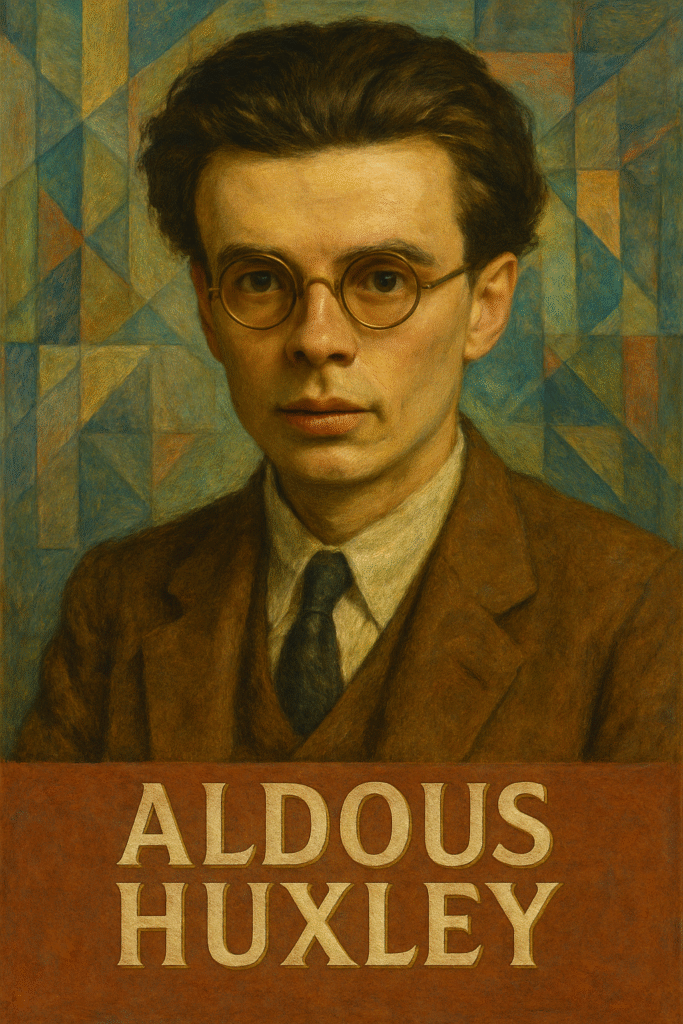
Introduction to Aldous Huxley
Aldous Huxley as Writer stands among the most influential literary figures of the twentieth century. He consistently explores human nature, society, and spiritual awareness with clarity and imagination. Furthermore, he blends philosophical inquiry with fictional storytelling to create profound insights. His works frequently examine the tension between progress and human values. Moreover, Huxley uses satire, allegory, and psychological depth to engage readers intellectually and emotionally. Consequently, his narratives address timeless dilemmas about freedom, morality, and knowledge. Additionally, he experiments with narrative forms, including essays, novels, and dystopian fiction, demonstrating remarkable versatility. Aldous Huxley as Writer highlights the capacity of literature to question cultural norms and inspire critical reflection. Therefore, his enduring impact stems from both thematic richness and stylistic innovation, influencing generations of writers and thinkers globally.
1. Early Life and Family Influence
Aldous Huxley as Writer emerged from a distinguished intellectual family in England. His upbringing exposed him to science, literature, and art simultaneously. Furthermore, Huxley absorbed classical education, fostering early curiosity about philosophy and human nature. His parents encouraged exploration of science and creativity in balanced ways. Consequently, his formative years developed intellectual flexibility and cultural awareness. Additionally, exposure to debate, critical thinking, and literature shaped his narrative sophistication. Aldous Huxley as Writer demonstrates how personal and familial influences cultivate philosophical and literary depth. Moreover, early experiences with illness and sensory challenges heightened his perception and introspection. Therefore, his childhood laid a foundation for imaginative and analytical prowess, blending rational thought with ethical and spiritual inquiry.
2. Education and Academic Foundations
Aldous Huxley as Writer benefited from rigorous academic training in philosophy, literature, and the sciences. Furthermore, he studied at prestigious institutions, refining analytical skills and literary technique simultaneously. Consequently, his education fostered interdisciplinary understanding, allowing integration of diverse intellectual currents into writing. Moreover, exposure to classics and modern thought informed his philosophical novels, enhancing thematic richness. Additionally, scholarly guidance encouraged critical reasoning, creative imagination, and philosophical inquiry. Therefore, Huxley’s education functioned not merely as instruction but as a catalyst for literary experimentation, thematic exploration, and enduring intellectual influence. Furthermore, intellectual curiosity instilled in his formative years enabled him to balance depth and clarity, imagination and discipline, while crafting narratives addressing social, ethical, and psychological questions. Consequently, academic foundations underpinned his capacity to synthesize complex ideas into accessible prose with enduring relevance.
3. Early Literary Ventures
Aldous Huxley as Writer began with essays and short stories that explored human perception, consciousness, and social issues. Furthermore, these early publications revealed keen observation, wit, and philosophical inclination. Consequently, he experimented with narrative forms to merge intellect and creativity effectively, establishing a distinctive voice marked by clarity and sophistication. Moreover, early literary ventures addressed ethical dilemmas, cultural critique, and psychological insight, laying groundwork for his major works. Additionally, Huxley’s initial output attracted attention for originality and intellectual courage, combining social reflection with narrative elegance. Therefore, these early works demonstrated how experimentation solidifies literary technique while exploring meaningful themes. Furthermore, they foreshadowed the thematic complexity, stylistic precision, and narrative inventiveness defining his later novels and essays. Consequently, his early career provided enduring lessons about literary discipline, philosophical engagement, and imaginative experimentation.
4. The Role of Travel and Observation
Aldous Huxley as Writer frequently integrated travel and observation into literary reflection. Furthermore, journeys across Europe, India, and America shaped cultural, philosophical, and ethical perspectives, expanding his worldview. Consequently, exposure to diverse societies encouraged critical examination of social norms, human behavior, and institutional structures. Moreover, travel enhanced descriptive prowess, allowing him to blend concrete observation with imaginative interpretation effectively. Additionally, experiences abroad nurtured insights into cross-cultural ethics, religion, psychology, and human aspiration, informing fiction, essays, and philosophical works. Therefore, travel functioned as both creative stimulus and intellectual enrichment, deepening Huxley’s ability to portray universal human dilemmas with nuance and clarity. Furthermore, firsthand encounters with different environments strengthened authenticity, enriched narrative texture, and provided frameworks for ethical and philosophical exploration. Consequently, travel became central to thematic resonance and literary innovation across his oeuvre.
5. Early Novels and Social Critique
Aldous Huxley as Writer gained recognition through early novels combining satire, social observation, and philosophical reflection. Furthermore, works such as Crome Yellow critique elitism, conformity, and superficial culture while employing humor and narrative sophistication. Consequently, Huxley engages readers with psychological depth and intellectual provocation simultaneously. Moreover, early novels reveal fascination with human folly, desire, ethical ambiguity, and social convention, demonstrating narrative dexterity. Additionally, Huxley’s use of irony and characterization exposes cultural anxieties while entertaining effectively. Therefore, early fiction establishes thematic continuity with later works, exploring progress, morality, identity, and cultural critique. Furthermore, these novels exemplify his skill in balancing narrative accessibility with intellectual rigor. Consequently, they cement his literary reputation, demonstrating the ability to weave philosophical reflection into engaging narrative structures with enduring impact.
6. Dystopian Vision and Brave New World
Aldous Huxley as Writer is renowned for Brave New World, a pioneering dystopian novel exploring technological control, social conditioning, and human autonomy. Furthermore, it examines overreliance on pleasure, efficiency, and conformity, warning against ethical and moral compromise. Consequently, Huxley critiques the social and psychological costs of progress and scientific advancement while blending imaginative speculation with philosophical and psychological insight. Moreover, dystopian themes illuminate identity, freedom, ethical responsibility, and the human condition, reinforcing narrative depth. Additionally, Brave New World demonstrates foresight regarding sociopolitical, technological, and ethical dilemmas. Therefore, the novel exemplifies Huxley’s ability to merge visionary imagination with incisive critique, influencing literature, philosophy, and social thought. Furthermore, it remains relevant to contemporary discourse on ethics, autonomy, and societal organization. Consequently, the work confirms his enduring legacy as a prescient literary thinker.
7. Use of Satire and Irony
Aldous Huxley as Writer employs satire to interrogate cultural and intellectual pretension while blending humor with moral reflection. Furthermore, irony allows nuanced commentary on human behavior, societal structures, and institutional shortcomings, enhancing both engagement and critical perspective. Consequently, readers are prompted to reflect while entertained, bridging philosophical insight and literary pleasure. Moreover, Huxley’s tonal mastery balances critique with narrative elegance, creating works that resonate ethically, intellectually, and emotionally. Additionally, satire underscores ethical and societal concerns across fiction and essays, demonstrating versatility in approach and sophistication in execution. Therefore, irony functions as a central literary device, revealing Huxley’s skill in combining moral observation, cultural critique, and narrative artistry. Furthermore, satire facilitates accessibility while provoking profound reflection, exemplifying his enduring literary influence and thematic relevance.
8. Philosophical and Ethical Themes
Aldous Huxley as Writer consistently explores philosophical questions concerning existence, morality, knowledge, and human purpose. Furthermore, he integrates ethical reflection seamlessly into narrative and essayistic writing, allowing readers to engage with dilemmas of free will, happiness, and societal norms. Consequently, these themes intersect with psychological realism and cultural critique, enhancing narrative richness and intellectual resonance. Moreover, Huxley demonstrates how literature illuminates moral and existential inquiry while maintaining stylistic clarity and imaginative power. Additionally, ethical and philosophical exploration strengthens cohesion across genres, linking early essays, novels, and later speculative works. Therefore, his oeuvre exemplifies literature as a vehicle for intellectual enrichment and ethical contemplation. Furthermore, the integration of philosophy, narrative, and social critique ensures enduring relevance and demonstrates the capacity of literature to interrogate human experience meaningfully.
9. Influence of Mysticism and Eastern Thought
Aldous Huxley incorporates mystical and Eastern philosophical perspectives, including Vedanta, Buddhism, and meditation, to expand awareness and consciousness. Furthermore, these traditions inform narrative, essayistic, and philosophical approaches, shaping portrayals of perception, human potential, and spiritual insight. Consequently, mystical elements complement intellectual inquiry, encouraging reflection on inner life alongside societal critique. Moreover, Huxley synthesizes cross-cultural thought with Western literary form, enriching thematic diversity, narrative sophistication, and moral depth. Additionally, engagement with Eastern philosophy challenges materialist assumptions and fosters exploration of ethical, existential, and spiritual dimensions. Therefore, mystical influence underscores a commitment to examining both inner consciousness and external social structures. Furthermore, these themes illustrate how interdisciplinary and cross-cultural learning enhances literary imagination, narrative resonance, and philosophical inquiry, contributing to the enduring significance of his works.
10. Exploration of Science and Technology
Aldous Huxley frequently addresses the implications of science and technology for society, ethics, and human identity. Furthermore, he explores both potential benefits and dangers inherent in scientific progress, highlighting ethical tension and cultural impact. Consequently, his narratives depict the intersection of innovation, autonomy, and moral responsibility vividly, showing the human consequences of technological change. Moreover, Huxley blends imaginative speculation with careful observation of scientific trends and bioethical dilemmas. Additionally, he examines the psychological, sociopolitical, and cultural ramifications of technological advancement, reinforcing dystopian and philosophical themes. Therefore, Aldous Huxley demonstrates foresight, integrating literature, philosophy, and social analysis to provoke critical reflection. Furthermore, his work exemplifies how creative writing can illuminate ethical complexity while engaging readers intellectually, emotionally, and imaginatively in contemplating human potential and societal transformation.
11. Dystopian Visions
Aldous Huxley explores dystopian futures vividly, depicting societies dominated by technological control, the erosion of individuality, and profound moral dilemmas. Furthermore, his narratives caution against human tendencies toward conformity, excessive consumerism, and intellectual complacency while combining satire with philosophical reflection. Consequently, readers encounter imagined worlds that mirror contemporary anxieties while prompting ethical, psychological, and cultural contemplation. Moreover, Huxley blends imaginative speculation with incisive social critique, creating layered narratives that resonate intellectually and emotionally. Additionally, his works reveal the tension between progress and human values, illustrating consequences of unexamined societal trends. Therefore, dystopian vision functions as both literary invention and moral warning, demonstrating the power of narrative to engage with existential concerns. Furthermore, these texts remain enduringly relevant for understanding social, technological, and ethical pressures in modern life comprehensively.
12. Scientific and Technological Themes
Aldous Huxley frequently examines the intersection of science, technology, and human values. He explores both potential and peril. Furthermore, he anticipates ethical challenges emerging from biochemistry, mass production, behavioral engineering, and rapid technological innovation. Consequently, his novels and essays portray tensions between human progress, autonomy, and moral responsibility. They prompt reflection on the consequences of unchecked scientific advancement. Moreover, Huxley’s writing integrates imagination, philosophical inquiry, and rigorous observation, demonstrating foresight in analyzing societal implications. Additionally, he emphasizes critical thinking, self-awareness, and ethical vigilance as essential human safeguards. Therefore, exploration of science and technology in his work highlights literature’s capacity to engage meaningfully with contemporary dilemmas. It blends narrative, philosophical insight, and cautionary reflection. Furthermore, these themes reveal enduring relevance for readers navigating modern ethical, social, and scientific landscapes with discernment and awareness.
13. Philosophical Influences
Aldous Huxley integrates philosophical ideas from both Eastern and Western traditions. He draws inspiration from Vedanta, mysticism, and humanist thought. Furthermore, he extends these reflections into essays and fiction, engaging with knowledge, consciousness, perception, and alternative ways of thinking. Consequently, philosophical inquiry shapes both narrative structure and thematic depth, offering readers opportunities for reflection and self-awareness. Moreover, Huxley challenges conventional assumptions regarding ethics, identity, and human purpose, encouraging intellectual engagement and moral consideration. Additionally, his work demonstrates how philosophical exploration complements literary technique, deepening coherence and resonance. Therefore, philosophy becomes a lens. It interrogates life’s meaning, societal structures, and individual responsibility. This fosters intellectual rigor alongside imaginative expression. Furthermore, Huxley’s philosophical engagement ensures that literature functions simultaneously as aesthetic creation and ethical reflection, enriching the reader’s understanding of human experience profoundly.
14. Satire and Social Critique
Aldous Huxley uses satire to highlight societal flaws. It reveals contradictions and cultural absurdities. He blends wit with ethical reflection. Furthermore, his critique covers materialism and bureaucratic rigidity. Ideological dogma and intellectual complacency are also critiqued. This highlights the tension between human potential and societal expectation. As a result, readers are engaged intellectually while entertained, prompted to consider moral, cultural, and philosophical questions simultaneously. Moreover, satire complements narrative sophistication, allowing for nuanced commentary that balances humor, insight, and critical engagement effectively. Additionally, Huxley demonstrates mastery of tonal control, creating works that inform, amuse, and provoke reflection across audiences. Therefore, his satirical lens amplifies awareness of political, social, and technological pressures while maintaining literary elegance and imaginative depth. Furthermore, satire serves as a primary literary strategy. It ensures ethical, cultural, and philosophical concerns remain integral. These elements contribute to his enduring relevance and intellectual legacy.
15. Psychological Exploration
Aldous Huxley delves deeply into human consciousness, perception, and cognition. He examines how individuals respond to social pressures. He also explores how they react to environmental and technological pressures. Furthermore, his characters frequently confront moral, existential, and identity dilemmas, offering insight into psychological and ethical complexity. Consequently, narrative strategies reflect patterns of thought, memory, and emotion, encouraging readers to engage with interior life critically. Moreover, Huxley’s psychological exploration intersects with cultural critique, dystopian reflection, and philosophical inquiry, enriching thematic depth. Additionally, these insights provide a framework for understanding human motivation, social interaction, and ethical behavior. Therefore, integration of psychological exploration with narrative technique allows literature to illuminate both personal and societal dimensions of experience. Furthermore, Huxley shows how imagination merges with observation. Intellectual inquiry also plays a role. Together, they depict the intricate, interconnected complexities of human thought and behavior.
16. The Role of Religion and Mysticism
Aldous Huxley frequently addresses spiritual experience. He provides mystical insights and explores religious thought. He blends narrative, essayistic, and metaphysical approaches. Furthermore, he examines how transcendent practices influence perception, morality, ethical decision-making, and societal structures. Consequently, his treatment balances critique with reverence for spiritual wisdom. It encourages readers to consider broader dimensions of consciousness and human potential. Moreover, Huxley emphasizes direct experience and personal insight as pathways to knowledge, integrating philosophy, psychology, and narrative reflection. Additionally, mystical exploration complements ethical, cultural, and existential inquiry, enriching literary and thematic texture. Therefore, spiritual and mystical dimensions become essential components of his literary vision, deepening narrative complexity and interpretive richness. Furthermore, Huxley demonstrates how exploration of religion, metaphysics, and consciousness fosters intellectual engagement, imaginative creativity, and ethical reflection simultaneously.
17. Literary Style and Technique
Aldous Huxley demonstrates remarkable versatility. He blends realism, allegory, satire, and speculative fiction. Huxley maintains clarity and elegance throughout his work. Furthermore, his prose is vivid, precise, and philosophically rich, allowing readers to navigate complex thematic content with ease. Consequently, Huxley employs narrative experimentation, reflective commentary, and dialogue to convey intellectual rigor alongside imaginative depth. Moreover, stylistic choices adapt to narrative form, from short essays to novels, ensuring coherence and thematic resonance. Additionally, the combination of philosophical insight, imaginative speculation, and careful observation enriches narrative texture and meaning. Therefore, literary style and technique function as vehicles for both artistic expression and ethical reflection. Furthermore, mastery across genres enhances accessibility, engagement, and thematic exploration, underscoring Huxley’s enduring literary influence and creative ingenuity.
18. Early Novels and Experimentation
Aldous Huxley began with novels exploring youth and society. He also delved into artistic ambition and cultural critique. These early works reveal experimentation with form and narrative. Furthermore, these works blend satire, romance, and social observation. They create layered portraits of modern life. This demonstrates emerging thematic and stylistic sophistication. Consequently, readers encounter continuity of vision, evolving narrative strategy, and foundational concerns that recur throughout Huxley’s oeuvre. Moreover, early novels highlight experimentation with characterization, dialogue, and narrative voice, shaping future literary innovation. Additionally, interplay between personal experience, observation, and intellectual reflection strengthens thematic depth and authenticity. Therefore, initial works provide insight into the development of narrative technique, ethical inquiry, and imaginative ambition. Furthermore, they establish patterns of philosophical engagement, social critique, and literary exploration that define his mature contributions to twentieth-century literature.
19. Essays and Nonfiction Contributions
Aldous Huxley as Writer produces essays spanning culture, ethics, science, religion, and social critique, demonstrating analytical precision and philosophical depth. Furthermore, nonfiction allows exploration of contemporary issues, ethical dilemmas, and intellectual reflection beyond fictional narrative. Consequently, essays complement novels by reinforcing themes of human perception, morality, and societal observation. Moreover, Huxley’s nonfiction engages both academic and popular audiences, bridging literary and philosophical discourse effectively. Additionally, writing reflects clarity, insight, and interpretive skill, providing readers with intellectual enrichment alongside literary appreciation. Therefore, essays and nonfiction function as integral extensions of thematic and ethical exploration within his broader body of work. Furthermore, they showcase versatility, ensuring that literary engagement extends beyond fiction into critical, philosophical, and cultural arenas with enduring relevance.
20. Critical Reception and Recognition
Aldous Huxley as Writer earned widespread recognition for his literary achievements. He was praised for intellectual insight and social relevance. Critics highlighted his imaginative power, stylistic versatility, and ethical reflection. Furthermore, his work has been studied in literature, philosophy, and cultural studies, demonstrating interdisciplinary importance. Consequently, scholarly attention and awards underscore both influence and critical engagement across global audiences. Moreover, readers encounter texts that simultaneously entertain, educate, and provoke reflection, illustrating literature’s capacity to combine aesthetic and ethical impact. Additionally, recognition highlights Huxley’s role in shaping modern thought, cultural discourse, and creative expression. Therefore, critical reception affirms his status as a major twentieth-century literary figure. Furthermore, Aldous Huxley shows the convergence of imagination, philosophy, and social consciousness. This intersection leaves an enduring imprint on literature, thought, and cultural history worldwide.
21. Exploration of Human Nature
Aldous Huxley as Writer consistently probes the complexities of human nature, examining ambition, fear, desire, and morality. Furthermore, he presents characters responding to societal, technological, and ethical pressures. His narratives reveal psychological depth alongside philosophical insight. Moreover, he highlights the tension between personal freedom and social expectation. Consequently, readers reflect on choices, consequences, and inner growth. Additionally, the work emphasizes empathy, self-awareness, and ethical responsibility. Through careful observation, Huxley demonstrates how character, environment, and circumstance intersect to shape behavior. Therefore, his exploration of humanity illuminates both timeless dilemmas and contemporary challenges, inviting readers to consider moral and emotional development across diverse contexts.
22. Critique of Consumerism
Aldous Huxley as Writer frequently exposes the influence of consumer culture on individuals and communities. Furthermore, he illustrates the seduction of materialism and superficial pleasure. Through narrative and satire, he depicts societal obsession with wealth, comfort, and distraction. Moreover, characters often confront ethical dilemmas arising from external pressures. Consequently, the texts critique cultural priorities and question values imposed by modern life. Additionally, the writing highlights the balance between individual fulfillment and societal expectation. Huxley underscores the tension between genuine satisfaction and manufactured desire. Therefore, his critique encourages reflection on personal values, cultural norms, and the consequences of prioritizing consumption over creativity and self-awareness in contemporary society.
23. Utopian Contrasts
Huxley juxtaposes dystopian warnings with utopian possibilities, emphasizing ethical and spiritual development. Furthermore, he explores idealized societies to critique current social conditions. His narratives balance imaginative speculation with philosophical insight, revealing the potential for human growth and self-realization. Moreover, he highlights moral choices, education, and societal organization as tools for transformation. Consequently, readers recognize contrasts between flawed realities and aspirational visions. Additionally, Huxley emphasizes how technology, culture, and governance can enable or hinder ethical development. Therefore, the work encourages contemplation of collective responsibility, human potential, and the importance of aligning progress with wisdom and compassion across social systems.
24. Influence of Eastern Thought
Huxley draws on Eastern philosophies, particularly Vedanta and meditation practices, to expand human understanding. Furthermore, he explores consciousness, perception, and the transcendence of ego. His narratives integrate these perspectives into reflections on morality, creativity, and spiritual experience. Moreover, he shows how meditation, mindfulness, and philosophical contemplation enhance intellectual and emotional growth. Consequently, readers encounter frameworks for self-awareness beyond Western rationalist paradigms. Additionally, his work emphasizes the interplay of mind, experience, and ethical living. Therefore, the writing demonstrates the value of cross-cultural philosophy in fostering holistic understanding, guiding reflection on personal development, and expanding moral imagination in modern life.
25. Experimental Narrative Techniques
Huxley frequently experiments with form, blending third-person, stream-of-consciousness, and epistolary styles. Furthermore, he manipulates time, perspective, and narrative voice to enhance thematic depth. His structural innovation reflects psychological complexity and philosophical inquiry. Moreover, he often incorporates digressions, essays, or reflections within fiction. Consequently, readers experience multifaceted texts that challenge conventional storytelling. Additionally, experimental form reinforces ethical and social commentary by immersing readers in character experience. Therefore, narrative experimentation serves as both aesthetic achievement and vehicle for intellectual engagement, highlighting literature’s capacity to explore form alongside content dynamically.
26. Depiction of Totalitarianism
Many works portray totalitarian control, emphasizing psychological, cultural, and ethical consequences. Furthermore, he explores obedience, conformity, and suppression of individuality. Through detailed depiction, the narratives reveal how societies enforce ideology and limit freedom. Moreover, he highlights the interplay between authority, manipulation, and technological influence. Consequently, readers consider the costs of power concentrated without accountability. Additionally, the work underscores resilience, resistance, and ethical choice as human responses to oppression. Therefore, the depiction of authoritarianism offers both warning and insight, emphasizing vigilance, moral reflection, and awareness of social dynamics to preserve individual and collective integrity.
27. Vision of Education
Education appears as a central theme, emphasizing critical thinking, ethics, and cultural literacy. Furthermore, he critiques rote learning, indoctrination, and superficial instruction. His narratives advocate for intellectual independence and self-reflection as essential for personal and societal growth. Moreover, he examines how education shapes values, decision-making, and civic responsibility. Consequently, readers appreciate the role of knowledge in cultivating moral judgment. Additionally, education becomes a tool to resist manipulation and encourage creativity. Therefore, Huxley presents learning as foundational to human development, promoting informed awareness and ethical engagement while challenging conformity and intellectual complacency across generations.
28. Vision of Art and Literature
Art and literature serve as both inspiration and critique in Huxley’s work. Furthermore, he explores creative expression as a reflection of consciousness, morality, and culture. He demonstrates how literature can illuminate ethical questions, reveal psychological depth, and provoke reflection. Moreover, he emphasizes aesthetic value alongside intellectual engagement. Consequently, readers understand art as essential for societal dialogue, cultural memory, and individual growth. Additionally, creativity represents resistance to superficiality and ethical erosion. Therefore, artistic exploration emerges as a vital instrument for imagination, empathy, and reflection on human experience across both temporal and moral dimensions.
29. Exploration of Love and Relationships
Human relationships are central, portraying intimacy, ethical tension, and emotional complexity. Furthermore, he examines love as a force that challenges ego, convention, and societal expectation. Characters navigate desire, trust, and moral conflict, revealing multifaceted dynamics. Moreover, interpersonal bonds illustrate both vulnerability and resilience. Consequently, readers witness the interaction of personal choice, ethical consideration, and social context. Additionally, the work emphasizes empathy, understanding, and moral awareness within relationships. Therefore, exploration of love highlights the intertwining of emotion, intellect, and ethical reflection, offering readers a nuanced perspective on connection, responsibility, and human development.
30. Ethical Dilemmas
Huxley consistently presents characters facing ethical challenges across social, personal, and technological contexts. Furthermore, he explores conflicts between desire, duty, and societal pressure. His work emphasizes reflection, consequence, and moral responsibility. Moreover, dilemmas illustrate the tension between individual freedom and collective welfare. Consequently, readers engage with questions of justice, virtue, and accountability. Additionally, ethical inquiry becomes central to narrative engagement and thematic depth. Therefore, the writing encourages contemplation of values, decision-making, and human responsibility, revealing the intricate interplay between moral philosophy, personal choice, and cultural influence.
31. Influence on Modern Thought
Huxley’s work shapes intellectual discussions across philosophy, literature, and social theory. Furthermore, he inspires analysis of human behavior, ethics, and cultural evolution. His writings contribute to debates on technology, consciousness, and society. Moreover, his influence extends into education, science, and spirituality. Consequently, readers and scholars recognize his contributions to multiple disciplines. Additionally, interdisciplinary engagement amplifies the relevance of his insights. Therefore, the work demonstrates enduring impact, illustrating how literature can guide reflection on human nature and societal development consistently.
32. Vision of Utopia vs. Dystopia
Contrasting idealized and oppressive societies, Huxley explores possibilities and limitations of human organization. Furthermore, he highlights consequences of extreme order, freedom, or technological control. The tension between utopia and dystopia underscores ethical, psychological, and cultural questions. Moreover, readers engage with speculative scenarios revealing societal potential and vulnerability. Consequently, reflection on governance, morality, and innovation emerges naturally. Additionally, literary contrast reinforces narrative complexity and thematic richness. Therefore, these visions function as both cautionary tales and aspirational frameworks, emphasizing the need for ethical, cultural, and personal balance.
33. Satirical Commentary on Politics
Huxley addresses political systems, ideologies, and leadership critically. Furthermore, he reveals flaws, contradictions, and ethical lapses within governance. Satire underscores absurdity, power dynamics, and ideological rigidity. Moreover, political critique intersects with psychological, social, and cultural observation. Consequently, readers gain insight into governance, persuasion, and manipulation. Additionally, humor and irony enhance engagement while delivering critique. Therefore, satirical commentary functions as both literary strategy and ethical reflection, revealing the intersection of politics, morality, and human behavior.
34. Exploration of Mortality
Mortality and the human condition appear frequently, emphasizing awareness of life, death, and meaning. Furthermore, he examines existential concern, spiritual inquiry, and the passage of time. Characters confront finitude, ethical responsibility, and self-realization. Moreover, reflection on mortality shapes choices, perception, and moral growth. Consequently, readers engage with profound philosophical and emotional questions. Additionally, awareness of mortality enhances narrative depth and ethical resonance. Therefore, exploration of life and death illuminates consciousness, morality, and the pursuit of purpose throughout human experience.
35. Critique of Modern Society
Huxley consistently interrogates social structures, values, and cultural norms. Furthermore, he examines industrialization, bureaucracy, and cultural complacency. Satirical and ethical perspectives highlight contradictions, superficiality, and moral compromise. Moreover, narratives reveal the tension between human potential and societal limitation. Consequently, readers reflect on contemporary challenges, cultural pressures, and ethical obligations. Additionally, critique encourages awareness of both individual and collective responsibility. Therefore, societal examination provides insight into the human condition, the risks of conformity, and the necessity of self-awareness for meaningful life engagement.
36. Focus on Perception and Consciousness
Perception, cognition, and consciousness form central themes in Huxley’s work. Furthermore, he examines subjective experience, altered awareness, and the limits of knowledge. His narratives highlight philosophical inquiry and experimental insight into mind and reality. Moreover, he demonstrates the interplay between perception, ethics, and personal development. Consequently, readers engage with both intellectual and experiential reflection. Additionally, exploration of consciousness encourages mindfulness, introspection, and awareness of broader ethical implications. Therefore, attention to mental and sensory processes enriches both narrative complexity and philosophical resonance across literary works.
37. Engagement with Science Fiction
Huxley integrates speculative and futuristic elements to explore social, technological, and ethical questions. Furthermore, science fiction frames imagination alongside moral and philosophical inquiry. Through dystopian and utopian narratives, he interrogates cultural trends, psychological behavior, and governance. Moreover, imaginative frameworks facilitate analysis of consequences, risk, and societal development. Consequently, readers explore potential futures while reflecting on present choices. Additionally, genre blending enriches narrative form and thematic exploration. Therefore, science fiction becomes a tool for intellectual, ethical, and imaginative engagement, demonstrating literature’s capacity to bridge reality and possibility effectively.
38. Interplay of Individual and Society
Huxley frequently emphasizes the tension between personal freedom and social expectation. Furthermore, characters navigate cultural norms, ethical challenges, and psychological pressures. Narrative focus reveals conflicts between desire, duty, and responsibility. Moreover, societal structures shape identity, behavior, and moral development. Consequently, readers reflect on balance between autonomy and collective constraints. Additionally, narrative interplay encourages evaluation of ethical, cultural, and social dimensions. Therefore, attention to individual-society dynamics provides insight into human experience, cultural negotiation, and ethical decision-making across historical and speculative contexts.
39. Exploration of Drug Use and Consciousness
Huxley examines the effects of substances on perception, cognition, and spirituality. Furthermore, he explores chemical, mystical, and experimental means to expand consciousness. Narratives consider ethical, psychological, and societal implications of altered awareness. Moreover, experimentation serves philosophical and literary purposes, highlighting subjective experience. Consequently, readers encounter reflections on freedom, responsibility, and the limits of human understanding. Additionally, exploration of psychoactive influence illuminates morality, creativity, and cultural interaction. Therefore, drug use functions as both metaphorical and practical vehicle for examining consciousness, ethics, and human potential, contributing to narrative and thematic depth.
40. Cross-Generational Influence
Huxley’s work influences multiple generations of writers, thinkers, and cultural commentators. Furthermore, his novels, essays, and ideas inform literature, philosophy, and social critique across time. Themes of ethics, consciousness, and society resonate with contemporary and future audiences. Moreover, cross-disciplinary impact demonstrates relevance beyond literature alone. Consequently, scholars, students, and creatives engage with his insights globally. Additionally, intellectual legacy fosters reflection on morality, innovation, and human potential. Therefore, enduring influence confirms the continued relevance of imagination, critical analysis, and ethical inquiry across generations and cultural contexts consistently.
41. Exploration of Technology and Ethics
Huxley frequently examines how technological advancements affect morality, freedom, and human relationships. Furthermore, he highlights the ethical dilemmas created by scientific progress and mechanization. His narratives emphasize both promise and peril, showing consequences of misuse or ethical neglect. Moreover, he portrays societal dependence on technology as a source of control and dehumanization. Consequently, readers reflect on responsibility, autonomy, and the human cost of innovation. Additionally, the work encourages consideration of progress alongside wisdom, urging evaluation of ethical frameworks. Therefore, technology becomes a lens through which human values, social organization, and moral choice are critically examined, offering insight into the interaction between invention and ethical accountability across time.
42. Spiritual Inquiry
Spirituality plays a central role in examining consciousness, purpose, and ethical living. Furthermore, Huxley integrates mystical practices, philosophical reflection, and ethical exploration. His narratives consider meditation, introspection, and transcendence as tools for personal and societal insight. Moreover, he contrasts materialistic pursuits with spiritual development to highlight moral and psychological growth. Consequently, readers are invited to reflect on meaning, awareness, and ethical responsibility. Additionally, the work underscores spiritual inquiry as a complement to intellectual and artistic exploration. Therefore, engagement with spiritual themes enriches both personal understanding and cultural critique, demonstrating the profound relationship between inner life, ethical reflection, and human flourishing.
43. Satire of Social Conventions
Huxley employs satire to critique social norms, cultural rituals, and inherited values. Furthermore, irony exposes hypocrisy, rigidity, and the tension between appearance and reality. He blends humor with ethical reflection to challenge complacency and encourage critical thinking. Moreover, his narratives show how societal pressures shape behavior, choices, and moral understanding. Consequently, readers recognize the limitations and contradictions of convention. Additionally, satire serves as a mechanism to engage readers while prompting reflection on ethical and social norms. Therefore, literary humor becomes both entertaining and instructive, revealing the interplay of culture, morality, and human perception consistently.
44. The Role of Science
Science appears as both a tool and a cautionary element in Huxley’s work. Furthermore, he explores scientific exploration’s capacity to illuminate or distort human understanding. Narratives frequently juxtapose empirical knowledge with ethical, social, and spiritual concerns. Moreover, scientific advancements reveal both empowerment and potential domination over individual freedom. Consequently, readers assess the consequences of innovation in parallel with moral and philosophical reflection. Additionally, his writing highlights the need for balance between intellectual curiosity and ethical responsibility. Therefore, science functions as a narrative and philosophical device, illustrating human ambition, ingenuity, and the importance of foresight and moral reflection in guiding progress.
45. Human Freedom and Responsibility
Freedom emerges as a recurring theme, intertwined with accountability and societal constraints. Furthermore, characters navigate tension between individual choice and collective influence. Ethical dilemmas, social pressure, and personal desire intersect, emphasizing complexity of autonomy. Moreover, Huxley examines how power, knowledge, and culture can enhance or restrict freedom. Consequently, readers reflect on responsibility, self-governance, and ethical engagement. Additionally, narratives illustrate the consequences of choice and inaction within personal and social contexts. Therefore, exploration of freedom reinforces broader philosophical, moral, and societal themes, emphasizing the interplay between autonomy, ethical responsibility, and cultural influence consistently.
46. Critique of Political Ideology
Huxley scrutinizes political movements, ideological rigidity, and institutional authority. Furthermore, he highlights manipulation, conformity, and the ethical cost of unquestioned allegiance. Satire and narrative insight reveal power’s impact on morality, behavior, and individual development. Moreover, characters encounter conflicts between idealism, pragmatism, and coercion. Consequently, readers examine governance, ethics, and civic responsibility critically. Additionally, the work emphasizes the importance of moral judgment in political participation. Therefore, reflection on ideology functions as both social critique and moral exploration, highlighting the tension between power, ethics, and human agency across historical and speculative contexts.
47. Vision of a Harmonious Society
Huxley presents conceptual models of societies striving for balance between ethics, culture, and innovation. Furthermore, he illustrates both potential benefits and hidden perils of order and structure. Narratives explore governance, education, and cultural development as tools for social harmony. Moreover, ethical reflection is central to evaluating societal outcomes and individual roles. Consequently, readers consider how values, policy, and human behavior interact. Additionally, the work emphasizes responsibility, empathy, and foresight in cultivating community well-being. Therefore, vision of societal harmony serves as both aspiration and critical reflection, highlighting the intersection of morality, culture, and organization consistently.
48. Environmental Awareness
Nature and ecology appear in multiple narratives as both symbolic and practical concerns. Furthermore, Huxley illustrates the relationship between human activity, ethical responsibility, and environmental consequences. He emphasizes balance, sustainability, and the consequences of exploitation. Moreover, the natural world offers reflection on beauty, mortality, and interconnectedness. Consequently, readers confront the ethical dimensions of ecological stewardship. Additionally, environmental awareness complements philosophical, spiritual, and social themes. Therefore, attention to ecological matters reinforces holistic ethical reflection, emphasizing human responsibility and the interdependence of life systems consistently across narratives.
49. Philosophical Dialogues
Dialogue serves as a key mechanism for exploring ideas, ethics, and human understanding. Furthermore, Huxley integrates philosophical debate within character interaction, narrative exposition, and internal reflection. These dialogues illuminate conflicts between belief, reason, and morality. Moreover, readers gain insight into the ethical, social, and intellectual dimensions of human experience. Consequently, discussion becomes a tool for reflection, engagement, and insight into moral and cultural complexity. Additionally, narrative dialogue encourages readers to question assumptions and consider alternative perspectives. Therefore, philosophical exchange reinforces thematic depth while enhancing intellectual engagement across literature consistently.
50. Legacy and Recognition of Aldous Huxley as Writer
Huxley’s work endures through its profound exploration of ethics, consciousness, and societal critique. Furthermore, his novels, essays, and philosophical reflections influence literature, science, and cultural thought globally. Scholars, readers, and creatives recognize his contributions across multiple disciplines. Moreover, his insights into human nature, morality, and societal trends remain relevant for contemporary analysis. Consequently, his writing inspires reflection on imagination, innovation, and ethical responsibility. Additionally, his influence spans generations, guiding exploration of intellectual, spiritual, and cultural questions. Therefore, Aldous Huxley as Writer represents a unique intersection of philosophical inquiry, literary artistry, and social critique, confirming his enduring legacy in shaping both literature and human thought for generations.
————————————————————————————————————————————————————–
E.M.Forster as a Modernist Writer: https://englishlitnotes.com/2025/06/01/em-forster-as-a-modernist-writer/
Use of Since and For: https://grammarpuzzlesolved.englishlitnotes.com/since-and-for-in-english-grammar/
The History of American Literature: https://americanlit.englishlitnotes.com/
Notes on English for All Classes: http://englishwithnaeemullahbutt.com
Discover more from Naeem Ullah Butt - Mr.Blogger
Subscribe to get the latest posts sent to your email.