1. Early Life and Family Influences
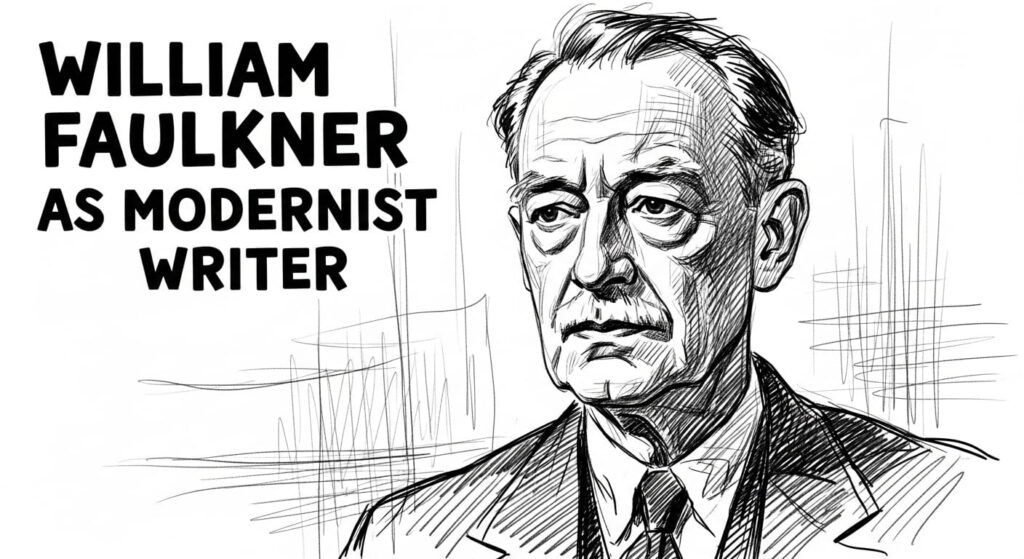
William Faulkner as Modernist Writer was shaped profoundly by his southern upbringing and family heritage. Furthermore, he absorbed local stories, traditions, and dialects that would later influence his narrative style. His family’s history provided insight into social hierarchies and human complexity. Consequently, Faulkner developed a nuanced understanding of regional identity and human psychology. Additionally, exposure to oral storytelling cultivated an appreciation for rhythm, tone, and narrative layering. William Faulkner demonstrates how early environment informs thematic depth. Moreover, his southern roots allowed him to explore moral ambiguity and cultural conflict. His formative years laid the foundation for literary innovation. They also established complex characterization. He explored the American South with enduring artistic resonance.
2. Education and Intellectual Foundations
William Faulkner as Modernist Writer benefited from formal schooling and independent literary study. Furthermore, he read widely across classics, contemporary fiction, and philosophical works. Exposure to diverse intellectual traditions enhanced his analytical skills and narrative imagination. Consequently, he synthesized multiple influences to create a distinctive modernist voice. Additionally, Faulkner’s curiosity about psychology, history, and social change informed thematic development. William Faulkner demonstrates how interdisciplinary learning strengthens literary experimentation. Moreover, scholarly engagement nurtured innovative approaches to narrative structure and point of view. Education was more than instruction. It catalyzed thematic depth. It also encouraged stylistic complexity and profound exploration of human experience.
3. Early Writing Experiments
William Faulkner as Modernist Writer began his literary career with short stories, poems, and early novels exploring identity and morality. Furthermore, experimentation with narrative perspective allowed him to test multiple voices and temporal structures. Early works reveal fascination with human consciousness and ethical dilemmas. Consequently, Faulkner honed a style that combined psychological insight with experimental narrative technique. Additionally, he developed recurring motifs related to memory, time, and moral conflict. William Faulkner demonstrates that initial creative exploration builds foundations for later masterpieces. Moreover, these works established a reputation for intellectual courage and stylistic innovation. Therefore, early literary experiments foreshadow the thematic sophistication and narrative daring of his most acclaimed modernist novels.
4. Influence of the South
William Faulkner as Modernist Writer draws deeply from the cultural, social, and historical fabric of the American South. Furthermore, southern landscapes, towns, and social hierarchies permeate his fiction. His depiction of regional customs, dialects, and tensions reflects authenticity and narrative richness. Consequently, Faulkner explores themes of race, class, and legacy with complexity. Additionally, the South provides a backdrop for moral ambiguity and generational conflict. William Faulkner demonstrates how place can function as both setting and character. Moreover, his engagement with southern culture enables exploration of universal human experiences. Therefore, the South remains central to his imaginative world, providing context for thematic depth and enduring literary resonance.
5. Early Novels and Social Observation
William Faulkner as Modernist Writer established his early reputation with novels that investigate societal dynamics and human character. Furthermore, works such as Soldiers’ Pay and Sartoris reveal concern with family, honor, and moral complexity. These narratives blend narrative experimentation with vivid social observation. Consequently, Faulkner presents psychological and cultural insight simultaneously. Additionally, his early novels introduce narrative techniques like multiple perspectives and shifting chronology. William Faulkner demonstrates mastery of intertwining thematic richness with narrative innovation. Moreover, these works foreshadow the modernist experimentation that defines later classics. Therefore, early fiction sets the stage for groundbreaking literary achievements and the exploration of timeless human dilemmas.
6. Creation of Yoknapatawpha County
William Faulkner as Modernist Writer invented the fictional Yoknapatawpha County to explore southern society in detail. Furthermore, this invented world allows examination of recurring families, historical tensions, and social evolution. The county functions as both a narrative framework and a symbolic space. Consequently, Faulkner examines memory, legacy, and moral complexity across interconnected narratives. Additionally, Yoknapatawpha provides a laboratory for modernist experimentation in time, perspective, and consciousness. William Faulkner demonstrates how a fictional setting can achieve thematic and structural cohesion. Moreover, this imaginative county reflects historical awareness, cultural insight, and philosophical depth. Therefore, Yoknapatawpha County underpins Faulkner’s exploration of the human condition within a specific yet universally resonant landscape.
7. Narrative Innovation
William Faulkner as Modernist Writer employs groundbreaking narrative techniques, including stream of consciousness and nonlinear chronology. Furthermore, shifting perspectives allows complex psychological exploration and temporal experimentation. His narratives challenge conventional storytelling, inviting active reader engagement. Consequently, Faulkner presents layered interpretations of reality, memory, and identity. Additionally, experimentation with voice, tense, and point of view enhances thematic richness. William Faulkner demonstrates how innovation in form amplifies narrative meaning. Moreover, these strategies reveal intricate connections between personal and cultural history. Therefore, narrative experimentation becomes central to his modernist achievements, establishing him as a visionary in literary technique and thematic exploration.
8. Themes of Memory and Time
William Faulkner as Modernist Writer, repeatedly examines how memory, past influence, and temporal complexity shape both narrative and character perception. Furthermore, he emphasizes the nonlinear interaction between recollection, emotion, and moral consciousness, creating a layered understanding of human experience. Consequently, Faulkner challenges conventional chronological storytelling, showing how past events continually affect present choices, relationships, and ethical dilemmas. Additionally, memory intertwines with cultural and historical awareness to illuminate broader societal patterns, enhancing interpretive depth. Narrative strategies such as fragmented chronology, repeated motifs, and interior reflection reinforce psychological realism while maintaining thematic cohesion. Moreover, attention to temporal experimentation lets characters’ inner lives mirror personal legacies. It also highlights familial and regional legacies, emphasizing moral ambiguity and continuity. Memory and time serve as structural devices. They also function as thematic devices. This deepens literary complexity. It fosters modernist experimentation and enhances reader engagement within his works.
9. Psychological Depth and Characterization
William Faulkner as Modernist Writer crafts psychologically complex characters navigating moral, social, and existential dilemmas with remarkable nuance. Furthermore, interior monologues, shifting perspectives, and detailed consciousness mapping reveal desires, anxieties, and ethical tension intricately. Characters’ identities emerge through family dynamics, societal pressures, and historical circumstances, reflecting multifaceted human behavior. Consequently, readers witness multidimensional personalities, interpret choices, and consider consequences within ethical and cultural frameworks. Additionally, Faulkner emphasizes imperfection, moral ambiguity, and internal struggle to evoke empathy and critical reflection, linking character to thematic exploration. Narrative experimentation complements this psychological insight, employing fragmented chronology and multiple viewpoints to enhance literary sophistication. Moreover, characterization serves as a vehicle for modernist inquiry, exploring conscience, identity, resilience, and human interaction. Therefore, Faulkner’s nuanced portrayal of character underlines the intersection of individual psyche, societal influence, and narrative innovation effectively.
10. Exploration of Race and Society
William Faulkner consistently interrogates race, social hierarchy, and inequality in southern communities, emphasizing both historical and moral dimensions. Furthermore, depictions of segregation, racial tension, and ethical conflict reveal structural injustice while reflecting individual consciousness and moral choice. Novels such as Absalom, Absalom! illustrate how historical legacy, family memory, and personal responsibility converge, shaping narrative and thematic depth. Consequently, Faulkner critiques social norms, cultural expectations, and inherited oppression while highlighting moral ambiguity and human consequence. Additionally, attention to marginalized perspectives enriches narrative perspective and ethical inquiry, reinforcing reader reflection on societal dynamics. Literary strategies, including shifting viewpoint, memory, and non-linear storytelling, deepen engagement, connecting individual experience to collective history. Moreover, intersections between race, time, and family reveal complex ethical and cultural patterns. Therefore, Faulkner illuminates both regional specificity and universal human dilemmas through modernist technique and sustained social reflection.
11. Southern Gothic Elements
William Faulkner frequently uses Southern Gothic motifs. He intertwines decay, grotesque figures, and moral ambiguity. These elements enhance thematic and aesthetic depth. Furthermore, atmospheric detail, eerie settings, and psychological tension evoke both cultural specificity and universal human conflict. Gothic elements highlight frailty, sin, mortality, and societal pressure, reinforcing ethical dilemmas within the narrative. Consequently, readers encounter richly textured worlds that blend horror, humor, and philosophical reflection simultaneously. Additionally, moral complexity and emotional resonance increase interpretive challenge, deepening engagement with narrative and character. Faulkner’s stylistic integration of Gothic elements with modernist experimentation strengthens narrative innovation, perspective multiplicity, and structural sophistication. Moreover, attention to grotesque and unsettling imagery emphasizes historical consciousness, ethical reflection, and regional authenticity. Therefore, Southern Gothic acts as both a stylistic and thematic strategy. This amplifies Faulkner’s modernist exploration of human frailty. It enhances social critique and narrative artistry.
12. The Sound and the Fury
William Faulkner as Modernist Writer achieved literary acclaim through The Sound and the Fury, exemplifying narrative innovation and psychological complexity. Furthermore, stream-of-consciousness, shifting perspectives, and nonlinear chronology challenge traditional storytelling while reflecting subjective experience and ethical tension. The novel examines family decline, identity, and historical legacy, revealing the interplay between personal choice and social expectation. Consequently, readers engage with fragmented narrative, multiple interpretations of time, and ethical ambiguity. Additionally, structural experimentation complements thematic depth, allowing the reader to immerse themselves in character consciousness and moral reflection. Faulkner demonstrates mastery of literary form as a vehicle for modernist exploration of time, memory, and social critique. Moreover, the novel’s stylistic intricacy underscores character psychology, ethical nuance, and narrative innovation simultaneously. The Sound and the Fury exemplifies Faulkner’s skill in formal experimentation. He combines this with profound human insight, establishing his status as a central modernist figure.
13. As I Lay Dying
William Faulkner as Modernist Writer extends narrative experimentation in As I Lay Dying. He employs multiple voices and interior perspectives. Faulkner also uses fragmented chronology to explore death, family duty, and existential struggle. Furthermore, the novel’s structure reflects psychological realism, emphasizing ethical tension and individual perception. Characters face grief, obligation, and moral ambiguity. This confrontation allows readers to consider the consequences of action within a cultural and historical context. Consequently, interpretive engagement deepens as narrative multiplicity encourages reflection on consciousness, relational dynamics, and societal expectations. Additionally, stylistic focus on rhythm, tone, and narrative texture enhances literary and aesthetic experience. Faulkner demonstrates the power of experimental form to evoke empathy, understanding, and intellectual participation. Moreover, the interweaving of character voice, moral inquiry, and structural innovation strengthens thematic cohesion and modernist sophistication. Therefore, As I Lay Dying strengthens Faulkner’s reputation. It combines narrative experimentation with a profound exploration of human resilience. The narrative also examines consciousness and ethical complexity.
14. Light in August
William Faulkner as Modernist Writer examines racial, sexual, and moral tensions in Light in August. Furthermore, the novel presents layered narrative voices, historical context, and psychological insight. Social critique, regional identity, and human vulnerability intersect with formal experimentation. Consequently, Faulkner reveals patterns of behavior, cultural legacy, and moral choice. Additionally, his prose balances descriptive richness with interior reflection. William Faulkner demonstrates how thematic complexity aligns with innovative storytelling. Moreover, ethical exploration complements narrative technique, producing enduring literary resonance. Therefore, Light in August exemplifies his mastery in merging modernist form with substantive thematic inquiry. It highlights social, cultural, and psychological dimensions.
15. Absalom, Absalom!
William Faulkner as Modernist Writer reaches narrative and thematic culmination in Absalom, Absalom!, a dense, multilayered exploration of family, history, and morality. Furthermore, the novel uses shifting perspectives, nonlinear time, and unreliable narrators to challenge conventional storytelling. Themes of pride, legacy, and cultural memory intersect with social critique and psychological depth. Consequently, readers navigate complex moral landscapes and historical interpretations. Additionally, Faulkner’s prose style combines richness, subtlety, and philosophical reflection. William Faulkner demonstrates an unparalleled ability to synthesize form, theme, and character into cohesive modernist innovation. Moreover, the novel exemplifies his exploration of Southern identity, human frailty, and ethical ambiguity. Therefore, Absalom, Absalom! represents the apex of his literary artistry and modernist experimentation.
16. Evolution of Narrative Techniques
Faulkner’s narrative techniques evolved to encompass stream-of-consciousness, multiple perspectives, and experimental chronology. Furthermore, he increasingly focused on subjective experience, inner thought, and fragmented storytelling. These strategies allowed intricate exploration of memory, identity, and ethical tension. Consequently, readers engage actively, piecing together character psychology and plot dynamics. Additionally, shifting viewpoints illuminate conflicts between personal desire, social expectation, and historical legacy. Innovations in voice and temporal structure enriched thematic depth and emphasized the fluidity of perception. Moreover, narrative experimentation became a hallmark of literary modernism, challenging conventions while amplifying psychological realism. Therefore, evolving techniques make a deliberate effort. They blend formal experimentation with emotional resonance. This produces complex, immersive, and intellectually compelling literature. It continues to influence writers and scholars alike.
17. Regional Identity and Culture
Faulkner’s works remain deeply rooted in the South, examining cultural, historical, and moral landscapes. Furthermore, depictions of southern towns, families, and social hierarchies reveal ethical ambiguity and generational tension. Rich local color, dialect, and customs provide narrative texture and authenticity. Consequently, the South functions as both setting and character, shaping actions and perspectives. Additionally, regional focus illuminates universal themes such as human frailty, resilience, and moral choice. Intertwining social critique with historical consciousness, Faulkner captures the complexity of tradition, progress, and cultural memory. Moreover, regionalism reinforces narrative cohesion and thematic resonance across multiple novels. Therefore, southern identity remains central to his literary project. It allows him to explore enduring ethical, social, and psychological questions within vividly realized, culturally specific contexts.
18. Interplay of History and Memory
Faulkner frequently examines the tension between history and memory, highlighting the subjectivity of recollection. Furthermore, past events shape identity, ethical decisions, and interpersonal relationships. Memory operates as both a narrative device and a thematic lens, connecting personal experience with collective heritage. Consequently, readers navigate multiple temporal layers to understand character motivation and societal legacy. Additionally, historical awareness informs moral and cultural critique, emphasizing responsibility, guilt, and human fallibility. Integration of personal and regional history enriches narrative depth and psychological realism. Moreover, recollection, rumor, and perspective intersect to produce a nuanced interpretation of events. Therefore, Faulkner demonstrates that the past is active and malleable. It influences contemporary perception and narrative structure. He challenges linear notions of time, causality, and historical truth within literature.
19. Moral Complexity and Ethical Inquiry
Faulkner’s fiction frequently engages with moral ambiguity, exploring the tension between desire, duty, and conscience. Furthermore, ethical dilemmas emerge within family, social, and historical frameworks, compelling nuanced judgment. Characters confront choices shaped by pride, legacy, and circumstance, often with no clear resolution. Consequently, narratives prompt reflection on justice, integrity, and human fallibility. Additionally, moral complexity intersects with social critique, historical awareness, and psychological depth, reinforcing narrative sophistication. Faulkner illuminates human capacity for both cruelty and compassion, creating ethically charged storytelling. Moreover, ambiguity heightens engagement and intellectual challenge, demanding careful attention from readers. Therefore, ethical inquiry becomes central to his modernist exploration. It blends philosophical reflection, cultural observation, and character-driven insight. This creates profoundly resonant literature.
20. Family and Generational Conflict
Families provide both narrative focus and thematic exploration in Faulkner’s work. Furthermore, intergenerational tension, inheritance, and loyalty highlight cultural and psychological forces. Complex family structures reflect societal norms, moral dilemmas, and historical consequences. Consequently, familial relationships illuminate personal and collective responsibility. Additionally, parental influence, sibling rivalry, and generational memory enrich character development and thematic resonance. Recurrent family dynasties, particularly in Yoknapatawpha County, provide continuity and interconnectedness across novels. Moreover, familial analysis enables exploration of identity, morality, and cultural inheritance. Therefore, Faulkner’s attention to family and generational conflict deepens the understanding of human behavior. It highlights social structure and ethical negotiation. This attention anchors narrative complexity in both personal and communal dimensions.
21. Psychological Realism
Psychological realism defines Faulkner’s approach, emphasizing consciousness, perception, and subjective experience. Furthermore, internal monologues and stream-of-consciousness techniques reveal intricate thought patterns. Characters’ cognition interacts with memory, emotion, and environment, creating authentic psychological landscapes. Consequently, readers perceive nuanced motivations, moral tension, and emotional subtlety. Additionally, exploration of consciousness facilitates thematic cohesion and structural experimentation. Overlapping mental states and perspectives intensify narrative depth and interpretive challenge. Moreover, psychological realism integrates social context, ethical dilemmas, and historical awareness, reinforcing modernist innovation. Faulkner’s focus on mind and perception enriches character portrayal. It enhances narrative complexity. This focus encourages active reader engagement in the interpretive process.
22. Social Hierarchy and Inequality
Faulkner explores class, power, and inequality, reflecting the stratified southern social landscape. Furthermore, disparities of wealth, race, and privilege create ethical tension and influence character behavior. Social structures intersect with memory, morality, and identity, shaping narrative trajectory. Consequently, readers confront both systemic injustice and individual responsibility. Additionally, exposure of social hierarchy amplifies thematic complexity, providing critique alongside storytelling. Characters negotiate societal expectations, personal ambition, and historical legacy within these structures. Moreover, attention to inequality reinforces realism, regional authenticity, and psychological insight. Therefore, examining social hierarchy provides a way to explore moral, cultural, and humanistic themes. It highlights structural constraints and possibilities for ethical action within narrative.
23. Symbolism and Imagery
Faulkner utilizes rich symbolism and imagery to reinforce themes, characters, and mood. Furthermore, objects, landscapes, and recurring motifs convey psychological states and cultural meaning. Symbolic structures intersect with narrative form, time, and perspective. Consequently, imagery enhances interpretive depth, guiding readers through thematic layers. Additionally, Faulkner’s visual and sensory detail conveys emotion, ethical tension, and historical consciousness. Symbolism links personal experience with communal history and regional identity. Moreover, repeated motifs provide continuity and reinforce narrative cohesion across novels. Therefore, symbolic and imagistic strategies strengthen modernist experimentation, enriching both aesthetic and thematic complexity within his literary corpus.
24. Myth and Archetype
Mythological reference and archetypal patterns underpin character, plot, and thematic exploration. Furthermore, Faulkner adapts classical and regional archetypes to illuminate ethical, psychological, and social concerns. Mythic resonance enhances narrative universality while grounding stories in cultural specificity. Consequently, readers perceive patterns of heroism, tragedy, and moral conflict interwoven with southern identity. Additionally, archetypes support thematic continuity, moral inquiry, and symbolic depth. Integration of myth facilitates reflection on historical recurrence, human behavior, and collective memory. Moreover, archetypal structure complements narrative innovation, enriching modernist experimentation. Therefore, myth and archetype provide structural and thematic scaffolding, linking human experience across time and culture in Faulkner’s literature.
25. Stream-of-Consciousness Technique
Faulkner employs stream-of-consciousness narration to depict interiority and temporal fluidity. Furthermore, shifting narrative perspectives reflects cognition, memory, and emotional complexity. Fragmented and nonlinear expression challenges conventional linear storytelling. Consequently, readers reconstruct events while engaging with character psychology and ethical dilemmas. Additionally, this technique underscores perception, subjectivity, and temporal interplay. Stream-of-consciousness facilitates integration of internal reflection with historical and social context. Moreover, it reinforces thematic cohesion and narrative experimentation. This stylistic device serves structural purposes. It also serves thematic purposes. It emphasizes the modernist interplay of mind, memory, and moral inquiry in literature.
26. Depiction of Violence
Violence permeates Faulkner’s novels, reflecting moral, social, and historical tensions. Furthermore, physical, psychological, and symbolic violence illuminate character and community dynamics. Conflict emphasizes ethical dilemmas, cultural legacy, and human fallibility. Consequently, readers confront ethical ambiguity, societal constraints, and personal responsibility. Additionally, depictions of violence reinforce realism, narrative tension, and psychological depth. Violence intertwines with memory, trauma, and cultural critique, deepening interpretive complexity. Moreover, narrative treatment of brutality reflects broader modernist concerns with morality, power, and human nature. Therefore, Faulkner’s portrayal of violence contributes to thematic resonance, narrative intensity, and ethical reflection within the literary work.
27. Religion and Morality
Religion, belief systems, and moral reflection permeate Faulkner’s work, shaping character decisions, societal structures, and narrative tension simultaneously. Furthermore, he explores the conflict between spiritual conviction, ethical responsibility, and personal desire, revealing how individuals negotiate complex moral landscapes. Characters grapple with sin, guilt, and redemption while navigating historical, familial, and social pressures. Consequently, religious and moral inquiry intersect with psychological depth, narrative experimentation, and regional consciousness, producing layered meaning throughout his novels. Additionally, ambiguity, contradiction, and ethical complexity challenge readers to reflect critically on justice, accountability, and virtue. Narrative strategies such as shifting perspective, interior monologue, and non-linear chronology enhance thematic richness and interpretive engagement. Moreover, spiritual contemplation amplifies resonance with both internal and external human struggles, emphasizing moral consequence and existential reflection. Therefore, religion and morality emerge as central motifs that integrate ethical, psychological, and cultural dimensions across Faulkner’s literature.
28. Exploration of Isolation
Isolation, in its physical, emotional, and social dimensions, recurs as a central motif throughout Faulkner’s narratives. Furthermore, alienation emphasizes individual struggle, societal pressure, and ethical decision-making, often producing profound psychological tension. Characters experience marginalization, estrangement, and internal conflict, which directly shape narrative structure, point of view, and thematic development. Consequently, readers witness nuanced explorations of human resilience, vulnerability, and relational complexity. Additionally, isolation operates as a lens through which identity, morality, and social connection are interrogated within historical and cultural contexts. Narrative fragmentation, multiple perspectives, and interior monologues reinforce the experiential effects of separation and estrangement. Moreover, these portrayals highlight how solitude magnifies ethical, emotional, and social reflection, contributing to both modernist experimentation and literary depth. Therefore, the motif of isolation acts as both a structural and thematic device. It provides insight into consciousness, interpersonal tension, and enduring human vulnerability.
29. Language and Prose Style
Faulkner’s prose exhibits richness, rhythmic variation, and syntactic complexity, reflecting both narrative innovation and psychological insight. Furthermore, linguistic experimentation captures shifts in time, consciousness, and perspective, deepening engagement with character interiority and ethical tension. Narrative voice adapts to reflect moral standpoint, personal perception, and social context, producing layered and multifaceted storytelling. Consequently, readers navigate intricate, often challenging passages that convey emotion, cognition, and thematic density simultaneously. Additionally, stylistic choices such as repetition, cadence, and regional dialects reinforce modernist experimentation, structural cohesion, and cultural authenticity. Lexical precision and rhythmic variation serve both aesthetic and functional purposes, supporting narrative texture, character development, and thematic resonance. Moreover, the interplay of syntax, voice, and rhythm enhances interpretive richness, encouraging reflection on consciousness, morality, and societal dynamics. Therefore, Faulkner’s prose style underpins narrative sophistication, providing an indispensable framework for psychological, ethical, and cultural exploration.
30. Literary Influence
Faulkner influenced subsequent generations of writers, particularly in narrative experimentation, psychological realism, and regional focus. Furthermore, his blending of ethical, historical, and cultural insight set precedents for modernist and postmodernist literature. Narrative form, stream-of-consciousness technique, and ethical exploration inspired literary experimentation. Consequently, his legacy extends beyond the South, shaping global literary practice and criticism. Additionally, thematic richness, stylistic innovation, and moral inquiry continue to inform scholarship and creative work. Influence intersects with narrative technique, regionalism, and modernist experimentation. Moreover, Faulkner’s literary contributions provide models for blending human experience with formal daring. Therefore, his impact endures as writers, critics, and readers engage with the depth, complexity, and innovation of his literature.
31. Race and Social Tension
Faulkner’s fiction frequently addresses race, segregation, and social inequality in the American South. Furthermore, characters navigate complex racial hierarchies, prejudice, and moral conflict. These depictions reveal ethical ambiguity, societal constraints, and historical legacy. Consequently, readers confront the human and structural consequences of discrimination while reflecting on personal responsibility and social justice. Additionally, Faulkner explores both the oppressive systems and the nuanced interactions between individuals across racial lines. Narrative techniques emphasize perspective, memory, and moral insight, heightening interpretive depth. Moreover, attention to racial tension reinforces regional authenticity, historical consciousness, and psychological realism. Therefore, Faulkner’s engagement with race enhances ethical, cultural, and humanistic inquiry. It provides profound insight into the social fabric and moral dilemmas of his literary universe.
32. The Southern Landscape
The southern landscape plays a crucial role in Faulkner’s work, serving as both setting and symbol. Furthermore, towns, rivers, forests, and fields reflect character psychology, historical memory, and societal norms. Faulkner imbues geography with narrative significance, linking place to identity and moral circumstance. Consequently, environmental detail reinforces plot, theme, and emotional resonance. Additionally, southern settings support exploration of tradition, change, and cultural inheritance. Landscape imagery intertwines with character experience, ethical tension, and generational memory, creating layered interpretation. Moreover, environmental description enhances regional realism and aesthetic texture. Therefore, the southern landscape actively shapes action. It deepens thematic concerns. It establishes a vivid, immersive literary world.
33. Depiction of Women
Faulkner’s portrayal of women reveals gender dynamics, societal expectations, and ethical conflict. Furthermore, female characters confront agency, limitation, and social constraint within both family and community. These narratives explore vulnerability, resilience, and moral complexity. Consequently, women serve as lenses through which Faulkner interrogates power, identity, and social norms. Additionally, their experiences reveal ethical dilemmas, relational tension, and cultural expectations, enhancing thematic richness. Interactions among genders reflect both historical context and human universality. Moreover, character depth balances social critique with psychological insight. Therefore, depictions of women illuminate human behavior, societal structure, and ethical complexity, enriching narrative texture and modernist experimentation.
34. Death and Mortality
Death, loss, and mortality recur throughout Faulkner’s novels, shaping character psychology and thematic resonance. Furthermore, mortality emphasizes ethical decision-making, familial legacy, and social continuity. Characters confront existential questions regarding purpose, legacy, and ethical consequence. Consequently, readers engage with narrative tension, moral reflection, and philosophical inquiry. Additionally, treatment of mortality intersects with memory, history, and psychological realism, reinforcing modernist narrative experimentation. Symbolic and literal representations of death enrich both aesthetic and thematic dimensions. Moreover, mortality connects human experience to temporal and ethical frameworks, providing interpretive depth. Therefore, Faulkner’s exploration of death reinforces narrative sophistication, emotional resonance, and philosophical engagement within literature.
35. Memory and the Past
Memory functions as both a theme and a structural device, shaping perception, identity, and narrative flow. Furthermore, recollection interacts with history, trauma, and ethical choice. Characters reinterpret events, reconstruct relationships, and confront legacy through memory. Consequently, narrative becomes layered, subjective, and psychologically complex. Additionally, memory intersects with morality, social hierarchy, and historical consciousness, enriching interpretive nuance. Techniques such as non-linear chronology, multiple perspectives, and interior monologue heighten engagement. Moreover, attention to memory underscores human vulnerability, resilience, and ethical responsibility. Therefore, Faulkner demonstrates the intricate connection between past and present, illuminating both personal and collective experience within modernist literature.
36. Violence and Ethical Consequences
Violence in Faulkner’s novels exposes human fragility, ethical tension, and societal dysfunction. Furthermore, depictions of conflict, cruelty, and oppression illuminate moral ambiguity and social pressure. Characters navigate physical, psychological, and symbolic violence, shaping narrative stakes and thematic intensity. Consequently, readers confront the ramifications of human action within a historical and cultural context. Additionally, violence interacts with memory, ethics, and regional identity, deepening interpretive complexity. Narratives highlight consequences for both perpetrators and victims, reinforcing moral inquiry. Moreover, integration of violence complements character development, narrative tension, and thematic resonance. Therefore, Faulkner’s treatment of violence offers profound insight into human behavior, ethical dilemmas, and social dynamics.
37. Psychological Fragmentation
Fragmented consciousness and narrative structure reflect psychological and ethical complexity. Furthermore, Faulkner portrays conflicting perspectives, incomplete memory, and internal tension. Fragmentation challenges narrative linearity, emphasizing subjectivity and interpretive engagement. Consequently, readers reconstruct events, understanding the interplay between thought, perception, and action. Additionally, narrative fragmentation parallels thematic exploration of morality, history, and identity, reinforcing cohesion amid experimental form. Moreover, structural complexity enhances character depth, psychological realism, and reader immersion. Psychological fragmentation serves as both a modernist device and a thematic lens. It deepens insight into consciousness, ethics, and social dynamics.
38. Justice and Injustice
Exploration of justice, legality, and moral consequence pervades Faulkner’s work. Furthermore, characters confront systemic inequity, personal bias, and ethical conflict. These narratives probe the balance between societal norms and individual conscience. Consequently, readers examine the historical and cultural implications of legal and moral judgment. Additionally, thematic attention to justice intersects with race, class, gender, and familial dynamics, providing complexity. Legal and ethical dilemmas reinforce narrative tension and reader reflection. Moreover, moral inquiry amplifies modernist experimentation and psychological realism. Therefore, justice and injustice remain central to Faulkner’s exploration of ethical, social, and humanistic concerns.
39. Time and Temporality
Faulkner experiments with narrative time, presenting past, present, and memory as fluid constructs. Furthermore, chronological shifts, overlapping events, and subjective perception challenge conventional storytelling. Temporal complexity emphasizes causality, consequence, and character perspective. Consequently, readers actively interpret sequence, meaning, and ethical implication. Additionally, temporal experimentation enhances thematic depth, psychological realism, and narrative sophistication. Patterns of recurrence, reflection, and foreshadowing reinforce cohesion and interpretive richness. Moreover, manipulation of time amplifies modernist innovation and engagement with consciousness. Therefore, Faulkner’s treatment of temporality shapes narrative architecture, thematic resonance, and reader perception effectively.
40. Ethical Ambiguity
Ethical ambiguity permeates Faulkner’s characters, situations, and societal depictions. Furthermore, moral dilemmas resist simple resolution, reflecting human complexity and social pressure. Consequences of choice highlight character motivation, cultural influence, and historical context. Additionally, ambiguity encourages critical reflection on justice, responsibility, and morality. Ethical uncertainty intertwines with narrative structure, memory, and perspective, heightening interpretive challenge. Moreover, it underscores the interplay between social norms, personal desire, and historical forces. Therefore, ambiguity enriches thematic depth, psychological realism, and modernist experimentation, providing readers with layered moral insight.
41. Human Desire and Conflict
Faulkner explores human longing, ambition, and internal tension extensively. Furthermore, characters grapple with personal desire, societal expectation, and historical legacy. Narrative conveys the struggle between impulse, conscience, and ethical obligation. Consequently, readers perceive an intricate interplay of psychology, morality, and social constraint. Desire intersects with familial, cultural, and temporal forces, enhancing narrative richness. Moreover, conflict reinforces thematic cohesion, character depth, and modernist experimentation. Therefore, Faulkner portrays human motivation as simultaneously ethical, psychological, and historically conditioned.
42. Isolation and Alienation
Isolation functions as both a literal and metaphorical motif, shaping character experience and narrative tension. Furthermore, alienation highlights social, ethical, and psychological struggles. Characters navigate estrangement, marginalization, and introspection within complex cultural and historical frameworks. Consequently, isolation emphasizes moral responsibility, relational dynamics, and individual vulnerability. Additionally, narrative uses seclusion to probe consciousness, ethical decision-making, and cultural critique. Moreover, alienation complements structural experimentation, enhancing modernist engagement and interpretive depth. Therefore, Faulkner integrates isolation as a thematic, ethical, and narrative device.
43. Community and Social Fabric
Faulkner examines communal structures, social networks, and collective responsibility. Furthermore, interactions among neighbors, families, and institutions highlight cooperation, tension, and moral expectation. Narrative reflects both supportive and oppressive dynamics within communities. Consequently, readers analyze societal influence on ethical choice, identity, and historical continuity. Additionally, depictions of community reinforce themes of loyalty, tradition, and conflict. Cultural and social commentary enriches narrative texture, thematic cohesion, and modernist experimentation. Moreover, collective perspective complements individual consciousness, memory, and ethical inquiry. Therefore, Faulkner presents community as both a stabilizing and challenging force within literature.
44. Humor and Irony
Humor and irony appear as narrative tools for critique, reflection, and engagement. Furthermore, Faulkner uses wit to reveal absurdity, ethical tension, and social contradiction. Satirical elements deepen thematic resonance, illuminating morality, human folly, and societal norms. Consequently, readers perceive ethical, psychological, and cultural layers simultaneously. Additionally, irony enhances stylistic sophistication and modernist experimentation. Moreover, humor balances gravity, providing interpretive nuance and narrative texture. Therefore, Faulkner demonstrates mastery in blending levity with intellectual, moral, and literary exploration.
45. Dreams and the Subconscious
Dreams, hallucinations, and subconscious reflection feature prominently, illustrating internal conflict and perception. Furthermore, characters’ inner visions reveal memory, desire, and ethical concern. Subconscious exploration complements narrative fragmentation, stream-of-consciousness, and thematic depth. Consequently, readers gain insight into character psyche, moral tension, and historical consciousness. Additionally, dream imagery reinforces symbolism, archetype, and narrative experimentation. Moreover, subconscious reflection enhances modernist exploration of mind, ethics, and social observation. Therefore, inner life remains central to Faulkner’s literary and thematic architecture.
46. Nature and Environment
Natural surroundings reflect psychological state, moral complexity, and cultural context. Furthermore, Faulkner links environmental description to narrative pacing, ethical reflection, and historical consciousness. Landscapes serve as metaphors, moods, and structural anchors. Consequently, setting interacts with character, theme, and narrative experimentation. Additionally, a detailed depiction of flora, fauna, and terrain enhances realism, sensory engagement, and interpretive depth. Moreover, environmental focus complements regionalism, ethical inquiry, and modernist innovation. Therefore, nature functions as both an aesthetic and a thematic tool within Faulkner’s literature.
47. Memory and Trauma
Memory of traumatic events shapes narrative, consciousness, and ethical tension. Furthermore, recollection intersects with history, moral reflection, and psychological realism. Characters navigate the impact of violence, injustice, and loss through memory. Consequently, readers engage with subjective temporality, ethical complexity, and historical consequence. Additionally, traumatic memory enhances narrative structure, thematic cohesion, and character insight. Moreover, exploration of memory and trauma supports modernist experimentation in form and content. Therefore, Faulkner demonstrates how past experiences influence perception, decision-making, and social interaction.
48. Innovation in Form
Faulkner consistently experiments with narrative form, integrating fragmented chronology, interior monologue, and multiple perspectives. Furthermore, structural innovation allows exploration of consciousness, moral ambiguity, and historical layering. Nonlinear narratives engage readers in reconstructing the story, analyzing perception, and ethical implications. Consequently, form reinforces thematic depth, psychological realism, and cultural resonance. Additionally, experimentation highlights modernist preoccupation with subjectivity, temporality, and literary innovation. Moreover, structural creativity complements ethical inquiry, regional focus, and character complexity. Therefore, formal innovation underpins Faulkner’s distinctive modernist vision, enriching narrative, thematic, and aesthetic experience.
49. Critical Legacy
Faulkner’s literary contributions continue to shape criticism, scholarship, and creative practice. Furthermore, narrative experimentation, psychological depth, and thematic richness inform the study of modernism, ethics, and regionalism. Legacy includes influence on writers, theorists, and literary institutions globally. Consequently, engagement with Faulkner’s corpus remains central to understanding twentieth-century literature. Additionally, scholarship explores ethical, historical, and structural innovations, reinforcing interpretive depth. Moreover, critical legacy enhances appreciation of narrative strategy, thematic complexity, and moral inquiry. Therefore, his work continues to inspire literary exploration, pedagogy, and reflection, underscoring enduring relevance.
50. Conclusion: Faulkner’s Enduring Significance
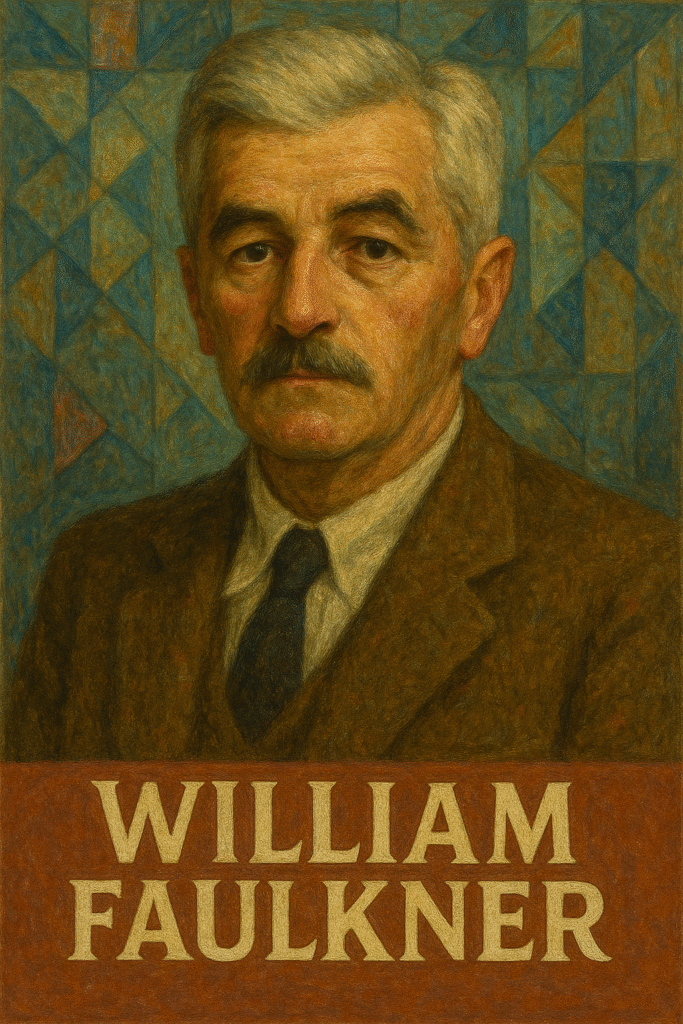
William Faulkner as Modernist Writer demonstrates unparalleled integration of thematic depth, narrative innovation, and psychological insight. Furthermore, his exploration of memory, morality, regional identity, and human complexity exemplifies modernist experimentation at its height. Narrative fragmentation, stream-of-consciousness, and temporal fluidity engage readers in active interpretation while deepening ethical and psychological understanding. Consequently, Faulkner’s literature challenges conventional storytelling, offering profound insight into individual consciousness, social hierarchy, and cultural legacy. Additionally, his synthesis of character, setting, and historical awareness reinforces interpretive richness and thematic resonance. His work continues to influence writers, critics, and readers, bridging formal innovation with humanistic inquiry. Therefore, William Faulkner as Modernist Writer remains a central figure in literary history. He exemplifies the enduring power of modernist narrative. His work reflects ongoing ethical reflection and narrative artistry.
————————————————————————————————————————————————————-
Aldous Huxley as a Writer: https://englishlitnotes.com/2025/06/01/aldous-huxley-as-a-writer/
Little, A Little, and The Little: https://grammarpuzzlesolved.englishlitnotes.com/difference-between-little-a-little-the-little/
Chaucer as a Realist: https://englishwithnaeemullahbutt.com/2025/05/18/chaucers-realism-realist/
The History of American Literature: https://americanlit.englishlitnotes.com/colonial-and-early-national-period/
Discover more from Naeem Ullah Butt - Mr.Blogger
Subscribe to get the latest posts sent to your email.