1. The Vision of Corrupt Society
Langland begins with a dream exposing medieval corruption. Society appears spiritually exhausted and morally blind. Moreover, falsehood dominates faith and commerce alike. Through Will’s wandering vision, readers confront a disordered world. Additionally, human greed replaces divine justice in every class. The poet links spiritual decay with social inequality convincingly. Therefore, Social Corruption and Justice in Piers Plowman opens with critique and moral insight. Langland’s tone urges reform through self-awareness, not punishment. His dream reflects the need for repentance within all ranks. Consequently, the opening scene sets moral foundation for the entire poem. Through vivid allegory, Langland reveals humanity’s distance from divine order. He exposes imbalance between wealth and faith, urging honest labor and humility. His moral vision redefines social order through spiritual awakening and sincere repentance.
2. The Corruption of Wealth and Trade
Greed and manipulation govern medieval commerce. Langland portrays merchants who exploit the poor shamelessly. Moreover, deceitful traders symbolize society’s obsession with profit. The dreamer observes injustice disguised as prosperity ironically. Additionally, wealth appears to erode conscience and compassion simultaneously. The poet’s tone condemns moral blindness through biting satire. Therefore, Social Corruption and Justice in Piers Plowman examines how money distorts human values. Langland contrasts divine generosity with human selfishness effectively. His poetic vision restores faith’s role in material ethics naturally. Moreover, his criticism of merchants extends to rulers who enable exploitation. Consequently, his poem becomes a moral protest against greed and vanity. Through spiritual reflection, Langland transforms economic commentary into divine truth. His vision teaches that honest labor sustains justice better than corrupt wealth.
3. Hypocrisy of Religious Authority
Langland exposes moral weakness within the Church boldly. Priests and friars preach holiness but pursue luxury. Moreover, sacred offices turn into means of personal advancement. His satire unmasks religious vanity disguised as devotion. Additionally, spiritual blindness reflects misplaced faith in worldly success. Through allegory, Langland links false sanctity with social decline. Therefore, Social Corruption and Justice in Piers Plowman condemns clerical hypocrisy as moral disease. The poet demands renewal through humility and sincerity. Moreover, his vision attacks systemic decay rather than individuals. Consequently, his language balances anger with compassion perfectly. His critique defends true piety against false showmanship. Through moral contrast, he redefines spirituality as service, not status. Langland’s religious vision calls for awakening within Church and laity alike. His courage reshapes medieval literature into an instrument of reform.
4. Falsehood and Moral Disorder
The poet personifies deceit as a ruling power. Falsehood leads humanity astray with persuasive charm. Moreover, every virtue faces distortion by greed and pride. Through vivid dialogue, Langland transforms lies into living forces. Additionally, moral confusion spreads like disease throughout society. The poet’s structure shows how corruption becomes systemic easily. Therefore, Social Corruption and Justice in Piers Plowman reflects truth’s struggle against hypocrisy. His dreamer searches for honesty amid worldly deception persistently. Moreover, moral awakening begins through recognition of evil’s disguise. Consequently, Langland warns readers about complacency toward deceit. His vision connects personal sin with collective collapse meaningfully. Through allegory, he preaches vigilance against moral illusion. His poetic warning remains timeless as moral corruption repeats across generations.
5. The Dreamer’s Search for Truth
Will’s restless journey symbolizes humanity’s inner moral struggle. He moves through confusion, temptation, and despair continually. Moreover, his encounters reveal weakness in faith and justice alike. Every step challenges his understanding of right conduct deeply. Additionally, his sincerity contrasts with society’s false devotion naturally. Through dialogue and revelation, he learns truth through suffering. The poet uses dream vision to explore moral awakening gradually. Furthermore, Will’s endurance becomes emblem of perseverance in faith. His journey urges readers to examine their own moral blindness carefully. Consequently, moral progress appears as lifelong search rather than sudden revelation. Through divine grace and personal effort, Will approaches clarity steadily. The dream structure merges spiritual vision with ethical exploration effectively. Langland portrays awakening as continuous quest for inner justice and divine harmony.
6. The Role of Lady Holy Church
Lady Holy Church guides Will toward divine wisdom patiently. She represents faith purified from corruption and greed completely. Moreover, her presence contrasts with deceptive religious figures significantly. Through her teachings, Will learns about truth and salvation deeply. Additionally, her instruction restores clarity lost through moral confusion earlier. Her words remind readers that understanding begins with spiritual humility. Furthermore, she symbolizes ideal faith serving justice and compassion together. Her vision presents harmony between worship and social morality beautifully. Consequently, she functions as the moral compass within the dream. Through her guidance, Will begins discerning good from evil clearly. Her dialogue emphasizes personal reform as path to communal restoration. Moreover, her wisdom counteracts ignorance spread by false preachers continuously. Langland’s portrayal of her dignity restores balance between intellect and piety gracefully.
7. The Castle of Truth
The Castle of Truth stands as symbol of divine perfection. It reflects strength, honesty, and moral order completely. Moreover, every wall and gate represents purity and justice precisely. Through vivid description, Langland creates spiritual architecture of righteousness. Additionally, the castle’s inaccessibility reveals human distance from virtue. The dreamer observes that reaching truth demands humility and discipline. Furthermore, deceit and sin obstruct entry through moral blindness persistently. The scene urges reform through internal transformation rather than external force. Consequently, the castle becomes central image of salvation in the poem. Its walls embody spiritual security built through love and faith. Moreover, this fortress represents resistance against worldly temptation naturally. Langland uses its imagery to define moral hierarchy clearly. The Castle of Truth illustrates triumph of divine order over human corruption.
8. The Figure of Lady Meed
Lady Meed personifies reward corrupted by greed and ambition. Her charm deceives rulers, priests, and commoners alike. Moreover, she turns virtue into transaction through material desire. Her influence spreads moral confusion throughout society effectively. Additionally, Langland portrays her trial as allegory of human compromise. The court’s debate reveals conflict between justice and temptation directly. Furthermore, her allure exposes hypocrisy of those claiming righteousness falsely. She embodies struggle between service and self-interest vividly. Consequently, Lady Meed becomes instrument of both revelation and critique. Through her, the poet questions motives behind generosity and judgment. Moreover, her presence reflects the moral instability of institutions continually. Langland’s satire warns readers about worship of wealth and power. Her narrative thread emphasizes that justice cannot coexist with bribery or deceit.
9. The King’s Dilemma
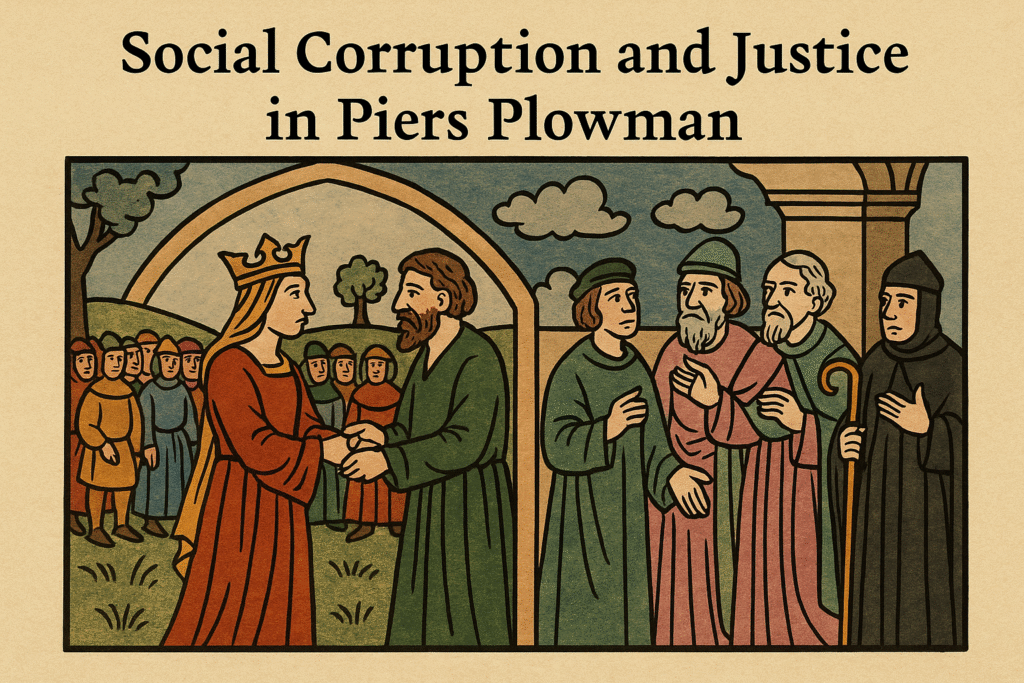
The King faces moral confusion while governing corrupted subjects constantly. His attempts to balance mercy and order reveal moral complexity. Moreover, advisors manipulate his sense of justice for self-gain continually. Through allegory, Langland explores political power’s vulnerability to sin. Additionally, the King’s indecision mirrors society’s struggle with ethical authority. The poet portrays him not as tyrant but flawed ruler realistically. Furthermore, his search for guidance symbolizes humanity’s dependence on divine wisdom. His desire for righteousness contrasts sharply with greed around him. Consequently, the King becomes emblem of compromised justice in worldly rule. His spiritual struggle underscores failure of authority without moral foundation. Moreover, Langland uses his conflict to criticize governance corrupted by ambition. Through this portrayal, readers witness moral failure spreading from crown to commoner alike.
10. The Court of Reason
Reason appears as divine guide balancing judgment and compassion equally. Her arguments expose false reasoning behind social corruption effectively. Moreover, she teaches the King about justice as moral responsibility. Her presence establishes order where passion once ruled chaotically. Additionally, she represents wisdom guiding human governance toward righteousness. The dialogue emphasizes that justice depends on inner integrity truly. Furthermore, Reason’s influence marks turning point within moral narrative. Her counsel transforms debate into lesson on humility and fairness. Consequently, she stands as guardian of divine reason against emotional excess. Her calm rationality contrasts deceitful eloquence of courtiers profoundly. Moreover, Langland positions her as counterpart to Lady Meed’s temptation. Through Reason’s example, truth reclaims its authority within moral discussion. Her wisdom restores clarity and peace amid political and spiritual confusion, illustrating Social Corruption and Justice in Piers Plowman clearly.
11. False Teachers and Spiritual Deception
Langland condemns preachers who twist scripture for profit openly. Their sermons replace salvation with gain and status shamelessly. Moreover, false teachers erode public faith through manipulation constantly. Through satire, the poet reveals religion’s vulnerability to vanity. Additionally, these figures corrupt souls under disguise of divine guidance. Their words mirror society’s moral blindness through persuasive hypocrisy. Furthermore, Langland’s critique urges discernment and sincere faith always. He distinguishes genuine devotion from self-serving performance carefully. Consequently, readers recognize that deception destroys both preacher and listener. His warning advocates personal understanding over blind obedience completely. Moreover, spiritual literacy becomes defense against corruption and ignorance effectively. Through vivid language, Langland exposes moral decay spreading through false leadership. His vision reminds us that truth survives only with honest interpretation. Humility reveals the powerful themes of Social Corruption and Justice in Piers Plowman.
12. Piers as the True Laborer
Piers represents the ideal Christian worker embodying honesty and diligence purely. He tills the field of faith through moral effort daily. Moreover, his example redefines labor as spiritual vocation genuinely. Through simplicity and perseverance, he restores dignity to work naturally. Additionally, his plowing becomes a symbol of redemption through service. Langland contrasts his purity with deceitful behavior of others clearly. Furthermore, Piers’ labor reflects divine partnership between faith and action. His example inspires community to unite under honest purpose firmly. Consequently, his image challenges corruption rooted in greed and laziness. Through him, Langland preaches salvation through effort rather than privilege. Moreover, his presence transforms moral theory into living example dynamically. Piers’ devotion bridges earthly toil with heavenly grace seamlessly. His honest hands nurture justice. They succeed where words once failed. This emphasizes Social Corruption and Justice in Piers Plowman with powerful clarity.
13. The Field of Folk
The Field of Folk presents vivid panorama of medieval society. It includes nobles, merchants, clergy, and peasants together. Moreover, Langland observes moral weakness within every class impartially. Through detailed imagery, he exposes selfishness disguised as respectability. Additionally, the field symbolizes humanity’s shared struggle for righteousness. The poet blends satire with empathy to reveal spiritual disorder. Furthermore, each character reflects moral blindness in unique form. The scene invites reflection on universal need for repentance deeply. Consequently, the field becomes mirror of social corruption and hope simultaneously. Its diversity reveals tension between divine justice and human error profoundly. Moreover, Langland’s realistic portrayal transforms allegory into living moral landscape. His inclusive vision teaches that salvation requires reform from all sides. The Field of Folk unites realism with moral aspiration masterfully.
14. The Vision of Pardon
Piers receives pardon symbolizing divine mercy and grace fully. Yet the document’s ambiguity challenges faith’s simplicity meaningfully. Moreover, the poet questions whether written forgiveness replaces genuine repentance. Through this episode, Langland examines tension between ritual and sincerity. Additionally, the pardon reveals danger of misusing sacred authority selfishly. Piers’ response reflects humility before divine judgment sincerely. Furthermore, the scene exposes how institutions distort faith through control. The poet reminds readers that mercy must inspire moral change continually. Consequently, this vision deepens poem’s concern with justice and salvation. Piers’ awareness marks turning point from innocence to moral comprehension. Moreover, Langland contrasts external law with internal conviction clearly. Through irony and devotion, he reaffirms divine truth’s supremacy over human systems. The vision invites renewed trust in grace guided by conscience purely.
15. The Figure of Conscience
Conscience emerges as final voice of moral understanding. He guides humanity toward truth through reflection and discipline steadily. Moreover, his counsel balances Reason’s logic with compassion beautifully. Through allegory, Langland defines him as soul’s vigilant guardian. Additionally, Conscience represents harmony between belief and action directly. His speech warns against comfort in sin or ignorance continually. Furthermore, his presence signifies hope amid decay and confusion. He insists that justice requires self-examination before judgment firmly. Consequently, Conscience becomes the moral compass of the entire dream. His authority depends not on power but sincerity completely. Moreover, Langland elevates him as symbol of inner reform perpetually. Through Conscience, truth gains voice within moral conflict powerfully. His teaching transforms knowledge into virtue through awareness and faith combined.
16. The Power of Repentance
Repentance becomes the central force driving inner renewal sincerely. Through confession, Will discovers freedom from deception and pride entirely. Moreover, repentance reconnects the soul with divine mercy continuously. Langland emphasizes that recognition of sin begins transformation authentically. Additionally, he shows that true sorrow requires action, not words alone. This turning point marks shift from self-interest to moral clarity effectively. Furthermore, repentance becomes the seed of communal reform and justice. Through personal humility, social harmony starts rebuilding naturally. Consequently, moral rebirth follows acknowledgment of guilt and divine dependence. Langland uses this moment to redefine strength through contrition beautifully. Moreover, repentance joins spiritual cleansing with ethical repair profoundly. The poet assures readers that even corruption yields to faith’s power. Thus, repentance stands as bridge between human failure and divine grace eternally.
17. The Role of the Clergy
The clergy hold spiritual power yet often misuse it shamefully. Langland criticizes priests who prefer wealth to devotion continually. Moreover, he portrays their hypocrisy as source of social decay. Their failure betrays the trust of faithful followers gravely. Additionally, true ministers appear humble, serving out of compassion and duty. The poet contrasts holy service with empty ritual vividly. Furthermore, corrupted clergy symbolize broader disintegration of justice and virtue. Their greed infects governance, worship, and moral example persistently. Consequently, Langland calls for reformation through honest faith and discipline. His critique balances exposure of sin with appeal to renewal. Moreover, the vision reflects society’s yearning for moral integrity. Through satire and sorrow, Langland restores reverence to divine service. He insists that holiness requires poverty of spirit, not prideful ceremony.
18. The Figure of Reason Revisited
Reason reappears to remind Will of discernment and steadiness. Her return signifies that wisdom must remain active constantly. Moreover, she guides moral sight beyond illusion and temptation effectively. Through renewed dialogue, Reason clarifies the difference between intellect and arrogance. Additionally, she warns against overconfidence disguised as faith persistently. Her lessons revive the dream’s balance between humility and knowledge. Furthermore, Reason restores calm after spiritual confusion and emotional excess. Langland employs her as emblem of divine understanding continually. Consequently, her counsel prepares Will for deeper moral awakening. Through her logic, illusion yields to recognition of spiritual order. Moreover, her argument joins intellect with faith through disciplined inquiry beautifully. Reason’s wisdom becomes foundation for social harmony and inner peace simultaneously. Her reappearance confirms the constancy of divine truth guiding all creation.
19. The Voice of Truth
Truth stands at the poem’s moral center as divine presence. It speaks through symbols, dreams, and conscience collectively. Moreover, Truth embodies law rooted in love and fairness equally. Langland presents it as eternal principle uniting justice with compassion. Additionally, the poet uses allegory to reveal truth’s transformative nature. Through Truth, every lie dissolves under light of recognition. Furthermore, the dreamer learns that divine law never contradicts mercy. The presence of Truth exposes falseness hidden within ritual or pride. Consequently, this figure reconciles knowledge with faith gracefully. Langland’s portrayal makes abstract virtue feel intimate and living profoundly. Moreover, Truth becomes voice calling humanity to integrity continually. Through it, the poem transcends time, guiding both ruler and peasant alike. Truth’s clarity restores purpose amid moral confusion and institutional decay naturally.
20. Greed and Material Corruption
Greed spreads through the poem like infection of conscience continually. It twists charity into self-interest and service into ambition. Moreover, Langland shows that material desire destroys spiritual unity completely. His characters chase gold while losing moral substance tragically. Additionally, wealth symbolizes decay of truth within all social classes. Through biting irony, the poet exposes hypocrisy of both clergy and nobles. Furthermore, greed distorts justice by equating worth with possession shamelessly. Every bribe or lie widens gap between law and love. Consequently, society becomes battlefield of envy, deception, and despair. Langland condemns greed not only as sin but as blindness. Moreover, he teaches that charity rebuilds what desire destroys swiftly. Through vivid contrast, he calls readers toward simplicity and faith. His attack on greed remains timeless defense of justice and compassion.
21. Justice as Divine Order
Justice, in Langland’s vision, transcends law into divine balance completely. It governs both heaven and earth with equal grace. Moreover, the poet insists that justice requires mercy to endure. His depiction merges moral philosophy with Christian theology perfectly. Additionally, Langland shows that divine order sustains creation harmoniously. Through symbolic trials and judgments, he illustrates moral equilibrium precisely. Furthermore, human justice appears fragile when detached from divine principle. The dream’s episodes reveal constant need for righteous leadership sincerely. Consequently, Langland identifies obedience to truth as path toward peace. His definition of justice condemns pride while uplifting repentance naturally. Moreover, justice acts as mirror reflecting soul’s moral integrity. Through its clarity, corruption loses power to deceive endlessly. Langland’s faith in divine justice guides his social and poetic mission.
22. The Role of Patience
Patience tempers justice with endurance and hope gracefully. Langland celebrates it as virtue sustaining spiritual growth steadily. Moreover, patience resists corruption by cultivating peace within adversity. The poet treats it as moral defense against pride and haste. Additionally, patience purifies will by aligning it with divine time. Through hardship, characters learn humility and compassion profoundly. Furthermore, patience restores harmony where anger would cause destruction swiftly. Langland presents it as strength disguised as gentleness beautifully. Consequently, the poem teaches that virtue matures only through waiting. Patience joins prayer and perseverance to rebuild moral stability naturally. Moreover, Langland’s portrayal reveals human weakness transformed by divine grace. Through this virtue, endurance becomes act of worship continually. Patience sustains faith amid decay, ensuring renewal and justice eternally.
23. The Fall of the Church
Langland laments Church’s moral decline through vivid satire continually. Priests neglect duty, bishops hoard wealth, and monks seek comfort shamelessly. Moreover, faith’s institutions lose purpose through luxury and deceit. The poet’s criticism exposes distance between doctrine and practice deeply. Additionally, his tone remains corrective, not merely condemnatory or bitter. He calls leaders to repentance through sharp moral vision. Furthermore, Langland warns that churchly failure weakens nation’s conscience gravely. Through symbolic contrast, he advocates reform through humility and charity. Consequently, his critique functions as act of devotion and loyalty. The poem transforms protest into prayer for renewal earnestly. Moreover, Langland portrays decline as temporary shadow, not permanent loss. His confidence in divine correction affirms enduring power of faith. Church corruption becomes lesson reminding believers of truth’s ultimate resilience.
24. The Struggle for Salvation
Salvation appears both personal and communal within Langland’s allegory. The dreamer realizes redemption demands cooperation and compassion deeply. Moreover, salvation requires active faith expressed through honest work. Langland rejects empty confession unaccompanied by moral change. Additionally, he teaches that forgiveness follows reform, not ceremony alone. His vision redefines salvation as lifelong process of purification. Furthermore, each trial refines soul through humility and perseverance consistently. Through vivid imagery, Langland turns doctrine into lived experience profoundly. Consequently, salvation becomes collective journey toward unity with divine truth. The poet insists that justice begins within the conscience sincerely. Moreover, social harmony depends on shared pursuit of redemption. His message binds personal virtue to public righteousness powerfully. Through this fusion, Langland transforms theology into practical human ethics.
25. The Role of the Common People
Common people embody moral potential and resilience within society’s decay. They work, suffer, and hope amid injustice courageously. Moreover, Langland gives them dignity often denied by rulers and clergy. His sympathy transforms peasants into voices of divine wisdom. Additionally, their endurance symbolizes faith’s strength through adversity naturally. The poet honors simplicity as foundation of spiritual health profoundly. Furthermore, their honesty contrasts with corruption of power vividly. Langland portrays laborers as teachers of truth through action. Consequently, social renewal arises from humble dedication and sincere prayer. He defines community through shared work, not hierarchy or wealth. Moreover, the dream validates human worth beyond worldly measure. Through these characters, Langland restores moral equality across class lines gracefully. The common folk stand as vessels of faith’s purest strength eternally.
26. The Seven Deadly Sins
The seven deadly sins march as procession of moral downfall. Each symbolizes temptation weakening faith and justice profoundly. Moreover, Langland dramatizes sin as social disease infecting everyone. Through vivid personification, he reveals human weakness vividly. Additionally, pride stands as root connecting all vices naturally. Greed, envy, and sloth follow, corrupting conscience and community simultaneously. Furthermore, wrath and gluttony shatter harmony through indulgence and anger. The poet portrays lust as blindness of heart and reason. Consequently, this parade mirrors human history of moral decay. Langland’s depiction serves as spiritual diagnosis demanding repentance urgently. Moreover, his structure shows how sin evolves through habit and ignorance. Through this moral pageant, he warns against complacency persistently. The seven sins stand not as list but living forces opposing salvation.
27. The Dreamer’s Awakening
Will awakens from vision filled with clarity and humility. His revelation merges experience with conviction gracefully. Moreover, awakening represents consciousness purified through divine teaching. The poet transforms closure into renewed beginning symbolically. Additionally, Will’s awareness unites faith, reason, and compassion deeply. His awakening reflects truth’s endurance beyond dream and sleep. Furthermore, he understands justice not as punishment but restoration lovingly. The dreamer’s transformation embodies Langland’s hope for human renewal. Consequently, awakening becomes spiritual resurrection from ignorance to faith. Langland uses it to show that vision continues through life. Moreover, the end becomes beginning of lifelong moral vigilance. Through awakening, the poem achieves harmony between insight and devotion. Will’s awareness fulfills journey’s purpose—seeing truth through humility completely.
28. The Message to Society
Langland’s message extends beyond personal salvation into collective responsibility. His poem addresses rulers, priests, and commoners equally. Moreover, it insists that justice depends on moral cooperation continually. Through satire and sermon, he calls for reform and mercy. Additionally, his tone combines sternness with compassion effectively. The poet’s faith in truth empowers critique without despair. Furthermore, his message anticipates modern social ethics remarkably. He envisions world rebuilt through repentance and shared labor. Consequently, the dream offers blueprint for harmony through righteousness. Langland teaches that corruption ends where conscience begins honestly. Moreover, his universal appeal lies in sincerity and hope. Through this moral vision, society finds redemption in unity. His enduring call transforms literature into living act of reform.
29. The Enduring Power of Faith
Faith sustains the dreamer beyond corruption and doubt completely. It binds fragmented world through divine promise continually. Moreover, faith becomes strength against despair and injustice profoundly. Langland portrays it as light guiding through moral darkness. Additionally, belief renews courage amid failure and uncertainty eternally. Through faith, humanity reclaims purpose and purity naturally. Furthermore, this power restores balance between earthly toil and divine reward. The poet’s vision exalts faith as foundation of justice. Consequently, his dream concludes with triumph of love over deceit. Langland assures that grace endures beyond all human weakness. Moreover, faith renews society through compassion and service beautifully. Through moral illumination, corruption transforms into opportunity for virtue. Thus, faith becomes unbroken chain linking heaven and earth eternally.
30. Justice Restored Through Mercy
Justice finds fulfillment not in punishment but forgiveness. Langland resolves conflict between law and grace harmoniously. Moreover, mercy softens truth without diluting righteousness completely. The poet envisions world governed by compassion and fairness. Additionally, this resolution mirrors divine governance of creation. Through balance of mercy, justice achieves permanence beautifully. Furthermore, Langland’s portrayal ends moral chaos through reconciliation. His insight teaches that charity perfects truth continually. Consequently, social healing follows spiritual forgiveness naturally. The poem transforms divine judgment into source of unity profoundly. Moreover, mercy reveals divine love shaping moral destiny endlessly. Through reconciliation, Langland concludes his vision with divine tenderness. Justice becomes light of compassion, guiding every heart toward peace.
31. The Final Vision of Renewal
In the closing revelation, Social Corruption and Justice in Piers Plowman reach divine harmony. The dreamer beholds unity where sin once ruled painfully. Moreover, every failure turns into lesson of restoration. Through divine light, truth and love embrace eternally. Additionally, corruption yields to grace, and society regains moral direction. The poet affirms that reform begins in each conscience continually. Furthermore, this final balance transforms vision into living prophecy. His allegory closes with call for courage and faith. Consequently, humanity learns that justice demands humility and endurance. Langland’s conclusion joins divine order with human responsibility gracefully. Moreover, the poem celebrates renewal through honesty, labor, and repentance. Through this union, eternal justice defeats transitory corruption forever. Thus, Social Corruption and Justice in Piers Plowman embodies redemption’s perfect equilibrium.
Piers Plowman Poem Summary: https://englishlitnotes.com/2025/06/07/piers-plowman-poem-summary/
Thomas Paine as a Revolutionary American Poet: https://americanlit.englishlitnotes.com/thomas-paine-revolutionary-american-writer/
Letter to Father about Mother’s Health: https://englishwithnaeemullahbutt.com/2025/04/26/letter-to-father-about-mothers-health/
Who vs whom: https://grammarpuzzlesolved.englishlitnotes.com/who-vs-whom/
Discover more from Naeem Ullah Butt - Mr.Blogger
Subscribe to get the latest posts sent to your email.