
1. Introduction to The Summoner in Canterbury Tales
The Summoner in Canterbury Tales exemplifies corruption, cunning, and social satire. Moreover, Chaucer presents him as both a comedic figure and moral lesson. Each narrative involving the Summoner highlights vice, manipulation, and ethical failure. Through allegorical and realistic depiction, Chaucer explores the interplay between human weakness and societal norms. Additionally, the Summoner’s profession allows commentary on justice, authority, and clerical misconduct. His behavior reflects both personal ambition and structural flaws within the Church. Furthermore, Chaucer uses irony, exaggeration, and dialogue to expose hypocrisy. Each encounter demonstrates the consequences of dishonesty, greed, and manipulation. By portraying the Summoner, Chaucer provides insight into ethical reflection, social satire, and moral instruction. Ultimately, the character remains central to understanding corruption, cleverness, and ethical awareness in Canterbury Tales.
2. Role in the Pilgrimage Narrative
The Summoner interacts with pilgrims, creating tension, humor, and narrative contrast. Moreover, his presence illustrates human folly and the social dynamics of travel. Each episode demonstrates ethical lapses, clever maneuvering, and human weakness. Through interaction, Chaucer emphasizes observation, reflection, and moral instruction. Additionally, the Summoner’s behavior provokes both ridicule and moral consideration. Furthermore, his role advances character development, highlighting ethical contrasts with other pilgrims. Each tale involving him underscores deception, opportunism, and social cunning. By weaving the Summoner into the pilgrimage, Chaucer merges narrative, moral observation, and satire. Ultimately, his presence enriches the storytelling by exposing vice and guiding ethical reflection.
3. Professional Role and Clerical Authority
The Summoner executes ecclesiastical duties, issuing summons for moral and legal infractions. Moreover, his role highlights the tension between religious authority and personal ambition. Each interaction demonstrates ethical negligence, manipulation, and corruption. Through his professional conduct, Chaucer critiques clerical abuse, nepotism, and exploitation. Additionally, the Summoner’s position allows reflection on justice, accountability, and social responsibility. Furthermore, ethical lapses reveal vulnerability in hierarchical systems and human oversight. Each exemplum illustrates moral compromise and consequences of unchecked authority. By presenting the Summoner in his professional capacity, Chaucer explores the interplay between office, ethics, and social perception. Ultimately, professional misconduct frames broader reflections on morality and institutional integrity.
4. Characterization through Vice and Cunning
The Summoner is defined by vice, cleverness, and opportunism. Moreover, his traits combine humor with social critique. Each tale demonstrates the consequences of manipulation, greed, and ethical failure. Through characterization, Chaucer emphasizes cunning aligned with moral negligence. Additionally, vice reinforces thematic contrasts between virtue and folly. Furthermore, narrative exaggeration highlights ethical reflection and satirical instruction. Each exemplum emphasizes awareness, prudence, and reflection. By developing the Summoner’s personality through vice, Chaucer engages readers in ethical evaluation. Ultimately, characterization offers insight into human weakness and societal critique.
5. Exploitation of Power
The Summoner exploits his clerical authority for personal gain. Moreover, greed motivates behavior, undermining ethical responsibility. Each action illustrates consequences for deceit, intimidation, and corruption. Through narrative, Chaucer critiques the misuse of professional power. Additionally, ethical reflection arises from observing abuse and its societal effects. Furthermore, exploitation emphasizes moral vigilance and awareness. Each exemplum demonstrates how authority without conscience leads to social disruption. By portraying misuse of power, Chaucer underscores ethical instruction and reflection. Ultimately, the Summoner’s exploitation reflects broader societal and spiritual consequences.
6. Interaction with the Pardoner
The Summoner often intersects with the Pardoner, revealing complementary vices. Moreover, collaboration exposes hypocrisy, greed, and mutual manipulation. Each tale demonstrates cunning, ethical reflection, and social satire. Through dialogue, Chaucer critiques human weakness and institutional exploitation. Additionally, their interactions highlight consequences of moral failure and vice. Furthermore, social cunning illuminates reflection, prudence, and moderation. Each exemplum emphasizes ethical awareness in personal and professional relationships. By connecting characters, Chaucer strengthens narrative cohesion and moral instruction. Ultimately, interaction reinforces both satire and ethical reflection.
7. Social Commentary through Profession
The Summoner reflects society’s flaws through clerical office. Moreover, professional conduct provides insight into systemic weaknesses. Each narrative illustrates vice, folly, and corruption. Through his duties, Chaucer critiques authority, accountability, and ethical lapses. Additionally, satire reinforces awareness, prudence, and moral responsibility. Furthermore, observation of behavior highlights consequences for social neglect. Each exemplum integrates reflection, moderation, and ethical insight. By emphasizing profession as commentary, Chaucer exposes both personal and institutional vices. Ultimately, professional critique provides moral and social lessons.
8. Humor and Satire in Depiction
The Summoner generates humor through grotesque description and moral absurdity. Moreover, satire amplifies ethical reflection and social observation. Each encounter demonstrates vice, folly, and human weakness. Through exaggeration, Chaucer emphasizes moral awareness alongside entertainment. Additionally, comedic elements underscore reflection, prudence, and moderation. Furthermore, satire illuminates ethical failings and societal critique. Each exemplum integrates humor with instruction. By blending comedy and morality, Chaucer engages readers in reflection. Ultimately, humor supports ethical awareness and narrative engagement.
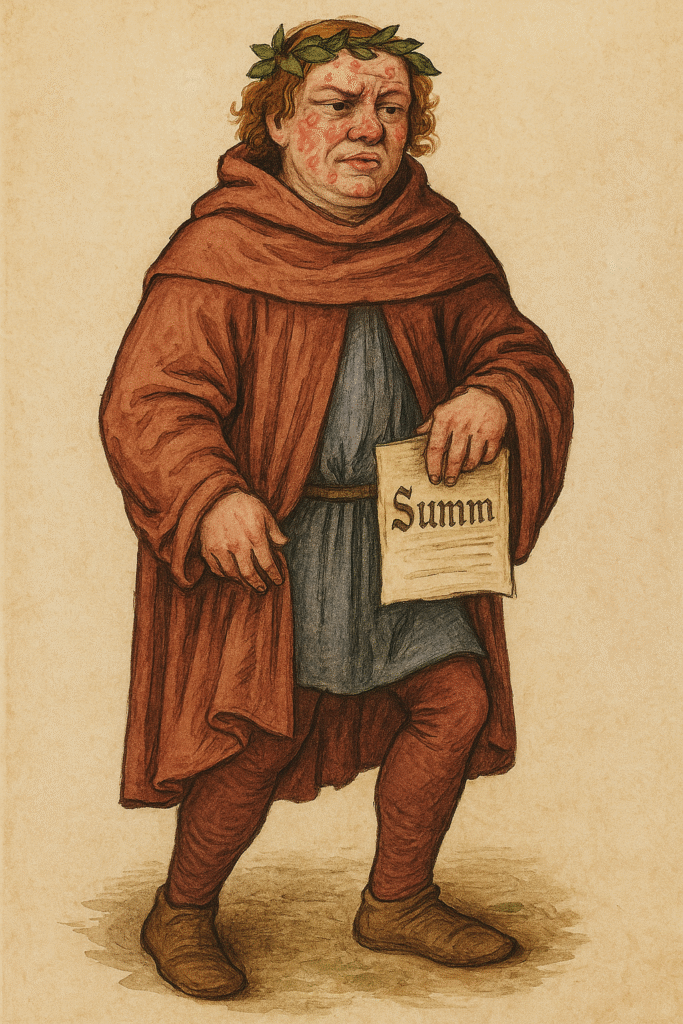
9. Appearance and Physical Description
The Summoner’s grotesque appearance mirrors moral corruption. Moreover, physical traits underscore cunning, vice, and satire. Each detail reinforces ethical reflection and social critique. Through description, Chaucer links visual imagery to moral evaluation. Additionally, exaggerated traits highlight consequences of ethical failure. Furthermore, appearance communicates vice, prompting reflection and prudence. Each exemplum demonstrates the connection between morality, personality, and conduct. By describing the Summoner vividly, Chaucer reinforces ethical lessons. Ultimately, appearance reflects character and moral instruction.
10. Moral Lessons from Vice
Vice informs ethical reflection through the Summoner’s behavior. Moreover, observation of misconduct guides readers’ prudence and moderation. Each narrative demonstrates consequences of greed, deceit, and immorality. Through vice, Chaucer reinforces awareness, ethical reasoning, and reflection. Additionally, satire emphasizes moderation, foresight, and moral guidance. Furthermore, ethical lapses offer instruction for social and spiritual conduct. Each exemplum connects observation with reflection and consequence. By presenting vice clearly, Chaucer models ethical vigilance. Ultimately, misconduct serves as a vehicle for moral instruction.
11. Corruption and Ethical Failure
The Summoner in Canterbury Tales exemplifies corruption through extortion, bribery, and cunning manipulation. Moreover, Chaucer emphasizes ethical failure within clerical authority. Each incident demonstrates consequences of vice, dishonesty, and neglect. Through his actions, readers observe the dangers of moral compromise and institutional exploitation. Additionally, reflection highlights prudence, moderation, and ethical vigilance. Furthermore, satire underscores human weakness and the consequences of misconduct. Each tale provides insight into both individual behavior and social repercussions. By exposing corruption, Chaucer illustrates practical moral instruction and societal critique. Ultimately, the Summoner in Canterbury Tales embodies personal vice intertwined with professional misconduct. These actions teach lessons on virtue and ethical responsibility.
12. Greed and Manipulation
The Summoner exploits his position for personal gain, revealing the destructive nature of greed. Moreover, Chaucer uses narrative episodes to display manipulation, deception, and ambition. Each action reflects ethical negligence and societal vulnerability. Through satire, readers observe consequences for selfishness and cunning. Additionally, moral reflection arises from contrasting virtue with vice. Furthermore, the Summoner in Canterbury Tales serves as a lens to critique clerical misconduct systematically. Each exemplum emphasizes prudence, moderation, and reflection in evaluating authority figures. By highlighting greed, Chaucer reinforces both narrative tension and moral instruction. Ultimately, manipulation underscores ethical reflection alongside social and spiritual guidance.
13. Legal Authority and Misuse
The Summoner’s role in enforcing ecclesiastical law illustrates ethical compromise and human frailty. Moreover, misuse of authority demonstrates consequences for moral and civic negligence. Each encounter emphasizes the risks of corruption, injustice, and exploitation. Through narrative, Chaucer encourages readers to reflect on moderation, prudence, and ethical awareness. Additionally, ethical guidance becomes apparent through the contrast of misconduct with proper conduct. Furthermore, the Summoner in Canterbury Tales exemplifies the intersection of power, responsibility, and vice. Each exemplum reinforces lessons about accountability, morality, and social critique. By portraying legal authority misused, Chaucer offers practical insight into ethical judgment and reflection. Ultimately, misuse of power serves as both social satire and moral instruction.
14. Interaction with Other Pilgrims
The Summoner interacts with various pilgrims, creating humor, tension, and narrative contrast. Moreover, these interactions reveal ethical failure and social cunning. Each tale highlights the interplay between personal ambition, vice, and moral responsibility. Through observation, readers gain insight into moderation, reflection, and prudence. Additionally, social dynamics emphasize the consequences of deceit and manipulation. Furthermore, the Summoner in Canterbury Tales demonstrates how relational context reinforces moral instruction. Each exemplum illustrates ethical awareness, social perception, and human weakness. By depicting interaction, Chaucer strengthens narrative cohesion while teaching ethical reflection. Ultimately, the character’s relationships provide both entertainment and moral guidance.
15. Satirical Purpose
Chaucer employs the Summoner to deliver social and clerical satire. Moreover, exaggerated traits underscore vice and ethical failure. Each story demonstrates consequences of ambition, deception, and moral laxity. Through humor and irony, readers observe human weakness and institutional flaws. Additionally, satire reinforces reflection, prudence, and moderation. Furthermore, the Summoner in Canterbury Tales embodies social critique and ethical instruction. Each exemplum connects vice to consequence, offering insight into moral and spiritual education. By blending satire with instruction, Chaucer conveys lessons on ethical awareness. Ultimately, the Summoner’s satire promotes reflection on human behavior and the dangers of misconduct.
16. Physical Description and Symbolism
The Summoner’s grotesque appearance symbolizes moral corruption and ethical decay. Moreover, exaggerated features highlight vice, cunning, and social critique. Each detail emphasizes reflection, prudence, and moderation in evaluating character. Through description, Chaucer links physicality with morality and narrative function. Additionally, visual imagery reinforces ethical instruction alongside humor. Furthermore, the Summoner in Canterbury Tales serves as an allegorical representation of clerical misbehavior. Each exemplum demonstrates how outward traits reflect inner ethical failure. By connecting appearance with vice, Chaucer strengthens narrative and moral instruction. Ultimately, physical depiction aids ethical reflection and social critique.
17. Cunning and Strategy
The Summoner displays cunning in exploiting opportunities and manipulating others. Moreover, strategic action demonstrates ethical compromise, ambition, and reflection. Each episode illustrates the consequences of deceit, vice, and social manipulation. Through narrative, readers gain insight into prudence, moderation, and ethical awareness. Additionally, satire emphasizes reflection and moral evaluation. Furthermore, the Summoner exemplifies cleverness aligned with ethical failure. Each exemplum reinforces awareness of human weakness, practical judgment, and moral responsibility. By portraying strategic behavior alongside vice, Chaucer integrates social critique and ethical instruction. Ultimately, cunning becomes both a source of humor and moral reflection.
18. Interaction with the Pardoner
The Summoner’s interaction with the Pardoner highlights complementary vices and moral hypocrisy. Moreover, collaboration demonstrates manipulation, mutual gain, and ethical failure. Each story emphasizes social observation, reflection, and prudence. Through dialogue, Chaucer underscores moral consequences of deceit and corruption. Additionally, ethical reflection arises from contrasting virtue with vice. Furthermore, the Summoner demonstrates human weakness across social relationships. Each exemplum emphasizes accountability, moderation, and moral judgment. By connecting these characters, Chaucer reinforces narrative coherence alongside ethical instruction. Ultimately, interaction illustrates collaboration as both humor and moral reflection.
19. Vice as Instruction
The Summoner exemplifies vice, providing readers with moral guidance through observation. Moreover, his actions highlight consequences of greed, deceit, and corruption. Each incident demonstrates reflection, prudence, and ethical evaluation. Through satire, Chaucer underscores the importance of moderation, accountability, and awareness. Additionally, ethical instruction arises naturally from observing misconduct. Furthermore, the Summoner serves as a vehicle for ethical reflection. Each exemplum teaches lessons about virtue, social responsibility, and ethical action. By portraying vice, Chaucer conveys moral and spiritual guidance effectively. Ultimately, human weakness provides instruction for ethical and social conduct.
20. Vice, Corruption, and Ethical Reflection
The Summoner provides insight into vice, corruption, and clerical abuse. Moreover, Chaucer’s depiction integrates humor, satire, and ethical reflection. Each narrative emphasizes prudence, moderation, and moral awareness. Through observation, readers recognize consequences of misconduct and social manipulation. Additionally, the character illustrates the dangers of ambition, deceit, and ethical compromise. Furthermore, the Summoner embodies corruption while simultaneously teaching reflection, virtue, and moderation. Each exemplum reinforces ethical guidance, social critique, and moral instruction. By presenting the Summoner vividly, Chaucer merges narrative, satire, and instruction. Ultimately, the Summoner highlights the interplay of vice and virtue, offering enduring lessons in ethical and social reflection.
21. Social Commentary
The Summoner exposes societal flaws through his conduct, revealing clerical corruption and human weakness. Moreover, Chaucer critiques the gap between moral expectation and practice. Each tale demonstrates consequences of dishonesty, greed, and manipulation. Through satire, readers observe ethical reflection and moderation in action. Additionally, the character provides insight into societal norms, highlighting virtue versus vice. Furthermore, narrative interactions reveal the interplay between authority and morality. Each exemplum reinforces prudence, ethical awareness, and accountability. By emphasizing societal critique, Chaucer ensures moral instruction accompanies humor. Ultimately, reflection on social behavior guides readers toward ethical understanding.
22. Humor and Irony
The Summoner employs humor, irony, and exaggeration to reveal vice vividly. Moreover, Chaucer balances comedy with moral instruction and social critique. Each episode demonstrates ethical reflection, prudence, and moderation. Through irony, readers observe the consequences of misconduct and manipulation. Additionally, humor enhances engagement while reinforcing lessons on virtue and social awareness. Furthermore, the Summoner illustrates human weakness through narrative exaggeration. Each exemplum blends entertainment with ethical guidance. By integrating humor, Chaucer emphasizes reflection alongside amusement. Ultimately, irony provides both laughter and instruction.
23. Greed and Its Consequences
The Summoner’s relentless pursuit of wealth exposes human weakness and moral corruption. Moreover, ethical reflection arises from observing consequences of vice. Each narrative demonstrates moderation, prudence, and ethical judgment. Through satire, Chaucer contrasts ambition with virtue, guiding readers toward reflection. Additionally, misconduct underscores accountability and the importance of ethical decision-making. Furthermore, narrative episodes highlight social and spiritual repercussions of greed. Each exemplum emphasizes vigilance, moral responsibility, and reflection. By depicting greed, Chaucer merges narrative entertainment with practical ethical instruction. Ultimately, lessons on vice encourage readers to consider virtue and moderation.
24. Interaction with Pilgrims
The Summoner’s interactions with fellow pilgrims reveal tension, humor, and moral contrast. Moreover, these engagements highlight ethical reflection and social dynamics. Each tale demonstrates prudence, moderation, and accountability. Through dialogue, Chaucer emphasizes consequences of deception, ambition, and moral failure. Additionally, observation of these interactions fosters ethical awareness in readers. Furthermore, relational dynamics illustrate human weakness and ethical responsibility. Each exemplum reinforces reflection, moral judgment, and social insight. By portraying the Summoner among peers, Chaucer emphasizes ethical instruction alongside narrative cohesion. Ultimately, social observation strengthens moral and ethical understanding.
25. Abuse of Power
The Summoner misuses his ecclesiastical authority to exploit others, illustrating moral failure. Moreover, narrative events reveal consequences of ethical negligence. Each episode emphasizes prudence, reflection, and moderation in judgment. Through satire, readers observe corruption, deception, and the ethical cost of ambition. Additionally, ethical guidance arises from examining misconduct. Furthermore, the Summoner exemplifies the dangers of abusing trust and power. Each exemplum reinforces social, moral, and spiritual instruction. By highlighting misuse of authority, Chaucer combines narrative, humor, and ethical reflection. Ultimately, lessons on power guide readers toward prudence, responsibility, and virtue.
26. Cunning Behavior
The Summoner demonstrates cunning, scheming, and manipulation in pursuit of personal gain. Moreover, ethical reflection emerges through consequences of deception. Each story illustrates prudence, moderation, and moral responsibility. Through narrative, Chaucer contrasts vice with virtue, teaching social and spiritual lessons. Additionally, observation fosters insight into human weakness and ethical decision-making. Furthermore, cunning behavior reinforces the need for reflection, prudence, and ethical awareness. Each exemplum underscores practical guidance for navigating ambition and desire. By presenting cleverness alongside misconduct, Chaucer integrates satire with moral instruction. Ultimately, readers learn lessons in vigilance, ethical judgment, and prudence.
27. Reputation and Consequence
The Summoner’s notoriety reflects both his vice and social perception. Moreover, reputation illustrates consequences of unethical behavior. Each tale emphasizes prudence, moderation, and reflection. Through narrative, Chaucer links public perception with moral responsibility. Additionally, social awareness underscores ethical conduct alongside personal ambition. Furthermore, consequences reinforce the interplay of virtue, vice, and accountability. Each exemplum guides reflection, ethical evaluation, and moral instruction. By examining reputation, Chaucer encourages readers to consider integrity, moderation, and prudence. Ultimately, social consequence reinforces ethical and spiritual awareness.
28. Ethical Lessons
The Summoner in Canterbury Tales embodies moral instruction through narrative and allegory. Moreover, observation of his vice guides readers toward reflection and prudence. Each story highlights moderation, accountability, and ethical awareness. Through satire, Chaucer emphasizes the cost of misconduct and ethical compromise. Additionally, narrative consequence reinforces social, moral, and spiritual lessons. Furthermore, ethical instruction arises naturally from observing human weakness. Each exemplum demonstrates the importance of reflection, moderation, and moral responsibility. By integrating vice with teaching, Chaucer ensures instruction accompanies narrative entertainment. Ultimately, ethical reflection promotes virtue, prudence, and moral awareness.
29. Satirical Function
Chaucer employs the Summoner for social and clerical satire, exposing vice vividly. Moreover, satire encourages ethical reflection and moderation. Each episode underscores the interplay of misconduct and consequence. Through narrative, readers gain insight into ethical responsibility, prudence, and virtue. Additionally, moral lessons emerge from observing exaggeration, irony, and human weakness. Furthermore, satire highlights the consequences of ambition, deceit, and corruption. Each exemplum reinforces reflection, social critique, and ethical instruction. By blending humor with morality, Chaucer enhances both engagement and reflection. Ultimately, satire provides ethical guidance alongside narrative entertainment.
30. Narrative Integration
The Summoner contributes to the narrative cohesion of Canterbury Tales through character and plot. Moreover, his presence balances humor, tension, and moral instruction. Each tale demonstrates ethical reflection, moderation, and prudence. Through narrative structure, Chaucer integrates social critique with spiritual guidance. Additionally, interactions reveal consequences of misconduct and ethical decision-making. Furthermore, observation of character drives reflection, prudence, and moderation in readers. Each exemplum strengthens both story and moral lesson. By merging narrative function with ethical instruction, Chaucer combines entertainment, reflection, and guidance. Ultimately, narrative integration reinforces the Summoner’s significance in thematic and ethical dimensions.
31. Reflection on the Summoner in Canterbury Tales
The Summoner in Canterbury Tales exemplifies vice, corruption, and moral failure. The character offers both narrative entertainment and ethical instruction. Moreover, Chaucer integrates satire, social critique, and reflection throughout the tales. Each episode emphasizes prudence, moderation, and accountability. Through observation of misconduct, readers gain insight into virtue, ethical responsibility, and spiritual guidance. Additionally, the Summoner highlights consequences of greed, deception, and abuse of authority. Furthermore, moral reflection arises naturally from narrative exposure to vice and ambition. Each exemplum reinforces practical instruction, moderation, and ethical judgment. By concluding with this character, Chaucer emphasizes the importance of vigilance, virtue, and social responsibility. Ultimately, the Summoner provides lasting lessons on morality, human weakness, and ethical conduct.
Henry David Thoreau: https://americanlit.englishlitnotes.com/henry-david-thoreau/
Mustafa Kamal by W.F.Castle: https://englishwithnaeemullahbutt.com/2025/06/02/mustafa-kamal/
Expression of Time, Money, and Distance in Grammar: https://grammarpuzzlesolved.englishlitnotes.com/expressions-of-time-money-distance/
English Poetry: https://englishlitnotes.com/category/english-poetry/
To study the character of The Reeve, follow the link: https://share.google/pOAUWdzXHW2dEEZr8
Discover more from Naeem Ullah Butt - Mr.Blogger
Subscribe to get the latest posts sent to your email.