
Introduction to Robert Henryson
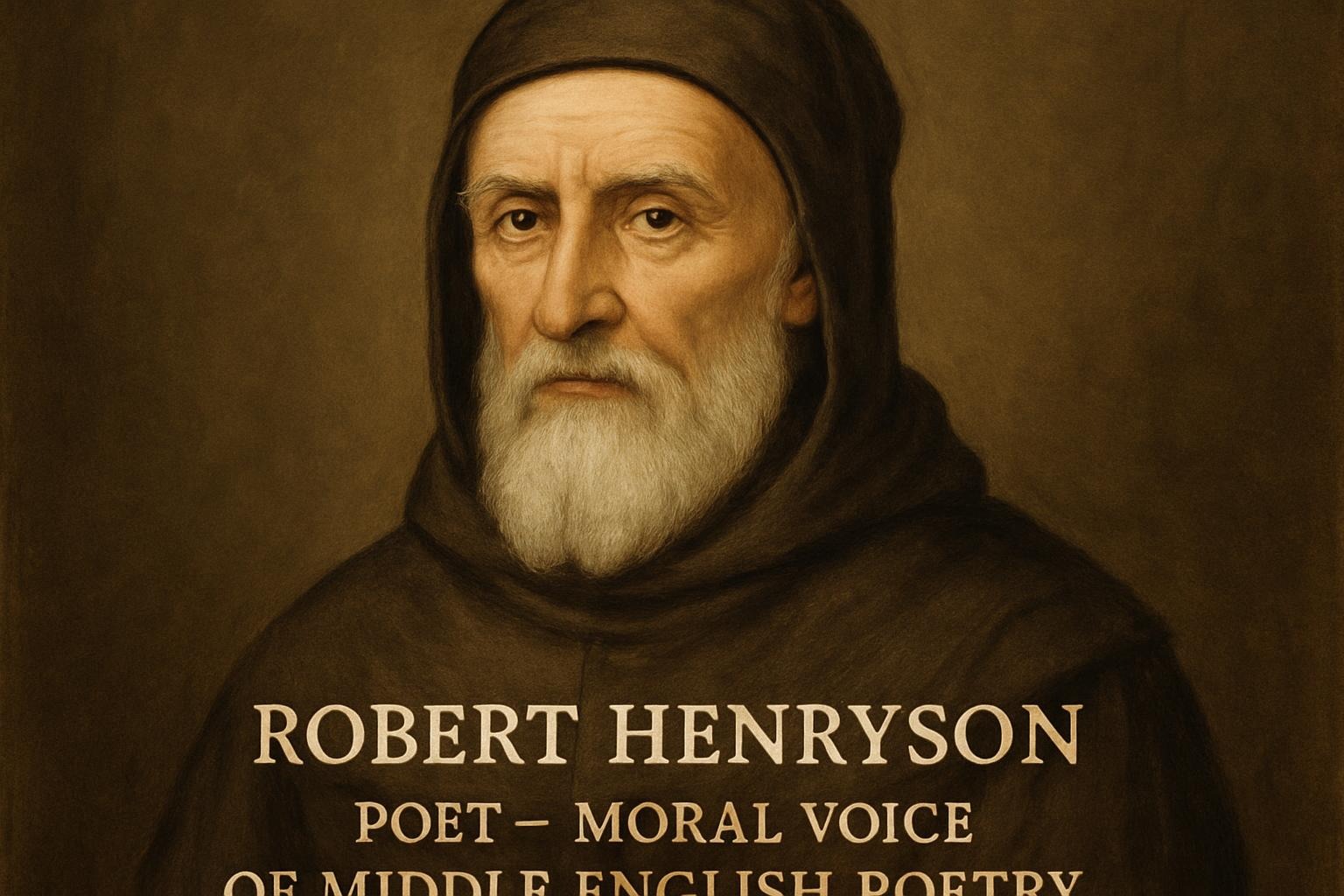
Robert Henryson as a poet holds a vital place in medieval literature. While often compared with Chaucer, he developed a unique voice. Moreover, his work skillfully blended classical sources with Christian morality. Consequently, his poetry communicates ethical reflection alongside artistic elegance. Furthermore, Scottish culture strongly shapes his diction, imagery, and narrative style. Likewise, his moral and social insights resonate beyond local borders. Therefore, Robert Henryson as a poet bridges regional tradition with wider English literary heritage. In addition, his influence extends to narrative technique, fable writing, and allegorical storytelling. As a result, audiences both medieval and modern engage with his work deeply. Through careful blending of ethics, emotion, and craft, his poetry remains timeless. Thus, Robert Henryson inspires readers across generations. He instructs and delights them, preserving relevance and enduring literary authority.
Historical and Cultural Context
To understand Robert Henryson as a poet, we must explore 15th-century Scotland in its full complexity. While England was shaken by dynastic wars and internal unrest, Scotland remained a fertile ground for cultural and literary growth. The records of Henryson’s life are limited. However, historical evidence suggests that courtly circles nurtured poets like him. Religious institutions also played an active role. Moreover, education played a crucial role in shaping both his intellectual scope and moral outlook. The influence of the Church, the legal profession, and classical training blended uniquely in his worldview.
Therefore, Robert Henryson as a poet emerged from a context that balanced tradition and innovation. The Scottish Renaissance had not yet begun, but literary voices like Henryson paved its foundation. His writing reveals a world torn between old values and new challenges. It echoes political tensions and ethical debates of his time with grace and precision.
Education and Scholarly Background
Robert Henryson reflects deep learning as a poet. His remarkable scholarly depth was shaped by rigorous academic training. He most likely studied law, logic, and classical texts at a university. There, he acquired the tools of rhetoric and ethical reasoning essential for his literary craft. While some traditions associate him with the University of Glasgow, others point toward the University of Paris. The University of Paris is known for its prominence in legal and theological studies. Moreover, his position as a schoolmaster at Dunfermline Abbey indicates his status as both a teacher and intellectual. This role not only affirmed his authority. It also placed him in a setting where moral instruction and classical education were deeply valued.
Therefore, Robert Henryson as a poet fuses scholastic rigor with creative imagination. His verse reveals poetic grace. It also demonstrates structured reasoning. This allows each narrative to function as both story and philosophical reflection.
Place in the Middle English Tradition
Robert Henryson was Scottish by origin and allegiance. As a poet, he belongs fully to the wider Middle English tradition. This tradition extended beyond regional borders. While his writing employed Middle Scots—a dialect distinct from Chaucer’s southern English—it remained intelligible to contemporary English audiences. It shared structural and lexical features with Middle English at large. Moreover, his deep admiration for Chaucer influenced his thematic concerns, narrative form, and moral tone. Henryson did more than imitate his English predecessor. He crafted a distinctive poetic voice that combined northern realism. His work also incorporated spiritual reflection and sharp irony.
Therefore, his work stands at a meaningful cultural crossroads, where English literary heritage meets emerging Scottish identity. Through his unique synthesis of traditions, Robert Henryson as a poet contributes not only to Scotland’s national canon but also to the collective richness of Middle English literature across the British Isles
Ethical Themes
Robert Henryson consistently returns to profound questions of morality, justice, and the fragile condition of humanity. He draws heavily from classical sources. He also incorporates biblical narratives. However, his primary aim remains rooted in ethical exploration rather than mere entertainment. He does not simply retell old stories. Instead, he reimagines them. This reveals inner conflict, spiritual failure, and the trials of moral decision-making. Furthermore, he emphasizes the tension between divine justice and human frailty. He offers characters who must confront not only external judgment but also internal doubt.
Therefore, his poetry rises above conventional storytelling and enters the realm of philosophical reflection. His ethical concerns resonate across time because they deal with choices, temptations, and consequences familiar to every age. Robert Henryson avoids letting his medieval context limit the relevance of his verse. His poetry remains strikingly modern in its moral urgency.
The Testament of Cresseid
Among the most famous and enduring works by Robert Henryson as a poet is The Testament of Cresseid. It is a sequel that boldly continues Chaucer’s Troilus and Criseyde. While Chaucer leaves Cresseid’s fate unresolved, Henryson takes creative responsibility by completing her tragic arc. Furthermore, he infuses the tale with emotional depth, moral critique, and a somber tone rarely seen in earlier treatments. In addition, he presents Cresseid not as a mere literary figure but as a complex character facing judgment and despair. Therefore, the poem transforms from a simple continuation into a profound meditation on loss, pride, and divine justice. It does not only extend the story but also challenges the reader to rethink its ethical dimensions. The Testament of Cresseid allows Robert Henryson to honor Chaucer. It also asserts Henryson’s own distinctive voice and moral authority.
Moral Lessons in Cresseid’s Fall
Robert Henryson uses Cresseid’s fate as a powerful lens. He explores divine justice and the fragile nature of human dignity. Though she suffers deeply, the narrative avoids excessive cruelty and instead offers a delicate balance between judgment and compassion. Moreover, Henryson highlights the fleeting nature of beauty and the inevitable decay of reputation, especially when pride blinds moral vision. In addition, he uses her downfall to illustrate the spiritual cost of betrayal and the redemptive possibility of self-awareness. Therefore, the poem becomes much more than a continuation of Chaucer’s work. It evolves into a profound reflection on mortality, guilt, and the hope for forgiveness. Ultimately, Robert Henryson, as a poet, crafts a narrative that remains emotionally moving and ethically relevant. It allows readers in every era to engage with timeless questions about justice, suffering, and the meaning of repentance.
Fable Writing and Didactic Style
Robert Henryson, as a poet, demonstrates a major strength in his masterful use of fables. This is particularly evident in his celebrated collection Morall Fabillis of Esope the Phrygian. While the structure draws from ancient sources, he retells these timeless stories with a distinctly medieval voice and cultural sensibility. The animal characters may at first appear lighthearted or amusing. They embody deeply serious human traits such as greed, deception, wisdom, and humility. Furthermore, each tale concludes with a moralitas—a concise and pointed ethical lesson that elevates the story beyond mere entertainment. In addition, these fables reflect the political, religious, and social issues of his time. They are veiled in allegory but clear in critique.
Therefore, Robert Henryson as a poet transforms simple narratives into tools for reflection and reform. His fables delight the reader while provoking thought, serving both to amuse and to instruct with remarkable balance.
Narrative Structure and Tone
Robert Henryson employs rich narrative structure and subtle tonal shifts throughout his work. While many fables begin playfully, they often conclude with serious reflection. Moreover, he balances irony, pathos, and moral clarity carefully. Consequently, readers remain engaged while considering ethical and spiritual truths. Furthermore, his technique blends entertainment with instruction seamlessly. Likewise, narrative pacing guides the audience through complex ideas without confusion. In addition, shifts in tone emphasize both humor and solemnity effectively. Therefore, his poetry speaks to intellect and emotion simultaneously. Moreover, he layers meaning so that each story resonates on multiple levels. As a result, audiences experience both delight and contemplation. Through careful attention to structure, rhythm, and imagery, Henryson crafts narratives that educate and move. Clearly, his artistry ensures lasting relevance and profound literary impact.
Use of Allegory
Robert Henryson makes strong use of allegory throughout his poetry. While animals or mythical figures appear, they often symbolize real human traits and behaviors. Moreover, virtues and vices frequently take central roles, guiding moral reflection. Consequently, readers encounter multiple layers of meaning in each tale. Furthermore, allegorical elements allow complex ethical and spiritual lessons to emerge naturally. Likewise, familiar stories gain depth through symbolic representation. In addition, characters and actions function as mirrors of human experience and moral choice. Therefore, Henryson transforms simple narratives into rich reflections on life, behavior, and divine justice. Moreover, allegory sharpens both instruction and artistry, ensuring stories entertain while teaching. Through this method, he engages intellect and imagination simultaneously. As a result, his works remain instructive, thoughtful, and compelling across centuries.
Language and Diction
Henryson wrote in Middle Scots, a language closely related to Chaucer’s Middle English. Indeed, his diction blends familiarity with refinement. Moreover, he employs rhyme, alliteration, and vivid imagery consistently. Consequently, his verse feels both accessible and polished. Furthermore, Henryson balances classical elegance with local realism thoughtfully. His narratives engage readers through clear rhythm and rhetorical skill. Likewise, he conveys moral and social themes subtly, yet effectively. Through careful word choice, he shapes character and scene with precision. Additionally, his poetic technique reflects both learned traditions and vernacular charm. As a result, Henryson’s work resonates across audiences and time. Moreover, the musicality of his lines enhances meaning and emotional impact. His poetry demonstrates that technical mastery and narrative clarity can coexist. Therefore, readers experience both aesthetic pleasure and ethical reflection.
Influence of Chaucer
Clearly, Chaucer’s influence profoundly shaped Robert Henryson as a poet, providing both inspiration and a literary foundation upon which to build. While he deeply admired Troilus and Criseyde, he chose not to imitate it blindly. Instead, he expanded its imaginative world by adding his own moral insight and emotional nuance. Moreover, Henryson introduced a sharper ethical edge and a somber tone that distinguished his work from Chaucer’s more romantic approach. In addition, he reimagined characters like Cresseid with psychological depth and spiritual gravity, making their struggles more relatable and tragic. Therefore, the literary relationship between the two poets evolves from simple admiration into a dialogue across time. Robert Henryson as a poet honors Chaucer’s achievement while simultaneously asserting his own voice and vision. His poetry continues Chaucer’s legacy, not by repetition, but by innovation, reflection, and a distinctly Scottish moral sensibility.
Realism and Psychological Insight
Henryson stands out for realism and emotional sensitivity. Although rooted in medieval ethics, his characters display remarkable depth. Moreover, they wrestle with pride, doubt, sorrow, and fear naturally. Likewise, he portrays their thoughts with clarity and nuance. Consequently, his poems move beyond simple moral lessons. They reveal inner life with sincerity and insight. Furthermore, Henryson balances ethical teaching with psychological realism skillfully. His narratives allow readers to empathize with human struggle deeply. Additionally, he captures emotion through precise diction and vivid imagery. As a result, the poetry resonates across time and culture. Henryson’s work combines ethical reflection with authentic human experience. His characters live fully on the page. Through his careful attention, readers encounter both moral guidance and profound emotional truth.
Critique of Society and Power
Henryson often satirizes social corruption with sharp insight. In his fables, animals symbolize rulers, clerics, and commoners alike. Moreover, greed and hypocrisy receive frequent critique. Likewise, his criticism feels bold yet clever. Consequently, he exposes societal faults while maintaining poetic charm. Through imaginative storytelling, he encourages reflection and reform. Furthermore, his work blends moral instruction with wit seamlessly. Readers encounter satire that entertains while provoking thought. Additionally, Henryson’s keen observation highlights human weakness universally. As a result, his fables function as both critique and art. He challenges authority gently but firmly. Moreover, his narrative skill ensures lessons resonate clearly. Through this approach, Henryson combines humor, morality, and social awareness. His poetry critiques society while remaining engaging. Ultimately, his work inspires ethical reflection without losing literary elegance.
Christian Morality and Religious Vision
Spiritual values shape Henryson’s poetry profoundly. Without harsh preaching, he affirms divine order and justice. Moreover, he explores themes of mercy, repentance, and human fallibility. Consequently, even his fictional tales carry rich theological depth. His voice leads readers gently toward reflection. Likewise, morality and poetry intertwine seamlessly. Furthermore, his works invite contemplation on ethical and spiritual matters. Through subtle guidance, he encourages understanding of virtue and vice. Additionally, Henryson balances instruction with literary artistry. His narratives convey lessons without moralizing overtly. As a result, readers absorb insight naturally and thoughtfully. Moreover, his poetic style reinforces spiritual themes elegantly. Therefore, his poetry achieves both intellectual and devotional impact. Henryson’s works remain relevant, blending ethics, faith, and imaginative storytelling effectively. In every line, spiritual reflection meets literary excellence.
Audience and Accessibility
Henryson reached both educated elites and common audiences with ease. Though grounded in classical learning, his language stayed clear and accessible. Moreover, his moralitas endings clarified the central message. Consequently, he functioned as teacher, entertainer, and moral reformer simultaneously. His poems traveled through courts, towns, and villages alike. Likewise, his storytelling engaged readers of diverse backgrounds. Furthermore, his work balanced entertainment with ethical instruction effectively. Therefore, audiences absorbed lessons naturally while enjoying artistry. His fables and narratives combined wit, wisdom, and moral reflection. Additionally, his style blended clarity with literary sophistication. As a result, Henryson’s poetry influenced both elite and popular culture. His narratives remain insightful, speaking across centuries. Through rhyme, rhythm, and memorable imagery, he captured imagination while teaching virtue. Ultimately, his work bridges education, morality, and art seamlessly.
Literary Legacy in Scotland
Henryson influenced later Scottish writers such as William Dunbar and Gavin Douglas. While each poet developed a distinct style, Henryson laid the foundation. Moreover, his skillful blending of ethics, realism, and classical form shaped the Scottish Renaissance. Consequently, his poetry occupies a central place in Scottish literary history. Likewise, his legacy endures through generations of readers and writers. Furthermore, his moral insight and narrative technique inspired subsequent literary innovation. His works became models for ethical storytelling and artistic craft. Therefore, Henryson’s contributions resonate beyond his own time, informing both style and substance in Scottish letters. Through fables, moralitas, and lyrical narrative, he combined entertainment with instruction. Additionally, his influence enriched the cultural and literary identity of Scotland. Ultimately, Henryson remains a pivotal figure in Scottish literary tradition.
Manuscript Survival and Print History
Although few manuscripts survive, Henryson reached print early. Editors included his works in 16th-century Scottish poetry anthologies. Moreover, modern scholars recovered and preserved his fables and narratives. Consequently, his voice continues through careful conservation. Today’s editions guarantee enduring readership worldwide. Furthermore, critical studies highlight his moral insight, narrative skill, and stylistic innovation. Therefore, both students and general readers can access his poetry. His influence extends beyond literary history into cultural and ethical reflection. Likewise, his works inspire contemporary translations and adaptations. Through this preservation, Henryson’s artistry remains vibrant, bridging medieval tradition with modern appreciation. Additionally, his thematic richness invites ongoing analysis of human behavior, morality, and society. Ultimately, careful scholarship ensures that Henryson’s poetic voice continues to educate, entertain, and inspire readers across generations.
Modern Critical Reputation
Modern scholars celebrate Henryson for rare insight and skill. While Chaucer dominates the canon, Henryson increasingly gains recognition. Moreover, critics emphasize his psychological realism and narrative elegance. Consequently, academic interest steadily grows. His works feature in university courses, anthologies, and critical studies worldwide. Furthermore, literary conferences explore his ethical depth and stylistic mastery. Therefore, his poetry attracts both historical and contemporary analysis. Scholars examine character, moralitas, and allegorical richness. Likewise, his influence on later Scottish writers receives attention. Through these studies, Henryson’s artistry achieves broader appreciation beyond medieval literature. Additionally, translations and adaptations introduce his work to new audiences. His narratives continue to instruct, entertain, and provoke thought. Ultimately, Henryson’s poetic voice remains vital, bridging medieval tradition with modern literary scholarship and enduring readership across cultures.
Narrative Innovation and Technique
Henryson demonstrates striking innovation in narrative technique. While following traditional forms, he experiments with perspective, voice, and pacing. Moreover, he balances humor, tragedy, and moral reflection effectively. Consequently, readers remain engaged while exploring ethical insights. Likewise, suspense and emotional resonance grow through careful structuring. His stories combine creativity with precision seamlessly. Furthermore, these innovations influence later poets and storytellers. Therefore, his narrative artistry becomes central to understanding his work. Moreover, technique supports both clarity and depth. Through skillful design, each tale achieves impact and memorability. Additionally, narrative variation maintains interest across audiences. Likewise, dynamic storytelling ensures lessons resonate naturally. His work demonstrates that literary craft can elevate moral teaching. In every case, Henryson blends instruction with artistry. Consequently, readers experience rich, layered storytelling across time.
Integration of Classical Sources
Henryson draws from classical authors extensively. While adapting Aesop, Ovid, and others, he reinterprets themes for Scottish audiences. Moreover, classical influence combines naturally with moral reflection. Consequently, ancient motifs transform into instructive tales. Likewise, blending classical and local elements enhances cultural relevance. Through this synthesis, Henryson bridges tradition with creative originality. Furthermore, ethical lessons gain depth and authority. Therefore, classical sources enrich narrative and meaning. Additionally, adaptation highlights literary skill. Likewise, integration provides timeless resonance for readers. His poetry connects past wisdom with contemporary concerns. Consequently, audiences access both entertainment and instruction simultaneously.
Poetic Form and Meter
Henryson’s use of rhyme, alliteration, and rhythm strengthens his verse. While following Middle Scots conventions, he allows expressive flexibility. Moreover, meter emphasizes emotional tone and narrative flow. Consequently, musicality and clarity coexist naturally. Likewise, rhythmic variation supports character development and theme. Through careful form, Henryson achieves accessibility and artistry. Furthermore, verse structure guides reader attention effectively. Therefore, poetry communicates both beauty and moral insight. Additionally, consistent techniques ensure cohesion throughout. Likewise, form reflects narrative intent skillfully. His craft combines tradition with creative expression. Consequently, poetic mastery enhances ethical and aesthetic impact simultaneously.
Allegorical Complexity
Henryson layers meaning through allegory consistently. While animal fables entertain, they convey moral, spiritual, and social lessons. Moreover, recurring motifs reinforce ethical reflection. Consequently, readers engage with multiple interpretive levels. Likewise, allegorical depth encourages repeated reading and contemplation. Through complexity, simple stories transform into lasting instruction. Furthermore, symbolism bridges entertainment and morality effectively. Therefore, layered narratives deepen intellectual and emotional engagement. Additionally, characters and actions carry moral weight clearly. Likewise, allegory supports reflection across audiences. Through this strategy, Henryson teaches subtly yet powerfully. Consequently, readers encounter wisdom through narrative artistry.
Human Experience and Emotion
Henryson portrays human emotion with remarkable precision. While medieval literature often idealizes behavior, he shows doubt, sorrow, and joy authentically. Moreover, emotional realism deepens empathy and engagement. Consequently, characters resonate across time and culture. Likewise, readers connect morally and psychologically with stories. Through this approach, ethical lessons gain clarity and urgency. Furthermore, emotion reinforces narrative impact consistently. Therefore, poetry balances moral instruction with human relatability. Additionally, vivid depiction enhances storytelling power. Likewise, nuanced emotion reflects thoughtful observation. Through empathy, Henryson encourages reflection and self-awareness. Consequently, his work remains both accessible and profound across generations.
Ethical Engagement for Readers
Henryson invites active moral contemplation in his poetry. While guiding readers, he encourages reflection rather than dictating judgment. Moreover, narratives emphasize consequences of actions clearly. Consequently, audiences consider virtue and vice thoughtfully. Likewise, ethical dilemmas enrich intellectual and spiritual experience. Through participation, readers develop insight into human behavior. Furthermore, moral reasoning becomes interactive and reflective. Therefore, poetry functions as both entertainment and instruction. Additionally, ethical engagement fosters long-term resonance. Likewise, active consideration strengthens connection to narrative. Through reflection, audiences learn subtleties of morality. Consequently, Henryson ensures poetry teaches thoughtfully and memorably.
Enduring Influence and Legacy
Henryson’s impact remains substantial across centuries. While rooted in medieval Scotland, his work informs modern literary study widely. Moreover, themes, narrative techniques, and ethical insight inspire writers today. Consequently, scholarship and pedagogy benefit from his poetry. Likewise, readers worldwide encounter psychological, moral, and artistic depth. Through careful preservation, Henryson’s contributions continue to educate and delight. Furthermore, his legacy informs Scottish literary identity clearly. Therefore, both historical and contemporary audiences value his work. Additionally, his influence shapes narrative, allegory, and ethical reflection. Likewise, poetry continues to guide, instruct, and move readers. Through enduring relevance, Henryson exemplifies timeless artistry. Consequently, his place in literary history remains secure, celebrated for both moral and aesthetic achievement.
Conclusion: The Enduring Poet
Robert Henryson as a poet combines moral wisdom, human emotion, and poetic clarity. Though shaped by medieval tradition, his vision remains timely. Moreover, his Scottish identity enriches Middle English heritage. Therefore, he stands as a central literary figure. His work continues to guide, move, and challenge readers worldwide. Furthermore, his blending of ethics and artistry demonstrates timeless literary skill. Likewise, his narratives reveal psychological depth and moral reflection. Consequently, his fables and longer narratives provide instruction, delight, and contemplation. Additionally, his moral and human insights resonate across centuries. Thus, his poetry bridges tradition and enduring relevance. Through careful study, readers encounter ethical, emotional, and artistic richness that defines his lasting legacy.
Julian of Norwich’s Understanding of Suffering in Divine Love:
https://englishlitnotes.com/2025/07/13/julians-understanding-of-suffering/
Notes on American Literature: https://americanlit.englishlitnotes.com/
Discover more from Naeem Ullah Butt - Mr.Blogger
Subscribe to get the latest posts sent to your email.