Introduction
The Romantic Age in English Literature marked a major cultural transformation. Primarily, it rejected the strict rationalism of the preceding Enlightenment era. Therefore, feeling, intuition, and imagination became central to human understanding. Consequently, writers turned inward to explore personal reflection and emotional depth. Furthermore, the era emphasized the imagination as a sacred, moral faculty for insight. Moreover, poets and novelists challenged social norms, hierarchy, and political authority boldly. In addition, the solitary individual became central to literature and creative vision. Conversely, reason was not discarded but re-prioritized behind human experience and feeling. Subsequently, nature served as a crucial source of inspiration for reflection. Furthermore, memory provided access to past emotions and personal insight continuously. Consequently, myth and legend were integrated to explore philosophical and spiritual truths. Moreover, narrative forms became flexible, experimental, and highly innovative across multiple genres. In addition, emotional authenticity replaced artificial convention as the literary ideal consistently. Therefore, Romantic writers celebrated the genius and inner vision of humanity fully. Subsequently, the movement reshaped cultural perception across Europe and beyond permanently. Consequently, the Romantic Age in English Literature remains vital for understanding artistic evolution.
1. The Period’s Historical Context
The Romantic Age in English Literature unfolded during immense political upheaval. Specifically, the French Revolution inspired writers to embrace liberty and equality. Consequently, literature addressed radical reform, dissent, and challenges to authority. Furthermore, the Napoleonic Wars intensified national identity, heroic struggle, and crisis. Moreover, the Industrial Revolution caused urbanization, dislocation, and mechanized labor rapidly. Therefore, poets highlighted human suffering and contrasted it with natural beauty. Conversely, rural landscapes offered moral, spiritual, and restorative models repeatedly. In addition, writers reflected deeply on human potential and social responsibility. Consequently, Romantic authors explored the individual’s ethical and moral duties carefully. Furthermore, historical awareness merged with aesthetic imagination in literary works effectively. Moreover, these conditions encouraged experimentation with poetic forms and narrative structures. Therefore, expressive strategies expanded to convey emotion and philosophy simultaneously. Subsequently, the tensions of politics and society enriched thematic concerns profoundly. In addition, Romantic literature portrayed social change alongside personal and spiritual insight consistently. Conversely, some writers critiqued industrialization while seeking harmony with nature intentionally. Furthermore, this era emphasized the role of imagination in understanding human experience fully. Thus, the Romantic Age in English Literature cannot be separated from historical upheavals permanently.
2. Shift from Neoclassicism
The Romantic Age in English Literature decisively rejected the strict artistic rules, rational order, and formalism central to Neoclassicism constantly. Specifically, Neoclassical writers prized decorum, universal truths, symmetrical structures, and rigid poetic conventions consistently. Therefore, Romantic poets viewed these constraints as restrictive, creatively stifling, and inadequate for expressing human emotion fully. Consequently, they sought originality, spontaneity, and the imaginative exploration of personal and collective consciousness deliberately. Furthermore, literary emphasis shifted from objective societal norms to subjective inner experience, prioritizing individual perception over social expectation completely. Moreover, writers experimented with language, narrative voice, and form to reflect dynamic emotional states and imaginative insight intensely. In addition, poetry became a vehicle for philosophical reflection, visionary experience, and profound ethical contemplation regularly. Conversely, the rejection of classical models did not eliminate craft or discipline but encouraged innovative, expressive flexibility entirely. Subsequently, Romanticism encouraged the exploration of nature, memory, and historical consciousness as central poetic subjects continuously. Furthermore, personal emotion, moral intuition, and aesthetic originality became the guiding principles of the era’s literature explicitly. Therefore, the Romantic Age in English Literature emerged as a creative revolution, rejecting rigid tradition while establishing a new vision for artistic freedom permanently. Moreover, this shift profoundly influenced all subsequent literary movements globally consistently.
3. Emphasis on Emotion and Subjectivity
The Romantic Age in English Literature primarily celebrated emotion, individual perception, and subjective experience as sources of truth consistently. Specifically, feeling was considered a reliable indicator of moral, spiritual, and aesthetic understanding fully. Therefore, writers explored intense emotional states, including melancholy, ecstasy, longing, and existential grief profoundly. Consequently, poetry, prose, and drama often became intimate records of personal consciousness and psychological reflection consistently. Furthermore, the expression of authentic, unfiltered passion was treated as a hallmark of true artistic achievement continually. Moreover, the subjective experience of love, death, nature, and divine mystery became central literary preoccupations entirely. In addition, rational, detached judgment was often regarded as inadequate, spiritually shallow, or morally insufficient repeatedly. Conversely, individual emotional experience offered insights into universal human truths accessible only through introspection actively. Subsequently, the Romantic literary voice emphasized vulnerability, intuition, and personal reflection, elevating inner life above external conformity deliberately. Furthermore, the exploration of imagination, visionary perception, and dreamlike cognition complemented this focus on emotion profoundly. Therefore, the Romantic Age fundamentally shifted the literary emphasis toward the depth, complexity, and authenticity of individual experience permanently. Moreover, this orientation empowered writers to investigate previously neglected aspects of human psychology, creativity, and ethical responsibility continuously.
4. The Cultivation of Imagination
The Romantic Age in English Literature crucially elevated the power of the imagination as a central, transformative creative faculty continuously. Primarily, imagination was regarded as an active, dynamic force capable of perceiving ultimate spiritual and moral truths directly. Therefore, poets treated it not simply as a decorative device, but as a fundamental instrument for profound insight consistently. Consequently, the imagination had the power to reshape reality rather than merely imitate the external world fully. Furthermore, this faculty enabled writers to bridge the vast divide between the finite material world and infinite spiritual existence continually. Moreover, it encouraged the poet to embrace visionary perception, allowing surreal or symbolic imagery to convey higher truths effectively. Conversely, passive observation and mere fancy were often considered trivial, superficial, or inadequate for true artistic creation repeatedly. In addition, cultivation of the imagination became essential to the poet’s distinctive artistic and moral mission profoundly. Therefore, the imagination provided a direct path to sublime experiences and transcendent understanding permanently. Furthermore, it justified freedom in poetic expression and bold experimentation across genres successfully. Consequently, the Romantic Age established imagination as the era’s highest, sacred power unequivocally. Moreover, the imagination allowed writers to explore metaphysical, psychological, and emotional realms endlessly.
5. Nature as a Spiritual Force
The Romantic Age in English Literature viewed Nature not merely as scenery but as a living, potent spiritual force consistently. Specifically, Nature functioned as a primary source of profound moral insight and emotional inspiration continually. Therefore, poets actively sought direct communion with landscapes, treating forests and mountains as sacred teachers. Consequently, solitary experiences in wild, untamed settings became vital pilgrimages toward self-knowledge and personal enlightenment intensely. Furthermore, Nature offered a necessary refuge from urban corruption, materialism, and social chaos repeatedly. Moreover, writers perceived evidence of a divine presence, an all-encompassing Oversoul, within natural phenomena constantly. Conversely, the industrial city was frequently portrayed as spiritually barren and morally decayed directly. In addition, encounters with elemental forces often triggered visionary or transcendental states of heightened awareness powerfully. Consequently, landscapes assumed symbolic significance, representing emotional states, philosophical truths, and ethical lessons continually. Moreover, Nature inspired narrative structure, imagery, and metaphor, deeply shaping Romantic literary form profoundly. Furthermore, poets used natural phenomena to examine mortality, beauty, and humanity’s cosmic position actively. Therefore, the Romantic Age established Nature as a sacred, living temple and a central moral guide permanently. Moreover, the natural world functioned as a continuous teacher of human virtue and aesthetic sensibility systematically.
6. The Focus on the Individual
The Romantic Age in English Literature intensely focused on the innate worth of the solitary individual consistently. Specifically, it celebrated the genius and exceptional potential of each person above collective conformity deliberately. Therefore, autonomous heroes, solitary thinkers, or isolated wanderers became central figures in literary exploration powerfully. Consequently, inner life, personal reflection, and unique perception emerged as the dominant thematic focus persistently. Furthermore, literature examined the ethical, moral, and emotional development of individual characters with unprecedented depth continuously. Moreover, the solitary protagonist symbolized both vulnerability and potential, highlighting the tension between self and society regularly. In addition, the pursuit of self-knowledge and moral integrity became defining literary concerns entirely. Conversely, societal norms, rigid hierarchies, and mass conformity were often depicted as stifling or oppressive repeatedly. Subsequently, the literary emphasis on individuality shaped poetic voice, narrative style, and imaginative experimentation decisively. Furthermore, the solitary genius became emblematic of Romantic ideals of freedom, creativity, and personal vision wholly. Therefore, the Romantic Age cultivated the exploration of psychological depth, emotional complexity, and ethical reflection permanently. Moreover, this celebration of the individual continues to influence modern conceptions of selfhood and artistic autonomy consistently.
7. The Importance of the Common Man
The Romantic Age in English Literature introduced a powerful, enduring celebration of the dignity, moral insight, and innate value of the common man continuously. Specifically, writers emphasized rural life, simple labor, and uneducated folk as legitimate sources of truth and wisdom consistently. Therefore, poems and narratives frequently depicted the humble, working-class individual with respect, empathy, and profound attention to detail deliberately. Consequently, this literary focus provided a corrective to the elaborate artificiality, social exclusivity, and formal ornamentation of prior Neoclassical poetry regularly. Furthermore, the plain language, direct expression, and accessible narrative style reinforced the democratic vision of literature actively. Moreover, ethical and spiritual lessons were derived from observing the natural virtues, daily struggles, and innate morality of ordinary people persistently. In addition, this approach validated previously overlooked perspectives, rendering their experiences artistically significant permanently. Conversely, aristocratic refinement, excessive polish, or artificial diction were often criticized as superficial, disconnected, or morally vacuous continuously. Subsequently, Romantic writers used the lives of common people to explore universal truths about love, justice, nature, and human character consistently. Furthermore, the elevation of the common man expanded literary subjects and democratized art profoundly. Therefore, the Romantic Age gave a lasting, powerful voice to ordinary lives and authentic experiences continually. Moreover, this perspective influenced subsequent social and literary movements across Europe and beyond permanently.
8. The Role of the Poet as Prophet
The Romantic Age in English Literature fundamentally redefined the social and spiritual role of the poet profoundly. Specifically, the poet emerged as a visionary figure, almost a moral prophet consistently. Therefore, he was regarded as the most sensitive, imaginative, and perceptive individual in society entirely. Consequently, the poet possessed the sacred duty of revealing truth hidden beneath surface appearances actively. Furthermore, his work was expected to guide humanity toward higher ethical and spiritual ideals consistently. Moreover, verse became a potent instrument capable of influencing both political and psychological life powerfully. Conversely, ordinary individuals, lacking imaginative depth, were considered unable to perceive these ultimate realities independently. Additionally, this conception justified the intense personal and emotional investment found in much Romantic poetry consistently. The poet’s imagination was seen as a conduit for universal insight, bridging human experience with transcendent understanding profoundly. In addition, his writings offered ethical instruction and societal critique through symbolic, visionary expression continually. Ultimately, the Romantic Age elevated the poet to a position of extraordinary cultural and moral authority permanently, defining literature as a central agent of enlightenment.
9. Key Themes of Revolution and Reform
The Romantic Age in English literature was deeply energized by revolutionary ideals consistently. Specifically, writers engaged passionately with global social reforms, advocating liberty and equality forcefully. Therefore, their works openly criticized tyranny, rigid class structures, and entrenched privilege continually. Consequently, literature became a platform for exploring universal human rights and justice intensely. Furthermore, themes of personal and spiritual freedom mirrored a broader desire for political autonomy directly. Moreover, early enthusiasm for the French Revolution inspired bold, idealistic portrayals of social transformation vividly. Later disillusionment with violence and chaos led to a shift toward introspective, psychological reform persistently. Writers reflected on moral responsibility, individual conscience, and ethical leadership carefully. Conversely, revolutionary energy never fully disappeared, serving as a philosophical foundation throughout the period continually. Additionally, Romantic texts frequently blended imaginative storytelling with sharp social critique, challenging conservative norms profoundly. Their poetry and prose emphasized the tension between societal order and individual liberty consistently. Consequently, the age produced works that inspired debate, reflection, and the possibility of human progress passionately. The era’s literature, therefore, became a powerful instrument for radical thought permanently.
10. The Lyrical Ballads and Their Impact
The Romantic Age effectively began with the 1798 publication of Lyrical Ballads consistently. Specifically, Wordsworth and Coleridge played decisive, transformative roles in shaping new poetic vision. Therefore, the collection represented a radical departure in both subject and poetic style fundamentally. Consequently, it abandoned the formal diction and heroic couplets favored by Neoclassicism entirely. Furthermore, the poems focused on rustic life, everyday experiences, and raw emotional intensity passionately. Moreover, the Preface to the second edition became a philosophical manifesto guiding the Romantic movement permanently. Writers used it to justify the legitimacy of the ordinary as worthy poetic subject continually. Conversely, early critics often responded with confusion, derision, or outright hostility quickly. Additionally, the work explored the supernatural and natural equally, blending imagination with perceptive observation deliberately. Its emphasis on sincerity, imagination, and emotional depth influenced generations of poets intensely. Consequently, Lyrical Ballads demonstrated that poetry could combine simplicity, philosophical depth, and universal appeal effectively. In addition, it established a new standard for expressing human experience with immediacy and authenticity consistently. The Romantic Age thus found its earliest, unmistakable expression here definitively.
11. The First Generation of Poets (Wordsworth & Coleridge)
The Romantic Age in English Literature was initially dominated by the foundational figures of Wordsworth and Coleridge, known as the first generation. Specifically, Wordsworth became the era’s central figure, exploring the deep moral significance of nature and memory profoundly. Therefore, he perfected the use of simple, accessible language to convey complex philosophical and spiritual insights effectively. Consequently, Coleridge, conversely, masterfully explored the realm of the sublime, the exotic, and the deeply supernatural in his brilliant verses. Furthermore, their collaboration in Lyrical Ballads established the two core pillars of the movement: the naturalistic and the Gothic or mysterious. Moreover, Wordsworth focused on making the ordinary seem extraordinary through imagination persistently. Conversely, Coleridge focused on making the extraordinary seem believable through detailed, psychological realism constantly. In addition, their early radical politics heavily infused their work with themes of liberty and human rights. Thus, the Romantic Age built its foundation on their twin visions.
12. The Second Generation of Poets (Byron, Shelley, Keats)
The Romantic Age reached its most passionate intensity with the second generation consistently. Specifically, Byron, Shelley, and Keats embodied youthful rebellion, intellectual daring, and emotional brilliance vividly. Therefore, their works reflected profound disillusionment with politics, society, and failed revolutions across Europe intensely. Consequently, Byron created the iconic Byronic Hero: a brooding, proud, isolated figure constantly. This character embodies immense talent, defiance, and moral independence while rejecting society’s rules continually. Furthermore, Shelley pursued philosophical idealism, exploring universal love, social reform, and radical thought consistently. He combined lyrical beauty with a fearless critique of tyranny, convention, and religious dogma directly. Moreover, Keats sought the perfection of aesthetic experience, deeply immersing himself in Greek myth, nature, and mortality consistently. Their poetry shared a fascination with intense emotion, imaginative freedom, and visionary insight persistently. Additionally, all three poets died young, intensifying the mythic, tragic aura surrounding their work permanently. Consequently, their legacies emphasized individual genius, moral courage, and creative daring extensively. Moreover, their writing inspired later generations to explore emotion, imagination, and philosophical inquiry relentlessly. Collectively, this second generation defined Romanticism’s highest ideals, leaving an indelible mark on English literature continuously.
13. Gothicism and the Dark Side of Emotion
The Romantic Age explored Gothicism extensively, revealing the darker human psyche consistently. Specifically, this style examined supernatural forces, terror, and intense psychological conflict vividly. Therefore, Gothic narratives often presented isolated settings, haunted castles, and shadowed interiors constantly. Consequently, protagonists faced profound emotional turmoil, mysterious secrets, and intense moral dilemmas continually. This literary exploration reflected broader anxieties about social change, progress, and moral ambiguity directly. Moreover, the Gothic fascination with horror and the sublime rejected Enlightenment ideals of neat rationality entirely. It emphasized the unpredictable, irrational, and uncontrollable aspects of life profoundly. Furthermore, writers explored the human mind’s hidden recesses, revealing subconscious fears, desires, and obsessions persistently. Conversely, these themes contrasted with more optimistic visions of Nature and human goodness promoted by other Romantics constantly. Additionally, Gothic literature often merged emotional intensity with philosophical reflection, questioning morality, fate, and society’s constraints intensely. Its influence persisted into Victorian sensation fiction, horror novels, and modern Gothic media continuously. The fascination with the macabre also allowed authors to explore freedom, transgression, and imagination powerfully. Consequently, the Gothic strain provided Romantic literature with heightened psychological depth and dramatic intensity permanently.
14. The Rise of the Romantic Novel
The Romantic Age in English Literature saw a significant rise in the novel’s popularity. The novel transformed into a critically respected literary form. Principally, the novel adapted the era’s themes. It focused heavily on the internal lives of its central characters. It also emphasized their psychological development deeply. Jane Austen was a writer who explored the intricate social and emotional dynamics of the gentry. She did so with keen observation and effective wit. Consequently, the Gothic novel, mentioned previously, provided a darker, more sensational avenue for exploring extreme psychological states constantly. Furthermore, historical fiction gained immense popularity, notably through the works of Sir Walter Scott, who romanticized national legends immensely. Moreover, the novel provided an expansive canvas for exploring the individual’s complex journey toward self-discovery within a changing world persistently. Conversely, these novels often incorporated elements of the poetic sublime into their narrative descriptions and settings dramatically. In addition, the novel offered greater scope for depicting the social effects of revolution and industrialization rapidly. Thus, the Romantic Age solidified the novel’s modern form.
15. Political Undercurrents and Influence
The Romantic Age in English Literature contained strong, dynamic political undercurrents. These undercurrents profoundly influenced its thematic concerns. They also affected its stylistic choices consistently. Specifically, the early works of the first generation openly championed republicanism and supported radical social and parliamentary reform vehemently. Therefore, many poets suffered state persecution or harsh criticism for their revolutionary fervor and openly stated anti-monarchical sentiments effectively. Consequently, the theme of rebellion against tyranny became a powerful, recurring motif across the works of Byron and Shelley, specifically. Furthermore, the focus on the common man carried a profound democratic message. The use of his language highlighted an inherent sense of equality. Moreover, literature became a crucial tool for both radical expression and for challenging the pervasive forces of political conservatism directly. Conversely, later writers turned away from direct political engagement toward inward, psychological escape as the revolutions failed quickly. In addition, this political energy gave the poetry its incredible sense of urgency and deeply felt importance immediately. Thus, the Romantic Age was inherently political.
16. The Development of the Lyric Poem
The Romantic Age in English Literature saw the definitive and crucial development of the lyric poem. This development made it the era’s signature literary form. Specifically, the lyric poem was uniquely suited to capture the desired sense of spontaneous, intense subjective feeling. It was perfect for deep personal introspection. Therefore, Wordsworth, Coleridge, and Keats refined the form, making it the perfect vehicle for their meditative and visionary experiences effectively. Through the lyric, poets spoke directly to the reader. This conveyed a sense of urgency. It also communicated unmediated emotional truth powerfully. Furthermore, the form provided the flexibility necessary to incorporate elements of the sublime, natural description, and complex philosophical thought simultaneously. Moreover, the lyric focuses intensely on a single moment of emotional crisis or profound insight, maximizing its immediate impact constantly. Conversely, the long, formal narrative poem of the Neoclassical era faded in prominence rapidly and effectively. In addition, this preference helped solidify the poet’s new role as a sensitive, autonomous individual constantly. Thus, the Romantic Age achieved its highest expression in the subjective lyric.
17. The Cult of Sensibility
The Romantic Age in English Literature strongly revived the earlier eighteenth-century Cult of Sensibility profoundly. Principally, this movement championed deep feeling and immediate emotional responsiveness as highly moral virtues consistently. Therefore, writers explored themes of acute empathy, heightened nervousness, and spontaneous emotional expression extensively. Consequently, the ability to feel deeply was considered a sign of moral superiority and spiritual depth unequivocally. Furthermore, characters often wept or swooned dramatically, demonstrating their refined and sensitive inner lives effectively. Moreover, this focus on intense feeling provided a philosophical justification for the entire romantic aesthetic immediately. Conversely, stoicism or emotional reserve became associated with coldness, repression, and moral failure constantly. In addition, the cult helped elevate personal, intense experience to the level of universal philosophical importance consistently. Thus, the intense expression of feeling served a clear political purpose by humanizing the individual powerfully. Subsequently, the Romantic Age normalized the public display of profound private emotion. Nevertheless, sensibility became a critical tool for understanding character motivation.
18. Mythology and Classical Themes
The Romantic Age in English Literature reinterpreted classical mythology and ancient themes with a new, distinctively imaginative emphasis consistently. Primarily, writers used Greek and Roman myths not for mere imitation but for profound, symbolic re-creation immediately. Therefore, they sought the raw, original energy and elemental power inherent in the ancient narratives and figures profoundly. Consequently, figures like Prometheus or the Titans were often recast as revolutionary symbols of defiance against tyrannical authority effectively. Furthermore, classical subjects provided a rich, universally understood framework for exploring contemporary issues of freedom and destiny deeply. Moreover, the poets were drawn to the sublime beauty and inherent tragic fate embedded within the mythological narratives constantly. Conversely, their approach contrasted sharply with the Neoclassical use of myth for rigid, didactic moral lessons strictly. In addition, the Romantic Age infused old stories with radical new emotional meaning. Subsequently, mythology became a canvas for the poetic imagination.
19. The Sublime and the Beautiful
The Romantic Age in English Literature actively championed the concept of the Sublime as a powerful aesthetic category above mere beauty constantly. Specifically, the Sublime refers to experiences that evoke a sense of awe, terror, and overwhelming power simultaneously. Therefore, poets frequently described vast, wild landscapes like towering mountains, stormy seas, or endless deserts deliberately. Consequently, this confrontation with immense, untamable nature revealed the individual’s own insignificance yet celebrated the capacity for deep feeling uniquely. Furthermore, the Sublime provided a spiritual intensity that the calmer, gentler experience of pure Beauty often lacked entirely. Moreover, the feeling of terror mixed with pleasure was interpreted as an encounter with the terrifying yet glorious power of the divine consistently. Conversely, the Beautiful remained important, signifying harmony, balance, and controlled artistic pleasure constantly. In addition, this distinction formed a cornerstone of the movement’s entire aesthetic theory profoundly. Thus, the Romantic Age defined the limits of human perception powerfully. Nevertheless, the Sublime became synonymous with the era’s grand vision.
20. Exoticism and Orientalism
The Romantic Age displayed a profound fascination with distant lands and cultures consistently. Specifically, writers turned to the Middle East, India, and Asia as imaginative canvases for narrative and poetic exploration intensely. Therefore, exotic locations provided opportunities to escape the mundane, rigid confines of European society effectively. Consequently, these faraway settings enabled exploration of passion, adventure, heroism, and wild natural beauty vividly. Furthermore, Orientalist motifs offered colorful, highly imaginative imagery, often blending fact with fantasy continuously. Moreover, Byron and other poets employed these exotic settings to examine psychological complexity and the Byronic Hero’s internal struggles consistently. Conversely, writers occasionally engaged with foreign philosophies, religious ideas, and mythologies to broaden intellectual and spiritual horizons significantly. In addition, the exotic inspired depictions of supernatural, mystical, and sublime phenomena across poetry and prose effectively. Artists and audiences shared a collective fascination with the mysterious, unknowable, and uncivilized aspects of far-off lands continuously. Furthermore, literature embraced the imaginative challenge of merging realism with idealized, romanticized imagery powerfully. Moreover, exoticism underscored the Romantic celebration of freedom, individuality, and emotional intensity throughout all forms consistently. Conversely, it sometimes reinforced stereotypical perceptions while still enriching literary imagination significantly. Consequently, distant cultures and landscapes became central to Romantic exploration of wonder, awe, and human possibility persistently.
21. The Role of Women Writers
The Romantic Age witnessed a remarkable emergence of women writers shaping literature profoundly. Specifically, Jane Austen skillfully analyzed social structures, morality, and domestic life with subtlety and insight consistently. Therefore, authors like Mary Shelley explored scientific and philosophical innovation, creating imaginative, socially challenging narratives powerfully. Consequently, Felicia Hemans and other poets earned critical recognition for lyrical and narrative works exploring domestic and emotional themes intensely. Furthermore, women often used Gothic fiction to examine female confinement, vulnerability, and societal pressure vividly. Moreover, novels provided a venue to critique class, gender inequality, and cultural expectation creatively. Conversely, female writers offered alternative perspectives on nature, individualism, and social progress compared to male contemporaries consistently. In addition, their work expanded the thematic and stylistic scope of Romantic literature dramatically. Women’s writing combined aesthetic, moral, and imaginative concerns, influencing subsequent generations profoundly. Furthermore, their narratives emphasized emotional realism, psychological depth, and ethical complexity continuously. Moreover, the popularity of female-authored works demonstrated that public taste could accommodate serious artistic innovation effectively. Conversely, their critical success sometimes provoked debate about gender and literary authority immediately. In addition, women’s voices brought balance, subtlety, and social consciousness to the Romantic imagination powerfully. Consequently, literature became more inclusive, nuanced, and attentive to diverse human experiences permanently.
22. The Growth of Literary Criticism
The Romantic Age experienced a rapid expansion of literary criticism as a serious intellectual pursuit continuously. Specifically, critics responded to the radical departure from Neoclassicism with extensive theoretical writings defending new poetic approaches effectively. Therefore, Wordsworth’s Preface to Lyrical Ballads became a seminal manifesto articulating the movement’s key aesthetic principles directly. Consequently, Coleridge, particularly in Biographia Literaria, elaborated complex theories on Imagination, Fancy, and creative vision profoundly. Furthermore, emerging literary journals and reviews provided forums for debate, evaluation, and aesthetic discourse consistently. Moreover, critics developed specialized vocabularies to describe emotion, subjectivity, and visionary qualities in poetry and prose consistently. Conversely, professional reviewers wielded considerable influence, shaping reputations and literary reception quickly and decisively. In addition, literary criticism explored authorial intention, psychological depth, and the moral responsibility of the poet extensively. Critics assessed innovation, originality, and the capacity for works to inspire emotional and intellectual engagement continually. Furthermore, this period saw criticism entwined with cultural, philosophical, and political commentary effectively. Moreover, sustained theoretical reflection helped define the Romantic poet’s authority and imaginative responsibility powerfully. Conversely, public and critical reception often clashed, highlighting the precarious nature of literary fame consistently. In addition, criticism encouraged intellectual rigor while reinforcing the centrality of imagination in literature permanently. Consequently, Romanticism cultivated both artistic creation and sophisticated, enduring critical analysis continuously.
23. The Concept of the Fragment and Ruin
The Romantic Age demonstrated a persistent interest in ruins, fragments, and incomplete forms consistently. Specifically, the decay of abbeys, castles, and classical monuments symbolized time’s inevitable passage and human mortality profoundly. Therefore, the fragment in literature represented the incompleteness of experience and knowledge, inviting imagination actively. Consequently, broken structures, unfinished texts, and partial narratives generated aesthetic pleasure through melancholy, mystery, and incompletion vividly. Furthermore, the ruined object provided a space for reflection on history, memory, and fleeting human achievement consistently. Moreover, poets encouraged readers to reconstruct meaning, merging personal insight with artistic creation continuously. Conversely, the fragment symbolized the tension between human limitation and the vastness of imagination persistently. In addition, ruins suggested the cyclical dominance of nature over human endeavor while highlighting emotional resonance powerfully. Writers such as Wordsworth and Shelley used these motifs to meditate on the sublime, mortality, and spiritual continuity extensively. Furthermore, the fragment fostered experimental narrative techniques, emphasizing ambiguity, incompletion, and open-ended interpretation effectively. Moreover, this fascination reflected dissatisfaction with Enlightenment ideals of perfection, rationality, and closure continually. Conversely, fragments created a dynamic interplay between absence and presence, loss and beauty vividly. In addition, ruins and incomplete structures became central metaphors for Romantic philosophical reflection consistently. Consequently, the aesthetic of imperfection dominated literature, emphasizing imagination, memory, and emotional engagement permanently.
24. Memory and Childhood in Romanticism
The Romantic Age celebrated memory and childhood as foundational sources of spiritual insight and imaginative creativity consistently. Specifically, childhood was idealized as a period of innocence, emotional intensity, and uncorrupted perception profoundly. Therefore, poets like Wordsworth revisited early memories to reclaim moral clarity and imaginative authenticity effectively. Consequently, recollection allowed adults to reconnect with wonder, joy, and the divine quality inherent in youth vividly. Furthermore, the adult world was depicted as a space of disillusionment, compromise, and fading visionary power continuously. Moreover, recollection of early experiences provided a framework for moral reflection and ethical evaluation persistently. Conversely, memory allowed poets to construct a personal mythology bridging past and present consciously. In addition, childhood impressions informed aesthetic sensibilities, emotional resonance, and philosophical inquiry constantly. Poetic exploration of memory reinforced the Romantic fascination with imagination, intuition, and spiritual insight vividly. Furthermore, literature depicted memory as a transformative tool for understanding identity, time, and experience continuously. Moreover, recollection often highlighted contrasts between nature’s purity and societal corruption effectively. Conversely, the act of remembering empowered ethical and emotional renewal, cultivating deep empathy permanently. In addition, childhood became both a literary motif and philosophical metaphor for innate human potential consistently. Consequently, memory and youth underpinned Romantic literature’s exploration of imagination, morality, and transcendence continuously.
25. The Influence of German Philosophy
The Romantic Age absorbed and adapted ideas from contemporary German philosophy extensively and profoundly. Specifically, thinkers such as Kant and the German idealists emphasized knowledge beyond empirical observation consistently. Therefore, the notion of the Transcendental offered a conceptual framework for imagination and spiritual insight effectively. Consequently, Coleridge engaged deeply with German thought, developing sophisticated theories of imagination, creativity, and consciousness persistently. Furthermore, German Romanticism emphasized myth, history, and the Sublime, providing thematic models for British writers actively. Moreover, this influence legitimized the focus on subjectivity, personal vision, and the poet as creator continuously. Conversely, abstract philosophical ideas sometimes gave poetry an intellectual intensity and dense complexity directly. In addition, German philosophy encouraged exploration of ideal forms, moral responsibility, and aesthetic perfection consistently. Writers synthesized metaphysics and art to explore human perception, moral imagination, and the spiritual realm vividly. Furthermore, these philosophical currents supported innovation, experimentation, and emotional authenticity in poetic expression continuously. Moreover, the influence reshaped literary aesthetics, narrative form, and imaginative scope permanently. Conversely, German thought prompted reflection on reason, emotion, and individual insight in creative work effectively. In addition, it reinforced the Romantic poet’s role as mediator between the finite and infinite persistently. Consequently, German philosophy enriched literature with conceptual depth, spiritual vision, and imaginative complexity permanently.
26. Romanticism and the Visual Arts
The Romantic Age in English Literature developed a close, mutually inspiring relationship with the visual arts consistently. Specifically, painters focused on dramatic landscapes, storms, ruins, and sublime natural scenes. Therefore, the Sublime in painting mirrored the emotional intensity found in poetry powerfully. Consequently, artists like J.M.W. Turner captured shifting light, weather, and atmospheric effects beautifully. Furthermore, John Constable emphasized naturalistic detail combined with expressive, almost spiritual, observation continuously. Moreover, visual art frequently explored medieval, mythological, and historical narratives as poetic counterparts effectively. Conversely, painting provided tangible imagery for poets, enhancing otherwise ineffable visionary experiences profoundly. In addition, William Blake combined illustration and poetry, demonstrating the integration of visual and verbal creativity uniquely. Painters conveyed emotion and imagination through color, composition, and dramatic perspective vividly. Furthermore, visual art offered a medium to express individual subjectivity and intense personal perception consistently. Artists and writers shared fascination with temporality, decay, and natural forces’ overwhelming power constantly. Moreover, painting inspired poetic description and enriched symbolic vocabulary throughout the era effectively. Conversely, poetry often reflected painterly technique in rhythm, tonal contrast, and visual imagery consistently. In addition, this artistic synergy established Romanticism as a multidisciplinary, interwoven cultural phenomenon permanently. Consequently, visual and literary Romanticism mutually reinforced sublime emotional and aesthetic experience continuously.
27. The Legacy of William Blake
The Romantic Age owes much to the visionary genius of William Blake continuously. Principally, Blake created an elaborate mythology that critiqued industrial society and rational materialism powerfully. Therefore, he celebrated spiritual imagination and the soul’s liberation from oppressive forces constantly. Consequently, his prophetic works and Songs of Innocence and Experience explored human dualities intensely. Furthermore, Blake both wrote and illustrated his poetry, merging visual and literary artistry seamlessly. Moreover, his radical politics and independent vision defied conventional authority across artistic and social spheres consistently. Conversely, his idiosyncratic style often left him misunderstood or relatively obscure during his lifetime persistently. In addition, his later recognition confirmed him as one of the era’s most original and profound creators entirely. Blake emphasized the unity of imagination, morality, and aesthetic beauty profoundly. Furthermore, his art explored spiritual, social, and political truths through symbolic, visionary forms continuously. Moreover, the integration of text and image inspired subsequent generations across multiple artistic fields powerfully. Conversely, Blake’s intense symbolism challenged conventional narrative expectations, inviting deeper engagement with meaning directly. In addition, he modeled the artist as prophet, thinker, and social critic simultaneously. Consequently, Romantic literature gained a profoundly imaginative and morally charged voice permanently.
28. The Nature of Time and Eternity
The Romantic Age consistently explored time and eternity as philosophical and poetic themes extensively. Specifically, poets sought moments of heightened vision or memory beyond chronological time constantly. Therefore, fleeting experiences provided glimpses of eternal truth, transcending material constraints profoundly. Consequently, memory enabled poets to connect past innocence with the present moment directly. Furthermore, writers contrasted transient physical life with unchanging spiritual or ideal realms consistently. Moreover, ruins, fragments, and fleeting impressions symbolized decay, loss, and impermanence effectively. Conversely, Keats attempted to immortalize beauty and truth through poetic structure and art continuously. In addition, Blake envisioned timeless spiritual realities, emphasizing human perception’s transformative power vividly. Poets reflected on mortality, impermanence, and historical continuity to evoke sublime awareness profoundly. Furthermore, temporal reflection reinforced ethical, philosophical, and aesthetic contemplation of life persistently. Moreover, nature’s cycles and changing seasons provided tangible models of time’s passage continuously. Conversely, poetry bridged human experience with a sense of infinite, eternal significance effectively. In addition, Romantic writers valued subjective perception as a key tool for understanding eternity vividly. These investigations of time and memory shaped the era’s spiritual, aesthetic, and emotional sensibilities profoundly. Consequently, literature captured the interplay between human finitude and transcendent permanence continuously.
29. Pantheism and Transcendentalism
The Romantic Age in English Literature was deeply influenced by Pantheism and Transcendentalism throughout literature continuously. Principally, Pantheism equated God with the natural universe, creating sacred environmental perspectives consistently. Therefore, nature became a living, divine presence, worthy of moral and spiritual reverence constantly. Consequently, Transcendentalism emphasized intuitive spiritual knowledge beyond observation or rational deduction persistently. Furthermore, both philosophies provided alternatives to institutionalized religion, which many poets criticized consistently. Moreover, Wordsworth articulated a form of Nature Mysticism, connecting spirit and perception harmoniously. Conversely, these ideas encouraged introspection, self-trust, and reliance on intuition as sources of truth consistently. In addition, the pursuit of spiritual unity with the surrounding world guided poetic imagination profoundly. Writers used these philosophies to depict humanity’s intimate connection with the universe vividly. Furthermore, natural landscapes symbolized divinity, moral order, and higher consciousness continuously. Moreover, Pantheism and Transcendentalism reinforced the Romantic focus on the sublime, emotion, and inner perception effectively. Conversely, literary works emphasized the inseparability of humanity, nature, and spiritual insight continually. In addition, poetic expression became a vehicle for universal, eternal truths in alignment with philosophical thought directly. Consequently, the era celebrated a vast, spiritually infused cosmos continuously, guiding poetic vision profoundly.
30. The Byronic Hero’s Characteristics
The Romantic Age created the archetypal Byronic Hero through Lord Byron’s innovative works consistently. Specifically, this figure is arrogant, passionate, independent, and profoundly morally conflicted intensely. Therefore, he cannot conform to social codes or conventional ethical norms constantly. Consequently, he carries dark secrets, guilt, and tragic personal history that fascinates readers vividly. Furthermore, the Byronic Hero embodies autonomous rebellion against authority while suffering intense personal consequences consistently. Moreover, he challenges destiny, societal expectation, and external moral constraints simultaneously, creating tension persistently. Conversely, the character’s immense popularity reflected a cultural fascination with isolation, defiance, and individuality universally. In addition, Byron influenced subsequent literary heroes, inspiring Romantic, Victorian, and modern narratives globally. His complexity allows exploration of inner psychology, moral ambiguity, and existential struggle profoundly. Furthermore, the hero’s suffering highlights the tension between personal freedom and societal obligation persistently. Moreover, this archetype symbolizes the Romantic ideal of extraordinary individual courage, talent, and vision consistently. Conversely, he is often doomed by fate, environment, or his own hubris directly. In addition, Byronic figures inspire reflection on ethics, identity, and emotional intensity powerfully. Consequently, Romantic literature celebrated the solitary, conflicted, yet heroic individual permanently.
31. Shelley’s Political Idealism
The Romantic Age saw its clearest expression of political idealism in Shelley. Primarily, he believed human society could reach perfection through radical reforms. Therefore, his works promoted liberty, equality, and freedom from tyranny continuously. Consequently, he envisioned a future society governed by reason and universal love. Furthermore, Prometheus Unbound expressed revolutionary ideas with poetic imagination and dramatic intensity. Moreover, he considered poets essential agents who could transform society with words. Conversely, his radicalism made his works controversial and often censored immediately. In addition, his poetry combined aesthetic beauty with political argumentation powerfully. Shelley’s writings inspired later generations of writers and reformers alike. He used myth and allegory to convey moral and ethical truths. Furthermore, his lyrical style elevated philosophy into a profound, emotionally moving form continuously. His belief in human perfectibility reflected a deeply held faith in progress. Moreover, Shelley’s radical thought emphasized imagination over practical, mundane considerations persistently. In addition, he fused idealistic philosophy with lyrical musicality in all works. His revolutionary vision remained unmatched in its passion and intellectual rigor continuously. Thus, the Romantic Age showcased the transformative, revolutionary potential of poetry effectively.
32. Keats’s Pursuit of Aesthetic Beauty
The Romantic Age achieved its finest aesthetic focus in Keats’s poetry. Primarily, he held that beauty and truth were inseparable and profoundly linked. Therefore, Keats explored sensory perfection through sound, color, and vivid imagery consistently. Consequently, his Odes embodied Negative Capability, embracing uncertainty without seeking definite explanation. Furthermore, his poems contemplated mortality, the fleeting nature of joy, and transience. Moreover, he focused on aesthetic perfection, prioritizing imagination over political concerns entirely. Conversely, his works reflected melancholy over decay, loss, and inevitable human mortality continuously. In addition, his lyric form, musicality, and imagery inspired generations of poets powerfully. Keats refined the English lyric, achieving emotional density and structural brilliance immediately. Furthermore, he showed how aesthetic beauty could convey spiritual and philosophical depth. His poetry created a transformative experience through intense sensory engagement effectively. Moreover, he emphasized that art could eternalize ephemeral, transient human experiences directly. In addition, he demonstrated that imagination and perception were inseparable for artistic excellence. His mastery of language made each word emotionally precise and musically vibrant. Consequently, the Romantic Age attained its highest dedication to beauty through his genius consistently.
33. The Medieval Revival
The Romantic Age rediscovered the Middle Ages as a rich source of inspiration. Primarily, writers explored chivalry, legend, and folklore to counter rationalized Neoclassical thought. Therefore, medieval themes highlighted spiritual depth, heroism, and emotional intensity continuously. Consequently, Gothic elements influenced poetry, novels, and emerging historical fiction vividly. Furthermore, Sir Walter Scott used legends to create historical novels with popular appeal. Moreover, medieval ruins and castles provided landscapes imbued with mystery and romance consistently. Conversely, fascination with the past highlighted emotion over pure intellectual reason effectively. In addition, the revival celebrated imagination, superstition, and cultural heritage as literary sources profoundly. Writers used legends to explore national identity, morality, and human courage consistently. Furthermore, Gothic motifs inspired psychological tension, suspense, and exploration of human fear constantly. The medieval revival allowed literature to merge imagination with historical awareness powerfully. Moreover, it reinforced Romantic concerns with sublime, wild landscapes and moral virtue fundamentally. In addition, this movement shaped European literature, influencing authors beyond England widely. Through medievalism, the Romantic Age connected national history with imaginative creativity continuously. Thus, writers celebrated the past as a living, symbolic, and aesthetic force effectively.
34. The Importance of Ruins and Graveyards
The Romantic Age focused on ruins and graveyards as symbols of mortality. Primarily, these sites inspired meditation on history, time, and human fragility continually. Therefore, crumbling architecture reflected the impermanence of human power and ambition directly. Consequently, graveyards allowed contemplation of death, memory, and spiritual continuity profoundly. Furthermore, poets contrasted the permanence of nature with human constructs to explore sublime tension. Moreover, ivy-covered ruins symbolized cycles of life, decay, and emotional reflection universally. Conversely, these locations encouraged Gothic imagination, combining beauty, terror, and historical awareness effectively. In addition, graveyard poetry celebrated melancholy, meditation, and the symbolic power of endings intensely. Writers explored ruins to illustrate historical continuity and mortality’s inevitability consistently. Furthermore, tombs and abbeys provided physical sites for profound imaginative engagement continuously. The aesthetic fascination with decay reinforced Romantic themes of impermanence and sublime awe. Moreover, ruins became metaphors for cultural memory, artistic creation, and ethical reflection profoundly. In addition, the interplay of time, memory, and human fragility created deep emotional resonance continually. These symbols inspired writers to explore historical consciousness and personal mortality intensely. Thus, the Romantic Age found reflection, imagination, and philosophy in ruins permanently.
35. The Theme of Isolation and Exile
The Romantic Age explored isolation and exile as defining heroic characteristics extensively. Primarily, solitary wanderers symbolized the poet’s separation from society and corruption consistently. Therefore, isolation was necessary for achieving imagination, insight, and personal freedom directly. Consequently, Byron’s heroes embraced exile as a rebellion against societal and moral limitations. Furthermore, solitude often caused melancholy, madness, and reflection on human existence continually. Moreover, vast natural landscapes provided symbolic backdrops for spiritual growth and introspection powerfully. Conversely, exile highlighted the tension between collective society and exceptional individual experience persistently. In addition, characters’ solitary journeys allowed exploration of moral, psychological, and philosophical depth continuously. Writers used isolation to emphasize the cost and value of exceptional genius effectively. Furthermore, exile reflected personal struggle, spiritual growth, and imaginative liberation simultaneously. It also symbolized the individual’s confrontation with history, society, and mortality profoundly. Moreover, Romantic literature celebrated personal vision over conformity to societal expectations consistently. In addition, solitary figures embodied courage, independence, and moral integrity in narrative development intensely. Thus, the Romantic Age honored the unique, tragic, and visionary solitary hero permanently.
36. Romanticism and the Sublime in Music
The Romantic Age in English Literature found profound expression through innovations in music consistently. Composers abandoned Classical formal balance, favoring dramatic intensity and subjective emotion decisively. Music conveyed feelings that words often failed to capture fully and vividly. Beethoven’s compositions, with dynamic tension and sweeping grandeur, exemplified this artistic transformation effectively. The sublime in music mirrored Romantic ideals of nature, imagination, and human passion profoundly. Composers expanded harmonic and rhythmic structures, creating emotionally charged, complex works constantly. Writers and poets frequently drew inspiration from these musical innovations, linking sound to heightened imaginative experience continuously. Music provided access to ineffable, transcendent truths that literature alone could rarely achieve immediately. Listeners experienced spiritual, visionary engagement through melody, harmony, and orchestration consistently. This cross-disciplinary influence reinforced the Romantic emphasis on individual perception, emotional depth, and creative intuition effectively. Moreover, music’s abstraction allowed a direct, immediate connection to universal, infinite experience powerfully. The era celebrated the union of sound, imagination, and feeling as essential for artistic truth constantly. Consequently, Romantic music and literature together explored the vast, untamed terrains of human emotion profoundly.
37. The Role of the Magazine and Review
The Romantic Age witnessed the rapid rise and influence of literary magazines consistently. These journals became essential platforms for publishing new works and shaping public taste profoundly. Publications such as the Edinburgh Review and Quarterly Review commanded authority over literary criticism immediately. Editors and anonymous reviewers emerged as powerful gatekeepers, determining which writers achieved success rapidly. Debates within these periodicals often reflected broader political, social, and aesthetic conflicts continuously. Romantic poets, including Keats and Shelley, frequently faced harsh, scathing critiques in these influential outlets effectively. At the same time, supportive reviews could propel emerging talents into prominence quickly and decisively. The format encouraged engagement between readers, writers, and critics, fostering vibrant intellectual communities continuously. Reviews provided detailed analysis, evaluating poetic style, moral content, and philosophical depth extensively. They also introduced new audiences to experimental works and avant-garde approaches, expanding literary horizons consistently. The magazines shaped public opinion, validated creative risk-taking, and enforced aesthetic standards effectively. Consequently, literary journals became a central mechanism for both preserving tradition and promoting innovation rapidly. Their enduring impact solidified the media’s crucial role in literary culture permanently.
38. Women and Gothic Literature
Women writers made significant contributions to Gothic literature throughout this period consistently. Ann Radcliffe, in particular, mastered complex narratives with suspenseful, terrifying atmospheres profoundly. Her novels often focused on female protagonists navigating oppressive domestic or architectural spaces continuously. The Gothic genre provided a safe, creative space to critique patriarchal constraints effectively. Radcliffe frequently employed the explained supernatural, resolving seemingly ghostly events rationally immediately. Her heroines displayed courage, moral fortitude, and keen emotional sensitivity persistently. Male villains typically embodied corruption, unchecked power, and social authority entirely. The use of terror, suspense, and mysterious settings amplified the novels’ dramatic intensity continuously. These works subtly challenged societal limitations imposed upon women, advocating autonomy and independence strongly. Popularity of female-authored Gothic novels confirmed widespread interest in darkness beneath polite society immediately. Beyond entertainment, these novels engaged readers with profound reflections on morality, fear, and human psychology effectively. Radcliffe’s intricate plotting and atmospheric detail influenced generations of novelists profoundly. Female Gothic writers also legitimized the novel as both serious literature and popular storytelling continuously. Their enduring influence shaped literary culture, empowering imaginative, intelligent female voices permanently.
39. Coleridge’s Visionary Poetry
Samuel Taylor Coleridge created some of the most mesmerizing, enduring poetry consistently. His works, including Kubla Khan and The Rime of the Ancient Mariner, explore exotic, supernatural, and sublime realms deeply. Coleridge skillfully used psychological realism to make impossible events feel believable constantly. The Secondary Imagination, central to his theory, reshapes external reality into profound artistic truth effectively. Themes of guilt, isolation, and spiritual fall dominate his most celebrated works profoundly. Redemption through imagination became a crucial focus, highlighting human resilience continuously. His technique combined archaic diction with rhythmic, musical, and often haunting meters consistently. Coleridge also emphasized the fusion of visionary creativity with disciplined craftsmanship directly. Biographia Literaria provided a detailed theoretical framework for interpreting his poetic method extensively. Unfinished works, such as Christabel, enhanced his aura of mystery and enigmatic reputation effectively. His exploration of dreams, fancy, and subconscious thought influenced generations of poets and writers continually. The intense focus on emotional depth and moral complexity defined his imaginative range entirely. Coleridge’s visionary approach offered literature profound psychological insight, blending imagination with moral and spiritual reflection permanently. His influence continues to shape the understanding of poetic genius universally.
40. The Concept of Negative Capability (Keats)
The Romantic Age gained greatly from Keats’s Negative Capability consistently. Keats defined this quality as embracing uncertainty, mystery, and doubt completely. Poets who mastered it could create profound art without definite answers constantly. It rejected the Enlightenment’s obsession with rational clarity and strict logic decisively. Keats demonstrated it by immersing himself fully in immediate, sensory experiences effectively. The true poet could shift perspectives, dissolving personal ego into the work entirely. This approach allowed imagination to flourish free from restrictive intellectual constraints continuously. Keats criticized Coleridge for seeking certainty, which sometimes hindered creativity directly. Negative Capability encouraged tolerance of ambiguity and emotional depth in poetic composition universally. It emphasized patience, subtlety, and flexibility as essential artistic virtues continually. Later literary movements, including modernism and aestheticism, embraced its principles profoundly. The concept influenced narrative voice, characterization, and emotional resonance throughout English literature extensively. Ultimately, Keats’s doctrine confirmed that true genius thrives amid doubt and complexity consistently. The Romantic Age defined a transformative understanding of artistic temperament permanently.
41. The Influence of Ossian
The Romantic Age experienced a profound impact from the Poems of Ossian consistently. James Macpherson claimed to translate ancient Gaelic heroic poetry, though mostly fabricated deliberately. These epics offered early Romantics sublime, primitive, and deeply emotional inspiration immediately. Themes of misty landscapes, heroic warriors, and tragic sorrow captivated readers extensively. The works highlighted the beauty of ruins, melancholy, and ancient history persistently. Macpherson’s poems fostered a strong sense of Scottish national identity effectively. They emphasized non-English culture, folklore, and unique literary heritage powerfully. Continental figures such as Goethe and Napoleon admired the poems, amplifying their global influence continually. The emotional intensity and wild natural imagery inspired numerous Romantic poets directly. The controversy over their authenticity raised essential questions regarding originality and literary truth consistently. Despite doubts, the Poems of Ossian modeled the Romantic taste for the archaic, the wild, and the emotionally intense continuously. They validated imagination, national myth-making, and artistic creativity simultaneously. Ultimately, the Romantic Age gained inspiration, narrative depth, and emotional resonance from this influential literary forgery permanently.
42. Scotland and the Romantic Imagination (Scott)
The Romantic Age was strongly shaped by Scotland’s imaginative landscapes and historical narratives consistently. Scotland’s wild terrain, dramatic cliffs, and rugged Highlands inspired awe and creativity immediately. Its clan history, legends, and distinct culture offered fertile material for Romantic literature constantly. Sir Walter Scott skillfully employed these elements to invent the modern historical novel effectively. His works dramatized Scotland’s past, emphasizing chivalry, loyalty, and fierce independence persistently. The Highlands’ untamed scenery provided the sublime, overwhelming landscapes the Romantics cherished profoundly. Writers and artists traveled to Scotland seeking authentic, emotionally resonant cultural experiences continually. Robert Burns celebrated the vernacular speech and democratic voice of ordinary Scots people directly. His poetry captured simple virtues, love, and heartfelt emotion, resonating with Romantic ideals consistently. The focus on regional distinctiveness strengthened broader concerns with national identity, folklore, and cultural authenticity effectively. Romantic literature often idealized the Scottish past, blending history with imaginative storytelling constantly. This fascination fostered a deep sense of place and mythic resonance universally. Ultimately, the Romantic Age in English Literature found inspiration, identity, and aesthetic power within Scotland permanently.
43. The Romantic Heroine
The Romantic Age featured a profound, complex development in the Romantic Heroine consistently. This figure often displayed extreme emotional sensitivity and deep moral awareness directly. Her innate connection to nature emphasized purity, spiritual strength, and inner harmony continuously. Gothic novels presented heroines navigating terrifying, oppressive spaces with courage and resilience effectively. Their intense subjectivity frequently mirrored the poetic speaker’s own inner emotional landscape universally. Jane Austen’s heroines demonstrated intellectual independence and critical awareness within strict social constraints consistently. Mary Shelley’s Elizabeth Lavenza exemplified gentle virtue, tragically destroyed by ambition and ego constantly. These portrayals combined emotional intensity with moral fortitude, creating multidimensional characters profoundly. Romantic heroines often confronted societal expectations, symbolizing the individual struggle for freedom and autonomy directly. They embodied both intelligence and vulnerability, reflecting the era’s fascination with heightened sensitivity and ethical consciousness consistently. The combination of Gothic terror and psychological realism allowed readers to engage deeply with their experiences persistently. By exploring these complex figures, Romantic literature questioned traditional gender roles and social limitations effectively. Ultimately, the Romantic Age solidified the sensitive, morally aware, and tragically compelling heroine as a lasting archetype permanently.
44. Romantic Poetry and the Sonnet Form
The Romantic Age consistently revisited and revitalized the Sonnet Form profoundly. The fourteen-line structure offered a precise frame for expressing intense personal emotion effectively. Poets like Wordsworth and Keats mastered the form, exploiting its compressed, powerful structure consistently. The sonnet allowed a meditative, focused exploration of a single emotional or philosophical truth directly. Wordsworth employed the form to express political ideas and observations of everyday life continuously. Keats used it to achieve aesthetic perfection, emphasizing musical language and rich imagery constantly. Romantics often experimented with Italian and Shakespearean sonnet patterns, bending traditional rules creatively. This experimentation allowed immediate expression of passion while maintaining formal discipline effectively. The sonnet also enabled subtle reflections on nature, art, and human experience profoundly. Its compactness encouraged precision of thought and emotional clarity, appealing to Romantic ideals universally. By combining spontaneity with formal structure, the sonnet became a powerful vessel for subjective experience consistently. Its continued popularity confirmed the enduring value of careful artistic construction. Ultimately, the Romantic Age in English Literature elevated the sonnet as an essential poetic instrument permanently.
45. The Concept of Fancy vs. Imagination (Coleridge)
The Romantic Age developed a crucial aesthetic distinction through Coleridge’s differentiation between Fancy and Imagination profoundly. Coleridge described Fancy as a mechanical faculty arranging ideas superficially and predictably. Fancy merely recombined fixed elements, producing conventional patterns without creativity continually. Conversely, Imagination possessed the power to dissolve, transform, and unify materials effectively. The Secondary Imagination was the highest creative faculty, participating in a divine act directly. This distinction justified the Romantic poets’ rejection of mere imitation and Neoclassical decoration consistently. Poets were recognized as visionary creators, not passive imitators of the world continually. Imagination allowed the transformation of ordinary experience into profound, higher realities continually. This theory underpinned the era’s emphasis on originality, emotional depth, and personal vision constantly. Moreover, it established the philosophical basis for evaluating poetic genius and creativity universally. Coleridge’s ideas shaped subsequent literary criticism, influencing aesthetics and conceptions of artistic inspiration decisively. By elevating Imagination above Fancy, the Romantic Age celebrated the poet’s ability to generate new, transformative experiences continuously. Ultimately, imagination became the central, defining principle of Romantic literary thought fundamentally.
46. The Poetry of Robert Burns
The Romantic gained a voice for common people. Robert Burns wrote in the rich, earthy Scottish vernacular consistently and powerfully. His poetry celebrated ordinary life, rural virtues, and democratic ideals effectively. Burns emphasized love, friendship, labor, and the dignity of daily work vividly. Writing in simple, direct language, he captured authentic, heartfelt human emotion continually. His focus on genuine feeling and spontaneous expression defined Romantic literary principles clearly. Later poets, including Wordsworth, drew inspiration from Burns’s vernacular and themes continuously. Burns bridged eighteenth-century sentimentalism with the emerging individualism of Romanticism effectively. His songs and lyrics became widely popular, spreading respect for folk tradition broadly. The use of local dialect allowed readers to connect deeply with rustic life directly. Moreover, Burns showed that simplicity and sincerity could carry profound philosophical meaning universally. His work highlighted the power of ordinary voices in shaping literature permanently. By combining social awareness with lyrical artistry, Burns expanded Romantic poetry’s emotional and cultural range. Thus, the Romantic Age recognized both the human and linguistic value of common expression fully.
47. The Impact of Travel and Exploration
The Romantic Age in English Literature was deeply influenced by global travel. Journeys to remote and exotic lands offered material for vivid literary depiction consistently. Travel satisfied the era’s fascination with the Sublime and foreign cultures directly. Writers integrated new landscapes, myths, and customs into their poetic imagination continually. Traveling often symbolized a spiritual quest for personal growth and discovery actively. Encounters with untamed, wild lands reinforced nature’s overwhelming, transformative power consistently. Byron’s travels across Southern and Eastern Europe added authority and authenticity to narratives effectively. These experiences inspired the creation of his dark, introspective Byronic Hero vividly. Exploration also prompted critical examination of European colonialism and cultural exploitation occasionally. The vast seas and terrifying unknown regions became symbols of human imagination continuously. Writers connected physical journeys to inner psychological and moral exploration powerfully. Romantic travel literature emphasized both adventure and personal, spiritual transformation consistently. The act of traveling transcended simple observation, becoming a moral and aesthetic practice profoundly. Through these literary journeys, the Romantic Age expanded its thematic and imaginative borders effectively. Thus, exploration shaped literature, philosophy, and the artistic imagination universally.
48. Mary Shelley’s Frankenstein
The Romantic Age in English Literature produced Mary Shelley’s Frankenstein as a seminal work. The novel examines the dangers of unchecked ambition in human endeavor consistently. Shelley critiques the Romantic ideal of the solitary, rebellious, and genius creator directly. The creature’s suffering reflects the ethical responsibilities inherent in imaginative and scientific power continually. Social rejection intensifies the tragic consequences of isolation and misunderstood genius effectively. Gothic terror combines with philosophical inquiry into morality, human nature, and society consistently. The creature embodies the archetypal Romantic outcast forced into permanent exile actively. Shelley’s narrative warns that knowledge without compassion leads to inevitable destruction powerfully. It interrogates the boundaries between life, death, and humanity itself directly. The story explores the consequences of transgressing natural and moral laws continually. Emotional intensity underscores the ethical dilemmas central to Romantic imagination vividly. Frankenstein also serves as a reflection on parental neglect and societal judgment consistently. Its enduring impact positions it as the foundation of modern science fiction comprehensively. Shelley’s masterpiece unites Gothic horror, philosophical depth, and Romantic creativity seamlessly. The Romantic Age immortalized a cautionary tale of ambition.
49. The Use of Symbolism
The Romantic Age in English Literature extensively employed Symbolism as a primary technique for conveying profound, ineffable spiritual truth effectively. Primarily, writers used natural objects—a flower, a cloud, a specific bird—to represent vast, complex philosophical concepts universally. Therefore, the physical world served as a mirror reflecting the deeper, invisible realities of the spiritual realm and the human mind constantly. Consequently, objects were not merely described but were infused with powerful, subjective emotional and imaginative significance profoundly. Furthermore, the symbol became the crucial link, bridging the gap between the material world and the poet’s transcendental vision constantly. Moreover, poets allowed symbols to accumulate meaning through suggestion and evocative imagery rather than explicit, fixed definition entirely. Conversely, Neoclassical poetry often relied on allegory, which provides a single, predetermined, and rational meaning strictly. In addition, this open-ended symbolic complexity engaged the reader’s own imagination, making them an active participant in the meaning-making process continuously. Thus, the Romantics sought to unlock the hidden language of the universe through intensely evocative figures of speech. The technique elevated natural elements to the status of profound, mystical revelations consistently. Symbolism became an indispensable tool for exploring the sublime.
50. Romanticism and the Novel of Education (Bildungsroman)
The Romantic Age nurtured the development of the Bildungsroman extensively. This novel form emphasized the psychological and moral growth of a single protagonist. Stories traced the journey from childhood into adulthood with careful attention. Protagonists faced societal pressures, personal doubts, and inner ethical dilemmas consistently. The genre reflected the era’s focus on individual experience and autonomy clearly. Heroes often confronted failure, disappointment, or social injustice, learning profound life lessons. Their personal evolution emphasized self-knowledge, reflection, and moral responsibility actively. Narratives frequently explored the formative influence of nature and social environment vividly. The Bildungsroman balanced episodic adventure with introspective meditation effectively, creating layered storytelling. Many works concluded with intellectual or spiritual maturity, tempered by nuanced disillusionment. Unlike lyric poetry, these novels allowed extended development of character and theme steadily. Romantic writers celebrated the hero’s subjective perception as the source of insight consistently. The genre encouraged readers to value moral growth over simple plot resolution clearly. Its structure mirrored life’s gradual accumulation of experience, challenge, and reflection naturally. Through the Bildungsroman, the Romantic Age elevated individual consciousness as a central literary concern.
51. The Theme of Disillusionment
The Romantic Age carried a strong, persistent sense of disillusionment throughout. Early enthusiasm for liberty and revolution soon gave way to despair. The French Revolution’s violence and the rise of Napoleon shattered youthful political ideals. Poets increasingly turned from political activism to inward reflection and natural observation. Byron, Shelley, and Keats expressed profound melancholy and deliberate, solitary isolation consistently. Their work rejected the stagnant, conservative world that followed Napoleon’s defeat clearly. Romantic literature often mourned the loss of childhood innocence and visionary imagination. The corruption and complexity of modern society provided frequent inspiration for sorrowful themes. Frankenstein and other texts dramatized the tragic failure of idealistic ambition vividly. Despite widespread despair, writers celebrated the transformative power of the solitary imagination actively. This focus strengthened personal expression, emotional depth, and moral reflection effectively. Poetic melancholy became a defining characteristic of the era’s creativity permanently. The pervasive sense of disappointment heightened literary intensity and imaginative urgency clearly. Romantic writers thus transformed social and personal disillusionment into profound artistic and philosophical insight. Their work highlighted the resilience of imagination against a disenchanted world.
52. The Impact of the Lake District School
The Romantic Age was strongly shaped by the Lake District poets’ influence. William Wordsworth, Samuel Taylor Coleridge, and Robert Southey formed this important school. They lived in remote landscapes far from London’s metropolitan cultural center. Their isolation reflected aesthetic and political distance from conventional literary authority consistently. The poets celebrated the moral and spiritual power of untamed nature. Their early revolutionary ideals gradually gave way to political conservatism gradually. Younger writers criticized this retreat from radical enthusiasm and innovation clearly. Wordsworth and Coleridge championed the use of ordinary language in poetry permanently. Rural life and daily human experience became legitimate poetic subjects universally. The Lake District symbolized nature as sacred, transformative, and inspiring profoundly. Collaborative works such as Lyrical Ballads marked the beginning of Romantic literary innovation. Their writings emphasized imagination, feeling, and moral insight over classical rules steadily. Visitors and later poets found the Lakes a source of profound inspiration. The Romantic Age thus secured a spiritual and intellectual home effectively.
53. The Concept of the Poet as Genius
The Romantic Age fundamentally elevated the poet to a near-sacred status. The genius was understood as born with innate imaginative capacity surpassing mere skill. This talent allowed poets to disregard conventional rules and traditional forms entirely. Poetic creation became a spontaneous overflow of authentic, intense human feeling consistently. The genius often rebelled against society’s mundane conventions and intellectual limits. Focus shifted from judging art to valuing the creative process deeply. Inspired artists were celebrated for originality rather than imitation or technique alone. This belief romanticized the artist’s suffering and prolonged personal isolation naturally. Emotional intensity and subjectivity became central features of literary production permanently. The poet’s role included conveying visionary insight inaccessible to ordinary human perception. Artworks were appreciated for revealing the unique mind rather than formal perfection. Society began venerating exceptional individuals as interpreters of truth and beauty universally. Writers embraced profound personal expression as the defining mark of their genius. Literary output emphasized imagination, emotion, and originality over strict intellectual rules consistently. Thus, the Romantic Age consecrated the poet’s exceptional creative mind permanently.
54. The Literary Ballad Revival
The Romantic Age in English Literature encouraged a strong return to the literary ballad. Poets wanted stories with direct language and deep emotion. They admired the simplicity and honesty of old folk songs. These songs carried a natural rhythm that suited their artistic goals. Coleridge shaped the movement with The Rime of the Ancient Mariner. His poem mixed old storytelling with intense psychological depth. Romantic poets rejected the polished style of the Neoclassical period. They preferred clear words that spoke directly to ordinary readers. The ballad helped them explore fear, guilt, fate, and spiritual mystery. It also gave their work a fast and engaging narrative flow. Unlike old folk ballads, Romantic versions focused on personal feelings. Poets highlighted individual emotion through vivid scenes and powerful images. This return to older traditions strengthened their sense of cultural identity. It helped them reconnect with national memory and ancient stories. Through this revival, the Romantic Age gained fresh creative energy.
55. Romanticism and the Sublime in Art Criticism
The Romantic Age was shaped by powerful intellectual theories concerning the Sublime. Critics, following Edmund Burke, argued that terror and awe surpassed simple beauty. This framework justified poets’ focus on wild nature and untamed passion. The Sublime measured success in landscape painting and intense, emotional poetry. Critics emphasized the overwhelming psychological effect on the sensitive, observant viewer. They avoided simply listing formal attributes of an artwork, stressing feeling. Subjective emotional response became central to aesthetic judgment and individual perception. Authority shifted from classical rules toward spontaneous, inherent power in art itself. Critical essays guided not only literature but also painting and architecture. The Romantic Age established an aesthetic prioritizing profound, overpowering emotional intensity permanently.
56. The Anti-Materialist Stance
The Romantic Age adopted a strong, pervasive Anti-Materialist Stance, profoundly rejecting the mechanistic worldview of the Enlightenment consistently. Specifically, writers opposed the idea that the universe could be reduced entirely to mere matter, logic, or scientific measurement alone effectively. Therefore, they argued that a profound spiritual reality, accessible only through the imagination and intuition, permeated and gave meaning to the physical world constantly. Consequently, the poetry served as a conscious resistance to the growing utilitarianism and soul-crushing materialism brought about by the rapidly accelerating Industrial Revolution universally. Furthermore, the Romantics fiercely criticized the relentless pursuit of wealth and the dehumanizing effects of new factory systems, championing the simple, natural life instead effectively. Moreover, their literature sought to reveal the hidden beauty, wonder, and mystery that the empirical, rational mind tragically overlooked or failed to account for entirely. Conversely, this philosophical position reinforced the value of the poetic imagination as the only faculty capable of perceiving the universe’s ultimate, divine truth profoundly. In addition, the rejection of mere fact emphasized the superior value of feeling, myth, and visionary insight consistently. Thus, the Romantic Age fought against a purely rational world.
57. The Exploration of Madness and Dreams
The Romantic Age intensely pursued the psychological Exploration of Madness and Dreams as crucial conduits to subconscious truth and imaginative insight consistently. Primarily, the irrational states of the mind—dreams, visions, and even insanity—were valued precisely because they circumvented the restrictive filters of rational thought entirely. Therefore, dreams were viewed as a form of spontaneous, unmediated creation, often containing profound symbolic meaning or even prophetic insight actively. Consequently, Coleridge’s Kubla Khan famously emerged from an opium-induced dream, confirming the power of the subconscious to create sublime, finished art effectively. Furthermore, the descent into madness often symbolized the tragic, overwhelming cost of genius, isolation, or the intense pressure of societal disapproval continuously. Moreover, the Gothic tradition extensively utilized the theme of psychological collapse and terrifying hallucination to heighten suspense and explore forbidden subjects profoundly. Conversely, the Romantics believed that by exploring these irrational realms, they could access universal human truths inaccessible to the cold, rational mind alone consistently. In addition, this literary interest set the foundation for future psychological explorations in Victorian literature and beyond permanently. Thus, the Romantic Agevalued the irrational mind.
58. The Legacy of the Cockney School
The Romantic Age in English Literature included the influential, yet often scorned, group of writers known pejoratively as the Cockney School constantly. Specifically, this group included John Keats, Leigh Hunt, and William Hazlitt, all associated with a middle-class, London-based, intellectual circle consistently. Therefore, they faced continuous, vicious attacks from conservative critics, who mocked their social origins, radical politics, and perceived stylistic vulgarity intensely. Consequently, the term “Cockney” was used as a class-based slur to delegitimize their serious artistic contributions and independent thinking profoundly. Furthermore, despite the hostility, these writers championed aesthetic beauty, independent thought, and liberal political ideals with fierce dedication continuously. Moreover, Keats, though briefly associated, transcended the group’s reputation to become one of the era’s most revered figures, known for his intense lyricism and pursuit of aesthetic perfection permanently. Conversely, Leigh Hunt provided crucial support and editorial platforms for many emerging poets, promoting the ideals of social and artistic freedom actively. In addition, their struggle highlights the complex class prejudices and political divisions that underscored the era’s entire literary scene and critical reception continuously. Thus, the Romantic Age saw class warfare in its reviews.
59. Romanticism and the Use of Dialogue
The Romantic Age showed an evolving approach to conversational style consistently. Lyric poetry minimized direct speech, favoring the speaker’s singular, intense voice effectively. Wordsworth and Coleridge used the simple, unadorned language of common people profoundly. In dramatic works and novels, direct speech exposed character conflicts and social dynamics vividly. Jane Austen used witty conversational exchange to expose social hypocrisy consistently. Gothic novels used heightened speech for extreme terror or passionate confrontation powerfully. Regional dialects reinforced the value of native tradition and the common voice actively. Rhetorical exchange in plays debated political and philosophical concepts directly within the form. Romantic writers successfully adapted conversational style to their varied literary purposes.
60. The Role of the Anthology
Romanticism used anthologies significantly. They defined the era’s key literature. Collections disseminated important achievements. Lyrical Ballads was a key collection. It was a programmatic statement. It announced the new Romantic aesthetic. This reached the public quickly. Anthologies curated the poetic space. They presented diverse poetic voices. Experimental styles were shown together. This established the movement’s breadth. It showed a shared purpose. Anthology structure shaped critical reception. The sequence guided the reader. It explained the philosophical project deeply. Later collections were crucial. They popularized second-generation poets. Byron, Shelley, and Keats were included. This secured their place in the canon. Collections also had a teaching function. They made radical poetry accessible. The reading audience grew wider. Selection determined critical attention. It chose which poems lasted. It granted cultural currency. The anthology became a powerful tool. It defined the movement itself. It created Romantic literary history. The Romantic Age used collections strategically.
61. The Figure of the Outlaw/Rebel
The Romantic Age recurrently employed the compelling Figure of the Outlaw or Rebel as a potent symbol. This figure represented the autonomous, non-conforming individual. Primarily, this character directly embodied the era’s deep philosophical rejection of tyranny, arbitrary social law, and oppressive political institutions universally. The outlaw was often romanticized as a noble, courageous figure. They acted outside the law to achieve a higher moral justice or greater freedom. Consequently, the Byronic Hero has a criminal or tragic past. His defiance of moral codes represents the quintessential example of this rebellious archetype profoundly. Furthermore, the outlaw’s isolation and ultimate exile mirrored the poet’s own necessary separation from a world the artist found corrupt, mundane, and spiritually stifling continuously. This figure allowed writers to explore the complex line between social crime and moral virtue. Writers continually challenged conventional ethical judgment. Conversely, the theme demonstrated a profound skepticism toward the ability of established authority to deliver genuine justice or protect true human liberty effectively. In addition, the outlaw’s connection to the wild, untamed spaces of nature reinforced the theme of freedom from civilization’s constraints actively. Thus, the Romantic Age found heroism in defiance.
62. The Cult of Emotion and Melancholy
The Romantic Age in English Literature embraced a pervasive Cult of Emotion and Melancholy. It elevated intense feeling—especially sorrow—to a state of aesthetic and moral value. Specifically, intense melancholy was seen not as a weakness. It was viewed as a sign of profound sensitivity and intellectual depth. It also indicated a spiritual connection to life’s tragic beauty. Therefore, the ability to feel deeply, even to the point of suffering, distinguished the sensitive, moral genius from the dull, unfeeling masses of people continuously. Poets often sought out scenes of loss, ruin, and natural decay. They aimed to stimulate these exquisite, profound emotional states. Furthermore, expressing personal sorrow became essential in lyric poetry. It created a powerful intimacy between the poet and the reader instantly. This focus gave rise to the imagery of the brooding and isolated young man. He was highly sensitive and often contemplated mortality. Sometimes, he reflected on lost love continuously. Conversely, this intense emotionalism stood in stark opposition to the prior age’s emphasis on emotional restraint, stoicism, and rational control universally. In addition, the romanticizing of sadness provided a compelling vehicle for exploring the era’s deep political and social disillusionment actively. Thus, the Romantic Age glorified the expressive heart.
63. Romanticism’s Influence on Victorian Poetry
The Romantic Age in English Literature exerted a massive and transformative influence on Victorian poetry. It set the stage decisively for the subsequent literary era. Primarily, the Victorian poets, including Tennyson and Arnold, inherited the Romantic focus on subjective experience, intense feeling, and the isolated individual continuously. The late Romantics emphasized aesthetic beauty and formal lyric perfection. Keats’s work heavily informed the poetry of Tennyson and the Pre-Raphaelites. Consequently, the Victorian poets often wrestled with profound spiritual questions. They faced philosophical questions about doubt, faith, and the meaning of existence. These issues were first raised by the Romantics in a profound manner. The Byronic Hero’s sense of existential isolation became crucial. Melancholic rebellion defined many of the Victorian era’s most complex, conflicted protagonists consistently. Moreover, Wordsworth established a strong tradition of nature poetry. This tradition continued its dominance but was often tinged with a more complex view. There was a less optimistic perspective of nature’s benevolence and spiritual power. Conversely, the Victorians often reacted against the earlier era’s extreme political idealism, tempering its fervor with a greater sense of duty, social realism, and profound moral complexity actively. In addition, the lyric poem remained the dominant, most prestigious literary form, further cementing its authority across the century fundamentally. The Romantic Age provided the essential foundation for the succeeding literary movement.
64. The Enduring Legacy of the Era
The Romantic Age in English Literature left an Enduring Legacy. It fundamentally shaped the course of all subsequent Western art. It also shaped thought and culture profoundly. Primarily, it permanently shifted the philosophical locus of art. The shift was from objective reality and classical convention to the subjective self, imagination, and personal feeling. Therefore, the concept of the artist as an inspired, unique genius, rather than a mere craftsman, remains the dominant cultural paradigm even today universally. Consequently, the era established the crucial importance of childhood, memory, and the power of the subconscious mind. It had a profound influence on psychological thought. It also influenced literary modernism. The Romantics fiercely defended nature. Their anti-materialist stance provides the core philosophical principles for modern environmentalism. These principles also guide deep ecology movements. Moreover, the Byronic Hero remains popular. The Gothic aesthetic endures as well. Their continued popularity confirms the era’s lasting exploration of rebellion, passion, and the terrifying sublime. Conversely, the Romantic movement’s profound political legacy lies in its foundational concepts of individual rights. It also lies in its foundational concepts of liberty and the poet’s social role. The poet actively serves as a prophetic critic of injustice. Every major literary movement that followed defined itself in one of two ways. They either continued the era’s monumental achievements. Alternatively, they reacted against these achievements. This confirms its permanent centrality consistently. The Romantic Age remains one of the most transformative periods in human cultural history.
65. The Influence of Rousseau
Jean-Jacques Rousseau significantly influenced Romantic thought. His philosophical concepts shaped the entire movement profoundly. He famously championed the innate goodness of man naturally. Conversely, he argued that society and its institutions corrupt this purity. His seminal work, Discourse on Inequality, detailed this decline vividly. Rousseau promoted the supreme value of spontaneous, intense feeling. He believed emotion was a more reliable guide than mere logic. He advocated for the importance of solitude for deep introspection. Removing oneself from society allowed true self-discovery. His theories fueled the revolutionary spirit across Europe. They provided justification for challenging monarchy powerfully. Writers seized on his emphasis on nature’s truth. They also embraced the theme of the noble savage. His influence provided a philosophical bedrock for Wordsworth‘s early ideals. The celebration of the common man stems from his social views. His focus on individual conscience was widely adopted. This emphasis contrasted sharply with Enlightenment rationalism. Rousseau’s ideas legitimized the emotional intensity in all Romantic art. His political thought inspired Shelley deeply. His concept of natural education shaped much of the era’s focus. The return to nature became a moral imperative for many. This French thinker’s impact was truly transformative. His work remains central to understanding Romanticism’s genesis.
66. The Concept of the Sublime in Landscape
The Sublime defined Romantic landscape aesthetics globally. It represented an experience of awe mixed with terror profoundly. This was seen as spiritually superior to mere beauty effectively. Philosophers like Edmund Burke formalized this distinction clearly. Poets actively described vast, untamed, and wild environments. Towering mountains, stormy seas, and huge deserts were popular. These scenes challenged human comprehension and control dramatically. Confrontation with nature’s overwhelming power was sought often. This terrifying experience led to profound spiritual insight. The Romantic Age in English Literature embraced this terror as a creative force. It transcended the calm, rational limits of classical art. Painters captured this feeling on their massive canvases. J.M.W. Turner masterfully depicted nature’s turbulent majesty. The Sublime provided a non-rational path to truth. It became synonymous with the era’s grand vision. The smallness of man against vastness was explored. Yet, this smallness affirmed man’s capacity for deep feeling. The feeling of pleasurable dread became an artistic goal. It justified the use of highly dramatic imagery constantly. This aesthetic principle was fundamental to the entire movement.
67. Romanticism and the Industrial City
The city was viewed with deep suspicion. It symbolized corruption and decay universally. Factories brought noise, pollution, and moral blight severely. Poets consciously sought refuge in the pure rural life. Urban existence was perceived as fundamentally dehumanizing. It violently suppressed genuine human emotion and freedom. The rapidly growing metropolis became a site of spiritual stagnation. Writers fiercely critiqued the sudden pace of industrial change bitterly. They saw the city as the ultimate enemy of the soul. The countryside, conversely, offered solace and moral clarity constantly. The rapid social displacement caused distress among many thinkers. They believed the factory system was inherently unnatural. This tension between the urban and the pastoral fueled much poetry. The loss of a simple, agrarian way of life was mourned often. Blake’s poetry, for instance, denounced the “dark Satanic Mills” powerfully. The city became a symbol of tyrannical rationalism unchecked. It represented the triumph of mechanism over organic life completely. This aversion to urban life was a core Romantic sentiment strongly. It provided thematic contrast for the era’s Nature worship intensely. This critique laid groundwork for later social reformers effectively.
68. The Rise of Literary Celebrity
The Romantic era fundamentally created the modern literary star. Lord Byron provides the ultimate example of this new public fame. His life was intensely chronicled and highly public. His numerous scandalous conducts fascinated society globally. Readers adored his brooding, rebellious, and defiant image. He became a global, cultural phenomenon almost instantly. The poet was transformed into a dramatic, public hero. This new level of fame reflected the era’s intense focus on the singular ego. Byron’s exploits became inseparable from his published verses. This fusion of art and biography was entirely new. It set a precedent for all subsequent artistic celebrity. The public consumed the poet’s life as much as the poem. This created immense pressure on the writers themselves. The demand for the poet to be a passionate genius was high. This new status granted the writer immense cultural influence. The elevation of the artist was a hallmark of the Romantic Age. This celebrity further justified the poet’s autonomy. It confirmed the power of the isolated, talented individual.
69. The Tension Between Nature and Art
Nature was deemed the ultimate source of all truth. It held purity and spiritual revelation constantly. Yet, the artist’s mission required creating lasting, beautiful art. Poets struggled to capture nature’s fleeting beauty in static verse. The transient, powerful moment must be immortalized somehow. Art, therefore, became an intense attempt to preserve the ephemeral. The completed art object became a sacred space for feeling. Keats focused solely on achieving perfect, aesthetic form in his odes. He believed beauty itself held all necessary truth and insight. Shelley viewed art as a powerful vehicle for revolutionary action. He used it to propel necessary social and political change. The difference highlighted the era’s central artistic conflict profoundly. Can human creation truly rival natural, divine divinity? The Romantic Age in English Literature debated their complex relationship constantly and profoundly. This productive tension between the organic and the created fueled much artistry. The final poem was a profound record of a past, intense vision. It was a secondary creation, born of primary natural inspiration. This struggle defined the work of every major poet intensely. They sought permanence for their powerful, temporary feelings urgently. Art’s essential role was to reveal the divine spirit within nature.
70. Romanticism and the Concept of Genius
The concept of the poet as a Genius defined the entire era. This figure was understood to be uniquely gifted by nature. He possessed a superior, innate imaginative insight and feeling. This validated the artist’s subjective view above all else. Rules and conventions were seen as restrictions for lesser talents only. The genius was inherently and often necessarily isolated. Isolation was viewed as a source of profound creative power. This focus radically changed how artistic quality was judged. Originality and spontaneous vision became paramount universally. The work was an expression of the individual soul’s truth. It was not a calculated imitation of classical models. This elevated the poet’s social status significantly. It justified the use of highly personal and unconventional forms. The genius was a figure of rebellion against the mundane world. This belief led to a romanticizing of the artist’s suffering. The struggles were seen as necessary for true creative depth. The idea of the genius remains foundational to modern art theory. It championed the autonomy of the artistic mind.
71. The Use of Folk Song and Mythology
Writers highly valued simple, authentic folk traditions intensely. Folk songs and oral ballads were thought to hold ancient, pure truth. They used simple, direct, and uncorrupted language. Mythology, both classical and indigenous, provided universal symbols. Poets reinterpreted old myths boldly and subjectively. They sought the raw, primitive, and elemental power within them. This connected the present to a deeper, authentic historical past. The common voice, found in folk tradition, gained immense importance. The purity of the rustic imagination was celebrated widely. Writers like Burns and Coleridge utilized these forms effectively. This provided a contrast to the Neoclassical emphasis on polite society. The recovery of native, non-Romanized mythology was key. It strengthened the emphasis on national identity and unique heritage. The fantastic and supernatural elements of folklore were embraced. They provided material for exploring the subconscious and the sublime. The literary ballad revival stems directly from this interest. This impulse sought out the emotional truths of the pre-rational mind strongly.
72. The Importance of the Essayists (Lamb, Hazlitt)
Romantic prose was significantly shaped by the era’s great Essayists. Charles Lamb wrote with a gentle, often whimsical, personal humor. He perfected the “familiar essay,” a conversational form. Lamb explored personal memory, eccentricities, and nostalgic themes deeply. William Hazlitt, conversely, offered sharp, influential literary criticism. He championed the political radicals and their ideals vehemently. His essays debated philosophical and aesthetic principles openly. The familiar essay gained widespread popular appeal quickly. It allowed for a subjective, intimate, and accessible voice. These writers defined and disseminated the period’s taste widely. Their prose provided a necessary intellectual counterpoint to the intense poetry. They engaged directly with the new cultural and political questions. Their work popularized the idea of the autonomous observer. Hazlitt’s directness contrasted with Lamb’s gentle melancholy effectively. These essays served as vital critical and social commentary. They provided a new mode of non-fiction self-expression constantly. Their prose styles reinforced the value of the individual’s unique voice. They helped bridge high art with common public discourse.
73. The Shift from Public to Private Voice
Neoclassical poetry predominantly favored a universal, public address. It spoke for the shared values of society as a whole. Its tone was formal, restrained, and often deliberately didactic. Romanticism, conversely, executed a radical shift sharply inward decisively. It passionately celebrated the unique, subjective self and its feelings. The intensely personal experience became the sole thematic focus. The lyric poem became the period’s dominant, defining literary form. This compact form was perfectly suited to private introspection. The poet’s voice was intimate, immediate, and rawly emotional. Private memory and personal history became legitimate public subjects. The spontaneous overflow of powerful feelings was valued most highly. This profound shift effectively redefined the purpose of all literature. The Romantic Age in English Literature valued personal truth above all external, established conventions. The poet became an individual speaking to individuals intimately. This gave rise to the entire concept of the poetic genius. It justified all autobiographical and confessional content in verse. The emphasis moved from collective wisdom to singular, imaginative insight. This change led to new levels of profound psychological depth. The reader was invited into the author’s innermost heart and mind.
74. The Rejection of Didacticism
Earlier literature was often explicitly designed to teach. It aimed to instruct the reader in moral or social lessons. This tradition included sermons, satires, and moralistic fables. Romanticism fundamentally rejected this overt didactic purpose. Art’s primary role should be to evoke powerful feeling instead. Truth, they believed, arrived through emotional or imaginative experience. The poet’s focus was solely on imaginative creation and beauty. They prioritized subjective vision over rigid moral instruction. Art for art’s sake, though not fully formalized, began to gain ground. They found the heavy-handed moralizing of the past age stifling. The reader was trusted to derive meaning organically. The poem should move the soul, not merely inform the mind. Wordsworth, while moral, rooted his lessons in feeling. He avoided the cold, rational instruction of Neoclassicism. Shelley’s politics were expressed through passionate idealism, not dogma. This rejection championed the autonomy of the art object. It allowed for ambiguity, mystery, and complex emotionality.
75. Romanticism and Childhood Innocence
Childhood was intensely idealized as a state of perfection. It was viewed as a time of pure, uncorrupted spiritual vision. The child was believed to be closer to God’s truth initially. This precious, unique vision inevitably fades with the coming of age. The corrupting influence of the adult world causes this loss. The adult poet must actively recall this lost state. Memory became a vital link to that pure imaginative past. This focus gave rise to profound, recurrent nostalgia in verse. Wordsworth explored this theme most deeply in his great odes. He mapped the transition from vision to disillusionment carefully. The intense, unmediated experiences of youth were prioritized. They served as a necessary contrast to later mediocrity. The celebration of the child’s perspective was revolutionary. It elevated the non-rational and emotional mind. This theme provided a major source of the era’s melancholy. It confirmed the tragedy of growing older and wiser.
76. The Concept of the “Oversoul”
Pantheism strongly influenced the concept of the Oversoul. The Oversoul is the universal spirit that unites all existence. It posits that God is synonymous with the entire natural world. Therefore, nature is seen as inherently sacred and living. Every individual soul shares a spark of this universal spirit. This justified Nature’s high, almost mystical, status in poetry. The individual sought spiritual unity with the natural environment intensely. This belief provided an alternative to institutionalized religion. It encouraged a direct, intuitive relationship with the divine. The Transcendentalists later formalized this concept further. Wordsworth’s philosophy contained a profound sense of the Oversoul. He spoke of a spirit that rolls through all things. This provided a philosophical basis for nature mysticism. The unity of all creation became a core Romantic hope. This concept elevated the subjective experience of the natural world. It affirmed the divinity of the common man’s intuition powerfully.
77. The Enduring Power of Lyrical Spontaneity
Lyrical spontaneity was the era’s single highest aesthetic ideal. It aimed to capture the pure, unmediated emotion at its absolute peak. The finished poem must feel completely uncalculated and raw. It should appear to be a direct, effortless outpouring of the soul. This ideal, however, often required profound artistic discipline. The poet’s ultimate art was to conceal all the conscious effort. The intense, powerful feeling must seem utterly effortless and natural. The spontaneous lyric became the highest, most valued mark of genius. It was seen as the most authentic vehicle for expressing spiritual truth. The apparent lack of artifice was universally celebrated. Lyrical genius defined the highest achievements of the period. Wordsworth’s theory of poetry prioritized this feeling highly. The Romantic Age in English Literature is remembered for its emotional range and profound depth. This quality made the poetry feel alive and immediately accessible. It connected the reader directly to the primary source of the feeling. The poems were conceived as organic, living things constantly. This spontaneity stood against the crafted formality of the past. It demonstrated the poet’s unique, inspired connection to nature.
78. Gothic Elements in Jane Austen
Jane Austen’s novels are renowned for their social satire and wit. Yet, strong Gothic elements often appear in her work subtly. Northanger Abbey provides a famous, lighthearted parody of the genre. It highlighted the tropes of the mysterious castle and the hidden crime. Other novels, like Mansfield Park, contain a dark moral backstory. Her heroines frequently face real social or emotional terror intensely. The threat of poverty, social ruin, or forced marriage is ever-present. Austen grounded the popular Gothic style in social realism effectively. Social oppression became a form of psychological dread for the heroines. She explored the limitations placed upon young women acutely. The terror was not supernatural, but entirely societal. This subtly critiques the male-dominated, oppressive systems. Her use of suspense and mystery owes a debt to Radcliffe’s influence. Austen demonstrated that terror could exist in a drawing-room. The subtle Gothic undertones add depth to her moral landscapes.
79. The Transition to Victorian Literature
The Romantic Age set the stage for the Victorian literary period decisively. Victorian poets inherited the Romantic focus on the subjective self. They grappled with its intense feeling and isolated individualism constantly. They tempered the earlier era’s extreme political idealism greatly. The Victorian age added a deep moral and social questioning to the mix. The focus shifted slightly towards duty and social responsibility. Romantic melancholy continued strongly, becoming the Victorian “malaise.” The long narrative poem, often historical, returned slightly in importance. The Byronic Hero transformed into the complex, conflicted Victorian protagonist. Tennyson wrestled with the spiritual doubt first raised by the Romantics. The nature mysticism of Wordsworth was often replaced by a colder scientific reality. This transition was complex, gradual, and highly contested. The Victorians defined themselves both in continuation of and reaction against their passionate forebears.
80. Conclusion
This transformative age fundamentally reshaped all of Western culture permanently. It decisively placed subjective, spontaneous emotion over cold, rational thought. It fiercely championed the worth and vision of the solitary individual. The immense power of the imagination was elevated as the supreme human faculty. The era’s profound legacy permeates all modern art forms consistently. The modern concept of the artist owes a massive debt to this movement. It established the crucial importance of memory and the child’s perspective. The anti-materialist stance inspires modern environmentalism and deep ecology. The Byronic Hero remains an archetype of defiance and passionate rebellion. The Gothic aesthetic continues to influence modern fiction and film deeply. Every major subsequent literary movement defined itself relative to the Romantics. The Victorians and Modernists both struggled with its powerful inheritance intensely. Its influence confirmed the writer’s role as a prophetic social critic. It demonstrated art’s spiritual power to effect deep human change. The focus on the sublime expanded aesthetic boundaries universally and permanently. The Romantic Age in English Literature truly changed the world and how we experience it. It remains one of the most vital periods in human cultural history forever.
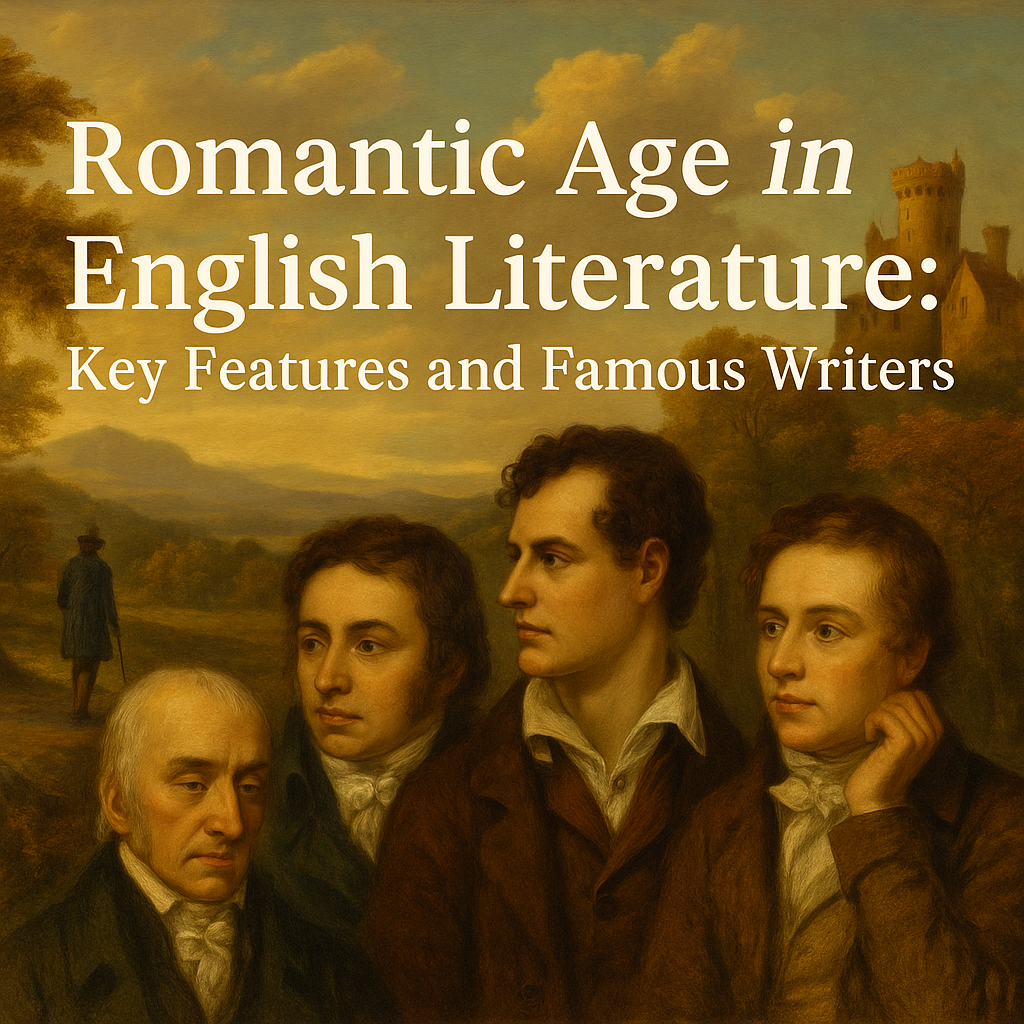
John Bunyan Restoration Period Writer: https://englishlitnotes.com/2025/07/03/john-bunyan-restoration-period-writer/
Grammar Puzzle Solved by Naeem Sir: http://grammarpuzzlesolved.englishlitnotes.com
Discover more from Naeem Ullah Butt - Mr.Blogger
Subscribe to get the latest posts sent to your email.