Introduction
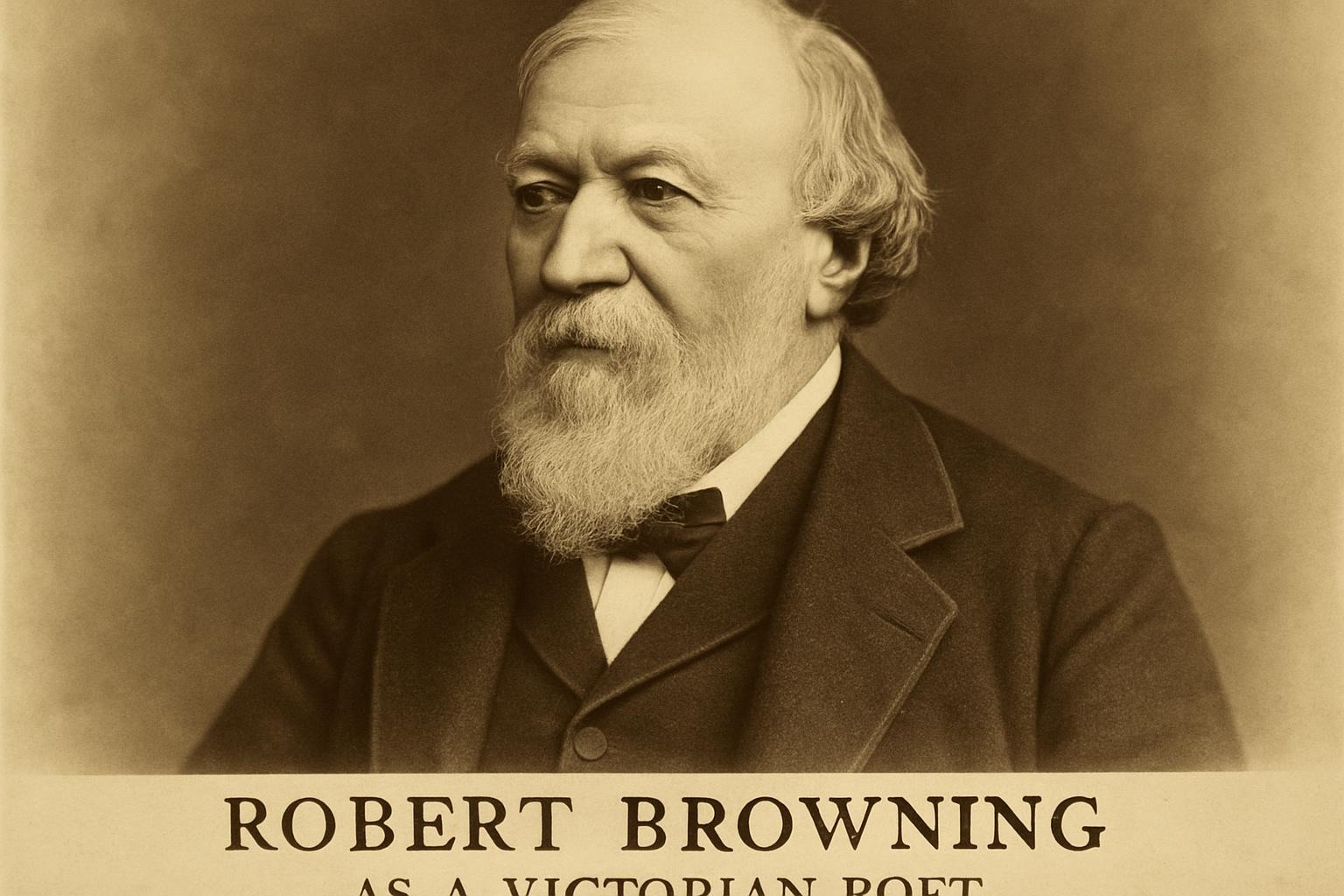
Robert Browning as Victorian Poet remains a towering figure in Victorian literature. He shaped poetry with unprecedented psychological insight. His dramatic monologues and complex narrative techniques are notable. He emerged during a period of cultural transformation, when society grappled with industrialization, scientific discovery, and moral questioning. His work reflects a deep engagement with human consciousness, ethical dilemmas, and social expectations. Unlike some contemporaries, Browning fused philosophical reflection with vivid characterization, producing poetry that challenges and rewards readers simultaneously. His exploration of human motives, moral ambiguity, and internal conflict distinguishes him from other major Victorian poets. Moreover, Browning’s style combined narrative complexity, lyrical elegance, and innovative form, setting a benchmark for poetic craft. His dramatic monologues offer unique perspectives on individual thought, revealing ethical, emotional, and intellectual depth. Through irony, symbolism, and strategic ambiguity, Browning crafted poems that prompt introspection and critical evaluation. Furthermore, his influence extends beyond literature, inspiring generations of poets, scholars, and critics. As a Victorian Poet, Robert Browning defined his era’s literary landscape. He enriched the ongoing discourse on ethics, psychology, and narrative artistry. He has left a legacy that continues to resonate globally.
1. Early Life and Education
Browning’s biography illustrates a privileged yet intellectually vibrant upbringing. Born in 1812 in Camberwell, he grew amid books, art, and music, which fostered literary curiosity and artistic ambition. His education emphasized classical studies, languages, and history, providing a foundation for later poetic exploration. From youth, Browning demonstrated fascination with human behavior, moral complexity, and philosophical questions, which became central to his work. Early exposure to Shakespeare, Milton, and Italian literature shaped his aesthetic sensibility. Additionally, he studied Italian poets extensively, which informed his innovative use of dramatic monologue. These formative experiences cultivated awareness of character, narrative structure, and psychological nuance. Browning’s early environment reinforced independent thinking, moral inquiry, and literary experimentation. Consequently, his education and upbringing combined to prepare him for a lifetime of literary innovation. They also instilled emotional depth and ethical reflection. This preparation influenced both his poetry and the Victorian cultural context.
2. Early Literary Career
Browning began publishing at a young age, demonstrating ambition and literary skill. His first works, including Pauline and Paracelsus, reveal fascination with philosophical and spiritual questions. They exhibit experimentation with narrative voice, rhetorical techniques, and verse form. Critics initially responded unevenly, often praising his intellect while questioning accessibility and clarity. Despite mixed reception, Browning persisted, revising extensively to refine style and enhance dramatic impact. Early poetry shows emerging interest in human consciousness, ethical ambiguity, and psychological depth, distinguishing him from peers. Furthermore, these works explore morality, personal identity, and philosophical reflection, laying groundwork for later masterpieces. Browning’s early career demonstrates commitment, resilience, and creative risk-taking, reflecting his dedication to artistic and intellectual growth. Consequently, he developed a distinctive poetic voice. This voice combined narrative innovation, psychological insight, and engagement with contemporary Victorian themes. It foreshadowed his future influence on literature.
3. Dramatic Monologue as Form
Browning pioneered dramatic monologue, transforming poetic narrative into a medium for psychological exploration. This technique allows a single speaker to reveal thought, emotion, and character without external narration. Through monologue, Browning investigates moral dilemmas, ethical decisions, and social interaction, offering nuanced insight into human consciousness. Works like My Last Duchess demonstrate control over voice, tone, and perspective, creating psychological tension and narrative suspense. Dramatic monologues allow for exploration of ambiguity, irony, and moral complexity, inviting readers to interpret underlying motives and ethical consequences. Moreover, this form integrates narrative, philosophical, and lyrical dimensions, establishing a model of poetic innovation admired by subsequent writers. Browning’s mastery of monologue balances dramatic immediacy with reflective depth. It emphasizes ethical engagement, personal responsibility, and character exploration. Consequently, his poetic technique became a hallmark of Victorian poetry. It illustrates how form and content can interweave to explore moral, social, and psychological dimensions simultaneously.
4. Browning’s Style
Browning’s style demonstrates linguistic precision, musicality, and structural innovation, combining narrative depth with philosophical reflection. He frequently employs irregular meter, enjambment, and colloquial diction to convey character voice and emotional nuance. His syntax reflects thought processes, sometimes fragmented to indicate tension, introspection, or inner conflict. Browning balances irony, symbolism, and imagery to enrich meaning, creating multilayered poetic experience. Furthermore, his stylistic choices enhance psychological realism, narrative clarity, and thematic resonance. They support the exploration of morality, human consciousness, and the Victorian social context. Browning’s style also incorporates rhetorical devices, including repetition, contrast, and dramatic pacing, which heighten tension and reinforce ethical inquiry. This distinctive approach distinguishes him from contemporaries, blending emotional intensity, intellectual rigor, and innovative narrative form. Consequently, Browning’s style exemplifies poetic artistry. It combines technical mastery with expressive depth. His work influences Victorian poetry and establishes a model for subsequent writers exploring psychological and moral complexity.
5. Major Themes in Browning’s Poetry
Browning’s themes encompass morality, psychological depth, human consciousness, and societal tension. He frequently addresses ethical dilemmas, moral ambiguity, and personal responsibility within historical, contemporary, or fictional contexts. His works interrogate power, pride, ambition, love, and deception, revealing ethical and emotional complexity. Additionally, Browning explores relationships, social hierarchy, and individual choice, emphasizing consequences and moral reflection. Historical and contemporary settings provide a framework for examining universal human struggles, ethical conflicts, and emotional nuance. Browning also considers psychological motivation, exploring the interplay between internal desire, ethical restraint, and social expectation. Through layered narrative and dramatic monologue, he examines conscience, guilt, ambition, and interpersonal dynamics, revealing the subtleties of human behavior. His thematic range balances individual experience with societal reflection, demonstrating engagement with Victorian cultural context, moral philosophy, and literary innovation. Therefore, Browning’s themes contribute to enduring relevance. They offer readers insight into human behavior, ethical reasoning, and psychological complexity across historical and cultural boundaries.
6. Narrative Complexity
Browning’s poetry demonstrates intricate narrative complexity, weaving multiple perspectives, temporal shifts, and ethical ambiguity. His works often juxtapose past and present, internal reflection and external action, creating tension and depth. Narrative structures support exploration of character, moral decision-making, and psychological insight, allowing readers to infer motives and consequences. Dramatic monologues frequently require active interpretation, engaging readers in analytical and ethical consideration. Moreover, Browning integrates historical context, social norms, and philosophical reflection, enhancing narrative richness. He balances storytelling with introspection, employing irony, symbolism, and layered characterization to convey multiple dimensions simultaneously. Consequently, his narrative techniques exemplify Victorian literary sophistication, revealing complexity, moral nuance, and human consciousness. Browning’s mastery of narrative structure allows ethical and psychological themes to unfold organically. This mastery ensures sustained engagement and intellectual challenge. It contributes to his reputation as a pioneering Victorian poet.
7. Psychological Depth
Browning as a Victorian poet achieves exceptional psychological depth, portraying consciousness, moral struggle, and inner tension with precision. Characters reveal thoughts, desires, and fears through voice, diction, and dramatic action. Works like Fra Lippo Lippi and Andrea del Sarto demonstrate nuanced understanding of human motivation, ethical conflict, and emotional complexity. He integrates interiority with social context, revealing interplay between personal desire and public expectation. Moreover, psychological realism enhances thematic exploration of morality, ambition, and conscience, supporting ethical reflection alongside narrative engagement. Browning’s attention to mental states, emotional nuance, and ethical consideration elevates poetry beyond storytelling, establishing profound resonance with readers. Consequently, his treatment of consciousness exemplifies Victorian literary innovation. It demonstrates how poetry can illuminate human nature, moral ambiguity, and character psychology. It challenges audiences to interpret motives, ethical choices, and consequences with discernment. This enhances the intellectual and emotional impact of his work.
8. Irony in Browning’s Poetry
Browning skillfully incorporates irony to explore character, morality, and ethical dilemmas, often juxtaposing words, actions, and intentions. Dramatic monologues reveal discrepancies between self-perception and reality, inviting critical reflection. In My Last Duchess, the Duke’s apparent civility masks arrogance and moral blindness, exemplifying ironic tension. Irony enhances psychological insight, narrative complexity, and thematic depth, allowing subtle engagement with morality, social dynamics, and ethical reasoning. Additionally, Browning’s use of situational, verbal, and dramatic irony enriches literary texture, guiding interpretation and reflection. This technique enables exploration of human consciousness, ambition, and flawed judgment without explicit commentary. Furthermore, irony interacts with symbolism, character exploration, and narrative form to deepen reader understanding and engagement. Consequently, irony serves as a critical tool for ethical, psychological, and literary exploration. It demonstrates Browning’s sophisticated approach to narrative, character, and thematic construction within Victorian poetry.
9. Browning and Tennyson
Browning’s relationship with Tennyson highlights contrasts in style, theme, and poetic philosophy within Victorian literature. While Tennyson emphasizes lyricism, moral reflection, and national sentiment, Browning foregrounds psychological complexity, narrative innovation, and ethical ambiguity. Both engage with Victorian cultural context, social change, and literary tradition, yet each develops distinct aesthetic approaches. Their mutual influence shaped public perception of Victorian poetry, contributing to debates about form, content, and artistic purpose. Browning’s focus on dramatic monologue contrasts with Tennyson’s narrative methods. His approach also differs from Tennyson’s lyrical methods. Together, these methods offer complementary explorations of consciousness, morality, and human motivation. Despite stylistic differences, both poets engage themes of loss, ambition, and ethical responsibility, reflecting cultural, philosophical, and historical concerns. Comparative study illuminates Victorian literary innovation. It showcases aesthetic variety and ethical reflection. The study emphasizes Browning’s unique contributions alongside other major Victorian poets. It situates him within broader literary discourse. This demonstrates his enduring relevance in both scholarship and general readership.
10. Browning’s Symbolism
Browning’s symbolism conveys moral, psychological, and philosophical meaning, enriching narrative and ethical complexity. Objects, settings, and imagery often represent inner conflict, ethical dilemmas, or emotional states. In The Ring and the Book, symbolic elements enhance character insight, illuminate ethical tension, and underscore narrative nuance. Symbolism allows layering of meaning, connecting action, motivation, and reflection. It supports exploration of consciousness, morality, and interpersonal dynamics, providing depth and interpretive richness. Browning integrates symbolism with dramatic form, irony, and narrative complexity, ensuring aesthetic coherence and intellectual challenge. Symbolic elements often show human ambition. They illustrate ethical struggle or societal expectation. This enables readers to discern subtle relationships between appearance and reality. Consequently, Browning’s use of symbolism strengthens poetic voice, thematic resonance, and psychological realism. It reinforces his stature as a Victorian poet. He combines ethical, narrative, and formal sophistication in works of enduring literary significance.
11. Moral Questions in Browning’s Poetry
Browning consistently addresses moral questions, exploring human choices and responsibility in depth. His dramatic monologues reveal ethical dilemmas, internal conflict, and social expectation simultaneously. Works like Fra Lippo Lippi probe virtue, compromise, and conscience, highlighting tension between personal desire and ethical obligation. Symbolism, irony, and narrative complexity strengthen ethical exploration and reader engagement, allowing reflection on human motivation. Additionally, Victorian cultural context frames his moral inquiry, ensuring resonance with contemporary audiences. Ethical ambiguity, psychological realism, and literary innovation intertwine seamlessly, providing multiple interpretive layers. Readers consider consequences, moral courage, and introspection while following the narrative. Browning’s characters confront pride, ambition, and ethical failure, illustrating timeless human concerns. Furthermore, literary structure emphasizes reasoning, reflection, and emotional depth. Consequently, his work establishes enduring significance, offering philosophical, ethical, and aesthetic insight without moralizing excessively. This balance reinforces his reputation for combining intellectual rigor, psychological subtlety, and ethical resonance in complex narrative poetry.
12. Human Consciousness
Robert Browning as Victorian Poet demonstrates profound attention to human consciousness, thought, and moral reasoning. Dramatic monologues illuminate inner conflict, desire, and ethical deliberation. Works like Andrea del Sarto reveal tension between ambition, conscience, and societal expectation. Narrative complexity and symbolism deepen psychological engagement, offering readers insight into motivation, emotion, and reflection. Browning blends interiority with social consequence, emphasizing intellectual, emotional, and moral dimensions simultaneously. Characters experience doubt, ethical challenge, and moral ambiguity, prompting careful interpretation. Ethical dilemmas often intersect with personal aspiration, creating multidimensional portraits of consciousness and responsibility. Furthermore, Victorian cultural context informs his depiction of thought and perception. Symbolism and irony enrich interpretation, providing subtle yet powerful philosophical inquiry. Consequently, Browning’s focus on human consciousness cements his status as a poet. He merges psychological realism, narrative sophistication, and ethical exploration. His work offers enduring literary and intellectual significance.
13. Character Exploration
Browning demonstrates extraordinary skill in character exploration, presenting psychologically complex, morally nuanced individuals. Through monologue, dialogue, and narrative, he exposes motives, desires, and internal conflict. Characters like the Duke in My Last Duchess reveal ambition, arrogance, and ethical blindness simultaneously, prompting critical reflection. Browning balances personal psychology with social context, highlighting consequences of action and ethical tension. Symbolism, dramatic irony, and narrative depth support exploration of individual conscience, ethical ambiguity, and emotional nuance. Moreover, readers engage with human consciousness, moral struggle, and identity through layered characterization, which reflects Victorian cultural and philosophical concerns. Browning’s character exploration merges narrative, psychology, and ethical inquiry, creating literature that challenges interpretation and rewards careful analysis. Consequently, his portrayal of complex individuals strengthens his reputation. He is known as a Victorian poet who combines ethical reflection, psychological realism, and literary innovation. These qualities illuminate human experience across temporal, social, and moral dimensions.
14. Browning’s Philosophy
Browning’s philosophy emphasizes moral responsibility, human consciousness, and the ethical consequences of choice. He often presents characters grappling with ambition, desire, and social constraint, reflecting philosophical engagement with human nature. Works integrate ethical reflection, narrative depth, and psychological realism to illuminate dilemmas faced by individuals and society. Browning explores faith, doubt, moral courage, and personal accountability, balancing intellectual rigor with poetic artistry. Dramatic monologues facilitate philosophical reflection while engaging the reader in ethical inquiry. Furthermore, symbolism, irony, and narrative structure reinforce philosophical ideas subtly yet effectively, promoting active interpretation. Through such integration, Browning addresses human aspiration, limitation, and moral awareness in a socially informed Victorian context. Consequently, his philosophical approach enhances his reputation as a Victorian poet. He blends narrative sophistication, ethical reflection, and psychological insight. This blend produces work that remains both intellectually stimulating and morally resonant across generations.
15. Browning’s Influence
Browning’s influence on Victorian poetry shaped narrative innovation, psychological depth, and moral inquiry among contemporaries and successors. Poets and critics admired his mastery of dramatic monologue, narrative complexity, and ethical reflection. His techniques inspired major Victorian poets, including Tennyson, while his thematic scope affected subsequent literary movements. Browning’s integration of irony, symbolism, and psychological realism provided a model for narrative and ethical sophistication. Furthermore, his focus on human consciousness, moral choice, and character exploration established standards for literary inquiry and emotional depth. Educational institutions often included his works, ensuring exposure to generations of readers and scholars. Dramatic monologue became a widely studied form, influencing narrative poetry internationally. Consequently, Robert Browning as Victorian Poet cemented his stature through technical innovation. His work demonstrated ethical engagement. His psychological realism shaped literary discourse beyond his historical period.
16. Victorian Poetry Context
Browning’s work reflects the broader context of Victorian poetry, characterized by moral reflection, social concern, and aesthetic innovation. His poetry engages cultural, ethical, and psychological themes central to Victorian literature, while expanding narrative and dramatic techniques. Other major poets emphasized lyricism, morality, and national sentiment, yet Browning foregrounded ethical ambiguity, psychological realism, and dramatic form. His works respond to industrialization, social change, and philosophical inquiry, aligning personal reflection with collective cultural concerns. Furthermore, his emphasis on human consciousness, moral questioning, and narrative experimentation distinguishes him within Victorian literary discourse. Browning interacts with Tennyson, Arnold, and other contemporaries, contributing to debates over style, theme, and literary purpose. Consequently, his poetry exemplifies Victorian literary innovation. It combines ethical inquiry, psychological insight, and narrative sophistication. This combination reinforces his lasting relevance within both historical and contemporary literary contexts.
17. Browning’s Poetic Voice
Browning’s poetic voice is marked by narrative clarity, psychological depth, and moral engagement. His monologues, dialogues, and dramatic narratives convey unique perspectives while reflecting inner consciousness. Voice adapts to character, theme, and ethical situation, demonstrating flexibility, precision, and expressive power. Colloquial diction, rhetorical devices, and syntactic variation contribute to dynamic, authentic, and compelling poetic expression. Moreover, Browning’s voice mediates between interiority and social observation, balancing ethical reflection with aesthetic and narrative concerns. Readers experience characters’ thoughts, moral reasoning, and emotional states directly, enhancing engagement and insight. His poetic voice reinforces dramatic monologue, narrative complexity, and ethical exploration simultaneously. Consequently, Browning’s distinctive voice underpins his reputation as a Victorian poet. It demonstrates technical mastery and psychological acuity. His voice also shows moral sophistication that enriches both literary form and thematic resonance for readers and scholars alike.
18. Narrative Experimentation
Browning exhibits narrative experimentation, blending temporal shifts, multiple perspectives, and complex ethical reflection. He often juxtaposes character interiority with social and historical context, creating narrative tension and depth. Dramatic monologues, multiperspectival texts, and intricate plot structures exemplify his inventive approach. Symbolism, irony, and rhetorical devices support interpretation while enhancing psychological and ethical engagement. Narrative experimentation enables ethical dilemmas, moral ambiguity, and character development to unfold organically, prompting reflective reading. Browning balances innovation with clarity, ensuring reader comprehension while sustaining intellectual challenge. Consequently, his experimentation demonstrates Victorian literary sophistication, contributing to narrative richness, thematic complexity, and ethical resonance. His inventive strategies distinguish him from contemporaries. He is a major figure in Victorian literature. His narrative techniques continue to influence poetic craft, marking him as a pioneering poet.
19. Poetic Innovation
Browning’s poetic innovation transforms conventional verse through dramatic monologue, syntax variation, and thematic depth. He experiments with meter, rhythm, and diction to enhance narrative, psychological, and moral impact. Symbolism and irony support interpretation and thematic exploration. His inventive structures convey consciousness, moral tension, and ethical reflection, challenging readers intellectually and emotionally. Browning’s innovation integrates narrative complexity, philosophical inquiry, and lyrical expression. Furthermore, technical mastery reinforces dramatic immediacy, character exploration, and ethical resonance. Consequently, Browning’s poetic innovation affirms his role as a Victorian poet. His experimentation enriches literature. It fosters intellectual engagement and provides enduring aesthetic, ethical, and psychological insight. This influences subsequent poetry and literary study.
20. Browning’s Style and Themes
Robert Browning as Victorian Poet demonstrates remarkable synthesis of style and themes, blending narrative sophistication, ethical reflection, and psychological depth. His diction, syntax, and dramatic technique enhance exploration of morality, human consciousness, and social dynamics. Symbolism, irony, and rhetorical devices strengthen thematic resonance and narrative clarity. Browning’s works examine ambition, love, conscience, and human complexity, balancing ethical insight with aesthetic elegance. He foregrounds character exploration, narrative innovation, and reflective contemplation simultaneously. Themes of moral choice, ethical tension, and human motivation recur, illustrating Victorian cultural context and philosophical inquiry. Dramatic monologue allows direct engagement with consciousness, thought, and moral ambiguity. Consequently, Browning’s style and themes exemplify his stature as a Victorian poet, merging innovation, psychological realism, and ethical reflection. His literary artistry continues to influence poetic form and ethical discourse. It also affects interpretive study. This influence affirms relevance in historical and contemporary contexts. It offers profound insight into human experience.
21. Browning’s Exploration of Human Psychology
Robert Browning often delves into the intricacies of human consciousness. His poems examine thought, emotion, and moral conflict simultaneously. Through dramatic monologues, he reveals complex psychological layers of his characters. These explorations provide insights into motives, desires, and fears. Moreover, Browning’s characters frequently confront ethical dilemmas, forcing readers to reflect on human decision-making. He combines narrative complexity with emotional resonance, allowing psychological realism to emerge naturally. Additionally, his use of irony in poetry emphasizes ambiguity and internal struggle. Browning’s attention to human consciousness challenges traditional moral assumptions while encouraging introspection. His characters often grapple with personal responsibility, ambition, and societal expectation. Consequently, readers encounter fully realized human psychology intertwined with Victorian cultural context. Browning achieves depth by linking thought and action with reflective narration, creating a rich tapestry of inner life. Furthermore, he anticipates modern psychological analysis, blending literary artistry with intellectual inquiry. In sum, Browning’s exploration of human psychology establishes him as a master of narrative depth and enduring thematic insight, reinforcing his role as a leading voice in Victorian literature.
22. Robert Browning as Victorian Poet: Dramatic Monologues
Robert Browning as Victorian Poet excels in crafting dramatic monologues. Each speaker offers insight into personality, motive, and ethical struggle simultaneously. Unlike traditional narration, these monologues allow the speaker to reveal truth indirectly, creating interpretive space for readers. Characters such as Fra Lippo Lippi and Andrea del Sarto reflect moral conflict, human ambition, and societal tension. Furthermore, Browning’s style uses rhythm, syntax, and imagery to reinforce psychological depth. Irony in poetry enhances ambiguity and challenges surface interpretation. He often juxtaposes character self-perception with objective circumstance, highlighting cognitive tension and ethical dilemmas. Through this narrative innovation, Browning blurs boundaries between observer and participant, fiction and philosophy. Moreover, the monologues demonstrate his poetic innovation, merging literary artistry with intellectual inquiry. Consequently, Robert Browning as Victorian Poet transformed narrative voice into a tool for psychological, moral, and social examination, influencing both contemporary and later literary practice.
23. Browning’s Stylistic Mastery
Browning’s style reflects careful manipulation of syntax, meter, and sound. He employs enjambment, caesura, and irregular rhythm to mirror thought processes effectively. Moreover, his diction blends colloquial speech with elevated poetic tone. These stylistic choices reinforce dramatic intensity while enhancing narrative complexity. Browning’s style accommodates multiple perspectives, allowing readers to interpret subtext and psychological nuance. He frequently uses metaphor, allusion, and symbolism to expand thematic resonance. Irony in poetry emphasizes tension between character perception and reality. Additionally, narrative intricacy engages readers actively, requiring interpretive engagement and reflection. Browning’s stylistic mastery extends to integrating philosophical, ethical, and emotional concerns seamlessly within his verse. Consequently, his writing demonstrates not merely technical skill but intellectual sophistication, influencing Victorian literature broadly. Furthermore, the layered approach ensures that narrative and psychological depth coexist harmoniously with musicality and thematic coherence. Browning’s style thus remains a benchmark for narrative poetry, combining dramatic artistry with intellectual depth, character exploration, and moral inquiry, reinforcing his enduring significance in literary history.
24. Narrative Complexity in Browning’s Works
Browning’s narratives often defy linear expectation, employing intricate temporal and psychological layering. He merges multiple voices, perspectives, and internal reflections seamlessly. Consequently, readers encounter plots that unfold dynamically, revealing hidden motives and consequences gradually. Dramatic monologues contribute to narrative complexity by allowing character subjectivity to guide interpretation. Browning balances clarity with ambiguity, ensuring that narrative sophistication enhances rather than obscures meaning. Moreover, irony in poetry creates tension between appearance and reality, deepening thematic exploration. He integrates philosophical reflection within narrative motion, connecting moral questions with human experience. Browning’s attention to psychological detail strengthens both plot and character development. Additionally, thematic consistency ensures that complexity does not sacrifice coherence or emotional resonance. His innovation influences subsequent Victorian poets, demonstrating possibilities of narrative experimentation within lyric and dramatic verse. Narrative complexity in Browning’s poetry enriches thematic exploration, psychological realism, and moral reflection simultaneously. Furthermore, his works anticipate modernist experimentation, blending temporality, consciousness, and ethical inquiry with stylistic sophistication. Consequently, Browning achieves literary richness, merging story, character, and philosophical depth into enduring poetic art.
25. Robert Browning as Victorian Poet: Use of Irony
Robert Browning as Victorian Poet employs irony to explore moral ambiguity, human contradiction, and character perception. Irony in poetry frequently underscores tension between self-awareness and external reality. His speakers often reveal desires, flaws, and ethical shortcomings simultaneously. Browning’s use of dramatic monologue enhances ironic tension by providing direct access to consciousness while inviting interpretive judgment. Furthermore, narrative structure, diction, and rhythm reinforce subtle dissonance between expectation and outcome. Irony heightens narrative engagement, compelling readers to analyze motives, choices, and consequences critically. Additionally, this technique emphasizes ethical reflection, psychological depth, and thematic nuance. Browning’s poetic voice employs irony strategically, ensuring it enriches rather than overshadows emotional resonance. Consequently, his ironic method demonstrates skillful integration of intellectual subtlety with literary artistry. Moreover, this approach solidifies Browning’s influence on subsequent Victorian literature, illustrating narrative innovation, character exploration, and philosophical inquiry through aesthetic sophistication. By blending irony with narrative, Browning ensures that his poems challenge interpretation, ethical contemplation, and reflective reading, reinforcing his enduring significance as a literary innovator, dramatic artist, and master of Victorian poetic expression.
26. Browning’s Influence on Victorian Literature
Browning profoundly influenced Victorian literature, inspiring contemporary poets and shaping aesthetic discourse. His innovations in dramatic monologue, psychological depth, and narrative complexity set a new literary standard. Poets and critics recognized his ability to blend philosophical reflection with lyrical mastery. Browning’s style, themes, and moral inquiry expanded possibilities for English poetry broadly. Furthermore, he engaged with human consciousness in ways that anticipate modernist experimentation. Narrative sophistication and irony in poetry challenged conventional literary expectations. Browning’s attention to character exploration, ethical reflection, and dramatic tension encouraged subsequent generations to explore psychological realism in verse. Additionally, his integration of philosophical and cultural concerns demonstrated poetry’s capacity to interrogate society. Browning’s influence extended beyond poetry into critical theory, aesthetics, and narrative practice. Consequently, Victorian literature absorbed his innovations, embracing complexity, intellectual engagement, and interpretive depth. Moreover, his works continue to inform literary scholarship, illustrating techniques for combining narrative, character, and ethical inquiry. Through these contributions, Browning remains a central figure in Victorian poetry, exemplifying enduring artistic and intellectual impact while shaping the trajectory of English literary history.
27. Browning and Tennyson
Browning’s relationship with Tennyson influenced literary culture while highlighting distinct poetic approaches. Browning emphasized dramatic monologue, narrative complexity, and psychological realism. Tennyson favored lyricism, moral reflection, and national sentiment. Nevertheless, both poets explored human consciousness and ethical questions with technical mastery. Their approaches diverged stylistically yet converged philosophically, shaping Victorian literary discourse. Browning’s influence appears in narrative experimentation, ironic tension, and moral ambiguity. Tennyson’s impact complements Browning through melodic phrasing and symbolic depth. Together, they define major Victorian poets, representing complementary poetic philosophies. Browning’s style emphasized interiority, cognitive subtlety, and narrative voice. Tennyson explored universal emotion and national identity. Consequently, Browning and Tennyson collectively transformed Victorian poetry, balancing innovation, tradition, and reflective insight. Furthermore, comparative study illuminates differences in tone, structure, and narrative technique, enhancing understanding of the period’s literary richness. Browning’s contribution endures through psychological subtlety, narrative daring, and character exploration. Victorian poetry, therefore, benefited from their complementary mastery, shaping cultural context, literary taste, and aesthetic values that continue to inform analysis and appreciation of the era.
28. Browning’s Symbolism
Browning frequently employed symbolism to deepen meaning, enhance psychological insight, and reinforce ethical reflection. Objects, settings, and gestures often carry layered significance beyond literal interpretation. Symbolism in poetry conveys human emotion, moral conflict, and spiritual inquiry simultaneously. Moreover, he uses color, light, and architectural motifs to evoke mood, cultural context, and cognitive tension. Dramatic monologues allow symbols to emerge naturally from character perception, creating interpretive richness. Irony in poetry interacts with symbolism, emphasizing ambiguity and multiple perspectives. Browning’s careful deployment of symbolic elements enriches narrative, thematic, and emotional resonance. Consequently, readers encounter interconnected motifs that illuminate ethical dilemmas, philosophical inquiry, and human consciousness. Symbolism enables him to explore abstract ideas concretely while maintaining narrative complexity and stylistic elegance. Browning’s use of symbolism demonstrates technical mastery, thematic sophistication, and narrative subtlety. Furthermore, this technique complements his dramatic monologue, psychological depth, and moral inquiry. Ultimately, symbolism in Browning’s poetry contributes to his enduring reputation as a Victorian poet who blends aesthetic innovation with ethical, intellectual, and emotional engagement, shaping literary interpretation and analysis for generations.
29. Moral Questions in Browning’s Poetry
Browning frequently engages with moral questions, exploring ethical dilemmas, responsibility, and human consequence. His characters confront complex choices that reveal ambition, virtue, and moral weakness. Dramatic monologues allow reflection on decisions while exposing subjective interpretation and self-deception. Irony in poetry highlights contradictions between intention, perception, and outcome, enhancing moral inquiry. Browning’s narrative sophistication emphasizes ethical ambiguity, forcing readers to assess judgment, consequence, and virtue critically. Themes of justice, honor, and personal accountability permeate his works. Moreover, psychological depth ensures that ethical reflection remains intertwined with human consciousness. Through characterization, plot, and reflective voice, Browning scrutinizes ethical norms, societal expectations, and individual responsibility. Consequently, moral questions remain central to his literary achievement, shaping thematic focus and philosophical resonance. Furthermore, these inquiries reinforce his influence on Victorian literature, integrating ethical reflection with narrative complexity. Browning’s approach demonstrates that poetry can interrogate human behavior while maintaining aesthetic rigor. His ethical exploration complements character exploration, psychological depth, and stylistic mastery. Ultimately, his work exemplifies Victorian literature’s engagement with conscience, cultural context, and the subtleties of moral reasoning, ensuring lasting relevance.
30. Browning’s Poetic Philosophy
Browning’s poetry embodies a distinctive philosophical outlook blending ethical reflection, human psychology, and artistic innovation. He investigates personal ambition, moral responsibility, and spiritual questioning simultaneously. Dramatic monologues allow readers to witness character thought processes directly, revealing internal conflict, desire, and conscience. Furthermore, Browning’s style combines narrative complexity with musicality, creating intellectual and aesthetic resonance. Irony in poetry underscores tension between appearance, reality, and self-perception. His philosophical concerns intersect with cultural context, moral inquiry, and Victorian social values. Moreover, Browning often challenges traditional ethical assumptions, inviting reflection and debate among readers. Narrative sophistication enhances engagement, while symbolism reinforces moral and psychological insight. Additionally, the interconnection of character exploration, narrative structure, and reflective voice emphasizes both individual and societal concerns. Browning’s poetic philosophy integrates moral questions with artistic craft, fostering enduring literary significance. Consequently, his works balance aesthetic beauty, ethical reflection, and intellectual rigor simultaneously. His philosophy provides a lens for understanding human consciousness, narrative interpretation, and Victorian cultural context, demonstrating the enduring sophistication of his literary vision and reinforcing his position among major Victorian poets.
31. Dramatic Monologue as Browning’s Innovation
Dramatic monologue constitutes Browning’s most remarkable contribution to Victorian poetry. This form emphasizes a single speaker revealing internal thought, emotion, and ethical deliberation. Unlike conventional narrative, it allows readers to interpret psychological nuance actively. Moreover, this technique creates tension between self-perception and external reality, fostering layered understanding. Browning employs complex syntax, rhythmic variation, and carefully placed imagery to reinforce dramatic effect. Irony in poetry enhances interpretive challenge, deepening narrative complexity. These monologues also facilitate exploration of moral questions, character psychology, and social context simultaneously. Browning’s innovation influenced subsequent poets, demonstrating narrative versatility and ethical sophistication. Furthermore, his dramatic monologues exemplify integration of stylistic mastery with thematic subtlety. Through this approach, narrative voice becomes a medium for moral, philosophical, and emotional engagement. Consequently, dramatic monologue represents a hallmark of Browning’s artistry, contributing enduringly to literary innovation and establishing him as a central figure in Victorian literature. Readers gain insight into human consciousness, ethical dilemmas, and narrative innovation concurrently, appreciating the depth of his literary craft.
32. Browning’s Exploration of Human Consciousness
Browning delves deeply into human consciousness, revealing thought, feeling, and perception simultaneously. His characters confront moral dilemmas, ambition, and self-reflection throughout his poetry. Dramatic monologues facilitate direct engagement with character psyche, encouraging interpretive insight and empathy. Furthermore, irony in poetry highlights discrepancies between self-perception and objective reality, adding psychological nuance. Browning often links consciousness with narrative complexity, ethical inquiry, and social observation. Moreover, his work demonstrates awareness of Victorian cultural context and human moral ambiguity. Symbolism reinforces abstract reflection, making internal states tangible for readers. Browning’s attention to cognitive processes enhances both narrative and thematic depth. Consequently, his exploration of human consciousness enriches Victorian literature, blending psychological insight with dramatic artistry. Readers encounter ethical, emotional, and intellectual dimensions simultaneously, fostering multidimensional understanding. Browning’s focus on thought, motivation, and internal conflict exemplifies his mastery of character exploration and narrative sophistication. Additionally, this approach anticipates modern psychological analysis, highlighting enduring relevance. Through careful structuring of monologue, theme, and symbolism, Browning demonstrates the intricate interplay of human thought, moral reflection, and literary innovation, establishing himself as a defining Victorian poet.
33. Robert Browning as Victorian Poet: Major Themes
Robert Browning as Victorian Poet frequently addresses major themes such as ambition, morality, love, and artistic endeavor. His poems explore ethical tension, human consciousness, and psychological complexity simultaneously. Dramatic monologues allow characters to confront internal struggle, moral decision-making, and social responsibility directly. Furthermore, Browning integrates Victorian cultural context with personal reflection, creating layered narrative meaning. Symbolism reinforces thematic depth, illustrating moral questions and cognitive tension. Irony in poetry amplifies ambiguity, challenging readers to interpret intention, perception, and outcome critically. Browning also examines faith, doubt, and human resilience, linking ethical reflection with emotional insight. Narrative complexity ensures that themes evolve dynamically throughout the poem, engaging readers actively. Consequently, Browning’s thematic exploration establishes intellectual richness, emotional resonance, and ethical inquiry. His major themes demonstrate sophistication in addressing personal, social, and philosophical concerns simultaneously. Additionally, Browning’s treatment of love, ambition, and morality highlights both universal relevance and Victorian specificity. Through these techniques, Robert Browning as Victorian Poet achieves lasting significance, blending intellectual, moral, and aesthetic dimensions with enduring literary artistry.
34. Browning’s Poetic Voice
Browning’s poetic voice is distinct, blending narrative clarity, psychological insight, and ethical reflection. He conveys character perspective while maintaining authorial subtlety, balancing direct expression with interpretive space. Furthermore, dramatic monologues amplify this voice, allowing characters to express thought, emotion, and moral tension simultaneously. Browning employs rhythm, diction, and syntax to reinforce personality, social position, and emotional nuance. Irony in poetry emphasizes cognitive discrepancy, highlighting tension between perception and reality. His poetic voice accommodates narrative complexity while maintaining thematic coherence, aesthetic beauty, and psychological depth. Consequently, readers experience moral reflection, character exploration, and intellectual engagement concurrently. Browning’s voice integrates Victorian cultural context, ethical questions, and human consciousness into cohesive artistic expression. Moreover, it illustrates innovative narrative strategies that influenced subsequent major Victorian poets. Through his poetic voice, Browning merges artistry with insight, creating work that remains compelling across historical, philosophical, and literary study.
35. Narrative and Character Interaction
Browning emphasizes interaction between narrative structure and character development in his poetry. Characters’ decisions, reflection, and internal dialogue propel narrative motion effectively. Dramatic monologues reveal both ethical conflict and personal motivation simultaneously. Furthermore, narrative complexity reinforces psychological depth and thematic richness throughout the poem. Browning links plot progression with character consciousness, highlighting causality, consequence, and moral implication. Irony in poetry often accentuates discrepancy between intent and outcome, enhancing narrative tension. Symbolism integrates with narrative and character, deepening interpretive engagement. Consequently, readers observe interdependent layers of thought, action, and ethical inquiry concurrently. Browning’s mastery of character-narrative interaction demonstrates sophistication in addressing Victorian social and moral concerns. Moreover, this approach contributes to narrative innovation, psychological realism, and thematic resonance. Through careful orchestration of voice, plot, and reflection, Browning ensures cohesive and impactful storytelling while exploring human consciousness and moral philosophy.
36. Robert Browning as Victorian Poet: Poetic Innovation
Robert Browning as Victorian Poet redefines poetic form through dramatic monologue, narrative complexity, and stylistic ingenuity. He blends psychological realism with thematic subtlety, enhancing both aesthetic and intellectual impact. Furthermore, innovative structure allows exploration of ethical tension, human consciousness, and moral reflection effectively. Irony in poetry reinforces ambiguity, deepening interpretive engagement and psychological nuance. Browning experiments with rhythm, syntax, and diction to reflect cognitive and emotional states simultaneously. Symbolism and thematic layering complement innovation, demonstrating sophisticated integration of form and meaning. Consequently, Browning’s poetic innovation influenced Victorian literature profoundly, expanding narrative possibilities and stylistic repertoire. Readers encounter psychological insight, ethical inquiry, and literary artistry concurrently, experiencing multidimensional poetic achievement. Browning’s experimentation ensures enduring significance, bridging aesthetic mastery with intellectual and moral sophistication while shaping subsequent generations of major Victorian poets. His inventive approach demonstrates how poetry can blend narrative, philosophy, and human reflection within innovative structural frameworks, reinforcing his preeminence in literary history.
37. Victorian Cultural Context in Browning’s Work
Browning situates his poetry within Victorian cultural context, engaging social, ethical, and philosophical discourse. He addresses contemporary moral dilemmas, social expectation, and human ambition simultaneously. Dramatic monologues reveal individual consciousness while reflecting societal norms, tension, and aspiration. Furthermore, his poems incorporate historical, artistic, and philosophical references to enrich cultural resonance. Irony in poetry underscores conflict between societal perception and internal ethical reflection. Browning’s integration of culture and consciousness strengthens narrative and thematic depth. Consequently, his works serve both artistic and social exploration, enhancing understanding of Victorian literature. Readers encounter psychological, moral, and cultural layers simultaneously, illustrating human consciousness within historical context. Browning’s focus on cultural interplay ensures his poetry resonates beyond personal reflection, providing insight into ethical, societal, and intellectual concerns. Moreover, Victorian cultural context shapes narrative strategy, character development, and thematic focus, contributing to enduring relevance and literary sophistication.
38. Browning’s Symbolism and Imagery
Browning employs symbolism and imagery to deepen narrative, emotional, and philosophical resonance. Objects, actions, and settings carry layered meaning beyond literal description. Dramatic monologues integrate these symbols naturally, revealing psychological insight and ethical tension simultaneously. Irony in poetry interacts with imagery, emphasizing interpretive ambiguity and narrative complexity. Browning’s symbolic detail reinforces Victorian cultural context and moral inquiry. Additionally, metaphor, allegory, and visual motif strengthen thematic coherence and aesthetic appeal. Consequently, his symbolism enhances character exploration, moral reflection, and psychological depth. Readers perceive interwoven layers of meaning that enrich ethical, philosophical, and emotional engagement. Browning’s imagery complements narrative structure and poetic voice, producing cohesive and impactful literary work. Moreover, this technique strengthens his reputation as a major Victorian poet. His artistry balances intellectual sophistication. It also merges emotional resonance with ethical inquiry.
39. Ethical Inquiry in Browning’s Poetry
Browning consistently interrogates ethical questions, addressing personal responsibility, virtue, and consequence. Characters navigate moral ambiguity while revealing human motivation and cognitive tension. Dramatic monologues facilitate direct engagement with ethical dilemmas and internal reflection simultaneously. Irony in poetry emphasizes conflict between appearance, perception, and moral outcome. Narrative complexity integrates ethical inquiry with psychological realism and cultural context. Consequently, readers confront moral questions alongside character experience, gaining insight into human consciousness and Victorian social norms. Browning’s integration of philosophy, narrative, and dramatic voice ensures ethical reflection remains central to literary achievement. Moreover, these inquiries demonstrate the fusion of aesthetic innovation, thematic depth, and intellectual rigor in his poetry, reinforcing enduring significance.
40. Browning’s Cultural Relevance
Alfred Robert Browning’s work reflects the Victorian cultural context, portraying both individual and societal concerns. His poetry explores moral questions, psychological depth, and human consciousness, aligning with the era’s intellectual and ethical preoccupations. Browning keenly observes Victorian life, integrating social norms. He also highlights class distinctions and ethical dilemmas. This demonstrates his acute awareness of contemporary society. Through vivid characterization and narrative complexity, he illuminates personal conflict alongside cultural constraints. Additionally, his dramatic monologues often depict societal pressures while highlighting individual choice and responsibility. Browning engages deeply with moral, philosophical, and emotional issues. This engagement makes his work culturally relevant. It provides insight into Victorian ideals, anxieties, and transformations. Furthermore, he addresses artistic innovation, literary tradition, and intellectual discourse, bridging classical influences with modern thought. His poems encourage readers to examine personal ethics, cultural identity, and spiritual awareness within a rapidly evolving society. Consequently, Alfred Robert Browning, as a Victorian Poet, exemplifies how literature can reflect cultural dynamics. It offers timeless moral and psychological insight. His works are both historically significant and universally instructive. His attention to human consciousness enhances empathy and moral reflection in readers.
41. Psychological Complexity in Browning’s Characters
Browning’s characters exhibit profound psychological depth, capturing the full spectrum of human thought, emotion, and motivation. In his dramatic monologues, he explores inner conflict, moral dilemmas, and self-reflection, providing insight into human consciousness. Characters like Andrea del Sarto, Fra Lippo Lippi, and Rabbi Ben Ezra reveal ambition, doubt, and ethical questioning. These traits reflect Browning’s concern with moral and spiritual development. Furthermore, he employs irony, subtlety, and ambiguity to emphasize layered psychological portrayal, encouraging readers to interpret motivations and intentions carefully. Browning’s skill in depicting internal struggles highlights the interplay between societal expectation and personal desire. Through these portraits, he examines ethical responsibility, emotional vulnerability, and the complexity of decision-making in morally ambiguous situations. Additionally, his attention to nuanced thought patterns and moral reasoning distinguishes his work within Victorian literature. Browning’s exploration of psychological depth shapes his poetic voice. It influences subsequent writers and reinforces his status as a master of character exploration and human consciousness.
42. Dramatic Monologue Mastery
The dramatic monologue defines Browning’s stylistic and thematic innovation, allowing him to reveal character, thought, and moral reflection simultaneously. Through this technique, a single speaker communicates their perspective while readers infer context and ethical dilemmas. Poems like My Last Duchess, Soliloquy of the Spanish Cloister, and Porphyria’s Lover showcase narrative complexity. They highlight irony in poetry and introspection. Browning’s style combines vivid imagery, subtle irony, and rhythmic variation to maintain tension and psychological authenticity. Additionally, he structures monologues to reveal moral questions gradually, inviting readers to engage actively with the speaker’s consciousness. This approach allows ethical, philosophical, and emotional exploration without direct narration or authorial intrusion. Moreover, dramatic monologues serve as vehicles for social commentary, moral inquiry, and cultural reflection, emphasizing Victorian literary priorities. Browning’s poetic voice gains depth and credibility through careful language, perspective, and characterization. Consequently, Alfred Robert Browning excels as a Victorian Poet. He shows mastery in merging narrative, psychology, and moral insight. He produces enduring, influential poetry that reshaped Victorian literary practice. His work inspired future generations of poets and dramatists.
43. Browning’s Narrative Complexity
Browning’s narratives are notable for intricate structures, temporal shifts, and multi-layered meaning. His stories often explore ethical dilemmas, human consciousness, and psychological depth through unfolding events. Poems frequently employ retrospection, introspection, and varying perspectives, encouraging readers to navigate complex moral and emotional landscapes. Furthermore, his narrative complexity integrates symbolism, allegory, and metaphor, reinforcing thematic exploration while challenging conventional storytelling. This technique allows him to probe Victorian cultural context, human motivation, and moral responsibility, aligning personal and societal experiences. Browning’s plots avoid linear simplicity, instead revealing gradual development of character and thought. By balancing narrative intricacy with emotional resonance, he maintains engagement while promoting critical reflection. Consequently, his narrative skill complements his dramatic monologues, extending the scope of Victorian poetry. Alfred Robert Browning exemplifies the union of structural innovation with ethical inquiry. He combines these with psychological inquiry, establishing a model for literary sophistication. This model influenced contemporary readers and subsequent literary movements in England and beyond.
44. Irony and Moral Inquiry
Browning frequently integrates irony in poetry to question human behavior, social norms, and ethical choices. His subtle use of irony encourages reflection on morality, self-interest, and cultural expectations. In My Last Duchess, irony highlights the Duke’s authoritarian control and distorted moral reasoning, revealing psychological complexity. Similarly, Soliloquy of the Spanish Cloister uses humor and sarcasm to underscore ethical contradictions and human folly. Browning balances irony with emotional resonance, ensuring moral reflection remains central without sacrificing narrative or lyrical elegance. This approach enables readers to engage critically with moral questions while appreciating aesthetic and structural mastery. Furthermore, his ironic technique complements dramatic monologues and narrative complexity, reinforcing Browning’s distinctive style. Consequently, Alfred Robert Browning demonstrates the capacity to blend ethical inquiry. He provides psychological insight and engages in literary innovation. This establishes enduring relevance and influences both contemporaries and future literary discourse. His ability to combine humor, critique, and philosophy highlights moral ambiguity and human consciousness.
45. Browning’s Symbolism
Browning’s symbolism enriches thematic depth, linking personal experience to universal concerns. He employs metaphorical imagery, allegorical references, and symbolic characters to examine morality, human consciousness, and Victorian cultural values. For instance, in Rabbi Ben Ezra, symbolic language conveys optimism, spiritual growth, and ethical reflection. Similarly, Andrea del Sarto and Fra Lippo Lippi use objects, gestures, and artistic process symbolically. They explore ambition, morality, and creative tension. Symbolism also allows Browning to discuss ethical dilemmas subtly while maintaining narrative complexity and psychological realism. Moreover, symbolic devices bridge individual and societal concerns, reflecting Victorian literature’s engagement with moral, cultural, and intellectual issues. Browning’s skillful use of symbolism deepens thematic resonance, emotional engagement, and ethical exploration. Consequently, Alfred Robert Browning as Victorian Poet demonstrates how symbolic language can elevate narrative, character, and philosophical reflection simultaneously. His works remain influential, offering layered interpretation and enduring insight into human behavior, moral reasoning, and artistic expression.
46. Poetic Innovation
Browning’s poetic innovation encompasses form, technique, and thematic daring. He transformed the dramatic monologue into a vehicle for psychological and moral inquiry. Additionally, his experiments with rhythm, rhyme, and syntax reinforce narrative emphasis and character development. Browning blends realism, symbolism, and philosophical reflection, producing multidimensional poetry that engages both intellect and emotion. His experimentation with narrative perspective, interior monologue, and temporal shifts challenges conventional Victorian poetry while maintaining clarity and aesthetic beauty. Furthermore, he integrates irony, moral questioning, and psychological depth to innovate without sacrificing accessibility. Browning’s innovations influence later poets and establish him as a key figure in literary evolution. Consequently, Alfred Robert Browning as Victorian Poet exemplifies poetic innovation, combining technical mastery, narrative skill, and ethical exploration. His work inspires continued study, emulation, and appreciation. It bridges traditional forms with modern sensibilities. His contributions confirm his place as one of the most influential figures in Victorian literature.
47. Influence on Later Writers
Browning’s influence extends across Victorian literature, modernist poetry, and narrative fiction. Writers admired his psychological depth, moral inquiry, and dramatic monologues. His narrative complexity, ethical exploration, and stylistic innovation informed subsequent poets, including T.S. Eliot, Ezra Pound, and W.H. Auden. Additionally, his focus on human consciousness and moral reflection resonates in prose, drama, and lyric traditions. Browning’s integration of ethical dilemmas, narrative experimentation, and cultural insight provides a model for literary engagement. Alfred Robert Browning, as a Victorian Poet, had a profound impact on multiple generations. He demonstrated the enduring power of literary innovation. His work combined philosophical and psychological sophistication. His work encourages readers to consider ethical responsibility, human behavior, and societal norms while appreciating structural, linguistic, and narrative artistry. Browning’s legacy ensures that both historical and contemporary audiences continue to engage with his poetry meaningfully.
48. Browning and Tennyson
The relationship between Browning and Tennyson shaped Victorian literary discourse significantly. While Browning emphasized dramatic monologue and psychological depth, Tennyson focused on lyricism, myth, and emotional resonance. Their contrasting approaches illustrate Victorian literature’s diversity in form, theme, and philosophical inquiry. Despite differences, both engaged with moral questions, human consciousness, and cultural reflection. Browning’s narrative complexity complements Tennyson’s symbolic richness, offering readers a multifaceted understanding of Victorian values, ethical dilemmas, and literary innovation. Consequently, Alfred Robert Browning as Victorian Poet contributes alongside Tennyson to a broader dialogue on literature, morality, and human experience. Their combined influence shaped major Victorian poets. They established aesthetic standards. Their influence enriched cultural discourse. This ensured their lasting impact on English literature.
49. Browning’s Enduring Appeal
Browning’s poetry maintains enduring appeal due to narrative skill, psychological insight, and moral reflection. His dramatic monologues continue to captivate readers with ethical complexity, emotional depth, and intellectual challenge. Furthermore, his innovative style, symbolism, and cultural engagement render his work relevant across historical and social contexts. Browning’s exploration of human consciousness, ethical questions, and personal ambition ensures ongoing scholarly and popular interest. Consequently, Alfred Robert Browning as Victorian Poet remains influential, celebrated, and studied. His literary achievement bridges Victorian traditions with timeless exploration of human nature, creativity, and morality. Readers continue to find relevance, inspiration, and insight in his narratives, ensuring his continued cultural significance in literary history.
50. Legacy of Robert Browning as Victorian Poet
The legacy of Robert Browning as Victorian Poet reflects his remarkable contributions to literature, psychology, and ethical inquiry. His works shaped narrative complexity, dramatic monologue, and psychological characterization, influencing major Victorian poets and subsequent generations. Browning’s integration of moral questions, human consciousness, and narrative innovation enriched Victorian literature while promoting critical reflection. His emphasis on ethical dilemmas, symbolism, and psychological depth offered models for literary, philosophical, and cultural discourse. Additionally, his poetic voice, stylistic innovation, and character exploration ensured enduring relevance across historical and social contexts. Consequently, Robert Browning holds a central place in literary history, inspiring writers, scholars, and readers alike. His influence continues to resonate, demonstrating the enduring power of poetry to engage ethically, intellectually, and emotionally with human experience. Browning’s legacy exemplifies how Victorian poetry can combine artistic mastery. It also involves moral reflection and cultural insight. This combination confirms his lasting prominence and significance in world literature.
Alfred Lord Tennyson as a Victorian Poet: https://englishlitnotes.com/2025/08/01/alfred-lord-tennyson-as-a-victorian-poet/
Notes on American Literature: http://americanlit.englishlitnotes.com
Visit Google to search for English literature topics, authors, and study resources:https://www.google.com
Discover more from Naeem Ullah Butt - Mr.Blogger
Subscribe to get the latest posts sent to your email.