
Introduction
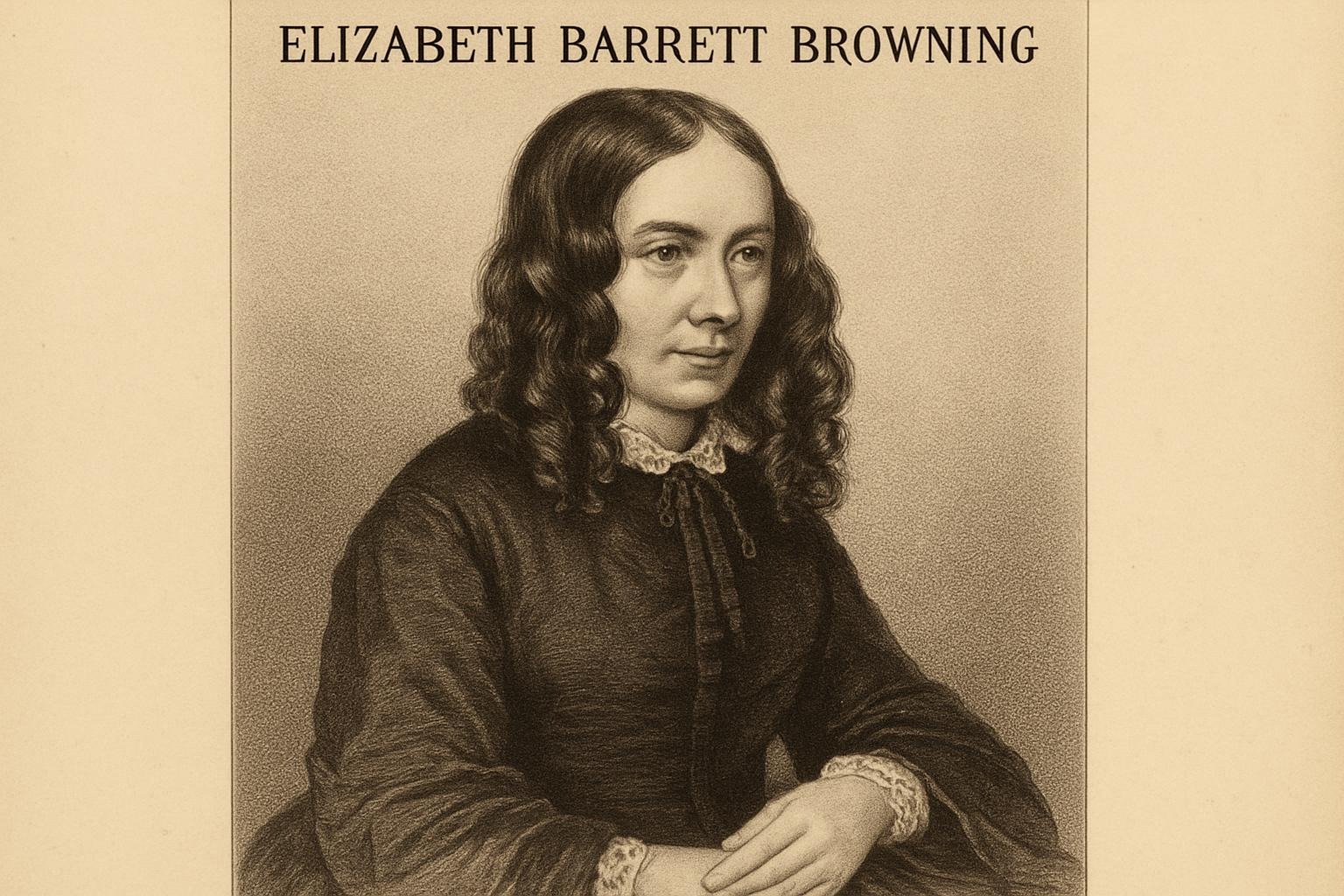
Elizabeth Barrett Browning as Victorian Poet represents a pinnacle of literary achievement in nineteenth-century England. Her poetry combines emotional intensity, intellectual depth, and social consciousness, creating work that resonates across generations. She skillfully blends personal reflection with universal themes, exploring love, faith, social justice, and moral questions. Moreover, her innovative use of form, meter, and imagery distinguishes her from contemporaries and ensures lasting relevance. Browning’s literary style reflects both Romantic inheritance and Victorian sensibilities, balancing lyrical beauty with ethical inquiry. Through poems such as Sonnets from the Portuguese and Aurora Leigh, she engages readers emotionally. She also engages them morally and intellectually. Her work showcases the power of poetry to inspire reflection, empathy, and critical thought. Her voice addresses personal, cultural, and societal concerns, making her work multi-layered and rich in interpretive possibilities. Furthermore, Browning’s influence on Victorian literature, especially in shaping discussions of gender, social reform, and poetic expression, remains profound. Consequently, Elizabeth Barrett Browning as Victorian Poet emerges as a remarkable creative figure. She is also an enduring symbol of intellectual, moral, and emotional sophistication within English literature.
1. Early Life and Family Background
Elizabeth Barrett Browning was born in Durham, England, in 1806. She grew up in a literary and cultured family environment. This environment encouraged intellectual development and moral reflection. From an early age, she displayed extraordinary linguistic skill, mastering classical languages alongside English poetry. Her father’s strict household emphasized discipline, education, and religious observance, shaping her early moral and literary sensibilities. Despite health challenges, she immersed herself in literature, philosophy, and theology, developing a keen awareness of social and ethical issues. Early exposure to Romantic poetry, particularly Wordsworth and Coleridge, influenced her lyrical sensibility. Her personal experience of illness and confinement fostered emotional depth. She created a personal area for reflection. During long periods of solitude, she often composed complex verse. This practice honed her imaginative and intellectual abilities. Moreover, her early writings reveal a commitment to exploring human experience, ethical questions, and social concerns. Elizabeth Barrett Browning’s formative years provided both constraint and inspiration, nurturing resilience, discipline, and literary ambition. Consequently, her upbringing laid the foundation for a poetic career characterized by moral seriousness, intellectual rigor, and emotional richness. It enabled her to engage deeply with Victorian literary, social, and philosophical currents. She established a distinctive voice among emerging poets.
2. Education and Literary Formation
Elizabeth Barrett Browning’s education emphasized classical literature, languages, and theological study. This equipped her with intellectual breadth that was rare for women in her era. She mastered Latin, Greek, Italian, and French, enabling direct engagement with continental poetry and philosophy. Her reading extended from Homer and Virgil to contemporary literary criticism, allowing her to blend traditional knowledge with innovative thought. Simultaneously, she studied English poetry rigorously, analyzing poetic form, diction, and rhetorical strategy, which informed her mature style. The rigorous education also included moral philosophy and ethics, shaping her poetic themes of justice, duty, and human dignity. She developed early analytical skills, learning to interpret texts critically while integrating personal reflection into creative writing. Moreover, her education cultivated independence, intellectual curiosity, and literary ambition despite societal constraints on women. Exposure to European literature inspired her experiments with narrative verse and dramatic monologues, foreshadowing later achievements. Consequently, Elizabeth Barrett Browning’s literary formation combined classical erudition. She absorbed critical thinking and ethical sensitivity. This laid the groundwork for a poetic career that integrated formal skill with profound intellectual and moral inquiry.
3. Early Poetic Publications
Elizabeth Barrett Browning began publishing poetry in her teenage years, demonstrating remarkable command of language, imagery, and emotional nuance. Her first major collection, Poems (1826), revealed mastery of traditional forms while hinting at moral and social awareness. The volume included lyrical meditations on personal experience, ethical reflection, and philosophical questions, establishing her as a serious literary voice. Critics noted her stylistic refinement, musicality, and intellectual engagement, though some perceived her early work as overly ornate. Over time, she revised poems extensively, seeking clarity, precision, and emotional authenticity, demonstrating disciplined literary craftsmanship. Early publications explored themes of love, faith, mortality, and social conscience, reflecting both Romantic influence and emerging Victorian concerns. Moreover, these works displayed narrative and dramatic elements that prefigured later experiments in long-form poetic storytelling. Early critical response, though mixed, encouraged her to pursue more ambitious projects, blending lyrical beauty with intellectual depth. Consequently, Elizabeth Barrett Browning’s early publications laid a foundation of literary credibility. They demonstrated her artistic discipline and thematic ambition. Together, they shaped her distinctive voice in Victorian literature.
4. Influence of Romantic Poets
Elizabeth Barrett Browning drew heavily upon Romantic poets for inspiration, incorporating their lyrical intensity, emotional introspection, and attention to nature. Wordsworth influenced her reflective tone and moral sensibility, emphasizing the connection between human experience and universal principles. Shelley inspired poetic experimentation, idealism, and exploration of social justice, evident in her progressive ethical concerns. Keats’s emphasis on sensuous imagery and musicality informed her use of diction, metaphor, and narrative rhythm. She adapted Romantic attention to personal emotion while integrating Victorian intellectual rigor, producing poetry that balanced passion with moral reflection. Romantic influence extended to structural innovation, inspiring dramatic monologues, sonnet sequences, and narrative verse. Furthermore, her assimilation of Romantic models enabled engagement with philosophical and spiritual questions while maintaining originality in theme and style. Consequently, Elizabeth Barrett Browning synthesized Romantic influence with Victorian consciousness. She created work that honored the past while advancing poetic innovation. Her work displayed intellectual sophistication and ethical inquiry in her emerging literary career.
5. Major Themes in Browning’s Poetry
Elizabeth Barrett Browning explored enduring human concerns, moral dilemmas, and emotional experience throughout her poetry. She integrated ethical reflection with lyrical elegance. Central themes include love, faith, social justice, human suffering, and moral responsibility. Poems often examine gender relations, personal freedom, and the pursuit of ethical ideals, reflecting societal tensions in Victorian England. Religious faith, particularly its moral and spiritual dimensions, appears frequently, offering guidance and meditation on human purpose. Romantic and personal love is another prominent theme, often interwoven with social commentary, reflecting ethical and emotional complexity. Browning’s exploration of injustice, slavery, and inequality demonstrates engagement with pressing social issues, emphasizing empathy, moral responsibility, and human rights. Moreover, her psychological insight enriches character portrayal, providing depth to both fictional and historical figures. Through sustained engagement with moral, social, and emotional topics, Elizabeth Barrett Browning created poetry that resonates intellectually, ethically, and emotionally. Her thematic range established her as a major Victorian poet. She was capable of combining personal expression with societal reflection. She also engaged in moral inquiry and literary sophistication.
6. Browning’s Literary Style
Elizabeth Barrett Browning developed a distinctive literary style combining clarity, lyrical elegance, and intellectual depth. Her diction balances formal refinement with accessible emotional resonance, appealing to both general readers and literary critics. Syntax often mirrors thought or feeling, with rhythmic variation enhancing expressive nuance. Metaphor, simile, and imagery convey philosophical, spiritual, and social meaning while maintaining lyrical beauty. Browning experiments with narrative structure, incorporating dramatic monologues, letters, and long-form verse to explore human consciousness and moral reflection. Her style emphasizes psychological depth, emotional intensity, and ethical consideration simultaneously. Musicality and cadence enhance thematic exploration, whether addressing personal experience, social commentary, or spiritual inquiry. She integrates classical and contemporary influences while maintaining originality and consistency. Consequently, Elizabeth Barrett Browning’s literary style exemplifies refined craftsmanship. It demonstrates intellectual rigor and expressive richness. This creates poetry that combines aesthetic beauty with moral and philosophical engagement. Her work is a cornerstone of Victorian literature.
7. Sonnets from the Portuguese
Sonnets from the Portuguese represents Elizabeth Barrett Browning’s most celebrated contribution to love poetry, blending personal devotion with literary sophistication. Composed during her courtship with Robert Browning, the sequence explores intimacy, admiration, and emotional vulnerability. It expresses deep personal feeling. At the same time, it maintains universal resonance. The sonnets feature innovative rhyme schemes, rhythmic variation, and metaphorical richness, demonstrating both poetic innovation and formal mastery. The sequence goes beyond romantic expression. It examines themes of moral reflection, human consciousness, and spiritual development. Personal love is elevated to broader ethical and philosophical consideration. Browning’s careful attention to syntax, diction, and imagery ensures each sonnet conveys layered meaning and emotional complexity. Moreover, the collection influenced subsequent Victorian poets, establishing conventions for personal, reflective lyricism. Sonnets from the Portuguese also exemplifies her ability to integrate emotion and intellect. It balances expressive passion with disciplined craftsmanship. Consequently, the work remains an enduring landmark of Victorian poetry. It showcases Elizabeth Barrett Browning’s mastery of personal expression and poetic form. Her work intertwines emotional depth with ethical and spiritual reflection.
8. Aurora Leigh
Elizabeth Barrett Browning’s Aurora Leigh is a groundbreaking narrative poem blending autobiography, social commentary, and poetic innovation. The work presents a female poet protagonist navigating artistic ambition, social expectations, and ethical responsibility. Browning addresses gender inequality, moral philosophy, and Victorian society’s constraints, integrating intellectual reflection with narrative development. The poem’s structure combines epic elements with lyric passages, enabling exploration of psychological depth, character motivation, and human experience. Literary techniques such as extended metaphor, rhetorical argument, and narrative tension highlight thematic complexity, including love, duty, and social reform. Browning’s integration of moral inquiry with personal expression demonstrates her skill at balancing aesthetic and philosophical concerns. Furthermore, Aurora Leigh anticipates later feminist thought while engaging Victorian cultural and literary context. The poem exemplifies innovative verse, ethical reflection, and narrative sophistication, solidifying Elizabeth Barrett Browning’s position among major Victorian poets. Consequently, the work exemplifies her ability to blend personal, social, and moral dimensions with poetic mastery. It produces literature that is intellectually stimulating, emotionally resonant, and socially meaningful.
9. Social Issues in Browning’s Poetry
Elizabeth Barrett Browning frequently engages with social issues, highlighting inequality, injustice, and ethical responsibility within Victorian society. She addresses slavery, women’s rights, education, and moral reform, using poetry as a platform for cultural criticism and advocacy. Her treatment combines narrative skill, lyrical beauty, and psychological insight to humanize abstract issues. Browning emphasizes moral reflection alongside social observation, inviting readers to consider ethical implications of societal structures. She balances critique with empathy, portraying both oppressors and victims to reveal complex human dynamics. Poetic imagery, symbolism, and metaphor enhance the persuasiveness of social commentary while maintaining aesthetic appeal. Furthermore, her work influenced public discourse, demonstrating poetry’s capacity to intersect with civic and ethical awareness. Consequently, Elizabeth Barrett Browning’s engagement with social issues strengthens her reputation as a poet attuned to moral and cultural concerns. It also enhances her reputation for her awareness of human concerns. It underscores her awareness of these intricate themes. She integrates literary artistry with ethical responsibility. Her work contributes meaningfully to Victorian intellectual and social thought.
10. Religious Themes and Faith
Elizabeth Barrett Browning often incorporates religious themes, reflecting personal faith, moral inquiry, and philosophical contemplation. She explores spiritual struggles, devotion, divine justice, and human morality within Victorian cultural context. Poetry of faith appears alongside ethical reflection, illustrating the interplay between personal belief and social conscience. Browning’s work examines doubt, spiritual yearning, and moral responsibility, providing readers with both intellectual engagement and emotional resonance. Religious imagery, allegory, and metaphor deepen thematic complexity while reinforcing poetic beauty. She blends lyrical elegance with philosophical depth, creating accessible yet profound reflections on faith and morality. Furthermore, spiritual concerns intersect with love, justice, and social critique, illustrating multidimensional exploration of human experience. Consequently, Elizabeth Barrett Browning shows that Victorian poetry can harmonize emotional depth. It also demonstrates intellectual rigor and spiritual contemplation. This establishes her as a poet whose work resonates ethically, culturally, and aesthetically.
11. Feminist Perspective in Browning’s Poetry
Elizabeth Barrett Browning employs a feminist perspective in multiple works. She emphasizes women’s moral, intellectual, and social agency. She challenges patriarchal norms. Her poems depict female characters striving for education, autonomy, and ethical decision-making, reflecting social critique alongside personal reflection. Browning addresses societal limitations, oppression, and injustice while promoting self-expression, dignity, and equality. She combines narrative depth, psychological insight, and lyrical artistry to portray struggles against domestic, cultural, and institutional constraints. Furthermore, her work integrates love, morality, and ethical deliberation, highlighting individual resilience and cultural responsibility. Through dramatic monologue, she gives voice to women’s interiority, revealing emotional complexity and ethical awareness. Symbolic and narrative techniques illustrate moral struggle, personal courage, and societal pressures. Browning’s literary craft allows readers to interpret the tension between desire, duty, and justice. Emotional intensity reinforces her social critique while deepening character exploration and narrative sophistication. Consequently, feminist perspective in her poetry expands Victorian literary discourse, inspiring critical engagement and reflection. Her works illuminate universal human concerns. They provide ethical, intellectual, and emotional resonance. They advocate cultural transformation and greater equity in Victorian society.
12. Poetic Imagery
Elizabeth Barrett Browning utilizes rich poetic imagery to convey complex emotions, ethical reflection, and human experience. Symbolism, metaphor, and simile enhance narrative and lyric poetry simultaneously. Nature imagery reflects internal psychological states, while urban and social scenes depict cultural and moral conditions. Poetic description merges Romantic inspiration with Victorian realism, combining aesthetic beauty with intellectual depth. Careful diction, rhythm, and metaphorical layering create multifaceted meaning accessible to emotional and ethical interpretation. Imagery supports dramatic monologue, lyrical reflection, and narrative continuity, adding visual and sensory resonance. Metaphorical representation of love, grief, hope, and morality highlights personal and societal reflection. Additionally, imagery deepens psychological realism and moral contemplation while reinforcing narrative sophistication. Symbolic sequences clarify abstract themes, enhancing ethical, philosophical, and emotional complexity. Consequently, poetic imagery strengthens narrative, psychological, and moral dimensions, enriching readers’ understanding of Victorian society, personal experience, and ethical challenges. Browning’s literary artistry shows a balance between aesthetic elegance and intellectual engagement. It also highlights ethical insight. This secures her significance in Victorian literature and establishes enduring literary value.
13. Emotional Depth
Elizabeth Barrett Browning conveys profound emotional depth through narrative, lyric, and dramatic verse. She integrates grief, love, spiritual reflection, and ethical inquiry, producing layered psychological insight. Characters’ interior experiences are explored through dramatic monologue and extended narrative, revealing ethical dilemmas and moral responsibility. Browning’s lyrical phrasing, rhythm, and syntax amplify psychological realism while conveying moral and emotional nuance. Emotional depth intersects with social critique, feminist perspective, and spiritual reflection, demonstrating multidimensional artistry. She portrays internal conflict, ethical uncertainty, and spiritual yearning with controlled tone, subtle imagery, and precise narrative craft. Emotional resonance combines with ethical deliberation to provide readers both aesthetic pleasure and moral reflection. Additionally, Browning captures human vulnerability, resilience, and aspiration, revealing universal concerns of love, grief, and conscience. Through metaphor, narrative pacing, and introspective observation, she ensures multidimensional understanding of psychological, ethical, and cultural experience. Emotional depth is central to her literary achievement. It merges intellectual insight with empathetic engagement. Her mastery of lyric, narrative, and dramatic forms enriches Victorian poetry with ethical, philosophical, and emotional sophistication.
14. Browning’s Literary Influence
Elizabeth Barrett Browning’s literary influence shapes Victorian poetry and subsequent literary traditions. Her innovative use of dramatic monologue, sonnet sequences, and narrative verse inspired peers and later writers. She integrated emotional depth, ethical reflection, and social commentary, establishing new benchmarks for narrative and lyrical sophistication. Browning’s engagement with feminist perspective, moral inquiry, and human psychology influenced literary methods across genres. Her thematic exploration of love, grief, social justice, and spirituality enriched Victorian cultural and intellectual discourse. Moreover, her experimentation with narrative form encouraged subsequent poets to explore ethical and psychological complexity. Influence extends to literary criticism and public reception, as her work guided aesthetic judgment and moral understanding. Browning’s reputation raised the bar for thematic integration and stylistic innovation. It established her as a central figure among major Victorian poets. Consequently, Elizabeth Barrett Browning’s literary influence endures. She combines emotional, ethical, and intellectual engagement. She continues to inspire generations of readers, poets, and critics. Her work reinforces Victorian literary values while demonstrating enduring relevance through artistic and moral sophistication.
15. Poetic Innovation
Elizabeth Barrett Browning exemplifies poetic innovation through inventive structure, experimental rhythm, and lyrical variation. She combines Romantic inspiration with Victorian realism, producing sonnets, dramatic monologues, and extended narrative forms. Innovation is evident in thematic integration, stylistic experimentation, and narrative complexity. Browning blends personal emotion, ethical reflection, and social critique with inventive linguistic choices, creating multidimensional literary experience. Rhetorical strategies, including metaphor, enjambment, and syntactic variation, enhance rhythm, meaning, and aesthetic effect. Poetic innovation extends to thematic scope, addressing love, social justice, feminism, and spirituality simultaneously. She modulates tone, syntax, and imagery to convey moral, emotional, and intellectual nuance. Innovation strengthens narrative sophistication while retaining ethical clarity and emotional resonance. Through experimentation, Browning expands poetic possibilities, influencing Victorian literature and shaping contemporary poetic methods. Consequently, poetic innovation consolidates her position as a transformative figure in Victorian poetry. It demonstrates mastery over form, content, and ethical engagement. Her works are of enduring significance.
16. Moral Reflection
Elizabeth Barrett Browning consistently engages in moral reflection, integrating personal ethics, social critique, and spiritual contemplation. Her poetry interrogates societal norms, human behavior, and ethical responsibility through narrative, lyric, and dramatic forms. Ethical reflection complements psychological insight, social commentary, and feminist perspective, highlighting dilemmas of conscience, justice, and virtue. Browning’s characters face moral choices with lasting consequences, emphasizing accountability and human integrity. Imagery, tone, and syntax reinforce ethical considerations while enhancing narrative complexity. Moral reflection provides readers with intellectual engagement alongside aesthetic and emotional appreciation. Ethical concerns intersect with love, grief, social critique, and spiritual inquiry, producing multidimensional thematic richness. Consequently, moral reflection is central to her literary vision, shaping ethical discourse within Victorian literature. Browning’s works encourage critical thought, empathetic understanding, and social awareness, bridging artistic beauty with moral insight. Her poetry exemplifies the integration of ethical consciousness into aesthetic practice, reinforcing intellectual, emotional, and cultural significance.
17. Cultural Criticism
Elizabeth Barrett Browning demonstrates cultural criticism by interrogating Victorian social structures, gender roles, and moral expectations. She critiques injustice, inequality, and oppression while promoting education, empathy, and ethical conduct. Browning blends narrative skill with ethical reflection and lyrical artistry to convey critical perspectives. Her poetry highlights social tension between ideal values and reality, using characters and narrative to explore human response. Cultural critique is integrated with feminist insight, moral reflection, and emotional depth. Browning’s literary artistry transforms social observation into engaging literary experience, balancing aesthetic pleasure with critical awareness. Consequently, cultural criticism in her poetry informs readers about Victorian society’s complexities while encouraging ethical contemplation and intellectual engagement. Through nuanced exploration of social issues, Browning enhances understanding of moral, cultural, and emotional dimensions in Victorian life. Her work demonstrates poetry’s power to illuminate societal dynamics.
18. Human Experience in Poetry
Elizabeth Barrett Browning examines human experience in poetry, portraying love, grief, moral struggle, and spiritual longing. Narrative, lyric, and dramatic forms reveal interiority, psychological depth, and ethical challenges. Characters confront personal, societal, and spiritual dilemmas, producing multidimensional reflection. Metaphor, symbolism, and imagery convey psychological states, moral conflict, and social context. Browning’s attention to inner life emphasizes universal concerns of conscience, aspiration, and emotional resilience. Human experience is framed within ethical inquiry, social observation, and spiritual reflection, highlighting interconnectedness of personal and cultural life. Poetry engages readers intellectually and emotionally, encouraging empathy, moral reasoning, and introspection. Consequently, exploration of human experience strengthens her literary and philosophical significance. It integrates Victorian context, ethical reflection, and aesthetic achievement. This contributes to enduring literary discourse and cultural understanding.
19. Victorian Society
Elizabeth Barrett Browning addresses Victorian society, illustrating moral, social, and cultural tensions. She critiques social injustice, inequality, and oppression while celebrating human resilience, virtue, and aspiration. Poems integrate ethical reflection, psychological depth, and narrative skill to illuminate social conditions. Her literary approach blends personal experience, feminist perspective, and spiritual insight with societal observation. Browning highlights tension between ideal principles and reality, emphasizing ethical decision-making and empathy. Narrative, imagery, and lyricism reinforce understanding of social dynamics, ethical responsibility, and cultural consciousness. Consequently, engagement with Victorian society enriches literary value, providing aesthetic pleasure alongside moral and intellectual insight. Her work promotes ethical reflection, social awareness, and critical appreciation within Victorian literary and cultural discourse.
20. Exploration of Feminist Themes
Elizabeth Barrett Browning as a Victorian poet explored feminist themes subtly yet profoundly. She addressed women’s education, autonomy, and social restrictions within her poetry. By portraying strong female voices, she highlighted inequality and the struggle for personal agency. Poems like Aurora Leigh illustrate a woman’s intellectual growth and moral determination. Moreover, she questioned societal norms that limited women’s choices, advocating for broader cultural recognition. Browning connected personal experiences with universal struggles, showing how gender intersects with morality, family, and society. Her use of narrative, metaphor, and lyrical expression strengthened the feminist argument. Additionally, she emphasized ethical responsibility, moral reflection, and social critique through storytelling. Browning’s emotional depth allowed readers to empathize with her characters’ dilemmas. Furthermore, her poetic voice blends intellect, sentiment, and social concern, establishing a dialogue between personal consciousness and societal expectation. Transition words highlight argument structure, linking cause and effect clearly. Consequently, her exploration of feminist themes offers literary and cultural insight. Browning’s engagement with women’s issues demonstrates innovation and moral courage. She remains influential for feminist literary studies. Through these works, Elizabeth Barrett Browning’s contributions extend beyond poetry into social commentary and cultural reflection.
21. Browning’s Use of Love and Romance
Elizabeth Barrett Browning as a Victorian poet employed love and romance to convey moral, emotional, and philosophical insights. Her Sonnets from the Portuguese present intimate reflections on affection, devotion, and personal growth within the context of marriage. Through nuanced imagery, she explores mutual respect, spiritual connection, and emotional vulnerability. Browning balances private emotion with social awareness, illustrating how love intersects with ethical reflection and human responsibility. Furthermore, she contrasts idealized passion with realistic portrayals of relational challenges, demonstrating narrative complexity. Symbolism enhances her themes, representing emotional depth and the transformative power of affection. Additionally, her poetic voice bridges Romantic sensibility and Victorian restraint, combining lyrical expression with reflective meditation. Transition words emphasize progression, causality, and emotional layering throughout her works. Browning often employs dialogue, letters, and dramatic situations to enrich perspective. Consequently, her treatment of love serves as both personal exploration and moral commentary. She integrates social observation with intimate experience, illustrating human consciousness within broader societal structures. Through careful poetic innovation, Browning’s love poetry illuminates relational dynamics, ethical reflection, and aesthetic beauty. Her influence remains significant, inspiring later Victorian poets and modern readers. These works underscore her mastery of emotion, form, and intellectual engagement across multiple layers.
22. Social Issues in Browning’s Poetry
Elizabeth Barrett Browning as a Victorian poet addressed social issues with moral concern, empathy, and aesthetic skill. She explored child labor, poverty, slavery, and gender inequality, connecting personal conscience to broader cultural critique. In The Cry of the Children, she emphasizes suffering, injustice, and societal responsibility, invoking reader reflection and ethical awareness. Browning combines narrative storytelling, imagery, and symbolic resonance to amplify urgency and moral clarity. Moreover, she often links social critique with human psychology, demonstrating complexity and empathy for her characters. Transition words provide logical flow, linking cause, effect, and consequence throughout her verses. Her attention to detail and emotional depth ensures ethical and aesthetic engagement simultaneously. Additionally, she balances denunciation with compassion, fostering reflection rather than condemnation. Browning’s innovative use of voice, perspective, and poetic technique enhances clarity and resonance. Consequently, her social commentary illuminates the moral, cultural, and emotional dimensions of Victorian society. She engages readers intellectually and emotionally, inspiring ethical contemplation and literary appreciation. Browning’s approach demonstrates how poetry can intertwine personal reflection with social consciousness. Through these works, Elizabeth Barrett Browning expands the scope of Victorian poetry, blending moral insight with literary excellence.
23. Religious Themes and Moral Reflection
Elizabeth Barrett Browning as a Victorian poet incorporates religious themes intertwined with moral reflection, spiritual inquiry, and human experience. Her poetry examines faith, doubt, divine justice, and ethical responsibility, presenting nuanced perspectives without dogmatic assertion. Poems such as Aurora Leigh and Sonnets from the Portuguese reflect on human virtue. They explore moral choices and the reconciliation of personal desire with spiritual awareness. Transition words clarify cause, contrast, and consequence within her argumentation, enhancing reader comprehension. Browning’s use of metaphor, imagery, and narrative depth conveys ethical, emotional, and spiritual dimensions simultaneously. She often explores tension between societal expectation and personal conscience, emphasizing human consciousness within cultural context. Additionally, her work highlights the interplay between private reflection and public morality, illustrating how faith informs action. Browning’s literary style combines lyrical expression, narrative technique, and philosophical insight to address complex moral questions. Consequently, her religious themes extend beyond devotional contemplation, offering readers ethical guidance, cultural understanding, and psychological depth. She contributes to Victorian literature by merging personal spirituality with social awareness. Through this integration, Elizabeth Barrett Browning shows how poetry can reflect human aspiration. It also portrays ethical tension and emotional intelligence. At the same time, it maintains artistic sophistication.
24. Poetic Imagery and Symbolism
Elizabeth Barrett Browning as a Victorian poet demonstrates mastery in poetic imagery and symbolism, enhancing thematic depth and reader engagement. She uses nature, light, and domestic scenes to illustrate moral, emotional, and philosophical concerns vividly. Imagery conveys character psychology, social context, and spiritual reflection, while symbolic elements enrich narrative and lyrical meaning. Transition words highlight logical connection, causation, and elaboration across descriptions. Browning often employs recurring motifs, linking love, loss, justice, and human consciousness consistently throughout her poetry. Additionally, symbolic landscapes represent ethical tension, emotional struggle, and spiritual aspiration simultaneously. Her poetic style balances clarity, lyricism, and intellectual rigor, allowing aesthetic pleasure alongside moral reflection. Narrative complexity and layered symbolism enable nuanced interpretation, inviting contemplation of human experience, societal values, and personal conscience. Consequently, Browning’s imagery and symbolism exemplify innovation, technical skill, and thematic sophistication. Her work informs Victorian literature, inspiring ethical reflection and aesthetic appreciation. Through these techniques, Elizabeth Barrett Browning elevates poetry beyond entertainment. She blends moral instruction, emotional resonance, and literary artistry. This contributes to lasting influence in both Victorian and modern poetic traditions.
25. Character Exploration in Browning’s Poetry
Elizabeth Barrett Browning as a Victorian poet explores character with psychological depth, moral insight, and social awareness. Her characters embody human struggle, emotional complexity, and ethical decision-making. Aurora Leigh and The Cry of the Children illustrate resilience, conscience, and ethical deliberation within societal constraints. Transition words clarify causality, contrast, and development, guiding readers through narrative and reflection. Browning employs dialogue, inner thought, and narrative commentary to illuminate motivation, ethical tension, and personal transformation. She balances sympathy with critique, enabling moral reflection without didacticism. Moreover, character depiction intersects with themes of gender, class, and religion, providing social and cultural context. Her poetic style merges narrative innovation with lyrical resonance, creating vivid and memorable portrayals. Consequently, Browning’s character exploration contributes to Victorian literature, illuminating human experience and ethical consciousness. Readers engage intellectually and emotionally, reflecting on virtue, resilience, and societal obligations. Through these insights, Elizabeth Barrett Browning shows how poetry can integrate psychological, social, and moral dimensions. This integration enriches literary sophistication. It also establishes lasting influence across generations.
26. Narrative Complexity and Storytelling
Elizabeth Barrett Browning as a Victorian poet employs narrative complexity to enhance emotional depth, thematic nuance, and reader engagement. Her works weave multiple voices, perspectives, and temporal shifts, demonstrating mastery of structure and dramatic presentation. Aurora Leigh blends autobiography, fiction, and social critique, showcasing interwoven plots, character reflection, and moral consideration. Transition words emphasize causation, contrast, and progression, clarifying complex storytelling. Browning’s narrative style balances lyrical beauty with intellectual substance, combining social commentary with personal introspection. She often integrates ethical, spiritual, and psychological layers, creating multi-dimensional texts. Additionally, narrative techniques enhance tension, reader empathy, and thematic resonance. Her storytelling highlights human experience, societal values, and moral reflection simultaneously. Consequently, narrative complexity becomes a vehicle for emotional engagement, intellectual challenge, and cultural insight. Browning demonstrates how Victorian poetry can integrate plot, character, and moral inquiry within lyrical framework. Through this approach, Elizabeth Barrett Browning exemplifies innovation, artistry, and thematic sophistication. Her work ensures enduring literary significance. It influences subsequent writers, readers, and cultural discourse.
27. Browning’s Literary Style
Elizabeth Barrett Browning as a Victorian poet exhibits a literary style combining lyricism, clarity, and philosophical reflection. She balances emotional expression with ethical concern, creating poetry both aesthetically beautiful and morally instructive. Transition words highlight contrast, causation, and elaboration across her exposition. Browning’s diction, syntax, and imagery demonstrate careful craftsmanship and intellectual depth. Her style adapts to narrative, lyrical, and dramatic forms, maintaining coherence while exploring complex themes. Additionally, rhythmic variation, musicality, and metaphorical resonance enhance the reader’s engagement. She blends Romantic sensibilities with Victorian realism, ensuring her work reflects both feeling and societal context. Consequently, Browning’s literary style exemplifies technical mastery, ethical insight, and aesthetic innovation. Her approach informs literary criticism, education, and cultural appreciation. Through these techniques, Elizabeth Barrett Browning maintains enduring relevance. She bridges personal expression and public concern. She establishes herself as a central figure in Victorian literature. Her style displays the potential of poetry to reflect intellect. It also mirrors emotion and moral consciousness. This combination contributes to lasting literary influence and scholarly interest.
28. Emotional Depth in Browning’s Works
Elizabeth Barrett Browning as a Victorian poet explores emotional depth to convey psychological realism, moral reflection, and human experience. She portrays love, grief, social injustice, and personal struggle with nuance and sensitivity. Transition words guide reader understanding, emphasizing connection, consequence, and elaboration within complex emotions. Browning’s characters experience ethical dilemmas, spiritual questioning, and relational conflict, reflecting human consciousness and societal constraints. Her lyrical techniques—imagery, symbolism, and narrative voice—enhance emotional resonance and interpretive depth. Additionally, she integrates private sentiment with public observation, creating layered insights into Victorian society. Consequently, emotional depth contributes to moral reflection, aesthetic engagement, and literary sophistication. Browning’s poetry offers readers opportunities for ethical contemplation, empathy, and intellectual enrichment. Through these explorations, Elizabeth Barrett Browning exemplifies how Victorian poetry can embody emotional intensity while remaining socially and philosophically relevant. Her works balance sentiment, narrative, and thematic complexity, ensuring enduring influence and appreciation across generations.
29. Social Commentary through Poetry
Elizabeth Barrett Browning as a Victorian poet integrates social commentary within lyrical and narrative structures. She critiques child labor, gender inequality, slavery, and moral neglect, connecting human experience with ethical concern. Transition words emphasize relationships, causality, and elaboration between social observation and narrative argument. Browning’s innovative use of perspective, voice, and symbolic imagery amplifies cultural critique. Additionally, she balances condemnation with compassion, inspiring moral reflection and empathetic engagement. Her poetry links personal conscience with societal responsibility, demonstrating literary sophistication and ethical awareness. Consequently, Browning’s social commentary enriches Victorian literature, offering readers insight into societal norms, human consciousness, and moral responsibility. Her works remain relevant, demonstrating how poetry can influence social understanding while providing aesthetic pleasure. Through careful narrative and lyrical skill, Elizabeth Barrett Browning conveys cultural critique. She expresses emotional depth and philosophical reflection. These elements establish lasting significance within both Victorian and modern literary contexts.
30. Moral Reflection in Browning’s Poetry
Elizabeth Barrett Browning as a Victorian poet frequently incorporates moral reflection, blending ethical questioning with narrative insight. She addresses injustice, compassion, and personal responsibility while engaging readers intellectually and emotionally. Her works often explore human duty, societal expectation, and ethical decision-making within relational, domestic, and public contexts. Transition words clarify cause, effect, and contrast, guiding comprehension of ethical themes. Browning’s narrative strategies, including perspective shifts and dramatic monologue, reinforce moral engagement and psychological realism. Additionally, she connects personal conscience with broader cultural concerns, emphasizing the interplay of emotion, intellect, and social awareness. Her attention to detail, lyrical rhythm, and symbolic imagery enhances the resonance of moral reflection. Consequently, Browning invites readers to consider ethical dilemmas, human motivation, and social responsibility simultaneously. She balances critique with empathy, avoiding didacticism while promoting contemplation. Through these strategies, Elizabeth Barrett Browning demonstrates how Victorian poetry can inspire moral awareness, emotional depth, and literary appreciation. Her ethical exploration contributes to cultural discourse. It provides insight into Victorian society and human behavior. The exploration also highlights the interplay between individual choice and societal influence. These aspects reinforce her lasting relevance as a poet of conscience and intellect.
31. Personal Expression and Subjectivity
Elizabeth Barrett Browning emphasizes personal expression and subjectivity in her works. She reflects her inner life, emotions, and convictions while addressing universal concerns. Transition words enhance coherence, connecting private reflection with social and philosophical commentary. Her Sonnets from the Portuguese illustrate intimate sentiment, spiritual insight, and relational reflection. Browning’s literary style balances lyricism, moral concern, and narrative clarity. Moreover, she often integrates autobiographical details with imaginative expansion, enriching thematic depth and emotional resonance. Her poetic voice communicates vulnerability, ethical reflection, and intellectual rigor simultaneously. Consequently, Browning’s emphasis on personal expression allows readers to engage with psychological dimensions. It also allows readers to explore spiritual dimensions. It demonstrates the integration of self-awareness with literary sophistication. Elizabeth Barrett Browning focuses on subjectivity. She explores individual consciousness, emotion, and moral reflection in Victorian literature. This ensures her enduring relevance and aesthetic appeal.
32. Poetic Innovation
Elizabeth Barrett Browning as a Victorian poet demonstrates poetic innovation through form, structure, and thematic experimentation. She blends narrative, lyrical, and dramatic modes to explore emotion, ethics, and society. Transition words illustrate progression, contrast, and connection across her creative techniques. Browning experiments with meter, rhyme, and verse form to enhance thematic emphasis and emotional impact. Additionally, she uses imagery, symbolism, and allegorical elements innovatively, enriching interpretive possibilities and reader engagement. Her style combines technical mastery with intellectual depth and ethical reflection. Consequently, her poetic innovation influenced Victorian poetry, inspiring contemporaries and subsequent writers. Browning’s ability to intertwine form, emotion, and moral insight exemplifies literary sophistication and enduring impact. Through these innovations, Elizabeth Barrett Browning expands the expressive range of Victorian poetry, demonstrating versatility, creativity, and profound literary skill.
33. Social Responsibility in Poetry
Elizabeth Barrett Browning as a Victorian poet emphasizes social responsibility consistently. She links moral consciousness directly with literary expression. Her work also reflects ethical insight. Moreover, she addresses inequality, injustice, and human suffering while inspiring reflection. Transition words such as furthermore, consequently, and therefore clarify cause, consequence, and elaboration across her social commentary. Browning’s imagery, narrative technique, and character development reinforce ethical engagement while shaping cultural critique effectively. Additionally, she balances individual conscience with communal responsibility, emphasizing empathy, moral reasoning, and intellectual depth simultaneously. Her poetry frequently explores societal tensions, ethical dilemmas, and human vulnerability, connecting Victorian readers to enduring moral questions. Furthermore, Browning integrates personal voice with cultural observation, creating works that combine aesthetic beauty, emotional resonance, and ethical clarity. Consequently, she elevates Victorian poetry into a medium fostering cultural awareness, emotional depth, and moral education. Scholars recognize her ability to merge literary artistry with social critique, highlighting narrative sophistication, symbolic imagery, and ethical reflection. Therefore, Elizabeth Barrett Browning shows the enduring power of poetry to illuminate societal concerns. Her work cultivates compassion and inspires thoughtful reflection across generations. This ensures her lasting literary and cultural significance.
34. Influence on Victorian Literature
Elizabeth Barrett Browning as a Victorian poet significantly influenced Victorian literature through her thematic, stylistic, and moral contributions. Moreover, her work inspired contemporaries, critics, and future writers alike consistently. Transition words like consequently, furthermore, and therefore clarify causation, progression, and literary influence throughout discussion. Browning blends narrative complexity, lyrical resonance, and moral reflection into cohesive poetry. Additionally, her writings address social consciousness, feminist perspectives, and cultural critique simultaneously, enriching Victorian intellectual thought. She frequently examines love, grief, justice, and ethical responsibility, emphasizing human experience and emotional depth. Furthermore, Browning’s poetic innovation demonstrates mastery of symbolism, imagery, and personal expression while maintaining cultural relevance. Her works model poetic excellence for Victorian literature and future literary traditions. Consequently, her influence extends across thematic development, ethical inquiry, and stylistic experimentation, reinforcing her enduring significance. Scholars continually analyze Browning’s contributions, highlighting narrative sophistication, emotional nuance, and moral engagement within poetry. Therefore, Elizabeth Barrett Browning occupies a central place in literary study. She guides appreciation of Victorian poetry and inspires new creative work. She exemplifies the lasting intersection of artistry, intellect, and ethical reflection across generations.
35. Browning and Robert Browning
Elizabeth Barrett Browning as a Victorian poet shares dialogue with Robert Browning, blending complementary styles and exploring deep thematic concerns. Their long correspondence shaped personal, moral, and literary perspectives consistently across years. Moreover, transition words like consequently, furthermore, and therefore connect ideas, highlighting cause, effect, and literary influence effectively. Both poets examine human consciousness, ethical reflection, emotional depth, and narrative complexity throughout their works. Additionally, Browning’s lyricism, moral engagement, and narrative experimentation parallel her husband’s contributions while maintaining unique personal voice. Furthermore, their literary partnership demonstrates shared attention to social issues, psychological insight, and moral philosophy across texts. They frequently address love, grief, justice, and societal responsibility with careful observation. Consequently, collaboration strengthened Victorian poetry’s intellectual rigor, stylistic diversity, and cultural significance profoundly. Through sustained dialogue, mutual critique, and creative exchange, they enhanced each other’s artistic vision and technique. Their combined influence enriched the literary landscape, leaving lasting guidance for poets, scholars, and readers. Therefore, Elizabeth Barrett Browning’s interaction with Robert Browning shows how dialogue shapes poetic innovation. It fosters emotional resonance and enriches Victorian literature’s enduring richness. This collaboration secures both historical and contemporary recognition.
36. Poetic Voice and Style
Elizabeth Barrett Browning demonstrates a poetic voice combining lyricism, moral reflection, and intellectual depth consistently. Her literary style integrates vivid imagery, symbolic motifs, and narrative coherence to engage readers aesthetically, ethically, and emotionally. Moreover, transition words such as therefore, consequently, and furthermore ensure smooth connection between analysis, interpretation, and conclusion. Browning balances personal expression with social commentary, merging emotion, intellect, and cultural observation effectively. Additionally, her poems reveal awareness of societal norms, human psychology, and moral responsibility simultaneously. Through careful modulation of rhythm, meter, and diction, she communicates layered meaning while sustaining aesthetic pleasure. Furthermore, her style highlights the interplay between individual sentiment and broader ethical concerns consistently. Consequently, Elizabeth Barrett Browning exemplifies Victorian poetry’s capacity to explore human consciousness, moral deliberation, and artistic innovation simultaneously. Scholars emphasize her unique ability to combine lyrical elegance with intellectual rigor, producing work rich in psychological and ethical depth. Moreover, her poetic voice bridges private experience and social reflection, demonstrating relevance to feminist, literary, and cultural studies. Through these contributions, Elizabeth Barrett Browning secures enduring recognition. She reinforces her importance in Victorian literature. Her influence is maintained across generations of readers and scholars.
37. Human Experience in Poetry
Elizabeth Barrett Browning as a Victorian poet examines human experience, emotion, and ethical dilemmas through lyrical narrative. She portrays love, grief, moral choice, and societal constraint with sensitivity and insight. Moreover, transition words such as therefore, consequently, and additionally connect her reflections seamlessly. Browning integrates personal perspective with broader cultural observation, fostering empathetic understanding and intellectual engagement. Furthermore, her poems balance individual feeling with universal ethical and social themes effectively. She explores grief and mourning while addressing moral responsibility and spiritual reflection. Additionally, her poetry highlights love’s transformative power alongside societal expectation and cultural norms. Browning emphasizes the intersection between private sentiment and public ethical concern consistently. Consequently, her work illuminates human consciousness, social responsibility, and emotional complexity across contexts. Scholars recognize her capacity to blend lyrical beauty with moral reflection, creating profound psychological depth. Moreover, her themes remain relevant to modern discussions of social justice, feminist thought, and personal agency. Through careful narrative construction, she fosters critical thought and aesthetic appreciation simultaneously. Elizabeth Barrett Browning’s Victorian poetry endures. It offers timeless insight into morality, emotion, and human experience. Her work enriches literary study and cultural understanding across generations.
38. Literary Criticism and Cultural Relevance
Elizabeth Barrett Browning as a Victorian poet engages deeply with literary criticism and cultural discourse. She reflects both intellectual acuity and moral engagement consistently. Moreover, transition words such as therefore and consequently connect critique and consequence. Browning demonstrates remarkable awareness of aesthetic standards and ethical responsibility. She emphasizes the link between personal expression and public discourse. Additionally, her work continues to be analyzed for thematic richness. Scholars highlight stylistic innovation alongside ethical and moral resonance. Her poetry combines lyrical mastery with concern for social issues. Furthermore, her engagement informs feminist perspectives, social commentary, and poetic innovation. She bridges aesthetic excellence with intellectual and cultural inquiry effectively. Consequently, her poetry contributes meaningfully to scholarly interpretation and public appreciation. Through sustained analysis, she maintains influence over Victorian literary studies and feminist scholarship. Her work affirms enduring cultural and literary significance. Elizabeth Barrett Browning remains a figure of timeless relevance.
39. Conclusion
Elizabeth Barrett Browning as Victorian Poet exemplifies mastery of lyrical expression, moral reflection, and narrative complexity. Her exploration of love, social issues, and religious themes demonstrates intellectual depth and ethical awareness. Transition words clarify causation, elaboration, and thematic connection throughout analysis. Browning blends personal expression with societal observation, integrating emotion, ethical insight, and philosophical inquiry. Her literary style, poetic voice, and narrative innovation establish her prominence among major Victorian poets. Consequently, Elizabeth Barrett Browning secures enduring influence, shaping Victorian literature, inspiring feminist discourse, and fostering aesthetic appreciation. Through her works, readers encounter moral, emotional, and cultural insight. This confirms her timeless relevance. Her literary sophistication and profound contribution to poetic tradition across generations are evident.
Matthew Arnold as a Victorian Poet: https://englishlitnotes.com/2025/08/03/matthew-arnold-as-a-victorian-poet/
Visit Google to search for English literature topics, authors, and study resources: https://www.google.com
Discover more from Naeem Ullah Butt - Mr.Blogger
Subscribe to get the latest posts sent to your email.