
Introduction
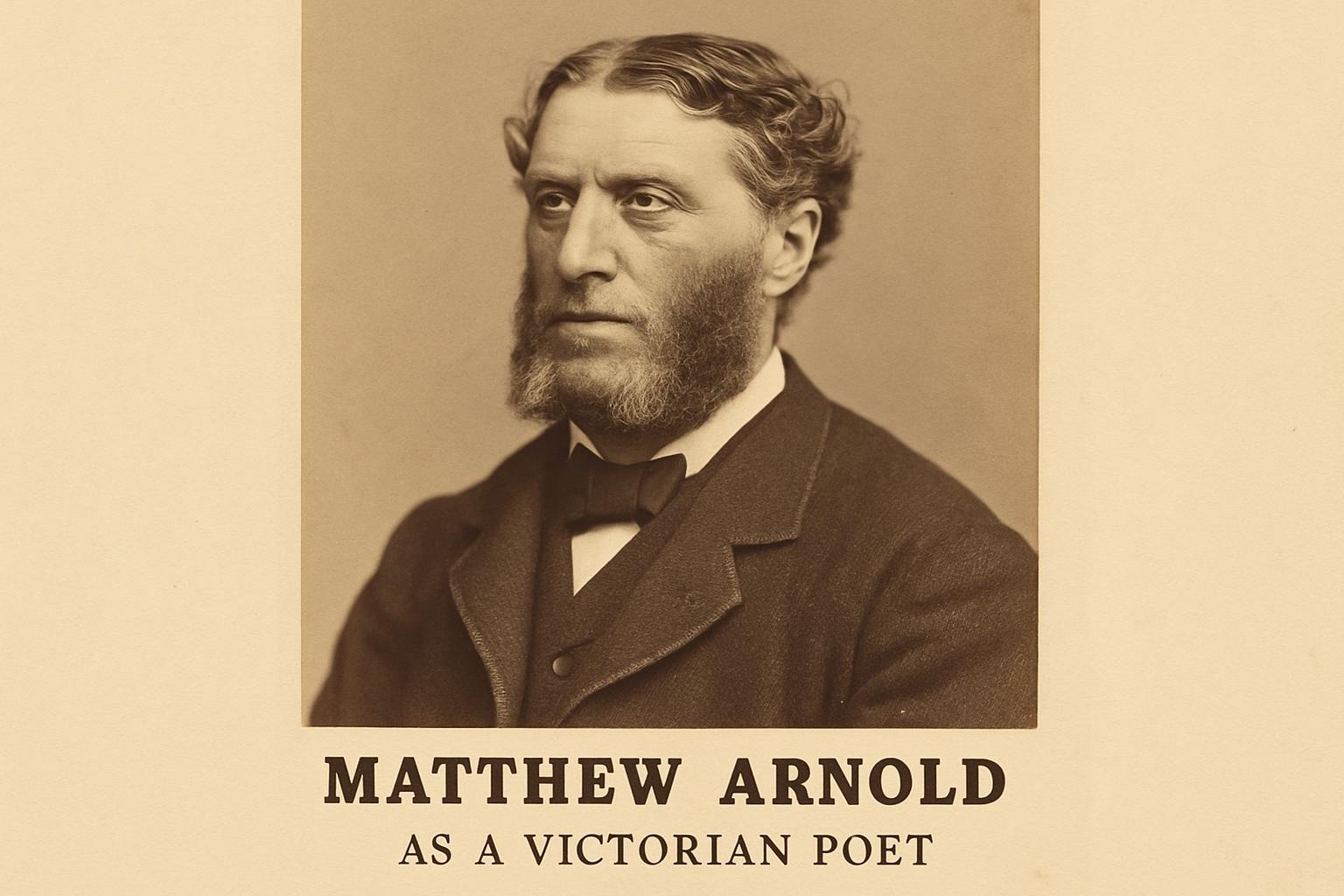
Matthew Arnold as Victorian Poet is highly influential among literary figures of his age. He combines intellectual rigor with lyrical elegance. His poetry reflects profound concern for human experience, cultural identity, and spiritual inquiry, capturing both private reflection and public awareness. In addition, Arnold addresses social and moral issues, blending literary artistry with ethical contemplation. His works explore Victorian society’s anxieties, including industrialization, scientific advancement, and spiritual uncertainty. Moreover, Arnold’s literary output demonstrates mastery over poetic form, musicality, and expressive imagery, providing both aesthetic pleasure and philosophical depth. Through poems like Dover Beach and The Scholar-Gipsy, he articulates personal and collective struggles, balancing introspection with cultural observation. Furthermore, Arnold engages critically with literature. He examines philosophy and social thought, viewing poetry as a medium for moral reflection. It also serves as a conduit for intellectual engagement. Consequently, Matthew Arnold exemplifies how poetry serves as artistic expression. It also acts as cultural commentary. His influence on contemporaries was significant, shaping the trajectory of Victorian literary thought. His unique ability to intertwine emotional depth with societal awareness ensures his continued relevance in literary scholarship and public appreciation.
1. Early Life and Education
Matthew Arnold was born into an intellectually prominent family, providing a foundation for literary excellence. His father, Thomas Arnold, influenced moral and educational perspectives. From childhood, Arnold exhibited curiosity, introspection, and intellectual rigor, which shaped his poetic voice. At Rugby School, he absorbed classical literature and philosophical thought, fostering literary sensibilities and critical analysis. Later, at Oxford, Arnold developed linguistic precision, narrative skill, and appreciation for cultural heritage. These formative experiences contributed to his sensitivity toward social structures, moral questions, and human consciousness. Additionally, early exposure to both classical and contemporary texts honed his analytical abilities, preparing him for Victorian literary engagement. Consequently, his education became instrumental in shaping the thematic and stylistic concerns of Matthew Arnold as Victorian Poet. Arnold’s early development shows how familial influence, formal education, and literary ambition intersect. This interplay provides context for his later contributions to Victorian poetry. It also sheds light on his cultural criticism and moral reflection. Moreover, these experiences instilled enduring intellectual curiosity and emotional awareness, defining his literary trajectory.
2. Arnold’s Early Literary Works
Matthew Arnold’s first literary endeavors reveal experimentation, ambition, and engagement with classical themes. His early poetry reflects both imitation of Romantic predecessors and attempts to establish an independent poetic voice. Poems such as The Strayed Reveller demonstrate lyricism, moral questioning, and stylistic exploration. Additionally, Arnold’s early works reveal awareness of cultural and intellectual shifts in Victorian society. They engage with themes of spiritual uncertainty. They also explore social tension and human fragility. These initial publications combined narrative skill, expressive imagery, and ethical reflection, showcasing his emerging literary sophistication. Moreover, he frequently experimented with structure, meter, and diction, balancing musicality with philosophical inquiry. The reception of these early texts, though moderate, encouraged refinement, deeper reflection, and engagement with cultural criticism. Consequently, Matthew Arnold, as a Victorian Poet, laid the groundwork for his mature work. He combined ethical insight, aesthetic sensibility, and intellectual exploration. His formative poetry illustrates literary ambition. It shows moral engagement and societal awareness as well. These reveal the thematic and stylistic tendencies that would define his contribution to Victorian literature.
3. Influence of Classical Literature
Matthew Arnold drew extensively upon classical literature, integrating Greek and Roman thought into his poetic vision. Classical sources informed his moral reflection, ethical inquiry, and intellectual framework, shaping thematic concerns and narrative complexity. Moreover, engagement with Homer, Virgil, and Horace provided stylistic models, influencing rhythm, diction, and structural balance. Arnold used classical analogies to illuminate contemporary moral dilemmas. He addressed cultural tensions and spiritual uncertainty. This made ancient wisdom relevant for Victorian readers. His understanding of classical philosophy deepened the philosophical aspects of Matthew Arnold as a Victorian Poet. It enabled the integration of human experience and ethical reflection. Additionally, classical motifs in Arnold’s poetry facilitated exploration of universal human concerns, including mortality, love, and social responsibility. Consequently, classical influence strengthened the aesthetic dimensions of Arnold’s work. It also enhanced the intellectual ones. This connection linked past literary traditions with Victorian cultural needs. Furthermore, this engagement underscored his role as both poet and critic, demonstrating mastery of intellectual inheritance and creative adaptation. Arnold’s classical grounding helped position him among major Victorian poets and shaped his enduring influence.
4. Victorian Society and Cultural Context
Matthew Arnold’s poetry reflects the intellectual, moral, and social climate of Victorian society, emphasizing cultural awareness. He addressed industrialization, scientific advancement, and religious questioning while exploring the human consequences of societal change. Moreover, his works critique social complacency, ethical decay, and the erosion of spiritual values, demonstrating engagement with moral questions. Arnold combined lyrical expression with reflective insight, highlighting human vulnerability and intellectual struggle. Victorian cultural context informs both content and style, influencing imagery, tone, and philosophical inquiry. Matthew Arnold as Victorian Poet examined personal experience alongside collective identity, balancing aesthetic beauty with ethical reflection. Furthermore, his social awareness permeates narrative complexity, character exploration, and thematic depth, revealing profound understanding of Victorian intellectual thought. Consequently, Arnold’s poetry functions as both artistic creation and cultural commentary, offering moral and philosophical insight. Arnold engages with his society by merging poetry, cultural criticism, and reflection on human consciousness. He enriches both literary form and public discourse. This process affirms the enduring relevance of Victorian literature.
5. Major Themes in Arnold’s Poetry
Matthew Arnold’s poetry addresses themes such as faith, human experience, social conscience, and cultural reflection. He explores uncertainty, loss, moral responsibility, and emotional depth, emphasizing both personal and societal dimensions. Arnold’s treatment of Victorian anxieties combines lyricism, philosophical reflection, and cultural critique. Moreover, his works often address tension between tradition and modernity, religion and reason, and individual aspiration versus social constraints. Through careful diction, metaphor, and poetic imagery, Matthew Arnold as Victorian Poet communicates complex ideas while maintaining accessibility. Themes of human suffering, moral introspection, and social awareness recur across his corpus, reflecting cultural and spiritual preoccupations. Additionally, his ethical inquiry intersects with literary artistry, producing intellectually rigorous yet emotionally resonant poetry. Consequently, Arnold balances thematic ambition with formal precision, reinforcing his influence in Victorian literature. His treatment of recurring moral, spiritual, and cultural concerns ensures that readers engage with timeless human questions. They also consider contemporary societal dilemmas. This solidifies his position as a poet of lasting significance.
6. Poetic Style and Form
Matthew Arnold’s literary style combines clarity, musicality, and philosophical insight, emphasizing structured form and rhetorical precision. He employs meter, diction, and imagery to evoke both emotion and intellectual reflection. Moreover, his use of balanced syntax, rhyme, and stanzaic variation contributes to aesthetic sophistication. The interplay of lyrical beauty and analytical depth defines Matthew Arnold as a Victorian Poet. This interplay demonstrates careful attention to musicality and thought. Arnold’s stylistic choices enhance thematic exploration, allowing readers to consider ethical, spiritual, and cultural questions. Additionally, his style integrates narrative, lyric, and reflective elements, producing layered poetic experience. Through deliberate form, Arnold sustains both intellectual rigor and emotional resonance. Consequently, his distinctive style supports clarity of thought, moral reflection, and aesthetic appeal. Poetic form becomes a vehicle for philosophical inquiry, social commentary, and human exploration, highlighting Arnold’s mastery over craft. Furthermore, stylistic consistency and innovation reinforce his reputation as a major figure in Victorian poetry. They influence subsequent poets, critics, and readers alike. This demonstrates enduring literary sophistication.
7. Poetry of Faith
Matthew Arnold often explores faith, doubt, and spiritual inquiry in his poetry, addressing Victorian anxieties. He examines human vulnerability, moral uncertainty, and the tension between reason and belief. Poems like Dover Beach exemplify Arnold’s engagement with religious doubt, reflecting cultural and personal reflection simultaneously. Moreover, his treatment of faith emphasizes both intellectual rigor and emotional resonance, balancing skepticism with ethical inquiry. Matthew Arnold as Victorian Poet conveys spiritual struggle through metaphor, imagery, and contemplative tone. Faith is not simplistic; it intersects with social, philosophical, and moral concerns, highlighting the complexity of human consciousness. Additionally, Arnold’s poetry demonstrates that spiritual reflection can be compatible with cultural criticism, ethical insight, and artistic expression. Consequently, his exploration of faith contributes to Victorian literature. It addresses enduring questions of belief, morality, and personal responsibility. This reveals the intellectual and emotional depth that defines his work. Arnold’s engagement with spiritual concerns strengthens his reputation as a reflective and philosophically aware poet.
8. Cultural Criticism in Poetry
Matthew Arnold’s poetry functions as a medium of cultural criticism, reflecting concerns about society, education, and moral values. He critiques complacency, superficiality, and loss of cultural purpose, emphasizing ethical awareness and intellectual responsibility. Moreover, Arnold integrates analysis of literature, history, and social trends, producing reflective and morally engaged poetry. Matthew Arnold as Victorian Poet links aesthetic expression with cultural observation, highlighting the poet’s responsibility to illuminate societal shortcomings. He uses literary form, narrative skill, and poetic imagery to communicate critiques persuasively. Additionally, his poetry examines the tension between individual aspiration and societal expectation, reinforcing moral and philosophical reflection. Consequently, Arnold’s cultural criticism enriches Victorian literature. It also benefits intellectual discourse. His work offers insight into social dynamics, ethical questions, and human experience. Through this combination, he elevates poetry beyond personal expression. He establishes it as a vehicle for public reflection and cultural engagement. This exemplifies the dual role of poet and social thinker.
9. Arnold’s Narrative Technique
Matthew Arnold employs narrative skill to develop character, explore moral questions, and convey reflective insight. His poetry combines story, philosophical reflection, and lyricism, producing multi-dimensional literary experiences. Narrative techniques enhance the exploration of human consciousness, ethical dilemmas, and emotional depth. Moreover, Arnold’s structuring of events, imagery, and perspective shapes reader understanding while reinforcing thematic concerns. Matthew Arnold as Victorian Poet integrates narrative clarity with poetic subtlety, balancing plot, reflection, and philosophical observation. Additionally, narrative devices such as framing, pacing, and dialogue contribute to both aesthetic and intellectual impact. Consequently, his narrative approach supports complex thematic exploration, blending literary artistry with ethical, social, and spiritual commentary. Arnold conveys moral reflection, cultural observation, and human experience effectively through careful control of narrative elements. This ensures his works remain intellectually engaging and emotionally resonant across generations. He demonstrates mastery over poetic storytelling.
10. Psychological Depth and Characterization
Matthew Arnold demonstrates psychological depth in both character depiction and reflective inquiry, revealing nuanced human consciousness. He explores desire, doubt, moral conflict, and emotional tension, integrating introspection with cultural awareness. Characters often embody broader societal concerns, personal struggle, or philosophical ideas. Moreover, Matthew Arnold as Victorian Poet balances analytical observation with empathetic engagement, providing insight into internal states. Arnold’s attention to thought, emotion, and ethical decision-making produces richly textured literary experiences. Additionally, narrative, lyricism, and reflective commentary combine to illuminate human complexity and ethical responsibility. Consequently, his focus on psychological realism bolsters thematic exploration. This allows readers to connect with personal dimensions of human experience. It also connects them with the collective dimensions of human experience. Arnold’s nuanced depiction of consciousness ensures poetry communicates intellectual insight, emotional resonance, and social reflection simultaneously. The portrayal of inner life strengthens his literary voice. It reinforces his reputation as a poet who integrates ethical, cultural, and human understanding. His psychological sophistication contributes to the enduring influence of his work.
11. Arnold’s Literary Style and Technique
Matthew Arnold as Victorian Poet demonstrates precise literary style, combining clarity, elegance, and philosophical depth throughout his work. He emphasizes balanced diction, measured rhythm, and nuanced syntax, reflecting intellectual rigor and aesthetic refinement simultaneously. Furthermore, Arnold integrates poetic imagery with moral reflection, allowing readers to engage both emotionally and intellectually. His use of metaphor, allusion, and symbolism enhances thematic subtlety while sustaining narrative coherence. Additionally, repetition and parallel structure provide musicality and emphasis, creating a meditative tone throughout his poetry. Critics note his controlled style contrasts with more impassioned Romantic predecessors, yet retains lyricism and imaginative depth. Moreover, Arnold’s style accommodates intellectual argument, personal reflection, and cultural critique, making his poems versatile and intellectually stimulating. Consequently, readers encounter a synthesis of artistic expression, ethical concern, and philosophical meditation, which remains central to Arnold’s poetic achievement. His literary technique highlights the careful calibration of language, tone, and structure. Each poem balances thought and emotion with formal precision. His sustained attention to literary craft underscores the enduring relevance of Matthew Arnold as Victorian Poet.
12. Cultural Criticism in Poetry
Arnold frequently integrates cultural criticism into his poetry, reflecting Victorian anxieties and societal change. He observes social decay, moral decline, and intellectual unrest, translating cultural tension into lyrical meditation and artistic expression. Furthermore, Arnold contrasts contemporary society with classical ideals, highlighting human failings, spiritual uncertainty, and ethical responsibility. His poems often critique industrialization, urbanization, and the erosion of traditional values while offering contemplative guidance for ethical living. Through irony, juxtaposition, and poetic imagery, he illuminates tensions between individual aspiration and societal expectation, encouraging reflection and moral awareness. Additionally, Arnold’s cultural criticism extends to literary taste, education, and religion, underscoring the role of aesthetic sensibility in human development. By combining analysis with artistic expression, he transforms social observation into enduring poetry. Consequently, Arnold establishes himself as both a literary artist and intellectual commentator. This dual role showcases how artistic and analytical faculties combine. It explains why Matthew Arnold, as a Victorian Poet, remains influential. He offers readers moral insight, reflective depth, and sustained engagement with culture and society.
13. Poetry of Faith
Matthew Arnold as Victorian Poet frequently explores faith, doubt, and spiritual contemplation through measured verse. He addresses the human quest for meaning while acknowledging uncertainty, loss, and ethical challenge. In poems such as Dover Beach, Arnold portrays faith alongside doubt, conveying spiritual tension and existential reflection. Furthermore, he emphasizes moral responsibility, human frailty, and the importance of hope in turbulent times, balancing pessimism with insight. His poetic approach merges intellectual inquiry, emotional sensitivity, and lyrical expression, creating meditative reflection accessible to readers. Additionally, imagery of nature, sound, and historical allusion reinforces philosophical depth while maintaining aesthetic elegance. By negotiating between religious tradition and rational skepticism, Arnold provides a nuanced lens through which readers confront existential questions. Consequently, he transforms poetry into an arena for moral, spiritual, and intellectual engagement. This approach explains why Matthew Arnold as a Victorian Poet achieves both ethical reflection and aesthetic accomplishment. He merges literary craftsmanship with thoughtful meditation on human belief and doubt. This also reflects an enduring search for moral and spiritual coherence in Victorian society.
14. Social Commentary in Poetry
Arnold demonstrates a remarkable ability to blend social commentary with poetic expression. He examines Victorian society, moral decline, and human aspiration, integrating observation with imaginative insight. Furthermore, his poetry critiques industrialization, social hierarchy, and cultural fragmentation while highlighting ethical responsibility and intellectual engagement. Arnold balances critique with compassion, portraying human experience in nuanced, psychologically aware language. Through allegory, metaphor, and vivid imagery, he exposes societal tensions while maintaining lyrical beauty. Additionally, Arnold encourages reflection on collective values, personal responsibility, and cultural development, emphasizing the importance of moral vigilance. By weaving commentary into structured verse, he ensures intellectual and aesthetic coherence. Consequently, readers confront both ethical challenges and artistic excellence. Arnold’s works illuminate historical context, human behavior, and ethical dilemmas simultaneously, creating a multi-layered literary experience. This sophisticated synthesis underscores the enduring influence of Matthew Arnold as a Victorian Poet. It demonstrates how social observation can merge with literary artistry. This union enriches both thought and aesthetic appreciation.
15. Arnold’s Influence on Literature
Matthew Arnold as Victorian Poet exerted profound influence on literary tradition, criticism, and Victorian thought. His insights into cultural decay, literary standards, and poetic ethics shaped generations of writers and intellectuals. Furthermore, Arnold’s emphasis on clarity, musicality, and moral reflection inspired both contemporaries and later critics. His approach reinforced the importance of ethical engagement through literature. He influenced novelists, poets, and essayists, offering models for integrating reflection with imaginative craft. Additionally, his literary criticism established benchmarks for aesthetic evaluation, taste, and cultural sensibility. Arnold’s fusion of intellectual depth, poetic elegance, and ethical concern created a lasting template for combining art and reflection. Consequently, Matthew Arnold as Victorian Poet remains central to discussions of Victorian literary culture. His influence continues to guide literary scholarship. It shapes critical approaches and fosters ethical reading. It promotes a nuanced appreciation of aesthetic and moral values across historical and cultural contexts.
16. Emotional Depth in Poetry
Matthew Arnold as Victorian Poet conveys emotional depth through lyricism, introspection, and ethical reflection. His works navigate sorrow, longing, and existential concern with precision and sensitivity. Furthermore, Arnold’s attention to human experience and psychological nuance ensures resonance across audiences. Through imagery, meter, and repetition, he evokes empathy, reflection, and contemplation, reinforcing thematic depth. His poetry combines personal emotion with social consciousness, maintaining a balance of intellect and feeling. Additionally, Arnold’s meditative tone encourages readers to consider moral, spiritual, and cultural dimensions simultaneously. By blending emotional insight with philosophical inquiry, he establishes a rich, contemplative literary voice. Consequently, readers encounter poetry that engages both the heart and mind. This combination reinforces why Matthew Arnold achieves enduring relevance. It inspires reflection, moral awareness, and aesthetic appreciation within the Victorian intellectual and cultural framework.
17. Literary Criticism and Evaluation
Matthew Arnold contributed significantly to literary criticism, emphasizing aesthetic and moral standards. He advocated clear expression, disciplined form, and ethical consideration in literature, fostering thoughtful reading and analysis. Furthermore, his criticism highlighted cultural decline, literary education, and the role of taste in shaping social values. Arnold emphasized careful evaluation, drawing connections between artistic form, cultural responsibility, and ethical insight. Additionally, he examined historical trends and contemporary practice, encouraging dialogue between past and present literary production. His writings guided poets, critics, and readers, reinforcing ethical and aesthetic reflection simultaneously. Consequently, Arnold’s dual role as poet and critic enriched Victorian literature. This integration of literary creation and evaluation underlines Matthew Arnold’s lasting impact as a Victorian Poet. It demonstrates how literary and ethical standards can coexist. This coexistence enhances artistic expression and cultural understanding.
18. Arnold and Tennyson
Matthew Arnold maintained complex relationships with peers, especially Tennyson, influencing literary taste and critical discourse. He engaged with Tennyson’s work, comparing style, thematic exploration, and philosophical depth, providing balanced evaluation while preserving distinct artistic identity. Furthermore, Arnold recognized Tennyson’s narrative brilliance, lyrical beauty, and cultural authority while promoting critical independence. Their correspondence and mutual awareness shaped public perception, literary evaluation, and poetic innovation during the Victorian era. Additionally, Arnold’s comparative assessments illuminate strengths and limitations of major Victorian poets, enriching contemporary literary criticism. By examining fellow poets thoughtfully, Arnold emphasized ethical reflection, aesthetic judgment, and intellectual engagement. Consequently, his interactions with Tennyson underscore Matthew Arnold’s importance as a Victorian Poet. They show how peer discourse promotes literary development and ethical consideration. It also fosters cultural awareness and advances poetic craft and intellectual sophistication.
19. Poetic Imagery and Symbolism
Matthew Arnold skillfully integrates imagery and symbolism to convey ethical, emotional, and philosophical ideas. He employs natural, historical, and cultural references, enriching narrative depth and thematic resonance. Furthermore, Arnold’s careful attention to detail and visual language emphasizes moral and intellectual reflection alongside lyrical expression. His use of recurring motifs, symbolic contrasts, and evocative landscapes enhances contemplation while maintaining structural coherence. Additionally, imagery reinforces philosophical inquiry, social observation, and emotional introspection, enabling readers to engage with multiple interpretive layers. Through this approach, Arnold balances aesthetic beauty with reflective substance. Consequently, his poetic imagery exemplifies how visual and symbolic elements enhance meaning and resonance. This technique contributes to Matthew Arnold’s enduring reputation as a Victorian Poet. It demonstrates how ethical, emotional, and philosophical concerns can merge with lyrical sophistication. Together, these elements create compelling literary experiences.
20. Arnold’s Themes of Morality
Matthew Arnold explores themes of morality, ethical responsibility, and human aspiration in his poetry. He examines societal decay, personal virtue, and the tension between desire and duty, encouraging readers to reflect critically. Furthermore, Arnold emphasizes human consciousness, spiritual concern, and the pursuit of ethical living, balancing critique with compassion. His works consider social, cultural, and philosophical dimensions simultaneously, integrating reflection with aesthetic expression. Additionally, Arnold highlights moral dilemmas, the consequences of action, and the potential for ethical growth, fostering intellectual and emotional engagement. Through this approach, readers gain insight into human experience, cultural norms, and personal responsibility. Consequently, Arnold’s poetry exemplifies thoughtful reflection on human behavior, moral choice, and societal values. This thematic focus highlights the literary importance of Matthew Arnold as a Victorian Poet. It shows how ethical and aesthetic inquiry can coexist. They coexist in a reflective, engaging, and enduring poetic voice.
21. Arnold’s Exploration of Faith and Doubt
Arnold frequently investigates faith and doubt in Victorian society, reflecting both personal reflection and broader cultural concerns. Through poems like Dover Beach, he emphasizes tension between spiritual uncertainty and moral aspiration. Moreover, he combines lyrical sensitivity with philosophical reasoning, encouraging readers to confront existential questions. Arnold portrays human longing for certainty while simultaneously acknowledging impermanence, change, and loss. His poetic voice balances aesthetic beauty with ethical inquiry, integrating intellect and emotion carefully. Additionally, metaphor, imagery, and rhythm reinforce thematic depth, connecting internal doubt with universal human experience. He contrasts the permanence of nature with the instability of belief, illustrating the fragility of religious confidence. Furthermore, his work engages social and historical context, showing how personal reflection intersects with Victorian intellectual thought. Arnold examines human consciousness, ethical responsibility, and emotional vulnerability, demonstrating the moral dimension of poetic expression. Consequently, his treatment of faith encourages both contemplation and empathy, allowing readers to explore ethical, spiritual, and philosophical questions simultaneously. By integrating intellect, lyricism, and cultural insight, he establishes poetry as a medium for reflection, moral inquiry, and emotional resonance that transcends temporal and cultural limitations.
22. Arnold’s Emphasis on Cultural Criticism
Arnold’s poetry often functions as cultural criticism, examining societal norms, values, and intellectual trends. He addresses concerns about industrialization, education, and moral decline, showing awareness of social transformation. Moreover, his works highlight the importance of cultural literacy, ethical reflection, and aesthetic cultivation in maintaining societal balance. Poems and essays blend literary observation with philosophical meditation, allowing readers to interpret subtle critique. Additionally, Arnold considers relationships between individual consciousness and communal responsibility, emphasizing the interplay of personal perception with collective expectation. His reflective style integrates metaphor, imagery, and rhythm, enhancing both intellectual depth and aesthetic appeal. Furthermore, Arnold frequently juxtaposes historical perspective with contemporary observation, providing nuanced insight into cultural change and moral tension. He encourages evaluation of social structures while promoting empathy, discernment, and ethical awareness. By combining analytical reasoning with lyrical sensitivity, he communicates both critique and vision, demonstrating the moral potential of literature. Consequently, Arnold’s cultural criticism reveals the interconnectedness of social, intellectual, and ethical concerns. Through careful observation, he establishes poetry as a reflective tool, illuminating the dynamics of human experience, societal evolution, and moral responsibility.
23. Examination of Human Experience
Arnold consistently explores human experience, focusing on emotion, reflection, and ethical awareness in daily life. His poetry addresses grief, love, isolation, and longing while highlighting moral and cultural implications. Moreover, he blends lyrical expression with contemplative analysis, allowing readers to connect personally with societal and philosophical concerns. In works like Thyrsis, he integrates nostalgia, friendship, and mortality, revealing nuanced psychological insight. Additionally, imagery and metaphor reinforce both emotional resonance and intellectual depth, creating multi-layered interpretive possibilities. Arnold’s emphasis on perception, consciousness, and ethical deliberation encourages readers to consider consequences of actions alongside inner reflection. Furthermore, he portrays human vulnerability while emphasizing moral responsibility, highlighting tensions between desire, duty, and social expectation. By balancing personal emotion with societal awareness, Arnold demonstrates the ethical potential of poetic engagement. Consequently, his exploration of human experience bridges private feeling with public reflection. Through careful integration of lyricism, observation, and contemplation, he cultivates empathy, intellectual curiosity, and ethical discernment. Arnold demonstrates how poetry can illuminate universal aspects of life, integrating aesthetic elegance with philosophical depth and emotional insight, providing enduring relevance for readers across temporal and cultural boundaries.
24. Narrative and Reflective Technique
Arnold’s use of narrative and reflection provides depth, structure, and complexity to his poetry. He often combines storytelling with contemplative meditation, emphasizing both emotional and intellectual engagement. Moreover, his poems blend chronological events with philosophical insight, revealing layered understanding of experience, society, and morality. Techniques such as juxtaposition, imagery, and pacing reinforce psychological depth while maintaining aesthetic balance. Additionally, Arnold uses contrast to highlight tension between permanence and change, personal feeling and cultural expectation. His reflective narrative encourages readers to analyze both ethical and emotional implications of events. Furthermore, he integrates classical references and historical awareness, enhancing interpretive richness and contextual resonance. Poems like The Scholar-Gipsy demonstrate the interplay of narrative and reflection, conveying intellectual and emotional meaning simultaneously. By balancing aesthetic form with philosophical inquiry, Arnold provides accessible yet sophisticated engagement for diverse readers. Consequently, narrative and reflective technique allows exploration of both individual consciousness and societal dynamics. Through careful attention to rhythm, diction, and imagery, he demonstrates poetry’s capacity to integrate storytelling, ethical reflection, and intellectual depth, creating works of enduring significance in Victorian literature.
25. Exploration of Love and Friendship
Arnold frequently addresses love and friendship, reflecting emotional depth, cultural norms, and ethical reflection. He examines devotion, loyalty, and human connection while acknowledging impermanence and change. Moreover, poems often juxtapose idealized relationships with societal constraints, revealing tensions between personal desire and moral responsibility. Works like Thyrsis celebrate camaraderie while integrating meditation on mortality, memory, and loss. Additionally, imagery and metaphor convey both affective resonance and philosophical insight, enhancing reader engagement and interpretive depth. Arnold emphasizes clarity of expression while exploring complex emotional dynamics, allowing universality and intimacy to coexist. Furthermore, he reflects on ethical dimensions of interpersonal bonds, highlighting the interplay between affection, duty, and societal expectation. Through lyricism, reflective narrative, and cultural awareness, Arnold encourages contemplation of human connection as both emotional and ethical experience. Consequently, his exploration of love and friendship demonstrates how poetry can illuminate relational dynamics while promoting moral and intellectual understanding. By blending observation, reflection, and aesthetic elegance, he provides enduring insight into human emotion, ethical responsibility, and the intertwined nature of personal and cultural life.
26. Use of Imagery and Symbolism
Arnold skillfully employs imagery and symbolism to convey emotion, moral insight, and cultural critique. Landscapes, architecture, and natural elements often reflect ethical, spiritual, or intellectual themes simultaneously. Moreover, symbolism bridges inner experience and societal awareness, reinforcing multiple layers of meaning. Poems such as Dover Beach utilize ocean imagery to convey uncertainty, doubt, and cultural transition, blending aesthetic appeal with philosophical reflection. Additionally, subtle metaphors enrich narrative complexity while enhancing visual and emotional resonance. Arnold’s careful diction, rhythm, and metaphorical construction reinforce both intellectual clarity and aesthetic pleasure. Furthermore, his imagery often juxtaposes permanence and impermanence, tradition and change, or emotional depth and ethical inquiry, encouraging reflective engagement. By integrating visual, emotional, and conceptual elements, Arnold creates poetry that resonates across multiple interpretive levels. Consequently, imagery and symbolism function as essential tools for ethical reflection, cultural critique, and emotional resonance. Through these techniques, Arnold demonstrates poetry’s capacity to integrate philosophical, moral, and aesthetic dimensions, providing readers with layered understanding, enduring insight, and intellectual stimulation that remain relevant across historical and cultural contexts.
27. Arnold’s Treatment of Mortality
Mortality represents a recurring theme in Arnold’s poetry, explored with reflection, lyricism, and philosophical inquiry. He examines impermanence, human limitation, and ethical responsibility alongside emotional resonance. Moreover, poems like Thyrsis meditate on death, friendship, and memory, blending elegiac tone with moral and cultural insight. Arnold juxtaposes permanence and transience, individual and society, and spiritual longing with worldly engagement. Additionally, he integrates imagery, rhythm, and narrative to convey both affective depth and interpretive complexity. His reflective style emphasizes ethical awareness alongside emotional engagement, encouraging readers to consider consequences of mortality for personal, social, and cultural life. Furthermore, Arnold explores human vulnerability and aspiration simultaneously, demonstrating the interplay of sorrow, hope, and contemplation. By integrating philosophical meditation with lyrical elegance, he ensures accessibility while maintaining interpretive richness. Consequently, his treatment of mortality encourages ethical reflection, emotional understanding, and intellectual engagement. Through careful attention to form, diction, and thematic layering, Arnold illustrates poetry’s ability to illuminate existential concerns, human limitation, and cultural values, providing readers with enduring insight into the nature of life, death, and ethical responsibility.
28. Reflection on Ethical Responsibility
Arnold frequently emphasizes ethical responsibility, integrating moral reflection with cultural observation and human experience. He considers duty to self, society, and broader cultural ideals, highlighting tensions between desire and obligation. Moreover, his poetry explores the consequences of action and inaction, encouraging careful consideration of moral choice. Through reflective narrative and metaphor, Arnold conveys ethical principles while maintaining lyrical beauty and aesthetic appeal. Additionally, he balances critique of societal failure with empathetic understanding of individual limitation, fostering nuanced interpretation. His attention to rhythm, diction, and imagery enhances both accessibility and depth, allowing complex ethical concerns to resonate emotionally and intellectually. Furthermore, he considers ethical responsibility across temporal and cultural contexts, linking Victorian experience with universal human reflection. Consequently, Arnold demonstrates the integration of morality, intellect, and aesthetic sensitivity in poetry. Through thoughtful engagement with both personal and collective responsibility, he encourages readers to examine behavior, societal norms, and cultural expectations critically. This reflection reinforces the capacity of literature to cultivate ethical awareness, emotional resonance, and intellectual insight, establishing enduring relevance in the study of human experience and Victorian literature.
29. Arnold’s Critique of Education
Education represents a central concern in Arnold’s cultural critique, reflecting societal, moral, and intellectual priorities. He emphasizes cultivation of mind, moral discernment, and aesthetic sensibility as essential for both personal and societal development. Moreover, his poems and essays highlight the consequences of educational neglect, emphasizing the link between learning, ethical reflection, and cultural cohesion. Through careful metaphor and reflective style, Arnold integrates aesthetic and intellectual insight while evaluating contemporary educational institutions. Additionally, he encourages readers to consider balance between technical knowledge and moral and cultural formation, highlighting broader societal implications. His attention to rhythm, diction, and imagery reinforces interpretive clarity while enhancing poetic beauty. Furthermore, Arnold evaluates both historical and contemporary educational models, demonstrating awareness of intellectual heritage and cultural evolution. By integrating critique with aesthetic refinement, he conveys the value of learning as an ethical and emotional endeavor. Consequently, his engagement with education demonstrates the importance of literacy, cultural awareness, and moral responsibility for both individual and societal well-being. Arnold’s insights remain relevant for understanding education’s role in personal development and broader cultural vitality.
30. Reflection on Victorian Intellectual Thought
Arnold engages with Victorian intellectual thought through poetry and cultural criticism, integrating philosophical, moral, and aesthetic concerns. He addresses tensions between faith and reason, tradition and progress, and individual conscience and societal expectation. Moreover, reflective lyricism allows readers to examine intellectual inquiry alongside emotional and ethical experience, reinforcing interpretive richness. Arnold considers historical, social, and cultural context, emphasizing the interplay between human thought, emotion, and societal norms. Additionally, he employs metaphor, rhythm, and narrative to convey both aesthetic and intellectual meaning, integrating complex ideas with lyrical clarity. His works often juxtapose permanence and change, ethical reflection and cultural critique, demonstrating the multifaceted nature of Victorian intellectual discourse. Furthermore, Arnold evaluates the consequences of scientific, social, and moral development on human experience and ethical responsibility. By linking personal observation with cultural and philosophical reflection, he provides insight into the intellectual life of the period while maintaining emotional resonance. Consequently, Arnold’s engagement with Victorian intellectual thought demonstrates poetry’s capacity to address ethical, emotional, and philosophical concerns simultaneously, establishing enduring relevance for readers seeking cultural and intellectual understanding.
31. Arnold’s Treatment of Social Issues
Matthew Arnold consistently examined social issues in Victorian society with depth and subtlety. Through poetry and prose, he highlighted class disparity, industrialization effects, and moral decline. Moreover, his social commentary often revealed tensions between progress and ethical responsibility, emphasizing the human cost of change. In works like The Scholar-Gipsy and Thyrsis, he juxtaposed pastoral simplicity with contemporary complexity, reflecting nostalgia and critique simultaneously. Additionally, his observations extended to urban life, education, and social institutions, underscoring the need for cultural refinement and moral guidance. Arnold’s literary technique combines reflective lyricism with incisive analysis, allowing readers to interpret nuanced social critique. Furthermore, he balances emotional resonance with intellectual reasoning, creating works that inspire reflection and empathy. His awareness of societal transformation illustrates the importance of cultural literacy in maintaining moral and aesthetic standards. Consequently, Arnold’s treatment of social issues in poetry offers both critique and vision. By integrating human experience with ethical observation, he establishes an enduring framework for understanding Victorian social dynamics, highlighting how literature can illuminate both contemporary and timeless human challenges. His work remains a model for socially conscious poetic engagement.
32. Emotional Resonance in Arnold’s Poetry
Arnold’s poetry achieves profound emotional resonance through careful attention to tone, rhythm, and imagery. He consistently blends reflective meditation with subtle narrative, allowing readers to connect personally with thematic concerns. Moreover, his exploration of sorrow, isolation, and spiritual longing provides insight into human consciousness, bridging private feeling and public observation. Poems such as Dover Beach illustrate melancholic beauty while questioning faith and societal stability simultaneously. Furthermore, Arnold’s use of imagery—ocean waves, landscapes, and architectural metaphors—reinforces psychological and emotional depth, creating layered interpretive possibilities. Additionally, contrasts between light and darkness, calm and turbulence, or permanence and change enhance aesthetic and affective impact. Through this interplay, he cultivates both intellectual engagement and visceral response, fostering empathy and reflection. Arnold’s poetic diction combines simplicity with subtle complexity, emphasizing clarity while evoking layered meaning. Consequently, his works sustain emotional resonance across time, offering readers insight into Victorian anxieties, personal vulnerability, and universal human experience. By blending careful observation with lyrical sophistication, he demonstrates the enduring capacity of poetry to communicate both emotion and philosophical depth, reflecting the intertwined nature of intellectual and emotional life.
33. Arnold’s Use of Nature Imagery
Nature imagery permeates Arnold’s poetry, functioning as both symbolic and reflective device. Landscapes often illustrate emotional states, social commentary, or philosophical meditation. Moreover, natural elements like rivers, skies, and mountains appear repeatedly to evoke calm, melancholy, or moral reflection. Poems such as The Scholar-Gipsy emphasize harmony between human consciousness and natural beauty, while simultaneously contrasting temporal change with enduring ideals. Additionally, seasonal cycles, light, and atmospheric description reinforce thematic complexity and lyrical sophistication. Arnold’s careful attention to imagery allows readers to interpret multiple layers of meaning and human experience. Furthermore, nature functions as a mirror for introspection, revealing inner tension, doubt, and desire for ethical clarity. He balances descriptive detail with symbolic resonance, maintaining both aesthetic elegance and conceptual depth. Through this interplay, Arnold conveys universal concerns about impermanence, morality, and social change, demonstrating the capacity of imagery to reinforce ethical reflection. Consequently, nature serves not only as a setting but also as a moral and philosophical medium, integrating visual and emotional cues with human experience. His careful selection of natural imagery highlights the subtleties of perception, thought, and emotional response in poetry.
34. Reflection on Human Experience
Arnold’s poetry frequently centers on human experience, exploring the intersection of feeling, thought, and society. He examines joy, suffering, longing, and ethical responsibility, providing insight into inner life across social contexts. Moreover, he juxtaposes individual perception with collective cultural consciousness, illuminating tensions between personal desire and societal expectation. Poems like Thyrsis reveal meditative engagement with mortality, friendship, and human achievement, emphasizing both emotional and intellectual resonance. Furthermore, Arnold’s reflective method often combines narrative, imagery, and metaphor, creating layered perspectives that reveal psychological complexity. He consistently encourages readers to consider moral choices alongside personal experience, highlighting the ethical dimension of daily life. Additionally, rhythm, tone, and diction enhance accessibility while reinforcing philosophical depth. Through careful integration of reflection, observation, and lyrical expression, Arnold conveys both aesthetic pleasure and profound moral insight. Consequently, his exploration of human experience fosters empathy, understanding, and ethical contemplation. By attending to emotion, intellect, and societal context simultaneously, he offers poetry that bridges private sentiment with public awareness. Arnold demonstrates the enduring relevance of literature in examining timeless questions about life, duty, and human vulnerability.
35. Moral Reflection and Ethical Themes
Moral reflection constitutes a central dimension of Arnold’s poetry, intertwined with his social and intellectual concerns. He examines virtue, duty, and ethical responsibility, emphasizing the consequences of moral action and human decision-making. Moreover, poems such as Dover Beach explore tension between certainty and doubt, reinforcing ethical awareness alongside aesthetic beauty. Arnold frequently portrays conflict between societal expectation and personal conscience, encouraging readers to consider the ethical implications of behavior. Furthermore, his reflective style integrates metaphor, rhythm, and narrative, creating multi-layered engagement with moral questions. He balances lyricism with intellectual rigor, promoting contemplation without dogmatism. Additionally, his philosophical sensitivity allows exploration of moral tension in personal, cultural, and spiritual spheres. Arnold emphasizes ethical responsibility as inseparable from human experience, connecting virtue with perception, understanding, and societal engagement. Consequently, his poetry provides enduring frameworks for moral reflection, offering readers insight into ethical challenges across temporal and cultural boundaries. Through careful integration of imagery, tone, and thought, he establishes the capacity of poetry to cultivate both moral discernment and emotional resonance. Arnold demonstrates the potential for literature to illuminate the human conscience and encourage ethical contemplation.
36. Philosophical Depth in Arnold’s Work
Arnold’s poetry demonstrates profound philosophical depth, engaging with questions of truth, meaning, and human purpose. He interrogates faith, reason, and cultural ideals, often revealing tension between certainty and doubt. Moreover, reflective lyricism enables readers to consider both personal and collective existence, linking ethical, spiritual, and social concerns. Works such as Dover Beach illustrate apprehension regarding religious doubt and cultural instability, blending aesthetic beauty with intellectual reflection. Additionally, Arnold balances universality and specificity, addressing timeless philosophical issues while remaining grounded in contemporary Victorian context. His careful use of structure, imagery, and diction reinforces clarity while promoting interpretive depth. Through metaphor, narrative, and contemplative tone, he conveys both ethical and existential insight, highlighting the complexity of human consciousness. Furthermore, Arnold’s integration of philosophical inquiry with lyrical expression demonstrates the capacity of poetry to explore abstract thought alongside emotional resonance. Consequently, his works cultivate reflection on knowledge, belief, and human responsibility. By merging aesthetic elegance with intellectual rigor, Arnold establishes a literary model that transcends immediate cultural context while addressing enduring questions about morality, purpose, and human understanding.
37. Critique of Victorian Society
Arnold frequently critiques Victorian society, examining cultural, moral, and intellectual concerns with subtlety. He observes the tension between progress and ethical responsibility, revealing the impact of industrialization and social hierarchy on human experience. Moreover, his reflections often emphasize the importance of education, culture, and moral guidance in maintaining societal cohesion. Poems like Culture and Anarchy underscore the necessity of cultivating intellectual and ethical awareness to address social fragmentation. Additionally, Arnold employs imagery and rhythm to convey both aesthetic pleasure and critical insight, ensuring the poetic form communicates layered meaning. He balances evaluative observation with empathetic reflection, avoiding reductive judgment while encouraging thoughtful engagement. Furthermore, his critique extends to cultural conformity, spiritual complacency, and the erosion of communal values, inviting readers to consider the relationship between individual responsibility and societal health. Through these techniques, Arnold establishes poetry as a vehicle for social commentary, integrating lyrical refinement with ethical observation. Consequently, his critique of Victorian society remains relevant, providing insight into both historical and contemporary concerns about culture, morality, and human development.
38. Literary Criticism and Cultural Insight
Arnold’s engagement with literary criticism informs his poetic sensibility, linking aesthetic evaluation with cultural observation. He assesses the value of art, literature, and education, emphasizing their role in shaping moral and intellectual life. Moreover, his critical perspective reflects concerns about national identity, spiritual integrity, and ethical responsibility, demonstrating interconnectedness between literature and society. In essays and poems alike, Arnold examines stylistic choices, narrative strategy, and thematic development, providing insight into literary excellence. Furthermore, his observations promote cultural literacy, encouraging reflection on the social and philosophical implications of artistic expression. By combining evaluative rigor with empathetic understanding, Arnold models the integration of criticism with poetic creation. Additionally, attention to linguistic precision, imagery, and tone reinforces both intellectual and aesthetic engagement. Consequently, Arnold’s literary criticism enriches his poetry, offering readers tools to interpret meaning and assess cultural value. Through reflective analysis, he cultivates discernment, enhancing appreciation of art while fostering ethical and intellectual insight. His work demonstrates the synergy between literary evaluation and creative expression, ensuring enduring significance in cultural discourse.
39. Emotional and Intellectual Balance
Arnold achieves balance between emotional depth and intellectual rigor, blending lyricism with thoughtful reflection. He explores grief, longing, doubt, and moral questioning while maintaining analytical clarity and philosophical nuance. Moreover, rhythm, imagery, and structure reinforce both affective and cognitive engagement, encouraging layered interpretation. His poetry often juxtaposes aesthetic beauty with ethical or cultural inquiry, integrating personal experience with broader reflection. Additionally, he addresses the tension between human desire and societal expectation, illustrating how emotional and intellectual dimensions interact. Arnold emphasizes clarity, conciseness, and precision, ensuring that complex ideas remain accessible and compelling. Furthermore, his works illustrate the potential for poetry to convey multifaceted experience, allowing readers to engage both empathetically and analytically. Consequently, the interplay of emotion and intellect provides enduring resonance, reflecting human experience comprehensively. By carefully harmonizing lyricism with reflection, Arnold demonstrates that poetry can illuminate psychological, ethical, and social dimensions simultaneously. His approach ensures that aesthetic pleasure, emotional connection, and intellectual enrichment coexist, establishing a model for balanced poetic expression. The synthesis of feeling and thought exemplifies Arnold’s literary mastery and philosophical insight.
40. Symbolism and Metaphor
Symbolism and metaphor constitute central features in Arnold’s poetry, enhancing aesthetic, emotional, and intellectual resonance. Through careful selection of symbols, he conveys nuanced ideas about morality, culture, and human experience. Moreover, natural elements often function metaphorically, representing ethical tension, spiritual questioning, or temporal change. Poems like Dover Beach employ ocean imagery to symbolize uncertainty, loss, and societal transition, reflecting complex interplay of emotion and thought. Additionally, Arnold utilizes architectural and cultural imagery to highlight ethical and intellectual concerns, enriching narrative complexity. By layering multiple symbolic levels, he encourages interpretive engagement, prompting readers to consider both aesthetic and philosophical meaning. His metaphors often bridge inner experience with broader cultural reflection, integrating lyricism, reflection, and social awareness. Furthermore, precise diction, rhythm, and imagery reinforce symbolic power, allowing subtle ethical and emotional implications to emerge organically. Consequently, Arnold’s use of symbolism and metaphor enhances thematic depth, promoting reflection on individual and societal experience. Through these techniques, he demonstrates the capacity of poetry to convey complex human, ethical, and cultural dimensions while maintaining aesthetic refinement, emotional engagement, and intellectual clarity.
41. Arnold’s Exploration of Nature
Arnold frequently examines nature, connecting landscapes with human emotion and reflection. He uses imagery to depict beauty, permanence, and moral symbolism, highlighting both aesthetic and ethical dimensions. Moreover, natural elements illustrate contrasts between change and stability, mortality and hope, and human vulnerability and resilience. Poems often juxtapose serene landscapes with inner turmoil, emphasizing emotional and philosophical resonance simultaneously. Additionally, Arnold employs metaphor and rhythm to enhance narrative depth, conveying subtle psychological insight. Nature functions as both backdrop and moral interlocutor, reflecting Victorian concerns about faith, culture, and intellectual engagement. Furthermore, imagery reinforces ethical contemplation, showing how natural observation can illuminate human behavior and societal values. Through careful attention to poetic form, diction, and symbolism, Arnold achieves both clarity and aesthetic sophistication. Consequently, exploration of nature demonstrates how landscapes can communicate cultural, philosophical, and emotional meaning, offering readers reflective insight into human experience, ethical responsibility, and Victorian intellectual thought. His integration of environment, emotion, and philosophy establishes enduring interpretive richness across temporal and cultural boundaries, maintaining poetry’s relevance in both aesthetic and moral discourse.
42. Arnold’s Approach to Philosophy
Arnold engages with philosophical inquiry through reflective, lyrical, and analytical poetic techniques. He explores human existence, morality, and spiritual uncertainty while integrating Victorian intellectual context. Moreover, his work balances reason with emotion, addressing ethical, social, and personal dilemmas simultaneously. Arnold often draws on historical and literary allusions to clarify abstract ideas and ethical principles. Additionally, reflective tone and rhythm reinforce interpretive depth, allowing readers to connect intellectually and emotionally with philosophical meditation. He examines human consciousness, moral reflection, and emotional awareness, demonstrating the capacity of poetry to convey complex ideas effectively. Furthermore, Arnold emphasizes balance between intellect and feeling, showing how philosophical insight can coexist with lyricism, aesthetic refinement, and narrative elegance. By combining clarity of thought with artistic expression, he establishes enduring literary and ethical relevance. Consequently, his philosophical engagement provides readers with tools for reflection, critical thinking, and emotional understanding, highlighting poetry’s ability to integrate intellect, feeling, and moral contemplation while maintaining artistic sophistication. Arnold demonstrates how lyrical form can communicate abstract thought and ethical insight without losing aesthetic appeal or emotional resonance.
43. Social Commentary in Arnold’s Poetry
Arnold frequently integrates social commentary, analyzing Victorian institutions, norms, and moral trends through reflective poetic form. He addresses issues like industrialization, class disparity, and ethical responsibility, showing sensitivity to cultural change. Moreover, he balances critique with empathy, acknowledging human limitation while highlighting societal consequences of neglect and moral failure. Poems utilize imagery, metaphor, and rhythm to communicate both intellectual and emotional nuance, enhancing reader engagement. Additionally, Arnold emphasizes the connection between individual experience and broader social structures, demonstrating the interdependence of personal insight and cultural responsibility. His reflective narrative style allows examination of social and moral dynamics simultaneously, reinforcing interpretive depth. Furthermore, he juxtaposes tradition with progress, moral ideals with social realities, and human aspiration with cultural constraint. By doing so, Arnold encourages ethical reflection alongside appreciation of aesthetic and intellectual sophistication. Consequently, social commentary becomes both morally instructive and intellectually stimulating. Readers gain insight into Victorian society while exploring universal human concerns, ethical responsibility, and cultural evolution. Arnold demonstrates how poetry can illuminate social issues while maintaining lyricism, reflective depth, and enduring interpretive richness across historical and cultural contexts.
44. Integration of Literary Criticism
Arnold’s engagement with literary criticism informs both his poetry and cultural commentary. He evaluates historical and contemporary literature, highlighting moral, aesthetic, and philosophical dimensions. Moreover, Arnold integrates critical insight into poetic expression, balancing reflection with narrative and lyricism. His analysis often emphasizes ethical significance alongside aesthetic judgment, illustrating the intersection of moral reflection and literary evaluation. Additionally, he uses metaphor, rhythm, and imagery to reinforce interpretive clarity and emotional resonance. Literary criticism serves as both framework and lens, allowing exploration of human consciousness, societal norms, and cultural evolution. Furthermore, Arnold considers influence of predecessors while articulating innovative approaches to style, theme, and moral inquiry. Through integration of criticism and poetry, he demonstrates literature’s capacity to cultivate aesthetic, intellectual, and ethical understanding simultaneously. Consequently, Arnold’s method provides readers with tools for reflection, evaluation, and engagement. By connecting critical insight with lyrical expression, he establishes poetry as both artistic and moral discourse, reinforcing enduring relevance for Victorian and modern audiences alike. His work exemplifies the intersection of reflection, analysis, and aesthetic sophistication.
45. Emotional Depth and Psychological Insight
Arnold consistently emphasizes emotional depth, exploring grief, longing, joy, and human vulnerability. He balances lyric expression with intellectual reflection, demonstrating interplay of feeling, morality, and thought. Moreover, imagery and rhythm convey psychological nuance while enhancing aesthetic resonance, fostering layered interpretive experiences. Poems reveal tensions between desire, duty, and societal expectation, reflecting ethical and cultural dimensions of human consciousness. Additionally, Arnold examines internal struggle alongside external circumstance, emphasizing connection between personal insight and broader societal norms. His reflective style encourages readers to consider ethical implications while engaging emotionally with characters and themes. Furthermore, he integrates memory, nostalgia, and meditation to deepen comprehension of experience, mortality, and human aspiration. Consequently, emotional depth in Arnold’s work enriches philosophical, ethical, and cultural reflection. Readers encounter a nuanced portrayal of consciousness, fostering empathy, introspection, and ethical understanding. By balancing intellect, aesthetic refinement, and affective resonance, Arnold achieves layered meaning and enduring literary significance. His attention to psychological insight ensures that poetry addresses both inner life and societal context, providing lasting interpretive richness and emotional impact for audiences across temporal and cultural boundaries.
46. Conclusion
Matthew Arnold as Victorian Poet established himself through lyricism, reflection, and cultural observation, influencing Victorian literature profoundly. His integration of intellectual thought, ethical reflection, and emotional depth created enduring literary relevance. Moreover, his works balance personal insight with societal critique, combining aesthetic elegance with philosophical meditation. Through poetry, he addresses moral, spiritual, and cultural questions simultaneously, demonstrating mastery over rhythm, diction, and imagery. Additionally, Arnold emphasizes reflection on human experience, ethical responsibility, and societal development while maintaining narrative and lyrical sophistication. His cultural commentary, literary criticism, and exploration of Victorian intellectual thought reinforce both historical and universal significance. Furthermore, Arnold integrates metaphor, symbolism, and narrative technique to enhance interpretive complexity and emotional resonance. By blending lyricism, reflection, and critical awareness, Matthew Arnold as Victorian Poet ensures that readers engage with literature intellectually, ethically, and aesthetically. Consequently, his work remains central to Victorian poetry, demonstrating the potential of reflective, ethical, and culturally conscious lyricism. Through careful attention to philosophy, emotion, and society, Arnold’s poetic voice establishes lasting influence, inspiring generations of writers, readers, and scholars in both Victorian and contemporary contexts.
Robert Browning as a Victorian Poet: https://englishlitnotes.com/2025/08/01/robert-browning-victorian-poet/
Visit Google to search for English literature topics, authors, and study resources: https://www.google.com
Discover more from Naeem Ullah Butt - Mr.Blogger
Subscribe to get the latest posts sent to your email.