
1. Introduction
Birth and Early Life
Joseph Conrad as Novelist was Józef Korzeniowski. He was born on December 3, 1857. His birthplace was Berdychiv, now Ukraine. This land was part of the Russian Empire consistently. His family belonged to the Polish gentry. This group was patriotic and often tumultuous. This fact shaped his unique perspective profoundly. It influenced national identity and political idealism effectively. His birth placed him within a world of nationalist struggle. This was against Russian hegemony persistently. It imbued his early consciousness with themes of exile. These themes also included frustrated ambition constantly. The family’s nobility was diminished by political upheaval. It ensured he received an intellectual heritage. This heritage steeped him in Romantic literature. It also included Polish independence history. This background provided the foundational tension. It was between high aspiration and brutal reality consistently. This permeates his mature fiction profoundly. His Polish youth was marked by deep cultural pride. It also included profound political despair. This served as a powerful catalyst. It created psychological intensity in his works. The conflict between duty and tragic consequence was a lesson learned early. This made his critiques of colonial ‘duty’ deeply personal and intensely felt effectively.
Polish Upbringing and Exile’s Shadow
The shadow of political exile fell heavily upon Conrad. This profoundly influenced his artistic development successfully. His father, Apollo Korzeniowski, was a poet. He was also a fervent nationalist activist. He organized resistance against Russian rule consistently. The family was subsequently banished to Vologda. This region was in Northern Russia constantly. This harsh displacement occurred when Conrad was four. It instilled a lifelong sense of rootlessness persistently. It created the psychological burden of being far from home. These themes pervade his narratives effectively. His mother, Ewelina Bobrowska, died in 1865. His father died in 1869. Both deaths resulted from the rigours of exile. This left young Conrad an orphan. He was only eleven years old effectively. This profound childhood trauma coupled with persecution constantly. It instilled a deep-seated melancholia. It created an awareness of mortality and suffering constantly. He was placed under the care of Tadeusz Bobrowski. His maternal uncle was pragmatic and stoic. Bobrowski’s letters provided crucial guidance. They offered stability consistently. His emphasis on duty supplied an ethical framework. Against this framework, Conrad’s protagonists were tested. They were often found wanting effectively.
Education and Intellectual Formation
Conrad’s education was eclectic and dispersed by nature consistently. This fact contributed significantly to his unique formation effectively. After initial formal tutoring, he studied privately often. This allowed him extensive reading time consistently. He read French and Polish literature constantly. This broadened his cultural horizons profoundly. His early reading included French Romanticism consistently. These works celebrated adventure and heroic action. This fueled his youthful yearning for escape. It also created a desire for exotic experiences successfully. This desire eventually led him to the sea successfully. His guardian, Tadeusz Bobrowski, arranged travel. They went across Europe, including Italy. This exposed him to the broader European landscape effectively. Bobrowski supported his education. He consistently emphasized discipline and practicality and urged a stable career path persistently. He avoided risky political or artistic endeavors constantly. This tension existed between the idealist spirit and moral realism. This intellectual crucible shaped the future novelist profoundly. His mastery of Polish and French was first. English was acquired later in life. This gave his prose a distinctive, formal elegance. It set him apart from native writers consistently.
Maritime Career and Global Travel
The decision to leave Poland for the sea was momentous. It occurred when Conrad was seventeen. It marks the absolute turning point for the novelist consistently. His maritime career began in Marseilles in 1874. He served on French vessels initially. He joined the British Merchant Navy in 1878. This was a pivotal move toward naturalization in 1886 effectively. This quarter-century was spent navigating world oceans. This provided essential geographical and sensory material. It covered his major fiction consistently. Life on board ship was rigid and isolated. It demanded duty and collective competence profoundly. This became the foundational metaphor for social order. It explored individual responsibility profoundly. His voyages exposed him directly to colonial reality. He witnessed the late 19th-century enterprise constantly. He saw moral decay and exploitative violence. This was hidden beneath ‘civilizing’ rhetoric effectively. The intense heat, the loneliness of the sea, and the oppressive jungle were key. These became central, visceral elements of his psychological realism constantly. He attained a Master Mariner’s certificate. This confirmed his deep commitment to the code of the sea. This code would constantly test the moral failings of his literary characters profoundly.
Transition to Writing and First Works
The reluctant transition from sailor to writer is unique. It represents a distinctive literary origin story successfully. Conrad began writing his first novel at sea. It was titled Almayer’s Folly in 1889. He used his intense solitude during off-duty hours effectively. He set down the morally complex world he witnessed. This was in the East consistently. The novel was published in 1895. It marked his official arrival in the English literary world. Critics were astonished by its insight. It showed colonial tragedy and formal sophistication profoundly. The act of writing became necessary. It was an outlet for processing moral weight. It covered twenty years of global experience constantly. Trauma and observation transformed into profound literary art effectively. His subsequent marriage was to Jessie George in 1896. Critical success anchored him firmly in England. He dedicated himself entirely to his craft. Financial anxiety persisted throughout his life effectively. Early novels established his reputation. These included An Outcast of the Islands and The Nigger of the ‘Narcissus’. They showed atmospheric density and psychological depth. His narrative perspective was skeptical, formal, and pessimistic profoundly.
Literary Maturity and Major Themes
The period between 1897 and 1911 was the zenith of Conrad’s achievement successfully. It yielded masterpieces that cemented his position. He became a pioneering modernist and profound moralist consistently. Works like Heart of Darkness (1899) appeared. So did Lord Jim (1900) and Nostromo (1904). These redefined the scope of the English novel. They moved beyond simple adventure tales. They explored political and philosophical inquiry consistently. He perfected his signature techniques during this phase effectively. These included the frame narrative device. He used the unreliable narrator Marlow constantly. He fractured linear chronology often. This mirrored the subjectivity of memory effectively. His major themes emerged with stark clarity. They focused on moral ambiguity of power and covered unchecked imperialism and psychological isolation. They also addressed the conflict between personal honor and universal chaos constantly. His deep personal experience on the Congo River was devastating. It inspired Heart of Darkness specifically. This lent visceral authenticity to his critique. It exposed human hypocrisy and the darkness of the European soul profoundly. Conrad used these narratives for more than storytelling. He performed rigorous, skeptical dissections of human nature. This solidified his role as a crucial bridge figure successfully.
Final Years and Enduring Legacy
Conrad’s final two decades saw widespread recognition. He consolidated his major figure status consistently. His writing pace slowed somewhat. His focus occasionally shifted effectively. Later novels like Chance (1913) appeared. They brought significant financial success. They gave broader popular recognition consistently. This demonstrated his continued capacity for study. He explored sophisticated character depth effectively. He moved away from the sea and focused on family and writing in rural Kent. The psychological landscapes of the ocean and the tropics remained indelible. They were settings of his imagination and moral philosophy consistently. He died in 1924. He left behind a body of stunning work. Critics recognized his linguistic achievement. It was by a non-native speaker consistently. His work influenced authors like Fitzgerald and Eliot profoundly. His ethical scope was immense. It explored the fragility of morality. It covered the corrosive power of greed successfully. This established him as an essential voice. He articulated the anxieties and structural uncertainties of the 20th century effectively. The enduring legacy of Joseph Conrad as Novelist rests upon his successful fusion. It combined high adventure with penetrating psychological realism. It proves the most profound journeys are always those taken into the darkness of the self constantly.
2. Literary Role and Influence
Joseph Conrad literary influence
Joseph Conrad as Novelist holds immense literary influence consistently. Therefore, he profoundly shaped the direction of modern fiction dynamically. Consequently, his work moved beyond rigid Victorian conventions effectively. Moreover, writers appreciated his intense focus on inner life and atmosphere consistently. Thus, his narrative complexity inspired many subsequent authors profoundly. Furthermore, Conrad introduced exotic, yet morally ambiguous, settings continuously. Therefore, his critical examination of empire resonated deeply with peers and successors persistently. Consequently, he demonstrated English prose could achieve expressive, psychological depth constantly. Thus, his themes of alienation and moral failure became central to 20th-century thought effectively. Moreover, many famous authors studied his complex use of symbolism and imagery closely. Therefore, Conrad remains vital for understanding literary transition across epochs profoundly. Consequently, his innovations redefined the scope of the novel successfully. Thus, his enduring power stems from his powerful psychological realism continually. Furthermore, modern literature owes a significant debt to his technical artistry consistently.
Conrad modernist fiction pioneer
Joseph Conrad as Novelist pioneered many modernist techniques successfully. Therefore, he abandoned linear Victorian storytelling for fragmented time consistently. Consequently, his narratives emphasized subjective perception over objective reality profoundly. Moreover, this focus on interiority signaled a clear break from 19th-century realism effectively. Thus, he utilized complex chronological leaps and shifts in perspective constantly. Furthermore, Conrad’s works often lacked reassuring conclusions or simple moral clarity persistently. Therefore, his literary world mirrored the confusion and complexity of the modern age consistently. Consequently, he experimented with stream of consciousness techniques subtly. Moreover, this allowed deep access to characters’ volatile mental landscapes effectively. Thus, Conrad, therefore, prepared the ground for later giants like Woolf and Joyce profoundly. Furthermore, his narrative experimentation redefined the limits of fictional form persistently. Therefore, he became a critical voice articulating the anxieties of the new century effectively. Consequently, Conrad’s early use of psychological distortion marked him a genuine artistic innovator consistently.
Psychological insight in writing
Joseph Conrad as Novelist displayed unmatched psychological insight consistently. Therefore, he expertly mapped the hidden terrain of the human mind profoundly. Consequently, his characters faced internal conflicts that overshadowed external action effectively. Moreover, he explored the darkness residing within every soul tirelessly. Thus, Conrad delved into areas of guilt, obsession, and moral decay deeply. Furthermore, his protagonists often became alienated from their own moral compasses persistently. Therefore, the tension between civilized veneer and savage instinct drove his best fiction compellingly. Consequently, he anticipated many ideas later formalized by early 20th-century psychological science effectively. Moreover, his narratives frequently focused on a character’s slow mental unraveling profoundly. Thus, the psychological analysis served as the engine of plot progression constantly. Furthermore, he showed how environment can strip away a man’s ethical foundation quickly. Therefore, Conrad’s focus on mental states provided enduring, universal truths consistently. Consequently, his literature remains highly valued for its profound inner understanding effectively.
Polish-British literary identity
Joseph Conrad as Novelist possessed a unique, dual literary identity profoundly. Therefore, his Polish heritage influenced his perspective on political idealism consistently. Consequently, this background provided an outsider’s critical view of British imperialism effectively. Moreover, his mastery of the English language, learned later in life, is truly remarkable consistently. Thus, his prose carried an exotic rhythm and formal precision uniquely his own dynamically. Furthermore, he often explored themes of exile, displacement, and belonging constantly. Therefore, his personal journey from Poland to the British merchant navy shaped his writing profoundly. Consequently, he understood the psychological cost of abandoning one’s native culture completely. Moreover, this experience enriched his exploration of characters operating far from home effectively. Thus, his outsider status gave him acute observational distance strategically. Furthermore, he infused English literature with European sensibilities and intense skepticism persistently. Therefore, his linguistic achievement remains a testament to his sheer literary will successfully. Consequently, his novels carry the weight of multiple cultural histories simultaneously.
Conrad master of prose
Joseph Conrad as Novelist achieved recognized mastery over English prose successfully. Therefore, his sentences possessed a striking rhythmic quality and formal elegance consistently. Consequently, he crafted prose that was dense, atmospheric, and highly evocative dynamically. Moreover, he managed to convey complex, abstract ideas through concrete imagery powerfully. Thus, his descriptions of the sea and jungle are unparalleled in their vividness constantly. Furthermore, he carefully balanced precise vocabulary with sweeping emotional impact effortlessly. Therefore, readers encounter a sophisticated blend of philosophical reflection and sensory detail consistently. Consequently, his prose often reflected the narrative’s psychological tension directly. Moreover, the formality of his style contrasted sharply with the chaotic subjects he depicted effectively. Thus, this unique tension is integral to his lasting literary appeal profoundly. Furthermore, he perfected the long, meditative sentence structure effectively. Therefore, his linguistic skill enabled deep exploration of complex moral and psychological themes consistently. Consequently, his style is instantly recognizable for its gravity and intensity persistently.
Victorian to modern transition
Conrad occupies a crucial space bridging two distinct literary eras successfully. Therefore, his early novels retained some formal elements of Victorian realism consistently. Furthermore, he maintained a Victorian concern with ethical dilemmas and moral responsibility persistently. Consequently, his later work decisively embraced the fragmented worldview of modernism effectively. Moreover, he moved away from clear social commentary toward subjective psychological probing constantly. Thus, his structural experimentation signaled a shift toward modernist literary concerns clearly. Furthermore, he abandoned the omniscient Victorian narrator for flawed, limited perspectives strategically. Therefore, this change reflected a growing cultural uncertainty about truth and knowledge profoundly. Consequently, Conrad helped usher in an age focused on individual consciousness and internal reality effectively. Moreover, his writing captures the anxieties of a world losing its traditional anchors powerfully. Thus, he served as a critical link between the 19th-century novel and the revolutionary forms of the 20th continually. Therefore, his transitional placement makes him essential for studying literary evolution closely.
Conrad symbolist narrative style
Joseph Conrad as Novelist utilized a sophisticated symbolist narrative style consistently. Therefore, his settings and objects often carried profound, hidden allegorical meanings consistently. Consequently, the literal journey in his novels always represented a deeper psychological or moral quest effectively. Moreover, the river, the fog, and the jungle function as potent symbols of the unconscious constantly. Thus, his narratives employed imagery to convey ideas that were too complex for direct statement clearly. Furthermore, the symbol of “darkness” stood for both colonial barbarism and human depravity simultaneously. Therefore, his reliance on symbolism enriched the emotional density of his prose profoundly. Consequently, readers must interpret his work actively, engaging with multiple layers of meaning persistently. Moreover, this symbolic richness is a hallmark of his pioneering modernist technique effectively. Thus, the external landscape often mirrored the character’s internal moral state exactly. Furthermore, his symbolism provided a powerful, evocative shorthand for philosophical concepts consistently. Therefore, Joseph Conrad as Novelist elevated atmosphere and setting to thematic significance successfully.
Conrad literary historical significance
Conrad holds profound and enduring literary historical significance successfully. Therefore, his novels offered a definitive critique of European colonial practices universally. Furthermore, he introduced a level of psychological depth that redefined character development effectively. Consequently, his stylistic innovations influenced generations of writers in multiple languages consistently. Moreover, he demonstrated the potential of the English novel to address vast philosophical and political questions globally. Thus, his biography as a non-native speaker achieving such mastery is historically unique and inspiring constantly. Furthermore, his works are fundamental texts for understanding the shift to modernism in the Western canon successfully. Therefore, he represents the global expansion of English literature as a dynamic, multicultural force persistently. Consequently, his exploration of ethical failure became central to 20th-century moral thought effectively. Moreover, his ability to fuse high adventure with profound introspection remains unmatched consistently. Thus, his historical position as a bridge figure is continuously studied and celebrated critically. Therefore, Conrad remains a towering figure whose shadow falls over contemporary fiction significantly.
Conrad English language mastery
Joseph Conrad as Novelist achieved extraordinary mastery of the English language constantly. Therefore, this feat is remarkable given his Polish and French linguistic roots profoundly. Consequently, his prose exhibits a formal elegance and precision rarely found even in native speakers consistently. Moreover, his distinctive vocabulary choice often gave his writing a slightly foreign, evocative quality dynamically. Thus, he utilized complex syntax and structure to mirror the complexity of his characters’ minds effectively. Furthermore, his struggle with the language arguably contributed to his unique, powerful narrative voice constantly. Therefore, he approached English with a careful, deliberate artistry born of hard-won understanding persistently. Consequently, his linguistic achievement itself reinforced his themes of perseverance and displacement successfully. Moreover, he demonstrated that the English novel was open to global voices and perspectives profoundly. Thus, his command of tone allowed him to shift seamlessly between ironic distance and passionate intensity effectively. Furthermore, Joseph Conrad as Novelist showed that deep emotional truth transcends national language barriers successfully. Therefore, his skill remains a testament to his singular genius and dedication consistently.
Influential early modernist novelist
Conrad emerged as an intensely influential early figure in modernist fiction effectively. Therefore, he challenged traditional narrative conventions well before his contemporaries consistently. Furthermore, his focus on the interior, subjective world marked a defining characteristic of the movement clearly. Consequently, he provided the psychological complexity that modernism desperately needed for its development effectively. Moreover, writers admired his daring use of non-chronological storytelling and shifting points of view constantly. Thus, Conrad offered a serious intellectual engagement with the moral collapse of the late Victorian era profoundly. Furthermore, his works signaled a break from the comfortable certainties of 19th-century literature rapidly. Therefore, he laid the stylistic foundation for later experiments in form and language consistently. Consequently, his influence spread through the literary world, shaping the aesthetics of the new century successfully. Moreover, he demonstrated the novel could be a vehicle for complex philosophical and political inquiry effectively. Thus, his innovations provided crucial guidance for subsequent generations of writers globally.
3. Narrative Technique and Style
Conrad complex narrative structure
Joseph Conrad as Novelist utilized notably complex narrative structure consistently. Therefore, he frequently employed frame narratives, nesting stories within stories effectively. Consequently, this layered approach mimicked the way humans relay memory and interpret events persistently. Moreover, the main tale was often filtered through an intermediary, most often the insightful Marlow consistently. Thus, this technique introduced multiple perspectives and levels of truth simultaneously. Furthermore, the deliberate fracturing of the timeline added to the narrative’s thematic resonance profoundly. Therefore, he challenged readers to piece together events, participating actively in meaning-making constantly. Consequently, his structural choices reflected the difficulty of grasping a single, objective reality effectively. Moreover, the complex design intensified the psychological tension and moral ambiguity consistently. Thus, this structural innovation became a hallmark of early modernist writing profoundly. Furthermore, Joseph Conrad as Novelist used complexity to underscore the elusiveness of definitive understanding effectively. Therefore, his layered storytelling remains one of his most distinctive technical achievements successfully.
Unreliable narrators in fiction
Conrad notably championed the use of unreliable narrators in his fiction consistently. Therefore, characters like Marlow often questioned their own interpretations of events and motives profoundly. Furthermore, the narrator’s personal biases or limited understanding shaped the narrative information presented effectively. Consequently, readers were forced to doubt the accuracy or completeness of the story continually. Moreover, this technique created a subtle, pervasive atmosphere of ambiguity and uncertainty constantly. Thus, Conrad used unreliability to highlight the subjective nature of truth and perception effectively. Furthermore, the narrator’s psychological state often colored the descriptions of external reality dynamically. Therefore, the flawed lens through which the story was viewed became a major theme in itself profoundly. Consequently, this approach invited deeper critical engagement from the reading audience persistently. Moreover, the ambiguity intensified the moral dilemmas faced by the central protagonists constantly. Thus, Conrad demonstrated the powerful literary utility of a flawed, human perspective successfully.
Conrad frame narrative technique
Conrad famously employed the structural device of the frame narrative consistently. Therefore, he often began with a group of listeners gathered in a specific, contained setting effectively. Furthermore, the true story, often concerning moral or physical journeys, was then recounted by a character, like Marlow effectively. Consequently, this framework created distance between the reader and the immediate, chaotic events being described profoundly. Moreover, the outer frame provided a sense of civilized reflection on uncivilized experiences constantly. Thus, the technique allowed Conrad to shift seamlessly between detached commentary and intense, personal immersion continuously. Furthermore, the frame narrative emphasized the act of storytelling and interpretation itself significantly. Therefore, the setting of the listeners often contrasted sharply with the remote, savage location of the inner tale clearly. Consequently, this contrast heightened the theme of moral decay and social hypocrisy effectively. Moreover, the frame allowed for a return to normalcy after the central psychological trauma profoundly. Thus, Conrad used this technique to control pacing and layer thematic meaning successfully.
Impressionist literary description style
Conrad employed an evocative, impressionist style in his literary descriptions consistently. Therefore, he focused on capturing the subjective sensory experience rather than objective facts persistently. Furthermore, his descriptive passages aimed to convey atmosphere, emotion, and mood above all else effectively. Consequently, landscapes and weather often mirrored the character’s internal psychological state dynamically. Moreover, details were frequently vague or suggestive, requiring the reader’s active engagement constantly. Thus, Conrad used light, shadow, and color to create a powerful emotional palette profoundly. Furthermore, his descriptions of the African jungle emphasized its oppressive, ungraspable nature constantly. Therefore, this style aligned with the modernist tendency to privilege inner experience over external reality effectively. Consequently, the setting became an intense psychological force acting upon the characters continuously. Moreover, the impressionist approach generated a pervasive sense of foreboding and uncertainty successfully. Thus, Conrad’s descriptive mastery allowed him to paint scenes rich in both physical and mental texture constantly.
Retrospective storytelling in Conrad
Joseph Conrad as Novelist often favored retrospective storytelling techniques consistently. Therefore, the narrator typically recounted events long after they had actually occurred effectively. Consequently, this temporal distance allowed for deep reflection and moral judgment on past actions constantly. Moreover, the act of remembering became central to the narrative’s thematic concern with guilt and consequence effectively. Thus, the narrator could analyze and interpret the past with the benefit of hindsight profoundly. Furthermore, this technique emphasized the lasting, psychological impact of previous experiences continuously. Therefore, the story was not merely about action but about the weight of memory and trauma persistently. Consequently, the retrospective view added layers of melancholy and fatalism to the plot successfully. Moreover, the narrator’s current state often influenced how the past events were filtered and presented effectively. Thus, Joseph Conrad as Novelist used memory as a structural device to explore the ongoing presence of the past profoundly.
Evocative descriptive prose writing
Conrad’s prose is highly renowned for its intensely evocative descriptive quality consistently. Therefore, he possessed a rare gift for summoning vivid, overwhelming atmospheres and settings successfully. Furthermore, his descriptions were characterized by a density of sensory detail and striking metaphorical language effectively. Consequently, the reader is immediately immersed in the oppressive heat of the jungle or the vast loneliness of the sea constantly. Moreover, he could articulate the inarticulate, describing psychological states through environmental imagery profoundly. Thus, the evocative power of his writing created a deep, visceral connection with the narrative successfully. Furthermore, he often built suspense by slowly accumulating detailed, atmospheric observations deliberately. Therefore, his descriptive passages often carried thematic weight equal to the dialogue or action effectively. Consequently, this unique prose style is fundamental to the profound artistic impact of his major novels constantly. Moreover, the beauty of the language contrasts sharply with the horror of the subject matter consistently. Thus, Conrad achieved a remarkable fusion of linguistic formality and raw emotional power successfully.
Multi-layered narrative techniques Conrad
Joseph Conrad as Novelist utilized profoundly multi-layered narrative techniques consistently. Therefore, he frequently employed concentric circles of storytelling, moving from one narrator to another effectively. Consequently, this complexity created an effect of textual depth and interpretative difficulty successfully. Moreover, the different narrative voices often provided conflicting versions of the same events, challenging the reader constantly. Thus, the multiple layers underscored the theme that absolute truth is elusive and subjective profoundly. Furthermore, he used shifts in narrative focus to control the release of crucial information strategically. Therefore, this kept the psychological tension high and the moral issues ambiguous consistently. Consequently, the multi-layered structure forced readers to actively compare and synthesize differing accounts effectively. Moreover, this innovative method became a characteristic feature of early modernist fiction profoundly. Thus, Joseph Conrad as Novelist used complexity to mirror the fractured nature of the modern psyche successfully. Furthermore, his technique allowed him to explore a subject from various moral and emotional vantage points consistently.
Conrad narrative experimentation examples
Conrad’s fiction is rich with influential examples of narrative experimentation successfully. Therefore, he pioneered the widespread use of the unreliable first-person narrator consistently. Furthermore, his technique of disrupting chronological time became a template for modernist writers globally. Consequently, he utilized the delayed revelation of information to heighten suspense and moral ambiguity effectively. Moreover, the deployment of the frame narrative remains a classic example of his structural innovation persistently. Thus, he experimented with narrative speed, sometimes slowing the pace for intense psychological scrutiny constantly. Furthermore, his use of non-European perspectives and settings expanded the novel’s geographical scope profoundly. Therefore, he consistently pushed the boundaries of what the English novel was traditionally expected to accomplish successfully. Consequently, these formal daring moves paved the way for the great literary achievements of the 1920s and beyond continually. Moreover, his willingness to forgo simple, satisfying resolutions marked him as a truly modern storyteller effectively. Thus, Conrad’s technical legacy is as important as his thematic contribution profoundly.
Conrad literary point perspective
Conrad made strategic and innovative use of literary point of view consistently. Therefore, he favored the limited, subjective perspective, often using the voice of Marlow effectively. Furthermore, this viewpoint allowed him to explore the psychological process of interpretation and judgment profoundly. Consequently, the story became less about events and more about the narrator’s attempt to understand them constantly. Moreover, by filtering the action through a flawed consciousness, he generated significant moral ambiguity effectively. Thus, the point of view was not fixed but shifted subtly, reflecting the narrator’s emotional state constantly. Furthermore, he occasionally employed an anonymous, detached third-person perspective to establish the narrative frame briefly. Therefore, this controlled use of perspective ensured that the reader never had access to absolute, objective truth successfully. Consequently, the limited point of view underscored his thematic concern with human fallibility and perception constantly. Moreover, this complex approach demanded a high level of intellectual engagement from his audience persistently. Thus, Conrad’s mastery of perspective proved fundamental to his narrative power effectively.
Marlow as central narrator
Marlow stands as Conrad’s most iconic and frequently used central narrator effectively. Therefore, his voice provides the essential lens through which the reader experiences the moral decay of Kurtz effectively. Furthermore, Marlow is a figure caught between civilized morality and the brutal realities he witnesses constantly. Consequently, he serves as an intermediary, interpreting the incomprehensible for the reading audience persistently. Moreover, his perspective is fundamentally unreliable, colored by his own psychological trauma and bias constantly. Thus, Marlow’s continuous philosophical musings provide the intellectual depth for the narratives profoundly. Furthermore, he is not merely a storyteller but a participant whose own moral code is severely tested consistently. Therefore, his presence links various Conrad stories, lending a thematic continuity to his major works successfully. Consequently, the reader relies entirely upon Marlow’s honesty, despite his clear limitations and self-doubt constantly. Moreover, his distinct, meditative voice is integral to the atmosphere and psychological texture of the narratives effectively. Thus, Marlow is less a traditional narrator and more a central character in his own right persistently.
4. Thematic Concerns
Conrad critique of imperialism
Joseph Conrad as Novelist delivered a scathing, powerful critique of imperialism consistently. Therefore, he exposed the moral corruption and economic greed underlying colonial endeavors profoundly. Consequently, his narratives revealed the hypocrisy of European nations claiming a “civilizing mission” effectively. Moreover, he showed how isolation and power instantly devolved men into primal savagery constantly. Thus, works like Heart of Darkness are foundational texts for anti-colonial literature globally. Furthermore, he focused less on political manifestos and more on the psychological damage inflicted on both colonizer and colonized persistently. Therefore, his critique gained enduring relevance through its deep moral and human focus profoundly. Consequently, he demonstrated that the quest for material profit destroyed the European soul completely. Moreover, his personal experience in the Congo provided authentic, horrifying detail consistently. Thus, Joseph Conrad as Novelist offered a profound moral assessment of the entire imperial enterprise successfully.
Moral ambiguity in Conrad
Conrad’s work is famously defined by pervasive moral ambiguity consistently. Therefore, his characters often exist in a state where ethical lines are constantly blurred profoundly. Furthermore, actions that appear heroic sometimes stem from selfish or flawed motivations effectively. Consequently, the clear distinction between good and evil frequently collapses under psychological pressure constantly. Moreover, Conrad often presented situations without offering the reader a simple, satisfying moral resolution effectively. Thus, he challenged the comfortable moral certainty of his Victorian audience relentlessly. Furthermore, the environment itself often created circumstances where traditional morality simply failed to apply constantly. Therefore, his narratives forced the reader to grapple with complex, unresolved ethical dilemmas persistently. Consequently, the lack of easy answers reflects his deeply skeptical worldview profoundly. Moreover, this ambiguity is a core element of his pioneering move towards literary modernism successfully. Thus, Conrad explored the tragedy inherent in trying to maintain a code in a chaotic world consistently.
Darkness representing human nature
The concept of “darkness” functions as a central, multi-faceted symbol in Conrad’s fiction consistently. Therefore, it literally refers to the unexplored geographical spaces, such as the African jungle effectively. Furthermore, more profoundly, it represents the potential for moral and spiritual collapse within the human soul constantly. Consequently, characters descend into “darkness” when they abandon civilized restraints and embrace primal urges effectively. Moreover, the narrative suggests that this inner darkness resides universally, regardless of race or civilization effectively. Thus, the physical setting acts as a mirror reflecting the hidden corruption within the individual psyche profoundly. Furthermore, the symbol is ambiguous, sometimes referring to ignorance, sometimes to malevolence, and sometimes to truth consistently. Therefore, the darkness is the ultimate test, stripping away a person’s veneer of morality and exposing their core effectively. Consequently, Conrad used this powerful image to articulate his deepest skepticism about human nature successfully. Thus, the final journey into the interior is always a journey into the self persistently.
Duty versus personal ethics
Conrad explored the intense, devastating conflict between duty and personal ethics consistently. Therefore, many protagonists struggled to uphold professional obligations while facing inner moral crises constantly. Furthermore, the demands of the service—maritime or colonial—often conflicted with a private sense of right and wrong effectively. Consequently, characters often faced moments where loyalty to an institution required ethical compromise profoundly. Moreover, the failure to perform one’s duty resulted in profound, inescapable psychological shame or guilt constantly. Thus, Conrad showed the immense mental burden of maintaining a rigorous code in a morally bankrupt environment effectively. Furthermore, the true measure of a man was often found in his private ethical response, not his public duty faithfully. Therefore, the theme underscored the necessity of individual conscience when societal structures collapse successfully. Consequently, this struggle for ethical consistency is central to characters like Jim and Marlow persistently. Thus, Conrad argued that duty is only valuable when rooted in genuine moral conviction powerfully.
Conrad isolation and alienation
Joseph Conrad as Novelist masterfully explored the profound experience of isolation and alienation consistently. Therefore, his characters often found themselves physically separated from civilization and moral support effectively. Consequently, this intense solitude stripped away social props, revealing the essential self clearly. Moreover, this isolation became a breeding ground for psychological deterioration, obsession, and breakdown constantly. Thus, he showed that the absence of society leads to a rapid loss of personal ethical guidelines profoundly. Furthermore, many of his protagonists also felt a deeper, spiritual alienation, even when surrounded by others consistently. Therefore, their inability to truly connect with their peers left them profoundly lonely and vulnerable effectively. Consequently, this theme underscored Conrad’s view of the individual as inherently isolated within a cold, indifferent universe persistently. Moreover, the feeling of alienation fueled the intense introspection and philosophical musings of his narrators continuously. Thus, Joseph Conrad as Novelist used physical separation as a literary tool for psychological examination effectively.
Human conscience moral conflict
Conrad’s work consistently prioritized the human conscience and moral conflict persistently. Therefore, the internal battle between temptation and rectitude drives the narrative tension effectively. Furthermore, characters are fundamentally defined by how they respond to profound ethical tests constantly. Consequently, the conscience serves as the last, fragile anchor against the moral chaos of the external world powerfully. Moreover, he explored the nature of guilt and how an individual’s past choices haunt their present thoughts constantly. Thus, the most compelling drama in his novels occurs within the character’s mind, not in the external action effectively. Furthermore, he showed how an individual’s sense of honor is created, maintained, and sometimes destroyed by circumstance constantly. Therefore, the narratives are relentless psychological investigations into the soul’s ability to resist corruption persistently. Consequently, the failure of conscience leads to profound inner darkness and moral destruction ultimately. Thus, Conrad established the integrity of the individual moral self as his highest thematic concern constantly.
Conrad existentialist literary themes
Joseph Conrad as Novelist anticipated many major existentialist literary themes successfully. Therefore, his characters often confronted the profound meaninglessness of the universe and society constantly. Consequently, they were forced to create their own moral codes and meanings without relying on external institutions effectively. Moreover, the narratives explored the psychological burden of absolute, radical freedom in an indifferent world constantly. Thus, his protagonists faced choices that defined their entire being, often leading to tragic outcomes profoundly. Furthermore, the emphasis on action, decision, and the consequences of those choices aligns strongly with later existential thought consistently. Therefore, Conrad was concerned with authenticity—living truthfully in the face of universal absurdity effectively. Consequently, his skepticism about progress and civilization resonated deeply with later existential philosophers persistently. Moreover, the feeling of alienation from society is a central psychological component of this worldview constantly. Thus, Joseph Conrad as Novelist pioneered the literary exploration of the human condition’s essential isolation successfully.
Hypocrisy in colonial society
Conrad mounted a devastating critique of hypocrisy within colonial society consistently. Therefore, he exposed the gap between Europe’s high-minded rhetoric and its brutal, greedy practices effectively. Furthermore, the agents of empire preached civilization while actively engaging in murder and exploitation profoundly. Consequently, this institutionalized hypocrisy created immense psychological pressure on the individuals involved constantly. Moreover, the contradiction between public duty and private depravity drove many characters to mental collapse effectively. Thus, Conrad showed that the removal of social supervision allowed hidden moral rot to flourish rapidly. Furthermore, the civilized veneer of the colonial enterprise was quickly stripped away by the pursuit of wealth constantly. Therefore, his narratives served as a powerful indictment of the moral self-deception required to justify imperialism persistently. Consequently, the theme underscored his skeptical view of humanity’s capacity for self-governance successfully. Thus, the irony of the colonizers becoming more savage than the colonized is a central moral insight profoundly.
Ethical dilemmas in literature
Conrad’s work is celebrated for its relentless focus on complex ethical dilemmas consistently. Therefore, his characters faced choices that offered no easy, purely moral solutions profoundly. Furthermore, often a protagonist had to choose between two bad options, resulting in inevitable moral injury effectively. Consequently, these dilemmas were intensified by the extreme settings and the collapse of external authority constantly. Moreover, the core conflict often involved choosing between personal survival and adherence to a strict ethical code constantly. Thus, Conrad elevated the moral decision-making process to the status of high drama and psychological scrutiny effectively. Furthermore, his exploration of these choices highlighted the fragility and subjectivity of human morality consistently. Therefore, the ethical weight of the narrative is carried by the protagonist’s inner turmoil and subsequent guilt effectively. Consequently, the enduring power of his novels lies in their honest depiction of moral compromise profoundly. Thus, Conrad showed that the difficulty of being “good” is the greatest human struggle consistently.
Conrad exploration of morality
Conrad dedicated his entire literary career to the difficult, nuanced exploration of morality consistently. Therefore, he was profoundly concerned with the origins, limits, and necessity of ethical behavior effectively. Furthermore, his work questioned whether morality was inherent or merely a fragile social construct constantly. Consequently, he often tested his characters by placing them in environments where social rules no longer applied persistently. Moreover, the narratives tracked the psychological process of moral disintegration when temptation proved too powerful effectively. Thus, Conrad ultimately affirmed the need for an individual code of honor, however difficult to maintain consistently. Furthermore, he demonstrated that moral failure carried a long-lasting, inescapable psychological cost effectively. Therefore, his exploration was deeply skeptical yet maintained a profound respect for human ethical striving constantly. Consequently, his analysis of morality remains one of the most rigorous and enduring in all literature persistently. Thus, Conrad showed the high psychological stakes involved in every moral decision constantly.
5. Psychological Focus
Conrad exploration subconscious mind
Joseph Conrad as Novelist was a literary forerunner in exploring the subconscious mind consistently. Therefore, his focus on the hidden, irrational urges that drive human behavior was pioneering effectively. Consequently, characters often acted upon instincts or motives they could not fully articulate or understand consciously. Moreover, he utilized symbolism and evocative atmosphere to hint at the unseen depths of the psyche profoundly. Thus, the “darkness” itself often represented the uncharted territory of the human subconscious effectively. Furthermore, he showed how repressed desires and fears could erupt into catastrophic external actions constantly. Therefore, his work predated and coincided with the emerging field of psychoanalysis consistently. Consequently, his narratives provided detailed, psychological portraits of individuals battling their own hidden natures relentlessly. Moreover, this focus on the inner workings of the mind defined his contribution to modern fiction successfully. Thus, Joseph Conrad as Novelist opened up new thematic possibilities by looking inward profoundly.
Characters psychological depth analysis
Conrad excelled at creating characters who possessed immense psychological depth successfully. Therefore, his protagonists were rarely simple heroes or villains, but intricate studies in human complexity consistently. Furthermore, he provided detailed analysis of their inner conflicts, motivations, and evolving mental states effectively. Consequently, the narratives often focused on a character’s slow, deliberate moral disintegration or self-discovery profoundly. Moreover, their external actions were always rooted in deep, often conflicting, internal psychological pressures constantly. Thus, this dedication to inner reality created characters who felt profoundly authentic and human effectively. Furthermore, he often charted the journey of a character from naive idealism to cynical, traumatized experience consistently. Therefore, the reader gained intimate access to their innermost doubts, shames, and aspirations persistently. Consequently, his literary methodology essentially equated character study with psychological analysis successfully. Thus, his memorable figures continue to resonate because of their multilayered emotional truth constantly.
Repression in literary fiction
Joseph Conrad as Novelist often explored the theme of psychological repression in his literary fiction consistently. Therefore, his characters frequently suppressed powerful emotions, desires, or traumatic memories actively. Consequently, this emotional control was often a necessity of maintaining a proper social facade effectively. Moreover, the narratives showed how repressed content inevitably erupted in irrational or violent behavior profoundly. Thus, the jungle setting often allowed characters to shed the civilized burden of emotional restraint quickly. Furthermore, he suggested that societal expectations for stoicism led to severe psychological damage constantly. Therefore, the intense psychological tension in his work often stemmed from the struggle against internal forces effectively. Consequently, he demonstrated that buried emotions do not disappear but corrupt the mind from within persistently. Moreover, Joseph Conrad as Novelist used the psychological breakdown of characters to critique the era’s restrictive morality effectively. Thus, the theme of repression underscores the profound mental cost of societal conformity successfully.
Guilt and shame Conrad
Conrad extensively analyzed the powerful psychological effects of guilt and shame consistently. Therefore, many of his most famous protagonists were tormented by a singular act of moral failure profoundly. Furthermore, the internal sense of guilt often became an inescapable psychological prison for the characters persistently. Consequently, the narratives tracked the arduous, often futile, attempt to achieve redemption and inner peace constantly. Moreover, shame, in Conrad, was linked to the loss of honor and standing within a community effectively. Thus, the intensity of the characters’ suffering stemmed from their own self-judgment and remorse profoundly. Furthermore, the past was never truly past, constantly intruding on the present through crippling memory and doubt consistently. Therefore, the psychological realism of his depiction of guilt remains a hallmark of his enduring genius effectively. Consequently, the burden of these emotions became the primary driver of the character’s subsequent actions and fate persistently. Thus, Conrad showed that the true punishment for moral failure is internal and inescapable constantly.
Obsession in Conrad narratives
Joseph Conrad as Novelist frequently explored the destructive psychological power of obsession in his narratives consistently. Therefore, his characters often became fixated on an idea, an object, or a person with crippling intensity effectively. Consequently, this obsessive focus led to the neglect of duty, the distortion of reality, and moral collapse successfully. Moreover, Kurtz’s obsession with ivory and power serves as a primary example of this destructive force profoundly. Thus, the narrative demonstrated how a singular fixation could rapidly consume the entire personality relentlessly. Furthermore, obsession often stood as a substitute for genuine human connection or meaningful purpose constantly. Therefore, the psychological state of obsession drove many of his plots toward inevitable, tragic conclusions effectively. Consequently, he showed the fine line between passionate dedication and irrational, psychological compulsion consistently. Moreover, Joseph Conrad as Novelist used obsession as a lens to critique the era’s materialistic and ambitious drives effectively. Thus, the theme highlights the inherent fragility of the human mind under extreme, self-imposed pressure constantly.
Human psyche in fiction
Conrad elevated the study of the human psyche to a central, defining purpose in fiction successfully. Therefore, his works function as profound psychological case studies disguised as tales of adventure persistently. Furthermore, he demonstrated that the most dangerous territory was not the jungle but the unexplored depths of the mind effectively. Consequently, the external landscape often served merely as a backdrop against which the internal psychological drama unfolded continuously. Moreover, his innovation lay in making the mind’s workings the primary subject of narrative investigation effectively. Thus, he explored universal psychological experiences like fear, doubt, and moral collapse with unprecedented intensity constantly. Furthermore, his rigorous analysis of consciousness positioned him as a pioneer of modern literature consistently. Therefore, he challenged the notion that fiction should only concern itself with outward social or public events effectively. Consequently, the ultimate journey in a Conrad novel is always an arduous exploration of the self profoundly. Thus, the enduring relevance of his work lies in its unflinching psychological honesty constantly.
Internal conflict literary Conrad
Joseph Conrad as Novelist focused intensely on internal conflict within his literary work consistently. Therefore, the battle within a character’s heart and mind was often more pivotal than any external action successfully. Consequently, these conflicts frequently pitted a character’s sense of duty against their selfish desires or fears effectively. Moreover, the struggle between a civilized identity and primal instinct is a recurring, central internal theme constantly. Thus, the narrative tension stemmed primarily from the character’s agonizing decision-making process profoundly. Furthermore, his internal conflicts often involved the wrestling match between memory and the desire for self-delusion constantly. Therefore, the reader gained intimate access to the devastating psychological toll of these inner battles persistently. Consequently, Joseph Conrad as Novelist made the individual conscience the battleground for universal moral struggles effectively. Moreover, the resolution of internal conflict often determined the character’s final moral fate completely. Thus, this profound focus on mental struggle is a hallmark of his psychological realism successfully.
Mental states in literature
Conrad was a master at depicting and analyzing complex mental states in his literature consistently. Therefore, his prose expertly conveyed feelings of anxiety, paranoia, and moral disorientation effectively. Furthermore, he used descriptive techniques to immerse the reader in the character’s subjective, often fractured, perception of reality profoundly. Consequently, his narratives charted the slow, insidious deterioration of a mind under extreme psychological pressure constantly. Moreover, the feeling of existential dread and the weight of unfulfilled ambition are common mental states explored effectively. Thus, Conrad demonstrated how environment and isolation directly trigger specific, powerful psychological responses constantly. Furthermore, he often focused on moments of profound mental paralysis or intense, irrational obsession persistently. Therefore, his detailed exploration of these varied mental states grants his work tremendous psychological authority effectively. Consequently, the power of his novels lies in their ability to make the reader share the character’s internal turmoil vividly. Thus, Conrad’s legacy includes pioneering the rigorous portrayal of the troubled mind successfully.
Psychological realism in Conrad
Joseph Conrad as Novelist achieved a high standard of psychological realism in his fiction consistently. Therefore, his characters’ motivations and reactions feel profoundly authentic and deeply complex effectively. Consequently, he based his characterizations on rigorous observation of human behavior under extreme duress constantly. Moreover, the inner logic of his character’s breakdown or moral choices is always convincing and deeply explored effectively. Thus, he avoided sentimentalized or simplistic depictions of human nature and action profoundly. Furthermore, his realism extended to showing the non-rational elements of the psyche, anticipating later literary trends constantly. Therefore, the struggles of his protagonists resonate because they mirror universal human vulnerabilities persistently. Consequently, the psychological weight of memory, guilt, and fear is conveyed with unflinching honesty effectively. Moreover, Joseph Conrad as Novelist demonstrated that true literary realism requires looking inward as much as outward successfully. Thus, his unflinching portrayal of human flawedness secured his reputation as a master observer of the soul consistently.
Conrad moral psychology exploration
Joseph Conrad as Novelist specialized in the intense exploration of moral psychology consistently. Therefore, he examined how ethical beliefs are formed, tested, and ultimately corrupted by circumstance effectively. Consequently, his narratives tracked the psychological cost of both maintaining and abandoning a moral code constantly. Moreover, he explored the tension between what a character believes they are and what they are capable of becoming profoundly. Thus, the study of moral erosion—the slow descent into unethical behavior—is central to his major works effectively. Furthermore, he demonstrated that the failure of morality is fundamentally a psychological breakdown constantly. Therefore, the integrity of the mind and the integrity of the soul are intrinsically linked in his fictional universe successfully. Consequently, Joseph Conrad as Novelist offered a skeptical but deeply humanistic view on the possibility of ethical survival persistently. Thus, his profound analysis of conscience ensures his lasting importance in global literature consistently.
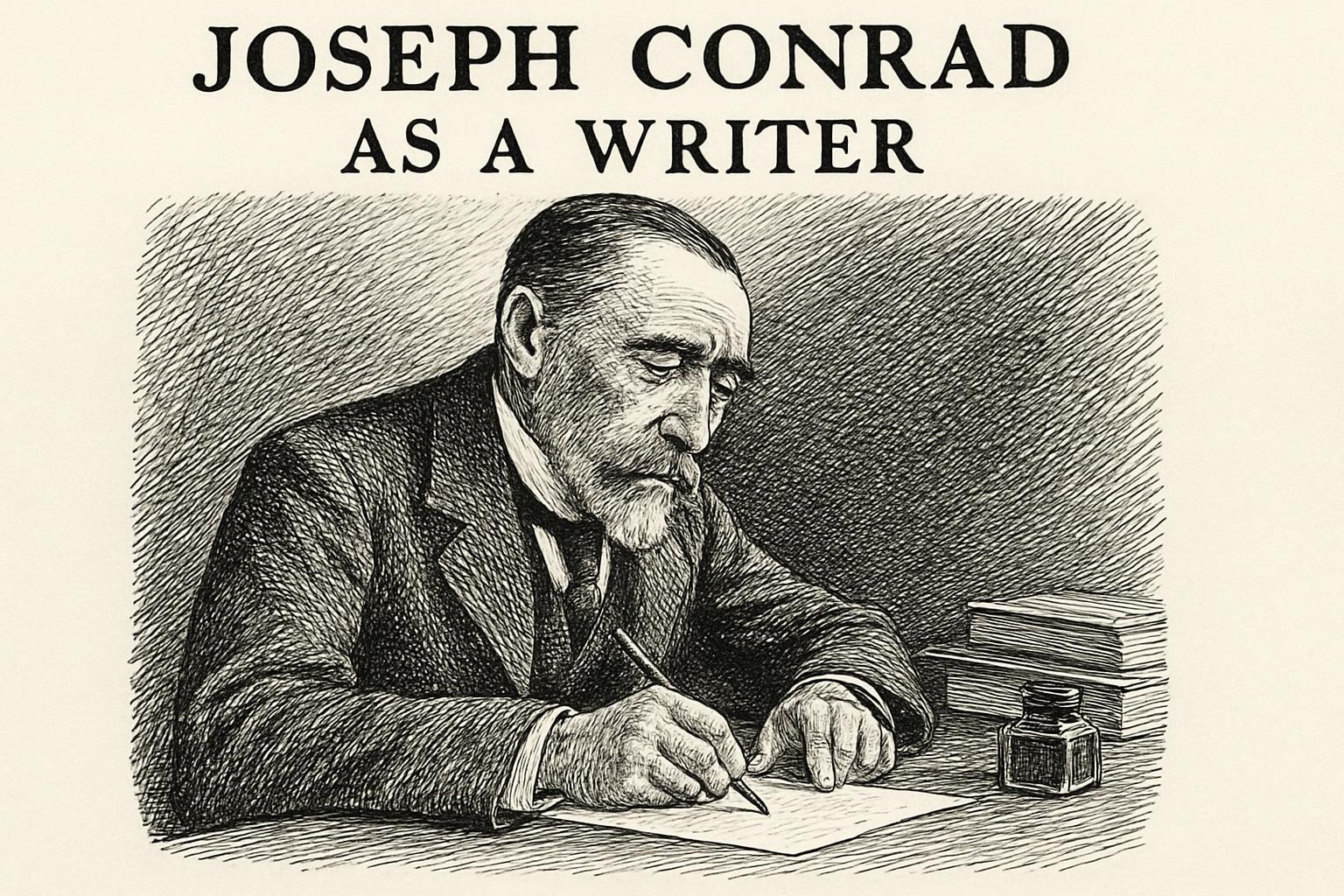
Psychological Themes in Edwardian Literature: https://englishlitnotes.com/2025/08/23/psychological-themes-edwardian-literature/
For grammar lessons, visit ChatGPT to explore the platform and interact with the AI: https://chat.openai.com
Joseph Conrad: https://campuspress.yale.edu/modernismlab/joseph-conrad/
Discover more from Naeem Ullah Butt - Mr.Blogger
Subscribe to get the latest posts sent to your email.