Introduction
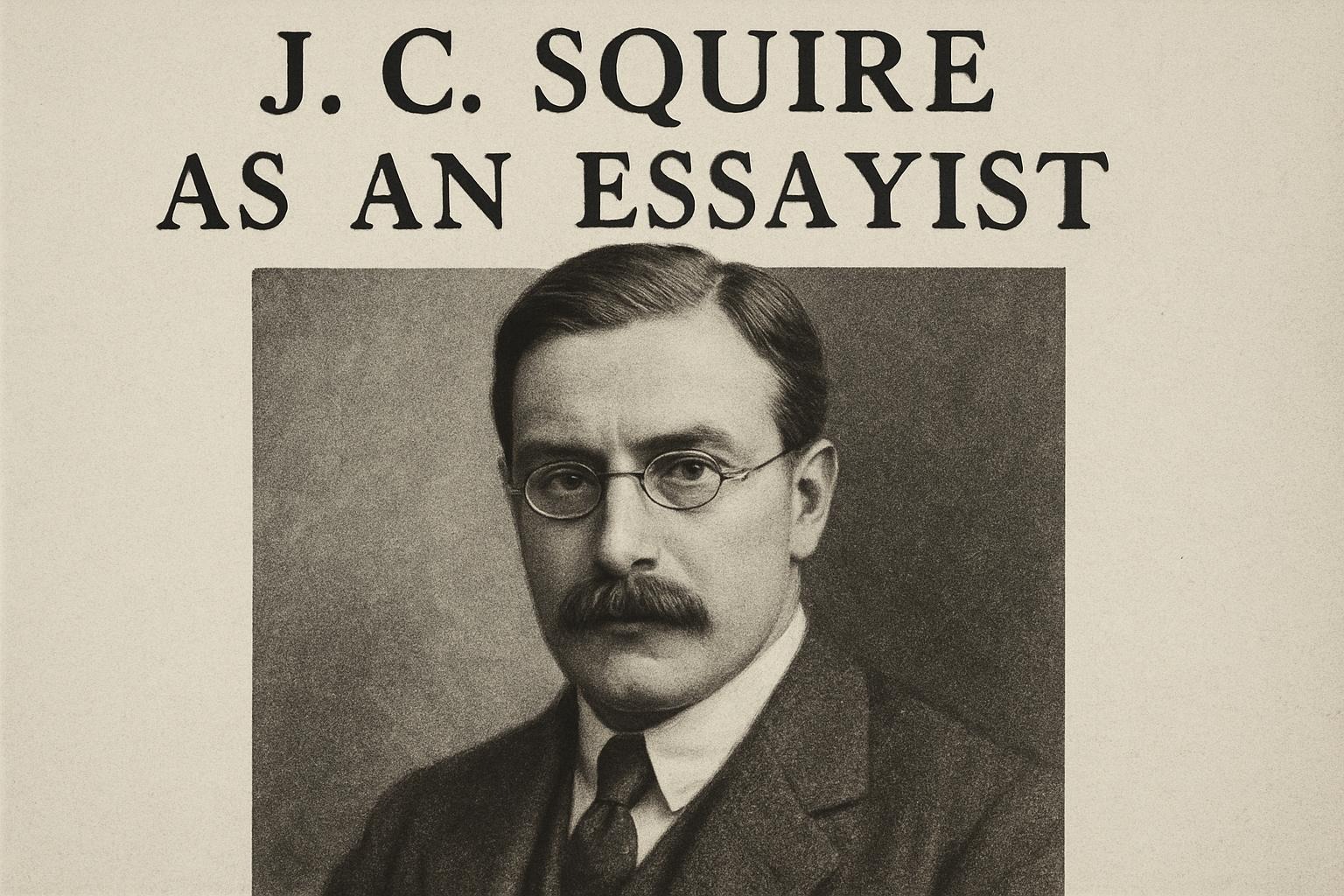
J.C.Squire as an Essayist (1884–1958) holds a central place in the period. He was the defining voice of the Georgian Period in prose. However, his greatest influence came from his role as a literary editor. Therefore, his critical thought shaped an entire generation. His essays are known for their blend of wit and nostalgia. Moreover, he championed traditional forms fiercely. Thus, his prose style stands against Modernist experiment. His writing is a perfect example of the Familiar Essay. Specifically, his literary criticism was widely read. Consequently, his literary reputation was immense in the 1920s. In fact, he steered the course of English prose greatly. Indeed, his journalistic essays made him famous. Significantly, his editorial work was his primary power. Furthermore, his cultural essays reflect the age. Hence, his role as a Georgian essayist is key. For instance, his prose is accessible and engaging. Likewise, his critical voice was influential. Nevertheless, his style is now somewhat overlooked. Similarly, his essay tradition links him to Lamb. Altogether, his contribution is substantial. Yet, he represents a counter-modern aesthetic.
Squire’s Georgian Aesthetic
1. The Familiar Essay Tradition
J.C.Squire as an Essayist mastered the Familiar Essay tradition. His style is personal, conversational, and light. He followed the path laid by Lamb and Hazlitt. However, he adapted this traditional style for the Georgian reader. He infused it with contemporary wit. Therefore, his prose style is highly engaging. He excelled at gentle digression and humor. Moreover, his essays feel like private conversation. Thus, his influence on essays was to preserve this form. His work provided comfort amidst change. Specifically, his essay themes often concern memory. Consequently, his writing style is easygoing. In fact, he avoided the polemics of his time. Indeed, his English essayist role is defined by this genre. Significantly, this contrasts sharply with Modernist prose. Furthermore, his reflective essays are poignant. Hence, his essay tradition link is clear. For instance, the essays are often anecdotal. Likewise, his cultural essays are accessible. Nevertheless, the sentimentality is usually controlled. Similarly, the gentle wit is constant. Altogether, his familiar style is enduring. Yet, his charm is undeniable.
2. The Dominance of The London Mercury
His editorial work was a primary source of influence. Squire founded and edited The London Mercury (1919–1934). This journal was the central organ of the Georgian movement. However, the magazine was a counterpoint to T.S. Eliot’s Criterion. It championed traditional verse and accessible prose. Therefore, his critical commentary was powerful. He used his position to shape the literary landscape. Moreover, his own journalistic essays filled its pages. Thus, his cultural commentary held great weight. The Mercury defined the Georgian Period aesthetic. Specifically, his literary editor role was paramount. Consequently, his literary influence was institutional. In fact, he was the gatekeeper of taste. Indeed, his critical voice was authoritative. Significantly, the journal promoted his chosen writers. Furthermore, his periodical writing shaped opinion. Hence, his Georgian literature legacy is complex. For instance, his opinions were often controversial. Likewise, his magazine was highly successful. Nevertheless, his power eventually waned. Similarly, the journal remains his major achievement. Altogether, his editorial impact is huge. Yet, his critical vision was limiting.
3. J.C. Squire as an Essayist: Literary Criticism
J.C.Squire as an Essayist wrote prolifically on literary criticism. His reviews and essays covered a vast range of authors. He assessed new works with a traditionalist’s eye. However, his critical judgments were often conservative. He valued clarity and sentiment over experiment. Therefore, his critical essays often dismissed Modernism. He focused on technical excellence in traditional forms. Moreover, his criticism was accessible to the general reader. Thus, his literary analysis was widely consumed. His prose critique was clear and unambiguous. Specifically, his critical thought prioritized poetry greatly. Consequently, his literary reputation rested on his opinions. In fact, he was the era’s chief arbiter of taste. Indeed, his critical voice was immensely loud. Significantly, he helped establish the reputations of his peers. Furthermore, his Georgian literature defense was constant. Hence, his critical commentary defines the era. For instance, his essays on Dickens are famous. Likewise, his periodical writing drove debate. Nevertheless, his limitations are now visible. Similarly, the clarity of his style is appealing. Altogether, his critical output is vast. Yet, his traditionalism was his greatest fault.
4. The Prose Style and English Prose
His prose style is a hallmark of the Georgian Period. J.C.Squire as an Essayist valued lucidity and elegance. His writing is fluent, effortless, and charming. However, it often sacrifices intensity for geniality. The ease of reading is paramount always. Therefore, his English prose is highly polished. He used a conversational, slightly formal tone. Moreover, his sentences are balanced and clear. Thus, his writing style is exemplary for the belles-lettres. His work is characterized by gentle rhythms. Specifically, his influence on essays comes from this style. Consequently, his essay themes are light and reflective. In fact, he proved that traditional prose still held power. Indeed, his journalistic essays were models of clarity. Significantly, his essay tradition links him to the past. Furthermore, his cultural essays are highly readable. Hence, his prose style defines the anti-Modernist camp. For instance, his use of metaphor is subtle. Likewise, his intellectual essays maintain accessibility. Nevertheless, the effect can feel overly smooth. Similarly, his elegance is highly deliberate. Altogether, his prose is immensely skilled. Yet, his refusal to evolve is limiting.
5. Humor, Satire, and Lightness of Touch
J.C.Squire as an Essayist used humor and satire effectively. His lightness of touch is a defining trait. He employed gentle irony and playful absurdity. However, his satire was rarely harsh or vicious. It was aimed more at human foibles than social systems. Therefore, his satirical essays are amusing. He used parody skillfully, especially of other poets. Moreover, his wit often stems from self-deprecation. Thus, his writing style is engagingly self-aware. His humor softened his sometimes stern critical voice. Specifically, his critical commentary often included wit. Consequently, his essays were popular entertainment. In fact, he brought a journalistic verve to the essay form. Indeed, his English essayist reputation relied on charm. Significantly, his cultural criticism was gentle. Furthermore, his reflective essays often use humor. Hence, his essay themes are lightened by wit. For instance, his famous parodies are masterful. Likewise, his prose style is consistently genial. Nevertheless, his lightness could sometimes appear trivial. Similarly, the charm of his writing is powerful. Altogether, his humor is central. Yet, the underlying seriousness is clear.
6. Social and Cultural Criticism
His social criticism was primarily cultural. J.C.Squire as an Essayist focused on preserving old ways. He lamented the loss of tradition and beauty. However, he did not engage in deep political analysis often. His critique was one of taste and aesthetics. Therefore, his cultural criticism is nostalgic. He wrote about the simple pleasures of English life. Moreover, his cultural essays documented the changing times. Thus, his critical commentary reflects a conservative sensibility. He often critiqued modern technology and pace. Specifically, his critical thought was traditionalist. Consequently, his essay themes are rooted in the English past. In fact, he used his periodical writing to air these views. Indeed, his Georgian Period setting is clear. Significantly, his journalistic essays often expressed regret. Furthermore, his social criticism was subtle. Hence, his literary analysis often compared epochs. For instance, his essays on trains are poignant. Likewise, his English prose conveys deep feeling. Nevertheless, his critique was deeply felt. Similarly, the essays are a social record. Altogether, his cultural eye was sharp. Yet, his focus was always on beauty.
7. The Literary Reputation and Critical Voice
His literary reputation was extremely high in his day. J.C.Squire as an Essayist was seen as a dominant force. His critical voice was considered highly authoritative. However, his reputation suffered a steep decline later. The Modernist movement he opposed eventually triumphed. Therefore, his work is now less well-known. He represents the tradition that was overthrown. Moreover, his powerful editorial position generated hostility. Thus, his reputation is complex and debated. His critical thought was sometimes seen as limiting. Specifically, his Georgian Period loyalty was absolute. Consequently, his prose critique is often revisionist. In fact, he was widely anthologized for decades. Indeed, his essay tradition status was once secure. Significantly, his early work is his strongest. Furthermore, his literary influence was immense on his peers. Hence, his critical essays remain historically important. For instance, he was awarded the knighthood late. Likewise, his writing style was always admired. Nevertheless, his conservatism limited his view. Similarly, the passage of time was unkind. Altogether, his peak was undeniable. Yet, his decline was sudden.
8. J.C. Squire as an Essayist: Journalistic Essays
J.C.Squire as an Essayist wrote countless journalistic essays. His output was voluminous and wide-ranging. He excelled at the short, immediate piece. However, his journalistic work never felt ephemeral. His quality remained high and polished. Therefore, his periodical writing is enduring. He wrote on everything from cricket to books. Moreover, his work appeared in major journals constantly. Thus, his prose style was instantly recognizable. His essays bridged the gap between daily and literary. Specifically, his cultural commentary was pervasive. Consequently, his literary analysis was highly visible. In fact, he used his journalism to educate readers. Indeed, his critical voice reached millions. Significantly, his English prose was a model of clarity. Furthermore, his essay themes were topical and literary. Hence, his literary influence was maximized through this form. For instance, he maintained a constant, high standard. Likewise, his humor and satire lightened the form. Nevertheless, the volume sometimes led to repetition. Similarly, the constant writing kept him relevant. Altogether, his journalism is key. Yet, his literary aspirations were higher.
9. The Reflective and Intellectual Essays
His reflective essays often touch on deep themes. J.C.Squire as an Essayist was a capable intellectual essayist. He explored the nature of memory and time. However, this depth is always cloaked in geniality. The philosophical musing is subtle and gentle. Therefore, his critical thought is understated. He wrote engagingly about the artistic process. Moreover, his reflective essays contemplate nature greatly. Thus, his writing style blends thought with charm. His essay themes are universal and profound. Specifically, his social criticism is often implicit here. Consequently, his cultural essays endure best. In fact, he was capable of great seriousness always. Indeed, his prose style maintains clarity throughout. Significantly, his essay tradition is enriched by this depth. Furthermore, his literary analysis often reveals intellect. Hence, his Georgian Period charm hides deep thought. For instance, his essays on landscape are profound. Likewise, his English prose is highly thoughtful. Nevertheless, the light touch is always primary. Similarly, the reflection is always elegant. Altogether, his depth is often overlooked. Yet, his lightness ensures readership.
10. Georgian Literature and the Anti-Modernist Stance
His role in Georgian literature is critical. J.C.Squire as an Essayist was the movement’s most vocal champion. He led the resistance against Modernism. However, his defense of tradition was often polemical. He used his platform to attack experimental writers. Therefore, his critical voice was highly divisive. He favored clarity and accessibility over obscurity. Moreover, his essays celebrated formal restraint. Thus, his Georgian essayist status is absolute. The movement was defined by its nostalgia. Specifically, his critical commentary was the party line. Consequently, his literary influence was used to gatekeep. In fact, his literary editor role cemented this. Indeed, his critical thought was antithetical to Eliot. Significantly, his social criticism was tied to aesthetic values. Furthermore, his prose style became a model for the anti-Modernists. Hence, his periodical writing drove the literary war. For instance, his attacks on Ulysses are famous. Likewise, his literary reputation suffered later. Nevertheless, his position was clearly defined. Similarly, his traditionalism was his core belief. Altogether, his Georgian loyalty is key. Yet, the stance limited his art.
11. J.C. Squire as an Essayist: Writing Style and Technique
J.C.Squire as an Essayist is defined by his accessible writing style. His technique prioritizes effortless communication. He mastered the rhetorical devices of light prose. However, the apparent simplicity is highly deceptive. His prose is the product of careful craft. Therefore, his prose style is deeply artistic. He used wit, irony, and conversational cadence. Moreover, his structure is clear and logical always. Thus, his literary analysis is always readable. His essay tradition is based on clarity. Specifically, his journalistic essays exemplify this. Consequently, his influence on essays is substantial. In fact, he demonstrated the power of the light essay. Indeed, his critical voice was amplified by this skill. Significantly, his English prose is technically accomplished. Furthermore, his reflective essays maintain this lucidity. Hence, his critical commentary is easy to follow. For instance, his transitions are smooth and natural. Likewise, his humor and satire are integrated. Nevertheless, the elegance is paramount always. Similarly, the technique is highly refined. Altogether, his style is his strength. Yet, his artistry is in his clarity.
12. Literary Influence and Periodical Writing
His literary influence was vast. J.C.Squire as an Essayist reached thousands through his periodical writing. He shaped the reading habits of the educated middle class. However, this influence was regional and temporary. It faded after the Modernist triumph. Therefore, his impact is historically defined. He provided a platform for many writers. Moreover, his editorial work launched careers. Thus, his Georgian literature group was highly cohesive. His critical voice commanded attention greatly. Specifically, his journalistic essays were everywhere. Consequently, his literary reputation was deserved then. In fact, his influence on essays was a return to tradition. Indeed, his social criticism was widely discussed. Significantly, his cultural commentary shaped tastes. Furthermore, his critical thought defined the anti-Modernist consensus. Hence, his English essayist status was secure. For instance, his magazines sold extremely well. Likewise, his essays were widely copied. Nevertheless, his legacy is now a subject of study. Similarly, the peak of his power was brief. Altogether, his influence was key. Yet, his traditionalism limited his reach.
13. J.C. Squire as an Essayist: Cultural Essays
J.C.Squire as an Essayist produced numerous cultural essays. These works documented the tastes and mood of the Georgian Period. He wrote on topics ranging from art to sport. However, his cultural writing was always imbued with literary sensibility. He approached everyday life aesthetically. Therefore, his social criticism was subtle. He defended the traditional English cultural sphere. Moreover, his cultural commentary was widely consumed. Thus, his essays are a valuable record of the era. His writing style made complex topics accessible. Specifically, his reflective essays often focused on culture. Consequently, his prose style became linked to English nostalgia. In fact, he saw culture as a unifying force. Indeed, his critical thought prioritized cultural cohesion. Significantly, his journalistic essays carried this message. Furthermore, his essay themes were diverse and engaging. Hence, his literary editor role expanded beyond books. For instance, his defense of old architecture is famous. Likewise, his English prose is highly descriptive. Nevertheless, his defense was ultimately futile. Similarly, his sense of loss is palpable. Altogether, his cultural scope is vast. Yet, his nostalgia is his signature.
14. The Georgian Essayist Identity
His identity as a Georgian essayist is defining. J.C.Squire as an Essayist embodied the Georgian reaction. He represented the literary resistance to the avant-garde. However, this stance meant he was quickly outdated. The tide of Modernism soon swept him aside. Therefore, his literary reputation is complex. He was the spokesman for traditional beauty. Moreover, his prose style was the movement’s model. Thus, his Georgian literature influence was ideological. He championed clarity and common experience. Specifically, his critical voice was a rallying cry. Consequently, his critical essays articulated the Georgian aesthetic. In fact, he was the era’s great middlebrow critic. Indeed, his essay tradition was rooted in the past. Significantly, his influence on essays was one of conservation. Furthermore, his critical thought was consistently conservative. Hence, his periodical writing spread his identity. For instance, he organized Georgian anthologies. Likewise, his social criticism was highly nostalgic. Nevertheless, his position was one of power. Similarly, his traditionalism was total. Altogether, his Georgian identity is crucial. Yet, his limitations are clear.
15. The Prose Critique of Modernism
His prose critique of Modernism was sharp and relentless. J.C.Squire as an Essayist viewed the new movement as chaotic. He saw Joyce and Eliot as obscure and elitist. However, his opposition was rooted in aesthetics and politics. He felt Modernism lacked clarity and heart. Therefore, his literary analysis was often biased. He demanded lucidity in form and language. Moreover, his critical essays defended the ordinary reader. Thus, his critical commentary was deeply conservative. His prose critique prioritized narrative and accessibility. Specifically, his critical voice was authoritative. Consequently, his humor and satire were often directed at Modernists. In fact, his editorial work was used as a weapon. Indeed, his intellectual essays defended traditional structure. Significantly, his prose style was the antithesis of Modernist prose. Furthermore, his literary reputation was built on this stance. Hence, his writing style became symbolic of tradition. For instance, he found The Waste Land pretentious. Likewise, his English prose was a deliberate contrast. Nevertheless, his attacks often backfired. Similarly, his traditionalism made him rigid. Altogether, his critique defines his era. Yet, his style is superior to his judgment.
16. The Theme of Nostalgia and Memory
The theme of nostalgia and memory is pervasive. J.C.Squire as an Essayist frequently expressed regret for the past. He used his reflective essays to summon vanished times. However, this nostalgia is gentle, never bitter. It is a quiet longing for simpler beauty. Therefore, his essay themes are rooted in sentiment. He idealized the pre-war Edwardian and Victorian ages. Moreover, his English prose evokes atmosphere skillfully. Thus, his cultural essays are deeply evocative. His writing style lends itself to this feeling. Specifically, his reflective essays are his finest work. Consequently, his social criticism is often an expression of loss. In fact, his essay tradition status is based here. Indeed, his prose style carries a melancholic tone. Significantly, his Georgian Period setting followed a devastating war. Furthermore, his humor and satire were a means of coping. Hence, his critical thought valued preservation highly. For instance, his memory of childhood is often idealized. Likewise, his intellectual essays explored time. Nevertheless, the sentiment is always genuine. Similarly, the melancholy is highly controlled. Altogether, his nostalgia is key. Yet, his elegance makes it bearable.
17. J.C. Squire as an Essayist: Critical Commentary
J.C.Squire as an Essayist offered constant critical commentary. His output as a reviewer was vast. He covered almost every major cultural event. However, the commentary was consistently filtered through traditional taste. His judgments were clear, if sometimes narrow. Therefore, his critical voice defined the mainstream. He used his platform to educate and steer readers. Moreover, his periodical writing was highly persuasive. Thus, his literary analysis influenced purchasing heavily. His critical thought was the cornerstone of the Georgian circle. Specifically, his critical essays articulated their goals. Consequently, his literary reputation was initially immense. In fact, he was a master of the concise review. Indeed, his editorial work allowed this dominance. Significantly, his prose critique of rivals was influential. Furthermore, his cultural commentary shaped public opinion. Hence, his journalistic essays are a key historical source. For instance, his critiques were rarely ambivalent. Likewise, his writing style gave authority. Nevertheless, his power eventually faded. Similarly, his clarity is now valued. Altogether, his commentary is key. Yet, his traditionalism was his limit.
18. The English Essayist Tradition
His work firmly belongs to the English essayist tradition. J.C.Squire as an Essayist inherited the mantle of the Familiar Essayists. He valued the gentle, discursive, personal tone. However, he modernized the form slightly for a faster age. His essays are shorter and more journalistic. Therefore, his influence on essays was one of continuity. He proved the form still had mass appeal. Moreover, his prose style was the style of the traditional essay. Thus, his essay tradition link is clear and strong. His essays are characterized by reflection and wit. Specifically, his reflective essays are central here. Consequently, his writing style is conversational. In fact, his English prose is a masterclass in tone. Indeed, his humor and satire fit the tradition perfectly. Significantly, his essay themes were suitably light. Furthermore, his cultural essays often referenced the past. Hence, his Georgian essayist status is confirmed by this lineage. For instance, he revived interest in Lamb. Likewise, his literary analysis was often historical. Nevertheless, his work lacks their depth. Similarly, his charm is entirely his own. Altogether, his tradition is clear. Yet, his popular appeal was unique.
19. The Social Criticism
His social criticism was rooted in aesthetics. J.C.Squire as an Essayist focused on cultural decline. He critiqued changes that undermined beauty or tradition. However, his criticism rarely targeted economic inequality directly. It was primarily a defense of old English life. Therefore, his cultural commentary is nostalgic. He disliked mass-produced modernity immensely. Moreover, his intellectual essays often explored this theme. Thus, his essay themes reflected loss. His social criticism was a gentleman’s lament. Specifically, his journalistic essays carried these observations. Consequently, his humor and satire softened the tone. In fact, his prose style made his critique charming. Indeed, his critical thought feared the future. Significantly, his critical voice was a plea for preservation. Furthermore, his cultural essays documented the decline. Hence, his Georgian Period setting is key to this feeling. For instance, he critiqued the spread of suburbs. Likewise, his writing style is melancholic. Nevertheless, his critique was sincere always. Similarly, the feeling of loss is pervasive. Altogether, his social critique is vital. Yet, his approach was subtle.
20. The Intellectual Essays
His intellectual essays are often understated. J.C.Squire as an Essayist wrote thoughtfully on literary and philosophical themes. He covered topics like the nature of genius and creativity. However, he always maintained his accessible prose style. The complexity is presented clearly and simply. Therefore, his critical thought is widely approachable. He discussed the role of the critic effectively. Moreover, his literary analysis was often profound. Thus, his reflective essays are his most serious work. His essay themes included the purpose of art. Specifically, his writing style made them popular. Consequently, his literary reputation was enhanced by depth. In fact, his critical voice was seen as well-rounded. Indeed, his English prose is a vehicle for ideas. Significantly, his journalistic essays occasionally carried deep thought. Furthermore, his cultural essays explore intellectual trends. Hence, his critical commentary was more than just opinion. For instance, his essays on biography are insightful. Likewise, his influence on essays is partly intellectual. Nevertheless, he avoided academic jargon strictly. Similarly, the clarity is his main goal. Altogether, his intellectualism is genuine. Yet, his light touch is his trademark.
21. J.C. Squire as an Essayist: Humor and Satire
J.C.Squire as an Essayist used humor and satire constantly. His lightness was a major selling point. He used gentle ridicule to make his points. However, the humor never detracts from the underlying seriousness. It serves to engage the reader first. Therefore, his writing style is highly entertaining. He was a master of the literary parody. Moreover, his satirical essays were much anticipated. Thus, his essay themes often included irony. His humor and satire targeted pretension and pomposity. Specifically, his critical commentary was often witty. Consequently, his prose style is engaging. In fact, his parodies remain classics of the form. Indeed, his critical voice used humor as a tool. Significantly, his social criticism was often humorous. Furthermore, his English prose is full of wit. Hence, his periodical writing was immensely popular. For instance, he made fun of obscure poetry. Likewise, his essays are highly charming. Nevertheless, the geniality is often a mask. Similarly, the wit is always precise. Altogether, his humor is essential. Yet, his satire is always gentle.
22. The Essay Themes
His essay themes are diverse yet consistent. J.C.Squire as an Essayist wrote on literature, nature, memory, and social change. He focused on topics that elicited reflection or sentiment. However, the core theme is always the defense of tradition. His writing is fundamentally conservative. Therefore, his cultural essays reflect this best. He often wrote about the past versus the present. Moreover, his intellectual essays explored artistic integrity. Thus, his reflective essays cover a wide range. His social criticism always concerned aesthetics. Specifically, his literary analysis focused on craft. Consequently, his writing style unified the themes. In fact, his journalistic essays brought the themes to life. Indeed, his critical thought defined his subjects. Significantly, his humor and satire were thematic tools. Furthermore, his English prose made the themes accessible. Hence, his essay tradition is based on light depth. For instance, his love of London is a recurring theme. Likewise, his critical commentary tied themes together. Nevertheless, the focus is consistently English. Similarly, the feeling of loss is always present. Altogether, his themes are profound. Yet, his touch is always light.
23. The Editorial Work Impact
His editorial work massively impacted the literary scene. J.C.Squire as an Essayist used The London Mercury to shape the era. He controlled publication and review processes. However, this power inevitably caused rivals to charge him with cliquishness. The “Squirearchy” gained notoriety among opponents. Therefore, his literary influence became institutional and personal. He actively opposed Modernism. Moreover, his periodical writing gave him authority. Thus, his critical voice spoke for the establishment. His platform gained his essays greater visibility. Specifically, he widely disseminated his critical commentary. Consequently, the Georgian Period defined itself through him. In fact, his literary editor role gave him the most power. Indeed, his critical thought established the standard. Significantly, the journal’s success enhanced his literary reputation. Furthermore, his journalistic essays promoted his views. Hence, his social criticism reached a wide audience. For instance, the magazine achieved commercial viability. Likewise, his prose critique became pervasive. Nevertheless, his power proved fleeting. Similarly, the journal remains his monument. Altogether, his editorial impact was key. Yet, he used his power conservatively.
24. J.C. Squire as an Essayist: Literary Analysis
J.C.Squire as an Essayist wrote constant literary analysis. His essays on other writers were frequent and influential. He favored clear, accessible critical judgments. However, his analysis was always non-academic. It appealed to the general reader primarily. Therefore, his critical essays were popular. He assessed poets like Masefield and Housman well. Moreover, his prose critique was always lucid. Thus, his critical commentary was widely read. His literary analysis was based on traditional standards. Specifically, his critical thought was conservative. Consequently, his literary influence was immense on taste. In fact, his writing style made analysis enjoyable. Indeed, his periodical writing carried the bulk of this. Significantly, his English prose was a model for critics. Furthermore, his humor and satire often entered analysis. Hence, his literary reputation rested heavily here. For instance, his essays on Dickens were praised. Likewise, his intellectual essays focused on craft. Nevertheless, his narrow views were limiting. Similarly, his clarity is his great strength. Altogether, his analysis is important. Yet, his accessibility is paramount.
25. The Critical Thought of the Period
J.C. Squire’s critical thought dominated the Georgian Period. J.C.Squire as an Essayist championed traditional values, defending them as the movement’s chief voice. He established the intellectual foundation for the movement. However, his ideas faced backward, clinging to the past. He struggled to integrate new realities. Therefore, his social criticism expressed nostalgia. He strongly supported the continuity of English prose. Moreover, his critical commentary influenced many deeply. Thus, his literary analysis preferred established forms. His critical thought actively opposed Modernism. Specifically, his editorial work promoted his ideas effectively. Consequently, his literary influence became institutional. In fact, his essay tradition defended English culture. Indeed, his cultural commentary shaped the age. Significantly, his prose critique successfully defined acceptable writing. Furthermore, his writing style functioned as part of his thesis. Hence, his ideas secured his literary reputation. For instance, he completely rejected ambiguity. Likewise, readers widely consumed his intellectual essays. Nevertheless, time has dated his ideas. Similarly, his commitment remained total. Altogether, his thought defines the period. Yet, his vision faced limitations.
26. The Prose Style Compared to Modernists
His prose style stands in sharp contrast to the Modernists. Squire as an Essayist favored clarity, lucidity, and formal grace. He rejected fragmentation and stream-of-consciousness. However, this contrast was deliberate and polemical. His style was a statement of traditional faith. Therefore, his critical voice was amplified by his writing. He maintained the essay as a coherent form. Moreover, his English prose was a model of accessibility. Thus, his writing style was a political act. His essays were instantly understandable always. Specifically, his critical commentary attacked obscurity. Consequently, his literary analysis was highly readable. In fact, his influence on essays was to keep them familiar. Indeed, his journalistic essays reached a wide audience. Significantly, his prose critique was stylistic warfare. Furthermore, his humor and satire contrasted with Modernist gloom. Hence, his Georgian Period identity is stylistic. For instance, his essays are never obscure. Likewise, his critical thought guided his writing. Nevertheless, his clarity sometimes lacked depth. Similarly, his elegance is undeniable. Altogether, his style is his position. Yet, his contrast is key.
27. J.C. Squire as an Essayist: Literary Influence
J.C. Squire as an Essayist exerted immense literary influence. His power was institutional and stylistic. He shaped the publishing world for over a decade. However, his influence was ultimately short-lived. It did not survive the triumph of the rival aesthetic. Therefore, his literary reputation is complex. He promoted a specific set of traditional values. Moreover, his editorial work determined success for many. Thus, his critical voice was the voice of the establishment. His influence on essays was conservative. Specifically, his critical essays set the standard. Consequently, his Georgian literature defined a taste. In fact, his periodical writing was a vehicle for control. Indeed, his writing style was widely imitated. Significantly, his critical thought guided his decisions. Furthermore, his journalistic essays reached the public. Hence, his cultural commentary held great sway. For instance, his approval meant sales. Likewise, his social criticism was impactful. Nevertheless, his power was fleeting. Similarly, his legacy is transitional. Altogether, his influence was key. Yet, his traditionalism was his limit.
28. The Writing Style and Clarity
His writing style is universally praised for its clarity. J.C. Squire as an Essayist wrote accessible, articulate prose. He made intellectual topics easy to grasp. However, this clarity sometimes masked a lack of originality. The brilliance lies in the execution, not the concept. Therefore, his prose style is technically masterful. He valued the reader’s ease above all else. Moreover, his English prose is a model of conciseness. Thus, his influence on essays is based on lucidity. His essays are effortless to read and digest. Specifically, his journalistic essays required this skill. Consequently, his literary analysis is always clear. In fact, his critical thought was conveyed clearly. Indeed, his humor and satire are precise. Significantly, his reflective essays maintain this quality. Furthermore, his cultural essays are perfectly executed. Hence, his literary reputation was built on accessibility. For instance, his essays are often read in schools. Likewise, his critical commentary is unambiguous. Nevertheless, the charm can be superficial. Similarly, the technique is his art. Altogether, his clarity is defining. Yet, his skill is subtle.
29. The Reflection on English Life
His reflection on English life is a core theme. J.C. Squire as an Essayist used his prose to capture the national mood. He wrote with great affection for English traditions and landscapes. However, this reflection is often tinged with melancholy. It reflects a sense of loss after the Great War. Therefore, his reflective essays are poignant. He cherished the continuity of English culture. Moreover, his cultural essays document these feelings. Thus, his social criticism is gentle and nostalgic. His essay themes are rooted in place. Specifically, his writing style evokes atmosphere powerfully. Consequently, his prose style is highly evocative. In fact, his English prose is a vehicle for sentiment. Indeed, his Georgian Period setting is key to this nostalgia. Significantly, his critical thought prioritized the native tradition. Furthermore, his humor and satire often defend these values. Hence, his journalistic essays connected with readers deeply. For instance, his essays on the countryside are evocative. Likewise, his intellectual essays explore cultural identity. Nevertheless, the affection is deeply felt. Similarly, the memory is always idealized. Altogether, his reflection is profound. Yet, his focus is narrow.
30. J.C. Squire as an Essayist: Georgian Literature
J.C. Squire as an Essayist was the leading prose figure in Georgian Literature. He championed the movement’s poets and traditionalists. He embodied the aesthetic of clarity and restraint. However, his greatest role was as a conservative critic. He defined the limits of the acceptable. Therefore, his critical voice was the voice of the group. He opposed the obscurity of the Modernists fiercely. Moreover, his editorial work was dedicated to this cause. Thus, his literary reputation was tied to the group’s fate. His writing style was the Georgian prose standard. Specifically, his prose critique enforced the rules. Consequently, his literary influence was immense within the group. In fact, his critical thought shaped the movement’s ideas. Indeed, his periodical writing provided a platform. Significantly, his essay themes were suitably traditional. Furthermore, his humor and satire were part of the aesthetic. Hence, his social criticism defended the Georgian ideal. For instance, his anthologies are famous. Likewise, his literary analysis favored clear verse. Nevertheless, his power was regional. Similarly, his traditionalism was total. Altogether, his Georgian status is key. Yet, his opposition defined him.
31. The Critical Voice of The London Mercury
His critical voice was the voice of The London Mercury. J.C. Squire as an Essayist used his editorship to wield immense power. His opinions were widely respected and feared. However, this voice became increasingly conservative. He struggled to accept new talent outside his circle. Therefore, his literary reputation is complex. He used his platform to attack experimental writers. Moreover, his critical commentary was authoritative. Thus, his editorial work shaped the literary market. His critical voice was the guardian of tradition. Specifically, his prose critique defined the acceptable. Consequently, his journalistic essays carried great weight. In fact, his writing style lent him credibility. Indeed, his literary influence was institutional. Significantly, his critical thought was the magazine’s thesis. Furthermore, his periodical writing reached a wide, educated audience. Hence, his cultural commentary was pervasive. For instance, his word could launch a career. Likewise, his essays set the tone. Nevertheless, the voice was ultimately silenced. Similarly, the power was immense for a time. Altogether, his voice is historical. Yet, his clarity is enduring.
32. The Periodical Writing Scope
His periodical writing scope was vast. J.C. Squire as an Essayist contributed to countless journals, including his own Mercury. He wrote consistently across genres and topics. However, the sheer volume meant his output was sometimes uneven. The quality, though high, varied slightly. Therefore, his journalistic essays are a major part of his work. He wrote quickly and lucidly always. Moreover, his writing style was perfectly suited for the press. Thus, his cultural essays reached the widest public. His essays were instantly recognizable to readers. Specifically, his critical commentary was always visible. Consequently, his literary influence was maximized. In fact, his English prose was a model for journalists. Indeed, his critical thought was constantly disseminated. Significantly, his essay themes were timely and relevant. Furthermore, his humor and satire were widely enjoyed. Hence, his literary reputation was built on consistency. For instance, his column was a weekly fixture. Likewise, his social criticism was topical. Nevertheless, the quantity overshadowed the quality. Similarly, the output was enormous. Altogether, his scope is key. Yet, his speed was impressive.
33. J.C. Squire as an Essayist: English Prose Mastery
J.C. Squire as an Essayist achieved English prose mastery. His writing is clear, rhythmic, and perfectly controlled. He resurrected and perfected the Familiar Essay. However, this mastery was of a traditional form. He was unwilling to adapt to the new age. Therefore, his prose style is a definitive example of Georgian elegance. He valued grace and accessibility above all else. Moreover, his writing style is effortless and fluid. Thus, his influence on essays is undeniable. His essays are models of technical skill. Specifically, his journalistic essays showcase this. Consequently, his literary reputation was justified by his craft. In fact, his critical thought was always clearly articulated. Indeed, his critical voice was amplified by his skill. Significantly, his literary analysis is always lucid. Furthermore, his humor and satire rely on precise language. Hence, his essay tradition status is secured by his skill. For instance, his sentence structure is flawless. Likewise, his cultural essays are perfectly pitched. Nevertheless, his reluctance to change is regrettable. Similarly, his elegance remains striking. Altogether, his mastery is clear. Yet, his traditionalism was his limit.
34. The Influence on Essays as a Form
His influence on essays as a form was conservative. J.C. Squire as an Essayist ensured the survival of the traditional essay. He proved it could still be popular and relevant. However, he resisted the essays of the Modernists entirely. He favored the familiar and reflective style. Therefore, his essay tradition was protected by him. He kept the essay personal and light. Moreover, his prose style was the model for the genre. Thus, his writing style was immensely influential. His essays were widely copied for decades. Specifically, his periodical writing spread his style. Consequently, his English prose set a popular standard. In fact, his literary reputation rested on this. Indeed, his critical thought guided the form. Significantly, his humor and satire defined the light essay. Furthermore, his journalistic essays were highly popular. Hence, his cultural essays are a key example. For instance, his clarity was highly valued. Likewise, his reflective essays are his finest. Nevertheless, the form needed to evolve. Similarly, his conservatism was total. Altogether, his influence is undeniable. Yet, his traditionalism was his core.
35. The Literary Reputation’s Decline
His literary reputation’s decline was sharp. J.C. Squire as an Essayist lost favor rapidly in the 1930s. The Modernism he opposed became the new norm. However, the decline was also due to his immense power. The reaction against the “Squirearchy” was fierce. Therefore, his critical voice lost its authority quickly. He represented a generation that was passing. Moreover, his critical commentary was seen as narrow. Thus, his editorial work ended its reign. His essays began to feel dated and sentimental. Specifically, his Georgian Period aesthetic was rejected. Consequently, his prose style seemed overly genteel. In fact, his literary influence was reversed entirely. Indeed, his intellectual essays were overlooked. Significantly, his social criticism seemed trivial. Furthermore, his writing style was deemed old-fashioned. Hence, his critical thought was replaced completely. For instance, his parodies lost their target. Likewise, his English prose was eclipsed. Nevertheless, the current reassessment is overdue. Similarly, his work deserves another look. Altogether, his decline was historical. Yet, his best essays remain.
36. J.C. Squire as an Essayist: Satirical Essays
J.C. Squire as an Essayist wrote excellent satirical essays. He used humor and satire to critique literary and social pretension. His light, witty touch made them very popular. However, his satire was rarely politically challenging. It remained largely within the confines of literary society. Therefore, his critical commentary was often amusing. He focused on parodying the obscure or sentimental. Moreover, his writing style made the satire accessible. Thus, his journalistic essays were highly effective. His satirical essays often targeted the Modernists. Specifically, his prose critique was sharpest here. Consequently, his critical voice was amplified by wit. In fact, his essays were widely reprinted. Indeed, his literary reputation benefited from his humor. Significantly, his English prose was perfectly suited for parody. Furthermore, his essay themes included literary fashions. Hence, his periodical writing was a vehicle for wit. For instance, his parodies are technically flawless. Likewise, his social criticism was subtle. Nevertheless, the humor is always genial. Similarly, the lightness is his key. Altogether, his satire is a highlight. Yet, his charm is his signature.
37. Legacy of J.C. Squire as an Essayist
J.C.Squire as an Essayist leaves a rich, if complex, legacy. He was the definitive Georgian essayist, whose prose style championed clarity, grace, and accessibility. Consequently, he excelled in the Familiar Essay tradition, providing charming reflective essays and sharp satirical essays. Thus, his editorial work on The London Mercury gave him immense literary influence. His critical voice became the defining sound of the Georgian Period. Specifically, his critical thought and literary analysis were the central intellectual opposition to early Modernism. For instance, his English prose remains a model of elegant, transparent writing. His humor and satire are still highly readable. Indeed, his large body of journalistic essays and cultural essays provides a valuable record of the era’s tastes. It also offers a deep sense of nostalgia. Significantly, while his literary reputation declined after the triumph of the avant-garde, his best essays endure. These essays are masterpieces of light, humane writing. Furthermore, his influence on essays was one of conservation, preserving the familiar form. Hence, his work is now being reassessed as a key transitional figure. Likewise, his charm and technical mastery are undeniable. Nevertheless, the clarity of his vision is his hallmark. Similarly, his traditionalism was his defining trait. Altogether, his essays are a lasting contribution. Yet, his clarity is his triumph.
Gordon Bottomley as a Playwright: https://englishlitnotes.com/2025/09/01/gordon-bottomley-as-a-playwright/
For grammar lessons, visit ChatGPT to explore the platform and interact with the AI:https://chat.openai.com
For English and American literature and grammar, visit Google:https://www.google.com
Discover more from Naeem Ullah Butt - Mr.Blogger
Subscribe to get the latest posts sent to your email.