1. Introduction
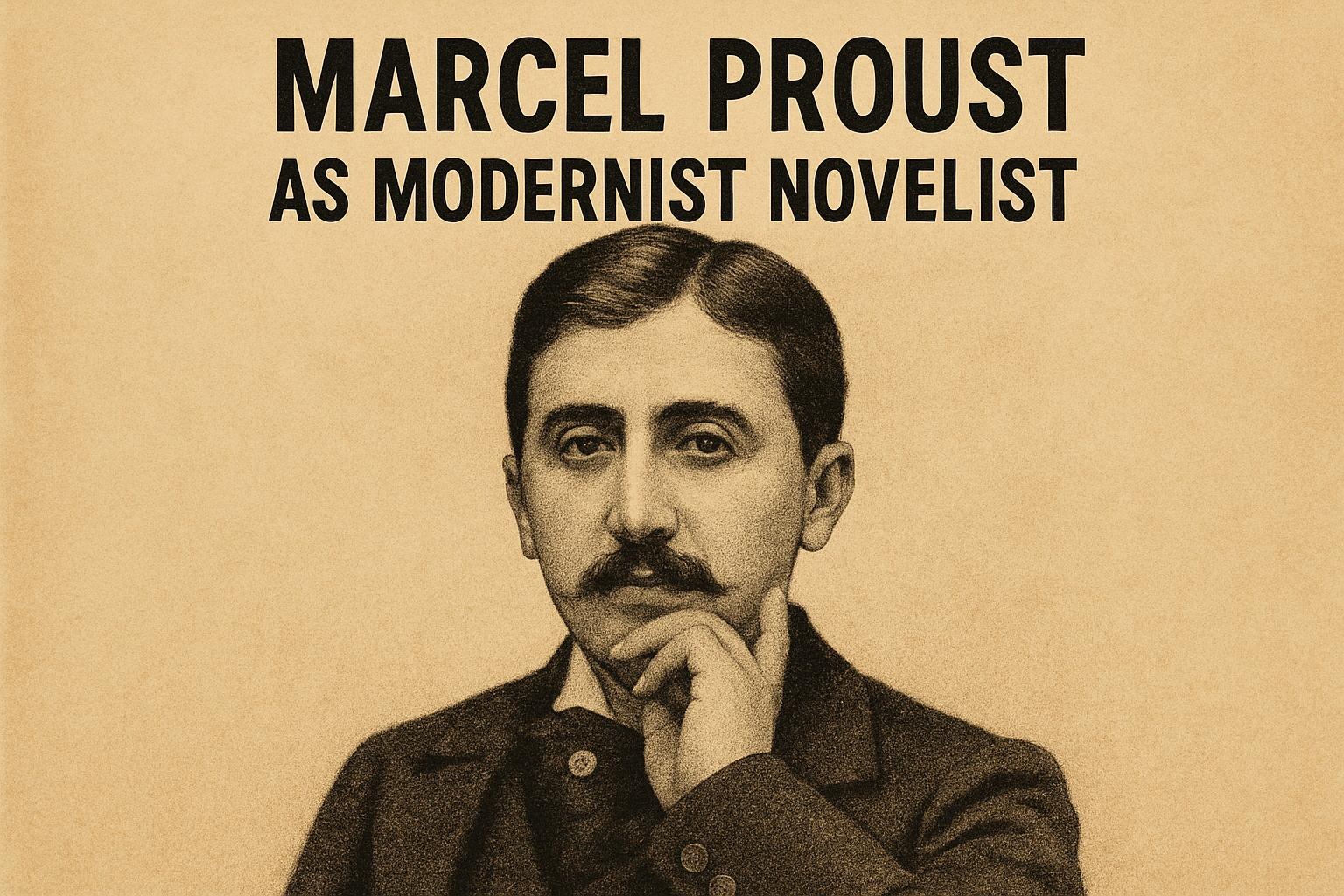
Marcel Proust changed the way we view the world. Indeed, he was a master of the internal soul. Marcel Proust as modernist novelist remains a very vital figure. For instance, he was born in Paris in 1871. His family was wealthy and also very well educated. However, Marcel suffered from terrible health for many years. Consequently, this forced him to stay inside and observe life. He watched people with a very sharp, keen eye. Moreover, he studied law but he truly loved art. Soon, he began to write for local French journals. Therefore, he sought the true essence of human time. He moved away from simple plots of old books. Instead, he explored the deep flow of human thought. His work is a vast map of the mind. Furthermore, he spent years in a quiet, cork-lined room. He gave his entire life to his massive project. Thus, he created a masterpiece for all future ages.
2. Birth
Marcel was born in a suburb of Paris called Auteuil. His father was a doctor and a famous researcher. Meanwhile, his mother came from a very wealthy family. They provided him with a very comfortable, rich life. However, he was a very sick and weak child. Specifically, he suffered a violent asthma attack at age nine. This event shaped his view of the fragile body. Consequently, he spent much of his time reading in bed. His mother encouraged his early love for the classics. Therefore, this bond influenced his writing on love and loss. Marcel Proust as modernist novelist grew from these early pains. He saw the world through the lens of illness. Moreover, he found beauty in the smallest of things. Every smell and sound became a part of him. Subsequently, he carried these memories into his adult life. Childhood was a garden of endless and deep wonders. Indeed, he never forgot his early home life.
3. Education
The young boy attended the very famous Lycée Condorcet. He excelled in the study of literature and philosophy. Indeed, he showed a great talent for writing essays. His teachers praised his deep and very original mind. Later, he served a year in the French army. Consequently, this experience gave him a new view of society. He then went to the Sorbonne to study further. For example, he listened to the lectures of Bergson. Bergson taught him about the true nature of time. Therefore, this philosophy changed his approach to the novel. Marcel Proust as modernist novelist used these ideas to innovate. He realized that time is a very personal thing. It is not just the ticking of a clock. Instead, it is a flow of lived moments. Furthermore, he graduated with a degree in law and literature. His education gave him a very strong intellectual base. Thus, he combined science with the beauty of prose.
4. Career Beginning
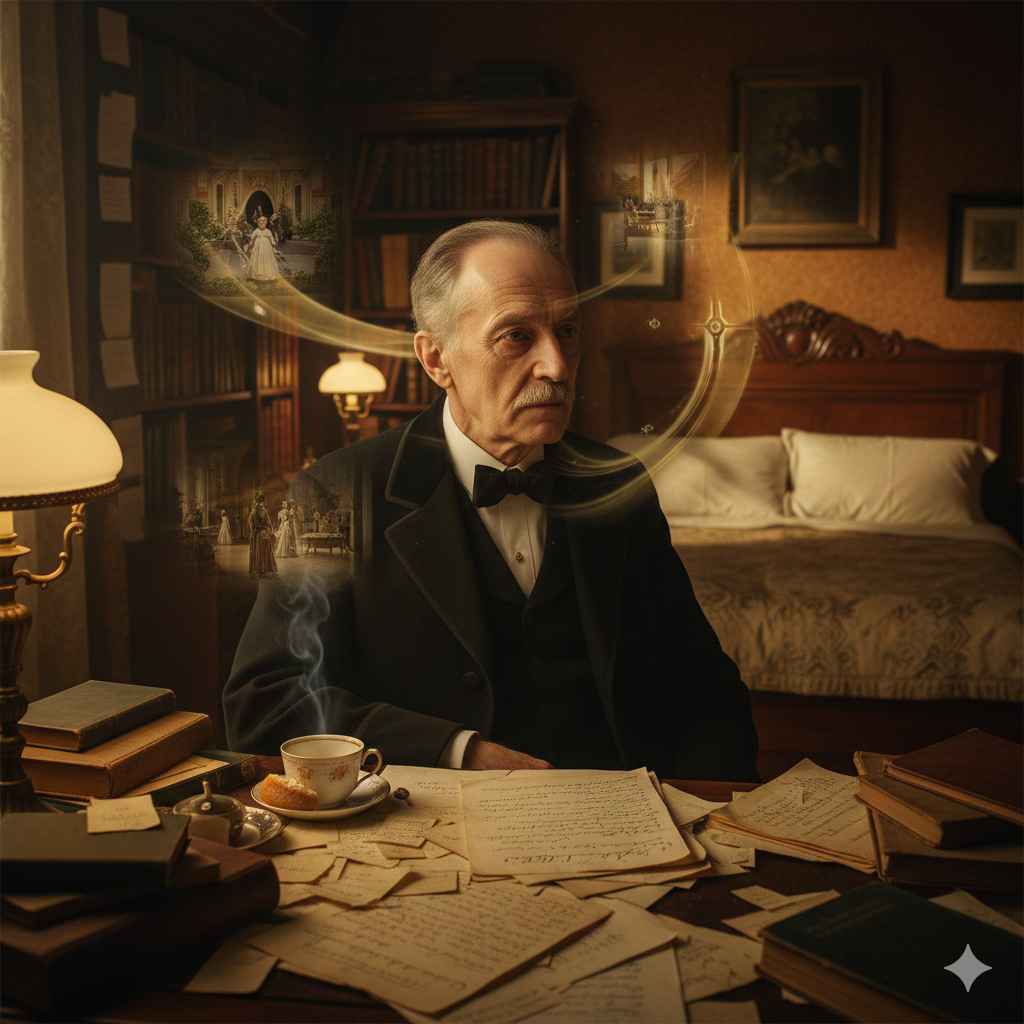
He began his career as a young socialite in Paris. He visited many high fashion salons and grand parties. Meanwhile, he was looking for a subject for fiction. His first book was a collection of short stories. Unfortunately, it did not receive much praise from critics. They thought he was just a light, social writer. However, this rejection made him work much harder now. He spent years translating the works of John Ruskin. Consequently, this work helped him find his own voice. Marcel Proust as modernist novelist was slowly coming to life. He moved into his quiet room after parents died. Therefore, he shut out the noise of the city. He began to write his massive and famous novel. Moreover, he worked mostly at night by a lamp. He wrote on thousands of small scraps of paper. Thus, he was building a world out of memories. Finally, he worked until the day of death.
5. Marcel Proust modernism
Modernism is about the break from very old ways. He rejected the linear style of the past century. Instead, he wanted to show the mental chaos. Therefore, he focused on the internal life of men. He used long sentences to mirror the human brain. Marcel Proust as modernist novelist defined a new era here. For instance, he ignored the typical hero story arc. He cared about the way we perceive our reality. Consequently, the world is a reflection of our souls. Furthermore, he explored the limits of language and art. He used symbols to represent very deep, hidden truths. Indeed, this shift was radical for readers back then. He proved that the mind is a vast universe. Moreover, we do not just live; we think life. His modernism is a search for the deep self. Thus, he looked into the mirror of the heart. His prose captures the light of a world.
6. Proust as modernist writer
He believed that art is the only true reality. Life is often dull and governed by simple habits. However, art can reveal the hidden truth of things. Marcel Proust as modernist novelist used his pen daily. He dug deep into the layers of his characters. For example, he showed that people are full of secrets. They change their masks depending on the social room. Consequently, this focus on the self is a trait. Moreover, he used metaphors to link many different ideas. He saw the connections between a flower and person. Therefore, these links create a very rich, textured world. He wrote with a very high level of precision. Indeed, every word was chosen for sound and meaning. He was a scientist of the human emotional state. Thus, his writing style is both dense and beautiful. He invites the reader to look much closer now. Finally, he found the epic in small details.
7. Marcel Proust narrative technique
His technique is famous for its very slow pace. Specifically, he expands a single moment into many pages. This allows him to analyze every small human feeling. Marcel Proust as modernist novelist used a first-person voice. Consequently, this voice acts as a filter for world. We see everything through the eyes of the narrator. Therefore, this creates a very intimate and personal experience. He does not follow a straight line of action. Instead, he moves by the power of mental association. One thought triggers a memory of a distant place. Moreover, this technique mimics the actual way we think. Furthermore, he weaves many complex themes into the plot. He discusses music, painting, and the nature of love. Indeed, his structure is like a very grand cathedral. It is built with thousands of small, careful details. Thus, every part of the book serves the whole. Finally, he changed the shape of the novel.
8. Stream of consciousness in Proust
His stream of consciousness is very orderly and deep. It is not a messy flow of random words. Rather, it is a careful map of thought. Marcel Proust as modernist novelist mastered this internal flow. For instance, he shows how the past is present. It stays hidden beneath the surface of our minds. However, we only need a sensation to bring it. Consequently, this creates a sense of living in time. We are in the present and the past together. Therefore, this layering of time is a modernist goal. He captures the subtle shifts in our private moods. Moreover, we feel the narrator’s joy and his pain. His prose is like a river of golden light. Furthermore, it carries us through the halls of memory. He gives us access to his most private thoughts. Thus, this is the true power of his work. Finally, he revealed the music of inner life.
9. Psychological realism in Proust
He looked deeper into the soul than any writer. Specifically, he wanted to find the laws of nature. For example, he studied the root of social pride. He looked at the cruel nature of human jealousy. Marcel Proust as modernist novelist used very keen observation. He analyzed the way people talk and also move. Consequently, he saw the lies that people tell daily. His characters are not simple or easy to judge. Instead, they are very complex and often quite flawed. Therefore, this realism is what makes his work powerful. He does not provide a happy or easy ending. Moreover, he shows life as it is truly lived. He explores the pain of social climbing as well. Furthermore, he sees the emptiness of the ruling class. Indeed, his book is a mirror for our lives. Thus, we see our own fears in pages. Finally, he taught us how to be honest.
10. Memory and time in Proust
Time is the main subject of his entire book. For instance, he views time as a destructive force. It takes away our youth and our many friends. However, memory is the way we can survive it. Marcel Proust as modernist novelist searched for lost time. He wanted to save the past from being lost. Consequently, he showed that time is not linear today. Instead, it is a circle that keeps coming back. We live our lives through the lens of memory. Therefore, the past is never truly gone from us. He used his writing to rebuild his old world. Moreover, he brought back the dead through beautiful words. This struggle against time is a very grand theme. Furthermore, he felt that only art could stop clocks. He lived in his memories to find truth. Thus, his work is a temple for the past. Finally, he saved his life by writing.
11. Involuntary memory Proust
Involuntary memory is his most famous and central idea. It happens when a sense triggers a sudden memory. Specifically, a taste or a smell brings back past. Marcel Proust as modernist novelist used the tea cake. This cake is known as the famous little madeleine. When he eats it, his childhood returns to him. Consequently, this memory is much stronger than a fact. It carries the actual smell and feel of home. Therefore, it brings a sense of pure, high joy. It proves that the past is still very alive. Moreover, we carry our lives inside our physical bodies. These moments are rare and also very precious gifts. Furthermore, they allow us to escape the trap of time. He built his entire novel around these flashes. Indeed, they provide the structure for his massive story. Thus, he found the eternal in a cup. Finally, it is a moment of grace.
12. Modernist experimentation in Proust
He experimented with the very form of the book. For example, he broke rules of the old novel. He removed the focus on the typical action plot. Marcel Proust as modernist novelist focused on the mood. Consequently, he wanted to capture the feeling of life. He used very long sentences with many small parts. Indeed, this was a bold and very new experiment. Furthermore, he mixed his story with many long essays. He wrote about the role of the great artist. Therefore, these parts are just as vital as story. He also played with the idea of selfhood. Specifically, he showed that we have many different selves. We change as we move through our long lives. Moreover, this view of identity is very modern indeed. He pushed the limits of what a novel does. Thus, he made the book a place for thought. Finally, he changed all of high literature.
13. Interior monologue in Proust
The interior monologue is the heart of his work. Indeed, we hear the narrator’s voice in every line. He shares his deepest doubts and his many fears. Marcel Proust as modernist novelist perfected this private tone. Consequently, he made the reader a close, trusted friend. We see his mind working through every small problem. Therefore, this creates a very strong and lasting bond. The monologue is full of rich and deep imagery. For instance, he uses art to explain his feelings. Moreover, he shows the quiet drama of the soul. A simple look can trigger a long mental storm. Furthermore, this focus on the inside is a shift. He records the whispers of the human heart daily. Every thought receives his full and total artistic care. Thus, this makes the mundane seem very grand now. Finally, he found beauty in a single quiet breath.
14. Subjective time in modernist fiction
His characters do not live by a clock’s time. Instead, they live by their own internal emotional rhythm. Specifically, a few minutes of love can feel eternal. Conversely, many empty years can pass in a page. Marcel Proust as modernist novelist explored this deep flow. Consequently, he showed that time is a personal thing. Therefore, the pace of his book changes quite often. He lingers on moments of intense and high beauty. Meanwhile, he speeds through the periods of dull habit. This creates a very natural and also dynamic pace. Moreover, it mimics how we actually remember our lives. Furthermore, it highlights the great importance of the moment. We live in a world of many shifting shadows. Indeed, he captured the light before it faded away. Thus, his time is the true time of soul. Finally, he showed that every moment has depth.
15. A la recherche du temps perdu
This is the title of his seven volume work. For instance, it follows a man seeking his purpose. Along the way, he learns about life and art. Marcel Proust as modernist novelist gave us this gift. Consequently, the book is a map of all humanity. It covers many characters and their long, complex lives. Therefore, every volume adds a new and deep meaning. Reading it is a life-changing event for many people. However, it requires much patience and an open heart. It is a world you enter and inhabit. Moreover, the title means “In Search of Lost Time.” It is the most ambitious novel ever written now. Furthermore, it stands as a peak of human achievement. He poured his whole soul into this massive work. Indeed, he turned his life into a timeless art. Thus, it is a monument to memory. Finally, we find ourselves in his pages.
16. Proust and modernist fiction
He stands with Joyce and also with Virginia Woolf. Together, they changed the way we write and read. Specifically, Proust focused on the interior more than others. Marcel Proust as modernist novelist brought a French style. Consequently, he showed that the novel is a philosophy. It is not just for a simple, light evening. Therefore, it is a way to understand our existence. He used fiction to find the hidden truth. Thus, he raised the status of the novel forever. Moreover, he made it as serious as any science. His impact is seen in every complex book today. Furthermore, he taught us to look closer at lives. Indeed, his legacy is the freedom to be deep. He is the father of the modern mind. Finally, his words continue to inspire many new writers. He showed that the mind is the story. Thus, his influence is very deep.
17. Proust’s treatment of consciousness
He treated the mind like a very deep ocean. Indeed, he explored the layers of the human self. This includes the conscious and the vast hidden mind. Marcel Proust as modernist novelist mapped this terrain. For instance, he showed how things trigger internal states. Consequently, he was interested in how we form ideas. His writing is a study of human awareness now. Therefore, he shows how consciousness is always moving along. It never stays in one single place for long. Moreover, this movement creates the music of his prose. He records the symphony of the human brain’s work. Furthermore, every thought is a note in a theme. Thus, his book is a mirror for every reader. We see our own minds in his words. Indeed, he captured the spark of human life itself. Finally, he made the invisible visible through his art. Thus, his vision remains powerful.
18. Proust and narrative innovation
He changed how stories are told from the inside. Specifically, he did not follow a simple, clear path. Instead, he used a very complex and layered style. Marcel Proust as modernist novelist moved through time. Consequently, he moved between the past and the present. This creates a sense of living in many times. Therefore, he used the narrator as a social filter. Everything is colored by the narrator’s unique personal mood. Moreover, he innovated the long form of the novel. He proved that length can lead to great depth. Furthermore, he did not care about quick, easy thrills. Rather, he wanted a slow transformation of the soul. Indeed, his sentences are famous for their many clauses. These clauses hold many ideas at one single time. Thus, this creates a very rich and textured reality. Finally, he invented a new language for the heart.
19. Modern novel techniques Proust
He used many different techniques to build his world. For instance, he used the idea of the digression. Specifically, he moves away from story to discuss art. These parts are the core of his message. Marcel Proust as modernist novelist mastered these new tools. Consequently, he showed that the novel could contain everything. It could be a history and a long poem. Therefore, he broke the walls between different arts. His work feels very modern even to us today. Moreover, he used irony to critique the high classes. He also used humor to soften his deep pain. Furthermore, his techniques require a very active, smart reader. He does not provide any easy or simple answers. Indeed, he invites us to think along with him. Thus, he was a true pioneer of words. Finally, his work is a laboratory of high art. He showed us the potential of novels.
20. Modernist treatment of memory
Modernism sees memory as a broken and fragmented thing. However, Proust sought to make it whole and real. Indeed, he treated memory as a creative, artistic act. Marcel Proust as modernist novelist used his memory. Consequently, we do not just remember; we actually create. Thus, the past is a work in progress always. Therefore, it changes as we grow and learn things. He used this to heal his own heart. For instance, he used memory to recover lost ones. Moreover, he showed that memory is tied to places. A house can hold a whole human life. Furthermore, this treatment of memory is very deep, poetic. It moves beyond simple nostalgia into the very profound. Indeed, he found the sacred in the mundane past. Every memory is a piece of a larger puzzle. Finally, when joined, they reveal the face of time. He turned his life into a myth.
21. Proust and psychological depth
He explored the mind with a very high level of detail. Indeed, he looked for the secret laws of the soul. For example, he studied the tiny roots of our vanity. He analyzed how a single word can cause deep pain. Consequently, his work is a study of the human psyche. Moreover, he showed that our feelings are very complex things. They change based on the people around us at lunch. Therefore, he did not use simple or flat character types. Instead, he gave every person a very rich inner life. Furthermore, he showed how we hide our true selves away. We use social rules as a strong and heavy mask. Indeed, this depth is what makes him a great master. He knew the heart better than any doctor or priest. Thus, his book feels like a real human encounter. Finally, he gave us a map for our own feelings.
22. Proust’s prose style
His style is famous for its very long, rhythmic flow. Specifically, he used many clauses to capture every single thought. This allows him to express very subtle and complex ideas. Moreover, his prose is full of many beautiful, rich metaphors. He compared the human heart to a dark, deep sea. Therefore, his words have a very musical and poetic quality. Readers often find his rhythm very soothing and quite deep. Furthermore, he used very precise language to describe every scene. He wanted the reader to see exactly what he saw. Indeed, this style was a major change in modern fiction. He did not care about the speed of the plot. Instead, he cared about the beauty of the written word. Thus, his books are a joy for the true artist. Finally, he proved that style is a matter of vision. He wrote with the grace of a true genius.
23. Modernist exploration of self
He wanted to know what makes a person a “self.” Indeed, he found that the self is very fragmented. We are not just one person throughout our whole lives. Instead, we are a collection of many different past selves. Consequently, this view of identity is a core modernist theme. Moreover, he showed how our surroundings change our inner soul. We are different in a garden than in a room. Therefore, he explored the fluid nature of our human identity. He used the narrator to show this constant mental shift. Furthermore, he proved that we are made of our memories. Without the past, the self would simply fade away today. Indeed, this exploration was very bold for his own time. He looked into the mirror and saw many faces there. Thus, he gave us a new way to see ourselves. Finally, he found the universe within a single man.
24. Proust and fragmentation of narrative
He broke the idea of a simple, linear story path. Instead, he used a fragmented structure to show life’s truth. One event might trigger a story from ten years ago. Consequently, the narrative jumps between the past and the present. This creates a very layered and rich reading experience now. Therefore, the reader must be very alert and quite active. Moreover, he showed that life does not happen in order. We experience the world through many different mental fragments today. Furthermore, he used this style to capture the true mind. The mind does not think in a straight line ever. Instead, it moves like a bird across a wide sky. Indeed, this innovation was vital for the modern novel genre. He replaced the plot with the flow of consciousness now. Thus, his book is a puzzle of human experience. Finally, he showed that every fragment holds a deep truth.
25. Proust and perception of reality
He believed that reality is a purely subjective and personal thing. For instance, two people see the same room very differently. Their past and their mood change what they actually see. Therefore, he focused on the act of human perception itself. He showed how our desires color the world around us. Consequently, his narrator often learns that his views were wrong. This realization is a key part of his growth process. Moreover, he showed that the truth is always very hidden. We must look past the surface to find the essence. Furthermore, he used art to help us see more clearly. Art reveals the reality that habit hides from our eyes. Indeed, this focus on perception is a modernist hallmark today. He proved that the world is a creation of mind. Thus, we live in a reality of our own. Finally, he taught us to look with fresh eyes.
26. Proust’s influence on modernism
His influence on other writers was very immediate and deep. For example, Virginia Woolf and James Joyce read him closely. They saw a new way to handle time and memory. Therefore, he helped set the stage for all modern fiction. He showed that the inner life is a worthy subject. Consequently, many later writers followed his very quiet, deep path. Moreover, his focus on the self changed the whole genre. He moved the novel away from the external social world. Instead, he placed it firmly within the human private mind. Furthermore, his style encouraged other artists to take bold risks. They saw that a book could be a life’s work. Indeed, he remains a model for every serious creative writer. He proved that art is a matter of total devotion. Thus, his shadow falls across all of modern literature. Finally, he is a teacher for those who seek depth.
27. Modernist themes in Proust
He explored the themes of loss, desire, and also art. Specifically, he looked at the pain of a fading world. He saw the shift from the old to the new. Therefore, his work captures a sense of deep social change. Consequently, he wrote about the vanity of high social life. He saw the empty rituals of the rich and powerful. Moreover, he found the theme of love to be tragic. Love is often based on a dream of the other. Furthermore, he used art as the only way to heal. Art provides the meaning that life often fails to give. Indeed, these themes are central to the whole modernist movement. He looked at the world with a very sad eye. However, he also found a way to celebrate human life. Thus, his work is both very dark and very bright. Finally, he found the eternal within the very fleeting.
28. Time and identity in Proust
Time is the force that defines our very human identity. For instance, we are different people at different ages now. The child and the old man are the same. However, they are also very different in their daily thoughts. Therefore, he explored how time shapes the human core soul. He showed that we are a sum of our years. Consequently, his narrator searches for his own true self today. He finds it hidden in the folds of his past. Moreover, he showed that time can be very cruel indeed. It erodes our beauty and our many close personal bonds. Furthermore, memory is the only tool that can stop time. Memory allows us to keep our identity whole and real. Indeed, this struggle is the heart of his great book. He lived to find the time that he had lost. Thus, his work is a map of a life. Finally, he found himself within the flow of years.
29. Proust and introspective narration
He used a narrator who looks deep into his mind. Indeed, the book is a long journey into the soul. The narrator analyzes his every thought and his every dream. Therefore, the tone is very quiet and also very intense. He does not care about the noise of the world. Instead, he cares about the whisper of the private heart. Consequently, the reader feels a very close bond with him. We share his secrets and his many quiet, dark fears. Moreover, this introspection allows for a very deep social study. He sees the truth of others by looking at himself. Furthermore, he showed that the mind is a great stage. Every small thought is a player in a grand drama. Indeed, this style was very new for the novel form. He turned the gaze of the writer firmly inward now. Thus, his book is a long, deep mental prayer. Finally, he found the truth in the quiet of a room.
30. Modernist aesthetics in Proust
His aesthetic was based on the search for pure beauty. Specifically, he believed that art should be very precise and deep. He used metaphors to reveal the hidden beauty of things. Therefore, his work is a celebration of the human senses. He described the smell of flowers and the taste of tea. Consequently, the book feels very alive and also very textured. Moreover, he showed that beauty is found in the mundane. A simple street can be as grand as any palace. Furthermore, he believed that the artist must be very disciplined. He gave up his life for the beauty of words. Indeed, this aesthetic vision is a key part of modernism. He wanted to create a world that would never fade. He built a cathedral of language for the whole world. Thus, his art is a gift to the human spirit. Finally, he found the divine in the very small.
31. Proust’s contribution to the modern novel
He contributed a new sense of depth to the novel. Specifically, he expanded the limits of what a book can say. He proved that the internal world is a vast place. Therefore, he changed the expectations of all future global readers. He moved the novel toward philosophy and also toward poetry. Consequently, the genre became much more serious and quite grand. Moreover, he innovated the use of time in a story. He showed that time is not a simple, linear thing. Furthermore, his focus on memory gave the novel a soul. He showed that a book can capture a whole life. Indeed, his work is a peak of the modern age. He remains a model for every writer who seeks truth. Thus, his contribution is both very large and very deep. He gave us a new way to tell our stories. Finally, he made the novel a home for the soul.
32. Legacy of Marcel Proust as Modernist Novelist
The Legacy of Marcel Proust as modernist novelist is immense. Indeed, he changed the way we perceive our own lives. Authors everywhere still study his long and beautiful sentences. Consequently, he taught us that art can truly conquer death. His work remains a bridge to the distant past. Therefore, scholars find new secrets in his text every year. Moreover, he remains a symbol of total artistic devotion. He gave his life to his one great book. Furthermore, his influence is found in films and paintings too. He is a giant of the twentieth century now. Indeed, his name is a synonym for deep and quiet thought. We still eat madeleines and think of him fondly. However, he made us realize that time is very precious. Finally, he showed us that every life is epic. His legacy will live as long as books exist. Thus, he is a star in the sky. We are lucky to have his vision.
To study the history of English literature, follow the link: https://englishlitnotes.com/category/history-of-english-literature/
For further reading and educational support on English literature, you may find helpful resources like notes, textbooks, and practice tests at ILMKidunya – Pakistan’s leading education portal.
Discover more from Naeem Ullah Butt - Mr.Blogger
Subscribe to get the latest posts sent to your email.