
Introduction
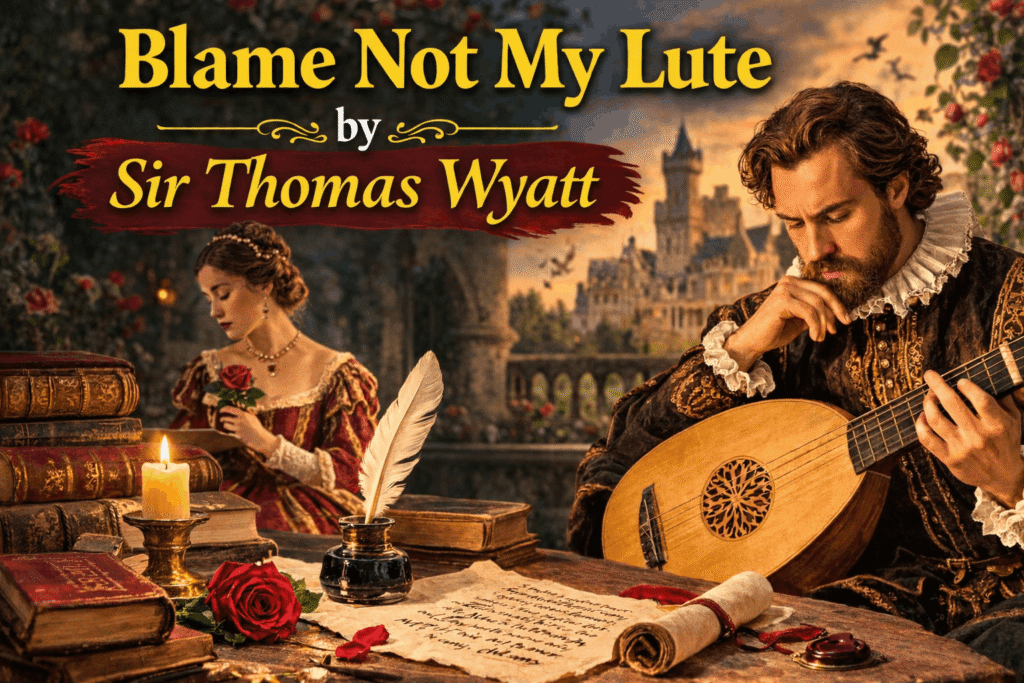
Renaissance poetry reflects emotion and courtly experience strongly. Moreover, Tudor poets express love and betrayal clearly. Therefore, readers deeply admire Renaissance lyric poetry. Meanwhile, Sir Thomas Wyatt strongly shaped English Renaissance literature. Consequently, scholars study Wyatt’s poetry within the Tudor poetic tradition. Furthermore, “Blame Not My Lute” by Sir Thomas Wyatt presents a lyrical protest. Thus, Wyatt connects music with emotional confession and criticism. Additionally, the poem reflects the traditions of courtly love poetry. Meanwhile, the poet addresses betrayal and disappointment directly. Therefore, the poem reveals emotional frustration through musical metaphor. Moreover, Wyatt uses the lute as a symbolic voice. Consequently, the instrument expresses suppressed truth and personal pain. Meanwhile, Tudor court culture strongly influences poetic expression. Thus, readers observe Renaissance love poetry themes clearly. Additionally, the poem strongly reflects Wyatt’s poetic style. Therefore, literature students examine this poem carefully. Meanwhile, readers notice emotional honesty within lyrical expression. Consequently, Wyatt creates a meaningful protest against betrayal. Thus, Renaissance poetry gains a powerful voice through Wyatt.
Background of the Poem
1. Tudor Court Culture
Tudor court culture strongly shaped Renaissance poetry. Moreover, nobles expressed emotion through music and poetry. Therefore, poets served royal courts and noble audiences. Meanwhile, Sir Thomas Wyatt lived within Tudor court life. Consequently, his poetry clearly reflects courtly love traditions. Furthermore, Tudor poetry addressed betrayal and romantic disappointment frequently. Thus, Wyatt expressed personal emotion through symbolic language. Additionally, court life encouraged poetic performance and artistic rivalry. Meanwhile, nobles admired Renaissance lyric poetry greatly. Therefore, poets used musical imagery and instruments symbolically. Moreover, emotional tension shaped courtly relationships strongly. Consequently, Blame Not My Lute by Sir Thomas Wyatt reflects this environment. Meanwhile, the poet voices criticism through musical metaphor. Thus, literature students examine Tudor culture through Wyatt’s poems. Additionally, courtly love poetry influenced Renaissance writers widely. Therefore, Tudor court culture clearly shaped the Renaissance poetic tradition. Meanwhile, emotional expression gained importance within Renaissance poetry.
2. Sir Thomas Wyatt and Renaissance Poetry
Sir Thomas Wyatt introduced Renaissance poetry into England. Moreover, he admired Italian Renaissance poetry deeply. Therefore, he adapted continental poetic traditions carefully. Meanwhile, Wyatt translated and imitated Petrarchan poetic forms. Consequently, English Renaissance literature gained new lyrical expression. Furthermore, Wyatt’s poetry reflects emotional sincerity and personal conflict. Thus, readers experience a strong voice within Renaissance love poetry. Additionally, his poetry shows intellectual control and symbolism. Meanwhile, Wyatt influenced Tudor poetry and Renaissance lyric poetry greatly. Therefore, scholars recognize him within the English literary renaissance. Moreover, Blame Not My Lute by Sir Thomas Wyatt demonstrates his poetic skill. Consequently, the poem blends music symbolism and emotional protest. Meanwhile, Wyatt’s poetic style emphasizes clarity and direct emotion. Thus, literature students analyze his poems widely. Additionally, Wyatt shaped the early modern English poetic tradition strongly. Therefore, Renaissance poetry gained expressive depth through Wyatt.
3. Renaissance Courtly Love Tradition
The courtly love tradition shaped Renaissance love poetry widely. Moreover, poets described devotion and romantic disappointment frequently. Therefore, literature explored emotional suffering and betrayal openly. Meanwhile, Renaissance poets often praised idealized lovers. Consequently, poetry expressed admiration and painful longing. Furthermore, courtly love poetry strongly influenced Tudor poetic culture. Thus, Wyatt explored emotional conflict within romantic relationships. Additionally, the poet used musical symbolism within the poetic narrative. Meanwhile, the lute becomes a voice of emotional truth. Therefore, “Blame Not My Lute” by Sir Thomas Wyatt clearly reflects courtly love themes. Moreover, the poem criticizes betrayal within romantic loyalty. Consequently, readers observe tension between love and honesty. Meanwhile, Renaissance poetry strongly celebrated emotional sincerity. Thus, Wyatt expressed frustration through lyrical voice. Additionally, courtly love poetry shaped the Renaissance poetic tradition widely. Therefore, Renaissance lyric poetry gained emotional depth.
4. Symbolism of the Lute
Musical instruments symbolize emotional expression in Renaissance poetry. Moreover, the lute represented harmony and artistic confession. Therefore, poets used the instrument as a poetic metaphor. Meanwhile, music communicated feelings beyond ordinary speech. Consequently, the lute expresses truth within emotional suffering. Furthermore, Wyatt uses the lute as a symbolic narrator. Thus, the instrument reveals hidden emotional frustration. Additionally, the poem criticizes betrayal through musical metaphor. Meanwhile, the instrument refuses silence and expresses truth. Therefore, Blame Not My Lute by Sir Thomas Wyatt centers on musical symbolism. Moreover, the lute represents poetic voice and honesty. Consequently, readers understand emotional confession through musical imagery. Meanwhile, Renaissance poetry connects music with storytelling frequently. Thus, Wyatt develops symbolic expression within lyrical poetry. Additionally, readers interpret emotional meaning through musical metaphor.
5. Theme of Betrayal in Renaissance Poetry
Betrayal appears frequently within Renaissance love poetry. Moreover, poets clearly describe disappointment and emotional suffering. Therefore, literature expresses frustration toward false affection. Meanwhile, Wyatt’s poetry reflects emotional conflict strongly. Consequently, readers observe themes of deception and loyalty. Furthermore, Renaissance lyric poetry highly values emotional honesty. Thus, poets criticize dishonest love through symbolic language. Additionally, the poem reflects Wyatt’s experience within courtly relationships. Meanwhile, betrayal creates poetic protest and emotional confession. Therefore, Blame Not My Lute by Sir Thomas Wyatt explores betrayal clearly. Moreover, the poem expresses frustration toward dishonest affection. Consequently, readers observe moral criticism within the lyrical voice. Meanwhile, Renaissance poetry strongly condemns emotional deception. Thus, Wyatt strengthens poetic tradition through honesty. Additionally, Renaissance poetry clearly highlights human emotional struggle.
Characters in the Poem
1. The Poet
Sir Thomas Wyatt speaks through the poetic voice strongly. Moreover, the poet expresses emotional pain through lyrical confession. Therefore, readers observe sincere frustration within Renaissance lyric poetry. Meanwhile, the poet rejects blame directed toward the lute. Consequently, he directs criticism toward betrayal and dishonesty. Furthermore, the poet values honesty within courtly love traditions. Thus, his voice challenges deception within romantic relationships. Additionally, the poet uses music to reveal hidden emotions. Meanwhile, Renaissance poetry often connects music and confession. Therefore, the poet transforms the lute into an emotional messenger. Moreover, the poet condemns betrayal with intellectual control. Consequently, readers observe moral strength within lyrical protest. Meanwhile, the Renaissance poetic tradition values emotional sincerity strongly. Thus, Blame Not My Lute by Sir Thomas Wyatt reflects this poetic voice. Additionally, the poet represents human dignity and personal honesty. Therefore, readers recognize Wyatt’s poetic style clearly. Meanwhile, the poet guides emotional meaning throughout the poem.
2. The Unfaithful Lady
The unfaithful lady represents betrayal within Renaissance love poetry. Moreover, her character symbolizes deception within courtly relationships. Therefore, the poem criticizes dishonesty through emotional language. Meanwhile, Renaissance court culture encouraged romantic devotion publicly. Consequently, betrayal created frustration and poetic protest. Furthermore, the lady symbolizes broken trust and disappointment. Thus, the poet condemns her actions through lyrical expression. Additionally, her character reveals weakness within the courtly love tradition. Meanwhile, poets often criticized false affection in Tudor poetry. Therefore, readers observe moral conflict within the poem. Moreover, the lady represents emotional betrayal within Renaissance poetry. Consequently, the poet exposes deception through musical symbolism. Meanwhile, the poem clearly reflects the traditions of courtly love poetry. Thus, readers understand emotional suffering within romantic relationships. Additionally, her character strengthens the poem’s moral criticism.
3. The Lute
The lute serves as a symbolic voice within Renaissance lyric poetry. Moreover, the instrument represents emotional confession and truth. Therefore, the poet rejects blame toward the musical instrument. Meanwhile, the lute expresses the poet’s hidden thoughts. Consequently, music becomes the medium for emotional honesty. Furthermore, Renaissance poetry often connects music with emotional expression. Thus, the lute symbolizes poetic voice and artistic honesty. Additionally, the instrument reveals emotional pain clearly. Meanwhile, music strengthens symbolic storytelling within lyrical poetry. Therefore, the lute communicates truth through melody. Moreover, the poet uses the instrument for moral criticism. Consequently, readers understand emotional frustration through musical imagery. Meanwhile, the lute represents artistic sincerity within the Renaissance poetic tradition. Thus, the poem gains depth through musical symbolism. Additionally, the instrument guides readers toward emotional truth.
Summary of the Poem
1. Opening Emotional Protest
The poem begins with an emotional protest against false blame. Moreover, the poet protects the lute from accusation. Therefore, the poet redirects criticism toward betrayal. Meanwhile, Renaissance lyric poetry often begins with direct confession. Consequently, readers encounter immediate emotional honesty. Furthermore, the poet defends artistic expression through musical symbolism. Thus, the opening establishes a strong lyrical voice. Additionally, the poet values truth above false reputation. Meanwhile, music reveals the poet’s emotional experience clearly. Therefore, readers observe moral seriousness within poetic expression. Moreover, the poet emphasizes sincerity within emotional storytelling. Consequently, Renaissance poetry gains authenticity and strength. Meanwhile, the opening reflects the Tudor poetic style strongly. Thus, readers understand emotional protest clearly. Additionally, the poet begins moral criticism through lyrical honesty.
2. Defense of the Lute
The poet clearly defends the lute from criticism. Moreover, he insists that music reveals truth honestly. Therefore, the instrument deserves respect and understanding. Meanwhile, Renaissance poets valued music deeply. Consequently, musical symbolism appears frequently within lyric poetry. Furthermore, the lute expresses hidden emotion through melody. Thus, readers understand the poet’s emotional struggle clearly. Additionally, music strengthens the poem’s symbolic meaning. Meanwhile, Renaissance lyric poetry often connects sound with emotion. Therefore, the lute becomes an emotional messenger. Moreover, the poet emphasizes artistic sincerity strongly. Consequently, readers observe moral honesty within the poetic voice. Meanwhile, the defense reflects Renaissance poetic tradition clearly. Thus, music protects truth and artistic dignity.
3. Exposure of Betrayal
The poet gradually reveals the theme of betrayal. Moreover, the poem criticizes dishonesty within romantic relationships. Therefore, readers clearly observe emotional disappointment. Meanwhile, Renaissance love poetry frequently explores betrayal. Consequently, Wyatt employs lyrical protest to express moral criticism. Furthermore, betrayal weakens trust within the courtly love tradition. Thus, the poet condemns false affection openly. Additionally, emotional sincerity strengthens the poem’s message. Meanwhile, Renaissance poetry values honesty above romantic illusion. Therefore, betrayal becomes a central theme within the poem. Moreover, the poet exposes deception through symbolic language. Consequently, readers understand emotional pain deeply. Meanwhile, lyrical protest intensifies the poem’s moral voice. Thus, betrayal strongly shapes the emotional narrative.
4. Moral Reflection
The poem gradually moves toward moral reflection. Moreover, the poet examines honesty within human relationships. Therefore, readers consider moral responsibility within romantic behavior. Meanwhile, Renaissance poetry often promotes ethical awareness. Consequently, Wyatt expresses wisdom through lyrical confession. Furthermore, the poem encourages honesty and personal dignity. Thus, readers reflect carefully on betrayal and loyalty. Additionally, moral reflection strengthens the Renaissance poetic tradition. Meanwhile, emotional sincerity guides the poem’s philosophical meaning. Therefore, readers recognize ethical insight within lyrical expression. Moreover, Wyatt combines emotion with moral understanding. Consequently, the poem gains intellectual depth and artistic strength. Meanwhile, moral reflection shapes the poem’s final message. Thus, Renaissance poetry clearly connects emotion and ethical thought.
5. Expression of Emotional Pain
The poet expresses deep emotional pain clearly. Moreover, betrayal intensifies his frustration and disappointment. Therefore, readers recognize sincere emotion within Renaissance lyric poetry. Meanwhile, the poet refuses silence and concealment. Consequently, music becomes an emotional confession and protest. Furthermore, the poet values honesty above romantic illusion. Thus, emotional sincerity shapes the lyrical voice strongly. Additionally, readers observe tension between love and betrayal. Meanwhile, Renaissance poetry explores emotional suffering frequently. Therefore, the poet transforms pain into poetic expression. Moreover, Blame Not My Lute by Sir Thomas Wyatt reflects emotional honesty clearly. Consequently, the poem condemns betrayal with intellectual control. Meanwhile, emotional sincerity strengthens the lyrical protest. Thus, readers experience authentic Renaissance love poetry. Additionally, Wyatt’s poetic style emphasizes emotional truth.
6. Music as Emotional Language
Music becomes emotional language within the poem. Moreover, the lute represents truth and confession. Therefore, the poet uses music for emotional expression. Meanwhile, Renaissance lyric poetry often connects music with love. Consequently, musical imagery strengthens the poem’s symbolism. Furthermore, the lute reveals hidden thoughts clearly. Thus, music becomes voice for emotional honesty. Additionally, readers observe artistic expression through musical metaphor. Meanwhile, Renaissance poets admired musical harmony greatly. Therefore, music strengthens lyrical storytelling strongly. Moreover, the poet values musical sincerity deeply. Consequently, readers recognize emotional truth through symbolic music. Meanwhile, the poem reflects Renaissance poetic tradition. Thus, music shapes the emotional narrative within the poem.
7. Condemnation of False Love
The poet condemns false love openly. Moreover, betrayal destroys trust within romantic relationships. Therefore, the poem criticizes dishonesty strongly. Meanwhile, Renaissance love poetry explores loyalty frequently. Consequently, Wyatt exposes emotional deception clearly. Furthermore, readers observe moral criticism within lyrical expression. Thus, the poet values sincerity within courtly love tradition. Additionally, betrayal weakens emotional bonds deeply. Meanwhile, Renaissance lyric poetry promotes emotional honesty. Therefore, readers understand moral conflict clearly. Moreover, the poet challenges deception courageously. Consequently, lyrical protest reveals ethical seriousness. Meanwhile, Blame Not My Lute by Sir Thomas Wyatt condemns false affection. Thus, the poem strengthens moral awareness.
8. Artistic Honesty
Artistic honesty defines the poem’s emotional voice. Moreover, the poet refuses artificial romantic praise. Therefore, he expresses truth through lyrical confession. Meanwhile, Renaissance poetry values authentic emotional expression. Consequently, readers observe sincerity within Wyatt’s poetic style. Furthermore, music symbolizes artistic integrity. Thus, the lute expresses emotional truth openly. Additionally, poetic voice becomes an instrument of honesty. Meanwhile, Renaissance lyric poetry values moral clarity. Therefore, artistic sincerity guides the poem’s message. Moreover, the poet criticizes deception strongly. Consequently, readers admire emotional courage within the poem. Meanwhile, artistic honesty strengthens the Renaissance poetic tradition. Thus, the poem promotes truthful expression.
9. Lyrical Protest
The poem functions as a lyrical protest. Moreover, the poet resists injustice and false blame. Therefore, music becomes a protest against betrayal. Meanwhile, Renaissance poetry often expresses personal frustration. Consequently, Wyatt transforms emotion into a poetic argument. Furthermore, readers recognize intellectual control within emotional protest. Thus, lyrical protest reveals moral strength. Additionally, the poet clearly defends artistic dignity. Meanwhile, Renaissance poets valued expressive courage. Therefore, protest strengthens poetic authenticity. Moreover, the poet criticizes deception confidently. Consequently, readers respect his moral determination. Meanwhile, lyrical protest defines Renaissance poetic voice. Thus, the poem gains emotional power.
10. Emotional Honesty
Emotional honesty guides the poem’s narrative. Moreover, the poet reveals sincere disappointment openly. Therefore, readers trust the poetic voice completely. Meanwhile, Renaissance poetry celebrates honest emotional expression. Consequently, Wyatt communicates truth through lyrical clarity. Furthermore, readers observe intellectual balance within emotional confession. Thus, the poem combines reason and emotion. Additionally, honesty strengthens the poem’s moral message. Meanwhile, Renaissance lyric poetry values sincerity deeply. Therefore, readers admire the poet’s courage. Moreover, Blame Not My Lute by Sir Thomas Wyatt highlights emotional sincerity. Consequently, the poem clearly reflects Renaissance poetic ideals. Thus, emotional honesty defines the poem’s meaning.
11. Reflection on Human Nature
The poem reflects human weakness and emotional conflict. Moreover, betrayal reveals fragile human loyalty. Therefore, readers examine human behavior carefully. Meanwhile, Renaissance poetry explores psychological truth. Consequently, the poem offers moral insight. Furthermore, emotional suffering reveals human vulnerability. Thus, readers understand romantic disappointment deeply. Additionally, literature becomes a reflection of human experience. Meanwhile, Renaissance writers valued philosophical reflection. Therefore, the poem invites thoughtful interpretation. Moreover, poetic voice expresses wisdom through emotional narrative. Consequently, readers learn moral awareness through poetry. Meanwhile, Renaissance literary tradition values intellectual depth. Thus, the poem reveals human nature clearly.
12. Development of Poetic Voice
The poem develops a strong poetic voice gradually. Moreover, the poet controls emotion through lyrical discipline. Therefore, readers observe intellectual structure within emotional expression. Meanwhile, Renaissance poetry values artistic balance. Consequently, Wyatt creates a meaningful poetic narrative. Furthermore, readers admire clarity within lyrical language. Thus, poetic voice reveals emotional sincerity. Additionally, the Renaissance poetic tradition encourages personal expression. Meanwhile, readers connect deeply with the poet’s voice. Therefore, poetic voice strengthens emotional communication. Moreover, the lyrical structure organizes emotional thought carefully. Consequently, the poem reflects Renaissance poetic excellence. Meanwhile, readers appreciate artistic craftsmanship strongly. Thus, Wyatt’s poetic voice remains memorable.
13. Emotional Conflict
The poem presents strong emotional conflict. Moreover, the poet struggles with betrayal and disappointment. Therefore, readers notice tension within romantic relationships. Meanwhile, Renaissance love poetry often explores emotional struggle. Consequently, the poem reflects a realistic human experience. Furthermore, the poet rejects false affection openly. Thus, emotional conflict strengthens lyrical intensity. Additionally, readers understand the poet’s moral frustration. Meanwhile, Renaissance poets strongly admired emotional sincerity. Therefore, Wyatt expresses inner conflict honestly. Moreover, emotional pain shapes the poem’s narrative. Consequently, readers feel sympathy for the poet. Meanwhile, emotional honesty strengthens poetic expression. Thus, the poem reveals authentic Renaissance emotion.
14. Criticism of Deception
The poem criticizes deception strongly. Moreover, the poet condemns dishonest affection openly. Therefore, readers observe moral criticism clearly. Meanwhile, Renaissance poetry valued honesty deeply. Consequently, Wyatt exposes betrayal through lyrical protest. Furthermore, deception damages trust within relationships. Thus, the poem teaches moral awareness. Additionally, readers understand the consequences of dishonest love. Meanwhile, Renaissance lyric poetry often condemns false devotion. Therefore, the poet encourages sincere emotional behavior. Moreover, lyrical protest strengthens the ethical message. Consequently, readers reflect upon loyalty and trust. Meanwhile, poetic criticism reveals intellectual strength. Thus, deception receives clear condemnation.
15. Role of Musical Symbolism
Music plays a central symbolic role. Moreover, the lute expresses emotional confession clearly. Therefore, musical symbolism strengthens the poem’s meaning. Meanwhile, Renaissance poetry frequently connects music with emotion. Consequently, readers interpret emotional truth through musical imagery. Furthermore, the lute becomes a poetic messenger. Thus, the poet communicates hidden feelings. Additionally, music transforms pain into lyrical beauty. Meanwhile, Renaissance writers admired musical harmony greatly. Therefore, the poem celebrates artistic expression. Moreover, musical symbolism strengthens poetic depth. Consequently, readers appreciate artistic creativity. Meanwhile, symbolic music enriches lyrical narrative. Thus, the poem gains emotional power.
16. Expression of Personal Truth
The poet expresses personal truth openly. Moreover, he refuses silence and concealment. Therefore, readers admire emotional courage. Meanwhile, Renaissance poetry encouraged honest expression. Consequently, Wyatt reveals a sincere emotional experience. Furthermore, personal truth strengthens poetic authenticity. Thus, readers trust the lyrical voice. Additionally, emotional honesty shapes Renaissance poetic tradition. Meanwhile, Wyatt rejects false romantic illusions. Therefore, poetic confession gains moral strength. Moreover, Blame Not My Lute by Sir Thomas Wyatt expresses this sincerity. Consequently, readers admire authentic Renaissance lyric poetry. Thus, personal truth defines the poem.
17. Moral Warning
The poem offers a moral warning clearly. Moreover, betrayal destroys emotional trust. Therefore, readers recognize an ethical lesson. Meanwhile, Renaissance literature often promotes moral reflection. Consequently, Wyatt encourages honest relationships. Furthermore, deception leads to emotional suffering. Thus, the poem teaches moral responsibility. Additionally, readers reflect carefully on loyalty. Meanwhile, Renaissance poetry valued ethical awareness. Therefore, moral warning strengthens poetic meaning. Moreover, lyrical expression reveals ethical insight. Consequently, readers understand the consequences of betrayal. Meanwhile, poetic narrative promotes moral wisdom. Thus, the poem conveys ethical guidance.
18. Artistic Control
Wyatt shows strong artistic control. Moreover, he organizes emotional ideas carefully. Therefore, the poem maintains intellectual balance. Meanwhile, Renaissance poetry valued disciplined expression. Consequently, readers admire poetic craftsmanship. Furthermore, lyrical structure strengthens emotional communication. Thus, artistic control enhances poetic quality. Additionally, readers observe a refined Renaissance poetic style. Meanwhile, Wyatt integrates music and emotion effectively. Therefore, the poem reflects Renaissance literary tradition. Moreover, poetic clarity strengthens the reader’s understanding. Consequently, artistic discipline defines Wyatt’s poetic voice. Thus, the poem demonstrates literary excellence.
19. Renaissance Poetic Tradition
The poem reflects Renaissance poetic tradition. Moreover, Wyatt connects music and love themes. Therefore, readers observe Renaissance literary values. Meanwhile, Renaissance poets admired emotional sincerity. Consequently, the poem celebrates lyrical honesty. Furthermore, poetic expression reflects Tudor court culture. Thus, Renaissance poetry gains cultural significance. Additionally, readers appreciate historical literary context. Meanwhile, Renaissance lyric poetry influenced English literature strongly. Therefore, Wyatt contributes important poetic innovation. Moreover, the poem represents the English literary renaissance clearly. Consequently, readers understand Renaissance poetic development. Thus, the poem remains historically important.
20. Lasting Literary Value
The poem holds lasting literary value. Moreover, readers strongly admire emotional honesty. Therefore, scholars continue studying Wyatt’s poetry. Meanwhile, Renaissance lyric poetry shaped English literary tradition. Consequently, the poem remains historically important. Furthermore, Blame Not My Lute by Sir Thomas Wyatt symbolizes Renaissance poetic achievement. Thus, readers appreciate artistic sincerity and symbolic expression. Additionally, literature students examine this poem widely. Meanwhile, the poem reflects Tudor cultural experience. Therefore, the poem remains relevant. Moreover, emotional truth attracts modern readers. Consequently, the poem remains memorable within Renaissance literature.
Critical Appreciation of the Poem
1. Emotional Sincerity
The poem demonstrates strong emotional sincerity. Moreover, Wyatt expresses frustration through direct lyrical voice. Therefore, readers sense genuine emotion within Renaissance lyric poetry. Meanwhile, emotional honesty defines Wyatt’s poetic style. Consequently, the poem rejects artificial romantic praise. Furthermore, sincerity strengthens poetic credibility and moral authority. Thus, readers admire the poet’s truthful confession. Additionally, Renaissance poetry values honest emotional expression. Meanwhile, Wyatt challenges courtly deception openly. Therefore, the poem encourages authentic emotional behavior. Moreover, Blame Not My Lute by Sir Thomas Wyatt reflects sincere emotional protest. Consequently, readers trust the poetic voice strongly. Meanwhile, the Renaissance poetic tradition celebrates emotional clarity. Thus, emotional sincerity strengthens the poem’s literary importance.
2. Moral Criticism
The poem presents clear moral criticism. Moreover, Wyatt condemns deception within romantic relationships. Therefore, readers observe ethical awareness throughout the poem. Meanwhile, Renaissance poetry often promotes moral reflection. Consequently, the poet strongly criticizes betrayal. Furthermore, the poem highlights honesty as an essential virtue. Thus, readers reconsider loyalty within human relationships. Additionally, moral seriousness strengthens the Renaissance poetic tradition. Meanwhile, Wyatt combines emotional expression with ethical thought. Therefore, the poem functions as moral instruction. Moreover, the poet encourages truthful emotional conduct. Consequently, readers recognize moral wisdom within lyrical narrative. Thus, moral criticism enriches the poem’s meaning.
3. Artistic Symbolism
Symbolism strengthens the poem’s artistic depth. Moreover, the lute represents poetic voice and emotional honesty. Therefore, music communicates hidden feelings effectively. Meanwhile, Renaissance poetry frequently uses symbolic objects. Consequently, symbolism enhances intellectual interpretation. Furthermore, readers understand emotional meaning through imagery. Thus, symbolism enriches Renaissance lyric poetry. Additionally, symbolic language strengthens artistic creativity. Meanwhile, the poet transforms music into expressive metaphor. Therefore, symbolic expression deepens poetic significance. Moreover, Blame Not My Lute by Sir Thomas Wyatt highlights musical symbolism clearly. Consequently, readers admire the poet’s artistic imagination. Thus, symbolism enhances the poem’s literary value.
4. Renaissance Cultural Reflection
The poem reflects the Renaissance cultural environment. Moreover, Wyatt lived within Tudor court society. Therefore, the poem represents courtly love traditions. Meanwhile, Renaissance poetry often reflects social experience. Consequently, readers observe historical context within lyrical expression. Furthermore, cultural awareness enriches literary understanding. Thus, the poem reflects the Renaissance intellectual atmosphere. Additionally, literature becomes a mirror of social behavior. Meanwhile, Renaissance poets valued artistic expression strongly. Therefore, the poem reveals Tudor cultural values. Moreover, readers connect history with poetry. Consequently, cultural reflection increases literary significance. Thus, the poem gains historical importance.
5. Poetic Structure
The poem demonstrates an organized poetic structure. Moreover, Wyatt arranges emotional ideas carefully. Therefore, readers follow the lyrical argument easily. Meanwhile, Renaissance poetry values structural discipline. Consequently, poetic order strengthens emotional expression. Furthermore, readers admire clarity within lyrical structure. Thus, structure supports intellectual meaning. Additionally, disciplined form reflects Renaissance artistic values. Meanwhile, poetic balance maintains reader engagement. Therefore, structural control enhances literary quality. Moreover, Blame Not My Lute by Sir Thomas Wyatt displays structural elegance. Consequently, readers appreciate organized poetic development. Thus, poetic structure strengthens artistic impact.
6. Intellectual Depth
The poem offers intellectual depth. Moreover, Wyatt combines emotion with thoughtful reflection. Therefore, readers consider ethical questions deeply. Meanwhile, Renaissance literature values intellectual exploration. Consequently, poetry becomes a medium for philosophical thought. Furthermore, emotional experience encourages moral reflection. Thus, the poem balances emotion and intellect. Additionally, readers interpret symbolic meaning carefully. Meanwhile, Renaissance poets admired philosophical inquiry. Therefore, intellectual depth enhances poetic significance. Moreover, readers discover layered meaning within lyrical expression. Consequently, intellectual strength enriches the Renaissance poetic tradition. Thus, the poem gains scholarly importance.
7. Musical Influence
Music strongly influences the poem. Moreover, the lute symbolizes lyrical expression. Therefore, musical imagery shapes emotional narrative. Meanwhile, Renaissance culture valued music highly. Consequently, musical symbolism strengthens the poetic atmosphere. Furthermore, music represents emotional communication clearly. Thus, the poem celebrates artistic harmony. Additionally, readers associate music with emotional confession. Meanwhile, Renaissance lyric poetry frequently integrates musical imagery. Therefore, musical influence enhances poetic creativity. Moreover, the poet transforms music into an expressive metaphor. Consequently, musical symbolism deepens emotional meaning. Thus, music enriches poetic artistry.
8. Language Simplicity
Wyatt uses simple language effectively. Moreover, simplicity increases emotional clarity. Therefore, readers understand the poetic message easily. Meanwhile, Renaissance poets valued clear expression. Consequently, simplicity strengthens lyrical communication. Furthermore, simple language supports emotional sincerity. Thus, readers appreciate an accessible poetic style. Additionally, clarity strengthens intellectual interpretation. Meanwhile, Renaissance poetry balanced elegance and simplicity. Therefore, Wyatt demonstrates refined linguistic control. Moreover, Blame Not My Lute by Sir Thomas Wyatt shows linguistic clarity. Consequently, readers admire the poet’s communication skills. Thus, simplicity enhances poetic beauty.
9. Emotional Universality
The poem expresses universal emotional experience. Moreover, betrayal affects human relationships everywhere. Therefore, readers from different eras understand the poem. Meanwhile, Renaissance poetry explores timeless emotional themes. Consequently, emotional universality strengthens literary relevance. Furthermore, readers connect personal experience with the poem. Thus, universal emotion ensures lasting appeal. Additionally, readers sympathize with the poet’s frustration. Meanwhile, literature reflects common human struggles. Therefore, emotional universality ensures continued appreciation. Moreover, readers recognize betrayal within everyday life. Consequently, universal themes strengthen poetic influence. Thus, the poem remains meaningful.
10. Literary Significance
The poem holds strong literary significance. Moreover, Wyatt influenced English Renaissance poetry greatly. Therefore, scholars recognize his poetic contribution. Meanwhile, Renaissance lyric poetry shaped English literary history. Consequently, the poem represents early Renaissance poetic innovation. Furthermore, Blame Not My Lute by Sir Thomas Wyatt remains widely studied. Thus, literature students analyze its symbolism and themes. Additionally, the poem illustrates the Tudor poetic tradition clearly. Meanwhile, literary history values Wyatt’s creativity. Therefore, the poem holds permanent literary importance. Moreover, readers admire its emotional honesty. Consequently, literary significance ensures lasting recognition. Thus, the poem occupies a respected position within English literature.
Use of Poetic Devices
1. Symbolism
Symbolism shapes the poem’s meaning strongly. Moreover, the lute symbolizes poetic voice and honesty. Therefore, musical imagery communicates emotional truth. Meanwhile, Renaissance poetry often uses symbolic objects. Consequently, symbolism enriches intellectual interpretation. Furthermore, readers understand hidden emotional meaning. Thus, symbolic language strengthens poetic expression. Additionally, symbolism deepens the emotional narrative. Meanwhile, poetic imagination transforms music into metaphor. Therefore, readers admire symbolic creativity. Moreover, Blame Not My Lute by Sir Thomas Wyatt demonstrates symbolic artistry clearly. Consequently, symbolism increases literary depth. Thus, symbolic imagery enhances poetic beauty.
2. Metaphor
Metaphor strengthens poetic expression greatly. Moreover, the lute functions as a metaphorical voice. Therefore, music represents emotional confession. Meanwhile, Renaissance poetry values figurative language. Consequently, metaphor deepens intellectual meaning. Furthermore, metaphor encourages imaginative interpretation. Thus, readers visualize emotional ideas clearly. Additionally, metaphor enriches the lyrical narrative. Meanwhile, figurative language strengthens poetic creativity. Therefore, readers admire imaginative comparison. Moreover, metaphor intensifies emotional communication. Consequently, poetic imagery becomes memorable. Thus, metaphor enriches Renaissance lyric poetry.
3. Tone
Tone reflects emotional seriousness throughout the poem. Moreover, the poet expresses frustration calmly. Therefore, readers’ sense controlled emotional protest. Meanwhile, Renaissance poetry values balanced emotional tone. Consequently, tone supports moral criticism. Furthermore, a calm expression strengthens poetic dignity. Thus, readers respect the poet’s sincerity. Additionally, tone guides the reader’s interpretation carefully. Meanwhile, emotional balance shapes Renaissance poetic style. Therefore, tone enhances lyrical effectiveness. Consequently, readers appreciate intellectual control. Thus, tone strengthens poetic authority.
My Lute Awake by Sir Thomas Wyatt: https://englishlitnotes.com/2026/03/09/my-lute-awake-by-sir-thomas-wyatt/
American Literature: http://americanlit.englishlitnotes.com
Discover more from Naeem Ullah Butt - Mr.Blogger
Subscribe to get the latest posts sent to your email.