Introduction
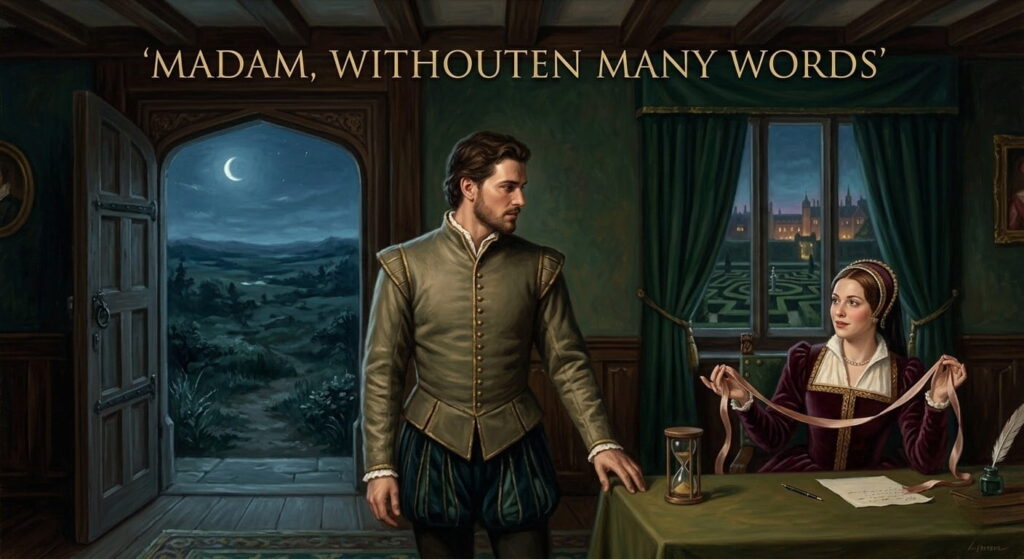
Sir Thomas Wyatt wrote a sharp and direct poem. This piece is titled Madam, Withouten Many Words. He seeks a clear answer from a specific lady. Indeed, the speaker dislikes long and fake courtly games. Instead, he demands a simple yes or no. However, he does not want any more wasted time. Consequently, the tone feels very blunt and honest. Furthermore, the poet rejects the usual flowery language of love. Similarly, he asks for a quick and final decision. Therefore, the poem stands out for its unique brevity. Moreover, Wyatt brings a new energy to English verse. Truly, he values truth over complex and empty speeches. Thus, the reader feels the speaker’s intense frustration. In addition, the poem reflects the harsh Tudor court. Naturally, the short lines match the urgent message. Consequently, the work remains a masterpiece of plain style. Finally, the speaker waits for her ultimate choice.
Background of the Poem
- The Influence of Italian Sonnets: Wyatt traveled to Italy on official royal business. There, he discovered the works of Francesco Petrarch. Nevertheless, he changed the Italian style to fit English. He often translated these poems into his own tongue. For example, he focused on themes of unrequited love. However, Madam, Withouten Many Words shows a different side. This poem avoids the typical deep and heavy gloom. Instead, it mirrors the quick wit of Italian madrigals. Furthermore, Wyatt introduced new rhythms to the English court. Consequently, his poetry became very popular among the elite. Similarly, he pushed the limits of traditional song forms. Thus, he helped birth a new era of literature. In addition, his travels shaped his unique poetic voice. Therefore, his Italian influence remains clear and strong.
- Life in the Tudor Court: The Tudor court was a very dangerous place. Men fought for power and the King’s favor. Similarly, poets wrote to impress the royal inner circle. Wyatt served King Henry VIII as a loyal diplomat. Consequently, he understood the games people played every day. Indeed, Madam, Withouten Many Words reflects this social world. He saw how courtiers hid behind many fake words. However, he preferred a more honest and direct approach. Thus, his poetry often mocks the courtly love tradition. Furthermore, he faced prison many times for his actions. Therefore, his work carries a sense of real risk. In addition, he wrote for a very small audience. Naturally, these readers understood his hidden and subtle meanings. Finally, his life was as dramatic as his verse.
- The Plain Style Tradition: Wyatt often used a very simple and clear style. This method is known as the plain style tradition. In contrast, many poets loved complex and flowery metaphors. However, Madam, Withouten Many Words sticks to the point. He uses short words to create a fast pace. Consequently, the message hits the reader like a blow. Similarly, the lack of ornament makes it feel modern. Furthermore, he focuses on the truth of human feelings. Therefore, his poems do not feel like dusty relics. In addition, he avoids the trap of excessive poetic padding. Thus, every single word serves a very specific purpose. Moreover, he proves that simple language can be powerful. Finally, this style influenced many later poets in England.
- The Nature of Courtly Love: Courtly love usually involved long and painful waiting periods. A knight would suffer for a cold, distant lady. Furthermore, he would write many songs about his pain. However, Wyatt challenges this slow and tiring process here. In Madam, Withouten Many Words, he demands speed. He does not want to pine away forever. Instead, he wants a deal made right now. Consequently, he treats love like a legal or business contract. Similarly, he rejects the idea of being a slave. Thus, he asserts his own dignity and personal time. Moreover, he shows a shift in the male perspective. Therefore, the poem feels like a bold social protest. In addition, he values his freedom over a false hope. Finally, he breaks the rules of the romantic game.
- Historical Context of the Manuscript: Wyatt did not publish his poems in printed books. Instead, friends passed his work around in handwritten manuscripts. The Egerton Manuscript is the most famous source today. Indeed, it contains Madam, Withouten Many Words in its pages. Consequently, we see his original intent and unique spelling. Similarly, these poems were meant to be sung aloud. Therefore, the rhythm is very bouncy and quite catchy. Furthermore, the manuscript shows how the court shared ideas. In addition, scholars study these pages to find his secrets. Thus, we keep his voice alive through these records. Moreover, the context of the manuscript adds great value. Finally, Wyatt remains a giant of the early Renaissance.
Characters in the Poem
The Speaker
The speaker is a man who values his time. He appears bold and very tired of games. Furthermore, he speaks his mind without any fear. He demands a quick answer from his beloved lady. Indeed, Madam, Withouten Many Words captures his honest mood. He refuses to play the part of the fool. Consequently, he sounds very different from other romantic poets. Similarly, he treats his lady as an equal partner. Therefore, he expects a direct and truthful response. In addition, he shows a very strong sense of self. Thus, he will leave if she says no. Moreover, he avoids the role of the weeping lover. Finally, he stands tall in his own simple truth.
The Lady
The lady is the target of this sharp poem. She seems to be playing a long game. Perhaps, she enjoys the attention of many different men. However, the speaker calls her to make a choice. Consequently, she must face his blunt and direct request. Similarly, she cannot hide behind her usual vague smiles. Therefore, the poem puts her in a difficult spot. Furthermore, she represents the classic cold lady of Petrarch. In addition, she holds the power to end the talk. Thus, her silence or her words will decide everything. Moreover, she is a silent figure in the text. Finally, she must decide if she wants his love.
Summary of the Poem
1. The Sudden Call
The speaker begins with a very sharp address. He calls out to his lady with great force. Furthermore, he asks for her full and immediate attention. However, he wants to keep the talk very short. Similarly, he rejects the need for a long chat. Consequently, he presents his heart with very few words. Thus, he sets a tone of extreme personal urgency. Therefore, the reader feels the speaker’s serious intent. In addition, he avoids the usual soft and flowery openings. Naturally, he treats the lady as an equal partner. Consequently, the poem feels modern and very direct. Moreover, he values his precious time above all else. Finally, he waits for her to look at him.
2. Rejection of Rhetoric
The speaker states his dislike for complex and fake speeches. Indeed, Madam, Withouten Many Words serves as his primary motto. He believes that true love needs no fancy padding. Consequently, he strips away the typical courtly love ornaments. Similarly, he asks her to be just as honest. Therefore, he avoids the trap of excessive and empty flattery. In addition, he focuses on the core of their bond. Thus, the message remains very lean and quite powerful. Furthermore, he challenges the standard rules of romantic verse. Moreover, he proves that simple words carry the most weight. Finally, he demands a life free from verbal clutter.
3. The Central Question
He asks a very deep and vital question now. Does she love him with a sincere and true heart? Furthermore, he wants to know her mind right away. However, he does not want any more vague smiles. Consequently, he puts her in a very tight spot. Similarly, he seeks a bond based on mutual truth. Thus, he offers his loyalty for her firm word. Therefore, the situation feels like a high-stakes trade. In addition, he values a clear path for their future. Naturally, he expects a response that matches his passion. Moreover, he refuses to live in a world of doubt. Finally, he waits for her soft yet sure reply.
4. The Request for Brevity
He insists that she must use a short reply. Long and winding stories will only waste his day. Similarly, he prefers a quick “yes” or “no” answer. Consequently, he maintains a fast and very brisk pace. Thus, he shows his deep respect for human efficiency. Therefore, he acts like a man of action and logic. Furthermore, he avoids the slow pain of traditional pining. In addition, he wants to settle the matter this hour. Naturally, he rejects the idea of a long courtship. Moreover, he brings a sense of business to romance. Finally, he leaves no room for any more delay.
5. Avoiding the Games
The speaker is truly done with the courtly games. These games are for boys who enjoy the chase. However, he is a man who seeks a result. Indeed, Madam, Withouten Many Words defines his entire adult approach. Consequently, he will not play the role of a slave. Similarly, he demands that she stop her clever tricks. Thus, he calls for a moment of raw truth. Therefore, the poem feels like a bold social protest. In addition, he values his own peace over her games. Furthermore, he shows a very strong sense of personal dignity. Moreover, he rejects the mask of the weeping lover. Finally, he stands firm in his clear and loud request.
6. The Price of Delay
Delay is a thief that steals his happy years. He will not let it take any more time. Similarly, he warns her about the cost of silence. Consequently, he pushes for a final and total choice. Thus, he shows the danger of a slow heart. Therefore, he treats her silence as a serious threat. In addition, he wants to avoid a life of regret. Furthermore, he believes that time is their greatest enemy. Naturally, he urges her to move with great speed. Moreover, he keeps his focus on the present moment. Finally, he looks for a sign of her resolve.
7. A Fair Proposal
He offers a very fair and very balanced deal. He gives his heart and asks for her love. Similarly, he sees this as a trade of equals. Consequently, he does not beg for her sweet grace. Thus, he keeps his pride and his soul intact. Therefore, the poem feels like a fair business talk. In addition, he values a relationship built on total trust. Furthermore, he shows that love should be a shared effort. Naturally, he avoids the trap of a one-sided romance. Moreover, he offers her a life of honest passion. Finally, he waits for her to accept his terms.
8. The Binary Choice
The choice is very simple for the lady today. She can stay with him or let him go. Similarly, there is no third path for her here. Consequently, she must face the truth of her heart. Thus, she cannot hide behind any more soft excuses. Therefore, the speaker demands a very clear verbal sign. In addition, he wants to end the cycle of hope. Furthermore, he values a “no” over a fake “yes.” Naturally, he seeks a life built on solid ground. Moreover, he brings the talk to a sharp point. Finally, he asks her to pick her side.
9. Integrity of Speech
He believes that words must match a person’s thoughts. If she does not love him, she must say. Similarly, he will respect a blunt and honest refusal. Consequently, he values her integrity as much as his. Thus, he seeks a world where speech is pure. Indeed, Madam, Withouten Many Words reflects this high moral standard. Therefore, he avoids the lies of the royal court. In addition, he wants to hear her real and raw voice. Furthermore, he proves that truth is a rare treasure. Moreover, he acts with a sense of high honor. Finally, he waits for her to speak the truth.
10. The Ready Departure
He is fully ready to leave her side now. If she says no, he will walk away. Similarly, he will not stay and cry for her. Consequently, he has a bag packed for his trip. Thus, he shows a very strong and firm will. Therefore, he does not fear the cold of isolation. In addition, he values his freedom over a cold lady. Furthermore, he is a man who can stand alone. Naturally, he gives her the power to lose him. Moreover, he shows that he is not her toy. Finally, he waits for her to decide his fate.
11. Defining the Bond
He wants to define what they are right now. Are they lovers or are they just strangers? Similarly, he wants to end the blurry gray lines. Consequently, he seeks a label for their shared bond. Thus, he brings a sense of order to love. Therefore, he acts with a very logical human mind. In addition, he hates the chaos of an unsure heart. Furthermore, he wants to build a house on rock. Naturally, he asks for a foundation of sure words. Moreover, he shows a desire for a clear future. Finally, he waits for her to name their path.
12. The Rejection of Slavery
He refuses to be a slave to her beauty. He is a free man with a soul. Similarly, he will not bow before her cold feet. Consequently, he asserts his own worth and his pride. Thus, he breaks the chains of old courtly love. Therefore, the poem is a song of total freedom. In addition, he values a love that is very liberating. Furthermore, he rejects the pain of a cruel mistress. Naturally, he wants a partner who walks beside him. Moreover, he shows a very modern sense of self. Finally, he waits for her to free him.
13. High Stakes Romance
The situation is very intense for them both now. Every word she speaks will change their whole lives. Similarly, the pressure of the moment is quite high. Consequently, they stand on a great and deep cliff. Thus, Madam, Withouten Many Words captures this tension very well. Therefore, the reader feels the weight of her choice. In addition, the speaker does not blink or look away. Furthermore, he holds his breath for her final word. Naturally, the stakes are as high as the stars. Moreover, he brings a sense of drama to prose. Finally, he waits for the world to turn.
14. Simple Needs
His needs are very small and very simple here. He just wants a word to guide him home. Similarly, he does not ask for gold or land. Consequently, he shows a heart that is very pure. Thus, he keeps his plea short and quite sweet. Therefore, he is easy to please and to love. In addition, he avoids the greed of the royal court. Furthermore, he values a “yes” more than any crown. Naturally, he is a man of very few desires. Moreover, he proves that love is enough for him. Finally, he waits for her to give it.
15. The Final Appeal
This is his last and most honest appeal now. He has said all that he can say. Similarly, he has laid his heart on the floor. Consequently, he has no more words to give her. Thus, the poem comes to a very fast end. Therefore, he leaves the rest to her quiet mind. In addition, he feels a sense of light relief. Furthermore, he has done his duty as a lover. Naturally, he rests in the truth of his speech. Moreover, he shows a great and deep inner peace. Finally, he waits for her to finish it.
16. The Logical Step
He believes that his request is very logical now. It is the only way to save them. Similarly, it is the best path for their hearts. Consequently, he acts with a very cool head. Thus, he avoids the heat of a wild rage. Therefore, he sounds like a teacher or a judge. In addition, he values the power of a clear mind. Furthermore, he proves that love can be quite smart. Naturally, he rejects the idea of a blind passion. Moreover, he brings a sense of light to love. Finally, he waits for her to see it.
17. Respecting the Silence
He will respect her silence if it means no. However, he prefers that she speak her mind. Similarly, he will not force a word from her. Consequently, he gives her the space to breathe now. Thus, he shows a very kind and gentle heart. Indeed, Madam, Withouten Many Words is a sign of respect. Therefore, he treats her with a high social grace. In addition, he values her right to choose her life. Furthermore, he acts like a true and noble knight. Moreover, he shows a great and deep moral strength. Finally, he waits for her to be ready.
18. The Power of Choice
She holds all the power in her hands now. She can make him stay or make him. Similarly, she is the master of their shared world. Consequently, he waits for her to exert her will. Thus, he shows a sense of humble patience here. Therefore, he is a man who can wait. In addition, he values the weight of her final word. Furthermore, he knows that she is a strong woman. Naturally, he treats her choice with great honor. Moreover, he brings a sense of awe to love. Finally, he waits for her to choose.
19. The Closing Statement
The speaker makes one last and very firm point. He is done and will say no more. Similarly, he is ready for whatever comes his way. Consequently, he stands with his head held very high. Thus, he is a man who knows his worth. Therefore, he feels a sense of great personal pride. In addition, he is ready for a “no” or “yes.” Furthermore, he has no fear of the lonely road. Naturally, he is a man of very strong grit. Moreover, he proves his strength through his short speech. Finally, he waits for her to end it.
20. The Ultimate Silence
The poem ends with a very heavy and deep silence. The speaker has finished his short and blunt plea. Similarly, the lady has not yet spoken a word. Consequently, the air is full of great tension. Thus, the reader must imagine the outcome now. Therefore, the poem leaves a lasting and deep mark. In addition, it shows the power of the unspoken word. Furthermore, it challenges us to speak our own truths. Naturally, it remains a giant of the English language. Moreover, it brings a sense of closure to Wyatt. Finally, we wait for her to speak forever.
Critical Appreciation
1. The Power of Brevity
Wyatt creates a masterpiece of efficiency in this short lyric. Indeed, Madam, Withouten Many Words proves that less is more. He rejects the bloated style of his many peers. Consequently, the poem hits with the force of a hammer. Similarly, the rhythm moves with a fast and steady beat. Therefore, the reader feels the speaker’s real and raw pulse. Furthermore, the lack of ornament highlights the core emotional truth. In addition, the poet values clarity over any complex artistic show. Naturally, this approach was quite revolutionary for the Tudor period. Thus, he establishes a new standard for English secular verse. Moreover, he proves that short sentences can carry heavy weight. Finally, the brevity mirrors the speaker’s lack of total patience.
2. Rejection of Courtly Tradition
The poem functions as a bold critique of romantic norms. Traditionally, lovers would pine and suffer for many long years. However, this speaker refuses to participate in such slow games. Consequently, he mocks the standard tropes of the courtly lover. Similarly, he demands a level of honesty that is rare. Therefore, the work feels like a fresh and modern protest. Furthermore, he treats love as a matter of personal honor. In addition, he avoids the trap of being a victim. Naturally, Madam, Withouten Many Words signals a shift in poetic tone. Thus, Wyatt moves away from the soft Italian sonnet style. Moreover, he asserts his own masculine dignity and firm spirit. Finally, the tradition of silent suffering comes to an end.
3. The Tone of Assertiveness
The speaker possesses a voice that is exceptionally firm and clear. He does not ask for permission to speak his mind. Similarly, he sets the terms for the entire social encounter. Consequently, he sounds more like a judge than a suitor. Thus, the poem gains a sense of high-stakes authority. Therefore, the lady must respond to his very strong energy. Furthermore, he avoids any sense of weak or desperate pleading. In addition, his confidence remains unshaken throughout the short text. Naturally, Madam, Withouten Many Words showcases his dominant and resolute character. Moreover, he speaks as a man who knows his worth. Thus, he commands the room with his sharp, short words. Finally, his assertiveness defines the poem’s unique and lasting impact.
4. The Business of Romance
Wyatt frames the act of love as a formal contract. He uses language that suggests a fair and equal trade. Similarly, he wants to settle the deal without any delay. Consequently, the poem loses the typical hazy and dreamy atmosphere. Instead, it feels grounded in the harsh and real world. Thus, he brings a sense of logic to human passion. Therefore, the reader sees love through a very practical lens. Furthermore, Madam, Withouten Many Words treats feelings as tangible and real. In addition, he values a certain result over a vague hope. Naturally, this business-like tone adds a layer of cold realism. Moreover, he proves that romance requires a firm and solid foundation. Finally, he looks for a “yes” to close the deal.
5. Psychological Realism
The speaker expresses a psychological state that many people feel today. He is tired of the masks that society often wears. Similarly, he feels the weight of wasted time and effort. Consequently, his frustration is a very relatable and human trait. Thus, the poem survives because it speaks to the heart. Therefore, it moves beyond the limits of the sixteenth century. Furthermore, Wyatt captures the anxiety of waiting for a choice. In addition, he shows the relief of demanding a final answer. Naturally, Madam, Withouten Many Words acts as a mirror for us. Moreover, he portrays a man at the edge of his patience. Thus, the text gains a deep and lasting emotional resonance. Finally, his honesty makes the poem feel very alive.
6. The Economy of Language
Every word in this poem serves a very specific task. There is no room for fluff or for empty lines. Similarly, Wyatt chooses his verbs to suggest immediate and direct action. Consequently, the poem flows like a fast mountain stream. Thus, the economy of language creates a sense of tension. Therefore, the reader stays focused on the speaker’s main goal. Furthermore, the short lines match the theme of quick decision-making. In addition, the poet avoids the use of excessive and distracting adjectives. Naturally, this creates a lean and very muscular poetic style. Moreover, Madam, Withouten Many Words is a lesson in writing well. Thus, he achieves a maximum impact with a minimum count. Finally, the language stays as sharp as a cold blade.
7. The Direct Address
The use of the word “Madam” creates an immediate scene. It places the reader right in the middle of a talk. Similarly, it shows the speaker’s respect and his social standing. Consequently, the poem feels like a dramatic and private monologue. Thus, we hear his voice as if he stood nearby. Therefore, the directness adds a sense of reality to the work. Furthermore, he speaks to her face without any hidden notes. In addition, the address demands an answer that is just as direct. Naturally, Madam, Withouten Many Words starts the fire of the talk. Moreover, it bridges the gap between the poet and the lady. Thus, the intimacy of the address is quite striking and bold. Finally, he holds her gaze with his first few words.
8. Intellectual Balance
The poem displays a fine balance between emotion and cold reason. While the speaker feels passion, he remains very logically sound. Similarly, he weighs his options with a very clear mind. Consequently, he does not let his heart rule his head. Thus, the work appeals to the brain as much as the soul. Therefore, it reflects the humanist ideals of the early Renaissance. Furthermore, Wyatt shows that love is a choice of the will. In addition, he provides a structure for his wild and deep feelings. Naturally, Madam, Withouten Many Words avoids the mess of pure sentimentality. Moreover, he presents a coherent and very strong argument for truth. Thus, the balance makes the speaker seem more credible and firm. Finally, he wins the reader over with his solid logic.
9. Rhythmic Urgency
The meter of the poem pushes the reader forward very quickly. It mirrors the speaker’s own desire for a fast result. Similarly, the short line lengths create a staccato and drum-like effect. Consequently, the pace feels urgent and almost a bit breathless. Thus, the form of the poem perfectly matches its content. Therefore, the music of the verse underscores the main message. Furthermore, Wyatt uses rhythm to show his rising and deep tension. In addition, the steady beat suggests a heart that is ready. Naturally, Madam, Withouten Many Words is a rhythmic tour de force. Moreover, the lack of long pauses keeps the energy high. Thus, the poem never drags or feels slow for a second. Finally, the rhythm stops only when the talk ends.
10. The Legacy of the Plain Style
Wyatt’s plain style changed the course of English literary history. He broke away from the heavy and ornate medieval past. Similarly, he paved the way for the great Elizabethan poets. Consequently, his influence is seen in the works of many. Thus, he is the father of the modern English lyric. Therefore, his simple approach remains a model for many writers. Furthermore, his work proves that truth does not need a mask. In addition, he values the human voice in its purest form. Naturally, Madam, Withouten Many Words is a pillar of this legacy. Moreover, his contribution to the language is vast and quite deep. Thus, we still study his words for their clear beauty. Finally, his plain style remains his most lasting and true gift.
Poetic Devices
1. Alliteration
Wyatt uses alliteration to link his key and important ideas. For instance, he repeats sounds to create a very strong rhythm. Similarly, these sounds draw the eye to specific and vital words. Consequently, the poem gains a musical and very catchy quality. Thus, the device helps the lines stay in the mind. Therefore, the reader hears the echo of his bold speech. Furthermore, it adds a layer of texture to the plain style. In addition, the sounds mimic the sharp and quick heartbeats. Naturally, this device makes the simple language feel more artistic. Moreover, he uses it with a very subtle and careful hand. Thus, the alliteration never feels forced or too loud for us. Finally, it binds the short poem into a tight whole.
2. Metaphor
The entire poem functions as a large and deep metaphor. He treats the lady’s choice like a formal and legal bid. Similarly, his heart is the object of a grand trade. Consequently, love becomes a tangible and very physical thing here. Thus, the abstract feeling gains a clear and solid shape. Therefore, the reader can grasp the weight of his desire. Furthermore, he avoids the cliches of “roses” and “pearls” often used. In addition, his metaphors are grounded in the real Tudor world. Naturally, this makes his poetry feel more honest and direct. Moreover, he uses imagery to show his own internal state. Thus, the metaphor helps him explain his need for speed. Finally, the device turns a talk into a vivid scene.
3. Apostrophe
The speaker uses an apostrophe to address the lady directly now. She is present in the scene, but she remains silent. Similarly, this device creates a sense of high and intense drama. Consequently, the reader feels like a witness to a private talk. Thus, the address to “Madam” is a key poetic move. Therefore, it focuses the energy of the poem on one person. Furthermore, it allows the speaker to voice his deep needs. In addition, it creates a bridge between his heart and hers. Naturally, this makes the poem feel very personal and raw. Moreover, the apostrophe highlights her role as the final judge. Thus, the device gives the poem a clear and sharp focus. Finally, he speaks to her soul with every short line.
4. Rhetorical Question
He uses a rhetorical question to push her toward a choice. He asks if she will love him or leave him. Similarly, he does not expect a long or complex answer. Consequently, the question serves as a tool for quick action. Thus, it narrows the options for the silent and cold lady. Therefore, she must face the logic of his honest mind. Furthermore, the question highlights the binary nature of their bond. In addition, it shows his confidence and his very bold spirit. Naturally, the device adds a sense of urgency to the text. Moreover, it forces the reader to think about the answer. Thus, the question lingers in the air after the poem. Finally, it demands a “yes” or “no” from her lips.
5. Rhyme Scheme
The rhyme scheme provides a sense of closure and finality. Every sound finds its match in a very quick way. Similarly, the rhymes are simple, and they are very clear. Consequently, they support the plain style of the entire work. Thus, the poem feels like a finished and perfect object. Therefore, the rhymes add a sense of song to the speech. Furthermore, they help create a fast and steady pace. In addition, Wyatt uses rhyme to emphasize his most vital points. Naturally, the sounds are pleasing, and they are very firm. Moreover, the scheme reflects the order he seeks in love. Thus, the music of the verse is tight and strong. Finally, the rhymes snap shut like a finished and firm deal.
The Hare and the Tortoise-Aesop Fables: https://englishlitnotes.com/2025/09/30/the-hare-and-the-tortoise-aesop-fables/
The Prioress in Canterbury Tales: https://englishlitnotes.com/2025/05/24/prioress-in-canterbury-tales/
John Steinbeck as a Modernist Writer: https://americanlit.englishlitnotes.com/john-steinbeck-modernist-writer/
Discover more from Naeem Ullah Butt - Mr.Blogger
Subscribe to get the latest posts sent to your email.