
Introduction
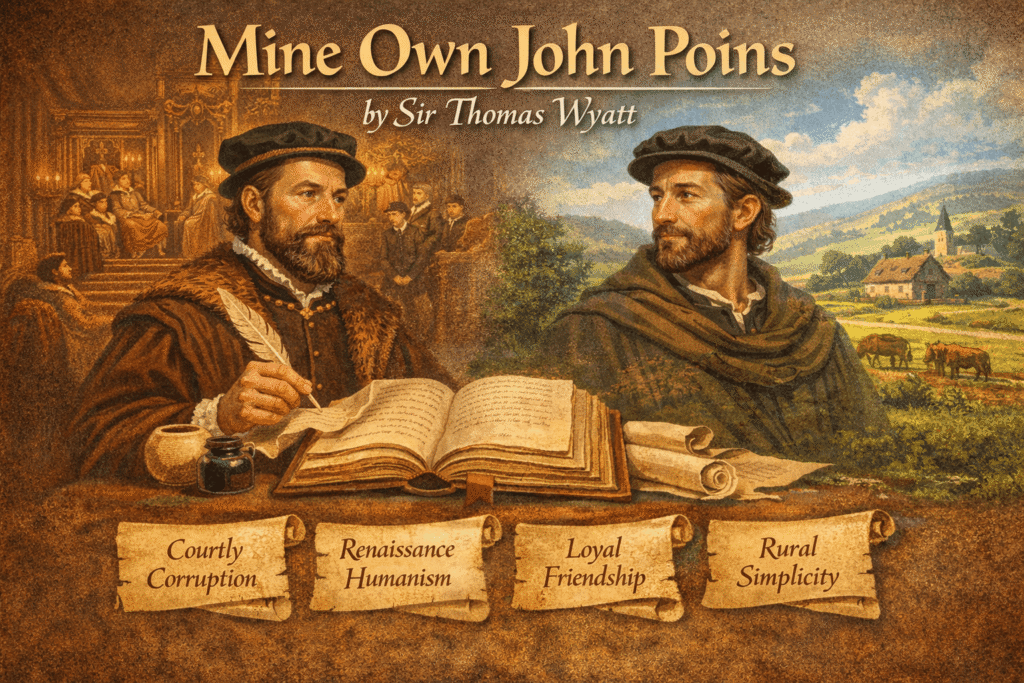
Sir Thomas Wyatt writes about honesty, friendship, and moral independence. First, he rejects corruption inside the Tudor royal court. Moreover, he praises peaceful country life and honest labor. However, many courtiers chase power, favor, and wealth. Therefore, Wyatt condemns ambition, deception, and empty praise. Meanwhile, sincere friendship guides his thoughts and choices. Thus, he values virtue above royal rewards and status. Furthermore, the poet trusts wisdom more than political success. Consequently, readers notice strong personal conviction and courage. Indeed, Wyatt speaks with direct voice and firm belief. Therefore, Mine Own John Poins celebrates loyalty and moral freedom. Likewise, the poem praises simple living beyond court politics. However, Wyatt criticizes greed and hypocrisy among courtiers. Thus, he chooses a calm rural life and thoughtful reflection. Moreover, friendship offers comfort during political uncertainty and tension. Meanwhile, court culture encourages jealousy, rivalry, and dishonesty. Therefore, Wyatt prefers integrity over dangerous royal ambition. Consequently, the poem presents philosophy, friendship, and ethical courage. Finally, readers admire Wyatt’s honesty and moral strength.
Background of the Poem
1. Political Atmosphere of Tudor England
Tudor England shows intense struggle for royal favor and influence. First, courtiers compete for wealth, power, and recognition. Moreover, loyalty shifts with sudden royal decisions. Therefore, fear shapes conduct within palace society. Meanwhile, ambitious nobles praise rulers without honest judgment. Consequently, deception spreads across political relationships. Thus, sincere loyalty rarely survives court rivalry. Furthermore, Henry’s court demands obedience and careful speech. Therefore, many courtiers protect status through flattering praise. However, thoughtful observers question this culture of ambition. Thus, poets explore criticism through reflective writing. Moreover, Wyatt witnesses rivalry and suspicion personally. Consequently, he understands the dangers surrounding royal service. Meanwhile, sincere friendship offers emotional stability and support. Therefore, Wyatt values loyalty above temporary political advantage. However, ambition often destroys trust among courtiers. Thus, political tension shapes Wyatt’s poetic reflections. Moreover, Mine Own John Poins reflects this troubled political environment. Consequently, readers understand the historical pressure shaping the poem. Finally, the background clarifies Wyatt’s rejection of corrupt court life.
2. Wyatt’s Personal Life and Experience
Sir Thomas Wyatt serves King Henry through diplomatic duties. First, he participates in political missions and royal service. Moreover, daily court life surrounds him with rivalry. Therefore, he observes ambition and jealousy among courtiers. Meanwhile, political accusations threaten several royal servants. Consequently, Wyatt experiences imprisonment during a dangerous political crisis. Thus, this event changes his understanding of royal power. Furthermore, he questions loyalty inside court society. Therefore, he values sincere friendship and honest discussion. However, court politics often reward manipulation and flattery. Thus, Wyatt rejects dishonest praise for advancement. Moreover, philosophical reflection guides his personal decisions. Consequently, poetry becomes his means of expression. Meanwhile, he prefers intellectual discussion and moral independence. Therefore, ambition loses attraction within his worldview. However, rivalry continues within royal society. Thus, Wyatt seeks peace through thoughtful withdrawal. Moreover, sincere companionship supports emotional stability. Consequently, Mine Own John Poins expresses Wyatt’s personal convictions. Finally, his life experience shapes the poem’s reflective tone.
3. Influence of Renaissance Humanism
Renaissance culture encourages study of classical philosophy and literature. First, scholars admire Greek and Roman ethical teachings. Moreover, humanists praise moderation, wisdom, and moral balance. Therefore, writers promote thoughtful living and intellectual reflection. Meanwhile, philosophy shapes literature across Europe. Consequently, poetry explores ethics, virtue, and friendship. Thus, humanist ideals influence Wyatt’s poetic thinking. Furthermore, classical writers inspire Renaissance poets strongly. Therefore, moral independence becomes central literary theme. However, court society promotes luxury and ambition. Thus, humanist thinkers criticize pride and excessive desire. Moreover, they admire rural simplicity and honest labor. Consequently, countryside life represents moral harmony and balance. Meanwhile, friendship becomes respected social virtue. Therefore, writers celebrate loyal companionship and intellectual dialogue. However, political culture challenges these ideals. Thus, poets defend ethical conduct through literary expression. Moreover, virtue guides Wyatt’s reflections on society. Consequently, Mine Own John Poins expresses humanist values clearly. Finally, Renaissance philosophy strengthens the poem’s moral argument.
4. Friendship Between Wyatt and John Poins
John Poins stands as Wyatt’s trusted friend and listener. First, both share thoughtful discussion about society and politics. Moreover, they observe corruption within the royal court. Therefore, shared experience strengthens their friendship. Meanwhile, loyalty forms the center of their relationship. Consequently, Wyatt trusts Poins with honest reflection. Thus, the poet speaks openly about political corruption. Furthermore, friendship allows intellectual discussion without fear. Therefore, Wyatt shares personal beliefs with sincerity. However, court ambition often destroys honest friendships. Thus, their loyalty resists political rivalry and jealousy. Moreover, shared values unite both companions. Consequently, they respect honesty above royal favor. Meanwhile, thoughtful conversation strengthens mutual understanding. Therefore, Poins becomes witness to Wyatt’s moral reflections. However, ambition surrounds their political environment constantly. Thus, sincere friendship provides emotional balance. Moreover, loyalty protects their relationship from corruption. Consequently, Mine Own John Poins celebrates faithful companionship. Finally, friendship deepens the poem’s emotional and philosophical meaning.
5. Rural Life as Moral Ideal
Wyatt presents rural life as peaceful alternative to court ambition. First, countryside living avoids rivalry and political competition. Moreover, nature supports calm thought and honest work. Therefore, rural communities value integrity and moderation. Meanwhile, simple living removes pressure from political ambition. Consequently, individuals enjoy peaceful daily activity. Thus, countryside life strengthens moral character and dignity. Furthermore, honest labor builds respect and independence. Therefore, Wyatt admires rural simplicity strongly. However, courts promote luxury, rivalry, and selfish ambition. Thus, Wyatt rejects corrupt court culture. Moreover, countryside life nurtures sincere friendship and trust. Consequently, people live without jealousy or political fear. Meanwhile, nature encourages thoughtful reflection and wisdom. Therefore, moderation guides everyday conduct. However, ambition rarely disturbs peaceful rural communities. Thus, rural life protects moral values and independence. Moreover, Wyatt praises this calm lifestyle in reflection. Consequently, Mine Own John Poins celebrates countryside virtue and balance. Finally, rural ideals strengthen the poem’s ethical message.
Characters in the Poem
Sir Thomas Wyatt
Sir Thomas Wyatt appears as the speaker and moral thinker. First, he observes corruption inside the Tudor royal court. Moreover, he values honesty above political reward. Therefore, he refuses dishonest praise for powerful courtiers. Meanwhile, ambition surrounds the political environment he observes. Consequently, Wyatt questions the moral cost of royal service. Thus, he explains his withdrawal from court society. Furthermore, he supports independence and ethical judgment. Therefore, he protects personal conscience against court pressure. However, many courtiers choose advantage instead of integrity. Thus, Wyatt rejects their behavior and values. Moreover, he prefers peaceful rural life and thoughtful study. Consequently, the countryside offers reflection and intellectual freedom. Meanwhile, literature and philosophy guide his understanding. Therefore, he values wisdom above temporary political success. However, ambition once influenced his early hopes. Thus, experience reshapes his view of power. Moreover, loyal friendship gains deep importance in his life. Consequently, Mine Own John Poins reveals Wyatt’s character and moral courage. Finally, the poet represents integrity against corruption and hypocrisy.
John Poins
John Poins represents Wyatt’s loyal friend and trusted listener. First, the poet addresses him with sincere respect. Moreover, Poins understands the dangers within court politics. Therefore, Wyatt explains his absence from royal service. Meanwhile, Poins symbolizes loyalty and thoughtful companionship. Consequently, the poem develops as personal communication. Thus, friendship becomes central within the discussion. Furthermore, Poins represents trust between intellectual companions. Therefore, Wyatt shares criticism and reflection without hesitation. However, court culture rarely encourages honest friendships. Thus, Poins stands apart from ambitious courtiers. Moreover, he respects integrity and thoughtful judgment. Consequently, he listens carefully to Wyatt’s reasoning. Meanwhile, shared values strengthen their relationship. Therefore, Poins supports honest discussion about society and politics. However, ambition often weakens friendships inside court life. Thus, loyal companionship becomes rare and valuable. Moreover, Poins symbolizes moral understanding and stability. Consequently, readers recognize his quiet influence within the poem. Finally, his presence strengthens Wyatt’s reflections about friendship and virtue.
Summary of the Poem
1. Opening Address to John Poins
Wyatt begins the poem with direct address to Poins. First, he answers a question about his absence. Moreover, Poins wonders why Wyatt avoids court society. Therefore, Wyatt explains his decision through calm reasoning. Meanwhile, he shows respect for royal authority. Consequently, his criticism targets corrupt courtiers instead. Thus, he separates loyalty from dishonest flattery. Furthermore, Wyatt values truth in speech and conduct. Therefore, he refuses praise without sincere belief. However, many courtiers flatter rulers for personal gain. Thus, Wyatt rejects such behavior and ambition. Moreover, integrity guides his actions and words. Consequently, he chooses independence over political reward. Meanwhile, friendship allows honest conversation and reflection. Therefore, Poins receives this explanation as trusted companion. However, court culture demands obedience and flattering speech. Thus, Wyatt prefers distance from such expectations. Moreover, Mine Own John Poins begins with sincere explanation. Consequently, readers understand the poem’s personal tone. Finally, friendship shapes the entire discussion.
2. Reflection on Court Behavior
Wyatt observes the behavior of ambitious courtiers. First, many individuals seek favor through dishonest praise. Moreover, they hide true thoughts behind polite speech. Therefore, hypocrisy becomes common within political society. Meanwhile, competition encourages jealousy and rivalry. Consequently, loyalty weakens among ambitious courtiers. Thus, Wyatt criticizes this social environment openly. Furthermore, he values honesty in speech and judgment. Therefore, false praise conflicts with his conscience. However, royal service often demands flattering language. Thus, courtiers praise rulers regardless of truth. Moreover, ambition encourages manipulation and deceit. Consequently, political advancement replaces moral responsibility. Meanwhile, Wyatt protects personal integrity through withdrawal. Therefore, distance allows him to maintain honest judgment. However, court ambition continues around him. Thus, he rejects behavior that threatens ethical conduct. Moreover, virtue guides his reflection about society. Consequently, the poem criticizes court culture strongly. Finally, readers recognize the poet’s moral resistance.
3. Condemnation of Flattery
Wyatt condemns flattery within royal political culture. First, ambitious courtiers praise leaders without sincere belief. Moreover, they hide criticism behind obedient language. Therefore, deception becomes accepted political practice. Meanwhile, rulers hear praise rather than honest advice. Consequently, truth disappears from court discussion. Thus, Wyatt rejects flattering speech completely. Furthermore, he believes integrity requires honest expression. Therefore, he refuses to praise actions he condemns. However, ambitious individuals accept deception for advantage. Thus, moral compromise becomes common practice. Moreover, Wyatt criticizes this ethical weakness strongly. Consequently, his withdrawal protects personal conscience. Meanwhile, honest judgment remains his guiding principle. Therefore, he avoids situations requiring false praise. However, political culture encourages manipulation and obedience. Thus, Wyatt distances himself from corrupt expectations. Moreover, sincere friendship replaces dishonest court interaction. Consequently, readers observe his ethical determination. Finally, the poem defends truth against political flattery.
4. Praise of Honest Speech
Wyatt values honest speech within personal relationships. First, truth strengthens trust between individuals. Moreover, sincere words support moral integrity. Therefore, honesty becomes essential for meaningful friendship. Meanwhile, court culture often rejects truthful expression. Consequently, many courtiers hide their real thoughts. Thus, Wyatt praises openness and clear judgment. Furthermore, friendship allows free discussion of ideas. Therefore, he speaks honestly with Poins. However, political ambition discourages truthful criticism. Thus, many individuals sacrifice honesty for advancement. Moreover, Wyatt rejects such compromise. Consequently, integrity guides his conduct. Meanwhile, honest speech protects personal dignity. Therefore, sincerity shapes his conversations and reflections. However, dishonesty spreads through political ambition. Thus, Wyatt chooses integrity rather than deception. Moreover, friendship supports honest dialogue and trust. Consequently, Mine Own John Poins celebrates truthful communication. Finally, readers admire Wyatt’s devotion to sincerity.
5. Preference for Rural Life
Wyatt praises peaceful rural life outside court society. First, countryside living removes political rivalry and ambition. Moreover, nature encourages calm thought and reflection. Therefore, rural communities value integrity and honest work. Meanwhile, simple life reduces pressure from political competition. Consequently, individuals experience peace and stability. Thus, countryside living supports moral balance. Furthermore, honest labor builds dignity and independence. Therefore, Wyatt admires rural simplicity deeply. However, court culture promotes luxury and rivalry. Thus, ambition disturbs harmony within royal circles. Moreover, countryside life nurtures sincere friendship. Consequently, people respect loyalty and cooperation. Meanwhile, nature encourages philosophical reflection and learning. Therefore, Wyatt finds peace beyond court influence. However, ambition rarely disturbs rural communities. Thus, simple life strengthens moral character. Moreover, moderation guides daily conduct. Consequently, Mine Own John Poins praises countryside virtue. Finally, readers see rural life as ethical alternative.
6. Criticism of Greed
Wyatt criticizes greed among ambitious courtiers. First, many individuals seek wealth through royal favor. Moreover, they measure success through gold and property. Therefore, greed replaces moral judgment and wisdom. Meanwhile, rivalry grows among competing courtiers. Consequently, loyalty disappears from political relationships. Thus, Wyatt condemns desire for excessive riches. Furthermore, wealth rarely brings moral satisfaction. Therefore, integrity holds greater value than material reward. However, court culture praises luxury and possession. Thus, many individuals chase fortune without reflection. Moreover, greed weakens character and friendship. Consequently, society loses balance and fairness. Meanwhile, Wyatt values moderation in life. Therefore, he praises contentment instead of ambition. However, greed encourages betrayal and dishonesty. Thus, Wyatt rejects wealth gained through corruption. Moreover, honest living provides greater dignity. Consequently, readers observe strong moral argument. Finally, the poem defends virtue against destructive greed.
7. Defense of Personal Integrity
Wyatt strongly defends personal integrity. First, he values conscience above political advantage. Moreover, moral strength protects individual dignity. Therefore, he refuses dishonest praise for rulers. Meanwhile, many courtiers abandon principles for promotion. Consequently, political ambition destroys ethical stability. Thus, Wyatt protects his independence carefully. Furthermore, integrity shapes his actions and speech. Therefore, he prefers honest criticism instead of flattery. However, court culture demands obedience and praise. Thus, Wyatt chooses distance from corrupt expectations. Moreover, integrity strengthens personal identity. Consequently, moral independence guides his decisions. Meanwhile, friendship supports ethical conviction. Therefore, loyal companions encourage truthful reflection. However, ambition often threatens moral courage. Thus, Wyatt rejects compromise with corruption. Moreover, wisdom supports his ethical stance. Consequently, readers admire his determination. Finally, the poem celebrates integrity within difficult political circumstances.
8. Importance of Friendship
Wyatt emphasizes sincere friendship. First, friendship offers trust and understanding. Moreover, loyal companions encourage honest discussion. Therefore, friendship strengthens moral confidence. Meanwhile, court politics weakens relationships through rivalry. Consequently, genuine loyalty becomes rare and valuable. Thus, Wyatt praises companionship with Poins. Furthermore, friendship supports intellectual conversation and reflection. Therefore, Wyatt shares personal thoughts openly. However, ambition threatens many political friendships. Thus, Wyatt protects sincere companionship carefully. Moreover, shared values strengthen bonds between friends. Consequently, moral understanding grows through discussion. Meanwhile, friendship offers comfort during political uncertainty. Therefore, Wyatt values companionship above royal favor. However, court ambition damages trust constantly. Thus, loyal friendship appears precious and honorable. Moreover, intellectual companionship encourages philosophical thought. Consequently, readers see friendship as central theme. Finally, the poem honors loyalty and companionship.
9. Reflection on Moral Freedom
Wyatt values freedom guided by conscience. First, independence protects moral judgment. Moreover, freedom allows honest speech and reflection. Therefore, Wyatt rejects situations demanding dishonesty. Meanwhile, court society limits freedom through political expectation. Consequently, individuals praise rulers without sincere belief. Thus, Wyatt protects independence through withdrawal. Furthermore, conscience directs his choices and conduct. Therefore, he refuses to sacrifice truth. However, ambition pressures individuals toward obedience. Thus, Wyatt chooses moral liberty instead of advantage. Moreover, intellectual reflection supports ethical decisions. Consequently, freedom strengthens personal dignity. Meanwhile, sincere friendship supports independent thought. Therefore, Wyatt values freedom of conscience deeply. However, court influence threatens personal independence. Thus, he distances himself from political pressure. Moreover, wisdom guides his understanding of liberty. Consequently, readers admire his devotion to conscience. Finally, the poem celebrates moral freedom.
10. Final Moral Reflection
Wyatt concludes with calm moral reflection. First, he confirms his rejection of corrupt ambition. Moreover, integrity guides his life and choices. Therefore, he values truth above court favor. Meanwhile, friendship strengthens his confidence. Consequently, Poins receives sincere explanation from the poet. Thus, Wyatt defends independence with dignity. Furthermore, moral courage shapes his final message. Therefore, readers observe strong ethical conviction. However, political ambition continues around him. Thus, Wyatt remains committed to honesty. Moreover, rural peace offers balance and reflection. Consequently, wisdom replaces desire for power. Meanwhile, friendship preserves trust and understanding. Therefore, Wyatt appreciates loyal companionship deeply. However, court culture still encourages flattery and greed. Thus, he rejects that world completely. Moreover, virtue remains his guiding principle. Consequently, readers understand his moral philosophy. Finally, the poem ends with firm ethical clarity.
Critical Appreciation of the Poem
1. Theme of Moral Integrity
The poem presents strong commitment to moral integrity. First, Wyatt rejects dishonest praise within court society. Moreover, he values conscience above political advantage. Therefore, integrity guides every judgment he expresses. Meanwhile, ambitious courtiers sacrifice ethics for advancement. Consequently, Wyatt criticizes corruption within royal circles. Thus, integrity becomes the poem’s central moral value. Furthermore, the poet defends honesty in speech. Therefore, he refuses praise without sincere belief. However, court culture demands obedience and flattering language. Thus, Wyatt protects personal dignity through independence. Moreover, moral strength shapes his character. Consequently, readers admire his ethical determination. Meanwhile, philosophical reflection supports his arguments. Therefore, he values virtue above wealth and power. However, ambition continues dominating political society. Thus, Wyatt separates himself from corrupt influence. Moreover, sincere friendship strengthens moral courage. Consequently, the poem celebrates ethical independence. Finally, readers recognize integrity as the poet’s guiding principle.
2. Critique of Courtly Life
Wyatt offers strong criticism of royal court culture. First, he observes hypocrisy among ambitious courtiers. Moreover, many individuals praise rulers without honest belief. Therefore, deception becomes common political practice. Meanwhile, rivalry encourages jealousy and betrayal. Consequently, trust disappears from many relationships. Thus, Wyatt condemns ambition that destroys moral values. Furthermore, he refuses participation in dishonest praise. Therefore, integrity guides his decision to withdraw. However, court culture rewards manipulation and flattery. Thus, many individuals sacrifice honesty for promotion. Moreover, Wyatt exposes this social corruption. Consequently, the poem becomes sharp political commentary. Meanwhile, friendship allows honest discussion about society. Therefore, the poet expresses criticism without fear. However, ambition still dominates royal politics. Thus, Wyatt distances himself from that environment. Moreover, moral courage strengthens his critique. Consequently, readers see clear rejection of court hypocrisy. Finally, the poem reveals deep dissatisfaction with court life.
3. Celebration of Friendship
Friendship forms an important theme within the poem. First, Wyatt addresses Poins with sincere respect. Moreover, friendship allows honest reflection and discussion. Therefore, the poem takes personal conversational tone. Meanwhile, loyal companionship contrasts with corrupt court relationships. Consequently, friendship appears more valuable than political success. Thus, Wyatt trusts Poins with personal thoughts. Furthermore, intellectual conversation strengthens their bond. Therefore, sincere friendship supports moral confidence. However, court ambition often weakens relationships. Thus, loyalty becomes rare within political society. Moreover, Wyatt protects genuine friendship carefully. Consequently, companionship offers emotional stability. Meanwhile, friendship encourages philosophical reflection. Therefore, Wyatt values loyal friends above royal favor. However, ambition threatens trust constantly. Thus, the poet celebrates sincere companionship. Moreover, friendship supports honesty and intellectual exchange. Consequently, readers recognize its importance in the poem. Finally, loyal friendship strengthens the poem’s moral message.
4. Praise of Rural Simplicity
Wyatt praises peaceful rural life strongly. First, countryside living removes political rivalry and ambition. Moreover, nature encourages calm reflection and learning. Therefore, rural communities value honest work. Meanwhile, simple living supports moral balance. Consequently, individuals enjoy peace and independence. Thus, countryside life represents ethical alternative. Furthermore, honest labor builds dignity and self-respect. Therefore, Wyatt admires rural simplicity deeply. However, court life promotes luxury and competition. Thus, ambition disturbs harmony within royal society. Moreover, countryside life encourages friendship and trust. Consequently, people live without jealousy or rivalry. Meanwhile, nature supports thoughtful reflection. Therefore, wisdom grows through simple experience. However, political ambition rarely touches rural communities. Thus, moral values remain strong. Moreover, moderation guides everyday conduct. Consequently, readers see countryside virtue clearly. Finally, the poem praises rural simplicity as ideal life.
5. Expression of Humanist Thought
Humanist philosophy strongly influences the poem. First, Renaissance thinkers praise wisdom and moderation. Moreover, classical philosophy shapes ethical reflection. Therefore, writers celebrate virtue and moral independence. Meanwhile, humanists admire balanced living. Consequently, literature explores friendship and ethical conduct. Thus, Wyatt reflects these ideas clearly. Furthermore, classical influence appears in philosophical reasoning. Therefore, moral judgment guides poetic discussion. However, political society often rejects humanist ideals. Thus, ambition challenges ethical values. Moreover, Wyatt defends virtue through thoughtful criticism. Consequently, the poem promotes moral philosophy. Meanwhile, friendship represents important humanist virtue. Therefore, intellectual discussion shapes the poem’s tone. However, court ambition threatens philosophical reflection. Thus, Wyatt protects wisdom and independence. Moreover, moderation strengthens moral character. Consequently, readers observe humanist influence clearly. Finally, the poem reflects Renaissance ethical thought.
6. Tone of Personal Reflection
The poem carries thoughtful and reflective tone. First, Wyatt speaks calmly to trusted friend. Moreover, the voice shows sincerity and confidence. Therefore, readers sense personal honesty. Meanwhile, reflection guides the poem’s structure. Consequently, arguments develop through reasoned explanation. Thus, the tone remains balanced and controlled. Furthermore, Wyatt avoids emotional exaggeration. Therefore, his reasoning appears clear and firm. However, moral concern appears within criticism. Thus, reflection replaces anger or bitterness. Moreover, intellectual discussion shapes poetic voice. Consequently, readers understand the poet’s reasoning. Meanwhile, friendship allows open communication. Therefore, the tone becomes conversational and sincere. However, criticism of court culture remains strong. Thus, Wyatt maintains dignity and calm expression. Moreover, reflection supports philosophical depth. Consequently, the tone strengthens the poem’s message. Finally, thoughtful voice defines the poem’s character.
7. Use of Satire
Wyatt employs satire to criticize political society. First, he exposes hypocrisy among ambitious courtiers. Moreover, he questions their dishonest praise. Therefore, satire reveals corruption indirectly. Meanwhile, criticism appears through calm reasoning. Consequently, readers understand moral weakness within court life. Thus, satire strengthens the poem’s argument. Furthermore, Wyatt contrasts virtue with ambition. Therefore, corrupt behavior appears clearly negative. However, the poet avoids direct personal attacks. Thus, satire remains controlled and thoughtful. Moreover, moral reasoning supports satirical criticism. Consequently, the poem maintains intellectual dignity. Meanwhile, readers recognize irony within description of court conduct. Therefore, satire exposes moral failure effectively. However, Wyatt still respects royal authority. Thus, his criticism targets corrupt individuals. Moreover, ethical values guide satirical expression. Consequently, satire becomes powerful literary tool. Finally, the poem presents thoughtful political satire.
8. Simplicity of Language
The poem demonstrates clear and simple language. First, Wyatt avoids complex rhetorical ornament. Moreover, he prefers direct expression of ideas. Therefore, readers understand his arguments easily. Meanwhile, simplicity strengthens sincerity within the poem. Consequently, thoughts appear honest and natural. Thus, language reflects moral clarity. Furthermore, short statements emphasize important ideas. Therefore, the poem maintains strong logical flow. However, simplicity does not weaken intellectual depth. Thus, philosophical reflection still appears strong. Moreover, clarity supports ethical discussion. Consequently, readers focus on moral message. Meanwhile, straightforward language reflects sincerity. Therefore, the poem avoids unnecessary complexity. However, thoughtful reasoning remains central. Thus, language balances simplicity and meaning. Moreover, clarity strengthens persuasive argument. Consequently, readers appreciate the poem’s accessibility. Finally, simple language enhances the poem’s effectiveness.
9. Structure of the Verse Letter
The poem follows structure of personal verse letter. First, Wyatt addresses his friend directly. Moreover, he explains thoughts through conversation. Therefore, the poem develops logical explanation. Meanwhile, each argument builds upon previous reflection. Consequently, the structure appears clear and organized. Thus, the poem reads like thoughtful dialogue. Furthermore, personal address creates intimacy. Therefore, readers feel included within conversation. However, criticism of court society appears within discussion. Thus, personal tone balances serious ideas. Moreover, the structure allows philosophical reasoning. Consequently, the poet explains moral decisions clearly. Meanwhile, friendship frames the entire discussion. Therefore, the poem maintains conversational rhythm. However, serious ethical themes remain central. Thus, the verse letter form supports reflection. Moreover, the structure strengthens clarity of ideas. Consequently, readers follow argument easily. Finally, this form enhances personal and philosophical tone.
10. Overall Literary Value
The poem holds strong literary and moral significance. First, it explores integrity within political society. Moreover, it criticizes ambition and hypocrisy. Therefore, readers reflect on ethical conduct. Meanwhile, friendship strengthens emotional depth. Consequently, personal tone enriches philosophical discussion. Thus, the poem balances reflection and social criticism. Furthermore, Renaissance humanism shapes its ideas. Therefore, virtue and moderation remain central themes. However, court culture challenges those ideals. Thus, Wyatt defends moral independence. Moreover, satire exposes weakness within political ambition. Consequently, readers recognize timeless relevance. Meanwhile, rural simplicity represents ethical alternative. Therefore, the poem promotes balanced living. However, ambition continues dominating many societies. Thus, Wyatt’s message remains meaningful. Moreover, friendship and integrity guide human relationships. Consequently, readers respect the poet’s courage. Finally, the poem stands as powerful reflection on virtue and independence.
Poetic Devices Used in the Poem
1. Satire
Satire functions as a central poetic device in the poem. First, Wyatt exposes corruption through controlled criticism. Moreover, he describes the behavior of ambitious courtiers. Therefore, readers notice the contrast between virtue and ambition. Meanwhile, satire allows criticism without direct accusation. Consequently, the poet maintains dignity in his argument. Thus, satire reveals hypocrisy within court society. Furthermore, Wyatt contrasts honest living with corrupt ambition. Therefore, political behavior appears morally weak. However, the poet avoids harsh personal attack. Thus, satire remains thoughtful and restrained. Moreover, reason supports every critical observation. Consequently, readers understand the moral problem clearly. Meanwhile, satire strengthens the philosophical tone. Therefore, the poem becomes both reflection and criticism. However, satire never destroys the calm voice. Thus, intellectual judgment guides the criticism. Moreover, ethical reasoning shapes the poetic message. Consequently, satire becomes powerful moral tool. Finally, satire helps reveal corruption within political society.
2. Irony
Irony appears through contrast between appearance and truth. First, courtiers praise rulers without honest belief. Moreover, they present loyalty while seeking advantage. Therefore, their behavior creates strong ironic contrast. Meanwhile, Wyatt recognizes this contradiction clearly. Consequently, irony exposes weakness within political ambition. Thus, readers understand hidden meaning behind court behavior. Furthermore, the poet highlights difference between words and intentions. Therefore, irony strengthens criticism of hypocrisy. However, the poet expresses this contrast calmly. Thus, irony remains subtle and intellectual. Moreover, the reader recognizes dishonesty through reflection. Consequently, irony deepens moral analysis. Meanwhile, Wyatt maintains composed poetic voice. Therefore, irony appears through logical comparison. However, ambition continues guiding court conduct. Thus, irony reveals moral weakness among courtiers. Moreover, ethical judgment exposes the contradiction. Consequently, readers observe the hidden truth. Finally, irony strengthens the poem’s social criticism.
3. Contrast
Contrast plays an important role within the poem. First, Wyatt contrasts court life with rural simplicity. Moreover, he compares ambition with moral integrity. Therefore, readers recognize opposing values clearly. Meanwhile, court culture represents greed and rivalry. Consequently, rural life symbolizes peace and honesty. Thus, contrast clarifies Wyatt’s moral preference. Furthermore, friendship contrasts with political rivalry. Therefore, sincere companionship appears valuable. However, court ambition destroys many relationships. Thus, the poet praises loyalty instead. Moreover, contrast strengthens philosophical argument. Consequently, moral ideas appear stronger through comparison. Meanwhile, readers understand ethical choices easily. Therefore, contrast guides interpretation of the poem. However, ambition still dominates political society. Thus, the poet rejects that environment. Moreover, contrast emphasizes the value of integrity. Consequently, readers see clear moral difference. Finally, contrast shapes the poem’s central message.
4. Direct Address
Direct address strengthens the personal tone of the poem. First, Wyatt speaks directly to his friend Poins. Moreover, this method creates sincere conversation. Therefore, readers feel included within discussion. Meanwhile, the poet explains personal decisions openly. Consequently, the poem becomes reflective dialogue. Thus, direct address strengthens emotional connection. Furthermore, friendship frames the entire discussion. Therefore, arguments appear honest and personal. However, criticism of court society still appears strong. Thus, direct address balances personal and social themes. Moreover, the method supports philosophical explanation. Consequently, readers follow the poet’s reasoning easily. Meanwhile, friendship encourages open expression. Therefore, Wyatt speaks without hesitation. However, court society discourages such honesty. Thus, direct address shows trust between companions. Moreover, sincere tone supports ethical argument. Consequently, the poem feels intimate and reflective. Finally, direct address strengthens communication between poet and friend.
5. Imagery
Imagery appears through descriptions of countryside life. First, Wyatt refers to peaceful rural surroundings. Moreover, nature represents calm reflection and balance. Therefore, readers imagine quiet countryside existence. Meanwhile, rural simplicity contrasts with noisy court ambition. Consequently, imagery strengthens the poem’s moral vision. Thus, natural settings symbolize honesty and moderation. Furthermore, images of work suggest dignity and independence. Therefore, countryside life appears morally strong. However, court life suggests luxury and rivalry. Thus, imagery highlights ethical difference. Moreover, nature encourages intellectual reflection. Consequently, readers visualize calm environment beyond politics. Meanwhile, simplicity shapes everyday activity. Therefore, imagery supports philosophical thinking. However, ambition rarely appears within these scenes. Thus, countryside imagery symbolizes moral harmony. Moreover, natural balance reflects human virtue. Consequently, readers connect environment with ethical conduct. Finally, imagery strengthens the poem’s symbolic meaning.
6. Allusion
Allusion appears through references to classical philosophy. First, Renaissance writers admire Greek and Roman thought. Moreover, Wyatt follows this intellectual tradition. Therefore, philosophical influence shapes his ideas. Meanwhile, humanist scholars praise wisdom and moderation. Consequently, these values appear within the poem. Thus, classical philosophy influences moral reasoning. Furthermore, ethical reflection echoes ancient teachings. Therefore, readers recognize intellectual background. However, Wyatt adapts these ideas for his society. Thus, allusion strengthens philosophical depth. Moreover, classical wisdom supports criticism of ambition. Consequently, moral arguments gain historical authority. Meanwhile, Renaissance culture values classical learning. Therefore, Wyatt’s poetry reflects that tradition. However, court ambition often ignores philosophical guidance. Thus, allusion highlights difference between wisdom and ambition. Moreover, ancient thought strengthens ethical argument. Consequently, readers recognize intellectual influence. Finally, allusion enriches the poem’s meaning.
7. Symbolism
Symbolism helps communicate moral ideas within the poem. First, the royal court symbolizes ambition and corruption. Moreover, countryside life symbolizes honesty and peace. Therefore, locations represent opposing values. Meanwhile, friendship symbolizes loyalty and trust. Consequently, symbolic meaning deepens the poem’s message. Thus, readers interpret moral ideas through symbols. Furthermore, nature represents balance and wisdom. Therefore, countryside imagery suggests ethical harmony. However, luxury symbolizes court corruption. Thus, symbols clarify the poet’s argument. Moreover, symbolic contrast strengthens moral judgment. Consequently, readers understand values clearly. Meanwhile, friendship represents intellectual companionship. Therefore, symbolism supports emotional depth. However, ambition represents moral weakness. Thus, symbolic meaning guides interpretation. Moreover, ethical ideals appear through symbolic images. Consequently, readers grasp deeper philosophical message. Finally, symbolism enriches the poem’s literary power.
Madam, Withouten Many Words by Sir Thomas Wyatt: https://englishlitnotes.com/2026/03/11/madam-withouten-many-words-by-sir-thomas-wyatt/
The Tenth Muse Lately Sprung Up in America by Anne Bradstreet: https://americanlit.englishlitnotes.com/the-tenth-muse-lately-sprung-up-in-america-1650/
Discover more from Naeem Ullah Butt - Mr.Blogger
Subscribe to get the latest posts sent to your email.