Introduction
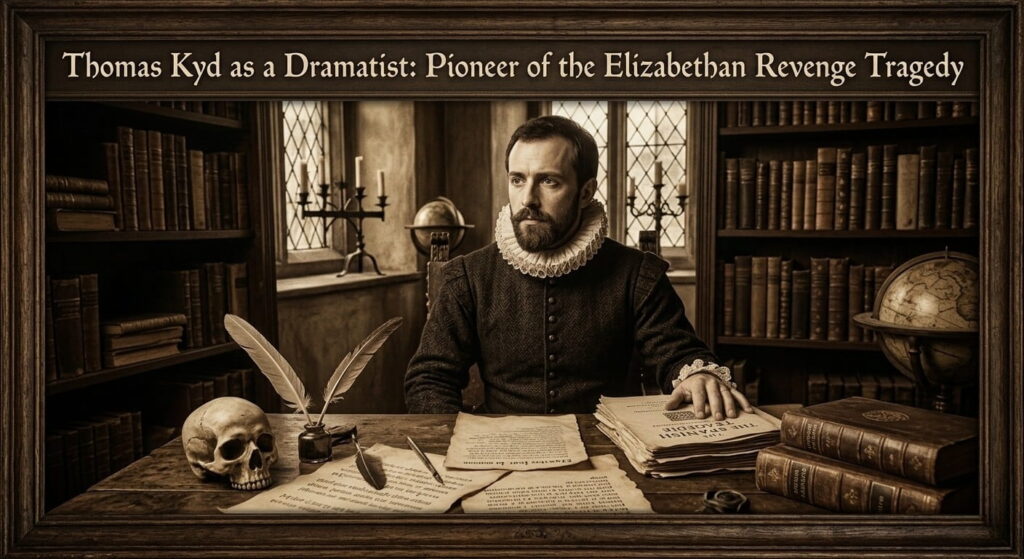
Thomas Kyd as a dramatist, transformed the English stage forever. He blended classical Senecan style with raw, popular energy. This innovation birthed the iconic Elizabethan revenge tragedy genre. Audiences loved his high stakes and intense emotional depth. He moved beyond simple morality plays toward complex human motives. Consequently, scholars view his work as a defining standard. His plays provided the blueprint for later Renaissance masters. He mastered the art of building suspense and dread. This article explores his massive impact on dramatic history. We examine thirty-five key elements of his unique craft.
1. Thomas Kyd
The historical record reveals very little about his early life. He lived during the vibrant reign of Queen Elizabeth I. Records show he studied at the Merchant Taylors’ School. This education gave him a strong grasp of Latin. He translated several important works before writing his own plays. However, his social status remained lower than his peers. His talent surpassed many contemporary university-educated writers. He understood the pulse of the London theater scene perfectly. His career faced a sudden end due to political trouble. Still, his creative output changed the course of drama. He remains a titan of the early modern period.
2. The Spanish Tragedy
This play established Thomas Kyd as a Dramatist of note. It became the most popular play of its era. The plot follows Hieronimo and his quest for justice. It features murder, madness, and a spectacular play-within-a-play. Furthermore, the work uses a ghost to frame the action. This structure captivated audiences throughout the late sixteenth century. Many theater companies performed it for several decades straight. It influenced every major writer who followed in London. The play solidified the tropes of the revenge genre. It serves as a cornerstone of English theatrical history. Most importantly, it defined the “tragedy of blood” for everyone.
3. Elizabethan Dramatist
Acting in this era required great versatility and wit. Every writer navigated a competitive professional world. They wrote for a diverse and demanding public audience. Consequently, their plays contain both high philosophy and gore. Kyd balanced courtly language with gritty, realistic depictions of violence. The era demanded constant novelty and high-stakes emotional conflict. Thomas Kyd as a dramatist, rose to meet these challenges. He helped move the theater from the courtyards into dedicated playhouses. His work reflects the growing confidence of the English nation. He stands among the giants of this golden age. His contributions helped define the spirit of his time.
4. University Wits
The University Wits were a group of educated playwrights. Although Kyd did not attend university, he joined them. This circle included brilliant minds like Marlowe and Greene. These writers brought classical learning to the public stage. They elevated the quality of English verse and plot. Thomas Kyd as a dramatist, proved he match their intellect. He utilized his school training to rival their complex metaphors. Moreover, he added a sense of theatricality that they often lacked. The group pushed the boundaries of what plays achieve. Kyd’s inclusion shows his high level of respect and skill. He proved that genius does not require a degree.
5. Pre-Shakespearean Drama
Before Shakespeare took the stage, Kyd ruled the theater. He successfully bridged the gap between old and new. He replaced clunky medieval tropes with sophisticated character arcs. Early plays often lacked the psychological depth he provided. Thomas Kyd as a dramatist, introduced characters who suffered real pain. This shift prepared audiences for the complexity of Hamlet. Furthermore, he experimented with pacing and subplots in fresh ways. He showed that tragedy is both bloody and intellectual. Without his groundwork, the later greats have struggled more. He paved the way for a more mature English drama. His influence is visible in every major 1590s play.
6. Renaissance Playwright
As a writer, he embraced humanism and the classical revival. He looked back to ancient Rome for inspiration. He sought to emulate the gravitas of Seneca’s tragic works. Simultaneously, he looked forward to a new era of expression. Thomas Kyd as a dramatist, captured the era’s obsession with honor. His characters grapple with personal agency and fate’s cruel hand. This focus on the individual is a hallmark of the Renaissance. He utilized the growing resources of the professional acting companies. His plays reflect the intellectual curiosity of the late sixteenth century. He turned the stage into a mirror for human nature.
7. “The Ur-Hamlet.”
Scholars believe he wrote an early version of Hamlet. This lost play is often called the “Ur-Hamlet.” It likely contained the ghost and the revenge plot. Many critics think Shakespeare used this version as his source. Thus, Thomas Kyd as a Dramatist shaped the world’s most famous story. The existence of this play shows his early creative reach. It featured the core elements of the melancholy prince’s tale. Furthermore, it established the theme of the hesitant revenger. We can see his fingerprints on the later Shakespearean text. His original vision survived through the adaptations of others. He remains the ghost behind the most famous play.
8. Revenge Tragedy
The revenge tragedy became a staple of the London stage. He successfully invented the specific rules of this genre. Each story begins with a secret or unpunished crime. Then, the hero must seek justice outside the law. Thomas Kyd as a dramatist, filled these plays with intense suffering. Characters often lose their minds during their long, dark quests. The genre explores the high cost of seeking personal vengeance. Additionally, it usually ends with a stage full of corpses. This formula provided endless thrills for the theater-going public. Kyd’s blueprint served as the stage for over fifty years. He is the true father of this dark tradition.
9. Tragedy of Blood
The “Tragedy of Blood” emphasizes extreme physical violence and gore. He did not shy away from blood on stage. He put stabbings and hangings directly in the audience’s view. This visceral approach shocked and delighted the rowdy London crowds. Thomas Kyd as a dramatist, used gore to heighten tension. Blood symbolizes the loss of order and the chaos of sin. Furthermore, it marks the definitive end of the villain’s life. The visual spectacle of death defined this specific sub-genre clearly. Kyd proved that physical horror could enhance deep poetic themes. His bold choices set a high bar for stage realism. Every drop of blood served a specific narrative purpose.
10. Senecan Influence
Roman playwright Seneca provided the structural model for his work. He adopted the five-act structure from the ancient world. He also borrowed the use of ghosts and long soliloquies. These elements added a sense of gravity and ancient authority. Thomas Kyd as a dramatist, adapted these cold Roman tropes. He injected them with more action and faster pacing. Moreover, he kept the focus on moral decay and fate. This blend created a unique English style of high tragedy. He proved that ancient models thrive in modern theaters. His mastery of Senecan form gave his plays lasting weight. He translated classical gloom into a vibrant theatrical force.
11. Stoicism
Stoicism appears frequently in the dialogue of his characters. He explored how men handle extreme and sudden grief. Characters often try to remain calm while their world crumbles. This philosophical struggle adds a layer of quiet dignity to chaos. Thomas Kyd as a dramatist, used stoic speeches to slow action. These moments allow the audience to reflect on the tragedy. Furthermore, they highlight the hero’s isolation from a corrupt world. The tension between raw emotion and stoic restraint creates drama. He understood that silence can be as loud as screaming. His characters fight their own hearts to maintain their honor. This internal battle defines many of his greatest scenes.
12. Machiavellian Villain
The Machiavellian villain is a hallmark of his complex plots. He created characters like Lorenzo to drive conflict effectively. These villains use cunning and deceit to reach their goals. They lack a traditional moral compass and prioritize personal power. Thomas Kyd as a Dramatist showed the danger of pure ambition. These figures often manipulate the hero into deeper misery. Moreover, they represent the political corruption of the Italianate setting. The audience loves to hate these clever and ruthless enemies. His villains are not just evil; they are highly intelligent. This intelligence makes their eventual downfall even more satisfying. They remain iconic archetypes in Renaissance dramatic literature.
13. Dramatic Structure
He mastered the art of complex and tight plotting. He carefully balanced multiple storylines within a single grand narrative. His plays move toward an inevitable and bloody climax. Every scene builds the pressure until the final explosion. Thomas Kyd as a dramatist, used parallel plots to mirror themes. This technique keeps the audience engaged through long performances. Furthermore, he used specific turning points to shift the mood. His sense of timing and rhythm set a new standard. He understood how to hold attention through complex political maneuvers. The structure of his plays influenced theater for many generations. He made the stage a place of intricate narrative design.
14. Blank Verse
He helped refine the use of blank verse in drama. He moved away from stiff, rhyming medieval couplets. He favored the more natural flow of unrhymed iambic pentameter. This change allowed for more realistic and flexible character speech. Thomas Kyd as a dramatist, gave his characters a unique voice. His verse sounds poetic yet carries the weight of conversation. Moreover, he used meter to emphasize key emotional shifts. This innovation paved the way for Marlowe and Shakespeare’s heights. Blank verse became the standard for all great English tragedies. Kyd’s early experiments proved the power of this flexible form. He gave the English stage its most beautiful rhythmic heartbeat.
15. Rhetorical Style
High rhetoric defines the language of his famous plays. He used formal speeches to convey deep moral points. His characters often debate their choices in long, structured passages. This style reflects the humanist education of the Tudor era. Thomas Kyd as a dramatist, used repetition and metaphor for power. These rhetorical tools make the dialogue feel grand and significant. Furthermore, the high style contrasts sharply with the gritty violence. This balance creates a sense of “elevated” tragedy for viewers. His language demands the full attention of the listening audience. He treated words as weapons and tools for emotional persuasion. His mastery of speech made his plays endure.
16. Play-within-a-play
He used the play-within-a-play as a deadly and clever weapon. In his masterpiece, Hieronimo uses drama to kill enemies. This layer of meta-theater adds a sense of irony. The stage characters become an audience for their own doom. Thomas Kyd as a dramatist, blurred the line between reality and fiction. This device allows the hero to execute justice through art. Moreover, it creates a spectacular and chaotic finale for everyone. Shakespeare later used this exact technique in the play Hamlet. It remains one of Kyd’s most brilliant and lasting contributions. He turned the theater back on itself to reveal the truth. This technique provides a thrilling and complex climax.
17. Ghost as a Character
The presence of a ghost marks his unique style. He introduced the spirit of Andrea to witness the revenge. This supernatural element adds a layer of cosmic justice. The ghost does not just scare; it serves the plot. Thomas Kyd as a dramatist, used the ghost to demand action. This spirit remains on stage to watch the entire play. Furthermore, it reminds the audience of the original, unpunished crime. This constant presence creates a haunting and somber atmosphere. It connects the world of the living to the dead. The ghost represents the memory that will not rest easily. He made the supernatural a vital part of English tragedy.
18. Personified Revenge
Beside the ghost sits the character of Revenge himself. He made an abstract concept a literal person on stage. Revenge acts as a guide and a dark promise. He assures the ghost that justice will eventually come. Thomas Kyd as a dramatist, used this figure to build anticipation. The audience knows that doom is certain for the villains. Moreover, it gives the play a ritualistic and mythical feel. This personification elevates a local feud into a cosmic event. Revenge watches the suffering with a cold and patient eye. He represents the inevitable cycle of violence that Kyd explores. This choice highlights the inescapable nature of the tragic end.
19. Delayed Revenge
Delay is a crucial tool for his storytelling method. The hero often waits too long to take his vengeance. This hesitation allows for deeper character development and high tension. Thomas Kyd as a dramatist, explored the psychological toll of waiting. Hieronimo struggles with his own doubt and external political forces. The delay makes the eventual outburst feel more earned. Furthermore, it keeps the audience in a state of suspense. This trope became a defining feature of the whole genre. It highlights the difficulty of acting in a corrupt world. Kyd used time as a source of agony for characters. This waiting period defines the core of the tragic experience.
20. Madness (Feigned and Real)
Madness is a central theme for his intense characters. His characters often lose their minds due to extreme grief. Sometimes they only pretend to be mad to hide plans. Thomas Kyd as a dramatist, used madness to show human limits. This state allows characters to speak truth to power safely. Moreover, it creates scenes of wild and unpredictable energy. The line between real pain and performance often becomes thin. This duality fascinates audiences and adds a layer of mystery. It reflects the unstable nature of a world without justice. His depiction of mental collapse is both terrifying and pathetic. It adds a human heart to the bloody revenge plot.
21. Soliloquy
The soliloquy allowed him to reveal his secret and inner thoughts. Characters speak directly to the audience when they are alone. This technique builds a close bond between the hero and viewers. He used these moments to explain motives and secret goals. We see Hieronimo’s private pain and his secret plans clearly. Furthermore, soliloquies provide a space for deep philosophical and moral debate. They slow down the action to focus on the mind. This device became the most famous tool of Renaissance theater. Kyd’s early use of it set the stage for Hamlet. He proved that the internal life is as dramatic as war. Every word spoken alone carries a heavy weight.
22. Dumb Show
He successfully utilized the “dumb show” for summary and plot. This silent pantomime explains key backstory or future events. It provides a visual break from the heavy rhetorical dialogue. He used it to heighten mystery and engage the audience. The audience must interpret the silent actions of the players. Moreover, it adds a ritualistic and formal quality to the play. These shows often contain symbolic meanings about the main plot. They highlight the artifice of the theater in a clever way. He showed that action without words can be very powerful. It remains a classic feature of early modern dramatic structure. These silent scenes often foreshadow the bloody end.
23. Letter in Blood
The letter in blood is a famous and visceral device. He used this specific prop to reveal hidden secrets. Bel-imperia writes to Hieronimo using her own blood as ink. This image underscores the urgency and danger of seeking revenge. He knew the power of strong and direct visuals here. The blood on the page proves the truth of murder. Furthermore, it links the physical body to the written word. This device helps drive the plot toward the final confrontation. It shows the extreme measures characters take to seek justice. He turned simple stage props into symbols of deep suffering. The letter serves as a physical bridge between victims.
24. Hanging Scene
The hanging of Horatio defined his uncompromising and gritty style. This shocking visual remains one of the most famous moments. He placed the murder in an arbor during the night. He used this scene to start the fire of vengeance. The sight of the dead son haunts Hieronimo forever. Furthermore, it provides a stark and brutal image of lost innocence. The audience watches the hero discover the body in real-time. This moment of pure horror anchors the rest of the play. It shows the ruthlessness of the villains without any mercy. Kyd proved that stage violence could be deeply and truly moving. This scene remains a masterclass in theatrical shock.
25. Secret Murder
Secret murder is the spark for all his plays. Every revenge play begins with a hidden and cruel crime. The villains believe they have escaped the reach of law. He used this secrecy to build tension and dramatic irony. Only the audience and the revenger know the dark truth. This creates a powerful sense of dramatic irony for viewers. Furthermore, the secret nature of the crime justifies private revenge. When the state fails to find the killer, the father acts. This theme explores the limits of human law and order. He showed that secrets eventually come to light through blood. The hidden act of violence demands a public ending.
26. Divine Justice vs. Private Revenge
This conflict is central to his whole dramatic vision. He questioned if individuals should take the law into their own hands. The Bible says that vengeance belongs only to the Lord. However, he showed a world where heaven remains silent. The characters feel forced to act when heaven remains silent. This tension creates a deep moral crisis for the hero. Furthermore, it forces the audience to judge the hero’s soul. Is the revenger a hero or a new villain? This question remains at the heart of the revenge genre. Kyd did not provide easy answers to these hard problems. He showed the heavy spiritual price of seeking earthly justice.
27. Fatalism
A sense of fatalism surrounds his tragic and dark world. His characters often feel like pawns in a larger game. They struggle against forces that they cannot control or escape. He used the ghost to suggest the power of destiny. No matter what they do, the characters march toward death. This creates a mood of dark and heavy inevitability. Furthermore, it reflects the tragic worldview of the late Renaissance. Human effort often fails against the wheel of blind fortune. The audience feels the weight of this gloom throughout the play. He showed that tragedy is the collision of will and fate. His plays remind us that our ends are written.
28. Moral Ambiguity
He successfully explored the grey areas of human morality. His heroes are rarely pure, and his villains are smart. He showed how revenge corrupts the soul of the hero. By the end, the hero often commits terrible acts himself. This complexity makes the characters feel more realistic and human. Furthermore, it challenges the audience’s simple ideas of right and wrong. We sympathize with Hieronimo but fear his wild and dark rage. This ambiguity is what makes the play a true tragedy. He avoided simple moral lessons in favor of human truth. He showed that justice can sometimes look like a crime. The moral world of his plays is vast.
29. Political Intrigue
High-level politics offer the backdrop for his dramatic action. His plays involve kings, dukes, and complex international relations. He showed how power breeds corruption in high places. The court is a place of whispers and deadly secrets. Furthermore, the struggle for the throne impacts the small people. This political layer adds stakes to the personal revenge plot. The hero must navigate a world of traps and lies. Kyd’s focus on the court reflected the reality of London. He showed that the halls of power are often bloody. This context makes the private tragedy feel globally important too. His characters fight both personal demons and political giants.
30. Social Hierarchy
Social class plays a vital role in his storytelling. His characters are often aware of their specific social standing. The conflict between low-born talent and high-born ego is clear. He used class to fuel the fire of social resentment. Villains often look down on the hero as a servant. This disrespect adds another layer of insult to the injury. Furthermore, the hero often uses his position to gain access. This theme reflects the social mobility of the Elizabethan era. He understood that power is tied to your family name. He showed how the lower classes suffer under the elite. His plays offer a sharp critique of the rigid hierarchy.
31. Betrayal and Loyalty
Betrayal is the engine used in his complex plots. Friends turn into enemies for the sake of cold gold. He explored the breaking of sacred and personal bonds. The shock of betrayal often hurts more than the murder. Furthermore, the hero finds loyalty in the most unexpected places. This contrast highlights the moral decay of the tragic world. The audience watches as every trust is slowly destroyed. It creates a feeling of total isolation for the protagonist. Loyalty becomes a rare and dangerous virtue in Kyd’s plays. He showed that even the closest hearts can turn cold. This theme keeps the emotional stakes high for everyone.
32. Influence on William Shakespeare
The shadow of his genius falls on William Shakespeare. Without him, we might not have the famous play, Hamlet. He provided the tools that Shakespeare later refined and improved. The ghost, the madness, and the play-within-a-play all started here. Shakespeare took Kyd’s raw energy and added more poetic depth. Furthermore, he adopted the structural pacing of Kyd’s revenge plots. We can see direct echoes of Hieronimo in many characters. Kyd was the teacher and the pioneer for the Bard. His early success proved what the English theater could do. He is the foundation upon which Shakespeare built his house. His legacy lives in the greatest lines ever written.
33. Development of the English Stage
He helped build the professional theater in London. He wrote for the newly built public playhouses of the city. He proved that tragedy could draw large and diverse crowds. His success helped make playwriting a viable and respected career. Furthermore, he pushed the technical limits of the stage itself. He used balconies, trapdoors, and complex props to tell stories. This innovation turned the theater into a place of wonder. Kyd’s plays demanded better actors and more complex stage management. He was a key player in the commercial theater boom. His work helped turn London into the drama capital. He made the stage a place for everyone to see.
34. Hieronimo (Protagonist)
Hieronimo remains his greatest and most famous creation. He is a grieving father who becomes a wild killer. He gave this character an incredible emotional and vocal range. We watch him go from a loyal judge to a madman. His transformation is the heart and soul of the play. Furthermore, he represents the struggle of the common man. He is a relatable figure in a world of royalty. His long speeches on grief are famous in English literature. He made him a complex and deeply tragic figure for all. He is the first great tragic hero of the stage. His pain resonates with every person who has lost much.
35. Decorum in Tragedy
He balanced formal decorum with raw and bloody action. He knew when to be formal and when to shock. He kept the dignity of the genre throughout the play. He used high language to justify the low acts of violence. This sense of decorum makes the tragedy feel truly grand. Furthermore, it ensures that the play is more than gore. The formal structure provides a frame for the chaotic emotions. This balance was a key part of Renaissance literary theory. He followed the rules while also breaking them for effect. He showed that a play can be both artistic and popular. This mastery of tone is his greatest technical achievement.
Conclusion
Thomas Kyd as a dramatist, left a mark that still glows. He invented a genre that defined an entire literary age. His work bridged the gap between tradition and bold innovation. We see his legacy in every dark and bloody tragedy. He gave us the ghost and the play-within-a-play forever. His success proved that words can haunt human minds. His characters still speak to our deepest fears and pains. He remains a pioneer who dared to show the dark. The English stage owes its soul to his early vision. He is truly the father of the Elizabethan revenge tragedy.
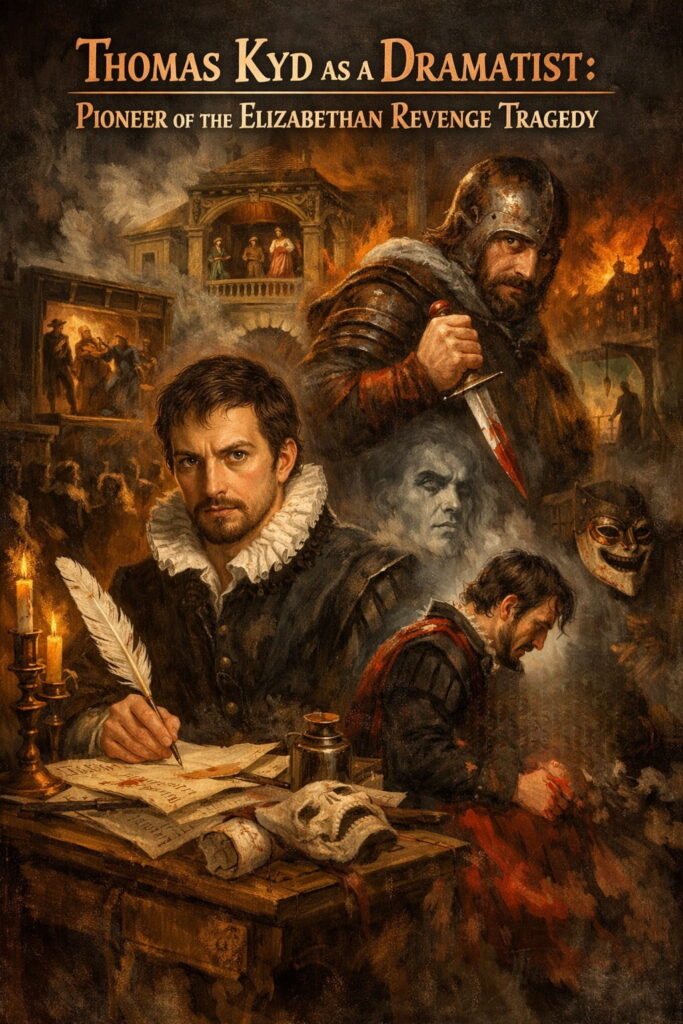
Thomas Kyd as a Dramatist: Pioneer of the Elizabethan Revenge Tragedy: https://englishlitnotes.com/2026/03/12/renaissance-drama-the-golden-age-of-elizabethan-and-jacobean-theater/
The Quaternions by Anne Bradstreet: A Complete Guide: https://americanlit.englishlitnotes.com/the-quaternions-by-anne-bradstreet-four-of-fours-guide/
Discover more from Naeem Ullah Butt - Mr.Blogger
Subscribe to get the latest posts sent to your email.