Introduction
Scholars often examine Characterization in The Spanish Tragedy carefully. First, Thomas Kyd shapes strong personalities through emotional conflicts. Moreover, each character reveals motives through actions and dialogue. Therefore, readers quickly understand moral tension within the drama. Furthermore, the play presents grief, justice, and revenge strongly. Consequently, these themes guide characters’ decisions and emotional responses. However, Kyd avoids simple personalities and predictable reactions. Instead, he builds complex individuals facing painful circumstances. Thus, characters evolve as events unfold within the tragic plot. Similarly, audiences observe psychological change and growing despair. Meanwhile, Hieronimo’s sorrow gradually transforms into determined revenge. Likewise, Bel-Imperia expresses courage and emotional independence. Therefore, the drama highlights human emotion and moral struggle. Additionally, dramatic dialogue strengthens every personality within the narrative. Consequently, audiences sympathize with suffering characters deeply. Furthermore, Kyd connects private emotions with political conflicts. Thus, personal tragedy influences the royal court and society.
1. Characterization
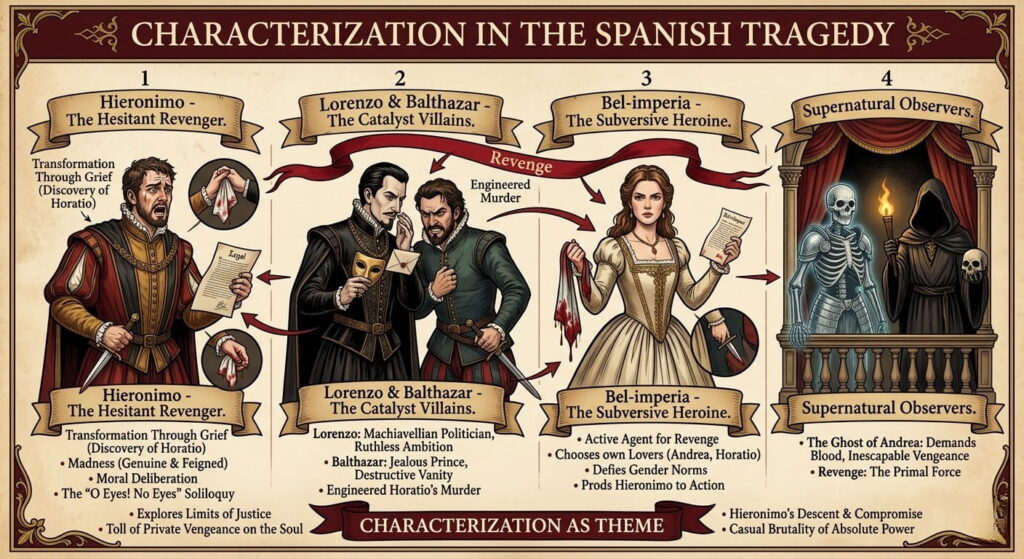
Characterization in The Spanish Tragedy reveals psychological depth clearly. First, Thomas Kyd introduces characters through emotional situations. Consequently, their reactions expose values, desires, and moral beliefs. Moreover, dialogue quickly reveals personality and motivation. Therefore, readers recognize moral struggles within each individual. Furthermore, actions strengthen understanding of different personalities. For example, Hieronimo shows patience before choosing revenge. Meanwhile, Bel-Imperia shows courage against oppressive authority. Likewise, Lorenzo represents ambition and political manipulation. Thus, different personalities shape dramatic tension throughout the story. However, Kyd avoids simple heroes and villains. Instead, characters possess mixed emotions and moral confusion. Consequently, audiences witness inner conflict during tragic events. Additionally, emotional speeches deepen character understanding. Similarly, grief transforms behavior and decision making. Therefore, character development connects closely with tragic events. Furthermore, relationships among characters expose hidden motives.
2. The Spanish Tragedy
The Spanish Tragedy presents intense emotions and tragic consequences. First, Thomas Kyd structures the narrative around revenge. Therefore, characters experience grief, anger, and moral conflict. Moreover, the storyline encourages emotional reactions from personalities. Consequently, actions reveal inner thoughts and hidden intentions. Furthermore, the court environment intensifies ambition and rivalry. Meanwhile, noble characters pursue power and personal advantage. Likewise, secret plots influence the tragic direction. Thus, relationships among characters shape dramatic tension. However, sorrow gradually replaces hope within the narrative. Instead, revenge becomes the dominant emotional force. Consequently, characters adopt desperate strategies and dangerous decisions. Additionally, audiences observe moral struggle and emotional transformation. Similarly, family loyalty influences character choices strongly. Therefore, grief shapes actions across the tragic storyline. Furthermore, personal loss intensifies the desire for justice. Thus, Characterization in The Spanish Tragedy grows through tragic conflict.
3. Thomas Kyd
Thomas Kyd demonstrates remarkable skill in dramatic character creation. First, he explores human emotions through powerful situations. Consequently, audiences witness grief, anger, and despair clearly. Moreover, Kyd structures dialogue to reveal personality traits. Therefore, each character expresses unique thoughts and motivations. Furthermore, emotional speeches deepen the understanding of suffering individuals. Meanwhile, Hieronimo embodies parental grief and moral struggle. Likewise, Bel-Imperia represents courage and emotional independence. Thus, Kyd balances contrasting personalities within the tragic narrative. However, ambition and corruption also influence several characters. Instead, the playwright highlights moral conflict through interaction. Consequently, characters evolve as events develop dramatically. Additionally, intense emotions guide important decisions. Similarly, political power influences behavior and relationships. Therefore, personal tragedy intersects with royal authority. Furthermore, Kyd connects emotional suffering with social injustice. Thus, Characterization in The Spanish Tragedy reflects Elizabethan dramatic concerns.
4. Revenge Tragedy
Revenge tragedy forms the central dramatic structure here. First, revenge motivates characters after severe injustice occurs. Consequently, grief transforms ordinary individuals into determined avengers. Moreover, emotional suffering encourages dangerous decisions. Therefore, characters abandon patience and seek violent justice. Furthermore, tragic revenge destroys victims and avengers alike. Meanwhile, Hieronimo struggles between legal justice and revenge. Likewise, Bel-Imperia demands justice for Horatio’s brutal murder. Thus, emotional pain guides their actions strongly. However, revenge also produces moral confusion. Instead, justice becomes difficult to achieve peacefully. Consequently, characters face hesitation and internal conflict. Additionally, dramatic speeches express anger and despair. Similarly, grief shapes every step toward revenge. Therefore, emotional intensity drives the tragic narrative forward. Furthermore, violent outcomes reveal revenge’s destructive power. Thus, Characterization in The Spanish Tragedy strengthens revenge tragedy traditions.
5. Elizabethan Drama
Elizabethan drama often explores strong emotions and social conflicts. First, playwrights highlight power struggles within royal courts. Consequently, characters experience ambition, jealousy, and rivalry. Moreover, dramatic dialogue reveals personality and intention. Therefore, audiences observe psychological complexity on stage. Furthermore, tragedy often examines grief and moral confusion. Meanwhile, revenge themes frequently appear within Elizabethan theater. Likewise, supernatural elements introduce destiny and fate. Thus, playwrights combine emotional drama with political tension. However, characters struggle between honor and revenge frequently. Instead, personal emotions challenge social expectations. Consequently, individuals pursue justice through dangerous actions. Additionally, emotional speeches deepen audience engagement. Similarly, dramatic conflict strengthens character development. Therefore, Elizabethan playwrights emphasize human psychology strongly. Furthermore, Thomas Kyd contributes greatly to this tradition. Thus, Characterization in The Spanish Tragedy reflects Elizabethan dramatic values.
6. Tragic Hero
The tragic hero often reflects human weakness and moral struggle. First, tragedy highlights the hero’s emotional vulnerability and ethical conflict. Consequently, audiences observe gradual psychological transformation during painful events. Moreover, the tragic hero suffers from overwhelming grief and confusion. Therefore, personal loss encourages desperate choices and dramatic actions. Furthermore, the hero often seeks justice through dangerous paths. Meanwhile, the character experiences hesitation and inner turmoil. Likewise, responsibility and sorrow influence important decisions strongly. Thus, tragedy explores the hero’s humanity and emotional depth. However, anger gradually replaces patience and rational judgment. Instead, emotional suffering shapes the hero’s destructive determination. Consequently, the hero pursues revenge despite moral consequences. Additionally, grief transforms personality and personal priorities. Similarly, tragic suffering exposes the hero’s emotional complexity. Therefore, the audience sympathizes deeply with the tragic figure. Thus, Characterization in The Spanish Tragedy reveals the tragic hero’s transformation.
7. Dramatic Characterization
Dramatic characterization develops personality through dialogue and action. First, playwrights reveal emotions through expressive speeches and interactions. Consequently, audiences understand motives behind important decisions. Moreover, dramatic conflict exposes hidden desires and ambitions. Therefore, characters demonstrate individuality through unique responses. Furthermore, emotional situations reveal deeper psychological dimensions. Meanwhile, tension between characters encourages revealing conversations. Likewise, strong dialogue expresses anger, grief, and determination. Thus, dramatic scenes deepen understanding of personality and conflict. However, sudden events challenge previous beliefs and attitudes. Instead, characters adapt quickly to painful circumstances. Consequently, emotional reactions reveal true motivations clearly. Additionally, relationships influence behavior and emotional responses. Similarly, grief encourages intense dialogue and passionate speeches. Therefore, dramatic interaction strengthens emotional realism within the play. Thus, Characterization in The Spanish Tragedy grows through dramatic dialogue.
8. Revenge Motif
The revenge motif drives emotional intensity within tragic drama. First, injustice triggers anger and sorrow among suffering characters. Consequently, grief motivates determined actions toward violent justice. Moreover, revenge reflects emotional desperation after personal loss. Therefore, characters reject patience and peaceful solutions. Furthermore, emotional suffering strengthens desire for punishment. Meanwhile, anger influences rational thought and moral judgment. Likewise, loyalty to loved ones encourages revengeful determination. Thus, grief transforms ordinary individuals into determined avengers. However, revenge often produces further tragedy and destruction. Instead, violence expands conflict and emotional suffering. Consequently, characters lose moral clarity during revengeful pursuits. Additionally, despair intensifies emotional instability and dangerous decisions. Similarly, justice becomes confused with revengeful satisfaction. Therefore, the revenge motif shapes character motivations strongly. Thus, Characterization in The Spanish Tragedy reflects powerful revenge themes.
9. Justice and Revenge
Justice and revenge create powerful emotional conflict in tragedy. First, characters seek fairness after suffering painful injustice. Consequently, frustration grows when official justice fails. Moreover, emotional pain encourages revengeful determination. Therefore, individuals attempt personal justice through violent actions. Furthermore, moral confusion emerges between justice and revenge. Meanwhile, grief intensifies anger and emotional desperation. Likewise, characters struggle between patience and retaliation. Thus, a tragic conflict arises from competing ideas of justice. However, revenge rarely restores peace or emotional stability. Instead, violent justice produces greater tragedy and suffering. Consequently, characters experience deeper moral conflict and despair. Additionally, anger influences decisions and emotional responses. Similarly, justice becomes difficult within corrupt social structures. Therefore, individuals rely upon revengeful solutions. Thus, Characterization in The Spanish Tragedy explores justice and revenge deeply.
10. Elizabethan Theater
Elizabethan theater presented dramatic stories with emotional intensity. First, playwrights explored human psychology through tragic conflicts. Consequently, audiences experienced powerful emotional engagement. Moreover, dramatic performances emphasized expressive dialogue and gestures. Therefore, characters communicated emotions clearly before large audiences. Furthermore, tragic plots explored themes of grief and revenge. Meanwhile, the theater reflected political tension within Elizabethan society. Likewise, audiences enjoyed stories involving justice and ambition. Thus, playwrights used emotional storytelling to attract attention. However, tragic narratives often ended with violence and suffering. Instead, dramatic conflict exposed human weakness and ambition. Consequently, characters faced difficult choices and emotional turmoil. Additionally, strong speeches created memorable, dramatic moments. Similarly, emotional dialogue revealed personality and motivation. Therefore, playwrights shaped characters through intense dramatic situations. Thus, Characterization in The Spanish Tragedy reflects traditions of Elizabethan theater.
11. Hieronimo
Hieronimo stands as the most complex character within the play. First, he begins as a loyal judge and caring father. Consequently, Horatio’s murder destroys his emotional stability. Moreover, grief overwhelms his rational thinking and judgment. Therefore, sorrow gradually transforms his personality and priorities. Furthermore, he struggles between legal justice and revenge. Meanwhile, confusion and despair influence his emotional responses. Likewise, hesitation delays his revengeful actions initially. Thus, audiences witness deep psychological suffering and frustration. However, grief eventually encourages determined revenge. Instead, emotional pain strengthens his desire for punishment. Consequently, Hieronimo plans revenge through dramatic deception. Additionally, sorrow inspires powerful speeches and reflections. Similarly, his grief reveals moral conflict and desperation. Therefore, audiences sympathize with his tragic transformation. Thus, Characterization in The Spanish Tragedy reaches powerful depth through Hieronimo.
12. Bel-Imperia
Bel-Imperia shows courage, intelligence, and emotional independence. First, she rejects political pressure and forced relationships. Consequently, she chooses love according to personal desire. Moreover, she supports Horatio despite social restrictions. Therefore, she challenges the authority of powerful men. Furthermore, grief strengthens her determination after Horatio’s death. Meanwhile, anger motivates her pursuit of justice. Likewise, she refuses silence despite dangerous consequences. Thus, her character represents bravery and resistance. However, court politics attempt to control her decisions. Instead, she secretly communicates with Hieronimo. Consequently, she helps reveal the truth about Horatio’s murder. Additionally, her emotional strength influences the revenge plot. Similarly, sorrow deepens her determination and courage. Therefore, she becomes a central force against injustice. Thus, Characterization in The Spanish Tragedy highlights Bel-Imperia’s strength.
13. Balthazar
Balthazar represents pride, ambition, and romantic obsession. First, he desires Bel-Imperia strongly despite her rejection. Consequently, jealousy influences his behavior and emotional responses. Moreover, he participates in secret plots against Horatio. Therefore, his ambition encourages destructive decisions. Furthermore, court power protects him from punishment. Meanwhile, arrogance shapes his interactions with other characters. Likewise, he ignores moral responsibility for violent actions. Thus, his personality reflects selfish ambition and privilege. However, his emotional immaturity creates further conflict. Instead, obsession controls his judgment and behavior. Consequently, he becomes part of the tragic conspiracy. Additionally, rivalry increases tension among noble characters. Similarly, desire for power influences political alliances. Therefore, his character represents corruption within royal society. Thus, Characterization in The Spanish Tragedy exposes Balthazar’s moral weakness.
14. Horatio
Horatio represents loyalty, honor, and emotional sincerity. First, he loves Bel-Imperia honestly and respectfully. Consequently, he avoids political manipulation and ambition. Moreover, his honorable behavior contrasts with that of corrupt nobles. Therefore, audiences admire his sincerity and integrity. Furthermore, his friendship with Hieronimo reflects deep loyalty. Meanwhile, happiness briefly appears through his relationship. Likewise, hope emerges before tragic violence destroys peace. Thus, Horatio symbolizes innocence within a corrupt court. However, enemies view him as an obstacle. Instead, jealousy motivates his brutal murder. Consequently, tragedy begins with his death. Additionally, his loss creates emotional devastation for Hieronimo. Similarly, Bel-Imperia’s grief strengthens revengeful determination. Therefore, his character shapes the emotional core of tragedy. Thus, Characterization in The Spanish Tragedy uses Horatio to represent innocence.
15. Lorenzo
Lorenzo represents manipulation, ambition, and political cruelty. First, he seeks power and influence within the court. Consequently, he plans secret actions against Horatio. Moreover, he organizes violent conspiracies without hesitation. Therefore, his ambition encourages immoral behavior. Furthermore, he manipulates others to protect his interests. Meanwhile, deception becomes his primary strategy. Likewise, he hides the truth through lies and control. Thus, his character reflects corruption within noble society. However, arrogance blinds him to future consequences. Instead, power strengthens his confidence and cruelty. Consequently, he believes authority will prevent punishment. Additionally, his manipulation increases tension among characters. Similarly, his actions create tragic events across the story. Therefore, Lorenzo becomes a dangerous antagonist. Thus, Characterization in The Spanish Tragedy exposes Lorenzo’s corruption.
16. Isabella
Isabella represents maternal grief and emotional suffering. First, she deeply loves her son Horatio. Consequently, his murder destroys her emotional stability. Moreover, sorrow overwhelms her ability to cope. Therefore, grief transforms her personality and actions. Furthermore, she expresses pain through emotional speeches. Meanwhile, despair replaces hope and patience. Likewise, injustice intensifies her emotional breakdown. Thus, she represents the tragic consequences of violence. However, society offers little comfort or justice. Instead, suffering grows stronger within her mind. Consequently, grief leads toward madness and despair. Additionally, emotional suffering influences her tragic fate. Similarly, maternal love intensifies her pain deeply. Therefore, audiences sympathize strongly with her suffering. Thus, Characterization in The Spanish Tragedy shows grief through Isabella.
17. Ghost of Andrea
The Ghost of Andrea introduces supernatural elements and tragic reflection. First, he observes events after his death. Consequently, audiences view tragedy from a spiritual perspective. Moreover, the ghost narrates the emotional consequences of revenge. Therefore, supernatural commentary guides audience understanding. Furthermore, the ghost represents unfinished justice and suffering. Meanwhile, he watches human actions without intervention. Likewise, fate unfolds while he observes silently. Thus, his presence connects destiny with revenge. However, he cannot influence human decisions directly. Instead, he witnesses the tragic consequences of violence. Consequently, the audience anticipates revenge and punishment. Additionally, supernatural presence deepens the dramatic atmosphere. Similarly, the ghost reminds viewers of moral consequences. Therefore, tragedy appears inevitable within the narrative. Thus, Characterization in The Spanish Tragedy includes a supernatural perspective.
18. Revenge (Personified)
Revenge appears as a symbolic character guiding tragic justice. First, this figure observes events beside the ghost. Consequently, revenge represents the desire for punishment. Moreover, the character encourages anticipation of violent justice. Therefore, revenge becomes a dramatic force within the play. Furthermore, the figure symbolizes emotional responses to injustice. Meanwhile, the audience expects tragic outcomes. Likewise, revenge promises punishment for guilty characters. Thus, symbolic presence strengthens tragic suspense. However, revenge also represents destructive emotional power. Instead, it encourages violence rather than forgiveness. Consequently, tragedy grows inevitable through revengeful determination. Additionally, symbolic characters deepen dramatic meaning. Similarly, revenge reflects emotional anger within human hearts. Therefore, audiences question justice and morality. Thus, Characterization in The Spanish Tragedy includes symbolic revenge.
19. Protagonist Characterization
The protagonist reveals emotional depth and moral struggle clearly. First, the main character faces painful injustice and loss. Consequently, sorrow transforms thoughts and personal priorities. Moreover, grief challenges patience and rational thinking. Therefore, the protagonist searches for justice desperately. Furthermore, emotional conflict shapes important decisions and actions. Meanwhile, the character struggles between law and revenge. Likewise, responsibility toward family intensifies emotional pressure. Thus, the protagonist represents human vulnerability within tragedy. However, anger slowly replaces patience and calm reasoning. Instead, emotional pain strengthens determination for revenge. Consequently, the character begins planning dramatic punishment. Additionally, grief encourages powerful speeches and reflections. Similarly, sorrow exposes inner conflict and desperation. Therefore, audiences sympathize deeply with the protagonist’s suffering. Thus, Characterization in The Spanish Tragedy presents a powerful tragic protagonist.
20. Antagonist Characterization
The antagonist reflects ambition, manipulation, and moral corruption. First, the antagonist seeks power and political influence. Consequently, selfish ambition shapes every decision. Moreover, deception becomes an important strategy for control. Therefore, the antagonist hides truth and manipulates others. Furthermore, arrogance encourages dangerous actions and conspiracies. Meanwhile, the character ignores moral responsibility for violence. Likewise, selfish desires dominate personal choices. Thus, ambition guides behavior within the royal court. However, cruelty eventually produces tragic consequences. Instead, manipulation increases conflict among characters. Consequently, tension grows throughout the dramatic narrative. Additionally, rivalry strengthens hatred and revenge. Similarly, corruption reveals weakness within political authority. Therefore, the antagonist represents moral decay in society. Thus, Characterization in The Spanish Tragedy exposes the dangers of ambition.
21. Madness in Drama
Madness appears as an emotional reaction to grief and injustice. First, extreme sorrow overwhelms rational thinking and emotional balance. Consequently, characters experience confusion and despair. Moreover, psychological suffering influences speech and behavior. Therefore, madness becomes visible through emotional expressions. Furthermore, tragic experiences weaken mental stability. Meanwhile, injustice intensifies emotional pressure and frustration. Likewise, grief encourages desperate thoughts and reactions. Thus, madness symbolizes the destructive impact of suffering. However, society misunderstands the character’s emotional pain. Instead, others interpret madness as weakness. Consequently, isolation deepens psychological suffering. Additionally, grief shapes unusual behavior and speech. Similarly, emotional trauma destroys calm reasoning. Therefore, madness represents the emotional cost of injustice. Thus, Characterization in The Spanish Tragedy explores psychological breakdown.
22. Moral Conflict
Moral conflict shapes decisions within tragic circumstances. First, characters struggle between justice and revenge. Consequently, emotional suffering challenges moral judgment. Moreover, grief influences choices and personal values. Therefore, individuals question their ethical responsibilities. Furthermore, loyalty toward family strengthens emotional pressure. Meanwhile, social expectations demand patience and obedience. Likewise, personal sorrow demands immediate justice. Thus, characters experience deep moral uncertainty. However, anger slowly weakens ethical restraint. Instead, emotional pain strengthens revengeful determination. Consequently, characters abandon peaceful solutions. Additionally, tragic conflict emerges from these moral struggles. Similarly, justice appears impossible within corrupt authority. Therefore, individuals pursue personal revenge instead. Thus, Characterization in The Spanish Tragedy highlights intense moral conflict.
23. Tragic Suffering
Tragic suffering forms the emotional center of the play. First, characters experience devastating personal loss. Consequently, grief shapes thoughts and emotional responses. Moreover, sorrow influences behavior and decisions. Therefore, suffering becomes a powerful, dramatic force. Furthermore, tragic loss destroys hope and happiness. Meanwhile, injustice deepens emotional despair. Likewise, characters struggle to accept painful reality. Thus, suffering transforms personalities and motivations. However, grief eventually encourages a vengeful determination. Instead, sorrow intensifies anger and frustration. Consequently, characters pursue dangerous solutions. Additionally, emotional speeches reveal deep suffering. Similarly, tragedy highlights human vulnerability and pain. Therefore, audiences sympathize with grieving characters deeply. Thus, Characterization in The Spanish Tragedy portrays powerful tragic suffering.
24. Justice vs Revenge
Justice and revenge create powerful, dramatic tension. First, characters seek fairness after painful injustice. Consequently, official justice appears slow and ineffective. Moreover, grief encourages revengeful thoughts and actions. Therefore, individuals attempt personal justice through violence. Furthermore, anger influences emotional judgment strongly. Meanwhile, characters question moral responsibility and duty. Likewise, patience conflicts with emotional desperation. Thus, justice becomes difficult within a corrupt authority. However, revenge rarely restores emotional peace. Instead, violence expands tragedy and suffering. Consequently, revenge destroys both victims and avengers. Additionally, moral confusion deepens throughout the narrative. Similarly, justice becomes unclear within emotional turmoil. Therefore, characters choose revenge over patience. Thus, Characterization in The Spanish Tragedy examines justice and revenge deeply.
25. Power and Corruption
Power influences behavior and decisions within the royal court. First, authority creates opportunity for manipulation and control. Consequently, powerful individuals abuse privilege without fear. Moreover, ambition encourages selfish and immoral actions. Therefore, corruption spreads among influential characters. Furthermore, political authority protects criminals from punishment. Meanwhile, weaker individuals suffer injustice and oppression. Likewise, ambition strengthens the desire for dominance. Thus, power distorts moral judgment and responsibility. However, corruption eventually produces tragic consequences. Instead, dishonest leaders create conflict and violence. Consequently, distrust grows among court members. Additionally, political ambition encourages rivalry and deception. Similarly, authority encourages arrogance and cruelty. Therefore, corruption damages justice and social harmony. Thus, Characterization in The Spanish Tragedy reveals the dangers of power.
26. Court Politics
Court politics create tension and rivalry within the noble society. First, noble families compete for influence and authority. Consequently, ambition shapes alliances and secret conspiracies. Moreover, political rivalry encourages deception and manipulation. Therefore, trust disappears among powerful individuals. Furthermore, jealousy strengthens hostility between noble characters. Meanwhile, ambition motivates violent actions and betrayal. Likewise, secret plans determine tragic outcomes. Thus, political conflict influences personal relationships deeply. However, moral responsibility becomes secondary to power. Instead, characters prioritize ambition and advantage. Consequently, injustice spreads within royal authority. Additionally, rivalry intensifies emotional hostility and revenge. Similarly, politics encourages corruption and dishonesty. Therefore, the noble society becomes unstable and dangerous. Thus, Characterization in The Spanish Tragedy reflects political conflict.
27. Honor and Loyalty
Honor and loyalty guide many characters in tragic circumstances. First, individuals value family reputation and personal integrity. Consequently, betrayal creates intense emotional suffering. Moreover, loyalty strengthens relationships between friends and family. Therefore, characters defend loved ones against injustice. Furthermore, honor influences decisions and moral judgment. Meanwhile, betrayal destroys trust within social relationships. Likewise, loyalty motivates characters to seek justice. Thus, emotional devotion shapes dramatic conflict strongly. However, revenge sometimes replaces honorable patience. Instead, anger influences decisions and behavior. Consequently, characters abandon peaceful solutions. Additionally, loyalty deepens emotional suffering after betrayal. Similarly, honor demands justice for a tragic loss. Therefore, characters pursue revenge to restore dignity. Thus, Characterization in The Spanish Tragedy highlights honor and loyalty.
28. Grief and Loss
Grief and loss dominate emotional experiences within the tragedy. First, characters suffer devastating personal tragedy. Consequently, sorrow shapes emotional responses and decisions. Moreover, grief destroys hope and happiness quickly. Therefore, characters struggle with overwhelming emotional pain. Furthermore, suffering influences relationships and personal identity. Meanwhile, despair weakens patience and rational thinking. Likewise, loss intensifies anger and frustration. Thus, emotional pain encourages revengeful determination. However, grief also produces vulnerability and confusion. Instead, sorrow deepens tragic consequences for many characters. Consequently, suffering spreads throughout the narrative. Additionally, emotional speeches reveal deep personal pain. Similarly, audiences sympathize strongly with grieving individuals. Therefore, grief becomes the central emotional force. Thus, Characterization in The Spanish Tragedy expresses profound grief.
29. Soliloquy
Soliloquy reveals hidden thoughts and emotional struggles. First, characters speak privately about fears and desires. Consequently, audiences understand psychological conflict clearly. Moreover, soliloquies expose the motivation behind important actions. Therefore, internal emotions become visible through dramatic speech. Furthermore, grief and anger appear strongly in these moments. Meanwhile, characters reveal plans and personal doubts. Likewise, inner conflict becomes clearer through reflection. Thus, soliloquy strengthens emotional realism within tragedy. However, private thoughts often reveal dangerous intentions. Instead, characters confess revengeful plans openly. Consequently, suspense increases throughout the dramatic narrative. Additionally, emotional honesty deepens audience sympathy. Similarly, a soliloquy strengthens understanding of personality. Therefore, dramatic speeches develop complex characters effectively. Thus, Characterization in The Spanish Tragedy benefits greatly from soliloquy.
30. Dramatic Irony
Dramatic irony strengthens suspense and emotional tension. First, audiences know information hidden from certain characters. Consequently, viewers anticipate tragic consequences earlier. Moreover, irony increases emotional engagement with the narrative. Therefore, tension grows during conversations and decisions. Furthermore, characters unknowingly approach dangerous outcomes. Meanwhile, audiences recognize hidden plots and conspiracies. Likewise, deception intensifies tragic anticipation. Thus, dramatic irony deepens emotional experience. However, characters remain unaware of the impending disaster. Instead, viewers observe mistakes and misunderstandings. Consequently, tragedy appears inevitable and unavoidable. Additionally, irony highlights manipulation within the royal court. Similarly, hidden knowledge exposes corruption and betrayal. Therefore, dramatic irony strengthens dramatic storytelling effectively. Thus, Characterization in The Spanish Tragedy benefits from ironic tension.
Conclusion
Characterization in The Spanish Tragedy reveals complex human emotions and moral conflict. First, Thomas Kyd presents characters with psychological depth. Consequently, audiences observe grief, ambition, and revenge clearly. Moreover, each personality contributes to the tragic narrative. Therefore, emotional suffering shapes decisions and behavior strongly. Furthermore, revenge transforms ordinary individuals into determined avengers. Meanwhile, court politics influence relationships and power struggles. Likewise, ambition encourages corruption and betrayal. Thus, tragedy emerges from personal sorrow and political conflict. However, justice remains difficult within a corrupt authority. Instead, revenge becomes the dominant response to injustice. Consequently, characters experience moral confusion and emotional suffering. Additionally, symbolic figures deepen the dramatic meaning. Similarly, soliloquies reveal psychological struggles within characters. Therefore, the play remains influential within Elizabethan drama. Overall, Characterization in The Spanish Tragedy creates enduring tragic power.
Supernatural Elements in The Spanish Tragedy: https://englishlitnotes.com/2026/03/13/supernatural-elements-in-the-spanish-tragedy-by-thomas-kyd/
Don Delillo Postmodern Writer: https://americanlit.englishlitnotes.com/don-delillo-postmodern-writer/
Discover more from Naeem Ullah Butt - Mr.Blogger
Subscribe to get the latest posts sent to your email.