Introduction
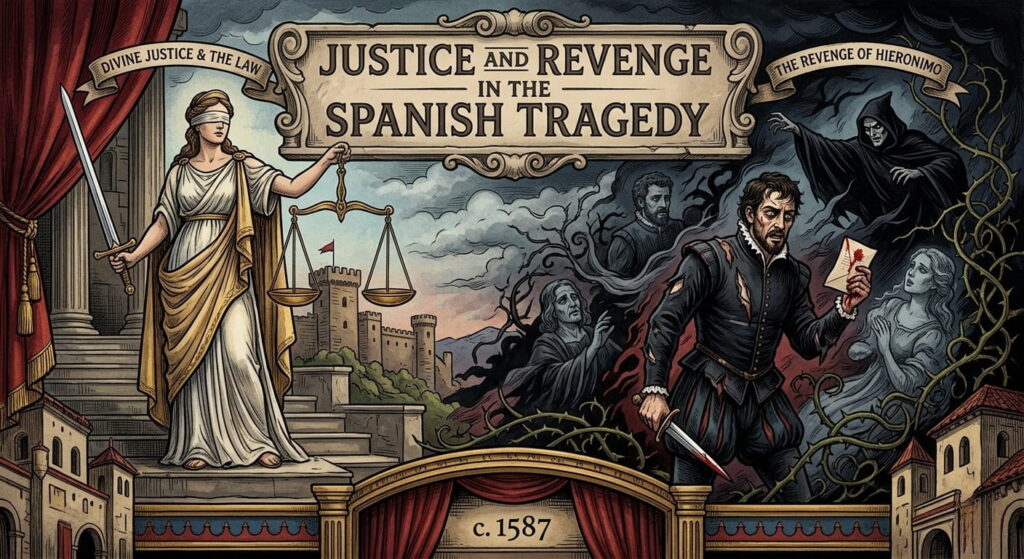
Justice and Revenge in The Spanish Tragedy shape the tragic narrative strongly. First, Horatio’s murder creates powerful emotional conflict. Consequently, Hieronimo begins searching desperately for justice. Moreover, corruption blocks legal punishment repeatedly. Therefore, revenge gradually replaces faith in authority. Furthermore, Bel-Imperia also demands justice for Horatio. Meanwhile, Lorenzo hides his crime through deception. Consequently, truth remains hidden from the royal court. Moreover, grief transforms Hieronimo’s personality slowly. Therefore, emotional suffering motivates revenge strongly. Furthermore, the failure of justice deepens tragic tension. Meanwhile, victims struggle against political corruption. Consequently, anger grows within grieving characters. Moreover, revenge promises restoration of honor. Therefore, the narrative moves toward violent punishment.
After the Introduction, the next sections continue with the numbered headings. Here is the next part (Headings 1–3).
1. Justice and Revenge in The Spanish Tragedy
Justice and Revenge in The Spanish Tragedy create the central tragic conflict. First, Horatio’s murder destroys moral balance immediately. Consequently, Hieronimo demands legal justice strongly. Moreover, the royal court fails to protect innocent victims. Therefore, anger grows inside grieving characters. Furthermore, Bel-Imperia demands punishment for Horatio’s death. Meanwhile, Lorenzo hides the crime through deception. Consequently, truth remains hidden from authority. Moreover, corruption protects criminals temporarily. Therefore, justice becomes impossible within the court. Furthermore, grief transforms Hieronimo’s calm personality gradually. Meanwhile, sorrow deepens his emotional suffering. Consequently, revenge appears as the final solution. Moreover, victims lose trust in legal authority. Therefore, personal justice replaces official law. Furthermore, emotional anger strengthens determination. Meanwhile, villains celebrate their temporary security. Consequently, tragedy moves toward violent revenge. Thus, Justice and Revenge in The Spanish Tragedy guide the entire narrative.
2. Failure of Legal Justice
Justice and Revenge in The Spanish Tragedy reveal the failure of legal justice. First, Hieronimo searches patiently for official judgment. Consequently, he approaches the king for justice. Moreover, corruption blocks his request repeatedly. Therefore, frustration grows within his mind. Furthermore, criminals continue enjoying royal protection. Meanwhile, innocent victims remain powerless. Consequently, the court ignores moral responsibility. Moreover, justice disappears from political authority. Therefore, victims lose faith in the law. Furthermore, Hieronimo questions the fairness of justice openly. Meanwhile, sorrow increases emotional tension constantly. Consequently, anger replaces patience gradually. Moreover, injustice strengthens the desire for revenge. Therefore, the narrative moves toward violent justice. Furthermore, the failure of the law exposes corruption clearly. Meanwhile, victims struggle against powerful criminals. Consequently, tragedy deepens through injustice. Thus, Justice and Revenge in The Spanish Tragedy expose the weakness of legal authority.
3. Revenge as Personal Justice
Justice and Revenge in The Spanish Tragedy transform revenge into personal justice. First, Hieronimo recognizes the failure of the court. Consequently, he chooses revenge as punishment. Moreover, grief fuels his determination constantly. Therefore, revenge becomes his moral duty. Furthermore, Bel-Imperia strongly supports the revenge. Meanwhile, villains continue hiding their crimes confidently. Consequently, revenge planning grows carefully. Moreover, emotional suffering guides Hieronimo’s decisions. Therefore, justice appears possible through revenge. Furthermore, patience disappears from his character gradually. Meanwhile, anger shapes his actions strongly. Consequently, revenge promises restoration of honor. Moreover, victims refuse to accept injustice silently. Therefore, violent punishment becomes inevitable. Furthermore, secret preparation strengthens narrative suspense. Meanwhile, criminals remain unaware of danger. Consequently, tragedy approaches its climax slowly. Thus, Justice and Revenge in The Spanish Tragedy portray revenge as personal justice.
4. Moral Conflict Between Justice and Revenge
Justice and Revenge in The Spanish Tragedy create a strong moral conflict. First, Hieronimo desires lawful punishment for Horatio’s murder. Consequently, he appeals to the king for justice. Moreover, the court delays fair judgment repeatedly. Therefore, frustration replaces patience gradually. Furthermore, grief deepens his emotional turmoil. Meanwhile, Lorenzo hides the crime through deception. Consequently, truth remains hidden from authority. Moreover, corruption protects criminals inside the court. Therefore, justice appears impossible through legal means. Furthermore, Hieronimo struggles between patience and revenge. Meanwhile, sorrow controls his emotional reasoning. Consequently, anger begins replacing rational thought. Moreover, revenge promises restoration of honor. Therefore, moral conflict shapes his transformation. Furthermore, audiences observe his internal struggle closely. Meanwhile, villains enjoy temporary security. Consequently, tragedy approaches slowly. Thus, Justice and Revenge in The Spanish Tragedy reveal deep moral conflict.
5. Hieronimo’s Transformation
Justice and Revenge in The Spanish Tragedy shape Hieronimo’s character transformation. First, Hieronimo begins as a loyal royal judge. Consequently, he respects legal authority strongly. Moreover, Horatio’s murder destroys his emotional stability. Therefore, grief overwhelms his calm personality. Furthermore, injustice increases his frustration constantly. Meanwhile, criminals escape punishment easily. Consequently, sorrow becomes anger gradually. Moreover, Hieronimo questions the fairness of justice. Therefore, revenge becomes his final solution. Furthermore, Bel-Imperia strengthens his determination. Meanwhile, villains underestimate his emotional strength. Consequently, revenge planning grows secretly. Moreover, his personality shifts from patience to action. Therefore, justice transforms into personal revenge. Furthermore, his determination guides narrative tension. Meanwhile, tragedy approaches its violent climax. Consequently, his transformation defines the narrative conflict. Thus, Justice and Revenge in The Spanish Tragedy shape Hieronimo’s tragic evolution.
6. Bel-Imperia’s Desire for Justice
Justice and Revenge in The Spanish Tragedy also motivate Bel-Imperia strongly. First, she loves Horatio sincerely. Consequently, his murder devastates her emotionally. Moreover, she demands punishment for the criminals. Therefore, she supports Hieronimo’s search for justice. Furthermore, Bel-Imperia secretly reveals crucial information. Meanwhile, Lorenzo attempts to control her actions. Consequently, family conflict deepens dramatically. Moreover, she refuses to be silent despite danger. Therefore, loyalty motivates her resistance strongly. Furthermore, her courage strengthens the revenge plot. Meanwhile, villains attempt to suppress her voice. Consequently, injustice intensifies her anger. Moreover, Bel-Imperia rejects political authority openly. Therefore, justice becomes her personal mission. Furthermore, her determination influences Hieronimo deeply. Meanwhile, villains remain unaware of approaching punishment. Consequently, tragedy approaches inevitable resolution. Thus, Justice and Revenge in The Spanish Tragedy highlight Bel-Imperia’s courage.
7. Political Corruption and Injustice
Justice and Revenge in The Spanish Tragedy expose political corruption clearly. First, Lorenzo manipulates authority for personal protection. Consequently, the court ignores moral responsibility. Moreover, criminals avoid punishment through influence. Therefore, justice disappears from the royal system. Furthermore, corruption spreads across the court environment. Meanwhile, innocent characters suffer quietly. Consequently, anger grows among victims. Moreover, corruption blocks every legal solution. Therefore, revenge appears to be the only alternative. Furthermore, the royal court fails to protect justice. Meanwhile, villains celebrate their temporary victory. Consequently, tragedy develops through injustice. Moreover, power distorts moral judgment repeatedly. Therefore, political corruption strengthens the revenge plot. Furthermore, victims lose faith in authority. Meanwhile, the hidden truth continues guiding revenge. Consequently, punishment becomes inevitable. Thus, Justice and Revenge in The Spanish Tragedy criticize corrupt authority.
8. Revenge as Moral Restoration
Justice and Revenge in The Spanish Tragedy present revenge as moral restoration. First, Horatio’s death demands punishment. Consequently, victims seek justice passionately. Moreover, corruption prevents lawful judgment. Therefore, revenge becomes a moral necessity. Furthermore, Hieronimo believes revenge restores honor. Meanwhile, Bel-Imperia supports this belief strongly. Consequently, revenge appears morally justified. Moreover, injustice strengthens emotional determination. Therefore, victims refuse to accept corruption silently. Furthermore, revenge promises restoration of dignity. Meanwhile, criminals underestimate moral consequences. Consequently, tragedy grows through determined resistance. Moreover, justice returns through violent punishment. Therefore, revenge becomes symbolic justice. Furthermore, emotional suffering drives moral action. Meanwhile, victims regain honor through revenge. Consequently, tragedy concludes through restored justice. Thus, Justice and Revenge in The Spanish Tragedy present revenge as moral restoration.
9. Delay of Justice
Justice and Revenge in The Spanish Tragedy develop through delayed justice. First, Hieronimo patiently searches for legal solutions. Consequently, the narrative tension grows slowly. Moreover, the court refuses immediate punishment. Therefore, frustration increases across the narrative. Furthermore, investigation scenes prolong suspense. Meanwhile, villains enjoy temporary freedom. Consequently, audience anticipation strengthens constantly. Moreover, patience gradually transforms into anger. Therefore, revenge planning becomes inevitable. Furthermore, the delay increases emotional intensity. Meanwhile, criminals remain confident in their safety. Consequently, justice approaches unexpectedly later. Moreover, delayed revenge strengthens the dramatic climax. Therefore, suspense remains powerful throughout the narrative. Furthermore, delay allows deeper emotional conflict. Meanwhile, victims continue searching for the truth. Consequently, tragedy moves toward violent justice. Thus, Justice and Revenge in The Spanish Tragedy use delay to intensify tension.
10. Revenge and Tragic Consequences
Justice and Revenge in The Spanish Tragedy end with tragic consequences. First, Hieronimo executes revenge during the staged play. Consequently, criminals receive violent punishment immediately. Moreover, the royal court witnesses shocking justice. Therefore, tragedy overwhelms every character present. Furthermore, revenge destroys both villains and victims. Meanwhile, emotional suffering continues after punishment. Consequently, peace never fully returns. Moreover, tragedy exposes the destructive nature of revenge. Therefore, justice arrives through catastrophic violence. Furthermore, moral reflection follows the tragedy. Meanwhile, survivors confront a painful reality. Consequently, suffering defines the final outcome. Moreover, revenge fails to restore complete justice. Therefore, tragedy reveals human vulnerability clearly. Furthermore, corruption leads to inevitable destruction. Meanwhile, audiences reflect upon justice deeply. Consequently, the narrative ends with a moral warning. Thus, Justice and Revenge in The Spanish Tragedy conclude with tragic consequences.
11. Justice and Revenge as Central Themes
Justice and Revenge in The Spanish Tragedy dominate the entire narrative. First, Horatio’s murder demands immediate justice. Consequently, Hieronimo begins searching for the truth. Moreover, Bel-Imperia also demands punishment. Therefore, revenge becomes the central motivation. Furthermore, corruption blocks official justice repeatedly. Meanwhile, criminals hide their crimes confidently. Consequently, injustice spreads throughout the court. Moreover, victims lose faith in legal authority. Therefore, revenge appears to be the only remaining solution. Furthermore, emotional suffering strengthens determination. Meanwhile, villains celebrate temporary safety. Consequently, tragedy approaches gradually. Moreover, justice returns through violent punishment. Therefore, revenge shapes narrative development strongly. Furthermore, moral conflict remains visible throughout the story. Meanwhile, characters struggle between justice and revenge. Consequently, tragedy becomes inevitable. Thus, Justice and Revenge in The Spanish Tragedy dominate the narrative structure.
12. Emotional Suffering and Revenge
Justice and Revenge in The Spanish Tragedy grow from emotional suffering. First, Hieronimo loses his beloved son. Consequently, grief overwhelms his rational thinking. Moreover, sorrow shapes his emotional reactions. Therefore, revenge becomes an emotional response. Furthermore, Bel-Imperia shares deep grief for Horatio. Meanwhile, villains ignore the suffering they caused. Consequently, anger replaces patience gradually. Moreover, grief transforms sorrow into determination. Therefore, revenge appears emotionally justified. Furthermore, emotional pain strengthens the revenge plot. Meanwhile, injustice deepens psychological conflict. Consequently, characters lose emotional balance. Moreover, suffering motivates violent justice. Therefore, tragedy grows from emotional loss. Furthermore, grief shapes character decisions constantly. Meanwhile, victims search for dignity through revenge. Consequently, emotional suffering drives narrative conflict. Thus, Justice and Revenge in The Spanish Tragedy emerge from grief.
13. Justice and Revenge in Court Politics
Justice and Revenge in The Spanish Tragedy connect with court politics. First, powerful nobles manipulate authority easily. Consequently, criminals escape punishment temporarily. Moreover, Lorenzo controls information within the court. Therefore, truth remains hidden from authority. Furthermore, corruption dominates political relationships. Meanwhile, innocent characters struggle against power. Consequently, justice becomes impossible within the court. Moreover, political ambition encourages deception. Therefore, revenge appears as moral resistance. Furthermore, victims challenge corrupt authority secretly. Meanwhile, criminals trust their political protection. Consequently, tragedy develops through political corruption. Moreover, justice becomes a personal mission. Therefore, revenge replaces official law. Furthermore, emotional anger fuels resistance. Meanwhile, villains ignore approaching punishment. Consequently, tragedy grows through political conflict. Thus, Justice and Revenge in The Spanish Tragedy criticize corrupt politics.
14. Revenge and the Search for Truth
Justice and Revenge in The Spanish Tragedy depend upon discovering the truth. First, Hieronimo investigates Horatio’s murder carefully. Consequently, clues reveal hidden criminals gradually. Moreover, Bel-Imperia secretly sends important information. Therefore, the investigation strengthens narrative tension. Furthermore, the hidden truth drives the revenge plot. Meanwhile, villains hide evidence repeatedly. Consequently, suspense increases across the story. Moreover, the investigation deepens emotional frustration. Therefore, revenge planning develops gradually. Furthermore, characters pursue truth passionately. Meanwhile, deception blocks justice constantly. Consequently, anger replaces patience slowly. Moreover, truth strengthens moral determination. Therefore, revenge appears justified. Furthermore, discovery shapes narrative movement. Meanwhile, criminals remain unaware of the investigation. Consequently, punishment approaches secretly. Thus, Justice and Revenge in The Spanish Tragedy depend upon truth.
15. Revenge as Justice for Horatio
Justice and Revenge in The Spanish Tragedy honor Horatio’s memory. First, Horatio represents innocence and loyalty. Consequently, his murder appears deeply unjust. Moreover, Bel-Imperia mourns his tragic death. Therefore, revenge becomes a tribute to him. Furthermore, Hieronimo promises justice for his son. Meanwhile, villains hide their crimes confidently. Consequently, revenge becomes the only punishment. Moreover, justice restores Horatio’s lost honor. Therefore, emotional loyalty strengthens determination. Furthermore, characters refuse to forget the injustice. Meanwhile, grief motivates revenge constantly. Consequently, tragedy grows through loyalty. Moreover, revenge becomes a moral obligation. Therefore, justice appears through violent punishment. Furthermore, victims seek dignity through revenge. Meanwhile, criminals remain unaware of approaching justice. Consequently, tragedy approaches its climax. Thus, Justice and Revenge in The Spanish Tragedy honor Horatio’s sacrifice.
16. Revenge and Moral Responsibility
Justice and Revenge in The Spanish Tragedy explore moral responsibility. First, criminals commit violent injustice. Consequently, punishment becomes morally necessary. Moreover, victims believe revenge restores justice. Therefore, revenge becomes a moral duty. Furthermore, corruption removes legal accountability. Meanwhile, victims accept personal responsibility for justice. Consequently, revenge appears ethically justified. Moreover, characters reflect on moral consequences. Therefore, revenge becomes symbolic justice. Furthermore, emotional suffering strengthens moral determination. Meanwhile, villains ignore ethical responsibility. Consequently, tragedy reveals moral imbalance. Moreover, justice returns through a vengeful action. Therefore, responsibility shifts toward the victims. Furthermore, moral reflection appears after violence. Meanwhile, audiences evaluate revenge carefully. Consequently, tragedy delivers ethical lessons. Thus, Justice and Revenge in The Spanish Tragedy explore moral responsibility.
17. Psychological Pressure Leading to Revenge
Justice and Revenge in The Spanish Tragedy develop through psychological pressure. First, grief overwhelms Hieronimo emotionally. Consequently, his mental stability weakens gradually. Moreover, injustice increases psychological tension. Therefore, emotional pressure influences his thinking. Furthermore, sorrow creates intense mental conflict. Meanwhile, corruption deepens frustration constantly. Consequently, revenge becomes a psychological release. Moreover, emotional pressure drives violent decisions. Therefore, characters struggle with inner conflict. Furthermore, grief shapes psychological transformation. Meanwhile, villains underestimate emotional suffering. Consequently, tragedy grows through mental turmoil. Moreover, revenge promises emotional relief. Therefore, psychological conflict drives narrative tension. Furthermore, suffering transforms character identity. Meanwhile, anger replaces patience completely. Consequently, revenge appears inevitable. Thus, Justice and Revenge in The Spanish Tragedy emerge from psychological conflict.
18. Revenge and Social Order
Justice and Revenge in The Spanish Tragedy challenge social order. First, the royal court fails to protect justice. Consequently, victims reject official authority. Moreover, corruption weakens social stability. Therefore, revenge becomes alternative justice. Furthermore, characters challenge the political hierarchy openly. Meanwhile, criminals misuse social power. Consequently, injustice spreads through society. Moreover, revenge disrupts the royal court. Therefore, social order collapses gradually. Furthermore, victims demand accountability through revenge. Meanwhile, villains depend upon authority for protection. Consequently, revenge restores moral balance. Moreover, violence exposes corruption clearly. Therefore, tragedy criticizes social injustice. Furthermore, revenge reveals broken institutions. Meanwhile, victims reclaim moral dignity. Consequently, social balance appears through punishment. Thus, Justice and Revenge in The Spanish Tragedy question social order.
19. Justice Through Theatrical Revenge
Justice and Revenge in The Spanish Tragedy appear through theatrical strategy. First, Hieronimo organizes a dramatic performance. Consequently, revenge hides within the play. Moreover, actors perform before the royal court. Therefore, villains remain unaware of danger. Furthermore, suspense grows during the performance. Meanwhile, Hieronimo controls the dramatic action. Consequently, criminals face sudden punishment. Moreover, theatrical illusion reveals hidden justice. Therefore, revenge becomes a dramatic spectacle. Furthermore, the royal court witnesses the violent truth. Meanwhile, tragedy shocks every character present. Consequently, justice appears through performance. Moreover, theatrical strategy exposes corruption. Therefore, revenge concludes the narrative conflict. Furthermore, hidden planning demonstrates Hieronimo’s intelligence. Meanwhile, villains lose their false security. Consequently, tragedy reaches its climax. Thus, Justice and Revenge in The Spanish Tragedy emerge through theatrical revenge.
20. The Tragic Outcome of Revenge
Justice and Revenge in The Spanish Tragedy end with tragedy. First, revenge eliminates the guilty criminals. Consequently, justice appears through destruction. Moreover, innocent characters also suffer consequences. Therefore, tragedy becomes unavoidable. Furthermore, emotional suffering remains after revenge. Meanwhile, peace never returns completely. Consequently, tragedy exposes the dangers of vengeance. Moreover, revenge destroys both victims and villains. Therefore, justice arrives too late for harmony. Furthermore, sorrow dominates the final moments. Meanwhile, survivors confront a painful reality. Consequently, audiences reflect upon revenge deeply. Moreover, tragedy delivers a moral warning. Therefore, vengeance appears destructive and powerful. Furthermore, justice remains incomplete despite revenge. Meanwhile, suffering defines the ending. Consequently, tragedy leaves a lasting impact. Thus, Justice and Revenge in The Spanish Tragedy conclude through tragic loss.
21. Revenge and Honor
Justice and Revenge in The Spanish Tragedy connect closely with honor. First, Horatio’s death destroys family honor. Consequently, Hieronimo seeks justice passionately. Moreover, revenge promises restoration of dignity. Therefore, honor motivates his determination strongly. Furthermore, Bel-Imperia defends Horatio’s honor courageously. Meanwhile, villains disrespect moral responsibility completely. Consequently, revenge appears morally justified. Moreover, emotional loyalty strengthens resistance against injustice. Therefore, honor becomes central to revenge. Furthermore, victims refuse to accept humiliation silently. Meanwhile, criminals believe their power ensures safety. Consequently, tragedy grows through wounded honor. Moreover, revenge restores dignity symbolically. Therefore, justice emerges through violent punishment. Furthermore, honor motivates moral courage. Meanwhile, villains underestimate emotional loyalty. Consequently, tragedy approaches inevitable punishment. Thus, Justice and Revenge in The Spanish Tragedy protect honor.
22. Revenge and Emotional Loyalty
Justice and Revenge in The Spanish Tragedy reflect emotional loyalty strongly. First, Hieronimo loves his son deeply. Consequently, grief motivates revenge strongly. Moreover, Bel-Imperia honors Horatio’s memory faithfully. Therefore, loyalty strengthens determination. Furthermore, emotional devotion fuels the revenge plot. Meanwhile, villains ignore emotional bonds completely. Consequently, victims feel justified in revenge. Moreover, loyalty creates powerful moral motivation. Therefore, revenge becomes personal responsibility. Furthermore, grief transforms love into determination. Meanwhile, criminals celebrate a temporary victory confidently. Consequently, tragedy grows through emotional loyalty. Moreover, justice honors lost relationships. Therefore, revenge restores emotional dignity. Furthermore, loyalty strengthens resistance against injustice. Meanwhile, suffering deepens commitment. Consequently, punishment appears inevitable. Thus, Justice and Revenge in The Spanish Tragedy arise from loyalty.
23. Revenge and Madness
Justice and Revenge in The Spanish Tragedy connect with madness. First, grief overwhelms Hieronimo’s mental stability. Consequently, sorrow weakens rational thinking. Moreover, injustice increases psychological pressure. Therefore, madness appears within emotional suffering. Furthermore, Hieronimo sometimes pretends madness deliberately. Meanwhile, enemies underestimate his intelligence. Consequently, revenge planning continues secretly. Moreover, madness becomes a strategic disguise. Therefore, deception protects his revenge plan. Furthermore, emotional pain influences his behavior strongly. Meanwhile, villains misunderstand his mental state. Consequently, tragedy moves toward its climax. Moreover, psychological suffering intensifies narrative tension. Therefore, revenge appears inevitable. Furthermore, madness reveals emotional trauma. Meanwhile, justice approaches through a hidden strategy. Consequently, tragedy unfolds dramatically. Thus, Justice and Revenge in The Spanish Tragedy connect with madness.
24. Revenge and Fate
Justice and Revenge in The Spanish Tragedy reflect a powerful destiny. First, Andrea’s ghost observes human actions silently. Consequently, supernatural presence guides audience understanding. Moreover, Revenge promises inevitable punishment. Therefore, fate appears connected with justice. Furthermore, villains ignore supernatural warnings repeatedly. Meanwhile, destiny moves events toward punishment. Consequently, tragedy becomes unavoidable. Moreover, supernatural commentary deepens narrative meaning. Therefore, justice appears predetermined. Furthermore, fate exposes moral consequences clearly. Meanwhile, criminals believe themselves safe. Consequently, destiny proves them wrong eventually. Moreover, revenge fulfills cosmic balance. Therefore, tragedy reveals moral justice. Furthermore, supernatural observers witness human corruption. Meanwhile, punishment approaches gradually. Consequently, destiny controls narrative outcome. Thus, Justice and Revenge in The Spanish Tragedy reflect fate.
25. Revenge and Moral Justice
Justice and Revenge in The Spanish Tragedy emphasize moral justice strongly. First, Horatio’s murder demands punishment. Consequently, victims seek justice passionately. Moreover, corruption blocks legal authority repeatedly. Therefore, revenge becomes alternative justice. Furthermore, moral conflict shapes character decisions. Meanwhile, villains ignore ethical responsibility completely. Consequently, tragedy reveals moral imbalance. Moreover, revenge restores moral order symbolically. Therefore, justice appears through violent action. Furthermore, emotional suffering strengthens moral determination. Meanwhile, criminals face inevitable consequences. Consequently, tragedy exposes ethical corruption. Moreover, justice emerges through revengeful punishment. Therefore, morality guides the revenge plot. Furthermore, suffering reinforces ethical reflection. Meanwhile, audiences consider justice deeply. Consequently, tragedy delivers a moral warning. Thus, Justice and Revenge in The Spanish Tragedy highlight moral justice.
26. Revenge and Human Suffering
Justice and Revenge in The Spanish Tragedy grow from human suffering. First, Horatio’s death causes overwhelming grief. Consequently, Hieronimo experiences unbearable sorrow. Moreover, Bel-Imperia shares emotional pain deeply. Therefore, suffering motivates revenge strongly. Furthermore, injustice intensifies emotional despair. Meanwhile, villains ignore victims’ suffering completely. Consequently, grief transforms into anger. Moreover, revenge becomes an emotional response. Therefore, tragedy develops through suffering. Furthermore, emotional pain shapes character actions. Meanwhile, victims demand justice passionately. Consequently, suffering deepens narrative conflict. Moreover, revenge promises emotional release. Therefore, tragedy exposes human vulnerability clearly. Furthermore, suffering unites victims against injustice. Meanwhile, criminals remain unaware of the consequences. Consequently, punishment approaches gradually. Thus, Justice and Revenge in The Spanish Tragedy arise from suffering.
27. Revenge and Social Justice
Justice and Revenge in The Spanish Tragedy challenge social injustice. First, the royal court fails to protect innocent citizens. Consequently, victims reject official authority. Moreover, corruption weakens social institutions. Therefore, revenge becomes social resistance. Furthermore, victims fight injustice independently. Meanwhile, criminals misuse power repeatedly. Consequently, social order collapses gradually. Moreover, revenge exposes corruption publicly. Therefore, justice returns through punishment. Furthermore, tragedy criticizes political corruption. Meanwhile, victims restore moral balance through revenge. Consequently, injustice becomes visible everywhere. Moreover, revenge demands accountability. Therefore, society recognizes corruption clearly. Furthermore, tragedy exposes broken institutions. Meanwhile, criminals lose their protection. Consequently, justice appears through rebellion. Thus, Justice and Revenge in The Spanish Tragedy confront social injustice.
28. Revenge and Dramatic Structure
Justice and Revenge in The Spanish Tragedy guide the narrative structure. First, Horatio’s murder begins a tragic conflict. Consequently, investigation scenes build suspense gradually. Moreover, emotional suffering deepens narrative tension. Therefore, revenge planning shapes the story. Furthermore, deception complicates relationships constantly. Meanwhile, villains enjoy temporary security confidently. Consequently, tension rises steadily. Moreover, revenge prepares the dramatic climax. Therefore, theatrical performance delivers the final punishment. Furthermore, tragedy concludes through violent justice. Meanwhile, audiences observe moral consequences clearly. Consequently, revenge shapes narrative progression. Moreover, emotional conflict strengthens dramatic engagement. Therefore, tragedy remains structurally balanced. Furthermore, suffering drives narrative momentum. Meanwhile, justice approaches through revenge. Consequently, tragedy reaches inevitable resolution. Thus, Justice and Revenge in The Spanish Tragedy guide the structure.
29. Revenge and Tragic Justice
Justice and Revenge in The Spanish Tragedy culminate in tragic justice. First, criminals face punishment during the staged play. Consequently, revenge appears suddenly. Moreover, truth becomes visible before authority. Therefore, justice emerges dramatically. Furthermore, tragedy shocks the royal court. Meanwhile, villains lose their false security instantly. Consequently, emotional tension collapses suddenly. Moreover, revenge fulfills moral expectations briefly. Therefore, tragedy replaces peaceful resolution completely. Furthermore, suffering continues after punishment. Meanwhile, survivors confront devastating consequences. Consequently, justice appears incomplete. Moreover, tragedy reveals destructive revenge clearly. Therefore, audiences reflect upon justice deeply. Furthermore, moral lessons emerge from suffering. Meanwhile, vengeance exposes human weakness. Consequently, tragedy defines the ending. Thus, Justice and Revenge in The Spanish Tragedy culminate in tragic justice.
30. Justice and Revenge as the Final Message
Justice and Revenge in The Spanish Tragedy form the play’s final message. First, corruption leads characters toward destruction. Consequently, injustice produces violent revenge. Moreover, tragedy exposes moral consequences clearly. Therefore, revenge becomes a warning against corruption. Furthermore, suffering reveals the cost of vengeance. Meanwhile, victims struggle desperately for dignity. Consequently, tragedy delivers powerful moral lessons. Moreover, revenge restores honor briefly. Therefore, peace never fully returns. Furthermore, justice appears incomplete after violence. Meanwhile, emotional loss defines the ending. Consequently, audiences reflect upon justice and revenge deeply. Moreover, tragedy exposes human vulnerability clearly. Therefore, moral responsibility becomes essential. Furthermore, revenge reveals destructive consequences. Meanwhile, justice demands accountability from power. Consequently, tragedy leaves a lasting impact. Thus, Justice and Revenge in The Spanish Tragedy express the play’s final message.
Conclusion
Justice and Revenge in The Spanish Tragedy dominate the tragic narrative powerfully. First, Horatio’s murder destroys moral balance immediately. Consequently, Hieronimo begins searching for justice. Moreover, corruption blocks legal punishment repeatedly. Therefore, revenge replaces faith in authority gradually. Furthermore, Bel-Imperia supports justice through determination. Meanwhile, villains hide their crimes through deception. Consequently, tragedy grows through injustice. Moreover, emotional suffering transforms characters deeply. Therefore, revenge becomes inevitable. Furthermore, supernatural forces observe moral corruption silently. Meanwhile, destiny guides events toward punishment. Consequently, revenge appears unavoidable. Moreover, the final performance delivers violent justice. Therefore, tragedy exposes moral consequences clearly. Furthermore, revenge destroys both villains and victims. Meanwhile, audiences reflect deeply upon justice and revenge. Consequently, suffering becomes the final lesson. Thus, Justice and Revenge in The Spanish Tragedy reveal the dangers of vengeance and corruption.
Plot Construction in The Spanish Tragedy: https://englishlitnotes.com/2026/03/15/plot-construction-in-the-spanish-tragedy-structure-conflict-and-revenge/
Victorian Period in English Literature: https://englishlitnotes.com/2025/04/20/victorian-period-in-english-literature/
Ernest Hemingway as a Modernist Writer: https://americanlit.englishlitnotes.com/ernest-hemingway-as-a-modern-american-writer/
Discover more from Naeem Ullah Butt - Mr.Blogger
Subscribe to get the latest posts sent to your email.