1. Naturalism in fiction defines Edwardian narrative style
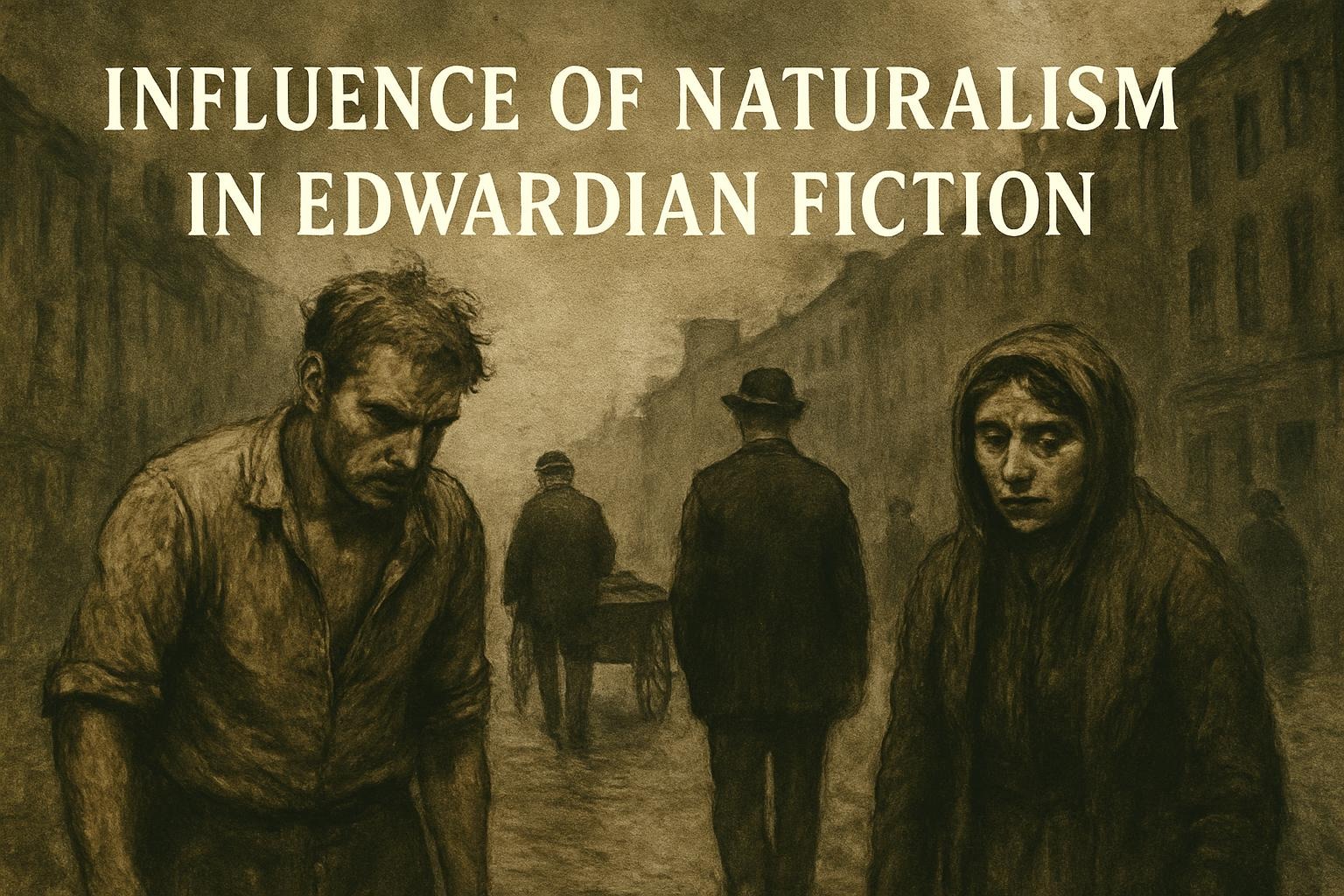
The influence of naturalism in Edwardian fiction shapes Edwardian writers, who embrace naturalism to capture life with unflinching realism. They emphasize heredity, environment, and social conditions shaping destiny. Therefore, characters reflect harsh truths. Authors like Arnold Bennett and John Galsworthy highlight struggles caused by poverty and society. Moreover, they avoid romantic illusions and present raw detail. Novels describe working-class hardship and human limitation without disguise. Consequently, literature focuses on the inevitability of suffering. Furthermore, naturalism stresses scientific influence, linking fiction with psychology and biology. Writers insist individuals cannot escape surroundings. Moreover, they highlight urban chaos, industrial cruelty, and rural decay. Readers face uncomfortable truths about society’s structure. Social issues become literary subjects instead of background details. The influence of naturalism in Edwardian fiction defines Edwardian narrative style. Thus, novels reveal existence not as fantasy but as struggle. Literature reflects reality boldly, guiding readers toward awareness and reform.
2. Naturalism in fiction rejects romantic idealism
The influence of naturalism in Edwardian fiction is evident as writers reject illusions of romance in storytelling. They replace fantasy with harsh depictions of survival. Therefore, literature avoids escapist narratives. Authors highlight grim realities of industrial life, slums, and moral conflict. Moreover, novels present love as vulnerable to poverty and social pressure. Characters struggle against forces beyond control. Consequently, stories lack perfect happy endings. Furthermore, writers argue that fiction must reflect truth, not dream. Naturalism opposes sentimentalism dominating earlier traditions. Instead, novels confront uncomfortable truths about class and corruption. Moreover, literature insists that honesty outweighs comfort. Readers face the bitterness of life, not fairy tales. The influence of naturalism in Edwardian fiction shows clearly as naturalism rejects romantic idealism directly. Thus, Edwardian literature embraces authenticity over illusion. Therefore, novels become testimonies of reality rather than fantasies. Writers prove literature carries responsibility to show truth, no matter how difficult.
3. Naturalism in fiction emphasizes heredity and environment
The influence of naturalism in Edwardian fiction is clear as Edwardian naturalists insist heredity and environment determine human destiny. Characters inherit weaknesses, diseases, or dispositions shaping choices. Therefore, literature emphasizes biology alongside circumstance. Authors highlight alcoholism, illness, and poverty passed through generations. Moreover, they reveal how surroundings reinforce despair. Novels show slums breeding crime and suffering. Consequently, fiction denies complete free will. Furthermore, writers argue society molds individuals relentlessly. Naturalism emphasizes that nature and nurture combine to define existence. Moreover, literature reveals how characters cannot escape social traps. Readers recognize tragic inevitability in their struggles. Thus, fiction expands scientific discussion within art. The influence of naturalism in Edwardian fiction underscores heredity and environment as central. Therefore, Edwardian novels align literature with contemporary psychology. Writers insist stories must portray forces shaping individuals realistically. Through this, naturalism deepens literature’s role in understanding the human condition.
4. Naturalism in fiction highlights working-class struggles
Edwardian naturalist novels describe working-class lives with brutal honesty. Writers show families enduring hunger, exhaustion, and deprivation. Therefore, literature highlights survival rather than romance. Authors portray characters as victims of poverty. Moreover, they emphasize limited choices shaping destiny. Novels explore slums, factories, and oppressive landlords. Consequently, fiction becomes a voice for laboring classes. Furthermore, naturalism insists these stories deserve attention equal to aristocratic tales. Writers describe how wages barely cover survival. Moreover, novels show generational poverty repeating cycles of despair. Readers confront reality without softening. Naturalism in fiction highlights working-class struggles bravely. Thus, Edwardian literature expands scope, moving beyond elite subjects. Therefore, novels prove literature can transform awareness by showing ignored lives. Writers reveal injustice through narrative power, demanding recognition of dignity within hardship. Fiction achieves relevance by centering on humanity’s everyday battle for survival.
5. Naturalism in fiction portrays deterministic characters
Edwardian naturalist writers emphasize determinism guiding human lives. Characters lack full freedom of choice. Therefore, literature portrays fate shaped by biology, environment, and society. Authors depict individuals crushed under forces beyond control. Moreover, novels highlight despair as characters repeat inherited patterns. Poverty, addiction, and illness return through generations. Consequently, fiction emphasizes inevitability of suffering. Furthermore, writers argue that freedom remains an illusion for oppressed classes. Novels insist external conditions outweigh willpower. Moreover, literature emphasizes tragedy within ordinary lives. Readers witness helplessness against structural injustice. Naturalism in fiction portrays deterministic characters powerfully. Thus, Edwardian fiction deepens realism into philosophy. Therefore, novels challenge optimistic notions of progress. Writers confront audiences with harsh acknowledgment of limits. Through naturalism, Edwardian literature shifts focus toward collective reform, showing individuals rarely escape destiny shaped by forces larger than themselves.
6. Naturalism in fiction integrates scientific thought
Edwardian writers influenced by Darwin and psychology embrace science within storytelling. They emphasize biology, sociology, and environment. Therefore, naturalism integrates scientific thought deeply. Authors describe characters through inherited traits and social contexts. Moreover, novels analyze actions like experiments. Literature transforms storytelling into social laboratory. Consequently, fiction gains credibility as truth-seeking. Furthermore, writers argue art must follow knowledge. Naturalism blends creative narrative with rational analysis. Moreover, novels reveal how scientific theories shape daily struggles. Readers learn through characters’ experiences rather than lectures. Naturalism in fiction integrates scientific thought convincingly. Thus, Edwardian literature embodies intellectual spirit of the era. Therefore, fiction evolves beyond entertainment toward research in narrative form. Writers prove novels can explore science while telling human stories. Literature gains seriousness and respect as vehicle of learning and truth.
7. Naturalism in fiction depicts urban environments
Edwardian naturalist novels focus on city life as harsh reality. Writers describe crowded streets, slums, and pollution. Therefore, literature depicts urban environments vividly. Authors portray poverty spreading through industrial centers. Moreover, they emphasize noise, filth, and chaos. Novels highlight alienation within crowded populations. Consequently, fiction explores psychological isolation. Furthermore, naturalism insists cities reveal modern struggles. Writers capture inequality visible in every corner. Moreover, literature emphasizes danger and corruption thriving in urban spaces. Readers encounter vivid portrayals of factories, railways, and overcrowded housing. Naturalism in fiction depicts urban environments as brutal landscapes. Thus, Edwardian novels expand beyond countryside nostalgia. Therefore, literature becomes mirror of industrial growth and suffering. Writers expose contradictions of progress. Through storytelling, readers feel life within Edwardian cities. Fiction secures its place as both witness and critic of modern urbanization.
8. Naturalism in fiction explores moral decay
Edwardian naturalist novels highlight decline in moral standards. Writers show corruption, greed, and selfishness spreading through society. Therefore, literature explores moral decay seriously. Authors describe hypocrisy among elites. Moreover, they emphasize how poverty forces immoral choices. Novels reveal characters compromising values for survival. Consequently, fiction insists morality depends on circumstance. Furthermore, naturalism denies universal virtue unaffected by environment. Writers emphasize realism over idealism. Moreover, literature portrays corruption as systemic rather than individual failure. Readers confront uncomfortable truth about society’s ethics. Naturalism in fiction explores moral decay courageously. Thus, Edwardian novels critique institutions as well as individuals. Therefore, literature insists reform must include ethical renewal. Writers prove art can expose hidden dishonesty. Through naturalism, fiction becomes guide for moral awareness. Readers learn that society’s integrity depends on justice and fairness, not empty respectability.
9. Naturalism in fiction challenges class privilege
Edwardian naturalist writers attack rigid class hierarchies. Novels highlight unfair privileges enjoyed by elites. Therefore, literature challenges class privilege directly. Authors describe wealthy characters indifferent to poor neighbors. Moreover, they expose corruption hidden under respectability. Fiction emphasizes disparity between luxury and suffering. Consequently, readers confront inequality. Furthermore, naturalism insists progress cannot exclude working classes. Writers highlight hypocrisy in social order. Moreover, literature portrays privilege as destructive to unity. Novels reveal characters failing morally despite wealth. Readers see corruption and cruelty among elites. Naturalism in fiction challenges class privilege forcefully. Thus, Edwardian novels call for justice through art. Therefore, literature demands recognition of all lives. Writers prove storytelling can undermine rigid structures. Fiction becomes equalizing force. Through naturalism, Edwardian literature transforms criticism into call for fairness. Novels become weapons against inequality and elitism.
10. Naturalism in fiction reveals gender inequality
Edwardian naturalist novels highlight struggles faced by women. Writers emphasize oppression in both workplace and household. Therefore, literature reveals gender inequality strongly. Authors portray female characters restricted by custom and law. Moreover, they emphasize financial vulnerability of women. Novels show mothers and daughters exploited by employers and families. Consequently, fiction criticizes patriarchal systems. Furthermore, naturalism insists gender shapes destiny as strongly as class. Writers highlight limited opportunities restricting choice. Moreover, literature emphasizes double burden of poverty and sexism. Readers sympathize with women struggling for independence. Naturalism in fiction reveals gender inequality without disguise. Thus, Edwardian novels strengthen feminist concerns. Therefore, literature contributes to debates on suffrage and reform. Writers prove fiction can amplify silenced voices. Through naturalism, Edwardian literature demands justice. Novels become allies in the long battle for equality.
11. Political Criticism in Edwardian Novels
Social commentary in Edwardian literature frequently targeted politics. Writers boldly critiqued corruption, poor leadership, and ineffective policies. They examined how governments treated ordinary citizens and how these decisions shaped their lives. Moreover, they revealed flaws in the ruling elite. Through detailed plots, authors connected politics with moral responsibility. Therefore, social commentary in Edwardian literature provided readers with both awareness and resistance. Political critique offered readers practical insights into reform and governance. Novels encouraged questioning authority, strengthening democratic values. Hence, literature during this period helped empower social debate. Writers placed emphasis on responsibility, accountability, and progress. Through fiction, they highlighted civic duties and ethical leadership. Political criticism thus shaped public understanding. Consequently, social commentary in Edwardian literature promoted political engagement. It shaped both opinion and action. Literature effectively functioned as both mirror and tool of reform.
12. Economic Critique through Edwardian Literature
Social commentary in Edwardian literature often critiqued economic inequality. Writers examined poverty, industrial hardship, and the exploitation of workers. They presented detailed images of unfair wages and long hours. Furthermore, they described the struggles of families trapped in poverty. Through these depictions, authors emphasized justice and reform. Consequently, social commentary in Edwardian literature demanded economic fairness. Many novels stressed the importance of social responsibility. Writers illustrated the moral obligation of the wealthy toward the poor. Additionally, they highlighted the dangers of unchecked capitalism. Therefore, literature inspired reflection on fairness and equity. Through relatable characters, authors connected readers emotionally to social issues. Thus, economic critique served as a call for change. Social commentary in Edwardian literature effectively revealed financial injustice. Readers saw the stark contrast between wealth and deprivation. Hence, Edwardian writing helped shape economic awareness.
13. Religion and Social Reform in Edwardian Writing
Social commentary in Edwardian literature frequently addressed religion. Writers explored faith, hypocrisy, and spiritual guidance. They depicted the church’s role in supporting or neglecting the poor. Moreover, they emphasized the conflict between dogma and compassion. Through detailed characters, authors showed struggles between morality and ritual. Therefore, social commentary in Edwardian literature questioned religious responsibility. It demanded reform within spiritual institutions. Furthermore, writers examined the misuse of authority by clergy. They revealed failures of moral duty in society. Yet, they also highlighted the power of genuine faith to inspire change. Consequently, religion became central to debates on justice. Through storytelling, authors urged compassion and equality. Thus, social commentary in Edwardian literature bridged morality and social activism. Religion, when examined critically, became a powerful force for reform. Literature revealed how faith influenced justice, duty, and community.
14. Class Conflict as Literary Theme
Social commentary in Edwardian literature consistently emphasized class conflict. Writers exposed the struggles between the privileged and the oppressed. Through vivid narratives, they illustrated unfair divisions within society. Moreover, they described barriers that blocked social mobility. Novels reflected deep resentment between classes. Therefore, social commentary in Edwardian literature became essential for reform discussions. Characters revealed injustice and expressed hope for fairness. Furthermore, authors emphasized the cruelty of social hierarchies. They showed how wealth shaped opportunity and dignity. Consequently, readers gained awareness of systemic injustice. Edwardian novels captured both resentment and aspiration. Hence, social commentary in Edwardian literature mirrored everyday tensions. Writers used fiction as a tool for exposing inequality. By dramatizing these struggles, they encouraged empathy. Literature revealed that class inequality shaped every aspect of life. Ultimately, Edwardian fiction promoted fairness, reform, and justice.
15. Criticism of Imperialism in Edwardian Literature
Social commentary in Edwardian literature often critiqued imperialism. Writers analyzed empire, colonialism, and exploitation. They revealed hidden injustices of imperial policies. Moreover, they illustrated the costs borne by colonized societies. Through characters, they exposed racial prejudice and cultural suppression. Consequently, social commentary in Edwardian literature opposed blind nationalism. Many novels emphasized the moral failures of empire. Furthermore, they highlighted the economic greed behind colonial expansion. Writers revealed the contrast between ideals and harsh realities. Literature described displacement, violence, and social injustice. Therefore, social commentary in Edwardian literature functioned as both critique and warning. It emphasized moral responsibility in international relations. Authors showed readers how imperial ambitions damaged both colonizer and colonized. Through fiction, they dismantled myths of empire. Hence, Edwardian literature encouraged reflection on fairness, humanity, and justice. Social commentary shaped public debate about colonial policies.
16. Depiction of Women’s Rights Struggles
Social commentary in Edwardian literature often focused on women’s struggles. Writers emphasized inequality in education, employment, and marriage. They revealed discrimination in laws and customs. Moreover, they dramatized women’s search for dignity and freedom. Female characters symbolized rebellion and resilience. Therefore, social commentary in Edwardian literature promoted gender equality. Novels highlighted injustices women endured in both private and public life. Furthermore, they connected personal struggles with broader movements for rights. Writers illustrated the courage of women demanding change. Consequently, readers supported reform. Literature encouraged empathy for women’s experiences. Thus, social commentary in Edwardian literature became a tool for activism. Authors provided inspiration for ongoing debates about justice. They validated women’s voices and aspirations. Through these portrayals, Edwardian novels strengthened social reform. Literature helped challenge entrenched stereotypes. Women’s rights thus became central to Edwardian storytelling.
17. Urban Life and Social Critique
The influence of naturalism in Edwardian fiction is evident in social commentary that frequently depicted urban struggles. Writers described overcrowding, poverty, and industrial harshness. They revealed health risks, unemployment, and crime in growing cities. Moreover, they exposed corruption within urban institutions. Through vivid settings, authors illustrated the struggles of working-class families. Therefore, the influence of naturalism in Edwardian fiction shows how social commentary captured modern anxieties. Cities became symbols of progress and oppression. Writers emphasized contrasts between wealth and deprivation. Furthermore, they dramatized the loneliness of urban life. Literature depicted alienation, moral decline, and resilience. Consequently, novels inspired reflection on urban policies. Authors urged reform in housing, labor, and welfare. Thus, social commentary reflected both hardship and hope. Cities revealed challenges of industrial society. Through fiction, writers portrayed survival and despair. Ultimately, Edwardian literature gave voice to urban struggles and reform needs.
18. Depicting Rural Poverty and Hardship
Social commentary in Edwardian literature often examined rural poverty. Writers described the struggles of farmers, laborers, and small communities. They highlighted unemployment, hunger, and injustice in countryside life. Moreover, they compared rural hardship with urban growth. Through these contrasts, authors revealed widespread neglect of rural areas. Therefore, social commentary in Edwardian literature demanded fairness for the countryside. Novels depicted rural decline as a national problem. Furthermore, they highlighted isolation and vulnerability in small communities. Literature described both resilience and suffering in village life. Consequently, readers recognized injustice beyond city walls. Authors called for reforms in land use and farming practices. Through characters, they revealed dignity and hardship. Thus, social commentary in Edwardian literature connected rural and national concerns. Writers illustrated shared struggles of poor families. Ultimately, Edwardian literature emphasized justice for neglected rural communities.
19. Literature as a Tool of Reform
Social commentary in Edwardian literature functioned as reform’s greatest tool. Writers used fiction to spread awareness and demand justice. They connected art with activism. Moreover, they showed literature’s ability to shape values. Novels dramatized inequality, giving reform movements a voice. Therefore, social commentary in Edwardian literature became a form of activism. Writers encouraged readers to challenge institutions. Furthermore, they connected private suffering with public issues. Through engaging stories, they persuaded society to act. Literature revealed injustice and suggested remedies. Consequently, novels encouraged political and social awareness. Authors built solidarity across class and gender. Thus, social commentary in Edwardian literature transformed storytelling into activism. It empowered movements and validated public struggles. Fiction became a tool for debate and reform. Ultimately, Edwardian writers proved literature could shape both thought and action.
20. Naturalism in fiction critiques social hierarchy
The influence of naturalism in Edwardian fiction is evident in critiques of social hierarchy. Writers reveal the oppression faced by lower classes. Novels emphasize inherited privilege and structural barriers. Therefore, literature exposes inequities hidden under respectability. Authors contrast wealthy lifestyles with laborers’ deprivation. Moreover, they highlight moral corruption among elites. Characters experience frustration, powerlessness, and marginalization. Consequently, readers confront systemic injustice vividly. Furthermore, naturalism insists social rank affects opportunity and behavior. Writers show social immobility shaping life chances. Moreover, literature portrays aristocratic neglect of public welfare. Readers recognize the role of birth and wealth in shaping destiny. Naturalism critiques social hierarchy effectively. Thus, novels illuminate inequality’s causes and consequences. Literature encourages empathy for marginalized individuals. Authors depict ethical failure within the privileged classes. Consequently, fiction inspires reflection on fairness and reform. Edwardian novels reveal society’s stratification honestly. Through naturalism, writers challenge rigid structures. Readers witness the human impact of social hierarchies consistently.
21. Naturalism in fiction exposes urban poverty
Edwardian naturalist writers focus on urban poverty with vivid realism. Streets, alleys, and tenements become narrative subjects. Therefore, literature captures economic despair and social neglect. Characters endure hunger, overcrowding, and disease. Moreover, novels reveal labor exploitation and unsafe working conditions. Fiction emphasizes survival against systemic hardship. Consequently, readers understand the harsh realities of industrial life. Furthermore, naturalism portrays psychological stress caused by deprivation. Writers highlight crime, alcoholism, and moral compromise. Moreover, literature explores generational cycles of poverty. Readers witness inevitability of hardship reinforced by circumstance. Naturalism in Edwardian fiction exposes urban poverty dramatically. Thus, novels transform social observation into moral critique. Literature encourages empathy and reform awareness. Authors emphasize structural inequality rather than individual blame. Consequently, fiction communicates both suffering and resilience. Edwardian novels reveal society’s failures vividly. Through naturalism, urban struggles gain literary legitimacy. Readers perceive industrial growth’s human cost. Literature documents the city as a site of both oppression and endurance. Fiction becomes an ethical and social witness consistently.
22. Naturalism in fiction examines the role of environment
The influence of naturalism in Edwardian fiction emphasizes environment shaping behavior. Writers illustrate how surroundings dictate choices and outcomes. Therefore, literature portrays human lives as responsive to external pressures. Characters encounter restrictive neighborhoods, polluted cities, or decayed countryside. Moreover, novels explore environment’s influence on morality and health. Fiction emphasizes adaptation, struggle, and survival within limiting contexts. Consequently, readers observe the interaction between human agency and circumstance. Furthermore, naturalism integrates environmental determinism into narrative structure. Writers depict surroundings reinforcing generational patterns of poverty or virtue. Moreover, literature highlights climate, industry, and urban planning as shaping forces. Readers recognize environmental pressures as central to character development. Naturalism in Edwardian fiction examines the role of environment clearly. Thus, novels demonstrate the inescapable influence of context. Literature emphasizes realism over imaginative idealism. Authors link external conditions to psychological and moral outcomes. Consequently, fiction aligns human experience with observable factors. Edwardian novels reveal life shaped profoundly by surroundings. Through naturalism, environment becomes both character and force. Readers understand the persistent impact of setting consistently.
23. Naturalism in fiction portrays industrial impact
Edwardian naturalist novels depict the industrial revolution’s influence vividly. Factories, railways, and mines shape human existence. Therefore, literature emphasizes mechanical, social, and environmental pressures. Characters endure dangerous work, long hours, and pollution. Moreover, novels reveal exploitation and the toll of labor on family life. Fiction highlights urban migration and overcrowding consequences. Consequently, readers confront both progress and human cost. Furthermore, naturalism presents industrialization as a deterministic force. Writers illustrate its shaping effect on morality, behavior, and health. Moreover, literature captures economic dependency and class division. Readers witness characters’ resilience amid harsh industrial conditions. Naturalism portrays industrial impact directly. Thus, novels balance technological progress with ethical critique. Literature warns of industrial society’s consequences on human lives. Authors reveal both opportunity and oppression in mechanized cities. Consequently, fiction explores human struggle alongside economic transformation. Edwardian novels demonstrate realism’s capacity to analyze societal evolution. Through naturalism, industry becomes a narrative agent. Readers perceive social, moral, and physical effects consistently.
24. Naturalism in fiction presents moral realism
The influence of naturalism in Edwardian fiction insists on moral realism. Writers depict ethical dilemmas shaped by circumstance rather than ideology. Therefore, literature avoids idealized morality. Characters face decisions constrained by poverty, heredity, or social pressures. Moreover, novels reveal moral compromise as realistic human response. Fiction highlights consequences rather than abstract virtue. Consequently, readers engage with ethical complexity and ambiguity. Furthermore, naturalism emphasizes cause-and-effect in moral behavior. Writers show environment, biology, and social class influencing decisions. Moreover, literature portrays morality as adaptive rather than fixed. Readers observe realistic consequences of ethical choices. Naturalism presents moral realism vividly. Thus, novels challenge sentimental or utopian moral portrayals. Literature depicts life’s gray areas with honesty. Authors insist ethical reflection requires acknowledgment of circumstance. Consequently, fiction strengthens understanding of human behavior. Edwardian novels prioritize moral clarity within social realism. Through naturalism, ethical dilemmas become integral to storytelling. Readers perceive morality as shaped by life conditions consistently.
25. Naturalism in fiction investigates hereditary influence
Edwardian naturalist writers examine heredity as a determinant of human behavior. Characters inherit traits, weaknesses, or illnesses shaping life paths. Therefore, literature emphasizes genetic and familial continuity. Novels explore the persistence of poverty, addiction, or temperament across generations. Moreover, authors illustrate how heredity interacts with environment to shape outcomes. Fiction demonstrates limited autonomy within biological constraints. Consequently, readers confront deterministic dimensions of human existence. Furthermore, naturalism integrates contemporary science into storytelling. Writers align heredity with observable behavior and psychology. Moreover, literature portrays inherited traits as influencing social mobility, morality, and health. Readers understand the interplay of genes and circumstance. Naturalism investigates hereditary influence consistently. Thus, novels reinforce realism and analytical observation. Literature balances narrative with empirical insight. Authors emphasize intergenerational consequences in shaping destiny. Consequently, fiction conveys realism grounded in science. Edwardian novels reveal human behavior as predictable yet complex. Through naturalism, heredity becomes both thematic and structural force. Readers perceive the weight of ancestry on character consistently.
26. Naturalism in fiction illustrates psychological determinism
The influence of naturalism in Edwardian fiction incorporates psychology to explain behavior. Writers explore character motivations using contemporary psychological insight. Therefore, literature portrays internal drives alongside external pressures. Characters act under impulses shaped by fear, desire, or habit. Moreover, novels link mental states to social and environmental conditions. Fiction emphasizes inevitability of certain responses to circumstances. Consequently, readers gain insight into human behavior realistically. Furthermore, naturalism integrates psychology into plot development. Writers reveal the interaction of consciousness and circumstance. Moreover, literature portrays mental health and emotional strain as consequences of environment and heredity. Readers observe realistic psychological responses to adversity. Naturalism illustrates psychological determinism clearly. Thus, novels merge external and internal causality. Literature portrays human behavior as scientifically interpretable. Authors depict struggles between instinct, reason, and society. Consequently, fiction deepens realism by incorporating mental processes. Edwardian novels depict predictable yet nuanced responses to stress. Through naturalism, psychology shapes narrative outcomes. Readers perceive behavior as influenced by biology, environment, and mind consistently.
27. Naturalism in fiction depicts social injustice
Edwardian naturalist novels reveal social injustice with uncompromising honesty. Writers emphasize exploitation, discrimination, and systemic neglect. Therefore, literature portrays ordinary lives shaped by unfair structures. Characters struggle against limited opportunity, oppressive landlords, or industrial exploitation. Moreover, novels reveal corruption among those in authority. Fiction highlights inequality as both cause and consequence of human suffering. Consequently, readers confront societal flaws directly. Furthermore, naturalism insists that social injustice is integral to narrative realism. Writers link poverty, class, and environment to ethical outcomes. Moreover, literature demonstrates that personal effort often fails against entrenched systems. Readers perceive the complexity of reform and responsibility. Naturalism in Edwardian fiction depicts social injustice vividly. Thus, novels provide moral and civic awareness. Literature encourages empathy for the oppressed while criticizing privilege. Authors expose systemic harm without sentimentalizing victims. Consequently, fiction becomes a tool for reflection and activism. Edwardian novels challenge complacency about inequality. Through naturalism, literature merges observation, critique, and advocacy consistently.
28. Naturalism in fiction explores urban alienation
Edwardian naturalist writers focus on urban alienation as a psychological and social phenomenon. Crowded streets, industrial noise, and crowded housing create isolation. Therefore, literature portrays loneliness amidst population density. Characters experience estrangement from community, family, and self. Moreover, novels explore moral and emotional disconnection in modern cities. Fiction highlights alienation as both cause and effect of industrial and social change. Consequently, readers perceive emotional consequences of urbanization. Furthermore, naturalism emphasizes how environment shapes mental and moral states. Writers depict emotional vulnerability in slums, factories, and tenements. Moreover, literature shows urban space as both opportunity and trap. Readers recognize systemic forces contributing to detachment. Naturalism explores urban alienation convincingly. Thus, novels depict modern life as psychologically complex. Literature warns of isolation amid social progress. Authors reveal consequences of industrial neglect on the human spirit. Consequently, fiction merges sociological observation with emotional realism. Edwardian novels portray alienation as inevitable yet narratively illuminating. Through naturalism, urban estrangement becomes a central theme consistently.
29. Naturalism in fiction examines generational cycles
The influence of naturalism is evident in depictions of generational cycles. Writers portray inherited poverty, habits, and diseases shaping families. Therefore, literature emphasizes inevitability across generations. Characters often repeat behaviors, failing to escape inherited disadvantages. Moreover, novels reveal patterns of crime, addiction, or moral compromise. Fiction stresses that social and biological factors reinforce each other over time. Consequently, readers recognize human limitation within context. Furthermore, naturalism links hereditary traits and environmental pressure to fate. Writers show that intervention often comes too late to change outcomes. Moreover, literature portrays the slow evolution of opportunity and despair within families. Readers understand that destiny is rarely self-determined. Naturalism examines generational cycles realistically. Thus, novels deepen awareness of structural constraints. Literature emphasizes the interplay between past and present. Authors insist that stories reflect patterns observable in real life. Consequently, fiction conveys the weight of ancestry and circumstance. Edwardian novels reveal continuity and repetition as inherent aspects of existence. Through naturalism, generational influence becomes central to narrative and theme consistently.
30. Naturalism in fiction portrays industrial despair
Edwardian naturalist writers depict industrial despair as both physical and moral crisis. Characters endure hazardous work, exhaustion, and economic precarity. Therefore, literature emphasizes suffering caused by mechanized society. Novels show oppressive schedules, harsh discipline, and unsafe conditions. Moreover, fiction reveals social alienation created by industrial labor. Readers encounter consequences of monotony, inequality, and exploitation. Consequently, naturalism links environment to behavior, health, and morality. Furthermore, authors depict despair as generational and structural, not merely individual. Novels illustrate recurring poverty, crime, and dependency. Moreover, literature emphasizes that industry’s promises rarely reach the working class. Readers perceive industrial growth’s ethical and human cost. Naturalism portrays industrial despair convincingly. Thus, novels balance documentation and social critique. Literature communicates both physical hardship and psychological strain. Authors insist realism requires confronting industrialization’s human consequences. Consequently, fiction conveys urgency for reform. Edwardian novels reveal laboring life in its full complexity. Through naturalism, industrial conditions shape narrative, character, and theme consistently.
31. Naturalism in fiction emphasizes poverty’s effects
Edwardian naturalist novels show the effects of poverty on mind, body, and morals. Characters suffer hunger, malnutrition, and limited access to education. Therefore, literature depicts deprivation as shaping behavior and opportunity. Novels reveal struggles for survival, ethical compromise, and social vulnerability. Moreover, fiction emphasizes intergenerational consequences of poverty. Readers observe families trapped in cycles of need and desperation. Consequently, naturalism insists that poverty is a central force determining destiny. Writers link financial hardship to social instability and moral choices. Moreover, literature portrays poverty as systemic rather than individual failure. Readers perceive inequality as structural and enduring. Naturalism emphasizes poverty’s effects realistically. Thus, novels raise awareness of social responsibility. Literature shows economic deprivation as influencing both decisions and character development. Authors insist that ethical and psychological consequences are unavoidable. Consequently, fiction communicates the urgency of reform. Edwardian novels illuminate everyday struggles caused by material scarcity. Through naturalism, poverty becomes central to storytelling, analysis, and social critique consistently.
32. Naturalism in fiction critiques patriarchal society
Edwardian naturalist writers examine gendered oppression through realist narratives. Female characters endure restricted opportunity, domestic control, and social expectation. Therefore, literature portrays patriarchy as limiting destiny and autonomy. Novels reveal economic vulnerability, legal inequality, and social subordination. Moreover, fiction emphasizes women’s struggle for education, work, and respect. Readers witness resistance, resilience, and systemic constraint. Consequently, naturalism links social structure to individual experience. Authors show how inheritance, environment, and law constrain women’s choices. Moreover, literature emphasizes moral compromise forced by gender inequality. Readers perceive everyday injustice as both structural and personal. Naturalism critiques patriarchal society convincingly. Thus, novels strengthen awareness of gendered limitations. Literature advocates empathy and reform by highlighting inequities. Authors portray women’s struggles as representative of systemic oppression. Consequently, fiction functions as social witness and moral commentary. Edwardian novels reveal patriarchy’s pervasive impact on life and opportunity. Through naturalism, gender dynamics are central to narrative, theme, and critique consistently.
33. Naturalism in fiction portrays urban crime
Edwardian naturalist novels depict urban crime as both cause and effect of social conditions. Slums, poverty, and overcrowding create desperation. Therefore, literature emphasizes context over individual morality. Characters engage in theft, violence, or exploitation to survive. Moreover, novels reveal generational patterns of criminality. Fiction shows crime as intertwined with deprivation, environment, and heredity. Consequently, readers perceive social causation behind illegal acts. Furthermore, naturalism portrays law enforcement, corruption, and public neglect realistically. Authors highlight moral ambiguity, ethical compromise, and societal failure. Moreover, literature depicts urban spaces as breeding grounds for crime. Readers understand crime as systemic rather than personal weakness. Naturalism portrays urban crime convincingly. Thus, novels transform social observation into ethical reflection. Literature exposes consequences of inequality and neglect. Authors reveal how environment and circumstance shape choices. Consequently, fiction critiques urban society’s moral and structural failings. Edwardian novels depict survival, desperation, and illegality authentically. Through naturalism, crime becomes a thematic and narrative force consistently.
34. Naturalism in fiction examines class mobility limits
Edwardian naturalist writers depict limits of social mobility clearly. Characters attempt to escape poverty or rise socially. Therefore, literature shows effort constrained by heredity, environment, and social structures. Novels emphasize blocked opportunity, discrimination, and economic restriction. Moreover, fiction portrays ambition thwarted by circumstance. Readers perceive the inescapability of social hierarchy. Consequently, naturalism emphasizes determinism in class progression. Authors link education, inheritance, and occupation to life outcomes. Moreover, literature depicts both aspiration and failure realistically. Readers recognize systemic barriers to equality. Naturalism examines class mobility limits convincingly. Thus, novels provide social insight while dramatizing human struggle. Literature shows inequality as both visible and structural. Authors insist that ambition alone rarely ensures success. Consequently, fiction communicates realism grounded in observation. Edwardian novels reveal societal rigidity and individual frustration. Through naturalism, social mobility becomes a central theme and ethical consideration consistently.
35. Naturalism in fiction emphasizes realism over sentiment
Edwardian naturalist novels prioritize realism over sentimentality. Writers avoid romanticized depictions of life and struggle. Therefore, literature portrays events, characters, and environments without embellishment. Novels reveal hardship, moral ambiguity, and social pressure. Moreover, fiction emphasizes accuracy in portraying poverty, disease, and injustice. Readers encounter challenges as they exist, not as idealized stories. Consequently, naturalism insists honesty outweighs comfort. Authors demonstrate the ethical value of depicting life truthfully. Moreover, literature portrays emotional responses without exaggeration or melodrama. Readers recognize genuine human experience through realistic depiction. Naturalism emphasizes realism over sentiment effectively. Thus, novels cultivate moral reflection and social awareness. Literature challenges readers to confront life’s complexities directly. Authors insist that fiction must serve truth over escapism. Consequently, storytelling becomes ethically and socially responsible. Edwardian novels present life realistically in both plot and character. Through naturalism, literary style embodies objectivity, precision, and authenticity consistently.
36. Naturalism in fiction addresses ethical responsibility
Edwardian naturalist writers insist literature demonstrates ethical responsibility. Characters face moral dilemmas shaped by heredity, environment, and social systems. Therefore, literature portrays ethical consequences realistically. Novels reveal choices constrained by circumstance. Moreover, fiction explores accountability within societal structure. Readers confront dilemmas without guidance from sentimentality or idealism. Consequently, naturalism emphasizes ethical reflection grounded in realism. Authors link social conditions to personal responsibility, showing consequences of neglect or exploitation. Moreover, literature portrays both individual and collective morality. Readers perceive the importance of justice and compassion. Naturalism addresses ethical responsibility effectively. Thus, novels guide reflection on behavior, society, and consequence. Literature combines observation with moral instruction. Authors insist readers evaluate characters’ actions within structural context. Consequently, fiction becomes both educational and ethically compelling. Edwardian novels reveal the intertwining of social awareness and moral perception. Through naturalism, literature embodies ethical insight and social critique consistently.
37. Naturalism in fiction highlights generational suffering
Edwardian naturalist novels depict generational suffering as an enduring theme. Families inherit poverty, illness, and social disadvantage. Therefore, literature portrays continuity of hardship across generations. Characters experience repeated cycles of struggle and limitation. Moreover, novels show inherited habits and behaviors shaping destiny. Fiction emphasizes structural barriers reinforcing suffering. Consequently, readers understand inevitability imposed by circumstance and heredity. Furthermore, naturalism integrates social, biological, and psychological dimensions. Authors illustrate that suffering is not isolated but systemic. Moreover, literature portrays resilience and vulnerability coexisting across generations. Readers witness both despair and perseverance as human constants. Naturalism in Edwardian fiction highlights generational suffering vividly. Thus, novels explore patterns of inheritance, environment, and social constraint. Literature presents realism through ethical, psychological, and social observation. Authors insist hardship transcends individual will. Consequently, fiction depicts life as intertwined with history and circumstance. Edwardian novels illuminate cycles of human experience authentically. Through naturalism, generational suffering becomes a central narrative force consistently.
38. Naturalism in fiction portrays institutional failure
Edwardian naturalist writers reveal institutional failure across government, church, and law. Characters suffer due to inadequate protection or neglect. Therefore, literature emphasizes systemic shortcomings in social structures. Novels highlight inefficiency, corruption, and moral failure in authority. Moreover, fiction portrays consequences for ordinary people dependent on institutions. Readers witness injustice, exploitation, and disillusionment. Consequently, naturalism demonstrates how structural flaws shape life outcomes. Authors connect individual suffering to broader institutional neglect. Moreover, literature stresses accountability and societal responsibility. Readers perceive moral and ethical obligations ignored by authority. Naturalism in Edwardian fiction portrays institutional failure convincingly. Thus, novels critique systemic inadequacy while maintaining narrative realism. Literature merges observation, social commentary, and ethical reflection. Authors insist readers evaluate both personal and collective responsibility. Consequently, fiction becomes a vehicle for awareness and reform. Edwardian novels expose the limitations and consequences of ineffective institutions. Through naturalism, institutional critique becomes central to plot, theme, and moral insight consistently.
39. Naturalism in fiction merges social observation and psychology
Edwardian naturalist novels integrate social observation with psychological insight. Writers explore behavior shaped by environment, heredity, and circumstance. Therefore, literature portrays characters as products of social and mental forces. Novels depict urban life, poverty, family dynamics, and moral dilemmas with psychological nuance. Moreover, fiction examines motivations, fears, and ethical conflict realistically. Readers observe how internal states interact with external pressures. Consequently, naturalism merges realism in society with human cognition. Authors highlight mental responses to adversity, injustice, and limitation. Moreover, literature portrays thought processes alongside observable events. Readers understand characters’ choices as both rational and conditioned. Naturalism in Edwardian fiction merges social observation and psychology convincingly. Thus, novels reflect life holistically, combining structural, emotional, and moral dimensions. Literature becomes a tool for understanding human behavior comprehensively. Authors insist realism requires attention to mind and society. Consequently, fiction deepens empathy and awareness. Edwardian novels exemplify the union of societal critique and psychological realism. Through naturalism, literature integrates intellect, experience, and social truth consistently.
40. Lasting Impact of Edwardian Social Commentary
Social commentary in Edwardian literature left a lasting legacy. Writers inspired later authors to challenge injustice and inequality. Their influence shaped both political and cultural thought. Moreover, they proved literature could transform society. Through memorable stories, they provided lessons for generations. Therefore, social commentary in Edwardian literature extended far beyond its era. It gave writers courage to confront oppression. Furthermore, it encouraged readers to demand fairness. Literature provided moral clarity in turbulent times. Consequently, Edwardian novels continue to inspire reform. Writers connected personal struggles with universal justice. Thus, social commentary in Edwardian literature achieved timeless relevance. It bridged art, activism, and ethics. Through novels, Edwardian writers shaped national conscience. Their influence reached beyond literature into politics. Ultimately, Edwardian social commentary proved literature can inspire enduring change. It remains powerful, inspiring, and essential.
Development of Social Problem Novels-The Edwardian Period:https://englishlitnotes.com/2025/08/21/development-of-social-problem-novels/
For English and American literature and grammar, visit Google: https://www.google.com
Naturalism: https://en.wikipedia.org/wiki/Naturalism_(literature)
Discover more from Naeem Ullah Butt - Mr.Blogger
Subscribe to get the latest posts sent to your email.