
Introduction
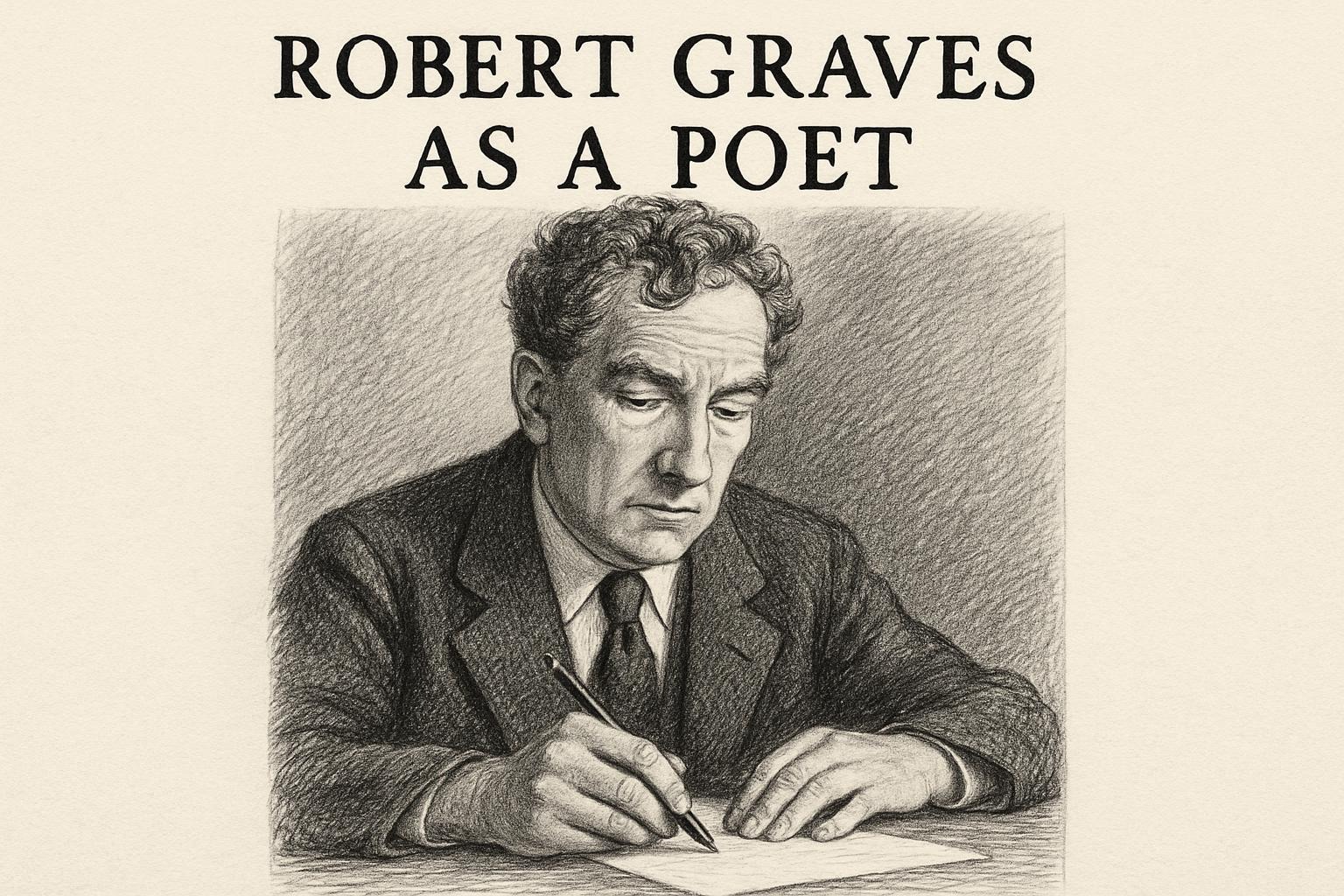
Robert Graves as poet reflects originality, boldness, and lyrical grace. His verses reveal the conflict between modern experiences and ancient traditions. He absorbed classical myth while confronting contemporary war trauma. Therefore, his poetry balances history with modern sensitivity. Moreover, he blended personal struggles with universal themes. Readers feel intimacy yet encounter timeless mythological echoes. Consequently, his writing became layered, thoughtful, and enduring. Graves created verses that challenge while offering emotional depth. His explorations often highlight memory, love, and the search for truth. Thus, readers engage with both realism and imagination in one breath. His poetry does not settle for simplicity. Instead, it invites deeper reflection. Each poem grows richer with repeated reading. Consequently, Robert Graves earned recognition as both craftsman and visionary. His role in shaping twentieth-century poetry remains secure and influential even today.
Early Life and Inspirations
Robert Graves as Poet emerged from experiences in early life. Born in 1895, he encountered both literary and classical traditions. Consequently, his youthful mind developed strong imaginative powers. He absorbed myths, legends, and cultural history. Therefore, his poetic voice carried richness from early experiences. Family influences also shaped his outlook. His father loved poetry, while his mother admired cultural depth. Thus, young Graves inherited literary passion naturally. Furthermore, his school years strengthened his knowledge of classical languages. That foundation later allowed him to explore Greek myths deeply. As a result, mythological elements fused naturally with personal expression. His early environment prepared him for literary greatness. Moreover, childhood tensions contributed themes of identity and conflict. Readers therefore sense genuine experiences behind his lyrical art. Graves connected youthful discovery with scholarly learning. Consequently, he united family influence with cultural richness.
War Experiences and Poetry
The First World War marked Robert Graves as a poet profoundly. He served as an officer and endured battlefield horrors. Consequently, war experiences shaped his early verse. His poems reflect vivid images of suffering and survival. Therefore, readers sense sharp honesty and unfiltered pain. Moreover, the war deepened his need for creative release. Poetry became both testimony and therapy. Through verse, he processed chaos and human fragility. Thus, his early collections record trauma while revealing resilience. His war writing demonstrates clarity, not sentimentality. Consequently, his voice stands apart among war poets. Furthermore, he balanced horror with lyrical beauty. His poetry reveals discipline and emotional intensity. Therefore, readers find truth combined with artistry. War transformed his outlook permanently, giving depth to later works. Consequently, he became inseparable from war’s haunting legacy. His verses remain central in war literature, showing courage and artistic strength.
Mythology in His Poetry
Robert Graves as poet frequently used mythological references. He believed myths preserved timeless truths. Consequently, they shaped much of his work. His devotion to the Greek goddess figure, the White Goddess, became central. Moreover, myths allowed him to connect personal emotions with universal narratives. Therefore, his poetry often reads like ritual invocation. Ancient stories transformed into living images within his verses. Readers encounter gods, goddesses, and archetypes reimagined creatively. Thus, poetry became both scholarship and magic for him. Furthermore, mythology granted depth beyond ordinary language. It offered symbolic richness and emotional power. Consequently, his poems transcend specific time and place. They link modern identity to ancient archetypes. Graves reinvented myths while maintaining reverence for their origins. Therefore, his legacy rests partly on mythological imagination. Ultimately, he used myth as a living framework. His myth-inspired poetry shaped his unique poetic authority.
Relationship with Love Poetry
Love shaped Robert Graves as poet profoundly. His verses often address women directly, blending passion with mystery. Consequently, his love poetry shows complexity and emotional honesty. Unlike conventional romantic lines, his works carry psychological depth. Therefore, they resonate with readers beyond surface sentiment. Moreover, he believed poetry and love were inseparable. He saw the muse figure as both inspiration and goddess. Thus, female presence dominates his creative universe. His poems reveal admiration, longing, and devotion. Yet they also highlight conflict and emotional vulnerability. Consequently, readers sense real struggles within the lyrical beauty. Furthermore, he treated love as sacred ritual rather than fleeting passion. His poetic voice reveals reverence for feminine power. Therefore, his love poetry remains unique among twentieth-century works. He found strength, purpose, and vision in love. His muse-centered poetry established enduring influence across literary traditions.
Classical Influence in Style
Robert Graves as poet revealed mastery of classical influence. He studied Latin and Greek extensively. Consequently, he gained understanding of poetic structure. Classical literature shaped his technique strongly. Therefore, he emphasized form, balance, and precision. Moreover, he admired clarity over obscurity. His verses carry rhythm reflecting ancient patterns. Furthermore, he used allusions creatively, not mechanically. Readers encounter mythology fused with disciplined craft. His classical influence distinguishes him from many modernists. While others rejected tradition, he reimagined it. Consequently, he built bridges between past and present. His poetic lines thus balance innovation and discipline. Additionally, his scholarship gave authority to his writing. Each reference feels deliberate, not decorative. Therefore, his classical grounding elevated his literary voice. He demonstrated how ancient learning enriches modern expression. His blending of tradition and modernity remains inspiring for serious readers today.
Use of Symbolism
Symbolism defined Robert Graves as poet. His imagery extended beyond simple description. Consequently, readers encounter layers of meaning. A bird might symbolize freedom, spirit, or transformation. Therefore, his poetry functions both literally and symbolically. Moreover, symbols connect ordinary life to eternal truths. They invite readers into hidden dimensions. Thus, each symbol offers intellectual challenge and emotional resonance. Furthermore, his symbols often link personal experience with mythology. For example, natural images evoke divine feminine figures. Consequently, his poetry reveals sacred energy through symbols. He used symbols to deepen interpretation and enrich lyrical power. Therefore, his poems reward close reading. They reveal new layers on every revisit. His symbolism joins vision with technique. Consequently, his reputation grew stronger through imaginative imagery. He advanced symbolism as central tool. His symbolic craft secured lasting position within twentieth-century literary traditions.
Influence of the White Goddess
The White Goddess concept defined Robert Graves as a poet. In his book The White Goddess, he outlined poetic theory. Consequently, goddess worship became integral to his verse. He identified the muse as feminine deity. Therefore, inspiration required surrender to her power. Moreover, this belief system shaped his imagery consistently. Poems became invocations rather than mere expressions. Furthermore, readers sense ritualistic devotion within his lines. His goddess figure represented creativity, love, and truth. Consequently, she embodied both mystery and revelation. This spiritual belief influenced his entire poetic outlook. Thus, his poems carried religious intensity alongside lyrical beauty. Additionally, the White Goddess symbolized eternal feminine authority. She governed his vision and artistic choices. Therefore, he cannot be separated from this myth. His worship of goddess-muse defined his uniqueness. Ultimately, this concept secured his place among mythic literary innovators.
Themes of Memory
Memory occupied central space in Robert Graves as poet. His works return frequently to past experiences. Consequently, readers encounter reflections of war, youth, and love. Memory gave continuity to his poetic voice. Therefore, recollections shaped emotional intensity within his verses. Moreover, memory linked personal history with larger myths. His recollections provided grounding for symbolic explorations. Thus, his poetry combines intimacy with universality. Furthermore, memory often carried both pain and healing. Trauma transformed into art through remembered detail. Consequently, memory granted resilience and depth. His poems use memory as both subject and tool. Therefore, his voice resonates across generations. Memory keeps personal stories alive for wider audiences. Ultimately, he demonstrates how recollection enriches expression. His work proves memory transforms experience into enduring art. Therefore, his verses remain timeless, personal, and culturally significant across literary history.
Treatment of Nature
Nature appears frequently in his verses with layered significance. Consequently, landscapes reflect emotional states while symbolizing timeless cycles. Forests, rivers, and skies become metaphors of inner struggles. Therefore, his poetry fuses external beauty with internal truth. Moreover, his descriptions avoid sentimentality, showing nature as alive, mysterious, and spiritual. He portrays natural scenes as sacred stages where myth unfolds. Thus, readers witness dialogues between humanity and earth. Furthermore, natural images connect with goddess symbolism. Each tree or flower carries ritualistic importance. Consequently, his nature poetry combines realism and imagination. It grounds his mythical explorations in earthly experience. Therefore, readers sense closeness to both soil and stars. His respect for natural rhythms reflects deep poetic philosophy. Ultimately, nature becomes a living companion in his work. His verses remind audiences of inseparable bonds between human destiny and natural world.
Distinct Voice Among War Poets
Robert Graves as poet belonged to the war generation, yet his voice differed. Consequently, his poems balanced honesty with discipline. Unlike some contemporaries, he avoided excessive bitterness. Therefore, his war poetry maintained lyrical control. Moreover, his style emphasized survival rather than despair. His verses revealed suffering but also resilience. Thus, he offered complexity beyond typical war lamentations. Furthermore, he acknowledged horror yet pursued beauty. Consequently, readers sense tension between destruction and creativity. This balance distinguished him among war poets. Therefore, his war writing stands as both testimony and art. He carved individuality through blending truth and craftsmanship. His distinct voice continues to attract readers of war literature. Ultimately, his contribution demonstrates poetry’s ability to transform chaos. Graves proved war experience could yield lasting artistry. His unique balance ensures enduring recognition as both soldier and poet.
Poetic Philosophy
Robert Graves as Poet believed poetry represented truth delivered through inspiration. Consequently, he treated verse as sacred calling. His philosophy emphasized authenticity and emotional honesty. Therefore, he rejected mechanical or artificial writing. Moreover, he linked poetry with ritual. Each poem required dedication to muse. Thus, his creative process carried religious weight. Furthermore, he emphasized feminine authority in inspiration. His philosophy valued imagination as divine gift. Consequently, he defined poetry as revelation, not entertainment. Readers therefore engage with depth and intensity. His philosophy shaped structure, theme, and imagery consistently. Moreover, it influenced critical essays and theoretical writings. His outlook separated him from casual literary trends. Ultimately, his poetic philosophy sustained his creative energy. Graves envisioned poetry as timeless bridge between human emotion and divine mystery. His commitment to truth and inspiration defines his entire poetic legacy.
Experimentation in Form
Robert Graves as Poet respected tradition but also experimented boldly. Consequently, his poems demonstrate variety in form. He employed classical meters alongside freer rhythms. Therefore, his work shows both discipline and innovation. Moreover, he used unusual stanza patterns. His experiments revealed desire for freshness. Thus, he balanced rule and creativity skillfully. Furthermore, his experimentation served theme, not display. His technical variety deepened emotional resonance. Consequently, readers never find monotony in his verses. Each poem carries unique formal structure. Therefore, his body of work demonstrates mastery of craft. Experimentation confirmed his independence within modern poetry. Moreover, it displayed confidence in handling technique. His formal diversity inspires both scholars and poets today. Ultimately, Graves showed experimentation strengthens, not weakens, tradition. His blending of structure and creativity ensured enduring originality. Readers continue discovering freshness in his diverse poetic forms.
Relationship with Modernism
Graves lived during literary modernism but maintained independence. Consequently, his work interacted with modernist movement cautiously. He admired innovation yet distrusted obscurity. Therefore, he avoided extreme experimentation. Moreover, he valued clarity and meaning. His poems remained accessible, unlike difficult modernists. Thus, he carved space outside dominant literary fashions. Furthermore, his mythological devotion set him apart. While modernists fragmented tradition, he reimagined it. Consequently, he shared era yet resisted conformity. His work shows selective modernist influence. Therefore, he contributed individuality within broader context. His independence strengthened his identity. Moreover, readers found relief in his balanced voice. Ultimately, Graves connected tradition with modern awareness. His relationship with modernism demonstrates complexity of twentieth-century literature. His independence ensured lasting relevance across generations.
Legacy in Twentieth-Century Poetry
Robert Graves as Poet influenced twentieth-century poetry through depth and originality. Consequently, later poets admired his combination of myth and honesty. His impact stretched across literary boundaries. Therefore, his influence reached critics, novelists, and scholars. Moreover, his emphasis on feminine muse inspired discussions. His mythological focus continues to attract researchers. Thus, his work remains studied internationally. Furthermore, his disciplined craft influenced poetic standards. He demonstrated clarity could coexist with depth. Consequently, he offered model of balanced artistry. His legacy rests on consistency, imagination, and sincerity. Therefore, his place in modern literature remains undeniable. He secured position among century’s strongest voices. Ultimately, his poems shaped dialogue between tradition and modernity. He continues inspiring through courage, devotion, and vision. His work ensures lasting presence within cultural and literary memory worldwide.
Robert Graves and Criticism
Robert Graves as Poet also contributed to literary criticism. Consequently, his essays deepened understanding of poetry. He wrote on poetic theory extensively. Therefore, readers gained insight into his creative process. Moreover, his book The White Goddess shaped literary thought. His criticism combined scholarship and personal philosophy. Thus, it influenced generations of poets. Furthermore, critics debated his theories widely. Some admired originality, others resisted his claims. Consequently, his criticism provoked lively literary conversations. His essays expanded his reputation beyond verse. Therefore, Graves became both poet and critic. His dual contribution enhanced cultural impact. Moreover, criticism revealed seriousness of his poetic devotion. Ultimately, his critical work ensured intellectual presence. His essays clarified his philosophy while challenging conventional thought. Readers engage with both poetry and criticism. His critical writings confirm complete dedication to poetic truth.
Prose Works and Poetry Connection
Graves produced novels and historical works alongside poetry. Consequently, his prose enriched understanding of his imagination. His novels displayed psychological insight. Therefore, readers discovered parallels with verse. Moreover, historical studies revealed fascination with past. His prose demonstrated versatility. Thus, he balanced poetry with scholarship effectively. Furthermore, prose themes often echoed poetic concerns. Memory, myth, and love appear consistently. Consequently, his writing career showed integration across genres. Prose did not distract from poetry. Instead, it supported imagination and depth. Therefore, his prose strengthened his poetic world. Moreover, his historical focus deepened mythological explorations. Ultimately, prose and poetry complemented each other. His prose works illustrate richness of creative vision. Readers appreciate how multiple genres reinforced poetic authority.
Personal Struggles in Poetry
Personal life shaped his poetry significantly. Consequently, readers encounter confessions of struggle. He faced emotional turmoil and complex relationships. Therefore, his poems reflect vulnerability. Moreover, he balanced honesty with artistry. His struggles gave authenticity. Thus, his verses reveal intimacy alongside discipline. Furthermore, personal pain merged with mythological imagination. Consequently, readers connect deeply with his voice. His poetry illustrates strength born from difficulty. Therefore, his struggles enriched rather than limited his work. His openness inspired respect. Moreover, audiences value genuine expression. Ultimately, his personal experiences created universal resonance. His poetry proves private battles produce enduring art.
Recognition and Awards
Graves received honors for literary contribution. Consequently, institutions recognized his poetic achievement. He gained prizes and respect. Therefore, his reputation spread internationally. Moreover, academic institutions studied his work. His fame extended through publications and lectures. Thus, recognition confirmed his lasting influence. Furthermore, awards celebrated both poetry and prose. Consequently, he secured respected position in literary history. His recognition reflected consistency and originality. Therefore, his career gained authority. Moreover, readers appreciated institutional acknowledgment. Ultimately, recognition confirmed cultural significance. His honored career reinforced his secure legacy.
Creative Process and Drafts
Graves maintained a meticulous approach to composition. Consequently, his creative process often involved extensive revision. Furthermore, he valued precision in language and rhythm. Therefore, drafts reveal careful shaping and refinement. Moreover, he believed in spontaneous inspiration followed by disciplined craft. Thus, the poem emerged from impulse, and then sharpened through intellect. In addition, his method combined intuition with control. Furthermore, his devotion to the muse guided his writing sessions. Since he waited for inspiration rather than forcing production, consequently, his work reflects both ease and mastery. Therefore, his notebooks show the journey from initial idea to finished verse. Moreover, understanding his process enhances appreciation for his artistry. Because of his commitment to craft, consequently, it distinguished his entire career. Ultimately, his writing process secured quality and enduring impact. In summary, because of this diligence, therefore, he achieved his unique voice. Moreover, he always ensured structure and clarity. Furthermore, these choices defined his work throughout his life. Additionally, quality was paramount for him. Therefore, the revisions mattered greatly. Consequently, the poems achieved permanence. Finally, his methods show dedication. Thus, his dedication remains clear to readers and critics. Therefore, the process justifies the product. In addition, this careful approach confirmed his serious nature. Consequently, his artistry remains respected.
Relationship with Other Poets
Graves navigated complex relationships within his literary circle. Consequently, he often held independent, and sometimes contrary, views. For example, he corresponded with contemporaries like Sassoon and shared war experiences. Therefore, these connections shaped his early work. Moreover, his strong opinions occasionally led to public disagreements. In particular, his critical assessments of modernist figures were often challenging. Thus, he maintained intellectual distance from many peers. Furthermore, he sought kinship with poets who valued traditional lyricism and mythological depth. Consequently, his influence on subsequent generations was often indirect, but evident through his strong individuality. Therefore, his literary friendships and rivalries defined his unique position. Moreover, his interactions reveal a man dedicated fiercely to his own poetic vision. Furthermore, his independence from prevailing trends remains a hallmark. In addition, he always argued for authenticity and sincerity. Therefore, his commitment to these values was unwavering. Consequently, this often put him at odds with others. However, his influence persisted because of his integrity. Ultimately, he valued truth over conformity. Thus, his relationships highlight his unique status. Finally, these complex bonds reveal a determined spirit throughout his career.
Poetry Readings and Public Presence
While often perceived as solitary, Graves engaged with the public through readings and lectures. Consequently, his public presence added to his literary persona. For example, his delivery was often direct and authoritative. Therefore, audiences gained a sense of his seriousness and conviction. Moreover, he used public platforms to promote his poetic philosophy. Furthermore, he spoke passionately about the White Goddess and the nature of inspiration. Thus, his readings became extensions of his critical thought. In addition, his residency in Majorca lent him an air of detachment and wisdom. Consequently, his appearances were relatively rare but highly anticipated. Therefore, his public voice reinforced the themes and authority of his verse. Moreover, his readings became significant literary events. Furthermore, his ability to connect with an audience through both the written and spoken word was compelling. In summary, because he rarely appeared, therefore, his presence carried weight. Consequently, his readings were important for understanding his vision. Moreover, he conveyed his ideas directly to the public. Thus, the public engagement supported his intellectual standing. Therefore, his public role was crucial. Finally, this presence confirmed his stature.
Translation Work and Global Themes
Graves was a skilled translator, and this work significantly impacted his poetry. Consequently, his translations from classical Greek and Latin deepened his understanding of form and myth. Therefore, he brought ancient voices to a modern audience. Moreover, his own verses often carried the resonance of timeless narratives. Furthermore, his translation of The Golden Ass and other texts revealed his commitment to mythological sources. In addition, this cross-cultural engagement enriched his thematic range. Thus, his poetry often addresses universal human experiences beyond English contexts. Moreover, his time abroad and his immersion in Mediterranean culture broadened his perspective. Consequently, his work possesses a global sensibility rooted in classical humanism. Therefore, his translation efforts were integral to his development as a poet. Furthermore, his global engagement distinguishes his artistic contribution. Moreover, he connected disparate traditions and histories. Thus, the translations were a central part of his intellectual life. Consequently, this work allowed him to explore themes of universal truth. Therefore, the breadth of his study enriched his personal expression and provided deep context for his unique poetic voice. Finally, this dual role amplified his influence.
Poetic Meter and Rhythm
Mastery of meter and rhythm was a defining characteristic of Graves’s verse. Consequently, his poems exhibit formal control and musicality. Therefore, he often used traditional meters but adapted them with subtle variations. Thus, his lines possess both discipline and natural flow. Moreover, he understood how rhythm could enhance emotional weight and thematic clarity. In addition, the structure of the poem was integral to its meaning. Furthermore, his technical skill allowed him to achieve a deceptively simple elegance. Moreover, his classical training instilled a deep appreciation for prosody. Consequently, his poetry is meant to be read aloud to appreciate its full sonic power. Therefore, his dedication to metrical excellence set a high standard. Furthermore, his rhythmic control is central to his lasting appeal. In summary, because he honored traditional form, therefore, he achieved powerful innovation. Moreover, the balance between structure and emotion is key. Thus, his technique ensures the longevity of his work. Consequently, the musicality draws in readers and conveys profound feeling. Finally, this technical precision elevates his artistry above mere sentiment.
Editing and Anthologies
Graves contributed significantly to poetry through his work as an editor and anthologist. Consequently, his selections reflected his distinct poetic tastes and values. Therefore, he championed lyricism and craft over fleeting modernist trends. Moreover, his anthologies offered a specific, principled view of poetry. Furthermore, his choices often highlighted historical and mythological connections. Thus, he sought continuity with the classical tradition. Consequently, his editing reinforced his belief in poetry as a serious, ancient calling. In addition, his introductions to these collections became critical statements. Therefore, he influenced public perception of poetic quality. Moreover, his work in shaping anthologies demonstrated his commitment to the art form’s integrity. Furthermore, his editorial choices extended his influence beyond his own compositions. In summary, because of this effort, therefore, he helped guide critical thought. Consequently, his anthologies remain valuable for their perspective. Moreover, he used editing to promote his aesthetic. Thus, his influence was both creative and critical. Therefore, his dual role ensured wider impact across the literary landscape. Finally, this commitment underscored his devotion.
Majorcan Influence on Imagery
Graves’s long residency in Deyá, Majorca, profoundly shaped his poetic landscape. Consequently, the local environment infused his imagery with Mediterranean light and scenery. Therefore, the island became a geographical and spiritual home. Moreover, images of olive groves, ancient stones, and the sea recur frequently. Furthermore, this setting provided him with the necessary isolation for deep contemplation and mythological research. Thus, the landscape itself felt ancient and imbued with mystery. Consequently, the Majorcan influence contributed significantly to the mood and atmosphere of his later work. In addition, the light and heat contrasted sharply with the trauma of his early war poetry. Therefore, the island became synonymous with his mature artistic life. Moreover, the Majorcan landscape acted as a natural backdrop for his mythological pursuits. Furthermore, its influence is inseparable from the texture of his verse. In summary, because of this location, therefore, his work gained new depth. Consequently, the environment became a muse in itself. Moreover, the tranquility fostered his later creativity. Thus, his move to Majorca was essential for his development.
Tone and Mood in Poetry
The tone in Graves’s poetry is complex, shifting between lyrical sweetness and sharp, and sometimes sardonic, intensity. Consequently, his verses avoid flatness, but instead present varied emotional registers. For example, he could be tender and devastating within the same collection. Therefore, readers often feel an unnerving sense of psychological truth. Moreover, his classical references and mythological seriousness lend a formal, ritualistic mood to many pieces. Furthermore, this seriousness is often balanced by deep personal feeling. Thus, the prevailing mood is one of controlled intensity and focused introspection. In addition, his skepticism regarding modern life often introduced a subtle, critical tone. Consequently, his poetry is challenging because of its emotional honesty and intellectual rigor. Therefore, the distinctive tone confirms his individuality among his peers. Moreover, his control over mood is a sign of his poetic discipline. Furthermore, he mastered the ability to convey multiple feelings simultaneously. Thus, the richness of his tone keeps readers engaged and provides enduring satisfaction. Therefore, the mood is a key element of his unique style. Finally, this complexity ensures the power of his work.
Influence of Personal Philosophy
Graves’s unique personal philosophy, particularly his belief in the muse and the nature of inspiration, was foundational. Consequently, his non-conventional views directly shaped his poetic output. Therefore, he wrote poetry to the muse, and not just about life. Thus, every poem was a philosophical statement, either implicitly or explicitly. Moreover, his worldview blended historical scholarship with deep personal intuition, creating a singular vision. Furthermore, this philosophical commitment set him apart from many contemporaries. Consequently, his poetry operates on a level of conviction that few match. In addition, his theories on mythological language imbued his work with layers of intended, ritualistic meaning. Therefore, his poetry is an expression of a completely integrated life and art. Moreover, his philosophy gave coherence and depth to his varied themes. Furthermore, his belief system is crucial to understanding the power of his verse. In summary, because he held such strong beliefs, therefore, his work carried profound authority. Consequently, his philosophy became inseparable from his creative identity. Thus, he offered a complete, articulated worldview through his poetry and prose. Finally, his convictions defined his artistic journey.
Contemporary Relevance of Themes
Despite dealing extensively with classical myths, Graves’s core themes maintain strong contemporary relevance. Consequently, modern readers continue to find resonance in his work. Therefore, his exploration of trauma, memory, and the search for authentic self remains timeless. Moreover, his poetry speaks directly to modern anxieties and emotional struggles. Furthermore, his focus on the feminine divine challenges traditional, patriarchal narratives, which is a theme highly relevant today. Thus, his mythological figures become symbols for current psychological dynamics. Consequently, his work bridges the ancient and the modern effectively. In addition, his disciplined craft offers a counter-balance to rapid, and often chaotic, modern forms of expression. Therefore, his emphasis on clarity and depth appeals to those seeking substance. Moreover, his enduring themes ensure his lasting significance in the literary world. Furthermore, Graves remains a poet for all times, and not just his own. In summary, because his insights were so universal, therefore, they speak to every generation. Consequently, his work endures through its emotional and intellectual honesty. Thus, his relevance is secured by the timeless nature of his inquiries.
Enduring Influence Today
Robert Graves continues shaping literature globally. His mythological depth attracts scholars and poets. Consequently, his verses remain widely studied. His influence stretches across generations. Therefore, contemporary readers value his originality. Moreover, his focus on memory and love resonates. His poetry speaks directly across time. Thus, readers find relevance continually. Furthermore, his devotion to muse inspires creative exploration. Consequently, Graves remains central in literary education. His works appear in anthologies and curricula. Therefore, his influence remains unshaken. His poetry demonstrates timeless vitality. Ultimately, he represents enduring force. His works guarantee continued presence within global cultural memory.
John Keats as a Poet: https://englishlitnotes.com/2025/07/24/john-keats-as-a-poet/
For grammar lessons, visit ChatGPT to explore the platform and interact with the AI:https://chat.openai.com
For English and American literature and grammar, visit Google:https://www.google.com
Discover more from Naeem Ullah Butt - Mr.Blogger
Subscribe to get the latest posts sent to your email.