Introduction
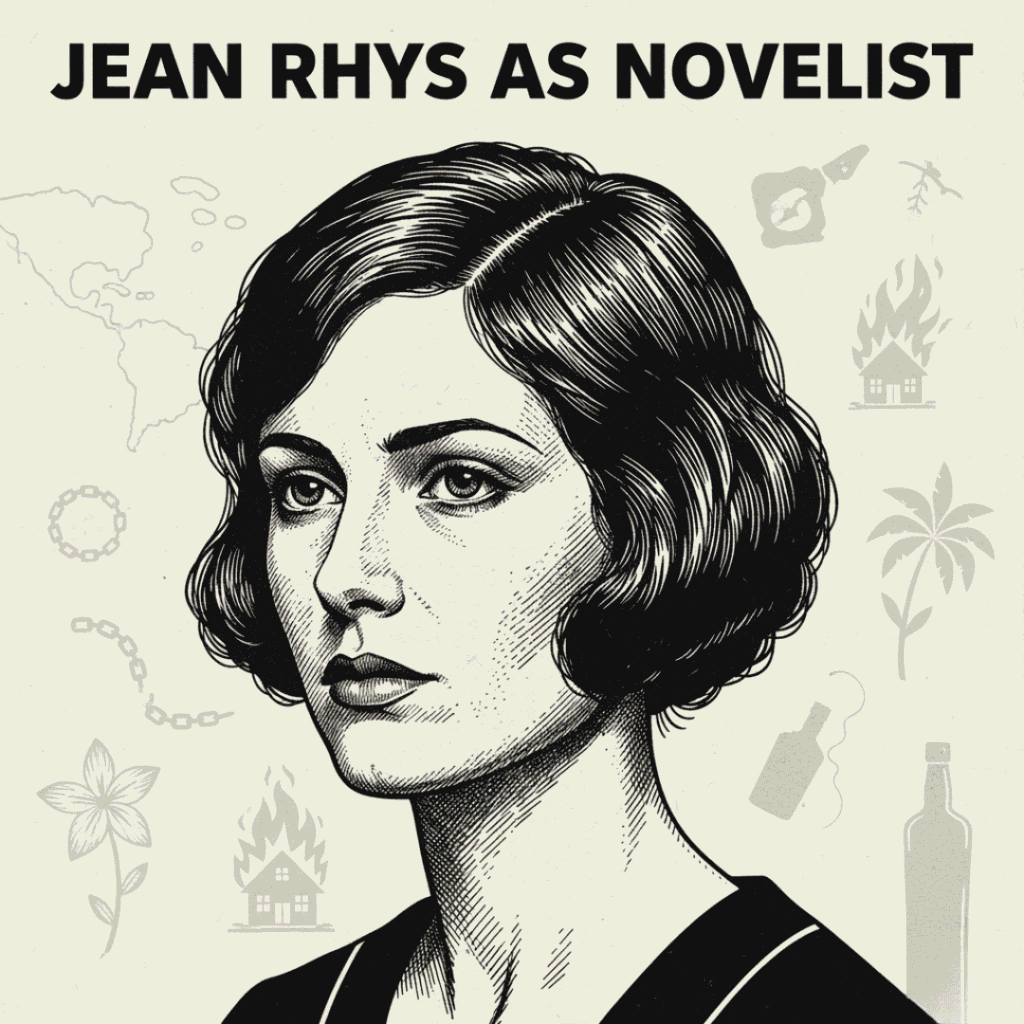
Jean Rhys as Novelist stands as a haunting and singular voice in the world of modern letters. She explored the dark corners of the female soul with a cold and very sharp eye. Her work often focuses on those who live on the very edges of polite society today. Readers find a world of shadows, bright tropical colors, and a deep, quiet despair here. Thus, she broke away from the happy endings of the past to show a harder truth. She used her own life to craft stories that feel both private and very universal now. Consequently, her prose remains some of the most precise and icy in all of English literature. One must look past the simple plots to find the heavy and complex themes beneath. Indeed, she treated every sentence like a carefully cut piece of expensive, clear glass. Therefore, she built a bridge between the old Caribbean world and the new, gray Europe. We see her genius in every short, painful, and perfectly formed line today. Moreover, she invites us into a room where the sun never truly shines. Each book works like a sharp needle to the heart of the reader. Finally, we must study her craft to know the real power of silence. She changed the face of fiction by speaking for the lost and the broken. Her work deserves our full and very deep attention in this modern age. We celebrate her bold and very unique creative vision.
1. Postcolonialism
Postcolonialism provided the heavy atmosphere for Jean Rhys as Novelist. This field of study looks at the messy aftermath of the British Empire’s rule. Therefore, she wrote from the perspective of a person caught between two worlds. Her characters often feel like ghosts in the land of their own fathers. Consequently, her work reflects the deep scars of history and social class today. However, she never fell into easy or simple political slogans in her art. Thus, she balanced the heat of Dominica with the cold rain of London. Many critics claim she gave a true voice to the forgotten colonies now. Furthermore, her novels reject the grand and proud myths of the great empire. As a result, her voice stands out as a radical and very honest one. She pushed the limits of what a colonial story can be. She flourished by showing the rot beneath the grand, white houses. Furthermore, she chose to ignore the safety of the old, standard narratives. Instead, she built a new home for the displaced and the lonely. Finally, she proved that history is a weight that we all carry. Her postcolonial vision stays vital for every new student of the world.
2. Wide Sargasso Sea
Wide Sargasso Sea remains the greatest achievement for Jean Rhys as Novelist. This book serves as a wild and lush prequel to a classic tale. Therefore, she gave a life to the woman hidden in the attic. This story moves through the damp forests and the hot, bright sunlight. Consequently, the reader feels the slow and steady slide into a madness. She used the sea as a border between the past and the present. Thus, the island of Jamaica becomes a place of beauty and fear. Moreover, she challenged the old view of the “madwoman” in literature today. As a result, the book became a global symbol of feminist and colonial struggle. She found a deep and dark music in the Caribbean night. Indeed, she succeeded in making the silent woman speak very loud. She treated the text like a thick and tangled garden of words. Finally, her masterpiece remains a guide for every brave and modern writer. She proved that the past can be rewritten with a sharp pen. The world is a place of deep, hidden, and very painful wonders.
3. The Rhys Woman
The Rhys Woman is a recurring figure for Jean Rhys as Novelist. This character is often poor, isolated, and very much alone in cities. Therefore, she drifts through the world without a steady home or name. This archetype reflects the deep vulnerability of women in a cold world. Consequently, her protagonists seek a safety that they can never truly find. She wanted to show the life of the woman who is discarded. Thus, her heroines spend their last coins on a new, red dress. Moreover, she explored the thin line between a lady and a ghost. As a result, the reader feels a deep and heavy pity here. She found a power in the small and the very weak things. Indeed, she proved that a drifting life holds a high and tragic truth. She rejected the strong and the happy heroines of the old books. Instead, she chose the woman who falls and gets back up again. Finally, this figure remains her most famous and lasting literary signature today. She found a strength in being very honest about our shared pain.
4. Dominica
Dominica was the primary home for the spirit of Jean Rhys as Novelist. She was born on this lush, green island in the year 1890. Therefore, the sights and smells of the tropics fill her every page. This connection to the land gave her work a very rich glow. Consequently, she found more truth in the mountains than in the city. She believed that the island held the secrets of her own soul. Thus, her novels often return to the heat and the bright flowers. Moreover, she felt a kinship with the wild and the dark forests. As a result, her art feels like a hike through a dense wood. She looked for the infinite within the small, blue bay of home. Indeed, she sought a union with the past in her late work. She used her pen to reach for the lost sun of youth. Finally, her work reminds us of our deep and natural roots. Dominica provided the best lessons for her growing and very sharp mind.
5. Alienation
Alienation defined the core of the work for Jean Rhys as Novelist. She believed that many souls feel like strangers in their own lives. Therefore, her characters never fit into the crowds of London or Paris. This theme appears in her praise for the lonely and the lost. Consequently, she rejected any social system that tried to crush the self. She urged us to see the pain of the person standing alone. Thus, her work is a manifesto for the quiet and the shy hearts. Moreover, she celebrated the unique spark inside every broken and sad person. As a result, she became a hero for the outsiders of the world. She saw the city as a place of cold and very gray walls. Indeed, she fought for the right to be sad and very different. She ignored the critics who wanted her to be a happy girl. Finally, her spirit remains a beacon for true and lonely dreamers. She taught us that being alone is a common and human truth.
6. Prequel
The art of the prequel was perfected by Jean Rhys as Novelist. She took a famous story and looked at what came before it. Therefore, she gave a rich history to a character we thought we knew. This approach forced readers to see the old book in a new way. Consequently, the act of reading becomes a task of finding a truth. She showed that every villain has a long and very sad story. Thus, her pages are full of the events that led to the end. Moreover, she used the prequel to speak back to the great empire. As a result, her work feels like a very bold and brave act. She rejected the simple and one-sided tales of the past years. Instead, she gave us the essence of a woman’s lost, bright youth. Indeed, she found beauty in the years before the fire and smoke. She proved that the start of a story is just as vital. Finally, her prequel remains a study for every writer of our time. She showed us how to look back with a clear eye.
7. Bertha Mason
Bertha Mason was a silent shadow until Jean Rhys as a Novelist spoke. In the old book, this woman was only a monster in an attic. Therefore, the new novel gave her a name and a real heart. This change moved the character from the dark into the light. Consequently, we see her as a bride, a daughter, and a dreamer. She was a girl of the sun who was lost in the cold snow. Thus, her story becomes a tragedy of the highest and best kind. Moreover, she showed that Bertha was a victim of a cruel world. As a result, the reader can no longer hate the woman in the room. She found a beauty in the mind of the one who is lost. Indeed, she transformed the literary landscape of the Victorian age forever today. She proved that every ghost was once a living and breathing girl. Finally, Bertha Mason remains a symbol of the suppressed and the hidden. We must listen to the voices that the world tries to drown.
8. Vulnerability
Vulnerability served a very specific purpose for Jean Rhys as Novelist. She believed that being open to pain is a very human state. Therefore, her characters are often hurt by the words of cold men. This style reflects the fragile nature of the heart in the city. Consequently, the act of survival becomes a major and heroic task. She showed that life is not always a smooth or easy road. Thus, her novels are made of small and very delicate moments. Moreover, she used vulnerability to capture the truth of being a woman. As a result, her work feels like a series of soft, sad breaths. She rejected the loud and the strong heroes of the war books. Instead, she gave us the essence of a feeling of great fear. Indeed, she found beauty in the broken and the soft bits. He proved that weakness can be a form of high, clear truth. Finally, her quiet lines create a very powerful and lasting impact.
9. Modernism
Modernism was the lifeblood of the style of Jean Rhys as writer. She treated the structure of the book like a strange and new toy. Therefore, she used short scenes and sudden shifts in the time. This playfulness brought a sense of wonder to her great art now. Consequently, readers must learn a new way to see a life story. She combined memories to create a fresh and very vivid mental image. Thus, a simple street became a map of the soul’s deep hunger. Moreover, she ignored the old rules of the long and boring story. As a result, her vocabulary feels like a sharp and icy garden. She showed that the mind has no limits but its own walls. Indeed, she was a scientist of the female and the lonely soul. She mixed sounds and feelings in her very quiet and dark room. Finally, her experiments led to a gold mine of cold beauty. She expanded the reach of the human voice for every reader.
10. Expatriate
The life of the expatriate was a key theme for Jean Rhys as writer. She lived far away from her home for most of her life. Therefore, she understood the pain of the person who has no land. This feeling appears in her many tales of Paris and London. Consequently, her work is a study of the hotel and the cafe. She watched the world from a table in the back of the room. Thus, her work feels like a hike through a strange city. Moreover, she used the expatriate life to show the loss of self. As a result, she found a peace in the rhythm of the road. She saw the beauty in a single and very lonely drink at night. Indeed, she was a worshiper of the street and the dark light. She found more truth in a stranger than in a close friend. Finally, her tales of the lost remain a warning for us. We must find a home in our own minds today.
11. Ford Madox Ford
Ford Madox Ford was a vital figure for Jean Rhys as writer. He was an older writer who saw her great and rare talent. Therefore, he helped her to publish her first and early books. This relationship was both a blessing and a very heavy curse. Consequently, her early work reflects the drama of their shared time. He taught her the rules of the craft in the city of Paris. Thus, she learned how to sharpen her pen and her own mind. Moreover, he became a character in her tales of love and pain. As a result, her work carries a weight of real and lived life. She did not believe in the lies of the polite and the social. Indeed, she stood for the single and the honest human life always. She chose the hard truth over the easy and the soft ways. Finally, this mentor helped to create a legend of the modern world. She reminds us that every artist needs a door to open.
12. Patriarchy
The weight of patriarchy was a constant focus for Jean Rhys as writer. She saw how men held the power and the money in the world. Therefore, her stories often show women who are at the mercy of. This stance was part of her fight for a real and true life. Consequently, her work can be quite biting and very harsh to the. She believed that the social system was a trap for the soul. Thus, she urged her readers to see the walls of the room. Moreover, she saw the world as a place where women are sold. As a result, her work is a call to see the truth today. She did not fear the anger of the men who ruled the. Indeed, she spoke her truth without any soft or kind words. She wanted a world that valued the person over the gold. Finally, her rejection of the old ways defined her hard path. She showed that being small in a big world is a fight.
13. Displacement
Displacement was the primary state for the work of Jean Rhys as Novelist. She refused to feel at home in the world of the city. Therefore, she wore her uniqueness like a bright and sad badge. This stance made her a hero to the lonely and the lost. Consequently, her novels celebrate the woman standing all alone in the rain. She believed that the majority is usually quite cold and very wrong. Thus, she urged her readers to find their own and private paths. Moreover, she showed that the safe road leads away from the soul. As a result, her work is a call to see the real world. She lived her life as a great and a very painful piece of art. Indeed, she never bent to the common or the social will here. She stood tall against the wind of the cold and gray world. Finally, her legacy of nonconformity inspires us to be very brave.
14. Economic Insecurity
Economic insecurity was a harsh reality for Jean Rhys as writer. She knew the fear of having no money for the rent or food. Therefore, her characters often count their small coins with a shaking hand. This depth invited the reader to look beneath the social surface. Consequently, we find a hidden heart inside the body of the poor. She loved to show the physical cost of a life without a home. Thus, the money became a symbol for the freedom of the soul. Moreover, she used it to show the distance between the two classes. As a result, the past and the present merge in a struggle. She showed that life is full of very hard and nested truths. Indeed, she found a home in the small and the dark boarding house. She hid her best gems in these quiet and very poor spaces. Finally, her stories remind us of the weight of the gold. We all need a safe place to rest our tired and weary heads.
15. Quartet
Quartet was the first major novel for Jean Rhys as Novelist. It tells the story of a woman caught in a dark love triangle. Therefore, it explores the themes of power and the loss of the soul. This book was based on her own life in the city of Paris. Consequently, the writing feels raw and very close to the bone today. She wanted to show the cruelty of the people who have the gold. Thus, her heroine is a victim of a very cold and social game. Moreover, she used her style to capture the heat of the city. As a result, the book remains a classic of the early modern age. She found a soul in the mess of a broken and sad life. Indeed, she was a master of the linguistic and the social spill. She knew exactly when to fall into the next dark space. Finally, this work is a study in the grit of the mind.
16. After Leaving Mr. Mackenzie
After Leaving Mr. Mackenzie shows the great skill of Jean Rhys as writer. It focuses on the period after a love affair has come to an end. Therefore, the heroine is a woman who has no place to go now. This style reflects the broken and the lonely nature of the city. Consequently, the act of walking the streets becomes a major task. She showed that the end of a love is a form of a small death. Thus, her pages are full of the quiet and the sad moments. Moreover, she used the city of London to show the coldness of life. As a result, the work carries a heavy and a very gray weight. She did not believe in the lies of the romantic and the soft. Indeed, she stood for the single and the honest human life always. She chose the truth over the easy and the fake joys. Finally, this novel remains a warning for the hearts of the world.
17. Voyage in the Dark
Voyage in the Dark is a vital book for Jean Rhys as Novelist. It tells the story of a young girl from the islands in London. Therefore, it contrasts the warm past with the cold and gray now. This connection to the land gave the work a very deep glow. Consequently, the reader feels the shock of the change in the world. She saw the city as a place of masks and very hard rules. Thus, her heroine is a lost bird in a forest of cold stone. Moreover, she used the dark to show the loss of the young soul. As a result, the work is a celebration of the memory of home. He rejected the cold and the objective view of the social world. Indeed, she found a universe in her own and private mind. She explored the deep and the dark caves of the female heart. Finally, her voice remains a guide for the lost and the young.
18. Good Morning, Midnight
Good Morning, Midnight marks a high point for Jean Rhys as writer. It follows a woman as she returns to the city of Paris later. Therefore, the book is a study of the passage of the time. This work is a master of the interior and the private monologue. Consequently, the reader is inside the head of the heroine all day. She believed that the mind is a place of ghosts and old songs. Thus, her pages are full of the echoes of the lost youth. Moreover, she used the cafe and the hotel to show the isolation. As a result, the work feels like a long and a very sad dream. He did not want to be a boring or a standard writer. Indeed, she was a hunter of the now and the then always. She caught the magic of the moment in her very sharp nets. Finally, this book remains her most modern and her best work.
19. Creole Identity
Creole identity was a complex subject for Jean Rhys as Novelist. She was a white woman born in a black and a brown land. Therefore, she never felt at home in the islands or in the city. This theme defines the deep and the dark roots of her art. Consequently, her characters are often caught in a middle and gray space. He believed that the soul has no single or simple color today. Thus, her work is a study of the race and the social class. Moreover, she saw the world as a place of many hidden layers. As a result, the reader feels a sense of a very deep displacement. She found a power in the mix of the two and the distinct worlds. Indeed, she was a bridge between the old and the new world. He proved that the self is a complex and a very rich thing. Finally, her vision of the identity remains a guide for us today.
20. Alcoholism
Alcoholism was a recurring and a sad theme for Jean Rhys as writer. She used it to show the despair and the escape of her characters. Therefore, the drink is a way to blur the hard edges of the world. This honesty made her work feel raw and very human to the reader. Consequently, the bar and the bottle are settings for the soul’s loss. He saw the physical act as a form of a slow suicide. Thus, her verses celebrate the touch of the glass in the dark. Moreover, she used her style for the quiet and the private moments. As a result, the body becomes a landscape of the gray grace. She did not hide behind the polite or the vague and fake words. Indeed, she treated the addiction as a natural and a sad wonder. She found the tragedy in the union of the glass and the lip. Finally, her work remains a testament to the pain of life.
21. The Underdog
The underdog was the primary hero for Jean Rhys as writer. She wrote for the people who are stepped on by the world of the. Therefore, she gave a dignity to the poor and the discarded woman. This focus made her a hero to the readers who feel the same. Consequently, her work is a mirror for the lonely and the soft heart. He believed that the person at the bottom sees the truth of the. Thus, his work is a call to see the person in the mud. Moreover, she defended the weak against the cold and the strong man. As a result, her novels feel like a safe home for the sad. He believed that every person is a unique and a rare work. Indeed, she was a friend to the human and the lonely soul. He found the light in the middle of the dark and gray. Finally, her vision remains a hope for the lost and the weak.
22. Minimalism
Minimalism was the chosen and the perfect style for Jean Rhys as Novelist. She used the fewest words to create the greatest and best impact. Therefore, her prose feels lean, cold, and very much like a knife. This choice gives her art a raw and a living edge today. Consequently, the reader feels the heat of the first and the sharp sparks. She captured the split second of a look or a sudden and sad thought. Thus, her words seem to land on the page with a heavy sound. Moreover, she used her style to mimic the fast and the tired minds. As a result, the novel breathes with a quick and a sad pulse. He did not want to be a boring or a standard craftsman. Indeed, she was a hunter of the now and the then always. She caught the magic of the moment in her very sharp nets. Finally, her energy keeps her work young and very fresh.
23. Fatalism
Fatalism was a dark and a steady force for Jean Rhys as writer. She believed that some lives are set on a path to a fall. Therefore, her characters often wait for the end with a quiet eye. This path led her to create a vision that is hard and very cold. Consequently, her work was often misunderstood by the happy and the dull. He did not care about the fame of the moment or the day. Thus, she focused on the truth of her own and private soul. Moreover, she believed that art should be a shock to the system. As a result, her novels still feel very modern and new today. He pushed the boundaries of what a book can say to the world. Indeed, she was a pioneer of the new and the hard style. He found a different way to speak to the hearts of the men. Finally, her spirit changed the course of the whole book.
24. Sensory Imagery
Sensory imagery was a vital tool for Jean Rhys as writer. She used the smells of the earth and the colors of the sky. Therefore, the reader can feel the heat of the Caribbean and the cold rain. This technique creates a sense of the place that is very real and deep. Consequently, the novel acts as a painting for the eyes and the mind. He placed every detail with a very specific and a clear intent. Thus, the arrangement guides the way we see the whole of the theme. Moreover, the look of the book is the soul of the book today. As a result, the page becomes a dynamic and a living field here. He rejected the flat and the boring look of the standard text. Indeed, she was an architect of the white and the blank page. He built structures that defy the laws of the old books. Finally, her talent makes her work a unique and rare gift.
25. Intertextuality
Intertextuality was a clever and a bold move for Jean Rhys as Novelist. She wrote her books to talk back to the old and the classic tales. Therefore, she created a dialogue between the past and the present day. This method revealed the hidden layers of the meaning in the old terms. Consequently, her novels look like strange and very beautiful maps of the mind. He rejected the rigid and the boring blocks of the old text in books. Instead, she chose a fluid and a dynamic visual and mental style. Indeed, she mastered the art of the moving and the changing type. He turned a typewriter into a musical and a rhythmic and sad instrument. Finally, her visual and mental genius remains unmatched in the whole of the world. She saw the beauty in every stroke and the dot of the pen. He turned standard ink into a complex and a deep code.
26. Passivity
Passivity was a complex and a deep theme for Jean Rhys as Novelist. Her heroines often wait for things to happen to them in the city. Therefore, they seem to lack the power to change their own and sad lives. This choice gave her novels a humble and a very quiet quality today. Consequently, the “i” became a small and a lonely point of light. He wanted to focus on the small and the weak things in the life. Thus, her tiny characters carry a very deep and a heavy meaning. Moreover, she challenged the ego through this visual and mental act. As a result, her voice sounds like a steady and a quiet whisper. He found power in the absence of the grand and the big symbols. Indeed, she proved that smallness is truly great and very real today. He rejected the capitalization of the self and the state in the world. Finally, this quirk remains her most famous and lasting signature.
27. Urban Loneliness
Urban loneliness defines the setting for Jean Rhys as writer. She saw the city as a place of cold stone and very many strangers. Therefore, her characters are lost in the crowds of the big and gray streets. This feeling of being alone in a room is a major and deep theme. Consequently, the hotel and the cafe are the homes for the lost souls. He believed that the city is a forest of the steel and the glass. Thus, her pages are full of the quiet and the sad and lonely moments. Moreover, she used the city to show the loss of the human and the soft. As a result, her work carries a heavy and a very gray and sad weight. She did not believe in the lies of the social and the polite world. Indeed, she stood for the single and the honest human life always. Finally, her tales of the street remain a warning for the heart.
28. Memory
Memory was a haunting and a steady ghost for Jean Rhys as Novelist. Her characters are always looking back at the sun of the islands today. Therefore, the past is more real than the cold and the gray present. This depth invited the reader to look beneath the surface of the mind. Consequently, we find a hidden heart inside the body of the old girl. She loved the visual and the mental look of the curved and the old lines. Thus, they became frames for her most delicate and her best and rare ideas. Moreover, she used them to disrupt the flow of the time and the day. As a result, the past and the present merge in a struggle for the soul. She showed that life is full of the nested and the very hard truths. Indeed, she found a home in the small and the dark and the old brackets. Finally, her stories remind us of the weight of the years.
29. Re-discovery
Re-discovery was a late and a bright joy for Jean Rhys as Novelist. She lived in the dark and the quiet for many years of her life. Therefore, her sudden return to the fame in the 1960s was a great surprise. This change moved her from the dark into the light of the whole world. Consequently, a new generation of the readers found her and her rare art. He believed that the truth will always come out into the light of the day. Thus, her work became a classic of the modern and the new age now. Moreover, she showed that the spirit can rise above the mud and the dark. As a result, her art feels like a prayer for the earth and the soul. He looked for the infinite within the finite and the small world. Indeed, she sought a union with the all of the people today. Finally, her work reminds us of our deep and our spiritual roots.
30. Mental Health
Mental health was a subject of the deep and the dark study for the. Jean Rhys as writer explored the breakdown of the mind in the cold world. Therefore, her heroines often lose their grip on the real and the solid. This path led her to create a vision that is hard and very cold. Consequently, her work was often misunderstood by the happy and the dull people. He did not care about the fame of the moment or the day. Thus, she focused on the truth of her own and private soul. Moreover, she believed that art should be a shock to the system of the. As a result, her novels still feel very modern and new to the reader. He pushed the boundaries of what a book can say to the whole of the world. Indeed, she was a pioneer of the new and the hard and sad style. Finally, her spirit changed the course of the whole book.
31. Feminist Critique
Feminist critique is a core part of the legacy of Jean Rhys as writer. She showed the world how women are trapped by the rules of the men. Therefore, she gave a voice to the silent and the discarded and the weak. This focus made her a hero to the readers who want the change. Consequently, her work is a mirror for the lonely and the soft and sad. He believed that the person at the bottom sees the truth of the whole of the. Thus, her work is a call to see the person in the mud and the dark. Moreover, she defended the weak against the cold and the strong and the hard. As a result, her novels feel like a safe home for the hearts of the world. He believed that every person is a unique and a rare and a good work. Indeed, she was a friend to the human and the lonely and the sad soul.
32. Style
Style was the final and the greatest tool for Jean Rhys as Novelist. She wrote with a precision that few others have ever reached in the world. Therefore, her prose is like a cold and a clear and a very sharp diamond. This choice gives her art a raw and a living and a very fresh edge. Consequently, the reader feels the heat of the first and the sharp and sad sparks. She captured the split second of a look or a sudden and a very sad thought. Thus, her words seem to land on the page with a heavy and a deep sound. Moreover, she used her style to mimic the fast and the tired and the sad minds. As a result, the novel breathes with a quick and a sad and a human pulse. He did not want to be a boring or a standard or a common craftsman. Indeed, she was a hunter of the now and the then always. Finally, her style is her ghost.
Legacy of Jean Rhys as Novelist
The legacy of Jean Rhys as Novelist remains a bright and a cold star in the sky. She showed us that the language is a wild and a very powerful force. Therefore, she changed the way we read and write the stories of the soul. He used the visual and the mental tricks to capture the flow of the life. Consequently, her influence lives in the modern and the new design and the art. Moreover, she proved that the individual is a sacred and a very rare thing. A single poem or a book can bring back a whole and a deep joy. Thus, she was a master of the inner and the private and the dark soul. He did not focus on the loud and the hard rules of the world. Instead, she looked at the soft movements of the heart and the mind. As a result, her work feels like a deep and a very long breath. Finally, the legacy of Jean Rhys as writer is pure and cold gold.
Hugh MacDiarmid as Poet: https://englishlitnotes.com/2025/09/07/hugh-macdiarmid-as-poet/
For grammar lessons, visit ChatGPT to explore the platform and interact with the AI:https://chat.openai.com
Discover more from Naeem Ullah Butt - Mr.Blogger
Subscribe to get the latest posts sent to your email.