Introduction
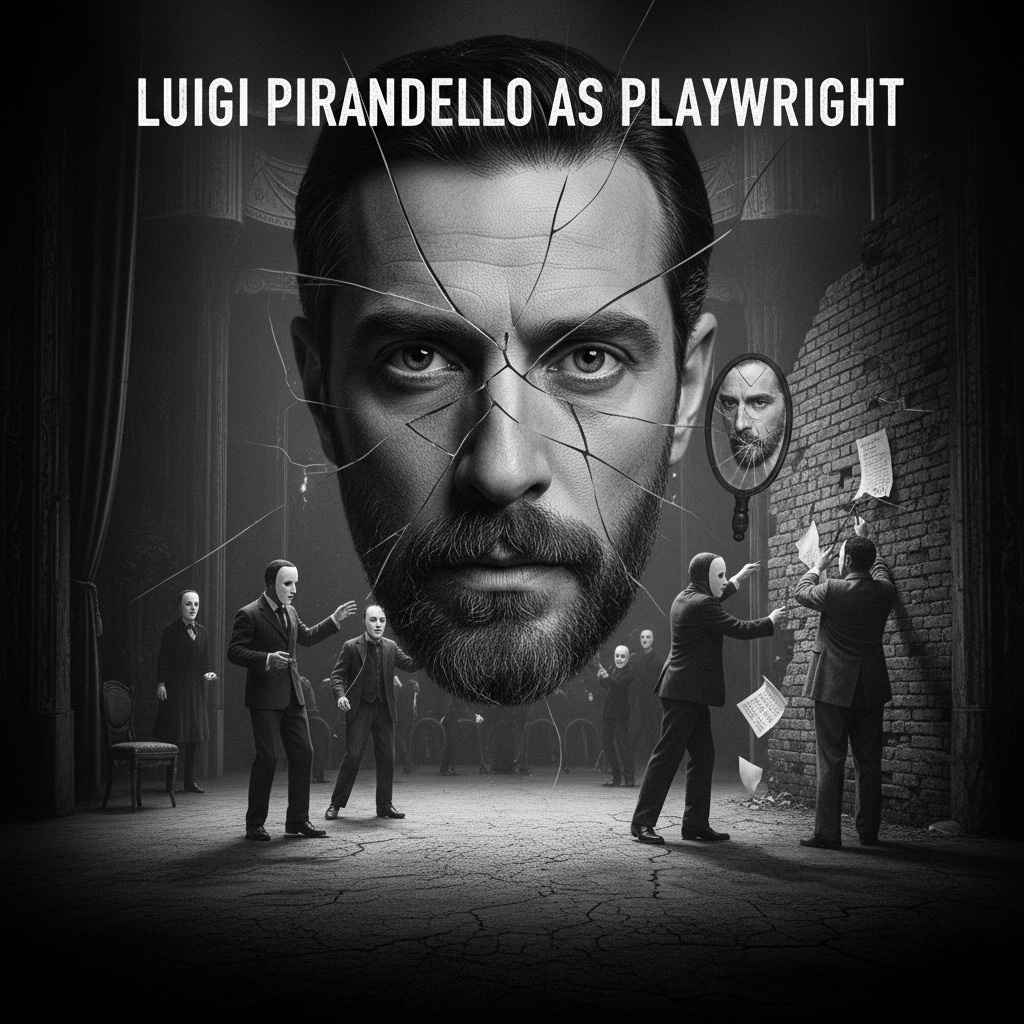
Luigi Pirandello as Playwright redefined the boundaries of the modern stage. Specifically, he was born in Sicily during the late nineteenth century. Consequently, his work reflects the deep tensions of Italian society. Furthermore, he challenged the idea of a single, fixed reality. Therefore, his plays often feature characters who doubt their own lives. Moreover, he won the Nobel Prize for his bold vision. As a result, his influence spread quickly across the entire globe. Similarly, he paved the way for the Theatre of the Absurd. Indeed, he is the father of meta-theatre for many. For this reason, we must study his complex, brilliant mind. Ultimately, he showed that the truth is always a fragment. Experience his world through forty-two distinct lenses in this study. Every section explores a different part of his unique genius. We see the man behind the many dramatic masks now. His voice remains vital in the modern world of theater. We must look closely at his specific, bold techniques today. His work demands our full and undivided attention always.
1. Relativism
Luigi Pirandello as Playwright embraced the concept of psychological relativism. To clarify, he believed that truth depends on the viewer. Consequently, no two people see the world the same way. Therefore, his characters often argue about what is actually real. Furthermore, this creates a sense of constant and deep uncertainty. As a result, the audience must decide the truth for themselves. Similarly, he mocks the idea of one objective social reality. Thus, life is a collection of many different private versions. Moreover, this philosophy drives the conflict in every single play. Ultimately, relativism is the core of his unique dramatic power. Specifically, he suggests that “truth” is a very fluid thing. Furthermore, we create our own facts to stay semi-sane. Consequently, the world is a place of many shifting truths. Therefore, we can never truly know the mind of another. In addition, this leads to a breakdown of shared meaning. Similarly, the characters live in their own private, dark shells. Thus, the stage becomes a battleground for different views. Indeed, he was a master of the subjective mind.
2. Meta-theatre
Meta-theatre defines Luigi Pirandello as Playwright in the modern era. For instance, he wrote plays about the act of theater. Consequently, the actors often talk directly to the sitting audience. Therefore, the “fourth wall” is broken almost every single time. Furthermore, he shows the stage as a place of artifice. In addition, characters might walk out of the script itself. Similarly, this style forces us to question our own roles. Thus, the theater is a mirror for our daily lives. Moreover, he explored the gap between the actor and role. Ultimately, he made the stage a self-aware and bold space.
Specifically, he exposes the mechanics of the dramatic performance itself. Furthermore, the play acknowledges that it is indeed a play. Consequently, the boundary between the world and stage dissolves away. Therefore, the audience becomes a part of the active drama. In addition, he uses this to highlight the lies of life. Similarly, we are all actors in our own small stories. Thus, the stage is the most honest place on earth. Indeed, he revolutionized the way we see the theater.
3. The Mask
The mask is a vital symbol for Luigi Pirandello as Playwright. Specifically, he believed humans wear masks to fit into society. Consequently, we hide our true selves from the prying world. Therefore, the “mask” is both a shield and a cage. Furthermore, his characters often struggle to take the mask off. As a result, they lose sight of who they truly are. Similarly, society demands that we play a specific, fixed part. Thus, identity is a performance that never truly ends for us. Moreover, the mask represents the lies we tell to survive. Ultimately, he showed the tragedy of the hidden, lonely face. Indeed, the mask becomes more real than the actual skin. For instance, we forget the person beneath the social layer. Furthermore, the pressure to conform is a heavy, dark weight. Consequently, we suffer in silence behind our painted, fake smiles. Therefore, the play is an act of stripping masks away. In addition, he shows the terror of being seen clearly. Similarly, the mask is a tool for social control. Finally, we are all hiding in plain, bright sight.
4. Multiple Identities
Luigi Pirandello as Playwright explored the theme of multiple identities. To clarify, he argued that one person is actually many. Consequently, we change depending on who is watching us now. Therefore, there is no single “I” in his dark world. Furthermore, this leads to a sense of total internal chaos. As a result, characters feel like strangers to their own selves. Similarly, they are “one, no one, and one hundred thousand.” Thus, identity is a fragmented and very fragile thing indeed. Moreover, he shows the pain of a soul without center. Ultimately, he captured the complexity of the modern human spirit. Specifically, we are a different person for every single friend. Furthermore, the “self” is just a collection of many parts. Consequently, we lose the thread of our own true story. Therefore, the search for the real “me” is futile. In addition, he uses this to mock the simple hero. Similarly, his characters are broken into a thousand small pieces. Thus, the ego is a ghost in the dark. Indeed, he was a pioneer of the fractured soul.
5. Illusion vs. Reality
Luigi Pirandello as Playwright obsessed over illusion versus reality. For example, his characters often live in a dream world. Consequently, they cannot tell fact from their own private fiction. Therefore, the line between the two is always very thin. Furthermore, he suggests that illusion is often more “real” than life. As a result, the truth is a matter of personal belief. Similarly, he challenges the audience to find the real facts. Thus, the stage is a place where anything is possible. Moreover, he shows that we all live in our illusions. Ultimately, he destroyed the comfort of a solid, real world. Specifically, he proves that reality is a very fragile construction. Furthermore, we cling to our dreams to avoid the pain. Consequently, the truth is a source of deep, cold terror. Therefore, the characters choose the beautiful lie over the fact. In addition, he mocks those who think they know the truth. Similarly, the world is a series of many mirrors. Thus, we see only what we want to see. Indeed, reality is a ghost.
6. Humourism
Humourism is a specific theory of Luigi Pirandello as Playwright. Specifically, it is the “feeling of the opposite” in art. Consequently, we laugh at a situation but feel the pain. Therefore, it is deeper than simple comedy or biting irony. Furthermore, he uses this to show the tragedy in life. In addition, we see the sad reality beneath the funny mask. Similarly, a lady in too much makeup is a joke. Thus, we then realize she is hiding her aging fear. Moreover, this mix of feelings is very human and raw. Ultimately, humorism allows us to pity the characters we mock. Specifically, it combines the brain and the heart in one. Furthermore, it avoids the trap of being just one thing. Consequently, the audience feels a strange and very deep tension. Therefore, the laugh dies in the throat very quickly now. In addition, he shows the dignity in the most absurd acts. Similarly, the clown is a figure of immense, quiet grief. Thus, humorism is the highest form of human truth. Indeed, he was a master of the sad smile.
7. The Puppet
The puppet is a recurring image for Luigi Pirandello as Playwright. To clarify, he saw humans as puppets of social fate. Consequently, we move according to the strings of tradition and law. Therefore, we lack true freedom in a very rigid world. Furthermore, his characters often feel like they are being watched. As a result, they act out parts they did not write. Similarly, the “author” of their lives is often quite absent. Thus, we are all just dolls on a crowded stage. Moreover, he shows the horror of a life without choice. Ultimately, he used this image to critique the modern society. Specifically, the strings are made of invisible, strong social expectations. Furthermore, we dance for the pleasure of the cold crowd. Consequently, the individual is lost in the mechanical, stiff movement. Therefore, the play is an attempt to cut the strings. In addition, he shows the pain of the wood and paint. Similarly, the puppet yearns to be a real, free person. Thus, the stage is a box of trapped dolls. Indeed, we are all being moved by others.
8. Verismo
Luigi Pirandello as Playwright began his career influenced by Verismo. For instance, this was a style of raw Italian realism. Consequently, he focused on the lives of poor Sicilian people. Therefore, his early work is very grounded in social truth. Furthermore, he soon moved beyond the simple limits of realism. In addition, he wanted to explore the internal world of mind. Similarly, he kept the grit of the real world’s pain. Thus, his plays feel very visceral and very earthy still. Moreover, he blended external facts with deep internal psychological doubt. Ultimately, Verismo provided the foundation for his more radical experiments. Specifically, he learned to observe the human animal with care. Furthermore, he used the local dialect to find the truth. Consequently, the characters feel like they belong to the soil. Therefore, the struggle for bread is a major, early theme. In addition, he shows the cruelty of the natural world. Similarly, he moved from the skin to the deep soul. Thus, realism was just his starting point on stage. Indeed, he found the ghost in the real machine.
9. Six Characters
Six Characters in Search of an Author defines him. Specifically, it is the most famous play by the playwright. Consequently, it changed the history of the world’s drama forever. Therefore, it features six figures who demand a finished story. Furthermore, they invade a rehearsal of a completely different play. As a result, the actors and characters fight for the stage. Similarly, it explores the nature of art and human reality. Thus, the characters claim to be more real than people. Moreover, it is a masterpiece of the meta-theatre style today. Ultimately, it remains his most powerful and lasting creative legacy. Specifically, he breaks the bond between the creator and work. Furthermore, the characters are frozen in their own tragic moment. Consequently, they must repeat their pain for the cold audience. Therefore, the theater becomes a place of eternal, dark suffering. In addition, he mocks the limits of the traditional stage. Similarly, the play is a revolution in a small box. Thus, we see the power of the imagined life. Indeed, he made the impossible happen on stage.
10. Madness
Madness is a central theme for Luigi Pirandello as Playwright. To clarify, he often used insanity to explore deep truths. Consequently, the “mad” character is the only one who sees. Therefore, madness is a way to escape the social mask. Furthermore, his own wife suffered from a very deep illness. As a result, he knew the pain of the mind first-hand. Similarly, he shows that “sanity” is just a social mask. Thus, the crazy person is often the most honest one. Moreover, he challenges the audience to define what is normal. Ultimately, madness is a refuge in a very cold world. Specifically, the madman creates his own, safer reality to live. Furthermore, he refuses to follow the rules of the sane. Consequently, he is a threat to the stability of society. Therefore, the play often centers on a battle of minds. In addition, he shows the poetry in the broken thought. Similarly, the mind is a dark and very winding cave. Thus, we are all just a step from the edge. Indeed, madness is a form of higher, dark truth.
11. The Mirror
The mirror serves Luigi Pirandello as Playwright and his themes. For example, his plays are often called “Mirror Theatre” by many. Consequently, they force the audience to look at their lives. Therefore, the stage acts as a reflection of the soul. Furthermore, characters often see a stranger in the actual mirror. As a result, they realize they do not know their selves. Similarly, the reflection is a second and very scary identity. Thus, the glass shows the crack in the human spirit. Moreover, it highlights the gap between the image and reality. Ultimately, the mirror is a tool for a painful self-discovery. Specifically, we are terrified of what the silver glass shows. Furthermore, the reflection mocks our attempts to be a person. Consequently, we see the mask slipping in the cold light. Therefore, the mirror is the ultimate judge of the face. In addition, he uses this to create a double world. Similarly, the character fights with his own ghostly, dark twin. Thus, the truth is found in the silver surface. Indeed, he made us look at our own eyes.
12. Solitude
Solitude haunts the work of Luigi Pirandello as Playwright constantly. Specifically, his characters are often locked in their own minds. Consequently, true communication with others is almost completely impossible now. Therefore, they remain alone even when they are together daily. Furthermore, this creates a sense of profound and total isolation. As a result, the self is a lonely island in sea. Similarly, words fail to bridge the gap between two souls. Thus, we are all strangers to those we love most. Moreover, he shows the cold heart of the modern human. Ultimately, solitude is the final and natural state of being. Specifically, the “I” is a room with no doors. Furthermore, we talk but no one truly hears the heart. Consequently, the social world is just a loud, empty noise. Therefore, the character retreats into his own private, dark thoughts. In addition, he shows the dignity in the lonely struggle. Similarly, the soul is a vast and very silent place. Thus, we are born and we die quite alone. Indeed, he was the poet of the solitary mind.
13. Enrico IV
Enrico IV is a major play for the playwright. To clarify, it tells the story of a mad king. Consequently, the man believes he is a king from history. Therefore, his friends must play along with his strange delusion. Furthermore, the play explores the power of the chosen mask. As a result, we wonder if he is actually still mad. Similarly, it is a tragedy about the flow of time. Thus, the character chooses the illusion over the real world. Moreover, it is a brilliant study of the human mind. Ultimately, it stands as a peak of his dramatic career. Specifically, he uses history as a shield against the present. Furthermore, the king is the only one who is free. Consequently, the sane people are the ones who are trapped. Therefore, the mask is his only way to live truly. In addition, he shows the cruelty of those who “help.” Similarly, the play is a masterclass in psychological and deep tension. Thus, we see the king in his lonely, dark court. Indeed, he found the truth in a royal lie.
14. Sicilian Identity
Sicily shaped Luigi Pirandello as Playwright and his early voice. For instance, he used the harsh landscapes of his home. Consequently, the themes of honor and family are very strong. Therefore, his work is rooted in the heat of Sicily. Furthermore, he captures the silent and dark nature of islanders. In addition, the social rules of the island are very strict. Similarly, this created a perfect setting for his “mask” themes. Thus, the Sicilian spirit is present in every single line. Moreover, he moved from the local to the truly universal. Ultimately, his home was the source of his dark genius. Specifically, the sulfur mines and the sun appear in plays. Furthermore, the code of silence is a major dramatic force. Consequently, the characters hide their secrets with a fierce, quiet pride. Therefore, the island is a metaphor for the isolated mind. In addition, he shows the violence beneath the calm, still surface. Similarly, the family is a cage of ancient, heavy rules. Thus, he was a child of the southern, dry earth. Indeed, Sicily was his first and most lasting stage.
15. The Script
The script is a source of conflict for the playwright. Specifically, he shows characters fighting against their pre-written destiny. Consequently, they want to change the words of the author. Therefore, the script is a symbol of fate and control. Furthermore, he suggests that we are all following a script. As a result, we lack the power to write our lives. Similarly, the play shows the limits of the written word. Thus, the characters struggle to find their own true voices. Moreover, he breaks the bond between the author and work. Ultimately, the script is a cage that they must break. Specifically, the paper world is too small for the living soul. Furthermore, the ink is a chain that binds the character’s feet. Consequently, they demand the right to live beyond the page. Therefore, the play is an act of meta-theatrical, bold rebellion. In addition, he shows the mechanical nature of the old drama. Similarly, the characters are more alive than the story itself. Thus, the script is a dead thing that wants blood. Indeed, he made the paper breathe and scream out.
16. Time
Time follows Luigi Pirandello as Playwright through his many scenes. To clarify, he shows that the past is never dead. Consequently, characters are often trapped by a single old moment. Therefore, they cannot move forward into a new and free life. Furthermore, time is shown as a destructive and cruel force. As a result, beauty and youth fade into the dark void. Similarly, the “now” is a fragile and very fleeting thing. Thus, we are all victims of the passing of years. Moreover, he uses non-linear plots to show mental time loops. Ultimately, time is the ultimate thief of our true selves. Specifically, the clock is a machine that grinds the spirit. Furthermore, memory is a prison with no windows to see. Consequently, the characters repeat their old sins over and over. Therefore, there is no escape from what we have done. In addition, he shows the tragedy of the aging, tired face. Similarly, the future is just a repeat of the past. Thus, the circle of time is a heavy, dark yoke. Indeed, he was the master of the long, slow wait.
17. Social Constraint
Social constraint defines Luigi Pirandello as Playwright and his world. For example, his characters live in a very rigid society. Consequently, they must follow rules they do not even believe. Therefore, their true desires are hidden deep under the surface. Furthermore, this creates a sense of constant and heavy tension. As a result, the community acts as a judge and jury. Similarly, the “public eye” is a terrifying and constant force. Thus, there is no room for the individual to breathe. Moreover, he shows the cruelty of the small-town mind today. Ultimately, society is the primary enemy of the true self. Specifically, the neighbors are always watching the front door daily. Furthermore, gossip is a weapon that can kill a name. Consequently, the characters must maintain their “dignity” at any cost. Therefore, the play is a study of the social cage. In addition, he shows the hypocrisy of the middle class. Similarly, the law is a cold and very blind master. Thus, the soul is crushed by the heavy weight. Indeed, he exposed the rot in the social heart.
18. Paradox
Paradox is a tool for Luigi Pirandello as a writer always. Specifically, he uses contradictions to reveal the deep human truth. Consequently, his characters often speak in riddles and strange loops. Therefore, the audience feels a sense of intellectual and emotional vertigo. Furthermore, he shows that being and appearing are the same. In addition, the truth is often found in the lie. As a result, his plays challenge our basic logic and senses. Similarly, he proves that the more we know, the less. Thus, the world is a series of impossible, dark puzzles. Moreover, this technique keeps the viewer in a state of doubt. For this reason, he is a master of the brain. Ultimately, the paradox is the only way to describe life. Indeed, we are all living a giant, walking contradiction today. For example, we seek freedom but love our heavy chains. Furthermore, he finds the logic in the most insane acts. Consequently, the play becomes a mental trap for the viewer. Therefore, we must think to feel the true drama. Similarly, his wit is a sharp and very cold blade. Thus, the truth is a circle with no end.
19. The Author
The author is a ghost for Luigi Pirandello as a writer. To clarify, he often removes the creator from the stage. Consequently, the characters are left to fend for their selves. Therefore, they search for a father who has left them. Furthermore, this absence creates a sense of profound spiritual loss. As a result, the play is a struggle for basic existence. Similarly, the author represents God or a higher moral power. Thus, the world is a script without a final hand. Moreover, he shows the pain of being a discarded creation. Ultimately, we are all searching for our own hidden author. Indeed, the characters are more real than the man himself. For instance, they live forever while he must die soon. Furthermore, the act of creation is a heavy, dark burden. Consequently, the work takes on a life of its own. Therefore, the creator loses control of the story very quickly. Similarly, the characters demand their own rights and unique voices. Thus, the stage is a place of creative rebellion. Finally, the author is just another mask in the dark.
20. Alienation
Alienation is a theme for Luigi Pirandello as a writer. For example, his characters feel like strangers in their homes. Consequently, they are cut off from their friends and family. Therefore, the world feels cold and very indifferent to them. Furthermore, they are alienated from their own bodies and minds. As a result, they watch themselves live from a far distance. Similarly, this reflects the modern condition of the lonely city. Thus, there is no place where they truly belong now. Moreover, he shows the gap between the self and world. Ultimately, alienation is the price of having a unique soul. Indeed, the character is a wanderer in a desert land. For this reason, communication is just a series of noises. Furthermore, they cannot touch the hearts of those nearby. Consequently, the silence between people is a vast, deep ocean. Therefore, we see the tragedy of the modern, lost man. Similarly, the stage highlights the distance between the living people. Thus, we are all alone in the crowded room. Finally, the play is a cry for a connection.
21. Reason
Reason is a weapon for Luigi Pirandello as a writer. Specifically, they use logic to justify their most insane acts. Consequently, the dialogue sounds like a cold, legal trial on stage. Therefore, they argue until the truth is completely worn away. Furthermore, he shows that reason can be a cruel trap. In addition, logic often leads us away from the real heart. As a result, the characters are prisoners of their own brains. Similarly, he mocks the idea that we are rational beings. Thus, we use our minds to build walls of lies. Moreover, the “logic of the mad” is a key theme. Ultimately, he proves that feelings are more real than facts. Indeed, the brain is a machine that creates dark illusions. For instance, they prove they are right while they suffer. Furthermore, the intellectual debate is a mask for deep pain. Consequently, we see the limits of the human thinking power. Therefore, the play is a battle of different, sharp minds. Similarly, the truth is lost in a sea of words. Finally, reason is a path to the void.
22. Suffering
Suffering is a constant for Luigi Pirandello as Playwright and his world. To clarify, he does not show physical pain only. Consequently, his characters endure a deep, silent and mental agony. Therefore, their lives are a series of small, hidden tragedies. Furthermore, this pain comes from the search for a self. As a result, they are victims of their own complex thoughts. Similarly, he shows that existence itself is a form of hurt. Thus, the characters cling to their pain to feel alive. Moreover, he finds the poetry in the sound of a sigh. Ultimately, suffering is the link that joins all humans together. Indeed, we are born into a world of deep, cold grief. For example, the loss of a name is a major pain. Furthermore, the fear of being seen is a constant ache. Consequently, the character is a figure of immense, quiet dignity. Therefore, we pity them even as we laugh at them. In addition, the play is a record of a soul. Similarly, he shows the weight of a single, dark day. Thus, we feel the sting of the world’s cold. Finally, suffering is our true and only home.
23. Narrative Breakdown
Luigi Pirandello as Playwright often used a narrative breakdown on stage. Specifically, he avoids the traditional, linear story that audiences expect. Consequently, the play often starts in the middle of chaos. Therefore, we must work to find the thread of logic. Furthermore, the characters give different versions of the same event. As a result, the story becomes a shattered mirror of facts. Similarly, this reflects the confusion of our own modern lives. Thus, there is no single, true way to tell a tale. Moreover, he uses this to highlight the limits of art. Ultimately, the narrative breakdown is a bold and radical act. Indeed, the plot is a puzzle with missing pieces today. For instance, we never find out the “real” truth in the end. Furthermore, the confusion is a deliberate and very sharp tool. Consequently, the audience must help to build the play now. Therefore, the stage is a place of active, creative thought. Similarly, he mocks the neat and easy story of old. Thus, life is a mess that we try to order. Finally, the breakdown is the highest form of truth.
24. Moral Ambiguity
Moral ambiguity defines the work of Luigi Pirandello as Playwright always. To clarify, he does not provide easy “good” or “bad” labels. Consequently, every character has their own valid and deep reasons. Therefore, the audience cannot judge them with any simple ease. Furthermore, he shows that every truth has a dark side. In addition, he mocks the idea of a fixed moral law. As a result, the plays are full of complex gray zones. Similarly, this reflects the messy nature of our own hearts. Thus, we are all saints and sinners in the dark. Moreover, he shows the cruelty of the purely “moral” man. Ultimately, he captured the uncertainty of the twentieth-century spirit. Specifically, the law is often a source of deep injustice. Furthermore, the “truth” can be a weapon to kill others. Consequently, we must look beyond the surface of the act. Therefore, the play is a test of our own values. In addition, he shows the dignity in the fallen soul. Similarly, the heart is a place of many secrets. Thus, there are no clean hands in the end. Finally, ambiguity is the only honest way to live.
25. The Mirror of Art
The mirror of art belongs to Luigi Pirandello as Playwright. Specifically, he used the stage to reflect the creative process. Consequently, the play often features a director or a critic. Therefore, we see the struggle to make something from nothing. Furthermore, he shows the gap between the idea and act. As a result, art is shown as a failing, fragile mirror. Similarly, it captures only a fragment of the living truth. Thus, the play is a meditation on its own being. Moreover, he mocks the pretension of the “high” artist. Ultimately, the mirror of art is a tool for self-reflection. Indeed, the stage is a place where we see ourselves. For example, the actors are shadows of the real characters. Furthermore, the paint and the wood are just cheap lies. Consequently, we feel the tragedy of the fake, dark world. Therefore, the play is an act of deep, creative honesty. In addition, he shows the power of the imagined image. Similarly, art is a mirror that we must break. Thus, the truth is found in the shards of light. Finally, art is the only mirror we have.
26. Fatalism
Fatalism is a force for Luigi Pirandello as Playwright and work. To clarify, his characters are often trapped by their pasts. Consequently, they cannot change the path of their lonely lives. Therefore, they are victims of a fate they cannot see. Furthermore, this creates a sense of profound and total hopelessness. As a result, they move toward their doom with slow steps. Similarly, he shows that our character is our ultimate destiny. Thus, we are bound by the chains of our history. Moreover, he mocks the idea of the “self-made” man. Ultimately, fatalism is the law of his dark, Sicilian stage. Specifically, the blood and the name are our first prisons. Furthermore, the mistakes of the father fall on the son. Consequently, the characters repeat the old, sad patterns of grief. Therefore, there is no escape from the script of life. In addition, he shows the beauty in the final fall. Similarly, the character accepts the end with a quiet pride. Thus, the gods are silent and very cold today. Indeed, he was the poet of the dark end. Finally, fate is the only master we know.
27. Character Autonomy
Character autonomy interests Luigi Pirandello as Playwright in every script. Specifically, he allows his creations to have their own lives. Consequently, they often rebel against the author’s original, fixed plan. Therefore, they demand the right to exist on their terms. Furthermore, they are more “real” than the actors who play them. As a result, the stage is a place of ontological war. Similarly, this reflects the struggle of the individual for freedom. Thus, the character is a living and very breathing soul. Moreover, he shows the power of the independent, bold mind. Ultimately, character autonomy is his most radical dramatic innovation. Indeed, the figure walks off the page into the room. For instance, they remember things the author never even wrote. Furthermore, they have their own private and very dark secrets. Consequently, the creator is just a witness to their life. Therefore, the work belongs to the characters in the end. In addition, he shows the dignity of the imagined being. Similarly, the play is a space for their rebellion. Thus, we see the ghost become a person. Finally, they are free of their maker.
28. Linguistic Failure
Linguistic failure haunts Luigi Pirandello as Playwright and his long scenes. To clarify, he shows that words are often quite empty. Consequently, characters talk but never truly reach each other’s hearts. Therefore, communication is a series of many sad, dark errors. Furthermore, he suggests that words have different meanings for all. As a result, we live in a state of total Babel. Similarly, the dialogue highlights the isolation of the lonely soul. Thus, the more they speak, the less they know. Moreover, he shows the gap between the thought and word. Ultimately, linguistic failure is the root of human tragic pain. Specifically, the character is trapped in a cage of sounds. Furthermore, the “truth” cannot be said in any simple way. Consequently, the silence is more honest than the loud talk. Therefore, we watch the struggle to be understood by others. In addition, he mocks the power of the grand speech. Similarly, the heart is a place that words cannot enter. Thus, we are all screaming into a vast void. Indeed, he was the poet of the broken line. Finally, words are just masks for the quiet.
29. The Tragedy of Logic
The tragedy of logic defines Luigi Pirandello as Playwright‘s dark wit. Specifically, his characters use reason to destroy their own lives. Consequently, they think too much and feel far too little. Therefore, their brains are their own most cruel and cold jailers. Furthermore, he shows that logic can justify the most insane acts. In addition, he mocks the Enlightenment idea of the rational man. As a result, the “sane” characters are often the most lost. Similarly, this reflects the breakdown of logic in the world. Thus, the more we reason, the more we suffer now. Moreover, he shows the poetry in the illogical and wild. Ultimately, he proved that the heart has no easy math. Indeed, the brain is a machine for creating dark illusions. For example, they prove their own doom with perfect, cold logic. Furthermore, the intellectual debate is a dance of the dead. Consequently, we see the limits of the human thinking power. Therefore, the play is a battle of sharp, cold minds. Similarly, the truth is lost in a sea of logic. Finally, reason is a path to the madness.
30. Existential Dread
Existential dread follows Luigi Pirandello as Playwright through his work. To clarify, his characters face the void on every page. Consequently, they feel the weight of a meaningless and cold universe. Therefore, every action is a struggle against the dark nothingness. Furthermore, they fear the loss of their own fragile identity. As a result, they cling to their masks with a desperate hand. Similarly, this reflects the anxiety of the early twentieth century. Thus, there is no God or author to save them. Moreover, he shows the courage in the simple act of being. Ultimately, existential dread is the base of his dramatic art. Specifically, the characters are suspended over a vast, dark pit. Furthermore, the silence of the world is a loud scream. Consequently, they talk to prove they have a working soul. Therefore, the play is a record of a human heart. In addition, he shows the dignity in the face of end. Similarly, the soul is a small light in the dark. Thus, we are all waiting for a sign today. Indeed, he was the master of the deep dread. Finally, we are alone in the stars.
31. The Grotesque
The grotesque is a style for Luigi Pirandello as Playwright. Specifically, he blends the beautiful with the very ugly and strange. Consequently, his plays often feature distorted and very bizarre images. Therefore, the audience feels a sense of shock and deep wonder. Furthermore, he uses this to show the mess of life. In addition, the grotesque reflects the internal state of the mind. As a result, the world looks like a cracked, dark dream. Similarly, this style avoids the trap of the pretty picture. Thus, we see the raw and the real human animal. Moreover, he finds the poetry in the most broken parts. Ultimately, the grotesque is the only way to show reality. Indeed, the stage is a place of many strange sights. For instance, the mask is often a twisted and scary thing. Furthermore, the body is shown in its most awkward states. Consequently, we feel the sting of the world’s cold irony. Therefore, the play is a dance of the dark dolls. In addition, he shows the truth in the distorted face. Similarly, life is a beautiful and very ugly joke. Finally, the grotesque is his highest form of art.
32. Intellectualism
Intellectualism is a force for Luigi Pirandello as Playwright and his world. To clarify, his plays are deeply concerned with ideas and philosophy. Consequently, the dialogue is often a high-level and sharp debate. Therefore, the audience must use their brains to follow him. Furthermore, he moved drama away from the purely emotional heart. In addition, he proved that ideas could be high, bold drama. As a result, he influenced the intellectual life of his entire era. Similarly, this reflects his own background as a scholar and man. Thus, the stage is a place for the active mind. Moreover, he shows the danger of the purely abstract thought. Ultimately, intellectualism is a core part of his creative soul. Specifically, the characters are obsessed with the “why” of things. Furthermore, they analyze their own lives with a cold eye. Consequently, the drama is a struggle of the thinking spirit. Therefore, we see the power of the word and idea. In addition, he mocks the lazy and the unthinking mind. Similarly, the play is a workout for the human soul. Thus, he was a philosopher with a stage. Finally, the idea is the hero.
33. The Unconscious
The unconscious attracts Luigi Pirandello as Playwright and his dark scenes. Specifically, he explores the hidden drives beneath the social mask. Consequently, his characters often do things they cannot even explain. Therefore, the self is a mystery even to the person. Furthermore, he anticipated many of the ideas of modern psychology. As a result, his plays feel very modern and very deep. Similarly, the unconscious is shown as a source of wild power. Thus, we are all moved by ghosts we cannot see. Moreover, he shows the terror of the dark and inner. Ultimately, the unconscious is the true author of our lives. Indeed, the mind is a house with many locked rooms. For example, a secret desire can destroy a whole family. Furthermore, the dream and the reality are always mixed together. Consequently, we see the shadows on the wall of the soul. Therefore, the play is a journey into the dark heart. In addition, he shows the poetry in the hidden drive. Similarly, we are strangers to our own deepest, cold selves. Thus, he was the poet of the inner dark. Finally, the ghost is in the blood.
34. Sicilian Verismo Evolution
Luigi Pirandello as Playwright saw his style evolve from Verismo. To clarify, he took the local and made it universal. Consequently, the Sicilian village became a metaphor for the world. Therefore, the local pain is the same as the human. Furthermore, he moved from the external to the internal view. As a result, the “realism” became a psychological and deep study. Similarly, this reflects his growth as a radical, bold artist. Thus, he did not leave his home but expanded it. Moreover, he proved that the local is the true global. Ultimately, this evolution is the story of his unique genius. Specifically, the peasants became the modern and lost everyman. Furthermore, the village rules became the laws of the mind. Consequently, the heat of Sicily became the fire of soul. Therefore, the play is a bridge between two different eras. In addition, he shows the dignity in the humble and small. Similarly, he found the eternal in the very local dirt. Thus, he was a Sicilian who spoke to all. Indeed, his home was his most powerful, lasting tool. Finally, he found the whole in a part.
35. Dramatic Economy
Dramatic economy defines the work of Luigi Pirandello as Playwright always. Specifically, he uses every word and every move with care. Consequently, there is no waste or clutter on his stage. Therefore, the focus stays purely on the core of drama. Furthermore, he stripped the theater of its old, heavy ornaments. In addition, he moved toward a more minimalist and sharp style. As a result, the plays feel very modern and very fast. Similarly, this highlights the intensity of the human, dark struggle. Thus, the stage is a lean and very efficient machine. Moreover, he proves that less is often much more today. Ultimately, dramatic economy is a sign of his great mastery. Indeed, the silence is as important as the spoken word. For instance, he used the pause to build the tension. Furthermore, the props are few but have a massive weight. Consequently, the audience feels the pressure of the small space. Therefore, every line is a needle that finds the heart. In addition, he shows the power of the focused, clear vision. Similarly, he was a master of the skeletal and raw. Finally, the bone is the truth.
36. The Double
The double is a theme for Luigi Pirandello as Playwright and art. To clarify, he shows characters with two or more faces. Consequently, they often meet their own ghostly and dark twins. Therefore, the “self” is split into two warring, cold parts. Furthermore, this creates a sense of profound and total confusion. As a result, we do not know which one is real. Similarly, this reflects the duality of the human condition always. Thus, we are all two people at the same exact time. Moreover, he shows the terror of seeing your own self. Ultimately, the double is a symbol of the fractured, modern soul. Specifically, the “appearing” and “being” are in a constant war. Furthermore, the shadow has its own life and its own will. Consequently, the character is a prisoner of his own twin. Therefore, the play is a dance of the two shadows. In addition, he shows the poetry in the split and broken. Similarly, the heart is a place of many mirrors and ghosts. Thus, we are never truly alone in the dark room. Indeed, he was the master of the twin soul. Finally, the mirror has two sides.
37. Artistic Truth
Artistic truth belongs to Luigi Pirandello as Playwright and his bold mind. Specifically, he argued that art is more real than life. Consequently, the character is more permanent than the living person. Therefore, art captures a truth that life always hides from us. Furthermore, the stage is the only place for a fixed soul. As a result, the play is a search for an eternal fact. Similarly, this reflects his deep love for the creative and high. Thus, the actor is a shadow but the character is fire. Moreover, he shows the power of the imagined and the deep. Ultimately, artistic truth is the goal of his unique, dark work. Indeed, the story is the only thing that stays alive. For example, a man dies but his ghost lives on stage. Furthermore, the word is more solid than the actual flesh. Consequently, we feel the weight of the eternal, frozen moment. Therefore, the play is a victory over the death and time. In addition, he shows the dignity in the created and made. Similarly, art is a mirror that never fades or breaks. Thus, he was the poet of the permanent soul. Finally, art is the only true reality.
38. Paradox of Communication
Luigi Pirandello as Playwright explored the paradox of human communication. To clarify, he showed that we speak to be alone. Consequently, our words act as walls instead of clear bridges. Therefore, the more we talk, the more we are isolated. Furthermore, he suggests that language is a very flawed, poor tool. As a result, true understanding is a rare and impossible dream. Similarly, this reflects the loneliness of the modern, city mind. Thus, the characters scream but no one hears the truth. Moreover, he shows the tragedy of the unsaid and the lost. Ultimately, the paradox of communication is his most painful, dark theme. Specifically, we use sounds to hide our true and deep heart. Furthermore, the listener hears only what they want to hear now. Consequently, the dialogue is a series of many sad, loud errors. Therefore, we watch the struggle to reach another’s lonely soul. In addition, he mocks the idea of a shared and easy truth. Similarly, the heart is a silent and very dark place. Thus, we are all talking to ourselves in the end. Indeed, he was the poet of the lonely word. Finally, silence is the only bridge.
39. Nihilism and Hope
Nihilism and hope battle in Luigi Pirandello as Playwright and his work. Specifically, his plays show a world that is empty and cold. Consequently, many critics see him as a purely dark soul. Therefore, there is a sense of nothingness at the core. Furthermore, he also shows the dignity in the human struggle. In addition, the characters continue to search despite the total dark. As a result, there is a small and very fragile light. Similarly, he proves that the search itself is the meaning. Thus, even in the void, we can find a tiny hope. Moreover, he shows the courage in the face of the end. Ultimately, his work is a balance of the dark and light. Indeed, the “perhaps” is the only thing we have today. For instance, the character keeps moving despite the heavy weight of fate. Furthermore, the laugh is a way to survive the deep pain. Consequently, we feel the sting but we still live on stage. Therefore, the play is a record of the human will. In addition, he shows the poetry in the hopeless and the lost. Similarly, the soul is a light that refuses to go out. Thus, he was the master of the dark hope. Finally, we go on.
40. The Cultural Mirror
The cultural mirror defines Luigi Pirandello as Playwright and his era. To clarify, he reflected the massive changes of the modern world. Consequently, his plays captured the death of the old systems. Therefore, he was a witness to the birth of the new mind. Furthermore, he influenced every major thinker of his entire time. As a result, his work is a map of the modern soul. Similarly, he showed the breakdown of the family and the state. Thus, the stage is a reflection of the global, dark crisis. Moreover, he proved that art must change with the world. Ultimately, the cultural mirror is his most important and lasting legacy. Specifically, he anticipated the themes of the coming, dark century. Furthermore, he gave a voice to the lost and the confused. Consequently, his work remains relevant to our own troubled lives. Therefore, we see ourselves in his broken and many mirrors. In addition, he shows the tragedy of the fragmented and lost. Similarly, he was a prophet of the modern, dark world. Thus, he is the father of our own stage. Indeed, he reflected the truth of us all. Finally, he is the mirror of time.
41. Luigi Pirandello as Playwright
Luigi Pirandello as Playwright remains a figure of immense, global power. Specifically, he changed the language of the modern theater forever. Consequently, he stripped away the lies of the old stage. Therefore, we face the raw truth of the human heart. Furthermore, his work is a bridge between the old and new. In addition, he found poetry in the most silent rooms. Similarly, he honored the struggle of the small and lost. Thus, his legacy grows with every new production today. Moreover, he remains the master of the many, dark masks. Ultimately, we must look at his work to see ourselves. For example, his words provide a home for the lonely. Furthermore, he taught us to find the truth in lies. Consequently, we can go on because he showed us how. Therefore, the stage is his eternal and very bold monument. In addition, his silence is full of deep, high meaning. Similarly, he is the voice of the fragmented and lost. Thus, he is the light in the dark. Indeed, he is a king. Finally, we must listen.
42. Legacy of Luigi Pirandello as Playwright
The legacy of Luigi Pirandello as Playwright is vast. Specifically, he redefined what is possible on a modern theater stage. Consequently, every modern writer owes a debt to his work. Therefore, we face the world with a new, sharp perspective. Furthermore, his influence is seen in every quiet, dark scene. In addition, he taught us that less is often more. Similarly, he moved drama away from the parlor to soul. Thus, his plays are performed in every city today. Moreover, he remains the most vital voice of his era. Ultimately, he changed the way we think about being human. For instance, his “meta-theatrical” style is a standard now. Furthermore, he found the universal in the very small and local. Consequently, he is a giant of the world literature. Therefore, his books and plays stay on our shelves forever. In addition, he found beauty in the most sparse places. Similarly, his work is a light for the lost hearts. Thus, he is a true master of the stage. Indeed, he lives on. Finally, his spirit is eternal.
Samuel Beckett as Playwright: https://englishlitnotes.com/2025/09/07/samuel-beckett-as-playwright/
For more educational resources and study material, visit Ilmkidunya. It offers guides, notes, and updates for students. https://www.ilmkidunya.com/
Discover more from Naeem Ullah Butt - Mr.Blogger
Subscribe to get the latest posts sent to your email.