Introduction
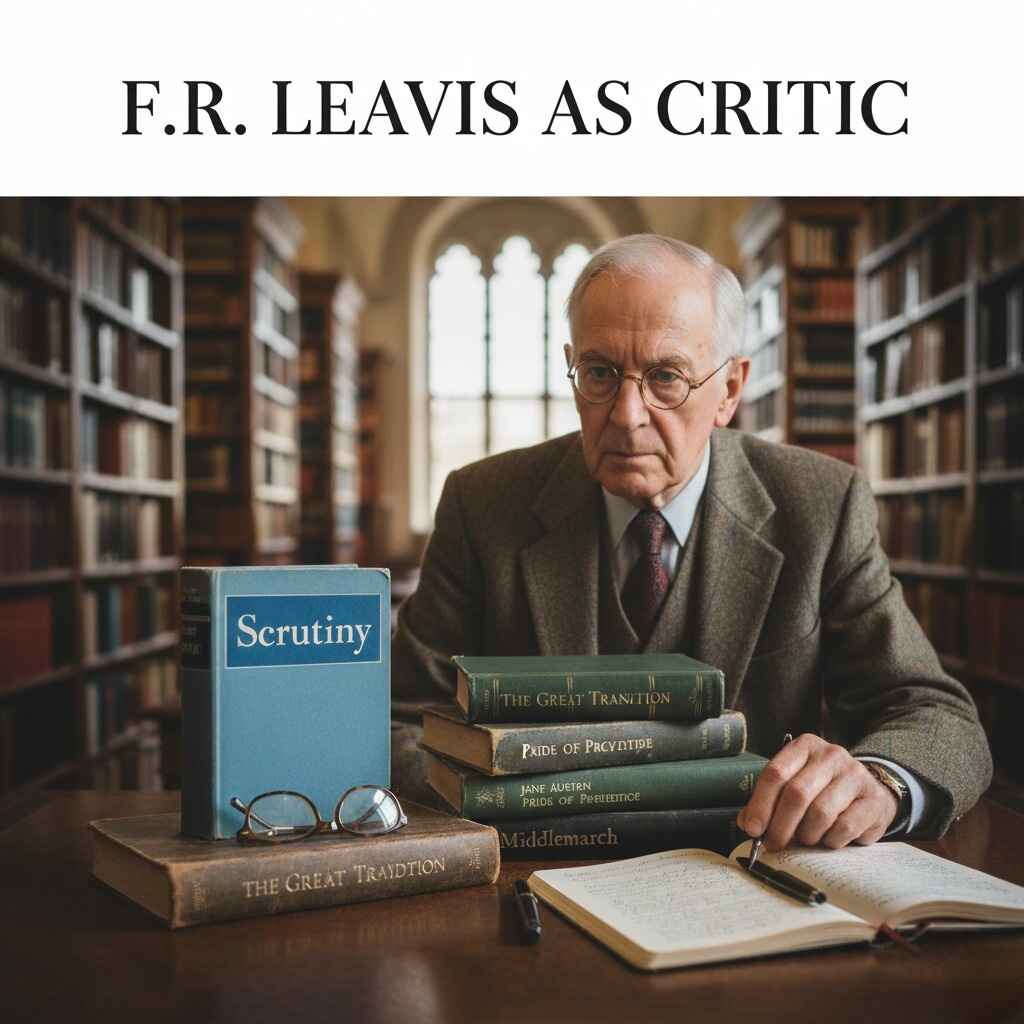
F.R.Leavis as Critic remains a giant of British letters. Specifically, he was born in Cambridge in 1895. Consequently, he spent his entire life at the University. Therefore, he is a pillar of the English tradition. Furthermore, he sought to make literature a moral force. In addition, he rejected the purely academic and dry talk. As a result, he founded the influential journal Scrutiny. Similarly, he focused on the health of the culture. Indeed, he believed great art could save a society. For this reason, he is a foundational figure today. Ultimately, he bridged the gap between ethics and the page. Experience his sharp mind through these forty-three unique lenses now. Every section explores a different part of his genius. We see the man behind the moral judgment today. His voice remains vital in every modern English debate. We must look closely at his specific techniques now. His work demands our full and undivided attention always. Indeed, he is the father of moral criticism. Specifically, he gave us the keys to serious value. Therefore, we begin our study.
1. The Great Tradition
F.R.Leavis as Critic defined the Great Tradition of novels. Specifically, he selected only a few vital English writers. Consequently, he favored Jane Austen and George Eliot deeply. Therefore, he focused on their intense concern for life. Furthermore, he excluded many popular writers from his list. As a result, he created a very strict literary canon. Similarly, this book changed how we view the novel. Thus, the moral seriousness became the only metric used. Moreover, he documented the organic link between art and values. Ultimately, he turned reading into a search for maturity. Specifically, he wanted to find the truly essential voices. Furthermore, he used rigorous analysis to prove his points. Consequently, the study of fiction became much more demanding. Therefore, we must focus on the best works today. In addition, he showed that most books are trivial. Similarly, the great novel is a study of conduct. Thus, we must learn to judge with honesty. Indeed, he was a pioneer of the serious look. Finally, this tradition is his lasting, academic legacy.
2. Scrutiny
Scrutiny defines the work of F.R.Leavis as Critic always. To clarify, he founded this journal with his wife. Consequently, it ran for over twenty years in Cambridge. Therefore, it became the voice of a new movement. Furthermore, the journal attacked the lazy and the shallow. As a result, it gained a reputation for being harsh. Similarly, it mapped the decline of the modern world. Thus, the critic became a soldier for the language. Moreover, he used it to defend the English culture. Ultimately, he brought rigor to the messy world of reviews. Specifically, the journal sought to establish a true standard. Furthermore, it rejected the influence of the London elite. Consequently, the focus was on the text and life. Therefore, we must be careful with our critical tools. In addition, he showed that journalism is a threat. Similarly, Scrutiny was a laboratory for the social mind. Thus, we see the power of the small group. Indeed, he was a master of the campaign. Finally, Scrutiny is a core of modern history.
3. Culture and Environment
F.R.Leavis as Critic wrote Culture and Environment for students. Specifically, this book warns against the mass media age. Consequently, it analyzes the impact of advertising on the minds. Therefore, the student must learn to resist the machine. Furthermore, he believed that the old ways were better. As a result, he praised the organic community of the past. Similarly, he saw the cinema as a corrupt force. Thus, we look at the health of the society. Moreover, he wanted an objective way to protect taste. Ultimately, this work changed the world of school English. Specifically, he rejected the new and hollow talk. Furthermore, he demanded a focus on the specific craft. Consequently, the critic became a technician of the culture. Therefore, we analyze the environment and the small details. In addition, he gave us a clear set of rules. Similarly, the work of art is a social defense. Thus, the critic is the final guard here. Indeed, he led a revolution in the classroom. Finally, this book is his lasting social throne.
4. The Organic Community
The organic community is a concept for this critic. To clarify, it refers to the old English village life. Consequently, people lived in harmony with their local work. Therefore, the language was rooted in the real soil. Furthermore, he believed that modern industry destroyed this peace. As a result, the modern man is now lost. Similarly, this idea informs his view of the verse. Thus, we see how the culture creates the art. Moreover, he taught us to value the folk tradition. Ultimately, the organic community is the heart of values. Specifically, it requires a slow and very patient life. Furthermore, it avoids the trap of the fast city. Consequently, the meaning grows from a shared, deep past. Therefore, the village serves as a model of truth. In addition, he showed the beauty in the old. Similarly, language is a web of social meanings. Thus, we must protect the roots with great care. Indeed, he was the master of the past look. Finally, we seek this lost order today.
5. Moral Seriousness
F.R.Leavis as Critic focused on moral seriousness. Specifically, he believed that art must judge our lives. Consequently, a great poem creates a state of maturity. Therefore, reading is a form of ethical development. Furthermore, he studied how words affect our moral choices. As a result, he brought ethics into the library. Similarly, he saw the critic as a social doctor. Thus, the goal of art is internal, quiet virtue. Moreover, he analyzed the human response to every choice. Ultimately, he found a spiritual reason to love books. Specifically, the soul seeks an order and a truth. Furthermore, the novel provides a map for the conduct. Consequently, we feel more alive after a deep read. Therefore, art is a vital part of human health. In addition, he avoided the purely aesthetic and the vague. Similarly, he grounded his theories in real life. Thus, the mind is a system that needs virtue. Indeed, he was a poet of the conscience. Finally, value is found in the seriousness.
6. Mass Civilisation
Mass civilisation was a threat for F.R.Leavis as Critic. To clarify, he feared the rise of cheap culture. Consequently, he attacked the radio and the popular press. Therefore, he believed that the minority must lead now. Furthermore, he argued that standards are falling fast today. As a result, he spent years fighting the new trends. Similarly, he saw the machine as a wall for all. Thus, the university was the key to a future. Moreover, he wanted to remove the noise of trade. Ultimately, he was a defender of a high world. Specifically, he stripped the modern mask to its bone. Furthermore, he removed the difficult and the very rare. Consequently, the message became clear and very direct now. Therefore, we can all understand the danger at last. In addition, he used logic to teach the truth. Similarly, it was a tool for the entire nation. Thus, he was a critic with a grand vision. Indeed, he worked for the harmony of man. Finally, high culture was his noble, firm hope.
7. New Bearings in English Poetry
New Bearings defines F.R.Leavis as Critic and his taste. Specifically, he championed T.S. Eliot and Gerard Manley Hopkins. Consequently, he rejected the soft poets of the past. Therefore, he looked for the hard and real texture. Furthermore, he believed that poetry must face the modern. As a result, he changed the way we read verse. Similarly, he saw the poet as a social force. Thus, the best art is the most direct art. Moreover, he gave us a new way to judge. Ultimately, value is found in the richness of response. Specifically, the critic must measure the mental effect today. Furthermore, he avoids the trap of the purely decorative. Consequently, we see the poem as a functional object. Therefore, it has a job to do for us. In addition, he shows the dignity in human need. Similarly, the mind is a system of many drives. Thus, the poem helps to keep the peace inside. Indeed, he was a master of the internal. Finally, poetry is a state of being.
8. Revaluation
Revaluation follows F.R.Leavis as Critic through the old history. To clarify, he changed the status of many poets. Consequently, he praised Milton less and Donne much more. Therefore, he mapped the many changes of the tradition. Furthermore, he showed that our past biases hurt reading. As a result, we often value the wrong old things. Similarly, he wanted to cure the reader of errors. Thus, the critic must be aware of themselves. Moreover, he turned history into a learning tool. Ultimately, he made us better and more honest readers. Specifically, he identified the problem of the grand style. Furthermore, he warned against the abstractions of the cold heart. Consequently, we must be open to the actual text. Therefore, we learn to see the poem’s true face. In addition, he showed the humor in our many mistakes. Similarly, the mind is often too lazy and soft. Thus, we must watch our own thoughts very closely. Indeed, he was the judge of the false reading. Finally, we seek the truth together.
9. The Minority Culture
Minority culture is a focus for F.R.Leavis as Critic. Specifically, he believed only a few truly understand art. Consequently, this group must protect the standards of taste. Therefore, they are the guardians of the English language. Furthermore, he argued that this is a vital task. As a result, he rejected the idea of a mass vote. Similarly, he protected the university from the outside world. Thus, the critic has a special and safe space. Moreover, he gave the elite a unique social power. Ultimately, he defined the unique duty of the mind. Specifically, he showed that words can save the soul. Furthermore, they do not need to be popular now. Consequently, the truth is the reality of the small. Therefore, we accept the burden of the hard work. In addition, he shows the limits of the purely common. Similarly, the mind has its own special, dark logic. Thus, the academy is a song for the nerves. Indeed, he was the king of the high. Finally, we feel the power of the few.
10. Education and the University
Education and the University is a masterpiece by him. Specifically, it is the most important book for teachers. Consequently, it laid the ground for the modern English degree. Therefore, he combined the library, the life, and the mind. Furthermore, it is a very difficult and rewarding read. As a result, it changed the way we think. Similarly, it is a bible for the Leavisite teacher. Thus, we see the logic of the entire field. Moreover, he wrote it with a sharp, clear hand. Ultimately, it remains a pillar of the British canon. Specifically, it explains the mission of the center today. Furthermore, it rejects the old and lazy ways. Consequently, the student is challenged on every single page. Therefore, we find the core of his unique vision. In addition, he shows the weight of the written word. Similarly, the book is a map of the soul. Thus, we return to it over and over. Indeed, he made the law for the campus. Finally, the book is his eternal, quiet monument.
11. D.H. Lawrence
D.H. Lawrence was the hero for F.R.Leavis as Critic. Specifically, he saw Lawrence as the greatest modern writer. Consequently, he praised the vivid sense of life here. Therefore, Lawrence represented the health of the organic spirit. Furthermore, this focus was a sign of his values. As a result, he defended Lawrence against all the critics. Similarly, he saw Lawrence as a complex and mature man. Thus, the novelist is a leader of the spirit. Moreover, he found the wealth in the vital force. Ultimately, he found the power in the blood. Specifically, he showed that life is not a simple fact. Furthermore, the flow of life is the core. Consequently, the reader must embrace the many different paths. Therefore, the text is a pulse that never ends. In addition, he shows the beauty in the warm light. Similarly, the language is a playground for the soul. Thus, we see the depth of the human spirit. Indeed, he was the father of the deep life. Finally, Lawrence is his gift of art.
12. The Function of Criticism
F.R.Leavis as Critic redefined the function of criticism. To clarify, he did not see it as a hobby. Consequently, it is a vital tool for human survival. Therefore, it helps us to organize our many values. Furthermore, he believed that criticism could replace old religion. As a result, art is the highest form of ethics. Similarly, it teaches us how to live with balance. Thus, the critic is a leader of the spirit. Moreover, he shows that art is not a luxury. Ultimately, criticism is the most complex form of speech. Specifically, it allows us to handle the difficult world. Furthermore, it creates a peace that the facts cannot. Consequently, we need the verse to stay truly sane. Therefore, the library is a temple for the modern. In addition, he avoids the trap of the purely pretty. Similarly, he finds the power in the hard line. Thus, the poem is a shield for the heart. Indeed, he was the priest of the secular. Finally, the function is the soul’s order.
13. Life and Thought
Life and thought are joined for F.R.Leavis as Critic. Specifically, he explores the conflict between two different worlds. Consequently, he shows how the industry changed our view. Therefore, the old myths of the past are now. Furthermore, he argues that art must save our values. As a result, art is the refuge of the human. Similarly, he bridges the gap between the two fields. Thus, the mind needs both the fact and the song. Moreover, he wrote with a sense of urgency, dark. Ultimately, he found a place for the soul now. Specifically, he showed that machines cannot give us meaning. Furthermore, only the serious word can heal the heart. Consequently, the critic has a new and vital job. Therefore, we must listen to the verse at the right age. In addition, he shows the dignity in the human search. Similarly, the life and stage are part of one. Thus, we seek the whole truth of our lives. Indeed, he was the master of the two paths. Finally, life and art must talk.
14. Maturation
Maturation is a theory for F.R.Leavis as Critic. To clarify, it is a state of perfect balance. Consequently, the mind feels all impulses in harmony. Therefore, we are not moved to act or to flee. Furthermore, this is the core of the aesthetic experience. As a result, we find peace beyond the daily. Similarly, it is a moment of total and quiet order. Thus, the art creates a still point for us. Moreover, he used this to explain why art matters. Ultimately, maturation is the goal of the high reader. Specifically, the nerves are tuned like a fine violin. Furthermore, the conflict of the soul disappears for a while. Consequently, we feel a sense of great, calm power. Therefore, the novel is the key to this state. In addition, he avoids the purely mystical and the vague. Similarly, he finds the biology of the deep peace. Thus, the heart is a system of many waves. Indeed, he was the scientist of the calm. Finally, the balance is the beauty itself.
15. The Common Pursuit
The common pursuit defines F.R.Leavis as Critic always. Specifically, he saw criticism as a shared social act. Consequently, it stands at one corner of his study. Therefore, we must work together to find the truth. Furthermore, he showed how we often mistake the label. As a result, our thinking becomes messy and very cloudy. Similarly, he wanted us to stay grounded in reality. Thus, the common pursuit is the final test here. Moreover, he used this to clear up the talk. Ultimately, he was a master of clear thought. Specifically, the thing out there must be seen truly. Furthermore, the mind must map the world with care. Consequently, the language becomes a precise and sharp tool. Therefore, we avoid the traps of the fake name. In addition, he shows the logic in daily life. Similarly, the pursuit is the anchor of the speech. Thus, we see the world as it really is. Indeed, he was the judge of the real. Finally, the pursuit is our starting point.
16. Moral Vitality
Moral vitality follows F.R.Leavis as Critic through his pages. To clarify, he saw it as a sign of health. Consequently, the healthy mind can see many sides at once. Therefore, vitality is a tool for a balanced view. Furthermore, he argues that good art must have vitality. As a result, it protects the work from being simple. Similarly, it shows a complex and very mature spirit. Thus, the vital soul cannot be easily fooled now. Moreover, he used this to judge the sentimental writers. Ultimately, vitality is the shield of the high art. Specifically, it allows the book to be strong and. Furthermore, it welcomes the opposite view into the room. Consequently, the reader feels the tension of the truth. Therefore, we avoid the trap of the easy answer. In addition, he shows the dignity in the complex heart. Similarly, the laugh is a part of the deep. Thus, the world is a place of many tones. Indeed, he was the master of both. Finally, vitality is the soul’s guard.
17. Sentimentality and Corruption
Sentimentality is a target for F.R.Leavis as Critic. Specifically, he saw it as a stock response here. Consequently, people feel too much for the wrong reasons. Therefore, they do not see the actual words. Furthermore, he argued that this is a sign of weakness. As a result, the sentimental reader is easily tricked here. Similarly, he wanted to train us for a hard view. Thus, the critic must avoid the purely sweet and. Moreover, he showed the danger of the fake heart. Ultimately, he was a judge of the emotional truth. Specifically, the feeling must grow from the actual text. Furthermore, we must not bring our own fake tears. Consequently, the work must earn the response it gets. Therefore, we look for the grit and the real. In addition, he shows the comedy in the fake sob. Similarly, the mind is often too lazy and soft. Thus, we must work to feel the true thing. Indeed, he was the enemy of the cheap. Finally, we seek the hard, clear light.
18. Stock Response in Culture
Stock response defines F.R.Leavis as Critic and his study. To clarify, it is a preset way of thinking. Consequently, the reader reacts without really looking at the words. Therefore, they use their own old habits to judge. Furthermore, he showed how this kills the experience here. As a result, we are just talking to ourselves. Similarly, he wanted to break these old and lazy. Thus, the student must learn to see with their eyes. Moreover, he used his tests to prove this error. Ultimately, the stock response is the enemy of growth. Specifically, it is a wall between the reader and. Furthermore, we rely on the safe and the familiar. Consequently, the book becomes a mirror of our biases. Therefore, we must learn to be surprised by art. In addition, he shows the tragedy of the closed mind. Similarly, the soul is a thing that needs something new. Thus, we must listen for the strange, new voice. Indeed, he was the teacher of the fresh look. Finally, we break the old mold.
19. Evaluation of Fiction
Evaluation interested F.R.Leavis as Critic throughout his life. Specifically, he studied why we get things wrong. Consequently, he found ten stock responses in his readers. Therefore, he mapped the many traps of the mind. Furthermore, he showed that our past biases hurt reading. As a result, we often see what we want to. Similarly, he wanted to cure the reader of errors. Thus, the critic must be aware of themselves. Moreover, he turned the error into a learning tool. Ultimately, he made us better and more honest readers. Specifically, he identified the problem of the sentimental view. Furthermore, he warned against the inhibitions of the heart. Consequently, we must be open to the actual text. Therefore, we learn to see the book’s true face. In addition, he showed the humor in our many mistakes. Similarly, the mind is a very tricky, dark place. Thus, we must watch our own thoughts very closely. Indeed, he was the judge of the false reading. Finally, we seek the truth together.
20. Aesthetic Balance
Aesthetic balance belongs to F.R.Leavis as Critic always. To clarify, it is the unique height of reading art. Consequently, it is different from our daily and busy. Therefore, we enter a state of total quiet. Furthermore, it creates a synaesthetic balance of our drives. As a result, we feel a sense of great order. Similarly, it is the most valuable state for a human. Thus, art is the bridge to this internal peace. Moreover, he explained this with the biology of nerves. Ultimately, the experience is the goal of the critic. Specifically, the soul is organized by the beautiful lines. Furthermore, the chaos of the world fades for a time. Consequently, we are more whole after the work ends. Therefore, we must protect the time for reading. In addition, he avoids the purely mystical and the vague. Similarly, he finds the logic in the silent heart. Thus, the mind is a machine for beauty. Indeed, he was the architect of the calm. Finally, the experience is our home.
21. Literary Ethics
Literary ethics is a label for F.R.Leavis as Critic. Specifically, he focused on the form of the work. Consequently, he looked at how the parts fit together. Therefore, the structure is more important than the message. Furthermore, he showed that the medium is the message. As a result, the reader must master the art here. Similarly, he rejected the old, moralistic way of reading. Thus, the work is a physical object of sounds. Moreover, he turned the critic into a formal judge. Ultimately, formalism is the foundation of the modern study. Specifically, we look for the balance and the pattern. Furthermore, the history of the writer is just noise. Consequently, the page is the only world we inhabit. Therefore, we analyze the meter and the rhyme. In addition, he shows the beauty in the rigid structure. Similarly, language is a building for the soul. Thus, we see the craft in every line. Indeed, he was the mason of the world. Finally, form is the final truth.
22. Serious Meaning
Meaning is a puzzle for F.R.Leavis as Critic. To clarify, he showed that meaning has four layers. Consequently, we must look for sense, feeling, tone, and intent. Therefore, a word is never just one simple thing. Furthermore, these layers work together to move the heart. As a result, the reader must be a master of all. Similarly, he mapped the complex world of human talk. Thus, meaning is a living and shifting thing today. Moreover, he taught us to hear the music here. Ultimately, meaning is the result of the total read. Specifically, he showed that sense is just the surface. Furthermore, the tone is the attitude toward the listener. Consequently, the feeling is the bias of the speaker. Therefore, the intent is the goal of the act. In addition, he shows the logic in the many. Similarly, the language is rich and very thick. Thus, we must taste every single drop with care. Indeed, he was the cook of the meaning. Finally, we find the depth.
23. Social Tone
Tone defines the work of F.R.Leavis as Critic always. Specifically, it is the speaker’s attitude toward the audience. Consequently, it tells us how to hear the lines. Therefore, a shift in tone can change the meaning. Furthermore, he showed how readers often miss the tone. As a result, they fail to understand the social act. Similarly, tone is a bridge between the I and. Thus, the work is a conversation with a heart. Moreover, he taught us to listen for the irony. Ultimately, tone is the music of social life. Specifically, it reveals the status and the intent here. Furthermore, it can be cold, warm, sharp, or soft. Consequently, we must be sensitive to the many changes. Therefore, the critic is a listener with a sharp ear. In addition, he shows dignity in a polite manner. Similarly, the heart is a place of many tones. Thus, the voice is the map of the. Indeed, he was the conductor of the sound. Finally, tone is the truth of the act.
24. Critical Intent
Intent is a focus for F.R.Leavis as Critic. To clarify, it is the goal that the writer seeks. Consequently, every word is a move toward an end. Therefore, we must ask what the work does. Furthermore, he showed that intent is often hidden from. As a result, the critic must look for the will. Similarly, it is the fourth and final layer here. Thus, the work is a deliberate and planned act. Moreover, he used this to judge the success of. Ultimately, intent is the engine of the entire script. Specifically, the writer wants to change the state of. Furthermore, they use every tool to reach the goal. Consequently, the reader must be aware of the push. Therefore, we see the logic in the choice. In addition, he shows the power of the purposeful. Similarly, language is a tool for a task. Thus, the soul has a destination in the verse. Indeed, he was the navigator of the text. Finally, we reach the end together.
25. Literal Sense
Sense is the surface for F.R.Leavis as Critic. Specifically, it is the literal and the dictionary meaning. Consequently, it is the first thing that a reader. Therefore, it is the logic of the statement here. Furthermore, he showed that sense is often a hook. As a result, we must not stop at the literal. Similarly, it provides the skeleton for the emotive and. Thus, the facts of the work are just starting. Moreover, he taught us to look past the prose. Ultimately, sense is the lowest of the four layers. Specifically, he used it to hook the rational part. Furthermore, the pseudo statement is a fake sense here. Consequently, the reader is tricked into a state of. Therefore, we accept the lie to reach the truth. In addition, he shows dignity in the simple. Similarly, the language is a house with many walls. Thus, sense is just the door to the. Indeed, he was the guard of the door. Finally, we enter the house.
26. Human Feeling
Feeling follows F.R.Leavis as Critic through the dark. To clarify, it is the speaker’s attitude toward the referent. Consequently, it shows how the writer feels about subject. Therefore, every word is colored by a bias here. Furthermore, he showed that feeling is the heat here. As a result, the reader must feel the pulse. Similarly, it is the layer that moves the audience. Thus, the work is a transfer of a mood. Moreover, he analyzed the emotional science of the act. Ultimately, feeling is the soul of the emotive. Specifically, it is the bias that gives words life. Furthermore, it can be love, hate, fear, or hope. Consequently, the heart is the real target of writers. Therefore, we must be open to the charge here. In addition, he shows dignity in the real. Similarly, the mind is a place of many fires. Thus, the language is the fuel for the spirit. Indeed, he was the chemist of the heart. Finally, we feel the heat.
27. Literary Pseudo-statements
The pseudo statement belongs to F.R.Leavis as Critic. Specifically, it is a statement that is not true. Consequently, it looks like a fact but is art. Therefore, we do not test it with the logic. Furthermore, he argued that art is full of these. As a result, they help us to order our impulses. Similarly, they create a state of balance without proof. Thus, the work is a pretend world that heals. Moreover, he protected art from the truth of labs. Ultimately, the pseudo statement is the poet’s highest tool. Specifically, it allows us to say things that should. Furthermore, it creates a myth for the modern soul. Consequently, we believe the line for the spirit’s sake. Therefore, the lie is more valuable than the fact. In addition, he shows dignity in the creative. Similarly, the mind needs the dream to stay sane. Thus, he was the master of the useful myth. Indeed, he was the poet’s bold shield. Finally, the lie is a bridge.
28. Logical Discipline
Logical discipline influenced F.R.Leavis as Critic in early work. To clarify, it is a focus on the facts. Consequently, he wanted to be as rigorous as scientists. Therefore, he used the new logic to study art. Furthermore, he believed that we must define our terms. As a result, he removed the ghosts from the study. Similarly, he saw the work as a functional structure. Thus, the critic must be scientific and cool. Moreover, he brought the rigor of the math here. Ultimately, this approach made him a radical and a leader. Specifically, he rejected the vague and the dreamy talk. Furthermore, he demanded a focus on the actual text. Consequently, the study of English became a serious job. Therefore, we use the tools of the trade now. In addition, he shows dignity in the clear. Similarly, the soul is a system that follows rules. Thus, he was the logician of the library. Indeed, he was the king of the clear. Finally, logic is our tool.
29. The Moral Lab
The moral lab defines F.R.Leavis as Critic always. Specifically, he wanted to measure the nerves of readers. Consequently, he dreamed of a science of the act. Therefore, he looked for the biological basis of beauty. Furthermore, he saw the mind as a system of. As a result, art is a way to tune the machine. Similarly, he used the language of the neurologist here. Thus, the response is a physical and real event. Moreover, he brought the lab into the garden here. Ultimately, he was the first neuro critic of history. Specifically, he showed that art affects the entire body. Furthermore, the rhythm is a beat for the heart. Consequently, the work is a medicine for the age. Therefore, we read to stay in a state of. In addition, he shows the dignity in the animal. Similarly, the soul is a thing that we study. Thus, he was the scientist of the inner world. Indeed, he was the bridge between two fields. Finally, the lab is open.
30. Coleridge’s Imagination in Leavis
Coleridge interests F.R.Leavis as Critic in a deep way. To clarify, he wrote a book on the mind. Consequently, he explored the nature of the Imagination here. Therefore, he saw the Imagination as a power joining all. Furthermore, he modernized the old ideas for the new. As a result, he linked the Romantic view to science. Similarly, he saw the Imagination as the highest order. Thus, it is the power that creates the balance. Moreover, he used Coleridge to build his own vision. Ultimately, he was the heir to the British tradition. Specifically, he showed that the mind makes the world. Furthermore, the artist is the master of this act. Consequently, the work is a record of primary power. Therefore, we must respect the holy and inner fire. In addition, he shows dignity in the long run. Similarly, he found the modern in the old gold. Thus, he was a scholar of the deep spirit. Indeed, he was the bridge of the years. Finally, imagination is our home.
31. Basic Cultural Peace
Basic cultural peace was the goal of this critic. Specifically, he believed that war is a failure here. Consequently, he wanted to remove the misunderstandings of the world. Therefore, a simple language can save the human race. Furthermore, he traveled the globe to teach the code. As a result, he saw himself as a peacemaker. Similarly, he believed that Basic could join the West. Thus, the simple referent would remove the emotive hate. Moreover, he was a dreamer of a quiet world. Ultimately, he was a linguist with a very noble purpose. Specifically, he worked in China to spread the light. Furthermore, he believed that logic could stop the fire. Consequently, the word was the final and only weapon. Therefore, we must learn to speak clearly. In addition, he shows dignity in failure. Similarly, the soul is a thing that wants to be joined. Thus, he was the poet of the global one. Indeed, he was the master of the one. Finally, peace is the goal.
32. The Social Meet
The social meet defines F.R.Leavis as Critic and actor. To clarify, he saw reading as a social bond. Consequently, the writer and the reader must find ground. Therefore, the Tone is the bridge between the souls. Furthermore, he showed how we model the mind here. As a result, reading is a form of the highest empathy. Similarly, it is a way to leave prison. Thus, the social nature of the speech is core. Moreover, he taught us to be good and kind. Ultimately, he was the master of the human bond. Specifically, the word is a gift from the I. Furthermore, it is a record of shared and common. Consequently, the meaning is a thing that we make. Therefore, the stage is a place for the meeting. In addition, he shows dignity in the other. Similarly, the soul is a thing that wants to be seen. Thus, he was the poet of the social truth. Indeed, he was the judge of the bond. Finally, we are not alone.
33. The Verbal Gear
The verbal gear is a metaphor for the critic. Specifically, he saw the work as a tool here. Consequently, every part has a job for the system. Therefore, the critic must look for the efficiency here. Furthermore, he showed that the rhythm is a part. As a result, he used the language of engineering. Similarly, he saw the word as a cog here. Thus, the work of art is real. Moreover, he brought the rigor of the shop here. Ultimately, he was the first technician of the British. Specifically, he showed that beauty is a result. Furthermore, the form is the way that the machine moves. Consequently, the reader is the user of the high. Therefore, we must learn to operate the device now. In addition, he showed dignity in the craft. Similarly, the soul is a thing that needs tools. Thus, he was the mason who made the sharp. Indeed, he was the king of the how. Finally, the machine works well.
34. Shared Objectivity
Shared objectivity was a goal for F.R.Leavis as Critic. To clarify, he wanted to remove the private view. Consequently, he looked for the facts of the text. Therefore, the subjective whim is the enemy of study. Furthermore, he showed that the meaning is public. As a result, he turned the class into a place. Similarly, he rejected the I like this and that. Thus, the critic must be cool and neutral. Moreover, he brought clarity to the science here. Ultimately, he made the study of English hard. Specifically, he identified the errors that we all make. Furthermore, he gave us a grammar for the judgment. Consequently, the opinion is replaced by the analysis here. Therefore, we look for the evidence on the page. In addition, he shows dignity in the shared. Similarly, the soul is a thing that can be known. Thus, he was the master of the clear truth. Indeed, he was the king of the fact. Finally, we see the object.
35. Cambridge Modernism
F.R.Leavis as Critic lived in the Modernist era. Specifically, he was a part of the Cambridge news. Consequently, he worked with the Eliots of his time. Therefore, his analytical style mirrors the broken world here. Furthermore, he sought a new and rigorous way. As a result, he helped to build the modern view. Similarly, he reflected the anxiety of the lost age. Thus, the poem was a way to fix shards. Moreover, he brought the logic to the chaos here. Ultimately, he was a titan of the bold spirit. Specifically, he responded to the death of the old. Furthermore, he gave a voice to the academic study. Consequently, his work is a map of the soul. Therefore, we see the tension of the age here. In addition, he shows dignity in the lost. Similarly, he was a prophet of the sharp light. Thus, he was the master of the shattered one. Indeed, he was the bridge to the now. Finally, he is modern.
36. Secular Morality
Secular morality belongs to F.R.Leavis as Critic and a study. Specifically, he believed that bad reading is a moral failure. Consequently, the prejudices of the mind lead to war. Therefore, the close and the true read is good. Furthermore, he showed that art is the ethics left. As a result, the critic is a guard here now. Similarly, he saw the work as a teacher here. Thus, we read to become better and more one. Moreover, he showed that poetry is the lifeblood. Ultimately, he was the priest of the secular world. Specifically, the order of the mind is peace. Furthermore, the beauty is the truth that heals all. Consequently, the reader has a duty to the text. Therefore, we look for the wisdom in the line. In addition, he shows dignity in the ethical. Similarly, the heart is a place of the law. Thus, he was the poet of the good. Indeed, he was the judge of the soul. Finally, art saves us.
37. Judgment and Maturity
Judgment and maturity are the goals for this critic. Specifically, he demanded a mature response to the world. Consequently, the critic must judge the health of the work. Therefore, we cannot separate the art from life. Furthermore, he showed that a lack of maturity kills. As a result, the critic is a judge of conduct. Similarly, he saw the book as a moral test. Thus, we look for the signs of maturity here. Moreover, he taught us to be hard and honest. Ultimately, judgment is the final act of the mind. Specifically, it requires a total and deep look today. Furthermore, it avoids the trap of the easy answer. Consequently, the soul is tested by the great prose. Therefore, we must grow to reach a high level. In addition, he shows the dignity of the judge. Similarly, life is a thing that needs order. Thus, he was the master of the mature soul. Indeed, he was the voice of the gold. Finally, we grow now.
38. The Scrutiny Standard
The Scrutiny standard defines F.R.Leavis as Critic and an era. To clarify, he set a high bar for excellence. Consequently, only the very best works could pass here. Therefore, he created a strict filter for the tradition. Furthermore, he believed that standards are a social defense.17 As a result, he attacked the middle-brow and the cheap. Similarly, he protected the language from the commercial drift. Thus, the standard was the anchor of the culture. Moreover, he gave us a clear sense of quality. Ultimately, the standard is the legacy of the group. Specifically, it reveals the values and the intent here. Furthermore, it can be cold, warm, sharp, or soft. Consequently, we must be sensitive to the many changes. Therefore, the critic is a guardian with a sharp eye. In addition, he shows dignity in the high. Similarly, the heart is a place of standards. Thus, the voice is the map of the. Indeed, he was the conductor of the sound. Finally, standards save us.
39. Resistance to Mass Culture
Resistance to mass culture is a theme for him. Specifically, he fought the influence of the modern machine. Consequently, he saw advertising as a threat to thought. Therefore, the individual must stand against the many now. Furthermore, he argued that art is the final shield. As a result, he spent his life in the fight. Similarly, he saw the university as a fortress here. Thus, the resistance was a way of life. Moreover, he wanted to save the English soul today. Ultimately, he was a hero of high culture. Specifically, he stripped the mass mask to the bone. Furthermore, he removed the difficult and the very rare. Consequently, the message became clear and very direct now. Therefore, we could all understand the danger at last. In addition, he used logic to teach the truth. Similarly, it was a tool for the entire nation. Thus, he was a critic with a grand vision. Indeed, he worked for the harmony of man. Finally, high culture was his noble, firm hope.
40. The Novel as Life
The novel as life is a focus for him. To clarify, he saw the novel as vital. Consequently, it is a record of the human search. Therefore, we must respect the truth of the fiction. Furthermore, he showed that the novel is life. As a result, we find the meaning in the story. Similarly, it is a form of the highest and. Thus, the social nature of the speech is core. Moreover, he taught us to be good and kind. Ultimately, he was the master of the human bond. Specifically, the word is a gift from the I. Furthermore, it is a record of shared and common. Consequently, the meaning is a thing that we make. Therefore, the stage is a place for the meeting. In addition, he shows dignity in the other. Similarly, the soul is a thing that wants to be seen. Thus, he was the poet of the social truth. Indeed, he was the judge of the bond. Finally, we are not alone.
41. The Critical Mission
The critical mission defines F.R.Leavis as Critic and an actor. To clarify, he saw criticism as a social bond. Consequently, the writer and the reader must find ground. Therefore, the mission is the bridge between the souls. Furthermore, he showed how we model the mind here. As a result, reading is a form of the highest empathy. Similarly, it is a way to leave prison. Thus, the social nature of the speech is core. Moreover, he taught us to be good and kind. Ultimately, he was the master of the human bond. Specifically, the word is a gift from the I. Furthermore, it is a record of shared and common. Consequently, the meaning is a thing that we make. Therefore, the stage is a place for the meeting. In addition, he shows dignity in the other. Similarly, the soul is a thing that wants to be seen. Thus, he was the poet of the social truth. Indeed, he was the judge of the bond. Finally, we are not alone.
42. Leavis as Critic
F.R.Leavis as Critic remains a global power today. Specifically, he changed the language of modern study here. Consequently, he stripped away the lies of old soft. Therefore, we face the raw truth of the heart today. Furthermore, his work is a bridge to the now. In addition, he found poetry in the silent rooms. Similarly, he honored the struggle of the lost soul. Thus, his legacy grows with every new study here. Moreover, he remains the master of the many layers. Ultimately, we must look at work to know ourselves. For example, his words provide a home for many. Furthermore, he taught us to find the truth today. Consequently, we can go on because he showed how. Therefore, the page is his bold and true monument. In addition, his silence is full of depth. Similarly, he is the voice of the lost heart. Thus, he is the light in the dark and cold. Indeed, he is the king of the library. Finally, we must listen to his sharp voice.
43. Legacy of F.R.Leavis as Critic
The legacy of F.R.Leavis as Critic is vast. Specifically, he redefined what is possible on the pages. Consequently, every modern writer owes a debt to him. Therefore, we face the world with a sharp view. Furthermore, his influence is seen in every quiet study. In addition, he taught us that less is often. Similarly, he moved the drama to the soul here. Thus, his methods are used in every city today. Moreover, he remains the most vital voice of the era. Ultimately, he changed the way that we think. For instance, the Great Tradition is a standard now. Furthermore, he found the universal in the small part. Consequently, he is a giant of British letters. Therefore, his books stay on our shelves and minds. In addition, he found the beauty in the sparse. Similarly, his work is a light for the hearts. Thus, he is a true and gold master. Indeed, he lives on in our daily reading. Finally, his spirit is eternal and is one.
I.A.Richards as Critic: https://englishlitnotes.com/2025/09/07/ia-richards-as-critic/
American Literature: americanlit.englishlitnotes.com
Discover more from Naeem Ullah Butt - Mr.Blogger
Subscribe to get the latest posts sent to your email.