1. Introduction to Love Between Orpheus and Eurydice
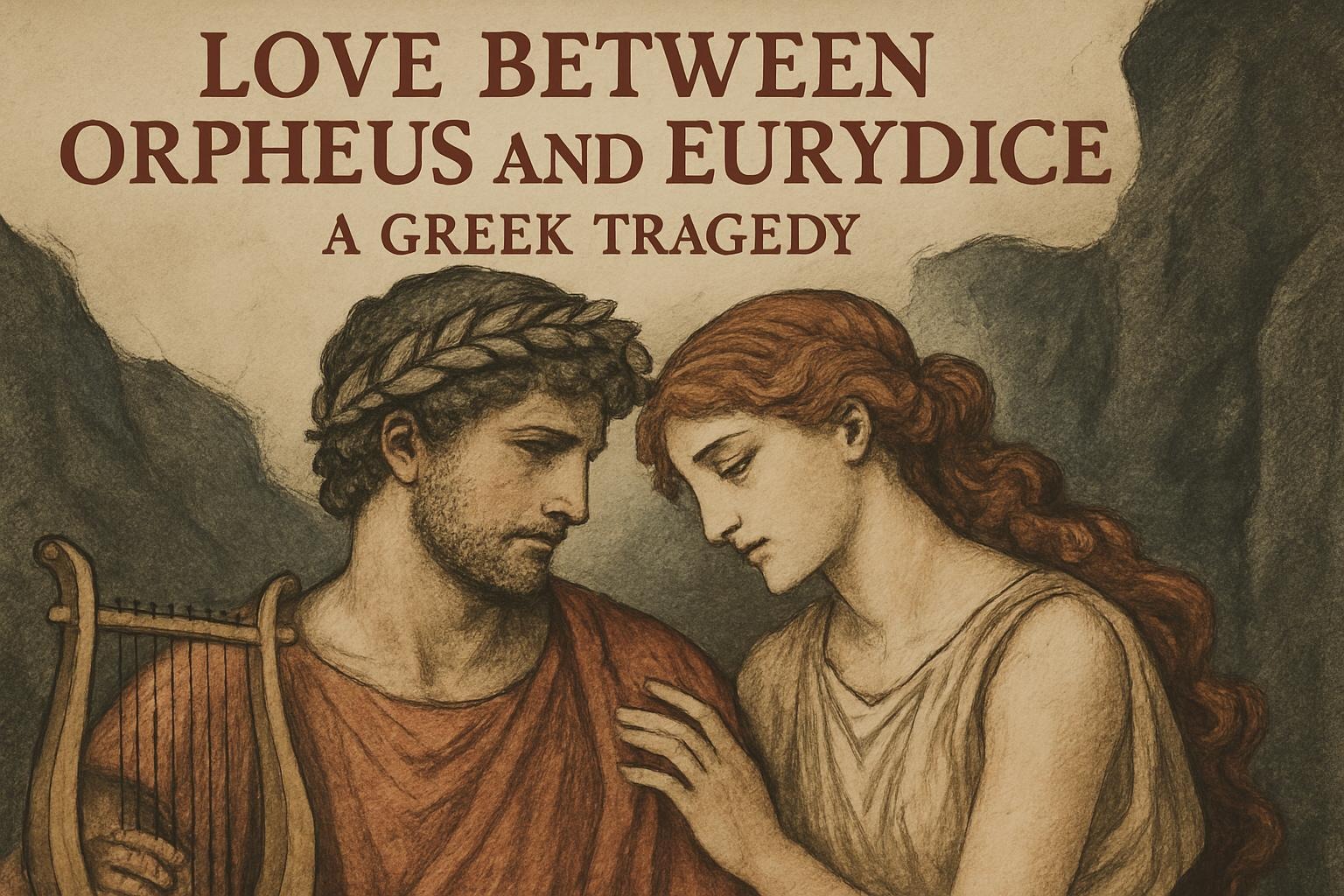
Love Between Orpheus and Eurydice remains one of the most powerful legends. It endures in ancient Greek mythology. The story reveals how music, love, and death intertwine within divine purpose. Orpheus, blessed with heavenly talent, could move stones and calm wild beasts with his lyre. Yet his heart found true rhythm only in Eurydice’s love. Their marriage embodied beauty, purity, and perfect emotional harmony. However, tragedy soon shattered their joy when Eurydice met her untimely death. Consequently, Orpheus refused to accept fate’s cruelty and sought her in the underworld. His courage, passion, and faith illuminated even Hades’ darkness. Moreover, the myth explores devotion’s triumph over mortality. Therefore, Love Between Orpheus and Eurydice endures because it embodies art’s spiritual power. Through this story, humanity learns that love might be tested by despair. Even so, love always strives toward transcendence. It seeks eternal emotional reunion through divine inspiration.
2. Divine Gift of Orpheus’s Music
Love Between Orpheus and Eurydice reveals music’s divine origin and sacred purpose. Orpheus’s melodies, blessed by Apollo, possessed supernatural beauty. His lyre could harmonize nature, soothe storms, and heal wounded hearts. Moreover, his songs bridged the distance between mortals and gods. Through melody, he expressed emotions words could never contain. Consequently, his art became a spiritual language connecting life and eternity. Eurydice’s presence deepened this divine music, transforming art into love’s purest form. Therefore, his talent symbolized divine favor born from emotional sincerity. Through his lyre, Orpheus reshaped grief into hope. Additionally, his music mirrored creation’s cosmic rhythm, uniting heaven and earth. The myth shows that art reaches its highest form when inspired by devotion. Ultimately, Love Between Orpheus and Eurydice demonstrates that true music transcends mortality. Thus, harmony becomes the eternal bridge linking human hearts with divine perfection.
3. Eurydice’s Symbol of Purity and Grace
In Love Between Orpheus and Eurydice, Eurydice symbolizes innocence, devotion, and divine grace. Her presence embodies the perfection Orpheus constantly seeks through music. Though her time on earth ends abruptly, her purity radiates through the story. Moreover, she becomes the eternal muse that sustains his art and faith. Her loss transforms Orpheus’s music into sacred lamentation. Consequently, she represents both divine ideal and emotional truth. Through Eurydice, Dunbar’s myth reminds readers that purity transcends mortality. Furthermore, her silent endurance teaches the power of quiet faith. She becomes the unspoken heart of the story, representing eternal love beyond physical presence. Therefore, her image lives through Orpheus’s song forever. Ultimately, Eurydice’s purity elevates the myth beyond tragedy. Thus, she remains an immortal emblem of beauty, spiritual loyalty, and the eternal feminine strength that uplifts love into divinity.
4. The Marriage and Early Joy of Love
The union in Love Between Orpheus and Eurydice begins in joy and harmony. Their love blossoms in music’s rhythm, celebrating emotional unity and divine approval. Moreover, their marriage symbolizes humanity’s highest happiness achieved through faith and art. The couple’s bond reflects perfect spiritual alignment between creation and affection. However, their joy remains fragile against destiny’s unpredictable hand. Soon, tragedy intervenes when Eurydice falls victim to a serpent’s fatal bite. Consequently, Orpheus’s blissful harmony collapses into devastating silence. Yet, his love refuses surrender, becoming stronger through grief. Therefore, their marriage symbolizes both perfection and fragility. Furthermore, the myth reveals that love’s beauty often invites divine testing. Through loss, Orpheus transforms affection into eternal devotion. Ultimately, this early joy serves as the emotional foundation for tragedy. Thus, the story teaches that genuine happiness always carries the shadow of inevitable sorrow.
5. The Tragic Death of Eurydice
In Love Between Orpheus and Eurydice, tragedy strikes swiftly and cruelly. Eurydice, fleeing from danger, steps upon a hidden serpent and meets her death. Her fall marks the poem’s emotional turning point, transforming joy into despair. Moreover, this sudden loss reveals the fragility of earthly bliss. Orpheus’s heart shatters, and his music turns from joy to lamentation. Consequently, grief becomes both his punishment and his strength. The myth presents death not merely as finality but as transformation. Therefore, Eurydice’s passing elevates the story to spiritual depth. Furthermore, her death initiates Orpheus’s heroic journey into the underworld. Through pain, love evolves into eternal purpose. Ultimately, her departure reminds readers that loss gives meaning to love. Thus, this tragedy unites beauty and sorrow. It reveals that the deepest affection finds its truest form through suffering and unwavering devotion.
6. Orpheus’s Descent into the Underworld
Love Between Orpheus and Eurydice reaches its emotional height in the descent into Hades. Orpheus, undeterred by fear, ventures beyond mortal boundaries for love’s sake. His journey symbolizes humanity’s struggle against separation and despair. Moreover, his courage transforms grief into divine faith. Through music, he gains passage across the shadowed realm of death. Consequently, even the underworld listens, moved by his harmony. Therefore, the descent signifies devotion’s triumph over mortality. Furthermore, Orpheus’s faith demonstrates that love endures beyond all limits. His melodies charm the very guardians of the dead. Thus, the myth portrays love as the soul’s guiding light through darkness. Ultimately, this journey redefines the meaning of courage. It teaches that the power of love can pierce even death’s silence. Hence, Orpheus’s descent becomes an everlasting symbol of faith’s endurance against despair.
7. The Power of Music in Transformation
Love Between Orpheus and Eurydice emphasizes music’s sacred ability to transform. Orpheus’s song not only consoles grief but alters the universe’s order. His melodies soften divine hearts and awaken sympathy in the underworld. Moreover, music becomes his sole weapon against death’s finality. Consequently, his art transcends limitation and embodies faith’s energy. Through sound, he creates life where silence rules. Therefore, music becomes the universal expression of divine harmony. Furthermore, the myth suggests that music unites emotion, spirit, and creation. Orpheus’s voice reshapes fate itself, proving art’s infinite reach. Thus, his song symbolizes divine grace transforming pain into purpose. Ultimately, Love Between Orpheus and Eurydice reveals that music is the spiritual language of eternity. Hence, Orpheus’s melody immortalizes love, demonstrating that artistic devotion can outlive tragedy, echoing forever through creation’s rhythm and emotional beauty.
8. The Appeal Before Hades and Persephone
In Love Between Orpheus and Eurydice, Orpheus’s plea before Hades and Persephone embodies love’s divine eloquence. His plea demonstrates the power of love to articulate divine eloquence. His song softens even the rulers of death. Moreover, his melody transforms judgment into mercy, illustrating art’s persuasive power. His voice transcends language, conveying sincerity beyond reason. Consequently, the divine couple grants him a single condition for Eurydice’s return: he must not look back. Therefore, Orpheus’s faith faces its ultimate test. Furthermore, this moment highlights love’s dependence on trust and restraint. Through music, Orpheus gains divine compassion. Thus, the myth reveals that art can move even cosmic authority. Ultimately, Love Between Orpheus and Eurydice teaches that emotional truth surpasses divine fear. Hence, Orpheus’s song becomes the medium. Through it, love, faith, and obedience unite to achieve one fleeting moment of heavenly redemption amid despair.
9. The Condition and Its Significance
Love Between Orpheus and Eurydice gains deeper meaning through the divine condition of trust. Orpheus must lead Eurydice to daylight without turning back. This command symbolizes faith’s supreme challenge. Moreover, it reflects divine law governing love’s spiritual order. Consequently, obedience becomes the measure of devotion. His yearning battles his fear as they ascend toward hope. Therefore, each step represents the struggle between faith and doubt. Furthermore, the myth teaches that love requires patience even under uncertainty. Orpheus’s gaze symbolizes humanity’s fragile trust before divine command. Thus, his test becomes universal. Ultimately, love between them demonstrates that disobedience, though tragic, springs from love’s desperate longing. Hence, the condition highlights how emotional devotion must align with faith. Through this, the myth unites moral discipline with compassion, offering an eternal reflection on love’s sacred boundaries.
10. The Moment of Doubt and Tragedy
The climax of love between them unfolds in tragic hesitation. As Orpheus nears the surface, fear overtakes faith. He turns to confirm Eurydice’s presence, breaking the divine command. Instantly, she vanishes into shadow once more. Moreover, this act reveals the human heart’s weakness under divine trial. His doubt transforms triumph into sorrow. Consequently, love’s test becomes its undoing. However, his failure deepens the myth’s meaning rather than diminishes it. Therefore, it illustrates the tension between trust and fear within devotion. Furthermore, this moment teaches that true love requires spiritual surrender. Orpheus’s glance represents universal human vulnerability. Ultimately, love between them becomes an eternal warning wrapped in beauty. Thus, the story immortalizes the truth that faith, though fragile, remains the foundation of enduring emotional strength and divine connection.
11. The Return to the Living World
Love between these two reaches its emotional height during the return journey. Orpheus leads Eurydice upward, guided by faith and longing. The tunnel of darkness narrows toward light, symbolizing hope’s fragile rise from despair. Moreover, the ascent mirrors human struggle against doubt. Each step becomes a test of obedience and endurance. Consequently, tension grows with every heartbeat. The silence behind him weighs heavier than death itself. Therefore, his determination wavers between trust and fear. Furthermore, the myth reveals the difficulty of spiritual patience. Through this journey, Orpheus embodies humanity’s constant fight between belief and insecurity. Ultimately, love between these two teaches that spiritual faith must remain unshaken even when unseen. Thus, this moment becomes the perfect metaphor for emotional trial. It represents divine command. It also illustrates the eternal conflict between devotion and doubt in love’s pursuit.
12. The Final Separation of the Lovers
The story of love between these two reaches unbearable sorrow in their final separation. One glance destroys everything love fought to regain. Eurydice fades once more into the underworld’s silence. Moreover, her disappearance embodies love’s eternal struggle with destiny. Orpheus’s cry echoes across realms, blending despair and devotion. Consequently, his loss becomes the ultimate symbol of human fragility. However, his grief transforms into sacred beauty through art. Therefore, his pain does not destroy him but enlightens his soul. Furthermore, the myth reveals that love’s essence survives even separation. Though Eurydice is gone, her spirit endures within melody. Thus, their farewell becomes divine unity through music. Love between these two shows that love’s immortality depends not on possession. Instead, it depends on remembrance. It teaches that devotion’s true form transcends all earthly reunion.
13. The Mourning of Orpheus
After Eurydice’s final loss, Orpheus’s grief consumes his existence. Love between these two reveals mourning as sacred transformation. Orpheus no longer sings for joy but for memory. Moreover, his lamentations fill the world with divine sorrow. His voice becomes prayer, not performance. Consequently, his pain sanctifies art itself. Through his mourning, he transforms emotion into eternal expression. Therefore, his grief turns tragedy into immortality. Furthermore, this sorrow mirrors humanity’s deepest longing to eternalize love through memory. His tears create harmony between suffering and devotion. Thus, Orpheus’s mourning unites human pain with divine beauty. Ultimately, love between these two shows that remembrance is the highest form of faith. His endless song becomes a monument of love. It proves that even in sorrow, music preserves what time and death cannot take away.
14. The Symbolism of the Lyre
In love between these two, the lyre symbolizes the eternal connection between art, love, and divine truth. Its strings vibrate with emotion, turning sorrow into harmony. Moreover, each note expresses faith stronger than despair. The lyre becomes Orpheus’s spiritual companion and voice of devotion. Consequently, it transforms into a sacred object bridging mortal and immortal realms. Through it, the world hears both grief and hope simultaneously. Therefore, music becomes a universal language of divine emotion. Furthermore, the myth emphasizes that creation arises from emotional depth. The lyre’s sound unites heaven, earth, and underworld through love’s resonance. Ultimately, love between these two portrays art as faith in audible form. Thus, the lyre represents humanity’s eternal tool of remembrance. It turns silence into song. Loss is transformed into beauty that transcends time and sorrow.
15. The Role of the Gods
Love between these two demonstrates divine power’s influence within mortal experience. The gods set the terms of love’s test, guiding yet challenging human will. Moreover, their judgment reflects cosmic balance rather than cruelty. Hades and Persephone, moved by Orpheus’s music, show mercy unknown in mythic law. Consequently, their compassion reveals the transformative power of sincere devotion. However, divine laws remain unchangeable, reminding mortals of spiritual discipline. Therefore, the gods symbolize justice within emotion’s domain. Furthermore, their actions teach that love cannot rewrite divine order but may inspire divine grace. Through Orpheus’s prayer, the myth unites human longing and divine control. Ultimately, love between these two reflects the moral equilibrium between emotion and law. Thus, the gods’ presence deepens the legend’s spiritual truth, revealing that faith earns compassion but must still obey destiny.
16. Human Fragility and Divine Law
The myth profoundly examines human weakness before divine command. Orpheus’s single glance reveals how emotion can overpower faith. Moreover, his story reflects the constant battle between desire and obedience. He knows the rule yet fails to follow it completely. Consequently, this moment captures human imperfection’s universal nature. Through his failure, Orpheus remains relatable and deeply human. Therefore, his weakness becomes the source of timeless truth. Furthermore, the story teaches that divine law exists to strengthen spiritual trust. Orpheus’s tragedy mirrors everyone’s struggle with self-control. Thus, the myth transforms imperfection into wisdom. Ultimately, this episode reminds readers that discipline sustains love’s purity. Though Orpheus loses Eurydice, his spirit gains understanding. Therefore, his failure enriches humanity’s vision of divine order. It proves that even error can yield enlightenment when guided by sincere and faithful love.
17. The Connection Between Love and Faith
The tale highlights how love and faith depend on each other for survival. Orpheus’s devotion cannot exist without belief in divine mercy. Moreover, faith transforms his emotion into spiritual endurance. His journey into Hades represents absolute trust against hopelessness. Consequently, the story reveals that love achieves purity only through unwavering faith. Therefore, each act of courage becomes an act of worship. Furthermore, this union between emotion and spirituality elevates human experience beyond mortality. Through faith, Orpheus finds purpose within loss. Thus, the myth expresses divine truth through emotional imagery. Ultimately, the connection between love and faith creates strength from suffering. Hence, the legend inspires readers to trust divine purpose even when unseen, proving that genuine devotion thrives not in reward but in faithful endurance through every shadow of despair.
18. Symbolic Power of Darkness and Light
Darkness and light serve as the story’s primary symbols of conflict and redemption. The descent into the underworld represents ignorance, grief, and human limitation. Moreover, the return journey toward light reflects faith and hope. Consequently, light becomes spiritual rebirth after emotional death. The contrast emphasizes the soul’s evolution through trial. Therefore, Orpheus’s passage through both realms symbolizes enlightenment. Furthermore, darkness embodies despair, while light signifies divine guidance. Through this imagery, the myth teaches spiritual renewal’s necessity. Each ray of light becomes a promise of redemption. Thus, love between these two uses nature’s opposites to express faith’s journey. Ultimately, the play of light and darkness mirrors human experience itself. Clarity often follows confusion. When sincere, love transforms despair into wisdom and spiritual resurrection.
19. Transformation Through Suffering
Suffering in the myth becomes the path toward transformation and immortality. Orpheus’s pain shapes his music into divine harmony. Moreover, his sorrow deepens understanding, turning tragedy into wisdom. Through endurance, his spirit transcends mortal limits. Consequently, suffering becomes a sacred teacher guiding the soul toward truth. Therefore, Orpheus achieves spiritual awakening through grief. Furthermore, this transformation reflects humanity’s journey through loss toward enlightenment. Love between these two shows that pain refines the human heart. His wounds produce art that heals others. Thus, suffering becomes creative power, not destruction. Ultimately, the myth illustrates that emotional pain purifies devotion. Hence, Orpheus’s endurance transforms despair into beauty. His sorrow becomes a universal symbol of hope, reminding humanity that love’s highest purpose is to redeem suffering through courage, faith, and unwavering artistic expression.
20. Emotional and Spiritual Redemption
Love between these two concludes this phase with redemption’s spiritual beauty. Orpheus’s journey, though tragic, leads to understanding. Through loss, he discovers divine truth about faith and devotion. Moreover, his grief cleanses his spirit, transforming despair into purity. Consequently, he achieves emotional peace beyond mortal reach. Therefore, redemption becomes love’s ultimate expression. Furthermore, his music immortalizes that salvation through harmony. The myth teaches that love’s trials serve spiritual progress. Thus, Orpheus’s story ends not in failure but awakening. Ultimately, love between these two reminds readers that pain refines, faith restores, and art redeems. Hence, his song becomes a prayer for every soul seeking grace. Through his journey, he transforms mortality into eternal serenity. This transformation proves that redemption arises where sorrow and devotion unite. They unite within divine understanding.
21. Emotional Collapse After Loss
When Orpheus loses Eurydice again, his entire being falls into desolation. Grief surrounds him, replacing music with unbearable silence. His heart aches as nature itself seems to echo his despair. Rivers slow their flow, and trees bend in mourning. Moreover, the winds whisper her name, carrying sorrow through the valleys. Though broken, he still clings to his lyre, turning pain into melody. Therefore, his suffering transforms into art that transcends all mortal limitation. Yet, through these songs, Love between these two survives beyond death’s cold grasp. Consequently, the poet becomes an emblem of endurance and emotion’s resilience. His art no longer belongs to joy but to sacred grief. Finally, this collapse marks not an end. Instead, it is a renewal. Memory replaces presence. Sorrow strengthens his artistic spirit toward divine immortality.
22. Transformation of Art and Memory
After Eurydice’s final departure, Orpheus surrenders completely to the world of remembrance. His songs evolve into living prayers that immortalize her beauty through rhythm. Moreover, every note he plays turns loss into something transcendent and pure. Through melody, he channels grief into healing expression. Hence, his art becomes sacred, bridging love and eternity. Therefore, Love between these two represents how memory reshapes human suffering into creative power. Though he mourns endlessly, his art grows brighter with spiritual insight. Each chord becomes a testimony of hope against despair’s shadow. Thus, he teaches that love never fades when expressed through art. Ultimately, his memory of Eurydice continues as a creative fire. It guides generations toward understanding emotion, loss, and redemption. His enduring artistic devotion transforms pain into beauty and despair into everlasting spiritual triumph.
23. The Wrath of the Maenads
While Orpheus isolates himself, the Maenads, wild followers of Dionysus, grow furious. They despise his sacred devotion and his rejection of worldly passion. Furthermore, his songs remind them of purity that challenges their chaotic nature. Enraged, they attack the poet without mercy, destroying his body and silencing his voice. Yet, his severed head still sings as it floats down the river. Therefore, his voice continues to echo love through eternity. Even death fails to erase his song’s resonance. Consequently, Love between these two achieves immortality through his sacrifice. This violent ending symbolizes how purity often suffers under corruption. However, Orpheus’s music defeats cruelty by surviving in divine memory. His spirit lingers in every rhythm. It demonstrates that truth endures through pain. Creation forever outlives destruction’s fleeting, brutal force across both life and death.
24. Symbolism of the Journey
The journey of Orpheus through the underworld carries deep symbolic meaning. His descent mirrors every human soul’s search for redemption and love. Moreover, the darkness represents inner struggle between faith and fear. Each challenge tests his devotion, showing how easily doubt can destroy trust. Therefore, his path becomes a metaphor for perseverance amid hopelessness. Through his courage, audiences witness the moral cost of temptation. Furthermore, his journey embodies obedience’s fragility under emotional weight. Although failure occurs, the effort remains spiritually victorious. Hence, his descent reveals humanity’s eternal need for faith. Ultimately, Orpheus’s story becomes an allegory for devotion’s triumph over mortality. It teaches that courage nourishes purity even through suffering. Thus, the myth reflects mankind’s enduring belief in renewal through love’s tested strength and redemption’s shining light.
25. The Role of Divine Law
Divine law governs the boundaries that define Orpheus’s fate. Hades’s command not to look back stands as a sacred decree symbolizing obedience. Moreover, the condition reveals that love must balance passion with restraint. Therefore, his failure becomes both tragic and instructive. Through it, we understand that emotion ungoverned by discipline often leads to destruction. Yet, divine law never seeks cruelty; it ensures cosmic harmony. Hence, the gods’ judgment mirrors moral order rather than vengeance. Furthermore, Orpheus’s experience demonstrates that even purity must respect divine boundaries. His sorrow becomes the ultimate expression of spiritual education. Thus, humanity learns through myth that wisdom grows from suffering. Consequently, divine law appears both severe and merciful. It reminds all souls that obedience purifies emotion. Obedience also strengthens the eternal bond between devotion, order, and transcendent truth.
26. Nature’s Response to Tragedy
After Orpheus’s death, nature mourns visibly as though sharing his grief. Rivers slow, forests sigh, and mountains echo faint laments. Birds fall silent while the sun dims behind mourning clouds. Moreover, every element of creation responds to his sorrowful song’s absence. Thus, his connection with nature extends beyond death itself. Consequently, the natural world mirrors the harmony between humanity and divinity. Therefore, his music becomes part of the earth’s eternal rhythm. Even silence seems filled with his spirit’s lingering echo. Through this reaction, audiences perceive nature as alive with emotional consciousness. Hence, his death restores balance through shared empathy. The world absorbs his memory, transforming grief into beauty. Finally, his story teaches that art and nature coexist. They are bound forever through spiritual energy. This connection reflects the unending rhythm of universal harmony.
27. The Moral Message
The tale of Orpheus offers a profound moral vision rooted in emotional wisdom. It warns that true love requires trust stronger than fear or doubt. Moreover, it reminds humanity that impatience often destroys what devotion builds. Through his failure, Orpheus teaches the sacred necessity of faith. Therefore, his story becomes not only tragic but deeply instructive. Furthermore, it highlights the transformative power of suffering in human growth. Each mistake leads toward deeper understanding rather than despair. Consequently, his myth reflects eternal lessons of balance between passion and reason. Thus, audiences realize that love’s strength lies in humility and endurance. Ultimately, his moral journey shows that redemption comes from honest confrontation with weakness. It emerges from the inner courage to love again.
28. Eternal Legacy of the Poet
Across centuries, Orpheus remains the immortal symbol of artistic devotion. His music continues to inspire poets, musicians, and dreamers around the world. Moreover, his name signifies creation’s sacred bond with divine inspiration. Therefore, his legend represents the unbroken union between beauty and suffering. Through time, scholars interpret him as the eternal musician who bridges heaven and earth. Consequently, Love between these two becomes the emblem of creative immortality. His story reveals that art is not confined to mortality but flows endlessly through the soul. Furthermore, every retelling renews his spiritual light for new generations. Thus, the myth’s endurance proves that beauty transcends both death and despair. Finally, his legacy continues to echo within every artist’s heart as an everlasting hymn of love, faith, and transcendent creativity.
29. Reflection on Tragedy and Hope
The tragedy of Orpheus invites reflection on love’s fragile balance between desire and destiny. His failure evokes sympathy, yet it also teaches resilience. Moreover, his grief reveals that even loss can create spiritual illumination. Therefore, the myth encourages acceptance of sorrow as a step toward wisdom. Through reflection, audiences recognize that tragedy refines emotion rather than destroys it. Furthermore, Orpheus’s unwavering devotion becomes a guide for emotional endurance. His tale symbolizes transformation through understanding pain. Hence, the story transforms suffering into the seed of creative hope. Ultimately, Orpheus’s journey stands as a mirror of every human heart. It reminds all that even when joy perishes, meaning remains through remembrance. There is also a moral awakening born from sorrow.
30. Conclusion: The Eternal Power of Love
In the end, Love Between Orpheus and Eurydice embodies the unbroken power of faith, art, and eternal devotion. Their story transcends time, reminding every generation that love’s strength endures beyond tragedy. Moreover, their myth reveals the sacred relationship between beauty and suffering. Therefore, Orpheus and Eurydice remain inseparable symbols of art’s spiritual purpose. Through pain, they achieve unity within immortality’s realm. Furthermore, their legend continues to inspire poets, lovers, and philosophers through centuries. Ultimately, their love teaches that loss refines, faith redeems, and creation heals. Thus, the myth remains alive as the ultimate expression of divine emotion. In conclusion, the power of their love surpasses death. It echoes eternally through melody and memory. This is humanity’s most enduring celebration of devotion, beauty, and moral transcendence forevermore.
Orpheus Journey to Underworld in Orpheus and Eurydice: https://englishlitnotes.com/2025/10/06/orpheus-journey-to-underworld/
You can also follow the link to study Orpheus and Eurydice: https://share.google/ujbbzFUgg1Q5GH5dL
What Love Inspires: The Greek Myth of Orpheus and Eurydice: https://share.google/eDP8kEkDoUxtIa5y4
Discover more from Naeem Ullah Butt - Mr.Blogger
Subscribe to get the latest posts sent to your email.