Introduction
Elizabethan drama shaped English theater with powerful, tragic storytelling. Playwrights explored justice, revenge, and human suffering on stage. However, Thomas Kyd gained special attention among Renaissance dramatists. His famous play, Spanish Tragedy, transformed tragic drama in England. Therefore critics consider Kyd an early master of revenge tragedy. Moreover, audiences admired emotional intensity within his dramatic storytelling. Consequently, the theater gained deeper psychological conflict and moral reflection. Likewise, tragic characters expressed grief, anger, and painful determination. In addition the play connected classical influence with Elizabethan theatrical culture. Thus, Renaissance drama achieved stronger narrative complexity and dramatic suspense. However, many playwrights followed traditional tragic storytelling methods. Yet Kyd introduced intense revenge motives and dramatic tension. Therefore, readers study this work within English literary history. Furthermore, scholars discuss its influence on later tragic drama. Consequently, Elizabethan theater gained powerful emotional depth. Thus, the play strengthened the dramatic exploration of justice and revenge.
Thomas Kyd wrote during a vibrant cultural moment in England. Theatre attracted audiences from many social classes and professions. However tragic drama demanded stronger emotional engagement from spectators. Therefore, Kyd created a powerful revenge narrative for audiences. Moreover, the play Spanish Tragedy reflected political tension and moral conflict. Consequently, audiences experienced grief, anger, and tragic determination. Likewise, the story examines justice within royal courts and society. In addition, dramatic conflict reveals corruption and personal betrayal. Thus, characters struggle with grief and the desire for revenge. However, moral conflict shapes every decision within the tragic narrative. Yet the play also explores justice within social institutions. Therefore, scholars connect this tragedy with classical dramatic traditions. Furthermore, later playwrights borrowed dramatic patterns from this work. Consequently, Shakespeare developed similar revenge structures within his tragedies. Thus, literary history remembers this drama within the revenge tradition.
Background of The Spanish Tragedy
- Historical Background of the Spanish Tragedy
Elizabethan England experienced a strong cultural and theatrical transformation. Theater gained popularity among nobles, merchants, and common citizens. Therefore, dramatists explored new themes within tragic storytelling. Moreover, Renaissance learning revived classical Greek and Roman dramatic ideas. Consequently, playwrights adopted tragic structures from Senecan drama. Likewise, revenge, fate, and justice shaped dramatic narratives. In addition, political tensions influenced dramatic imagination and storytelling. Thus, playwrights created intense conflicts within tragic plots. However, audiences demanded emotional drama and moral struggle. Yet theatre companies responded with powerful stage performances. Therefore, the Spanish Tragedy emerged within this dramatic environment. Furthermore, playwrights explored revenge and justice through tragic characters. Consequently, theater gained deeper emotional expression and narrative complexity. Likewise, dramatic dialogue reflected human grief and anger. In addition, tragic plots examined corruption within royal courts. Thus, Renaissance drama developed strong revenge traditions.
- Literary Background of the Spanish Tragedy
Thomas Kyd wrote during this vibrant theatrical period. Playwrights competed for audience attention and theatrical success. Therefore, dramatists experimented with powerful narrative structures. Moreover, Kyd studied classical tragedies and human conflict. Consequently, his dramatic vision explored justice and revenge themes. Likewise, tragic heroes faced grief, betrayal, and emotional suffering. In addition, audiences admired suspense and dramatic tension. Thus, theatre performances attracted large and enthusiastic crowds. However, political anxiety shaped dramatic imagination across society. Yet playwrights expressed these tensions through tragic storytelling. Therefore, the Spanish Tragedy reflected social conflict and moral struggle. Furthermore, the play introduced powerful revenge structures. Consequently, later dramatists followed similar tragic patterns. Likewise, Shakespeare studied revenge drama traditions carefully. In addition, theater audiences expected emotional intensity within tragic narratives. Thus Kyd’s dramatic background shaped English revenge tragedy.
- Dramatic Background of the Spanish Tragedy
Renaissance theater encouraged experimentation with dramatic form. Playwrights developed complex characters and layered storytelling. Therefore tragic narratives explored psychological conflict and moral decisions. Moreover, the revenge tragedy gained strong popularity among Elizabethan audiences. Consequently, dramatists created intense dramatic tension and violent conflict. Likewise, supernatural elements strengthened the tragic atmosphere and suspense. In addition, ghost figures represented justice and unresolved suffering. Thus, the theater presented powerful emotional experiences for spectators. However, many tragedies still followed classical dramatic influence. Yet Kyd combined classical structure with Elizabethan theatrical creativity. Therefore, the Spanish Tragedy introduced a new revenge tradition. Furthermore the play influenced dramatic imagination across England. Consequently, theater companies staged revenge dramas with great success. Likewise, audiences admired tragic intensity and emotional conflict. In addition scholars later recognised Kyd’s dramatic innovation. Thus, literary history remembers his work within Renaissance revenge tragedy.
Characters in The Spanish Tragedy
- Hieronimo
Hieronimo serves as Knight Marshal of Spain. He represents justice and moral authority within the royal court. However, tragedy enters his life through brutal injustice. His son Horatio suffers murder through a secret conspiracy. Therefore, grief and anger transform his personality and purpose. Moreover, Hieronimo struggles between justice and revenge. Consequently, his mind moves toward emotional breakdown and despair. Likewise, he seeks proof before taking revenge. In addition, he uses intelligence and dramatic strategy. Thus, he organizes a play to punish the murderers. His actions show a painful conflict between duty and revenge.
- Horatio
Horatio stands as the son of Hieronimo. He represents honour, loyalty, and youthful courage. Moreover, he supports the Spanish victory after the war with Portugal. Consequently, the royal court praises his bravery and integrity. However, Lorenzo and Balthazar feel jealousy and hatred toward him. Therefore they attack Horatio in a secret garden. Likewise, they murder him during a violent night conspiracy. In addition, his death becomes the central tragic event. Thus, his murder creates grief and anger for Hieronimo. His character symbolizes innocence destroyed by political corruption.
- Bel-Imperia
Bel-Imperia appears as a noble and intelligent woman. She shows independence and emotional strength throughout the play. Moreover, she loves Horatio with sincere devotion and loyalty. Consequently, Lorenzo opposes this relationship with strong anger. However Bel-Imperia refuses submission to family authority. Therefore, she seeks justice after Horatio’s brutal murder. Likewise, she secretly informs Hieronimo about the crime. In addition, she plans revenge against Lorenzo and Balthazar. Thus, she becomes an active force within tragic conflict. Her courage challenges male power within the royal court.
- Lorenzo
Lorenzo acts as the son of the Duke of Castile. He represents ambition, pride, and ruthless political power. Moreover, he desires control over Bel-Imperia’s personal choices. Consequently, he opposes her relationship with Horatio. However, jealousy and arrogance guide his violent decisions. Therefore, he organizes the murder of Horatio. Likewise, he manipulates others to hide his crime. In addition he attempts to silence Bel-Imperia. Thus, his character symbolizes corruption within royal authority. His actions trigger the tragic revenge that follows.
- Balthazar
Balthazar appears as the Prince of Portugal. He entered Spain after the defeat during the war. Moreover, he develops a romantic interest in Bel-Imperia. Consequently, jealousy grows toward Horatio. However, Lorenzo encourages his anger and ambition. Therefore he joins the conspiracy against Horatio. Likewise, he participates in the violent murder within the garden. In addition, he later appears confident and careless. Thus, he ignores the consequences of his crime. His character represents pride, jealousy, and reckless ambition.
- The Ghost of Don Andrea
Don Andrea appears as a ghost who observes events. He died earlier during the war between Spain and Portugal. Moreover, he loved Bel-Imperia during his lifetime. Consequently, his spirit watches the unfolding tragedy. However, he cannot change events in the human world. Therefore, he witnesses revenge and suffering among the living. Likewise, he speaks with the figure called Revenge. In addition, their presence frames the entire dramatic story. Thus, his ghost introduces supernatural influence within the play. His character represents memory, fate, and tragic destiny.
- Revenge
Revenge appears as a symbolic supernatural figure. This character accompanies the Ghost of Don Andrea. Moreover, Revenge promises justice for past wrongs and betrayal. Consequently, the ghost waits while tragedy unfolds. However, Revenge understands the coming destruction. Therefore, this figure watches human conflict without intervention. Likewise, the presence of Revenge increases dramatic tension. In addition, the character reminds audiences about inevitable punishment. Thus, Revenge represents fate and moral consequence. This symbolic role shapes the tragic atmosphere of the play.
Summary of The Spanish Tragedy
1. Supernatural Opening
The play opens with a mysterious supernatural moment. The Ghost of Don Andrea appears before the audience. Moreover, the figure called Revenge stands beside him. Consequently, both spirits observe events among living people. Andrea remembers his deep love for Bel-Imperia during his life. However, he died earlier during the war between Spain and Portugal. Therefore, his spirit now searches for justice and revenge. Moreover, he describes the circumstances of his death. Consequently, the audience understands his emotional suffering. Likewise, Revenge promises that justice will appear through human actions. In addition, the spirits watch events without interference. Thus, the Spanish Tragedy begins with the expectation of punishment and fate. Furthermore, this supernatural beginning creates suspense among spectators. However, the ghost cannot change the events of the world. Therefore, he patiently observes the story of revenge. Moreover, this device connects the human world with spiritual judgment. Consequently, the audience anticipates violence and tragic justice. Thus, the opening prepares the dramatic atmosphere of grief, revenge, and destiny.
2. Celebration After War
Spain celebrates victory after the war against Portugal. The king welcomes soldiers and noble courtiers with honor. Moreover, the royal court praises bravery on the battlefield. Consequently, Horatio receives special admiration for courage and loyalty. He captures the Portuguese prince Balthazar during battle. Therefore, his reputation grows among soldiers and nobles. Moreover, the king rewards Horatio with respect and recognition. Consequently, the court celebrates peace after the conflict. However, jealousy slowly grows among certain powerful nobles. Lorenzo observes Horatio with suspicion and wounded pride. Moreover, Balthazar feels humiliated because of defeat and capture. Consequently, a hidden rivalry begins developing inside the royal court. Likewise, political ambition influences relationships among characters. In addition, Bel-Imperia shows affection toward Horatio. Therefore, Lorenzo becomes more hostile toward the young soldier. Moreover, court harmony begins to weaken through jealousy and ambition. Consequently, celebration hides future tragedy within the palace. Thus, this early situation prepares the emotional conflict and political tension that later shape the Spanish Tragedy.
3. Love Between Horatio and Bel-Imperia
Bel-Imperia develops a sincere affection for Horatio. Moreover, Horatio respects her intelligence, courage, and emotional strength. Consequently, both characters share a deep emotional attachment. They meet secretly inside Hieronimo’s peaceful garden. Moreover, the garden represents safety and private happiness. Consequently, their relationship grows through conversation and trust. However, Lorenzo strongly disapproves of this relationship. He believes Horatio lacks noble status for Bel-Imperia. Therefore, resentment grows inside Lorenzo’s proud mind. Moreover, Balthazar also desires Bel-Imperia for political advantage. Consequently, jealousy and ambition guide their thoughts. Likewise, rivalry increases between the two noblemen. In addition, Bel-Imperia refuses submission to family authority. Therefore, she chooses love instead of social pressure. Moreover, Horatio accepts her affection with honesty and respect. Consequently, their relationship challenges the strict hierarchy of the royal court. Thus, love becomes a source of political conflict. Therefore, these relationships shape the tragic movement and emotional tension of the Spanish Tragedy.
4. Conspiracy Against Horatio
Lorenzo allows jealousy to dominate his decisions. Moreover, Balthazar supports Lorenzo through wounded pride and ambition. Consequently, both men plan violence against Horatio. They recruit loyal servants for the secret attack. Moreover, they commit the crime during the darkness of night. Consequently, secrecy protects their conspiracy from discovery. However, Horatio remains unaware of the coming danger. He trusts the peaceful setting of the garden. Moreover, he believes the court environment remains safe. Consequently, the conspirators gain advantage through deception. In addition, Lorenzo manipulates events carefully. So, no suspicion is coming from him right away. Moreover, Balthazar hopes the murder will remove his rival. Consequently, jealousy transforms into brutal violence. Likewise, the conspirators wait patiently for the right moment. Therefore, the peaceful garden soon becomes a place of tragedy. Moreover, hidden hatred replaces courtly friendship. Consequently, this conspiracy marks a decisive turning point within the Spanish Tragedy.
5. Murder in the Garden
Horatio meets Bel-Imperia in the quiet garden. Moreover, both express love and emotional devotion. Consequently, the moment represents happiness and peace. However, Lorenzo and Balthazar enter suddenly with servants. Consequently, the attackers surround Horatio without warning. Horatio fights bravely against an overwhelming force. Moreover, he tries to defend both himself and Bel-Imperia. However, the conspirators overpower him through superior numbers. Therefore, they hang him from a strong tree branch. Moreover, Bel-Imperia witnesses the terrible crime with horror. Consequently, grief and anger overwhelm her mind immediately. Likewise, she cries for help and justice. However, the attackers silence her through force. Therefore, the criminals escape without punishment. Moreover, the peaceful garden becomes a scene of brutal murder. Consequently, innocence suffers destruction through jealousy and ambition. Thus, violence drives the central action of the Spanish Tragedy and transforms private love into public tragedy.
6. Bel-Imperia’s Determination
Bel-Imperia suffers deep sorrow after Horatio’s death. Moreover, grief strengthens her determination for justice. Consequently, she refuses to remain silent about the terrible crime. However, Lorenzo attempts to hide the truth carefully. Therefore, he keeps Bel-Imperia under strict control. Moreover, he hopes fear will force her to remain silent. Consequently, Bel-Imperia searches for another path toward justice. Likewise, she writes secret messages to Hieronimo. In addition, she describes the murder and the criminals. Therefore, Hieronimo finally learns the truth about Horatio’s death. Moreover, Bel-Imperia refuses submission to family authority. Consequently, her courage challenges Lorenzo’s power. Likewise, she becomes an active participant in revenge. In addition, her actions encourage Hieronimo’s determination. Therefore, justice slowly moves toward its violent conclusion. Moreover, Bel-Imperia shows strength and intelligence during this struggle. Consequently, her determination becomes an important force in the tragic movement of the Spanish Tragedy.
7. Discovery of Horatio’s Body
Hieronimo walks through his garden during the early morning. Moreover, he searches for peace after daily duties. Consequently, he suddenly notices a terrible sight. Horatio’s lifeless body hangs from a tree. Therefore shock strikes Hieronimo with overwhelming grief. Moreover, he cries loudly for justice and explanation. Consequently, sorrow fills his heart and mind. Likewise, confusion deeply disturbs his thoughts. In addition, he struggles to understand the cruel event. However, no clear answer appears before him. Therefore, emotional pain controls his reactions. Moreover, he mourns the loss of his beloved son. Consequently, grief transforms his peaceful life into suffering. Likewise, anger slowly grows within his heart. In addition, the garden becomes a symbol of tragic loss. Therefore, the suffering of Hieronimo becomes central within the Spanish Tragedy and drives the desire for revenge.
8. Search for Justice
Hieronimo seeks justice through official authority. Moreover, he approaches the king with a painful complaint. Consequently, he demands an investigation into Horatio’s murder. Likewise, he asks the court for legal punishment. However, political influence protects the criminals. Lorenzo manipulates court relationships carefully. Consequently, suspicion never reaches the true conspirators. Moreover, the king delays serious action. Therefore, justice fails within the royal system. Likewise, Hieronimo loses faith in legal authority. In addition, his grief increases through frustration. Consequently, anger replaces patience in his thoughts. Moreover, the court shows weakness against corruption. Therefore, innocent suffering continues without relief. Likewise, Hieronimo realizes the truth about political power. In addition, despair pushes him toward another solution. Consequently, the failure of justice becomes a powerful theme in the Spanish Tragedy and prepares the path toward personal revenge.
9. Hieronimo’s Inner Conflict
Hieronimo struggles between law and revenge. Moreover, grief disturbs his emotional balance deeply. Consequently, he experiences moments of confusion and sorrow. Likewise, he speaks strange words before other characters. In addition, friends begin questioning his sanity. However, his mind continues searching for the truth. Therefore, he studies every clue carefully. Moreover, Bel-Imperia secretly confirms Lorenzo’s guilt. Consequently, certainty replaces doubt within Hieronimo’s mind. Likewise, anger begins guiding his thoughts. In addition, grief strengthens his desire for justice. However, moral hesitation still troubles him. Therefore, he reflects upon law and revenge. Moreover, he fears the consequences of violent action. Consequently, inner conflict dominates his emotions. Likewise, justice seems impossible through official authority. In addition, revenge slowly appears as the only solution. Thus, psychological struggle deepens the tragic tension within the Spanish Tragedy.
10. Decision for Revenge
Hieronimo finally recognizes corruption inside the royal court. Moreover, he understands the weakness of legal justice. Consequently, he abandons hope for official punishment. Therefore, revenge becomes his chosen path. However, he avoids careless violence and uncontrolled anger. Instead, he develops a careful and intelligent strategy. Moreover, he plans punishment through a theatrical performance. Consequently, enemies will face justice before witnesses. Likewise, he hides his true intention behind apparent madness. In addition, his plan requires patience and secrecy. Therefore, he prepares every detail carefully. Moreover, he invites Lorenzo and Balthazar to join the performance. Consequently, they unknowingly accept their fate. Likewise, the royal court welcomes the coming entertainment. In addition, spectators expect harmless dramatic amusement. However, hidden revenge waits behind the performance. Thus, Hieronimo’s decision prepares the powerful climax of the Spanish Tragedy.
11. Preparation of the Play
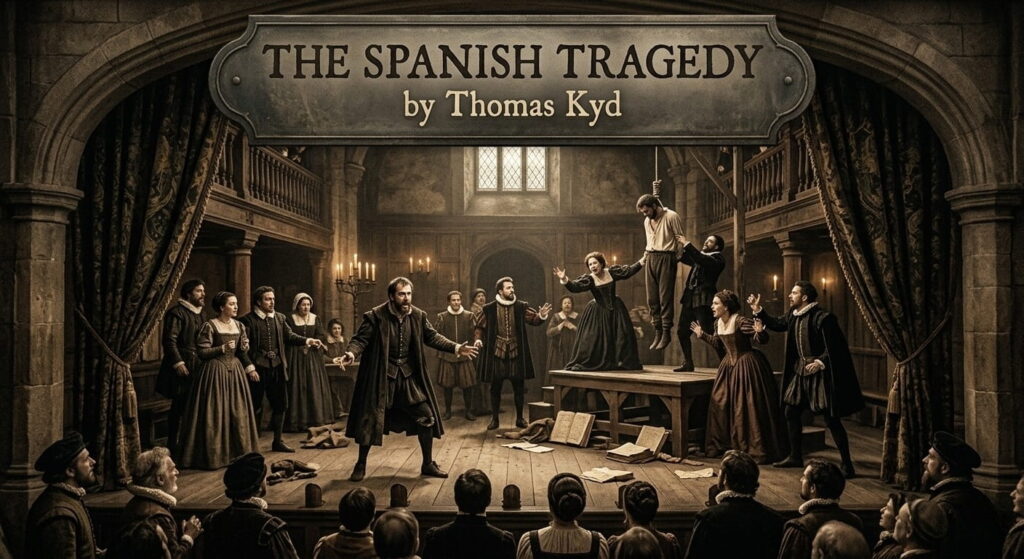
Hieronimo organizes a dramatic performance for the royal court. Moreover, he selects a tragic story for the play. Consequently, actors receive different roles in the performance. Likewise, Lorenzo and Balthazar participate with confidence. In addition, the king supports the theatrical entertainment gladly. Therefore, nobles gather to watch the spectacle. Moreover, excitement spreads across the court. Consequently, the atmosphere becomes joyful and relaxed. However, Hieronimo secretly replaces stage weapons with real ones. Therefore, danger hides within the theatrical performance. Moreover, actors practice their lines carefully. Consequently, no one suspects hidden revenge. Likewise, the stage becomes a place of preparation. In addition, Hieronimo controls every detail of the play. Therefore, the performance will produce real justice. Consequently, the theatre transforms into a weapon of revenge in the Spanish Tragedy.
12. The Play Within the Play
The performance begins before the king and nobles. Moreover, actors speak different languages during the scenes. Consequently, spectators watch with curiosity and fascination. Likewise, the story appears complex and entertaining. In addition, the actors perform their roles seriously. However, real revenge hides within the dramatic action. Therefore, Hieronimo follows the planned script carefully. Moreover, he waits for the perfect moment. Consequently, the stage becomes a place of deadly justice. Likewise, acting slowly transforms into a violent reality. In addition, the audience inside the court misunderstands events. Therefore, confusion spreads during the performance. Moreover, Hieronimo maintains control over the situation. Consequently, the dramatic device surprises both characters and spectators. Likewise, theatrical illusion hides real revenge. Thus, this technique becomes one of the most famous elements of the Spanish Tragedy.
13. Death of Lorenzo
During the performance, Hieronimo confronts Lorenzo directly. Moreover, he attacks him with a prepared dagger. Consequently, Lorenzo falls before the shocked audience. Likewise, spectators remain confused about the violence. In addition, many believe the action belongs to acting. However, the deadly wound reveals the truth. Therefore, the court slowly realizes the terrible event. Moreover, Lorenzo’s crime finally receives punishment. Consequently, justice arrives through violent revenge. Likewise, Hieronimo shows no regret for his action. In addition, grief still controls his emotions. Therefore, he continues the performance without hesitation. Moreover, the court experiences shock and horror. Consequently, revenge destroys the guilty conspirator. Likewise, spectators understand the seriousness of the tragedy. Thus, the death of Lorenzo forms a powerful moment in the Spanish Tragedy.
14. Death of Balthazar
Bel-Imperia participates bravely in the revenge plan. Moreover, she attacks Balthazar during the performance. Consequently, Balthazar dies through her determined action. Likewise, the court remains stunned by the violence. In addition, confusion slowly changes into realization. However, Bel-Imperia chooses death after revenge. Therefore, she ends her own life on the stage. Moreover her action shows tragic determination. Consequently, love and grief guide her final decision. Likewise, justice appears through sacrifice. In addition, the court witnesses the terrible consequences of jealousy. Therefore, tragedy reaches its emotional climax. Moreover, innocent love ends through violence and sorrow. Consequently, revenge destroys both criminals and victims. Likewise, the stage becomes a scene of destruction. Thus, Bel-Imperia’s final act strengthens the tragic meaning of the Spanish Tragedy.
15. Final Revelation
Hieronimo reveals the entire conspiracy before the king. Moreover,, he explains the crimes of Lorenzo and Balthazar. Consequently the court finally understands the truth. Likewise, grief and horror dominate the royal gathering. In addition, spectators recognize the failure of justice. However, revenge has already destroyed many lives. Therefore, tragedy cannot restore peace or happiness. Moreover, Hieronimo refuses further explanation of events. Consequently, despair controls his final actions. Likewise, he rejects the authority of the court. In addition, he chooses death rather than punishment. Therefore, the story ends with loss and suffering. Moreover, the Ghost of Andrea observes the conclusion. Consequently, supernatural justice appears fulfilled. Likewise, revenge completes its tragic purpose. Thus, the Spanish Tragedy closes with a grim vision of justice, suffering, and moral consequence.
Dramatic Devices Used in The Spanish Tragedy
1. Revenge Motif
Revenge forms the central dramatic device within the play. Characters pursue justice through personal retaliation. Therefore, revenge drives the entire tragic movement. Moreover, grief pushes Hieronimo toward revenge. Consequently, his emotional pain shapes the story. Likewise, Bel-Imperia also seeks revenge for Horatio. In addition, the Ghost of Andrea watches revenge unfold. Thus, revenge appears both human and supernatural. However, revenge never restores peace. Instead, revenge increases violence and suffering. Therefore, the Spanish Tragedy shows the moral consequences of revenge. Moreover, revenge creates tension throughout the drama. Consequently, audiences anticipate punishment for the criminals. Likewise, the plot advances through revenge planning. In addition, revenge exposes corruption within political power. Thus, the revenge motif connects emotion and action. However, revenge also destroys innocent lives. Therefore, Kyd presents revenge as powerful yet tragic. Consequently, the audience questions justice and morality. Revenge therefore, becomes the main dramatic force within the play.
2. Play within the Play
The play-within-the-play serves as a brilliant dramatic device. Hieronimo organizes a theatrical performance for the court. Therefore, drama becomes a tool for revenge. Moreover, Lorenzo and Balthazar participate as actors. Consequently, they unknowingly join their own punishment. Likewise, the audience inside the court expects entertainment. In addition, real weapons replace stage props secretly. Thus, the theater transforms into a deadly reality. However, spectators misunderstand the violent action. Therefore, confusion increases dramatic tension. Moreover, this device highlights theatrical illusion. Consequently, acting hides real revenge plans. Likewise, audiences observe two layers of drama. In addition, the device reveals Hieronimo’s intelligence. Thus, the stage becomes a place of justice. However, tragedy emerges from dramatic performance. Therefore, the Spanish Tragedy uses theater as a revenge strategy. Consequently, the device creates suspense and surprise. This dramatic method later influenced Shakespeare and other playwrights.
3. Ghost and Supernatural Elements
Supernatural presence forms another important dramatic device. The Ghost of Don Andrea introduces the story. Moreover,, the figure called Revenge accompanies him. Consequently, both spirits observe human events. Likewise, they discuss justice and suffering. In addition, they frame the entire dramatic narrative. Thus, supernatural commentary shapes audience expectations. However, the ghost cannot interfere with events. Therefore, he only watches human tragedy unfold. Moreover, supernatural presence reflects classical Senecan influence. Consequently, the play connects Renaissance theater with ancient traditions. Likewise, the ghost reminds audiences about fate and justice. In addition, the spirit symbolizes the memory of past violence. Thus, the Spanish Tragedy combines human action with supernatural observation. However, the spirits show patience while revenge develops. Therefore, the device increases suspense and dramatic reflection. Consequently, audiences anticipate punishment for the guilty. The supernatural frame strengthens the tragic atmosphere.
4. Madness
Madness functions as a powerful dramatic device in the play. Hieronimo experiences an emotional breakdown after Horatio’s death. Therefore, grief disturbs his mental balance. Moreover, he speaks with confusion and sorrow. Consequently, other characters question his sanity. Likewise, his strange behavior attracts attention. However, his madness hides careful planning. Therefore, madness becomes a strategic disguise. In addition, emotional suffering appears through fragmented speeches. Thus, psychological tension grows throughout the drama. Moreover, madness reflects human reaction to injustice. Consequently, audiences sympathize with Hieronimo’s suffering. Likewise, grief transforms a noble father into an avenger. In addition, madness deepens tragic emotion. Thus, the Spanish Tragedy explores mental anguish through this device. However, madness also delays immediate revenge. Therefore, suspense increases during the story. Consequently, madness strengthens both emotional depth and dramatic tension.
5. Dramatic Irony
Dramatic irony plays an important role within the play. Audiences often know more than characters. Therefore, tension develops through hidden knowledge. Moreover, spectators understand Lorenzo’s guilt early. Consequently, they watch Hieronimo struggle for truth. Likewise, characters inside the court remain unaware. In addition, the audience observes secret revenge planning. Thus, dramatic irony increases suspense and expectation. However, the court still trusts the criminals. Therefore, injustice continues without punishment. Moreover, the play-within-the-play creates powerful irony. Consequently, spectators inside the story expect entertainment. Yet the audience recognizes approaching revenge. Likewise, the difference between knowledge creates tension. In addition, irony exposes corruption within the court. Thus, the Spanish Tragedy uses irony to engage viewers. However, tragic outcomes remain unavoidable. Therefore, dramatic irony strengthens emotional impact and anticipation.
Thomas Kyd as a Dramatist: https://englishlitnotes.com/2026/03/13/thomas-kyd-as-a-dramatist-pioneer-of-the-elizabethan-revenge-tragedy/
The Tenth Muse Lately Sprung Up in America by Anne Bradstreet: https://americanlit.englishlitnotes.com/the-tenth-muse-lately-sprung-up-in-america-1650/
Discover more from Naeem Ullah Butt - Mr.Blogger
Subscribe to get the latest posts sent to your email.