Introduction
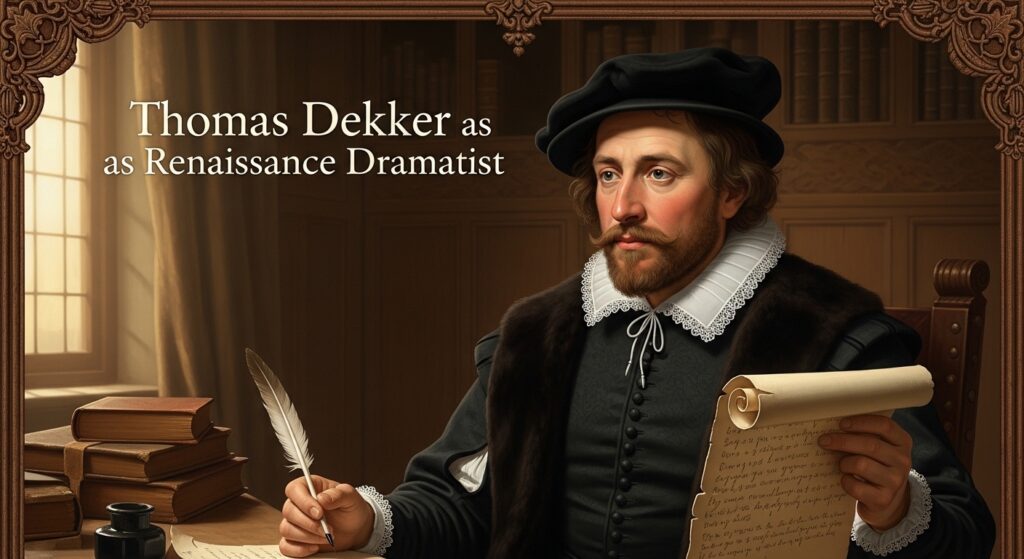
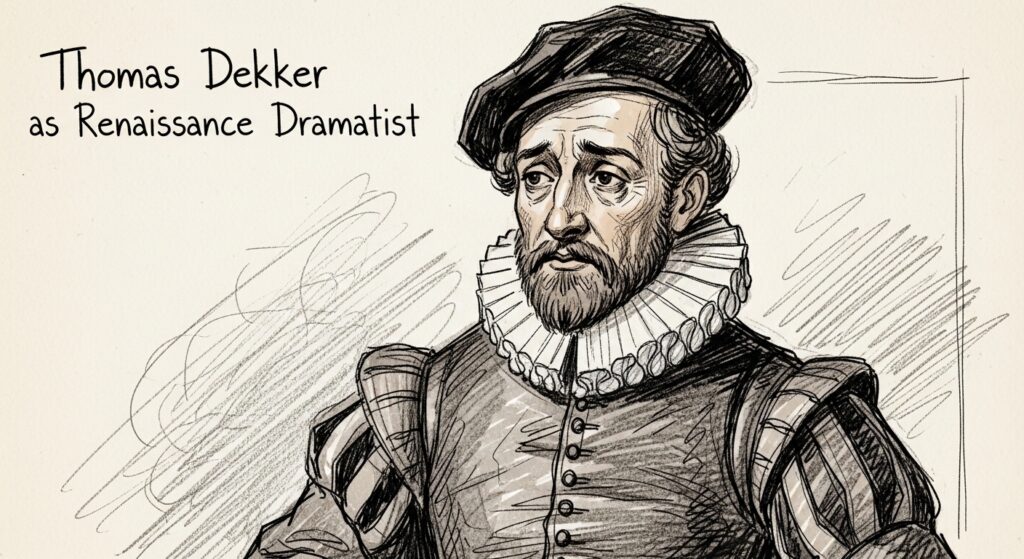
Thomas Dekker as Renaissance Dramatist holds a crucial role in late Elizabethan and Jacobean theatre, primarily excelling in citizen comedy. His work stood out for his profound sympathy for the working classes. His portrayal of London life was vibrant and authentic. It connected deeply with the everyday audience. Working often in intense collaboration with contemporaries like Middleton and Webster, Dekker became a prolific professional playwright. He skillfully blended romantic plots with gritty urban realism, reinforcing the enduring appeal of his plays. His masterpiece, The Shoemaker’s Holiday, is a testament to his genius. It celebrates the patriotic values of the London artisan. It also highlights moral and social values. Dekker demonstrated the power of the stage to reflect and celebrate the life of the common citizen. Consequently, his legacy rests firmly on his unique dramatic vision of the English capital.
1. Pioneer of Citizen Comedy
Thomas Dekker as Renaissance Dramatist pioneered the fully realized genre of citizen comedy. This established London’s middle and artisan classes as worthy subjects for heroic and romantic dramatic treatment. This focus departed significantly from the aristocratic settings common in early Renaissance drama. Therefore, his plays directly engaged the commercial class that formed a large part of the theater audience. The enthusiastic reception of The Shoemaker’s Holiday proved the commercial viability of celebrating the lives of merchants and craftsmen. Dekker’s sympathetic lens provided a positive view. It contrasted sharply with the satire of rivals like Ben Jonson. This contrast reinforced the positive, moralistic tone of the genre. Attention to the local slang and customs strengthened the authenticity of the citizen setting. Therefore, Dekker demonstrates that popular drama successfully validates the non-noble classes. Consequently, his work profoundly shaped the social focus of later comedy.
2. The Triumph of The Shoemaker’s Holiday
The play that cemented Thomas Dekker as Renaissance Dramatist is The Shoemaker’s Holiday (1599), his masterpiece of citizen comedy. The play’s boisterous energy captivated the public. Its patriotic fervor resonated with audiences. The depiction of the shoemaker Simon Eyre’s rise to Lord Mayor was especially powerful. Consequently, it became an instant, lasting success. The play skillfully blends the aristocratic romance plot (Rowland Lacy) with the working-class realism of the shop. This reinforces the play’s thematic unity. The celebration of the “gentle craft” and honest labor establishes a strong moral core. Its lively, fast-paced dialogue strengthened both its popular appeal and theatrical effectiveness. Therefore, Dekker demonstrates the power of drama to celebrate social mobility and national pride. The play remains his most frequently performed work.
3. Prolific Collaboration with Thomas Middleton
Thomas Dekker as Renaissance Dramatist was famous for his frequent and successful collaborations, most notably with Thomas Middleton. Together, they created some of the era’s most significant city comedies and tragicomedies. Their shared authorship on plays like The Roaring Girl and The Honest Whore demonstrated a rare synergy of dramatic talents. Therefore, they efficiently met the high demand of the theatrical market. The collaboration on The Roaring Girl, in particular, yielded a groundbreaking and highly popular character in the cross-dressing Moll Cutpurse. Their works had a thematic focus on complex urban morality. They also emphasized social satire. This focus reinforced the cutting-edge nature of Jacobean theatre. Attention to the blend of Dekker’s warmth and Middleton’s cynicism strengthened the dramatic tension. Therefore, Dekker demonstrates that collaborative artistry often defines a professional playwright’s career. Consequently, his collaborations significantly expanded his stylistic range.
4. The War of the Theatres (Jonson Rivalry)
Thomas Dekker as Renaissance Dramatist played a crucial role in the early Jacobean literary conflict. This conflict is known as the “War of the Theatres.” This conflict fundamentally shaped his dramatic career and public persona. His participation, particularly his play Satiromastix (1601), was a direct response to Ben Jonson’s satirical attacks in Poetaster. Therefore, the feud provided high-profile, commercial material for the competing theatrical companies. Satiromastix defended himself and John Marston from Jonson’s scorn, skillfully turning Jonson’s own satirical methods against him. Furthermore, the public nature of this dramatic rivalry reinforced the fiercely competitive and intellectual atmosphere of the London stage. Attention to the personal invective and sharp wit strengthened the immediate appeal of the satirical drama. Therefore, Dekker demonstrates that dramatic form served as a vehicle for public literary debate. Consequently, his dramatic satires provide key historical context.
5. Sympathy for the Marginalized
A defining trait of Thomas Dekker as Renaissance Dramatist is his profound sympathy for society’s marginalized and less-respectable characters. He often granted them dignity and moral complexity rarely seen on the stage. Characters like the reformed prostitute Bellafront in The Honest Whore defied social norms. The defiant Moll Cutpurse in The Roaring Girl also challenged rigid social conventions. Therefore, his drama possessed a distinctive humanist quality. This sympathetic portrayal contrasted sharply with the often-cynical and unforgiving characterizations of other playwrights. Furthermore, Dekker’s moral vision emphasized the potential for redemption and the inner goodness of even outwardly disreputable figures. Attention to the emotional realism of their struggles strengthened the audience’s empathy. Therefore, Dekker demonstrates that drama effectively offers a voice and moral defense for the socially excluded. Consequently, his characterizations provided a moral compass.
6. Thematic Blend of Romance and Realism
Thomas Dekker as a Renaissance Dramatist excelled in the challenging thematic blend of idealistic romance with gritty London realism. This fusion characterizes his finest work, The Shoemaker’s Holiday. The romantic subplot (the disguised nobleman courting the merchant’s daughter) provided the escapist fantasy. The main plot (the life of the shoemakers) offered authentic urban detail. Therefore, he achieved a drama that was both engaging and grounded. Additionally, this hybrid style broadened the appeal of his plays. It satisfied the desire for idealized love. It also fulfilled the appetite for familiar city life. Furthermore, the alternation between lyrical, romantic language and earthy, colloquial speech reinforced the stylistic versatility of this blending. Also, attention to the swift transitions between these modes strengthened the theatrical dynamism. Therefore, Dekker demonstrates that successful Renaissance drama often synthesizes competing genres. Consequently, Kyd’s blending was highly influential on tragicomedy.
7. Collaboration with John Webster
Thomas Dekker as Renaissance Dramatist established an important partnership with the acclaimed tragic playwright John Webster. This partnership resulted in city comedies like Westward Ho and Northward Ho. These collaborative efforts further cemented his reputation in the burgeoning city comedy genre. He played a significant role in contributing to a dramatic trend. Additionally, their joint plays participated in the theatrical war of words with Ben Jonson’s collaborators. This highlighted the fierce rivalry of the time. Furthermore, the blending of Webster’s darker sensibility with Dekker’s warmer, more genial outlook created a unique and popular dramatic texture. Also, attention to the satirical depiction of the mercantile class in these plays strengthened the social critique. Therefore, Dekker demonstrates the centrality of collaboration to the theatrical business model. Consequently, his collaborative works expanded his stylistic range.
8. Lyrical Quality of Language
A noteworthy aspect of Thomas Dekker as Renaissance Dramatist is the lyrical quality of his language. This is particularly evident in his songs, romantic speeches, and passages of genuine sentiment embedded within his plays. He included popular, memorable verse. For example, the “Merry Month of May” song in The Shoemaker’s Holiday added emotional appeal to his work. It also enhanced the charm of his creations. As a result, his plays possessed a distinct poetic grace. Additionally, this lyrical flair provided a necessary contrast to the realistic, often vulgar, colloquialism of his comic dialogue. Furthermore, Dekker’s ability to move between the poetic and the prosaic reinforced his stylistic range and dramatic sophistication. Also, attention to the rhythm and imagery of his songs strengthened their enduring charm. Therefore, Dekker demonstrates that dramatic writing must integrate strong poetic elements. Consequently, his songs contributed significantly to the genre.
9. Development of the Domestic Tragedy
Thomas Dekker as Renaissance Dramatist made a significant contribution to the development of the domestic tragedy genre. Notably, he collaborated on The Witch of Edmonton (1621, with Ford and Rowley). This focus on tragic events within the middle and lower classes broadened the moral and emotional scope of drama. It appealed directly to a wide segment of the audience. Additionally, the depiction of ordinary characters grappling with moral, social, and supernatural forces enhanced the sense of realistic terror. Furthermore, the collaboration on The Witch of Edmonton showed his skill in handling dark, complex, and socially resonant themes. Also, attention to the detailed psychological realism of the characters strengthened the tragic pathos. Therefore, Dekker demonstrates that profound tragedy exists within the common social sphere. Consequently, his work in this genre was pioneering.
10. Thematic Focus on Debt and Poverty
Thomas Dekker as Renaissance Dramatist often infused his plays with a poignant thematic focus on debt and poverty. He also highlighted the fragility of financial security. This focus reflects his own frequent, harsh personal experiences, including imprisonment for debt. His firsthand knowledge lent a chilling realism to his portrayal of economic struggle. It added sympathetic depth to his work. Consequently, his work possessed profound social relevance. Additionally, his comedies portrayed pressures facing the artisan class. These comedies highlighted the economic undercurrents of London life. Anxiety over financial ruin was pervasive in his dramas. It also appeared in his prose pamphlets. These works reinforced the precariousness of professional life. Additionally, attention to the realistic consequences of debt strengthened the social commentary. Therefore, Dekker demonstrates that personal experience effectively fuels dramatic realism. Consequently, his debt struggles added complexity to his work.
11. Use of Colloquial Speech
Thomas Dekker as Renaissance Dramatist had a remarkable ear for authentic London colloquial speech. He expertly reproduced slang with unparalleled vitality in his comic characters. This realistic dialogue immediately transported the audience to the bustling streets and shops of the city. It grounded the plays in a tangible reality. Therefore, he made his characters sound real and relatable. Additionally, the use of recognizable London vernacular enhanced the sense of intimacy and familiarity for the citizen audience. Furthermore, the contrast between the rough, witty speech of the commoners highlighted social commentary. More formal language was used by the nobles to reinforce it. Also, attention to the precise dialect of different trades and classes strengthened the play’s social detail. Therefore, Dekker demonstrates that authentic language is essential for successful social realism on stage. Consequently, his dialogue remains a vital historical record.
12. Moralistic and Didactic Tone
Despite the comedy and occasional vulgarity, Thomas Dekker as Renaissance Dramatist consistently employed a moralistic and didactic tone. He ensured that virtue was ultimately rewarded and vice punished in his plots. Dekker’s adherence to traditional dramatic morality resonated with the conservative ethics of the London mercantile class. This adherence reinforced the ethical function of the theatre. Therefore, his plays were widely accepted. Additionally, the clear contrast between honest labor and idle aristocracy (in The Shoemaker’s Holiday) provided a strong ethical message. Furthermore, the focus on repentance and redemption, particularly in The Honest Whore, underscored his Christian worldview. Also, attention to the formal epilogues and conclusions strengthened the explicit moral takeaway. Therefore, Dekker demonstrates that popular drama must ultimately uphold communal moral values. Consequently, his didacticism aligned with Renaissance ideals.
13. Influence on Early Tragicomedy
Thomas Dekker as Dramatist played a crucial role in the development of tragicomedy. This genre blends serious, near-tragic elements with a final comedic or romantic resolution. Moreover, his ability to skillfully shift tone from pathos to broad humor is evident in The Honest Whore. This skill defined a structural pattern for later practitioners of the genre. His work, therefore, offered a model for emotional complexity. Additionally, the dark, intense plots were enhanced by miraculous resolutions. These resolutions often came through repentance or a deus ex machina. This approach heightened the sense of dramatic relief. Furthermore, the sophisticated handling of both tragedy and comedy within a single work reinforced his thematic versatility. Also, attention to the careful pacing of emotional shifts strengthened the audience’s engagement. Therefore, Dekker demonstrates that tragicomedy requires masterful control over tone and expectation. Consequently, his tragicomic skill was highly praised.
14. Depiction of Female Agency
Thomas Dekker as Dramatist was notable for his sophisticated depiction of female agency. He often progressively portrayed their complexity in his dramas. Moreover, his heroines displayed courage, wit, and moral fortitude. These heroines could be a cross-dressing rogue like Moll Cutpurse or a wrongfully accused wife in The Witch of Edmonton. They challenged the conventional passivity of female characters. Therefore, his plays offered compelling female roles. Additionally, the focus on the internal moral struggle of characters like Bellafront underscored the psychological depth he afforded women. Furthermore, his sympathetic treatment of women navigating a patriarchal society reinforced his humanist sensibility. Also, attention to their sharp, witty dialogue strengthened their intellectual presence on stage. Therefore, Dekker demonstrates that complex female characters are vital for dramatic innovation and depth. Consequently, his female roles were groundbreaking for the era.
15. The Role of the Lord Mayor’s Pageants
Thomas Dekker as Dramatist was a leading writer of spectacular performances. These temporary performances were known as Lord Mayor’s Pageants. They were central to civic ceremonies. His lavish, allegorical spectacles included Troia-Nova Triumphans (1612). These works cemented his status as the city’s official poet. He became the official playwright. Therefore, his work served a political purpose. It also fulfilled a ceremonial function. Additionally, the pageants showcased his skill in writing elaborate verse and staging grand public spectacles. Furthermore, this work reinforced his strong affiliation with the London guilds and the civic authorities. Also, attention to the allegorical figures and patriotic themes strengthened the civic pride conveyed by the pageants. Therefore, Dekker demonstrates that drama extends beyond the playhouse to civic celebration. Consequently, his pageantry defined the city’s public ritual.
16. Thematic Critique of Aristocratic Snobbery
Thomas Dekker as Dramatist often incorporated a subtle critique of aristocratic snobbery. His thematic critiques were pointed and he included them in his citizen comedies. Moreover, noble characters like the Earl of Lincoln in The Shoemaker’s Holiday often acted foolishly or villainously. This behavior served as a foil to the virtue and common sense of working-class citizens. Therefore, his plays validated the morality of the middle class. Additionally, the nobleman Lacy had to disguise himself as a shoemaker to achieve his goals. This strategy reinforced the superior moral quality of the “gentle craft.” Furthermore, his consistent celebration of artisan values over inherited privilege underscored his democratic sympathies. Also, attention to the satirical portrayal of the arrogant gentry strengthened the comic relief. Therefore, Dekker demonstrates that drama effectively critiques class-based prejudice. Consequently, his satire targeted social hypocrisy.
17. Influence on Jacobean Satire
Thomas Dekker, although possessing a warmer tone than rivals like Jonson, significantly contributed to the development of Jacobean satire. His contributions were particularly evident in his collaborations on city comedies. Moreover, plays like Westward Ho and The Honest Whore had a London setting. They used this setting to expose social follies, greed, and moral corruption. They did so with sharp wit and detailed observation. Therefore, his work participated fully in the satirical trend. Additionally, his role in the War of the Theatres showcased his skill in direct satire. This rivalry culminated in Satiromastix. It demonstrated his dramatic satire against rival figures. Furthermore, the satirical depiction of the mercantile obsession with wealth and reputation reinforced the social realism of his work. Also, attention to the use of witty, cynical dialogue strengthened the satirical edge. Therefore, Dekker demonstrates that comedy is an effective vehicle for social and literary critique. Consequently, his satirical plays were commercially successful.
18. Narrative Use of Disguise
Thomas Dekker as Renaissance Dramatist frequently relied on the popular narrative device of disguise to drive the romantic plots. He explored social themes most famously with Rowland Lacy disguising himself as the Dutch shoemaker Hans. This device allowed the transgression of social barriers. It facilitated the nobleman’s direct engagement with the citizen class. This challenge to established hierarchies fueled the central romantic conflict. Additionally, the use of disguise allowed characters to observe and critique society from an outsider’s perspective, enhancing the dramatic irony. Furthermore, the successful maintenance of the disguise (Lacy’s Dutch accent) showcased the theatrical potential of performance and transformation. Also, attention to the risk involved in the disguise strengthened the dramatic tension. Therefore, Dekker demonstrates that disguise is a crucial tool for both romantic and social comedy. Consequently, his use of disguise was integral to the genre.
19. Versatility Across Dramatic Genres
A hallmark of Thomas Dekker as Renaissance Dramatist was his remarkable versatility across multiple dramatic genres. His work encompassed citizen comedy, romantic comedy, domestic tragedy, tragicomedy, and court pageant. This versatility allowed him to maintain a continuous stream of commissions. He adapted to changing theatrical tastes and company demands. This adaptation ensured his survival as a professional playwright. Therefore, he was a true master of his trade. Additionally, he adapted his style and tone for each genre. He moved from the lyricism of Old Fortunatus to the realism of The Witch of Edmonton. This range underscored his technical mastery. Furthermore, his collaborative efforts often involved mixing the best of various stylistic approaches. Also, attention to his prolific output across genres strengthened his reputation as a commercial powerhouse. Therefore, Dekker demonstrates that artistic adaptability is paramount to professional success. Consequently, his wide-ranging output defined his career.
20. Thematic Celebration of London
Thomas Dekker as Renaissance Dramatist was, above all, the dramatic chronicler of London. He celebrated the city not just as a setting but as a character in his plays. Moreover, he included recognizable landmarks, streets, and trades. This created a palpable sense of place. It fostered a deep connection with the local audience. Therefore, his work was intimately tied to the city’s identity. Additionally, the patriotic and civic pride celebrated in plays like The Shoemaker’s Holiday strengthened the audience’s sense of belonging. It reinforced their community identity. His dramatic focus was on the energy and dynamism of London’s economy. He highlighted social life. This focus underscored the city’s central importance to the English nation. Also, attention to the specific, detailed knowledge of the city strengthened the authenticity of his scenes. Therefore, Dekker demonstrates that drama effectively functions as a cultural mirror for the capital city. Consequently, his city focus was a hallmark of his style.
21. Collaboration with Ben Jonson (The Magnificent Entertainment)
Thomas Dekker as Dramatist and Ben Jonson had a bitter rivalry in the War of the Theatres. Despite this, they briefly collaborated on the prestigious, official spectacle, The Magnificent Entertainment (1604). This collaboration was for King James I’s entry into London. This collaboration showed that civic duty and royal command were more important than personal artistic feuds. It proved his professionalism. Additionally, the joint effort showcased his skill in creating complex allegorical and ceremonial public drama on a grand scale. Furthermore, selecting both rival playwrights for such a high-profile commission reinforced their status. They were leading dramatic voices of the day. Also, attention to the necessity of their cooperation strengthened the understanding of theatrical economics. Therefore, Dekker demonstrates that commercial expediency sometimes transcends personal antagonism. Consequently, his collaborative efforts were often pragmatic.
22. Narrative Emphasis on Moral Choice
Thomas Dekker as Renaissance Dramatist placed a strong narrative emphasis on moral choice. He consistently highlighted human will in his tragedies and tragicomedies. Moreover, characters often faced clear ethical dilemmas. For example, Bellafront’s decision to reform influenced the plot’s outcome. Their choices, rather than fate, determined the story. Therefore, his plays focused clearly on human responsibility. Additionally, this emphasis on moral agency reinforced the Christian and humanist underpinnings of his dramatic vision. Furthermore, the exploration of redemption and the power of repentance underscored the philosophical seriousness of his work. Also, attention to the internal struggles of his protagonists strengthened the psychological depth. Therefore, Dekker demonstrates that drama effectively explores the complexities of moral decision-making. Consequently, his focus on choice resonated with contemporary theology.
23. Thematic Use of Food and Feasting
A notable signature of Thomas Dekker as Renaissance Dramatist is the joyous and symbolic thematic use of food. He uses feasting and communal celebration in his comedies. The newly appointed Lord Mayor Simon Eyre sponsored the grand feast at the conclusion of The Shoemaker’s Holiday. This event served as a powerful symbol of social harmony, prosperity, and the commonality between the classes. Therefore, his drama possessed a distinctive warmth. Additionally, the focus on shared meals reinforced the themes of good fellowship, generosity, and civic unity. Furthermore, the boisterousness of these scenes enhanced the festive and celebratory atmosphere of his drama. Also, attention to the specific details of the artisans’ merrymaking strengthened the cultural realism. Therefore, Dekker demonstrates that communal eating powerfully symbolizes social integration and peace. Consequently, his feasts were memorable dramatic moments.
24. Professional Relationship with Philip Henslowe
Thomas Dekker as Renaissance Dramatist maintained a close professional relationship with the theatrical impresario Philip Henslowe. This relationship was often financially fraught. Henslowe’s diary provides the key historical record of Dekker’s prolific early career. He frequently received commissions and loans from Henslowe. These underscore his role as a rapid, reliable, and necessary playwright for the Admiral’s Men. Therefore, he was vital to the theatrical business. Additionally, Dekker wrote or adapted many plays for Henslowe’s company during the late 1590s. This confirmed his status as a workhorse of the popular stage. Furthermore, the financial instability reflected in Henslowe’s loan records reinforced the economic precarity of the professional writer’s life. Also, attention to the rapid production of plays strengthened the understanding of theatrical schedules. Therefore, Dekker demonstrates the high-pressure reality of the Renaissance playwright’s profession. Consequently, his life is documented by Henslowe’s accounts.
25. Influence on the Character of the Female Rogue
Thomas Dekker as Dramatist played a key role in shaping the theatrical character of the female rogue. He featured outsiders in plays like The Roaring Girl (co-written with Middleton). Moreover, Moll Cutpurse, based on a real-life figure, embodied the spirit of rebellion and moral ambiguity. She offered a dynamic and unconventional heroine. Therefore, his work broadened the scope of female representation on stage. Additionally, the exploration of her cross-dressing and defiance of gender norms enhanced the play’s sensational appeal and social commentary. Furthermore, the sympathetic portrayal of her essential honesty despite her roguish lifestyle reinforced Dekker’s thematic focus on inner virtue. Also, attention to the wit and intelligence of the female rogue strengthened her dramatic power. Therefore, Dekker demonstrates that unconventional characters profoundly impact dramatic innovation. Consequently, his rogues challenged social expectations.
26. Thematic Emphasis on Fidelity and Trust
Thomas Dekker as Dramatist frequently explored marital and romantic fidelity. He emphasized the importance of trust in his comedies and tragicomedies. Moreover, the enduring loyalty of characters like Jane in The Shoemaker’s Holiday underscores the moral value of steadfast love. The efforts of Bellafront to prove her “honest” intentions also highlight this moral value. Therefore, his drama offered a positive view of relationships. Additionally, the dramatic tension often revolved around threats to this fidelity, enhancing the emotional investment of the audience. Furthermore, the eventual triumph of trust and loyalty over jealousy and deceit reinforced the moral optimism of his comedies. Also, attention to the emotional sincerity of the lovers strengthened the romantic appeal. Therefore, Dekker demonstrates that relationships are vital territory for moral and dramatic exploration. Consequently, his themes resonated with domestic ethics.
27. Use of Simple, Effective Stagecraft
Thomas Dekker as Dramatist favored a style of simple, effective stagecraft. He relied heavily on vivid dialogue, strong characterization, and rapid action. This approach was preferred over elaborate scenic spectacle (outside of the Pageants). Moreover, this preference for dramatic substance was more important than theatrical flash. As a result, his plays were performed successfully across various public and private stages. This maximized their commercial reach. His work was highly adaptable. Additionally, the focus on the immediate, tangible reality of the London setting eliminated the need for complex, idealized scenery. Furthermore, his reliance on the actors’ skill to convey the emotional depth reinforced the centrality of performance over spectacle. Also, attention to the smooth flow of scenes strengthened the dramatic momentum. Therefore, Dekker demonstrates that strong writing is paramount to effective staging. Consequently, his drama relied on essential theatrical elements.
28. Legacy in City Comedy
The enduring dramatic legacy of Thomas Dekker as Dramatist is centrally defined by his City Comedy contributions. This genre peaked in the early Jacobean era. Moreover, his plays like The Shoemaker’s Holiday provided the genre with its model of geniality, social ascent, and sympathetic realism. This set him apart from the more cynical satire of Middleton and Jonson. Therefore, he offered a unique, accessible voice. He focused on the daily life and aspirations of the mercantile class. This focus ensured the genre’s popularity with the London audience. Furthermore, the blend of romance and realism he perfected in this genre strongly influenced subsequent urban dramatists. Also, attention to the detailed depiction of London social types strengthened the genre’s distinctiveness. Therefore, Dekker demonstrates that the dramatic genre effectively captures the spirit of its urban setting. Consequently, his contributions were foundational to the genre.
29. Thematic Exploration of Madness
Thomas Dekker as Dramatist explored the dark thematic exploration of madness in his tragic works. He particularly focused on the descent into irrationality driven by extreme moral or emotional stress. Moreover, in works like The Honest Whore and The Witch of Edmonton, the depiction of madness enabled intense psychological realism. It allowed these works to explore the vulnerability of the human mind. Therefore, he achieved powerful tragic effects. Additionally, the rational world contrasted with the chaos of the mad mind. This contrast reinforced the tragic dimensions of the plays. Furthermore, the use of madness often served as a visible symbol of societal or moral corruption. Also, attention to the poignant dialogue of the mentally afflicted characters strengthened the pathos. Therefore, Dekker demonstrates that drama effectively confronts the complexities of the fractured psyche. Consequently, his exploration of madness was highly influential on later tragedy.
30. Influence on Later Restoration Comedy
The sympathetic and realistic London setting is often overlooked. The focus on middle-class values is also frequently missed. Additionally, the witty dialogue of Thomas Dekker as Dramatist subtly influenced the development of Restoration comedy. Moreover, he successfully portrayed the everyday life of the city. This portrayal was later adapted to a more cynical and satirical tone. This adaptation demonstrated the potential of urban society as a rich source for dramatic content. Therefore, his work provided a structural antecedent. In his city comedies, Dekker emphasized sharp dialogue and social manners. This emphasis laid a foundation for the later focus on wit. It also encouraged social critique. Furthermore, his sympathetic treatment of certain anti-heroic figures foreshadowed the complicated morality of Restoration protagonists. Also, attention to the fast-paced, episodic plotting strengthened the connection to later comic structures. Therefore, Dekker demonstrates that dramatic genres often evolve by adapting earlier successful forms. Consequently, his work holds a place in comic genealogy.
31. Thematic Focus on Time and Change
Thomas Dekker captured the profound focus on time and social change. London rapidly shifted between the Elizabethan and Jacobean periods. He depicted the transition from stable guilds to the turbulent, money-driven city. This provided a compelling historical backdrop for his dramatic narratives. His work documented a major social shift for his audience. The aging of characters reinforced the theme of social mobility. Documentation of the plague provided context for temporal urgency. Attention to passing time strengthened the sense of historical realism. Dekker demonstrates that drama chronicles social evolution effectively. His plays reflect the era’s turbulence.
32. Use of Episodic Plotting
Thomas Dekker frequently used episodic plotting in his dramas. He strung together a series of related, distinct scenes. He avoided tight, classical unity of action. This structure was common in popular Renaissance drama. It showcased the breadth of London life effectively. He incorporated multiple social classes and subplots. This maximized the plays’ variety and popular appeal. It satisfied the audience’s appetite for complexity. This episodic nature allowed fluid integration of different genres. He blended romantic and realistic plots in The Shoemaker’s Holiday. Rapid shifts between scenes enhanced the performance’s dynamic energy. Clear, well-paced transitions strengthened the overall coherence. Dekker shows that flexible structure is vital for large-scale popular drama. His plotting was commercially astute.
33. Blending of City and Court Motifs
Thomas Dekker as Dramatist achieved a powerful effect. He did so by blending courtly and aristocratic motifs with the rougher realities of city life in his comedies. Moreover, figures like Rowland Lacy (the nobleman) appeared in the plebeian setting of the shoemaker’s shop. This created a compelling social and dramatic friction. Therefore, he explored the tensions between two distinct social worlds. Additionally, the nobleman’s voluntary descent into the city environment underscored the moral critique of the superficiality of the court. Furthermore, the eventual acceptance of the shoemaker Lord Mayor by the King reinforced the thematic ideal of social harmony. Also, attention to the contrast in manners and language strengthened the social commentary. Therefore, Dekker demonstrates that dramatic tension arises from the juxtaposition of social extremes. Consequently, his blending enriched his social observations.
34. Thematic Role of the Master Craftsman
A major innovation of Thomas Dekker as Dramatist was the elevation of the master craftsman or artisan. He brought the “gentle craft” to the role of a comic hero. This was embodied by the boisterous Simon Eyre. This focus celebrated the intelligence, integrity, and social contribution of the working professional. It granted him heroic status previously reserved for nobility. Thus, his work was genuinely democratic in spirit. Additionally, the portrayal of the craftsman’s energy and business acumen reinforced the contemporary pride in London’s economic success. Furthermore, the sympathetic attention to the workshop environment and the camaraderie of the workers provided a unique social setting. Also, attention to the robust, earthy humor of the craftsmen strengthened the popular appeal. Therefore, Dekker demonstrates that the common worker possesses significant dramatic heroism. Consequently, his heroes often rose from the artisan class.
35. Collaboration with John Ford and William Rowley
Thomas Dekker partnered with John Ford and William Rowley. They wrote the chilling domestic tragedy The Witch of Edmonton (1621). This late-career collaboration showed his adaptability to darker, cynical tragic themes. Therefore, he remained relevant in the changing theatrical landscape. His contribution likely involved the sympathetic portrayal of Mother Sawyer. This aligned with his usual humanism effectively. The play blends tragic intensity, social realism, and supernatural elements. This reinforced the dramatic complexity of the play. The seamless merging of distinct voices strengthened the tragedy’s coherence. Dekker shows the power of collaborative effort for complex, dark themes. Their partnership yielded significant works.
36. Use of Interludes and Songs
Thomas Dekker skillfully used interludes, songs, and celebrations. These enhanced the festive atmosphere of his plays. They also allowed for changes in pace and tone effectively. These moments, like the shoemakers’ party scenes, provided essential comic relief. They reinforced the thematic joy of the working class. Thus, he achieved a dynamic theatrical experience. Lyrical songs enhanced the romantic subplots significantly. They also showcased his poetic talent effectively. Spontaneous celebratory moments reinforced the vibrant citizen culture. Integrating music and dance strengthened the overall performance value. Dekker demonstrates that non-narrative elements are vital for theatrical dynamism. His use of song enriched his comedies.
37. Thematic Focus on Civic Loyalty
Thomas Dekker placed high focus on civic loyalty and patriotism. He stressed the importance of London guilds. The guilds sustained the nation’s economic and moral health. Celebration of the Lord Mayor reinforced civic virtue. Emphasis on public service and mutual aid affirmed the city. His plays were thus politically and socially affirming. London’s response to national events showed patriotic commitment. This includes the war in France in The Shoemaker’s Holiday. The moral order in his comedies reinforced a well-governed society. Pomp and ceremony of civic life strengthened the patriotic appeal. Dekker shows that drama celebrates civic values. His themes were deeply nationalistic.
38. The Complexity of The Honest Whore
Thomas Dekker as Dramatist co-authored, with Thomas Middleton, The Honest Whore, Part I (1604). This is a profound tragicomedy that uniquely explores the complexity of moral identity and social prejudice. Moreover, the protagonist, Bellafront, attempts to reform from prostitution. This forces the audience to confront questions of redemption, social acceptance, and the nature of true honesty. Therefore, the play was ethically challenging and sophisticated. Additionally, the play’s title itself, a seeming contradiction, highlighted the theme of inner moral worth versus outer social reputation. The sequel, Part II, was written solely by Dekker. It further explored the themes of endurance and temptation. This solidified his thematic commitment. Also, attention to the psychological depth of Bellafront strengthened the moral complexity. Therefore, Dekker demonstrates that drama effectively tackles nuanced ethical and social paradoxes. Consequently, his tragicomedy challenged audience morality.
39. Style of Genial Humor
Thomas Dekker, as a dramatist, used a style characterized by genial and warm humor. His humor was often boisterous. This was in stark contrast to the acid cynicism of Jonson’s comedies. Moreover, his comedies prioritized merriment and good fellowship. They emphasized the essential goodness of his characters, creating a feel-good dramatic experience. Therefore, he was the most humane of the London comic writers. Additionally, this warm tone ensured his popularity with the general audience, which preferred comforting comedy over harsh satire. Furthermore, the reliance on character-driven humor and witty repartee reinforced the accessibility of his plays. Also, attention to the genuine affection between characters strengthened the emotional heart of the comedy. Therefore, Dekker demonstrates that warm-hearted comedy can be both popular and dramatically effective. Consequently, his humor was celebrated for its kindness.
40. Thematic Role of Women’s Work
Thomas Dekker as Dramatist uniquely showcased the thematic role of women’s work. He highlighted their economic contribution in the London mercantile society. This detail is often ignored by other playwrights. Moreover, he depicted wives, apprentices, and even seamstresses actively involved in the “gentle craft” and city economy. Their vital social and financial contributions were underscored. These contributions are often underappreciated. Therefore, he offered a more complete view of city life. Additionally, the portrayal of the Lord Mayor’s wife, Jane Eyre, showed her actively managing the household. She also handled social affairs. This reinforced the importance of the female domestic role. Furthermore, the economic independence of figures like Moll Cutpurse further highlighted the various ways women navigated the economy. Also, attention to the practical details of their daily labor strengthened the realism. Therefore, Dekker demonstrates that women’s economic role is a significant dramatic subject.
41. Use of Dramatic Contrast
Thomas Dekker as Dramatist made sophisticated use of dramatic contrast. He enhanced his themes and characters by pitting cynicism against humanism. Dekker also contrasted courtly elegance with citizen roughness, and vice with virtue. Moreover, this technique of juxtaposition deepened the emotional and moral complexity of his plays. It forced the audience to weigh opposing social and ethical values. As a result, he achieved greater dramatic depth. Additionally, the jealous Earl of Lincoln contrasted with the generous Simon Eyre. This provided a clear moral framework in The Shoemaker’s Holiday. Furthermore, the constant oscillation between tragic intensity and comic relief reinforced the stylistic mastery of tragicomedy. Also, attention to the balanced structure of his subplots strengthened the thematic tension. Therefore, Dekker demonstrates that structural opposition is a powerful engine of dramatic meaning.
42. Influence on John Fletcher
The popular, structurally complex tragicomedies of Thomas Dekker as Dramatist laid a foundation. They arguably influenced the development of the genre by John Fletcher. Together with Francis Beaumont, Fletcher codified the form. Dekker successfully blended serious action with a happy ending. This demonstrated the commercial and artistic potential of the form. His sympathetic portrayal of marginalized characters further indicated this potential. Therefore, he was a crucial precursor. Additionally, Dekker’s ability to maintain suspense effectively is evident in The Honest Whore. The tone shifts in his work set a high bar for later tragicomic writers. Furthermore, his structural freedom and episodic plotting offered a template for Fletcher’s sprawling, romantic narratives. Also, attention to the dramatic resolution through recognition and repentance strengthened the link to the later tragicomic pattern. Therefore, Dekker demonstrates that early genre experimentation guides later formalization. Consequently, his work provided essential dramatic DNA.
43. Thematic Exploration of the Supernatural
Thomas Dekker as Dramatist occasionally utilized the thematic exploration of the supernatural and folklore in his dramas. He did this most notably in Old Fortunatus and The Witch of Edmonton. Magic, curses, and demonic pacts allowed him to explore universal questions of fate, temptation, and moral boundaries. These elements connected his London setting to grander philosophical and spiritual concerns. As a result, his plays achieved a deeper resonance. Additionally, the depiction of witchcraft in The Witch of Edmonton reflected contemporary social anxieties. It also portrayed the tragic consequences of communal fear. Furthermore, the allegorical figures in Old Fortunatus reinforced the didactic exploration of wealth and virtue. Also, attention to the realistic depiction of folk beliefs strengthened the social texture of his dramas. Therefore, Dekker demonstrates that fantasy and folklore effectively explore deep moral issues. Consequently, his use of the supernatural was powerful.
44. The Significance of Satiromastix
The significance of Thomas Dekker as Renaissance Dramatist is underscored by his authorship of Satiromastix (1601). This play effectively brought the dramatic War of the Theatres to a close. His sharp, witty, and emotionally charged satire was directed against Ben Jonson’s Poetaster. This conclusion was cathartic and popular. It marked the end of the highly public literary feud. Dekker emerged victorious, winning the decisive battle for the public stage. The play was produced rapidly, achieving immediate success. These factors confirmed his ability to use satire as both a weapon and a form of popular entertainment. Furthermore, the thematic focus on honesty and plain speech strengthened his moral stance. The role of the true poet reinforced the moral high ground of his position. Attention to the use of a dramatic mock-coronation strengthened the satirical effect. Therefore, Dekker demonstrates that dramatic confrontation effectively settles intellectual scores in the public arena. Consequently, Satiromastix remains a key historical document.
45. Style of Rapid Production
Thomas Dekker as Dramatist engaged in rapid, almost relentless dramatic production. He often worked simultaneously on multiple plays, revisions, and collaborations. This astonishing output was primarily dictated by the commercial demands of the Admiral’s Men. The pressures of his debt also played a role. This highlights the intensity of the professional Renaissance theatre market. Therefore, he epitomized the working playwright. Additionally, the necessity of speed sometimes led to structural flaws. His talent for dialogue and characterization ensured the plays’ quality and success. Furthermore, his ability to switch between prose pamphlets and drama further reinforced his relentless work ethic. Also, attention to the documented payments in Henslowe’s diary strengthened the historical record of his productivity. Therefore, Dekker demonstrates that sheer volume often equals professional survival in the arts. Consequently, his output remains an incredible feat.
46. Thematic Emphasis on Forgiveness
Many of Dekker’s conflicts ultimately resolve around forgiveness. This is especially true in his romantic tragicomedies. Reconciliation and mercy also play a major role. The miraculous recovery of relationships, such as Lacy and Rose, consistently demonstrated his belief in human kindness. Additionally, the redemption of a sinner, like Bellafront, highlighted the power of grace. Therefore, his drama possessed a profound humanist message. Final moments of harmony were often achieved through a royal or civic intervention. This reinforced the theme of benevolent authority and social peace. Furthermore, the rejection of vengeful impulses reinforced the Christian moral framework of his work. Attention to the emotional release of the final scenes strengthened the audience’s sense of moral uplift. Therefore, Dekker demonstrates that dramatic resolution often requires a transcendent act of compassion. Consequently, his themes often culminated in forgiveness.
47. Use of Dramatic Archetypes
Thomas Dekker as Renaissance Dramatist showed great skill when he created dramatic archetypes. He deployed these archetypes effectively. They resonated immediately with the popular audience. These included the honest apprentice, the witty rogue, the tyrannical father, and the virtuous wife. These clear, recognizable character types provided immediate dramatic context and a shorthand for moral judgment. This maximized the emotional accessibility of his plays, showing he mastered the language of the stage. Additionally, he showed originality by injecting unexpected complexity and moral nuance into these established types (for example, the redemption of the prostitute). Furthermore, the use of archetypes simplified the rapid writing and collaborative process typical of the time. Attention to the consistent morality of these figures strengthened the didactic message. Therefore, Dekker demonstrates that archetypal figures are essential building blocks for popular drama. Consequently, his characters remain memorable dramatic studies.
48. Affiliation with the Admiral’s Men
Thomas Dekker as Renaissance Dramatist maintained a long-standing affiliation with the Admiral’s Men. This was the primary rival company to Shakespeare’s Lord Chamberlain’s/King’s Men. His most productive years involved this company loyalty. This positioned him as a central figure in the competition for popular audiences at theatres like the Fortune. Therefore, his work directly shaped the Admiral’s repertoire. His success provided the Admiral’s Men with popular hits like The Shoemaker’s Holiday. This allowed them to compete effectively against Shakespeare’s company. Furthermore, the demands of this company likely steered him toward the popular, large-cast spectacle of citizen comedy. Attention to the specific requirements of the Fortune Theatre strengthens the understanding of his staging. Therefore, Dekker demonstrates that company affiliation dictates a playwright’s dramatic output and style. Consequently, his work is directly tied to specific theatrical groups.
49. Thematic Role of the Apprentice
The thematic role of the apprentice is highly unique and persistent in the drama of Thomas Dekker as Renaissance Dramatist. His work celebrates the energy, loyalty, and potential for social mobility inherent in this youth culture. Apprentices in his plays, such as Ralph in The Shoemaker’s Holiday, embodied London’s hardworking, patriotic spirit. They served as key catalysts for plot resolution, thus representing the city’s future. Dekker’s focus on their social rituals, banter, and military service enhanced the realism and appeal for the youth audience. Furthermore, the success of these figures reinforced the theme that honest labor leads to prosperity and honor. Attention to their distinct clothing and speech strengthened the visual and linguistic realism. Therefore, Dekker demonstrates that focusing on youth is a powerful tool for social celebration in drama. Consequently, his apprentices were popular and significant figures.
50. Enduring Dramatic Fame
Thomas Dekker as Renaissance Dramatist remains famous for his unique humanism. His vibrant realism makes him memorable. He is known for creating the quintessential English citizen comedy. He had an unparalleled ability to capture the authentic voice and moral heart of London’s working and mercantile classes. Consequently, his plays are invaluable historical documents and engaging dramatic works, and he is rightly celebrated as the city’s laureate. His masterpiece, The Shoemaker’s Holiday, continues to be revived for its joyous spirit. This play celebrates community, labor, and social harmony. Furthermore, his complex collaborations with figures like Middleton and Webster secured his place in the highest echelon of Jacobean playwriting. His sympathetic moral vision strengthens his status as one of the most compassionate playwrights of his age. Therefore, Dekker demonstrates that dramatic empathy transcends the historical era. His fame is secured by his profound humanity.
The Echoing Green by William Blake: https://englishwithnaeemullahbutt.com/2025/05/10/the-echoing-green-by-william-blake/
Grammar Puzzle Solved: http://grammarpuzzlesolved.englishlitnotes.com
History of English Literature-Quiz-Part-4: https://englishlitnotes.com/2025/06/23/anglo-saxon-period-literature-quiz-part-4/
American Literature: http://americanlit.englishlitnotes.com
Discover more from Naeem Ullah Butt - Mr.Blogger
Subscribe to get the latest posts sent to your email.