
1. Introduction to Wilfrid Wilson Gibson
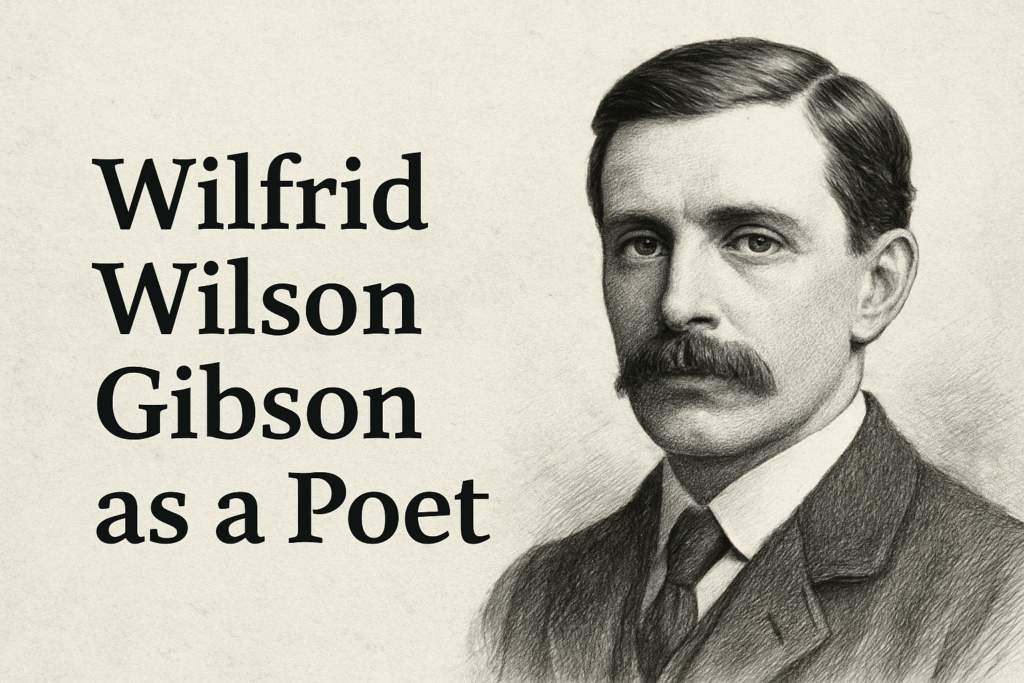
Wilfrid Wilson Gibson, born in 1878, emerged as one of the leading Georgian poets. Consequently, his work stood apart because he embraced simplicity strongly. Furthermore, he avoided complexity in his themes clearly. Therefore, he turned away from abstract symbolism often. Moreover, he rejected lofty ideals for common life always. In addition, he wrote primarily about the common man closely. Thus, his poetry reached wider audiences successfully. Consequently, his verse touched readers from different walks of life. Furthermore, he valued direct expression very much. Therefore, that approach gave his poetry authenticity clearly. Moreover, his choice of themes reflected human struggles often. In addition, he highlighted rural life and daily experiences strongly. Thus, he built a bridge between literature and reality. Consequently, readers found truth in his voice always. Furthermore, they noticed sincerity in his tone deeply. Therefore, Gibson carried forward the Georgian spirit well. Moreover, he added his own unique depth consistently. In addition, his poetry revealed the true essence of Wilfrid Wilson Gibson as Poet. Thus, he transformed ordinary experiences into meaningful verse. Consequently, he became a voice for the common people. Furthermore, he remains highly respected still.
2. The Georgian Movement and Gibson’s Place
The Georgian movement defined English poetry in the early twentieth century. It promoted clarity, directness, and the beauty of common life. Wilfrid Wilson Gibson as poet occupied a central role in this movement. Unlike poets who leaned heavily toward intellectualism, he highlighted ordinary experiences. For that reason, he appealed strongly to everyday readers. In fact, his inclusion in Edward Marsh’s Georgian Poetry anthologies confirmed his importance within the group. Moreover, Gibson balanced tradition with innovation by focusing on common people while shaping poetry into narrative form. This choice strengthened the movement’s goal of connecting poetry with life. Consequently, his contribution helped create a literary space where working-class voices could be heard. Because of his position, critics often described him as the true representative of Georgian ideals. His role gave Georgian poetry both authenticity and relevance.
3. Themes of Everyday Life
Gibson’s poetry consistently celebrated everyday life. He chose subjects often overlooked by mainstream literature. For instance, he wrote about workers, miners, and rural families. Through these portraits, he gave dignity to ordinary existence. Moreover, he emphasized the struggles of people who lived without privilege. Therefore, readers saw truth in his lines, not mere imagination. His interest in the common man made him stand out among his contemporaries. In addition, his writing showed that beauty resides in simple details. Transitions in his poems moved readers from hardship to hope, from struggle to resilience. Because of this approach, his poetry offered inspiration while remaining realistic. Furthermore, Gibson used plain language that matched the simplicity of his themes. Ultimately, he elevated daily experiences into art. Consequently, his work built empathy and respect for lives often forgotten in literature.
4. Sympathy for the Working Class
A defining aspect of Gibson’s poetry was his sympathy for the working class. He gave miners, laborers, and rural workers a voice in English poetry. Moreover, he avoided romanticizing their lives. Instead, he highlighted their struggles, fatigue, and endurance. Through such portrayals, Gibson added social depth to the Georgian movement. Readers noticed his sensitivity because he showed compassion without sentimentality. Furthermore, his sympathy did not reduce the dignity of working people. On the contrary, he revealed their strength, courage, and perseverance. This approach connected him with audiences who saw themselves reflected in his work. Because he emphasized social realities, Gibson’s poems bridged art and life. In fact, critics admired him for drawing attention to overlooked lives. Therefore, his work continues to be remembered for its humane outlook. His sympathy remains one of his greatest poetic contributions.
5. Narrative Quality in Gibson’s Poetry
Gibson’s poems often read like short stories. He had a remarkable gift for narrative verse. Rather than presenting abstract images, he told vivid stories in poetic form. Therefore, his works carried dramatic intensity. Furthermore, he frequently employed monologues and dialogues. Through these techniques, he allowed voices of ordinary people to shape the narrative. His storytelling drew readers in and made them participants in the experience. Moreover, the narrative quality created emotional closeness. As readers followed the unfolding events, they connected deeply with the characters. Because of this style, his poetry avoided obscurity and remained accessible. Additionally, his narrative skill made his war poems more powerful because they conveyed real events vividly. Consequently, his unique blend of poetry and story helped him reach diverse audiences. His narrative technique distinguished him from many of his contemporaries.
6. Influence of Rural Life
Rural life played an important role in shaping Gibson’s poetry. He valued countryside simplicity and found inspiration in the rhythms of rural existence. Moreover, he noticed how hardship and beauty coexisted in village settings. Consequently, his poems celebrated farm laborers, shepherds, and small communities. He also showed how natural landscapes provided strength during difficult times. In fact, his depictions of rural life balanced realism with lyricism. Furthermore, he offered readers a connection to nature while addressing social challenges. This balance made his work appealing both as art and as commentary. Therefore, he stood as both poet and observer of rural communities. Readers experienced the countryside not as idealized scenery but as a living, struggling world. Ultimately, rural life gave him a thematic foundation that shaped his identity as a poet.
7. The Impact of World War I
World War I transformed Gibson’s poetry. The war forced him to confront human suffering at a larger scale. Therefore, he abandoned purely pastoral themes and turned toward tragic realities. His war poems avoided patriotic glorification. Instead, he focused on pain, sacrifice, and futility. Moreover, he wrote about soldiers as human beings, not symbols. Through such portrayals, he revealed the devastating impact of war on individuals and families. Furthermore, his direct language intensified the emotional force. Critics noted that his war poetry displayed courage because it revealed truth rather than propaganda. In addition, his war themes gave depth to the Georgian movement, which otherwise risked appearing detached from global events. Consequently, his role as a war poet placed him among the significant literary voices of the early twentieth century.
8. Emotional Honesty in His Work
Emotional honesty defined Gibson’s poetic style. He did not mask pain with decorative language. Instead, he communicated feelings with clarity and sincerity. Moreover, he balanced emotion with restraint, avoiding sentimentality. This honesty gave readers confidence in his voice. Therefore, they trusted his portrayals of grief, struggle, and endurance. In addition, emotional honesty connected with readers who had lived through similar hardships. His war poems, for example, expressed genuine sorrow while maintaining dignity. Furthermore, even in poems about daily labor, he showed compassion without exaggeration. Because of this quality, his poetry stood apart from more artificial styles. Transitioning between emotions, Gibson guided readers from despair to resilience. Ultimately, his emotional directness gave his work lasting strength. Consequently, he remains admired as a poet whose honesty continues to resonate with modern audiences.
9. Use of Simple Language
Simplicity in language became Gibson’s signature trait. He avoided complicated metaphors and obscure references. Instead, he wrote with clarity so his readers could understand easily. Moreover, his words reflected the voices of ordinary people. Therefore, his language matched his subjects and themes. This stylistic decision reinforced his goal of giving poetry to the common man. Furthermore, the simplicity did not weaken his verse. On the contrary, it strengthened its impact by making emotions direct and powerful. In addition, readers found his language truthful because it mirrored real speech. Transitioning smoothly, he used plain words to express profound feelings. Consequently, his poetry showed that simplicity does not mean shallowness. His clear style still carries weight because it delivers emotions without confusion. Ultimately, his choice of simple language gave him a unique and lasting voice.
10. Contribution to Social Realism
Gibson played a major role in introducing social realism to Georgian poetry. He recognized that literature must represent genuine human conditions. Therefore, he wrote about poverty, hardship, and inequality. Moreover, his concern for social truth separated him from poets who focused only on beauty. Through his commitment to realism, he built bridges between art and life. Furthermore, his approach gave dignity to ordinary struggles by showing them as worthy subjects for poetry. In addition, social realism ensured his relevance during times of change and conflict. Consequently, his poetry offered more than aesthetic pleasure; it carried social conscience. Readers felt compelled to reflect on justice, labor, and humanity. Ultimately, Gibson’s contribution to social realism marked him as a poet deeply connected to his age. His realism gave lasting value to his poetry.
11. Contrast with Modernist Poets
During Gibson’s time, modernist poets like T.S. Eliot and Ezra Pound were reshaping poetry. However, Gibson chose a different path. He resisted experimental techniques and stayed true to clarity and narrative style. Therefore, his work contrasted sharply with modernist obscurity. Moreover, he did not use fragmented structures or heavy symbolism. Instead, he expressed life directly. This decision made his poetry accessible when modernist poetry became challenging for common readers. Furthermore, his focus on real people gave him a unique identity. In addition, his refusal to follow trends displayed courage. Critics sometimes viewed him as less innovative, yet his strength lay in sincerity. Consequently, his contrast with modernists highlighted his distinct contribution. Readers who sought clarity often turned to him. Ultimately, his divergence from modernism secured him a special place in literary history.
12. Friendship with Other Georgian Poets
Wilfrid Wilson Gibson as poet shared close connections with fellow Georgian poets. His friendship with Rupert Brooke, for instance, influenced his career. Moreover, he collaborated with others like Lascelles Abercrombie and John Drinkwater. These friendships nurtured creativity and encouraged collective growth. Therefore, he became part of a community that shaped early twentieth-century poetry. Furthermore, their shared values of simplicity and realism created harmony within the group. Gibson not only contributed individually but also strengthened Georgian identity as a whole. In addition, his interactions provided him opportunities to publish and reach wider audiences. Consequently, his friendships played both personal and professional roles. Readers today can see how this network supported his vision. Ultimately, his bonds with Georgian poets enriched his career and gave him confidence to remain true to his style.
13. Reception of Gibson’s Poetry
Gibson’s poetry received mixed critical reception during his lifetime. Many readers admired his sincerity and accessibility. They appreciated his attention to social realities. Moreover, his sympathy for the working class won respect. However, critics sometimes judged his simplicity as a weakness. They argued that his work lacked the complexity of modernist poetry. Despite such criticisms, his readership remained loyal. Therefore, his poetry continued to circulate widely. Furthermore, his inclusion in Georgian Poetry anthologies secured recognition. His war poems, in particular, drew strong responses because they addressed universal suffering. In addition, scholars later recognized his role in expanding themes of English poetry. Consequently, his reputation, though not as dominant as modernists, remains significant. Ultimately, Gibson’s reception reveals both admiration and debate, which reflects his unique place in literary history.
14. Gibson’s Dramatic Monologues
Dramatic monologues became one of Gibson’s favorite techniques. He allowed ordinary people to speak through his verse. Therefore, his poems carried authentic voices. Moreover, this technique made his poetry vivid and engaging. Readers felt as if they were listening directly to characters. Furthermore, dramatic monologues gave depth to his social themes. They revealed personal struggles, emotions, and resilience. In addition, they turned poetry into a form of performance. Consequently, his work combined storytelling with dramatic intensity. His monologues resembled miniature plays, which added variety to Georgian poetry. This style distinguished him from poets who focused solely on lyrical expression. Ultimately, Gibson’s dramatic monologues showcased his creativity and broadened his poetic form. Because of them, his poetry retained freshness and liveliness that continue to attract readers today.
15. Religious and Spiritual Undertones
Although Wilfrid Wilson Gibson as poet often wrote about social realities, he also explored spiritual undertones. His poetry occasionally reflected questions about faith and meaning. Moreover, he connected spirituality with daily struggles rather than abstract theology. Therefore, his religious tone appeared human and practical. Furthermore, he showed how suffering can lead to spiritual reflection. Readers found this aspect relatable because it linked faith with reality. In addition, he used spiritual motifs to provide hope during dark times, especially in war poems. Consequently, his work revealed not only social but also moral concerns. This combination added depth to his poetry and made it multi-dimensional. Ultimately, his spiritual undertones strengthened his appeal to audiences searching for comfort and understanding. His balanced approach ensured that spirituality supported realism rather than replacing it.
16. Legacy of His War Poetry
Gibson’s war poetry built a lasting legacy. Unlike poets who glorified war, he showed its devastating consequences. Therefore, his work contributed to the honest portrayal of World War I. Moreover, he depicted soldiers with humanity, not as symbols of victory. His war poems gave dignity to sacrifice while questioning futility. Furthermore, readers respected his courage to express truth during a patriotic age. In addition, his war poetry influenced later generations by shaping realistic war literature. Consequently, his contribution stands alongside other war poets such as Sassoon and Graves. His ability to merge emotion with realism made his war poems unforgettable. Ultimately, this legacy ensures his place in literary history. His war poetry continues to remind readers of the cost of conflict and the importance of truth.
17. Gibson’s Later Poetry
In his later years, Wilfrid Wilson Gibson as poet continued writing, although literary tastes shifted toward modernism. He remained committed to clarity and human themes. Therefore, he did not follow experimental trends. Moreover, his later poetry displayed maturity and deeper reflection. He focused more on memory, aging, and the persistence of human dignity. Furthermore, although critics sometimes overlooked him, his readers valued his consistency. In addition, his later works revealed a poet who never abandoned his principles. Consequently, his career demonstrated stability and loyalty to his vision. This steadfastness earned him respect as a poet of integrity. Ultimately, his later poetry strengthened his legacy. Even though the literary world changed, he stayed true to the ideals that had defined his earlier success. His later poems confirmed his lifelong dedication to realism and simplicity.
18. Gibson’s Contribution to English Literature
Wilfrid Wilson Gibson as poet contributed significantly to English literature by broadening poetic subjects. He elevated ordinary people, rural life, and social struggle into art. Therefore, he expanded the scope of what poetry could represent. Moreover, his use of plain language influenced future writers who valued clarity. His narrative style, dramatic monologues, and social realism enriched poetic forms. Furthermore, his war poetry gave truthful accounts of suffering, shaping war literature. In addition, his role within the Georgian movement highlighted his importance in early twentieth-century poetry. Consequently, English literature gained both honesty and accessibility from his work. Ultimately, Gibson’s contribution lies not only in themes but also in method. His commitment to sincerity, simplicity, and humanity marked him as a distinctive voice in his age. His influence still echoes in discussions of social poetry.
19. Critical Re-evaluation of Gibson
Modern critics have re-evaluated Gibson’s place in literature. Earlier scholars dismissed his work as too simple. However, later studies recognized the strength in his direct style. Moreover, they noticed how his attention to working-class lives enriched poetry. Therefore, he is now valued as a pioneer of social realism. Furthermore, his war poetry continues to attract attention for its honesty. In addition, critics highlight how his contrast with modernists created balance in early twentieth-century literature. Consequently, Gibson’s reputation has grown stronger with time. Readers today appreciate the clarity that once seemed plain. Ultimately, re-evaluation has shown that his simplicity carried depth. His work remains significant because it reflects a poet deeply engaged with human truth. This recognition ensures his place in the literary canon with renewed respect.
20. Imagery of Daily Tools and Labor
Gibson used vivid imagery of daily tools consistently. Consequently, he grounded his poetry in physical reality strongly. Furthermore, he often wrote about spades, looms, and mine shafts clearly. Therefore, these tools symbolized hard labor and endurance well. Moreover, the detailed imagery connects readers to the workers. In addition, it elevates ordinary objects into poetic symbols. Thus, he showed dignity in manual exertion always. Consequently, the concrete details avoid abstraction entirely. Furthermore, his precision makes the descriptions very powerful. Therefore, he achieved social realism through observation. Moreover, the tools represent life’s continuous struggle. In addition, they highlight the value of physical work greatly. Thus, he transformed the mundane skillfully. Consequently, his imagery feels truthful and very immediate. Furthermore, the tools emphasize the lives he portrayed. Therefore, he created lasting, tangible pictures always. Moreover, this focus distinguished him from other poets. In addition, he gave reverence to the worker’s environment.
21. Theme of Enduring Resilience
Wilfrid Wilson Gibson as Poet explored enduring resilience. Consequently, his poetry often focused on human strength greatly. Furthermore, he showed characters overcoming great hardship clearly. Therefore, this theme gave his work an optimistic edge well. Moreover, he found courage in the face of despair often. In addition, his working-class figures displayed deep endurance.1 Thus, they faced life’s struggles with quiet dignity always. Consequently, this resilience connected him with his readers. Furthermore, he showed hope emerging from difficult conditions. Therefore, he avoided bleak fatalism completely. Moreover, his war poems highlight this inner strength too. In addition, the human spirit refuses to break fully. Thus, he celebrated the quiet heroism of ordinary people. Consequently, this theme remains central to his moral vision. Furthermore, his focus on resilience gave his poems weight. Therefore, he inspired readers through truthful portrayals. Moreover, he affirmed the value of persistence always. In addition, this enduring quality defines his appeal.
22. Focus on Dialogue and Authenticity
Gibson centered his work on authentic dialogue often. Consequently, he allowed characters to speak in their own voices clearly. Furthermore, this technique reinforced his poetic realism strongly. Therefore, the dialogue created intimacy with the subjects well. Moreover, he captured the regional speech patterns carefully. In addition, this linguistic detail added genuine authenticity. Thus, the reader felt closer to the experience always. Consequently, he avoided all artificial, lofty language entirely. Furthermore, the dialogues revealed deep emotional truths quickly. Therefore, he used simple language to convey profound feelings. Moreover, this focus strengthened his narrative style greatly. In addition, the spoken word gave his poetry vitality. Thus, he ensured his work remained very accessible. Consequently, his commitment to dialogue distinguished Wilfrid Wilson Gibson as Poet greatly. Furthermore, he valued the common voice above all things. Therefore, the authenticity remains a key strength always. Moreover, he made poetry feel like real conversation. In addition, his ear for speech was very acute. Consequently, his verses possess deep human resonance.
23. The Poet as an Observer of Suffering
Gibson acted as a sensitive observer of suffering strongly. Consequently, he confronted pain directly in his verse always. Furthermore, his focus was on individual, human misery clearly. Therefore, he observed the effects of poverty and war well. Moreover, he did not turn suffering into mere spectacle. In addition, he treated his subjects with great respect always. Thus, his observation was deeply compassionate and tender. Consequently, he ensured his poetry carried social awareness. Furthermore, he showed that suffering is universal and quiet. Therefore, he avoided dramatic exaggeration completely. Moreover, his commitment to realism anchored his sadness. In addition, the reader trusts his honest depiction of pain. Thus, he became a voice for the marginalized constantly. Consequently, his role was moral and very important. Furthermore, his observation gave his work necessary gravity. Therefore, he linked poetry to the reality of his age. Moreover, his empathy defined his perspective clearly. In addition, he urged readers to recognize hardship.
24. Gibson’s Connection to Nature
Gibson maintained a deep connection to nature always. Consequently, his rural settings show great natural detail often. Furthermore, he valued nature as a source of quiet strength clearly. Therefore, he contrasted the natural world with urban difficulty well. Moreover, the landscape provided comfort and endurance. In addition, he used natural imagery sparingly but precisely always. Thus, he avoided romantic excess completely. Consequently, his nature poems feel grounded and very real. Furthermore, he showed how people interact with their environment strongly. Therefore, the natural world is part of the human struggle too. Moreover, he captured the quiet beauty of the countryside. In addition, his depictions were realistic, not just idealized. Thus, he affirmed the stability of the natural order constantly. Consequently, this theme aligns with Georgian ideals generally. Furthermore, his connection to nature was very authentic. Therefore, he found peace in the simple surroundings. Moreover, his love for the land endures strongly. In addition, he celebrated its quiet persistence.
25. Thematic Bridge to Post-War Poetry
Gibson created a thematic bridge to post-war poetry clearly. Consequently, his realistic war verse influenced later writers greatly. Furthermore, he established a standard for honest depiction strongly. Therefore, he rejected romanticized conflict successfully. Moreover, his focus on the soldier’s inner life was crucial. In addition, he portrayed futility and lasting trauma deeply. Thus, this emotional honesty paved the way forward always. Consequently, he moved poetry beyond simple patriotism completely. Furthermore, his work echoed the themes of later disillusionment often. Therefore, his clarity provided a model for new styles. Moreover, he showed that powerful poetry requires truth. In addition, his influence connects Georgians to the later decades. Thus, he bridged a major literary gap effectively. Consequently, his war themes remain highly significant. Furthermore, he helped literature face a new reality. Therefore, his work shaped future poetic expression. Moreover, he encouraged depth over easy sentiment.
26. Poem “The Ice-Cart” Analysis
Wilfrid Wilson Gibson as Poet wrote “The Ice-Cart” well.2 Consequently, this poem exemplifies his style and themes strongly. Furthermore, the work describes a simple urban delivery clearly. Therefore, it focuses on an ordinary, unnoticed moment well. Moreover, he uses simple language and sharp detail constantly. In addition, the poem captures the coldness and hard work deeply. Thus, he finds deep significance in mundane tasks always. Consequently, the delivery man represents quiet human labor. Furthermore, the ice itself offers sharp sensory contrast often. Therefore, the poem grounds deep contemplation in reality. Moreover, the work avoids all abstract, vague feeling entirely. In addition, the clarity makes the scene very immediate. Thus, he elevates a small, fleeting event greatly. Consequently, the poem showcases his social realism strongly. Furthermore, his observation is highly meticulous always. Therefore, the poem resonates due to its simplicity. Moreover, the work connects the city with labor. In addition, it confirms his dedication to the commonplace.
27. Gibson’s Influence on Poetic Language
Gibson influenced poetic language by promoting accessibility.3 Consequently, he moved verse away from dense complexity strongly. Furthermore, he proved that simple words carry great power clearly. Therefore, he encouraged a natural, clear style often. Moreover, his plain language was revolutionary then. In addition, it countered the overly ornate traditions always. Thus, he brought poetry closer to common speech successfully. Consequently, his work supported the language of the working class. Furthermore, he showed that technical skill works best with clarity. Therefore, his influence encouraged honesty and directness. Moreover, he rejected obscure symbols entirely. In addition, his focus on realism demanded clean expression. Thus, he widened the potential audience greatly. Consequently, his linguistic choices were deeply democratic. Furthermore, his legacy includes a commitment to clarity. Therefore, he remains a model for accessible poets. Moreover, his language helped define the Georgian era. In addition, his simplicity achieved lasting strength.
28. Theme of Shared Humanity
Gibson frequently explored the theme of shared humanity. Consequently, his poetry focused on universal experiences constantly. Furthermore, he showed that all people share common struggles clearly. Therefore, he created empathy between different classes well. Moreover, his miners and soldiers share deep emotion. In addition, he bridged the gap between the privileged and the poor always. Thus, his work possesses a strong moral dimension constantly. Consequently, he found dignity and worth in every life. Furthermore, his themes encouraged mutual respect greatly. Therefore, he used simple stories to convey deep connection. Moreover, his focus on common suffering unites the readership. In addition, he emphasized the ties that bind us closely. Thus, his poetry acts as a powerful humanitarian force. Consequently, he remains a poet of great integrity. Furthermore, his belief in humanity was very strong. Therefore, his work carries a message of unity. Moreover, he made poetry a truly democratic art.
29. Gibson’s Legacy in Regional Voice
Wilfrid Wilson Gibson as Poet secured a lasting place for regional voice. Consequently, he introduced authentic dialect and speech patterns clearly. Furthermore, his poetry reflects the language of the working North strongly. Therefore, he challenged the dominance of standardized London English well. Moreover, this focus on local speech gave his poems vitality. In addition, it enriched the texture of English literature greatly. Thus, he proved that regional voices carry universal truth always. Consequently, his commitment to local language was democratic. Furthermore, he showed dignity in everyday, unpolished speech often. Therefore, his technique influenced later writers deeply. Moreover, he opened up poetry to new linguistic possibilities. In addition, he demonstrated that authenticity creates powerful art. Thus, his work remains a testament to linguistic realism. Consequently, he connected poetry directly to the people strongly. Furthermore, his legacy includes broadening the poetic soundscape. Therefore, his regional voice is highly distinctive and crucial. Moreover, he captured the human spirit truthfully. In addition, his commitment to local diction endures.
30. Conclusion: Gibson’s Enduring Relevance
Wilfrid Wilson Gibson as poet continues to hold relevance in modern times. His focus on ordinary people makes his poetry timeless. Moreover, his clarity of language ensures accessibility for all readers. Therefore, students and scholars still study him with interest. Furthermore, his sympathy for working-class struggles resonates with societies facing inequality. His war poetry remains powerful because wars still affect humanity. In addition, his emotional honesty continues to inspire readers who seek truth in literature. Consequently, his poetry reminds us that greatness lies not only in complexity but also in sincerity. Ultimately, Gibson’s enduring relevance proves that poetry rooted in humanity never loses value. His work secures him a permanent place in English literary history. His voice still speaks clearly across generations, carrying compassion, realism, and truth.
Harold Monro as a Poet: https://englishlitnotes.com/2025/08/31/harold-monro-as-a-poet/
For grammar lessons, visit ChatGPT to explore the platform and interact with the AI:https://chat.openai.com
For English and American literature and grammar, visit Google:https://www.google.com
Discover more from Naeem Ullah Butt - Mr.Blogger
Subscribe to get the latest posts sent to your email.