
Introduction
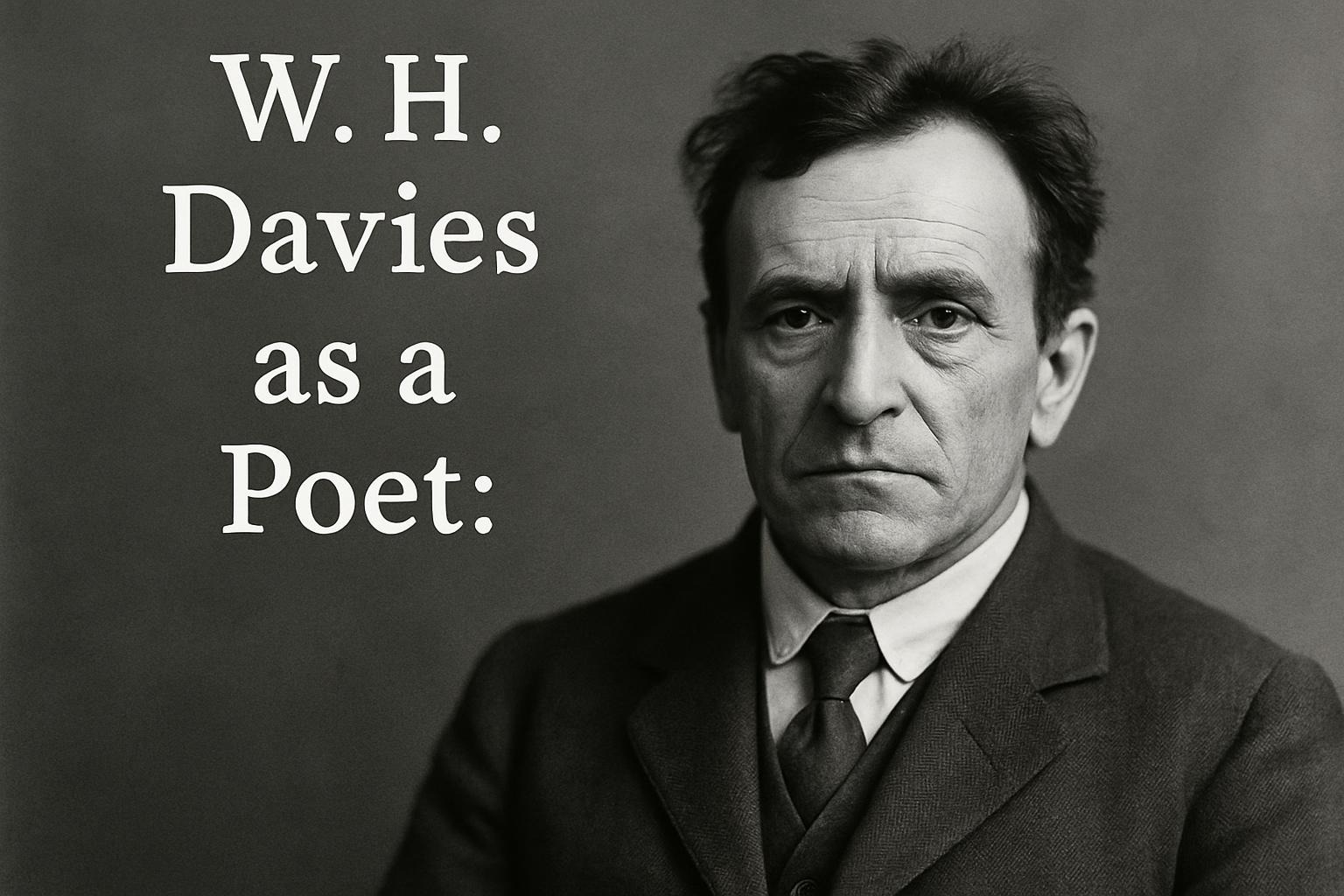
William Henry Davies as Poet gained recognition during the Edwardian period. His poetry reflects everyday life, nature, and human vulnerability beautifully. Consequently, it appeals to ordinary readers and literary scholars simultaneously. Moreover, Davies blends melancholic reflection with playful humor throughout his work consistently. He emphasizes fleeting moments and emotional depth in simple, natural settings thoughtfully. Additionally, his poems explore human hardship, wandering life, and social observation profoundly. Consequently, critics and readers alike admired his ability to combine realism and imagination. Furthermore, his verse demonstrates accessibility while maintaining intellectual richness effectively. Attention to rhythm, concise diction, and natural imagery enhances impact remarkably. Overall, William Henry Davies exemplifies Edwardian literary sensitivity, bridging Victorian traditions with modernist tendencies smoothly. Moreover, his poetry highlights the human spirit amidst societal transformation persistently. By integrating personal reflection with universal insight, Davies creates a timeless poetic voice. His focus on empathy, nature, and daily life resonates across generations profoundly. Thus, William Henry Davies as Poet continues shaping literary appreciation today and will endure for years.
1. Early Life and Background
William Henry Davies as Poet experienced humble beginnings in Newport, Wales, which influenced his literary perspective. From a young age, he faced poverty, wandering, and societal marginalization directly. Consequently, these challenges shaped his empathy, observation, and moral awareness profoundly. He developed an early fascination with nature, human experience, and simple living thoughtfully. Moreover, Davies engaged in odd jobs and travel, enriching his life perspective continuously. His exposure to rural landscapes inspired vivid imagery and reflective tone naturally. Additionally, encounters with diverse communities cultivated his social awareness and literary voice harmoniously. Consequently, he infused ordinary experiences with emotional resonance and philosophical reflection effectively. Furthermore, Davies’s early life created authentic understanding of human vulnerability and resilience abundantly. Observing hardship firsthand strengthened his ability to depict society’s contradictions and joys intricately. Moreover, he valued fleeting moments of life, capturing subtle beauty in daily routines consistently. His early experiences nurtured a poetic style that balances realism with lyrical elegance uniquely. Therefore, William Henry Davies conveys both simplicity and thematic depth remarkably. His background provided foundations for the wanderer’s perspective, empathetic tone, and social consciousness extensively. Overall, early life shaped themes, style, and worldview foundational to his literary contributions.
2. Influence of Edwardian Context
The Edwardian era influenced William Henry Davies as Poet extensively. Social change, urban expansion, and industrial growth shaped his thematic concerns profoundly. Consequently, he contrasted natural landscapes with urban hardships vividly and effectively. Moreover, Davies reflected Edwardian anxieties, social tensions, and human vulnerability consistently. Industrialization threatened nature and community cohesion, inspiring poetic critique naturally. Additionally, he integrated Edwardian sensibilities of leisure, reflection, and optimism seamlessly. He captured ordinary life and everyday beauty, balancing realism with lyricism thoughtfully. Furthermore, his work responded to contemporary literature, bridging Victorian tradition and emerging modernist innovation fluidly. Social awareness and historical consciousness emerge clearly in multiple poems. Therefore, his poetry embodies Edwardian complexity, blending observation with introspective insight thoughtfully. He highlighted human endurance and small pleasures amid broader societal transformation consistently. Moreover, his verse communicated empathy for marginalized individuals while celebrating natural beauty. Consequently, William Henry Davies as Poet demonstrates how historical context shapes literary voice uniquely. Overall, the Edwardian period provided thematic richness, stylistic cues, and cultural resonance essential to his enduring literary significance. His poetry captures both temporal reality and timeless human experience naturally.
3. Literary Career Beginnings
William Henry Davies as Poet began his literary journey through small publications and magazines initially. He struggled for recognition, publishing short collections gradually and intermittently. Consequently, readers noticed clarity, authenticity, and emotional resonance early on consistently. Early works like The Soul’s Destroyer display sensitivity, humor, and reflective depth abundantly. Moreover, he experimented with lyrical simplicity, social observation, and the wanderer’s perspective creatively. Literary connections and mentorship gradually expanded his audience and reputation steadily. Additionally, Davies adapted personal experience into universal themes, attracting critical acclaim naturally. His early style emphasized human vulnerability, nature, and fleeting beauty harmoniously. Consequently, these beginnings established foundational aspects of his poetic identity unmistakably. He gained recognition for blending accessibility with philosophical insight, appealing widely across social classes. Furthermore, his early publications influenced Edwardian readers seeking simplicity, honesty, and reflective clarity. Over time, Davies solidified his position among notable poets through persistent literary exploration. Therefore, William Henry Davies as Poet’s early career reflects dedication, originality, and enduring thematic focus consistently. Overall, beginnings demonstrate how personal experience, cultural awareness, and literary skill converge effectively. His early work laid groundwork for influential later poetry and public admiration naturally.
4. Themes of Nature
Nature dominates William Henry Davies as Poet’s works extensively. Rivers, trees, seasons, and wildlife appear consistently throughout his poetry. Moreover, he juxtaposed natural beauty with human experience skillfully and intentionally. He emphasized observation, meditation, and reflective understanding throughout his writing thoughtfully. Additionally, industrialization and urban encroachment appear subtly as critiques alongside nature’s purity. Consequently, readers perceive both environmental awareness and emotional resonance simultaneously. His descriptions evoke sensory experience, philosophical reflection, and ethical insight harmoniously. Furthermore, simplicity in diction enhances accessibility while deepening poetic impact naturally. Nature reflects humanity’s vulnerability, mortality, and hope repeatedly and meaningfully. He celebrates ordinary beauty, wandering life, and fleeting insight through natural imagery consistently. Moreover, Davies encourages mindfulness, ecological awareness, and emotional engagement with the environment abundantly. His work balances lyricism, reflection, and social observation through nature elegantly. Consequently, William Henry Davies as Poet conveys aesthetic pleasure, spiritual reflection, and ethical awareness seamlessly. Nature themes offer timeless resonance while anchoring poetry in Edwardian sensibilities effectively. Overall, his poetic nature encourages appreciation, empathy, and contemplation profoundly and consistently.
5. Wanderer’s Perspective
William Henry Davies as Poet emphasizes wandering, travel, and human displacement consistently. Experiences of vagrancy, poverty, and solitude shape reflections on freedom, struggle, and resilience naturally. Moreover, wandering exposes societal marginalization, personal discovery, and emotional honesty simultaneously. His wanderer’s perspective enhances narrative authenticity, empathetic tone, and observational clarity effectively. Additionally, he combines anecdotal experience with philosophical insight and social commentary harmoniously. Consequently, readers connect with loneliness, adventure, and reflection through accessible language vividly. His observations highlight simplicity, impermanence, and human vulnerability consistently. Furthermore, wanderer’s perspective enriches thematic variety, stylistic rhythm, and cultural relevance naturally. He draws attention to both external landscapes and internal emotional states skillfully. Consequently, William Henry Davies communicates universal human truths through personal experience seamlessly. Moreover, the wandering motif underscores freedom, reflection, and philosophical engagement creatively. Overall, this perspective provides a unique literary lens, blending realism, lyricism, and ethical awareness abundantly. The wanderer motif continues to resonate with contemporary readers, reflecting timeless human experience and emotional insight profoundly.
6. Lyric Simplicity
William Henry Davies emphasizes lyric simplicity, making his poetry approachable consistently. His lines remain short, rhythmic, and melodious while conveying deep emotion. Moreover, uncomplicated diction enhances clarity and accessibility without reducing expressive power. He avoids unnecessary ornamentation, allowing readers to focus on ideas naturally. Additionally, simplicity supports thematic depth, ethical reflection, and emotional resonance simultaneously. The approach mirrors everyday speech while maintaining reflective and contemplative quality harmoniously. Consequently, lyric simplicity strengthens the connection between poet and audience continuously. Furthermore, musical phrasing, repetition, and subtle rhyme amplify aesthetic pleasure abundantly. Observations of nature, human behavior, and rural life gain enhanced impact through simplicity. It also allows philosophical and ethical reflection to coexist with narrative clarity effortlessly. Short, deliberate phrasing emphasizes moments of beauty, hardship, and contemplation consistently. Moreover, simplicity interacts with wandering, pastoral imagery, and moral insight effectively. Overall, lyric simplicity defines Davies’s signature style, balancing elegance, reflection, and accessibility profoundly.
7. Observational Detail
William Henry Davies as Poet excels in precise observational detail consistently. He notices small gestures, environmental subtleties, and human behavior thoughtfully. Moreover, these observations inform narrative, emotional, and moral depth simultaneously. Attention to sensory experience strengthens imagery, making scenes vivid and accessible. He captures fleeting moments of life with clarity, accuracy, and subtlety naturally. Additionally, his depictions reveal contrasts in social status, personal resilience, and ethical reflection. Consequently, readers experience realism, emotional engagement, and contemplative resonance effectively. Observational skill integrates seamlessly with lyric simplicity, wanderer perspective, and pastoral imagery abundantly. Furthermore, details highlight universal human truths without overcomplication or pretension continuously. William Henry Davies transforms ordinary events into reflective and philosophical insight elegantly. Moreover, observational precision fosters empathy, intellectual engagement, and aesthetic pleasure simultaneously. Subtle nuances reveal psychological depth and societal awareness harmoniously. Consequently, observational detail remains a cornerstone of his literary identity, style, and enduring influence consistently. Overall, meticulous attention to life’s subtleties reinforces accessibility, thematic richness, and reflective resonance profoundly.
8. Human Sympathy in Poetry
Davies consistently conveys human sympathy, offering compassion for marginalized individuals vividly. He reflects on poverty, wandering life, and vulnerability with ethical awareness. Moreover, empathy blends with observation, lyrical simplicity, and moral insight seamlessly. He highlights resilience, dignity, and shared humanity thoughtfully throughout his works. Additionally, human sympathy strengthens reader engagement, reflective depth, and emotional resonance abundantly. Consequently, ordinary experiences gain universal significance, fostering understanding and connection naturally. The poet balances observation with ethical reflection, avoiding sentimentality or exaggeration effectively. Furthermore, compassion reinforces pastoral imagery, everyday life themes, and wandering perspectives harmoniously. Human sympathy underpins narrative cohesion, thematic depth, and accessibility consistently. Moreover, attention to human struggles enhances realism, philosophical reflection, and literary clarity effortlessly. Consequently, readers develop appreciation for ethical and emotional insight alongside aesthetic pleasure continuously. Overall, human sympathy remains central to the poetic voice, shaping style, theme, and enduring relevance profoundly.
9. Themes of Poverty
Davies addresses poverty with honesty, portraying social marginalization vividly and thoughtfully. He depicts destitution, labor struggles, and societal indifference without exaggeration. Moreover, poverty becomes a lens for ethical reflection, human empathy, and moral insight. He connects personal experience with universal observation, highlighting dignity amid hardship naturally. Additionally, poems emphasize resilience, simplicity, and philosophical contemplation consistently. Consequently, readers perceive social critique, emotional depth, and reflective awareness simultaneously. Pastoral imagery and wandering perspective interact with poverty themes harmoniously, enriching accessibility and narrative cohesion. Furthermore, verse communicates societal reality while maintaining lyric elegance and reflective tone continuously. Economic hardship appears alongside natural beauty and fleeting moments, reinforcing thematic contrast effectively. Davies balances realism with contemplation, ensuring poetry remains empathetic, accessible, and aesthetically engaging. Moreover, attention to human suffering emphasizes universality, ethical reflection, and cultural resonance abundantly. Consequently, poverty themes enhance moral insight, emotional engagement, and literary impact consistently. Overall, addressing poverty strengthens his poetic voice, style, and enduring relevance profoundly.
10. Vagabond Lifestyle Influence
William Henry Davies as Poet captures the vagabond lifestyle’s influence vividly. Wandering, traveling, and marginal living shape observation, reflection, and philosophical insight. Moreover, experiences of solitude, poverty, and exploration inform narrative and thematic depth consistently. He conveys freedom, resilience, and human vulnerability through accessible, lyrical verse effectively. Additionally, vagabond perspective enhances pastoral imagery, everyday life themes, and ethical reflection harmoniously. Consequently, readers experience both external environments and internal contemplative states naturally. Wandering life intersects with Edwardian sensibilities, social critique, and human empathy abundantly. Furthermore, vagabond influence reinforces rhythm, simplicity, and observational precision continuously. William Henry Davies transforms lived experience into reflective and ethical literary expression effortlessly. Moreover, the itinerant perspective provides authenticity, philosophical depth, and aesthetic pleasure simultaneously. Consequently, the vagabond lifestyle shapes his thematic richness, stylistic identity, and cultural relevance consistently. Overall, this influence defines a signature poetic lens, blending freedom, reflection, and moral observation profoundly.
11. Tramp Poet Identity
Davies embraces the tramp poet identity, reinforcing authenticity and perspective vividly. He integrates wandering experiences, poverty, and marginalization into reflective and accessible verse. Moreover, identity strengthens observation, ethical reflection, and empathetic resonance consistently. It conveys vulnerability, resilience, and philosophical insight naturally. Additionally, tramp persona aligns with lyric simplicity, pastoral imagery, and Edwardian sensibilities harmoniously. Consequently, readers perceive human struggles and ethical reflection alongside aesthetic engagement simultaneously. Identity reinforces narrative coherence, thematic unity, and stylistic clarity effectively. Furthermore, it supports reflection on freedom, daily life, and moral observation abundantly. Davies combines lived experience with universal insight, producing timeless poetic expression skillfully. Tramp identity allows ethical and aesthetic observation to coexist seamlessly. Moreover, it strengthens connection with readers, fostering empathy, contemplation, and appreciation continuously. Overall, tramp poet persona defines literary voice, thematic depth, and enduring influence profoundly.
12. Pastoral Imagery
William Henry Davies as Poet utilizes pastoral imagery extensively and effectively. Fields, rivers, trees, and rural life recur vividly across poems. Moreover, these elements convey serenity, freedom, and ethical reflection harmoniously. Pastoral imagery enhances lyric simplicity, narrative clarity, and emotional resonance naturally. Additionally, Davies contrasts industrialization and urban encroachment with nature’s purity thoughtfully. Consequently, readers experience aesthetic pleasure, moral insight, and contemplative engagement simultaneously. Imagery supports observational detail, wandering perspective, and Edwardian sensibilities consistently. Furthermore, it reinforces accessibility, human empathy, and reflective tone abundantly. William Henry Davies balances descriptive clarity with philosophical depth seamlessly. Moreover, pastoral motifs highlight ordinary beauty, fleeting moments, and universal truths effectively. Consequently, verse communicates emotional, ethical, and aesthetic dimensions continuously. Additionally, imagery strengthens rhythm, cohesion, and stylistic elegance naturally. Overall, pastoral imagery is central to thematic richness, stylistic identity, and enduring literary relevance profoundly.
13. Moral Insight in Poetry
Davies demonstrates moral insight through keen observation and reflection consistently. Ethical themes emerge in human vulnerability, wandering, and ordinary experiences vividly. Moreover, moral awareness integrates naturally with lyric simplicity, observational precision, and narrative clarity. He explores dignity, resilience, and social responsibility thoughtfully throughout poems. Additionally, ethical reflection reinforces reader empathy, aesthetic engagement, and philosophical contemplation abundantly. Consequently, ordinary life scenes gain universal significance and ethical dimension simultaneously. Moral insight interacts with pastoral imagery, Edwardian sensibilities, and wandering perspective harmoniously. Furthermore, it supports accessibility, emotional resonance, and thematic depth continuously. Ethical themes blend seamlessly with realism, lyricism, and contemplative observation effectively. Moreover, attention to morality enhances poetic voice, narrative cohesion, and cultural relevance consistently. Consequently, readers perceive universal truths, social awareness, and aesthetic pleasure naturally. Overall, moral insight underpins Davies’s literary identity, thematic focus, and enduring influence profoundly.
14. Poetic Sincerity
Davies’s poetic sincerity emerges through observation, reflection, and emotional honesty vividly. Authenticity derives from personal hardship, wandering experiences, and empathetic observation consistently. Moreover, simplicity, clarity, and natural rhythm reinforce genuineness without diminishing depth effectively. He avoids artificiality while conveying insight, beauty, and ethical awareness harmoniously. Additionally, sincerity strengthens accessibility, aesthetic pleasure, and reflective engagement abundantly. Consequently, readers perceive honesty, contemplation, and universal resonance simultaneously. Sincerity interacts with pastoral imagery, everyday life themes, and Edwardian sensibilities effectively. Furthermore, it reinforces narrative coherence, thematic richness, and stylistic clarity continuously. Poetic sincerity complements moral reflection, human empathy, and aesthetic observation naturally. Moreover, emotional honesty ensures timeless resonance, reader connection, and philosophical depth consistently. Overall, sincerity defines poetic voice, thematic focus, and enduring literary relevance profoundly.
15. Reflection on Freedom
William Henry Davies as Poet emphasizes reflection on freedom extensively. Travel, wandering, and marginal living inform contemplation on autonomy vividly. Moreover, freedom interacts with ethical reflection, human empathy, and social awareness harmoniously. He contrasts societal constraints with personal liberation thoughtfully throughout his works. Additionally, reflection on freedom reinforces lyric simplicity, observational precision, and narrative coherence effectively. Consequently, readers experience philosophical insight, emotional engagement, and aesthetic pleasure simultaneously. Freedom motifs intersect with Edwardian sensibilities, pastoral imagery, and wandering perspective consistently. Furthermore, it highlights resilience, dignity, and human aspiration abundantly. William Henry Davies balances individual liberty with moral and social reflection seamlessly. Moreover, freedom enhances thematic depth, stylistic clarity, and reader accessibility naturally. Consequently, verse communicates universal truths, ethical contemplation, and emotional resonance continuously. Additionally, freedom motifs unify pastoral imagery, everyday life, and wandering perspectives effectively. Overall, reflection on freedom remains central to his literary identity and enduring influence profoundly.
16. Contrast between Nature and Industry
Davies contrasts nature with industry vividly and consistently. Rural landscapes appear serene, while cities grow noisy and harsh. Moreover, this contrast emphasizes human intrusion into natural life effectively. He highlights moral reflection alongside environmental observation harmoniously. Industrial expansion threatens simplicity, freedom, and natural beauty thoughtfully throughout poems. Consequently, readers perceive both aesthetic pleasure and ethical contemplation simultaneously. Observations of machinery, urban life, and human struggle reinforce thematic depth naturally. Additionally, contrast interacts with wandering perspective, pastoral imagery, and Edwardian sensibilities abundantly. Verse underscores human vulnerability while celebrating resilience and reflection consistently. Davies balances lyricism, observation, and moral insight seamlessly. Furthermore, the interplay of nature and industry enhances accessibility and contemplative engagement continuously. Short, precise imagery amplifies contrast while supporting rhythm, narrative clarity, and thematic cohesion effectively. Consequently, contrast remains a central motif, defining style, moral awareness, and literary identity profoundly. Overall, Davies emphasizes harmony with nature as a recurring literary principle consistently.
17. Everyday Life Themes
William Henry Davies as Poet captures everyday life themes with elegance. He observes routine activities, personal interactions, and human emotion vividly. Moreover, ordinary moments inspire reflection, empathy, and aesthetic engagement simultaneously. Verse highlights beauty in simplicity, fleeting experience, and human vulnerability harmoniously. Additionally, everyday themes connect with wandering perspective, pastoral imagery, and moral insight naturally. Consequently, readers perceive universal truths through ordinary events consistently. Attention to minutiae reinforces accessibility, narrative cohesion, and emotional resonance effectively. Furthermore, ordinary life supports thematic richness, lyric clarity, and contemplative depth abundantly. Davies balances realism with reflection, ensuring human experiences remain central and meaningful. Moreover, mundane activities convey philosophical insight, ethical awareness, and aesthetic pleasure seamlessly. Consequently, everyday life themes strengthen stylistic identity, cultural relevance, and literary appeal continuously. Short, precise descriptions make verse both engaging and thoughtful effectively. Overall, everyday life forms a cornerstone of his poetic voice and enduring influence profoundly.
18. Personal Experience Poetry
Davies draws on personal experience to enrich poetic expression consistently. Wandering life, poverty, and intimate observation inform reflection and thematic depth vividly. Moreover, lived experiences enhance authenticity, ethical insight, and emotional resonance naturally. Verse transforms personal hardship into philosophical contemplation harmoniously and accessibly. Additionally, autobiographical elements interact with lyric simplicity, pastoral imagery, and Edwardian sensibilities effectively. Consequently, readers connect with real human struggles, freedom, and reflection simultaneously. Personal experience strengthens narrative cohesion, observational clarity, and moral engagement abundantly. Furthermore, individual perspective conveys universal truths, aesthetic pleasure, and ethical reflection continuously. Davies balances memoir, societal observation, and poetic imagination seamlessly. Moreover, experience amplifies reader empathy, philosophical contemplation, and reflective insight consistently. Consequently, personal narrative enhances literary identity, thematic coherence, and stylistic elegance naturally. Short, precise reflection makes poetry accessible, evocative, and ethically aware effectively. Overall, personal experience anchors poetic voice, thematic exploration, and enduring cultural relevance profoundly.
19. Accessible Poetic Voice
William Henry Davies as Poet communicates through an accessible poetic voice consistently. Simple diction, natural rhythm, and concise lines enhance clarity vividly. Moreover, accessibility strengthens emotional engagement, ethical reflection, and thematic depth harmoniously. Verse balances conversational tone with lyricism, observation, and reflective insight effectively. Additionally, familiar imagery connects ordinary readers with philosophical and aesthetic reflection naturally. Consequently, accessibility fosters empathy, contemplation, and enjoyment simultaneously. Observational detail and pastoral motifs reinforce clarity and engagement continuously. Furthermore, accessible voice interacts with wandering perspective, Edwardian sensibilities, and moral reflection effectively. William Henry Davies ensures insight is understandable without losing richness. Moreover, simplicity supports rhythm, thematic coherence, and narrative clarity seamlessly. Consequently, readers experience literary pleasure, intellectual engagement, and ethical resonance abundantly. Accessible voice solidifies stylistic identity, reader connection, and enduring poetic influence profoundly. Overall, accessibility enhances universality, relatability, and literary legacy consistently.
20. Spiritual Calmness
Davies conveys spiritual calmness through nature, reflection, and lyrical tone consistently. Rivers, trees, and seasons evoke serenity and contemplation vividly. Moreover, calmness complements ethical reflection, emotional depth, and aesthetic elegance naturally. Verse emphasizes meditation, human endurance, and fleeting beauty harmoniously. Additionally, serenity interacts with wandering perspective, everyday life, and pastoral imagery effectively. Consequently, readers perceive spiritual reassurance, contemplation, and poetic engagement simultaneously. Spiritual tone reinforces rhythm, simplicity, and thematic coherence abundantly. Furthermore, tranquility supports Edwardian sensibilities, reflective observation, and moral insight continuously. Calmness balances realism with lyricism, enhancing philosophical and aesthetic pleasure seamlessly. Moreover, reflective serenity guides ethical awareness, empathy, and literary resonance effectively. Consequently, spiritual calmness strengthens stylistic clarity, thematic focus, and reader connection naturally. Short, precise imagery evokes contemplation and introspection consistently. Overall, spiritual calmness shapes poetic identity, thematic depth, and enduring cultural significance profoundly.
21. Edwardian Poetic Sensibilities
William Henry Davies as Poet embodies Edwardian poetic sensibilities vividly. Reflection, lyricism, and observation characterize his early period work consistently. Moreover, themes of leisure, contemplation, and everyday beauty align with cultural trends effectively. Verse blends sensitivity, humor, and moral insight harmoniously with natural imagery. Additionally, Edwardian sensibilities interact with wandering perspective, pastoral motifs, and accessible voice naturally. Consequently, readers perceive historical context, philosophical depth, and aesthetic pleasure simultaneously. Observational clarity reinforces narrative cohesion, thematic coherence, and emotional resonance abundantly. Furthermore, sensibilities shape style, rhythm, and ethical reflection continuously. William Henry Davies bridges Victorian tradition and modernist innovation skillfully. Moreover, attention to ordinary life, human vulnerability, and reflection highlights cultural awareness effectively. Consequently, Edwardian poetic traits strengthen lyric simplicity, contemplative tone, and literary identity naturally. Overall, these sensibilities inform his thematic richness, accessibility, and enduring poetic influence profoundly.
22. Influence of Travel
Davies’s travels inform observation, reflection, and narrative perspective vividly. Wandering across Britain and abroad exposes him to landscapes, people, and hardship consistently. Moreover, travel enriches lyric imagery, moral reflection, and thematic depth harmoniously. Experiences with diverse environments enhance ethical awareness, human empathy, and contemplative insight effectively. Additionally, itinerancy interacts with everyday life themes, pastoral imagery, and wandering perspective naturally. Consequently, readers perceive authenticity, reflection, and aesthetic pleasure simultaneously. Travel reinforces accessibility, narrative cohesion, and observational clarity continuously. Furthermore, it strengthens rhythm, stylistic elegance, and literary resonance abundantly. Exposure to different cultures, landscapes, and social conditions informs universal insight seamlessly. Moreover, travel inspires reflection on freedom, nature, and ethical responsibility consistently. Consequently, Davies integrates personal experience with broader societal and natural observation naturally. Overall, travel shapes style, thematic richness, and enduring literary relevance profoundly.
23. “Leisure” Poem Analysis
William Henry Davies as Poet demonstrates mastery in his poem “Leisure.” The poem emphasizes observation, reflection, and appreciation of life vividly. Moreover, it critiques hurried living while celebrating ordinary beauty effectively. Lines capture sensory experience, philosophical insight, and moral awareness harmoniously. Additionally, “Leisure” incorporates pastoral imagery, lyric simplicity, and Edwardian sensibilities naturally. Consequently, readers perceive aesthetic pleasure, ethical reflection, and contemplative engagement simultaneously. Observational detail reinforces rhythm, narrative clarity, and thematic depth consistently. Furthermore, the poem balances critique of society with celebration of nature effectively. William Henry Davies transforms simple experiences into universal insight seamlessly. Moreover, “Leisure” encourages mindfulness, appreciation, and ethical contemplation continuously. Consequently, verse communicates emotional resonance, literary elegance, and social awareness abundantly. Pastoral motifs highlight ordinary beauty while fostering reflection naturally. Overall, “Leisure” exemplifies thematic focus, stylistic clarity, and enduring poetic influence profoundly.
24. Realistic Tone
Davies consistently employs realistic tone, portraying ordinary life vividly. Social conditions, wandering experiences, and natural observation inform reflection continuously. Moreover, realism conveys human vulnerability, joy, and ethical awareness effectively. Verse balances accuracy with lyricism and contemplative depth harmoniously. Additionally, realistic tone enhances accessibility, empathy, and thematic cohesion naturally. Consequently, readers perceive truth, aesthetic pleasure, and reflective insight simultaneously. Observational detail strengthens narrative clarity, rhythm, and emotional resonance abundantly. Furthermore, realism complements pastoral imagery, Edwardian sensibilities, and wandering perspective consistently. Short, precise phrasing conveys societal truth while maintaining poetic elegance effectively. Realistic tone reinforces philosophical reflection, reader engagement, and literary clarity seamlessly. Moreover, it integrates ordinary experience with universal insight naturally. Consequently, realism underpins thematic richness, stylistic identity, and enduring literary impact profoundly.
25. Social Critique in Poetry
William Henry Davies as Poet addresses social critique thoughtfully. Poverty, industrialization, and inequality appear subtly and effectively. Moreover, critique aligns with ethical reflection, observational detail, and accessible style consistently. He highlights human dignity and societal failure harmoniously. Additionally, social awareness interacts with wandering perspective, everyday life, and pastoral imagery naturally. Consequently, readers perceive empathy, moral reflection, and aesthetic engagement simultaneously. Verse encourages contemplation, ethical awareness, and societal insight continuously. Furthermore, critique strengthens realism, lyrical clarity, and thematic depth abundantly. William Henry Davies transforms observation into ethical and literary expression seamlessly. Moreover, commentary blends with lyric simplicity and reflective tone effectively. Consequently, social critique enhances accessibility, philosophical insight, and reader engagement naturally. Overall, ethical observation and social commentary define thematic focus, style, and enduring influence profoundly.
26. Poetic Legacy
Davies leaves a legacy characterized by lyric simplicity, empathy, and reflection. His work influenced Georgian poets and Edwardian sensibilities widely. Moreover, legacy includes observational precision, wandering perspective, and pastoral imagery harmoniously. He inspires appreciation for everyday life, nature, and ethical contemplation consistently. Additionally, poetic approach shaped rhythm, narrative clarity, and stylistic coherence naturally. Consequently, readers and poets gain aesthetic, intellectual, and ethical insight simultaneously. Influence continues through literary criticism, education, and poetic practice abundantly. Furthermore, his style balances accessibility, reflection, and philosophical depth continuously. Legacy reinforces human connection, cultural awareness, and literary resonance effectively. Poetic contribution ensures continuity between Edwardian and Georgian traditions seamlessly. Moreover, ethical, aesthetic, and thematic richness secure enduring recognition naturally. Overall, poetic legacy anchors literary identity, stylistic innovation, and cultural significance profoundly.
27. Influence on Georgian Poets
William Henry Davies as Poet inspired Georgian poets significantly. Lyric simplicity, accessibility, and pastoral focus shaped their poetic approach vividly. Moreover, observation, moral reflection, and wandering perspective influenced stylistic refinement effectively. Ethical awareness, narrative clarity, and reflective tone appeared abundantly in their works. Additionally, influence reinforced rhythm, thematic cohesion, and accessibility harmoniously. Consequently, Davies helped define Georgian poetic aesthetics and approach consistently. Pastoral imagery and ordinary life themes carried forward across generations naturally. Furthermore, his style encouraged clarity, empathy, and contemplative engagement continuously. Influence integrates with realism, lyrical expression, and ethical reflection effectively. Moreover, readers perceive continuity between Edwardian sensibilities and Georgian literary innovation seamlessly. Consequently, impact persists in literary study, poetic analysis, and cultural appreciation abundantly. Overall, influence shapes literary history, stylistic identity, and enduring significance profoundly.
28. Rhythmic Clarity
Davies achieves rhythmic clarity through concise phrasing and musical cadence consistently. Lines flow naturally, enhancing lyrical appeal and aesthetic pleasure vividly. Moreover, rhythm complements pastoral imagery, observational precision, and moral reflection harmoniously. Repetition, pacing, and subtle rhyme strengthen accessibility and thematic coherence effectively. Additionally, rhythmic clarity interacts with wandering perspective, Edwardian sensibilities, and lyric simplicity naturally. Consequently, readers perceive musicality, clarity, and contemplative insight simultaneously. Rhythm enhances narrative cohesion, emotional resonance, and reflective depth continuously. Furthermore, precise structure reinforces stylistic elegance and reader engagement abundantly. Davies balances musicality with realism, observation, and ethical contemplation seamlessly. Moreover, rhythm supports narrative, theme, and accessibility effectively. Consequently, clarity of movement enhances literary identity, aesthetic pleasure, and enduring influence naturally. Overall, rhythmic clarity defines signature style, lyrical elegance, and poetic resonance profoundly.
29. Welsh Poetic Heritage
William Henry Davies as Poet integrates Welsh poetic heritage seamlessly. Cultural background, rural landscapes, and lyrical sensitivity inform observation vividly. Moreover, heritage shapes rhythm, diction, and thematic depth naturally. Poems reflect homeland, language, and identity harmoniously. Additionally, Welsh influence interacts with Edwardian sensibilities, pastoral imagery, and wandering perspective consistently. Consequently, readers perceive cultural continuity, reflective depth, and aesthetic resonance simultaneously. Heritage strengthens authenticity, moral observation, and narrative clarity abundantly. William Henry Davies balances national identity with universal insight effectively. Moreover, Welsh poetic tradition reinforces lyric simplicity, observational precision, and thematic richness naturally. Consequently, verse communicates cultural awareness, reflection, and human experience continuously. Heritage anchors literary identity while enriching stylistic and ethical resonance effectively. Overall, Welsh poetic roots contribute to enduring influence, stylistic elegance, and thematic sophistication profoundly.
Legacy of William Henry Davies as Poet
The legacy of William Henry Davies as Poet remains profound. Lyric simplicity, observation, and ethical reflection continue inspiring readers widely. Moreover, accessibility, aesthetic pleasure, and contemplative insight define enduring literary influence. He shaped Georgian poets, Edwardian sensibilities, and poetic traditions harmoniously. Additionally, themes of nature, wandering, and everyday life maintain timeless relevance naturally. Consequently, his poetry fosters empathy, reflection, and appreciation for beauty simultaneously. Influence emphasizes rhythm, pastoral imagery, and moral insight abundantly. William Henry Davies continues guiding literary study, criticism, and poetic practice effectively. Moreover, human connection, philosophical reflection, and aesthetic engagement persist across generations seamlessly. Consequently, his contributions secure stylistic identity, thematic richness, and cultural significance continuously. Overall, the enduring impact of William Henry Davies confirms his lasting importance in literature profoundly and naturally.
Rupert Brooke as a Poet-Georgian Period: https://englishlitnotes.com/2025/08/30/rupert-brooke-as-a-poet/
For grammar lessons, visit ChatGPT to explore the platform and interact with the AI:https://chat.openai.com
Discover more from Naeem Ullah Butt - Mr.Blogger
Subscribe to get the latest posts sent to your email.