Introduction
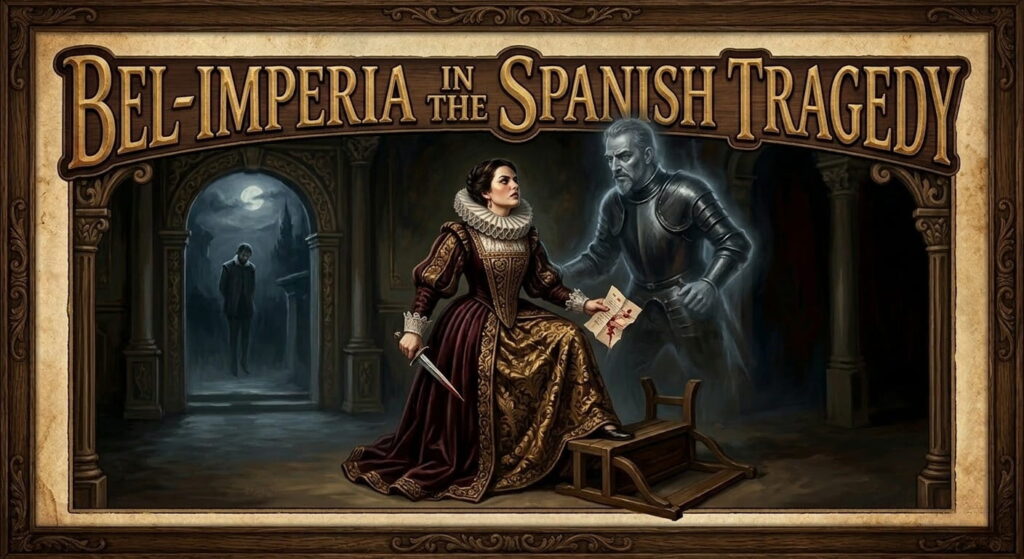
Bel-imperia in The Spanish Tragedy stands as a remarkably bold and defiant figure. Therefore, she challenges the traditional gender roles of the Elizabethan era. Although the men seek power, she pursues her own justice. Consequently, her character displays a rare sense of female agency. Moreover, she refuses to submit to her brother’s cruel will. Similarly, she chooses her own lovers against the king’s wishes. Because of her strong spirit, she drives the revenge plot. In addition, she orchestrates the final massacre with Hieronimo’s help. Thus, she transcends the typical role of a passive victim. Subsequently, the narrative highlights her intellectual and emotional strength. Furthermore, Kyd portrays her as a sophisticated and strategic player. Accordingly, her actions led to the total collapse of the court. Eventually, she takes her own life to maintain her honor. Therefore, her legacy remains central to the history of tragedy.
1. Bel-imperia Character Analysis
A deep character analysis reveals her as a complex figure. Specifically, she rejects the passive roles of her female peers. She possesses a sharp intellect and a very strong will. Consequently, her presence defines Bel-imperia in The Spanish Tragedy. Moreover, she seeks personal satisfaction and political justice alike. Therefore, her character moves the plot toward its violent end. In addition, she skillfully manages her own secret and dangerous affairs. Similarly, she defies the rigid expectations of the Spanish court. Because of her bravery, she stands as a tragic leader. Thus, she controls her destiny despite the many patriarchal traps. Subsequently, the narrative highlights her unique and fierce emotional depth. Furthermore, Kyd creates a woman who refuses to remain silent. Accordingly, her character remains a study in early modern resistance. Eventually, she proves that women can master the revenge genre. Therefore, her analysis shows a truly revolutionary and powerful spirit.
2. Hieronimo and Bel-imperia
The alliance between these two characters forms the core plot. Notably, they share a deep and burning desire for vengeance. They both lose a loved one to the same villains. For this reason, Bel-imperia in The Spanish Tragedy joins Hieronimo. Furthermore, they plan a secret play to trap their enemies. In the same way, their partnership crosses different social classes. However, she often acts with more speed than the Marshall. Therefore, their cooperation ensures the success of the final massacre. In addition, they trust each other with their most deadly secrets. Similarly, the text highlights their mutual respect and shared pain. Because of this bond, the court faces a total collapse. Thus, the duo represents the combined force of grief and rage. Subsequently, the dialogue reveals their shared commitment to a bloody end. Accordingly, their relationship provides the necessary fuel for the tragedy. Eventually, they achieve justice through a very high and personal cost.
3. Lorenzo and Balthazar
These two villains act as the primary obstacles for her. Specifically, Lorenzo controls his sister with a cold and cruel hand. He seeks to marry her to the captive Prince Balthazar. Consequently, they ignite the fury of Bel-imperia in The Spanish Tragedy. Moreover, Balthazar represents a forced and unwanted political union. Therefore, their combined ambition leads to the murder of Horatio. In addition, they embody the corruption and pride of the elite. Similarly, the text portrays them as arrogant and very manipulative men. Because of their greed, they ignore the growing threat of revenge. Thus, they walk blindly into the trap of the final play. Subsequently, their deaths provide a grim satisfaction to the mourning heroes. Furthermore, Kyd uses them to show the dark side of power. Accordingly, their villainy justifies the extreme violence of the ending. Eventually, they fall because they underestimate a woman’s resolve and skill.
4. Horatio’s Murder
The brutal killing of Horatio serves as the play’s catalyst. Notably, the villains hang him in a quiet, dark garden. They stab him repeatedly while he hangs from a tree. For this reason, Bel-imperia in The Spanish Tragedy seeks immediate revenge. Furthermore, the loss of her lover destroys her last hope. In the same way, the crime exposes the rot within the court. However, the murderers believe they can hide their dark deed. Therefore, they underestimate the power of her enduring and deep love. In addition, the scene creates a permanent and painful visual image. Similarly, the violence shifts the tone toward a darker path. Because of this murder, the heroine chooses a life of vengeance. Thus, the act of killing Horatio starts the clock of fate. Subsequently, his ghost haunts the memory of every surviving character. Accordingly, the tragedy builds upon the blood of this young soldier.
5. Bel-imperia’s Revenge
Her pursuit of vengeance remains the most active part of the play. Specifically, she takes the lead in planning the final deaths. She writes a letter in blood to find her allies. Consequently, this drive defines Bel-imperia in The Spanish Tragedy. Moreover, she refuses to let the law handle the criminals. Therefore, she takes the heavy burden of justice upon herself. In addition, her revenge targets the men who stole her happiness. Similarly, she uses her position to hide her true and deadly intent. Because she is a princess, she moves with great stealth. Thus, her plan unfolds with terrifying and perfect precision. Subsequently, she proves her skills as a master of the hunt. Furthermore, her rage provides the energy for the entire final act. Accordingly, she achieves a victory that leaves the court in ruins. Eventually, her revenge stands as a masterpiece of tragic female will.
6. Subversive Elizabethan Heroine
She represents a direct challenge to the norms of her age. Notably, she speaks with a voice of authority and clear logic. She rejects the quiet and submissive behavior of her peers. For this reason, Bel-imperia in The Spanish Tragedy acts as a rebel. Furthermore, she controls her own body and her private heart. In the same way, she disrupts the political plans of the King. However, the society around her tries to limit her freedom. Therefore, her subversion leads to a direct and violent conflict. In addition, the text portrays her as an intellectual and strong leader. Similarly, she uses the mask of duty to hide her rebellion. Because of this complexity, scholars view her as a modern figure. Thus, Kyd creates a woman who breaks every traditional mold. Subsequently, her actions inspire a new type of tragic female hero. Accordingly, she remains the most subversive character in the play.
7. The Arbour Scene
The garden scene provides a moment of brief and tragic beauty. Specifically, Horatio and the heroine share their love in secret. They believe the dark trees will hide their deep passion. Consequently, the setting shapes Bel-imperia in The Spanish Tragedy. Moreover, the peaceful garden quickly turns into a place of death. Therefore, the contrast between love and murder feels very sharp. In addition, the arbour symbolizes a lost and very fragile paradise. Similarly, the villains violate this sacred space with their cold steel. Because of the ambush, the garden becomes a haunting memory. Thus, the scene anchors the emotional weight of the entire plot. Subsequently, the heroine returns to this memory to fuel her rage. Furthermore, the imagery of the tree stays with the grieving father. Accordingly, the arbour represents the site where the tragedy truly began. Eventually, the peace of the garden dies with the young lover.
8. Bel-imperia’s Suicide
The final act of the heroine is her own tragic suicide. Specifically, she stabs herself after she kills her brother Lorenzo. She refuses to live in a world without her love. Consequently, her death concludes Bel-imperia in The Spanish Tragedy. Moreover, her suicide represents a final and total act of control. Therefore, she escapes the reach of the corrupt and surviving court. In addition, she chooses her own end rather than a trial. Similarly, her death mirrors the high stakes of the revenge plot. Because she dies, the cycle of violence reaches its limit. Thus, her suicide leaves a hollow and painful silence on stage. Subsequently, the King realizes the scale of his family’s loss. Furthermore, the act solidifies her status as a true tragic hero. Accordingly, she ends her life on her own and firm terms. Eventually, her body remains a symbol of the cost of justice.
9. Tragedy of Soliman and Perseda
The play-within-a-play serves as the final and deadly trap for all. Notably, the heroine plays the role of a desperate lover. She uses the fictional plot to hide her real intent. For this reason, Bel-imperia in The Spanish Tragedy achieves her goals. Furthermore, the actors use real daggers instead of wooden stage props. In the same way, the audience watches a real massacre occur. However, the courtiers believe they are seeing a harmless courtly show. Therefore, the fiction becomes a reality for the dying and villains. In addition, the play mimics the actual events of the royal court. Similarly, the dramatic device allows her to strike her enemies down. Because of this play, the revenge comes to a full end. Thus, the performance provides a bloody and very public justice. Subsequently, the lines between art and life vanish on the stage. Accordingly, the play stands as a classic revenge device.
10. Don Andrea’s Ghost
The spirit of a dead soldier watches the entire tragedy unfold. Specifically, Don Andrea returns from the underworld to seek satisfaction. He serves as a silent witness to the rising body count. Consequently, his presence frames Bel-imperia in The Spanish Tragedy. Moreover, he acts as a bridge between the dead and the living. Therefore, the supernatural elements stay close to the human drama. In addition, he provides a sense of cosmic and waiting justice. Similarly, the ghost represents the first love of the tragic heroine. Because of his death, the first seeds of vengeance are sown. Thus, he creates a context for the violence of the play. Subsequently, he finds peace only when the villains finally die. Furthermore, the ghost and Revenge act as a unique chorus. Accordingly, his presence reminds the audience that the past never dies. Eventually, his journey concludes with a dark and grim satisfaction.
11. Thomas Kyd Revenge Tragedy
Kyd established the blueprint for this popular and dark genre. Specifically, he combined Senecan elements with the energy of the stage. He introduced the ghost and the play-within-a-play as key tools. For this reason, Bel-imperia in The Spanish Tragedy follows a pattern. Furthermore, the plot focuses on a delay before the final strike. In the same way, the story explores the madness of the grieving. However, the playwright adds a unique focus on the female role. Therefore, the work stands as a landmark in English dramatic history. In addition, the blood and gore satisfy the needs of the crowd. Similarly, the intellectual depth appeals to the educated and elite readers. Because of his innovations, later writers like Shakespeare followed him. Thus, the genre remains a staple of the early modern theater. Subsequently, Kyd’s style defines the era of the University Wits. Accordingly, the play remains a masterpiece of the revenge form.
12. Female Agency in Drama
The heroine displays a high level of power and personal choice. Specifically, she decides her own path without asking for any permission. She rejects the role of a pawn in a game. Consequently, her strength elevates Bel-imperia in The Spanish Tragedy. Moreover, she takes direct action to solve her own problems. Therefore, she serves as a rare example of a powerful woman. In addition, her agency drives the most important parts of the plot. Similarly, she uses her mind to outwit her male enemies. Because of her choices, the narrative moves away from traditional norms. Thus, she proves that women can lead a tragic story. Subsequently, the text highlights her role as a primary force. Furthermore, she refuses to wait for men to provide justice. Accordingly, her agency remains a key topic for many modern scholars. Eventually, she breaks the silence of the Elizabethan female character.
13. Senecan Tragedy Influence
The works of Seneca provided the structure for this dark play. Notably, the drama focuses on high rhetoric and extreme violence. It utilizes a ghost to demand a bloody and swift revenge. For this reason, Bel-imperia in The Spanish Tragedy feels classically Roman. Furthermore, the playwright uses stichomythia to create a sharp tension. In the same way, the moral lessons appear throughout the long speeches. However, Kyd adds a faster pace for the public stage. Therefore, the Senecan model gains a new and very vibrant life. In addition, the focus on stoicism and fate remains very strong. Similarly, the characters reflect on the cycle of humans and suffering. Because of this influence, the play possesses a scholarly weight. Thus, the text connects the ancient world to the Renaissance stage. Subsequently, the audience experiences a refined and very academic horror. Accordingly, the Senecan style defines the tragedy’s intellectual core.
14. Elizabethan Gender Roles
The society of the play reflects the strict rules of Kyd’s time. Specifically, men control the political and legal systems of the state. Women often serve as tools for marriage and grand alliances. Consequently, these rules limit Bel-imperia in The Spanish Tragedy. Moreover, her brother assumes total control over her personal life. Therefore, she must operate within a very narrow space. In addition, the court expects her to remain silent and obedient. Similarly, her rebellion creates a massive shock for the royal family. Because she defies her gender, she faces a high risk. Thus, the play exposes the unfairness of the patriarchal social order. Subsequently, her character highlights the struggle for personal and female rights. Furthermore, she uses her femininity as a mask for her plans. Accordingly, the gender conflict adds another layer to the tragedy. Eventually, her defiance proves the limits of social control.
15. Madness and Melancholy
The characters suffer from deep grief that looks like total madness. Notably, Hieronimo loses his mind after he finds his son. He engages in strange, very wild, and rhetorical outbursts. For this reason, Bel-imperia in The Spanish Tragedy must stay sane. Furthermore, she uses his melancholy to further her own secret plans. In the same way, the play explores the thin line of sanity. However, her own grief remains sharp and focused on the end. Therefore, the theme of madness adds a sense of chaos. In addition, the melancholy provides a rich and poetic texture to the verse. Similarly, the madness allows the characters to speak the hard truths. Because of their pain, they break the rules of society. Thus, the psychological state of the heroes drives the final acts. Subsequently, the audience witnesses the total collapse of the human mind. Accordingly, madness serves as both a shield and a weapon.
16. Justice vs Revenge
The play explores the tension between legal justice and private revenge. Specifically, the state fails to provide a fair trial for Horatio. The corrupt leaders protect the murderers within the royal court. Consequently, this failure forces Bel-imperia in The Spanish Tragedy. Moreover, she realizes that the law is a tool for power. Therefore, she chooses the path of a violent and personal strike. In addition, Hieronimo debates the moral cost of taking a life. Similarly, the text questions whether revenge can ever truly be just. Because the gods remain silent, the heroes act for themselves. Thus, the conflict between law and blood remains a central theme. Subsequently, the final massacre provides a form of rough justice. Furthermore, the ending leaves the state in a total mess. Accordingly, the play warns that private revenge destroys everyone it touches. Eventually, justice becomes a dream that only death can fulfill.
17. University Wits Literature
Kyd was a central member of this elite group of writers. Notably, they brought academic learning to the public London stage. They combined classical knowledge with the energy of the crowd. For this reason, Bel-imperia in The Spanish Tragedy shines. Furthermore, their work helped to elevate the status of English drama. In the same way, they influenced the young William Shakespeare and others. However, they often lived very fast and dangerous lives in London. Therefore, their literature reflects a sense of grit and dark realism. In addition, they used sophisticated language to attract a smart audience. Similarly, the group defined the early phase of the Elizabethan theater. Because of their skill, the stage became a place of thought. Thus, Kyd’s work stands as a prime example of their art. Subsequently, the literary style features bold and very complex characters. Accordingly, the University of Wits transformed the world of English plays.
18. The Spanish Tragedy Summary
The plot follows a Marshall who seeks justice for his son. Specifically, he discovers the body of Horatio in his own garden. He teams up with a princess to find the killers. Consequently, this summary centers on Bel-imperia in The Spanish Tragedy. Moreover, the villains are powerful members of the royal family. Therefore, the heroes must hide their plans behind a fake play. In addition, the story features ghosts and many scenes of madness. Similarly, the ending results in the death of almost every lead. Because of the violence, the play became a massive theatrical hit. Thus, the summary highlights a world of betrayal and dark secrets. Subsequently, the narrative explores the limits of human and mental endurance. Furthermore, the summary shows the inevitable fall of the proud and elite. Accordingly, the work remains the most famous tragedy of its time. Eventually, the summary proves the power of the revenge plot.
19. Blood and Violence
The play contains many scenes of extreme and very bloody violence. Notably, the murder of Horatio and the final play feature gore. Characters stab each other and bite out their own tongues. For this reason, Bel-imperia in The Spanish Tragedy feels very visceral. Furthermore, the use of blood on stage satisfied the Elizabethan crowd. In the same way, the violence represents the breakdown of the state. However, the blood also serves as a symbol of sacrifice. Therefore, the physical horror matches the emotional pain of the heroes. In addition, the violence creates a sense of shock and constant danger. Similarly, the text explores the dark nature of the human spirit. Because of the killings, the tragedy reaches a full climax. Thus, Kyd uses gore to emphasize the finality of the revenge. Subsequently, the stage becomes a place of high and dark spectacle. Accordingly, the violence remains a core part of the play’s identity.
20. Patriarchal Defiance
She actively resists the control of the men in her life. Specifically, she rejects her father’s choice of a royal husband. She chooses a common soldier because of her own true love. Consequently, her defiance empowers Bel-imperia in The Spanish Tragedy. Moreover, she argues with her brother about her own personal rights. Therefore, she breaks the rules of the male-dominated and royal court. In addition, she uses her mind to defeat her patriarchal enemies. Similarly, her actions show that a woman can be a leader. Because she defies the King, she creates a political crisis. Thus, she stands as a symbol of resistance against the patriarchy. Subsequently, her death serves as her final and total act of defiance. Furthermore, she proves that her heart belongs only to herself. Accordingly, her character remains a hero for those who seek freedom. Eventually, she wins her battle at a very high cost.
21. Play-within-a-play
This dramatic device allows the heroes to kill their enemies. Specifically, they perform a tragedy for the King and his court. They cast the murderers in the roles of victims and killers. Consequently, the device assists Bel-imperia in The Spanish Tragedy. Moreover, the play allows the heroes to hide their real weapons. Therefore, they strike when the villains least expect a real attack. In addition, the device creates a sense of irony and deep drama. Similarly, the audience watches a play that is actually quite real. Because of this trick, the revenge reaches a successful end. Thus, Kyd introduced a tool that many later writers used. Subsequently, the performance blurs the lines between fiction and reality. Furthermore, it provides a public stage for private vengeance. Accordingly, the play-within-a-play stands as a masterpiece of dramatic timing.
22. Blank Verse Analysis
Kyd used unrhymed iambic pentameter to create a natural yet high tone. Notably, the verse allows for a very wide range of emotions. It supports both the quiet laments and the loud outbursts. For this reason, Bel-imperia in The Spanish Tragedy sounds very noble. Furthermore, the rhythm of the blank verse mimics the human voice. In the same way, the style elevates the play to high literature. However, Kyd adds his own rhetorical flourishes to the simple meter. Therefore, the poetry remains engaging for the entire five-act drama. In addition, the verse structure helps the actors to remember lines. Similarly, the blank verse provides a sense of order and class. Because of this choice, the play sounds different from prose. Thus, the analysis shows a writer who mastered his poetic craft. Subsequently, the language adds a layer of beauty to the horror. Accordingly, the verse remains a key part of the play’s success.
23. Dramatic Irony in Kyd
The audience often knows secrets that the characters do not possess. Specifically, we watch the villains plan while the heroes watch them. We know the daggers in the play are very real. Consequently, irony enhances Bel-imperia in The Spanish Tragedy. Moreover, the courtiers laugh while their sons are actually dying. Therefore, the contrast creates a sense of dread and dark humor. In addition, the irony highlights the blindness of the proud and royal. Similarly, the device keeps the audience on the edge of their seats. Because we know the truth, the suspense remains very high. Thus, Kyd uses irony to build a very complex narrative structure. Subsequently, the irony pays off in the final and bloody massacre. Furthermore, the characters realize the truth only when it is too late. Accordingly, dramatic irony serves as a primary tool for the playwright. Eventually, it makes the tragedy feel both inevitable and shocking.
24. Stichomythia in Tragedy
Rapid exchanges of single lines create a sharp and verbal tension. Notably, the heroine uses this device to argue with her brother. The quick rhythm mimics the sound of a real sword fight. For this reason, Bel-imperia in The Spanish Tragedy feels very fast. Furthermore, the technique reveals the wit and the speed of mind. In the same way, it emphasizes the conflict between the characters’ wills. However, the brevity of the lines also suggests a deep stress. Therefore, the scene becomes a high-stakes debate of life and death. In addition, the device keeps the audience focused on the dialogue. Similarly, it shows the influence of the Roman playwright Seneca. Because of the quick pace, the tragedy never slows down. Thus, the stichomythia provides a unique texture to the high verse. Subsequently, the verbal sparring leads to the final and physical combat. Accordingly, the device remains a hallmark of the Elizabethan stage.
25. Renaissance Stagecraft
The play utilizes the physical features of the Elizabethan theater well. Specifically, the garden arbour and the gallery provide different acting levels. The trapdoors and the props add to the visual and horror. Consequently, stagecraft supports Bel-imperia in The Spanish Tragedy. Moreover, the use of a curtained inner stage hides the bodies. Therefore, the playwright creates a sense of mystery and sudden shock. In addition, the costumes and music enhance the atmosphere of the court. Similarly, the stage allows for complex and multi-layered acting scenes. Because of the open stage, the actors connect with the crowd. Thus, the play demonstrates a deep knowledge of the theater space. Subsequently, the special effects of the era bring the blood to life. Furthermore, Kyd maximizes the potential of the wooden and the Swan. Accordingly, the stagecraft makes the tragedy a truly immersive experience. Eventually, the performance leaves a mark on the history of theater.
Conclusion
In conclusion, Bel-imperia in The Spanish Tragedy remains one of the most compelling and revolutionary figures of the Elizabethan stage. Specifically, her character transcends the traditional limitations placed upon women in early modern drama. She refuses to remain a silent victim and instead becomes a primary architect of her own fate. Consequently, her journey from a mourning lover to a strategic revenger provides the play with its strongest emotional core. Moreover, she demonstrates that intellectual brilliance and physical courage are not exclusive to male characters. Therefore, the tragedy reaches its inevitable and bloody climax through her direct and calculated actions. In addition, her final suicide serves as an ultimate statement of personal autonomy against a corrupt court. Similarly, the text highlights the high cost of seeking justice in a world of absolute power. Because of her defiance, she continues to inspire scholars and audiences alike. Ultimately, Kyd’s masterpiece owes its enduring legacy to the fierce spirit of this remarkable heroine.
Symbolism in The Spanish Tragedy: https://englishlitnotes.com/2026/03/16/symbolism-in-the-spanish-tragedy-meaning-revenge-and-justice/
New Sincerity in American Literature: https://americanlit.englishlitnotes.com/new-sincerity-in-american-literature/
Discover more from Naeem Ullah Butt - Mr.Blogger
Subscribe to get the latest posts sent to your email.