Understanding the difference between simile and metaphor improves literary interpretation. Students gain clearer insight into figurative language. Writers also gain stronger expressive tools. Moreover, comparisons shape vivid imagery in language. Therefore, readers visualize ideas more easily. Additionally, figurative comparisons enrich emotional expression. Writers also communicate complex feelings through imaginative language. Consequently, literature becomes engaging and memorable.
The difference between simile and metaphor centers on comparison style. Similes present comparisons through clear connecting words. Meanwhile, metaphors present direct imaginative identification. Both devices create meaningful relationships between ideas. However, each device produces unique expressive effects. Writers choose devices according to purpose. Consequently, literary expression gains variety and strength.
Furthermore, figurative language strengthens descriptive writing. Authors transform abstract ideas into concrete images. Readers, therefore, understand emotions more clearly. Writers also capture attention through creative expression. The Difference between simile and metaphor helps readers interpret imagery accurately. Students, therefore, analyze poetry and prose more effectively.
Writers also develop stylistic voice through figurative language. Comparisons shape tone and emotional depth. Moreover, vivid imagery stimulates imagination. Readers, therefore, experience literature more deeply. The Difference between simile and metaphor supports literary understanding. Students recognize artistic intention through careful comparison.
Finally, writers strengthen creative expression through figurative devices. Readers also enjoy expressive imagery and emotional clarity. Understanding the Difference between simile and metaphor strengthens writing skills greatly.
Understanding Figurative Language
Figurative language transforms ordinary statements into expressive descriptions. Writers move beyond literal meaning. Moreover, authors highlight relationships between ideas. Therefore, readers imagine scenes and emotions vividly. Writers employ several figurative techniques. These include simile, metaphor, personification, and symbolism. Each device shapes imaginative communication. However, similes and metaphors are most often.
The difference between simile and metaphor becomes important here. Both devices compare unrelated objects. Yet they structure comparison differently. Writers thus achieve varied emotional effects. Moreover, figurative language supports storytelling and poetic expression. Authors illustrate characters, settings, and emotions vividly. Readers, therefore, experience deeper engagement. Students also analyze figurative language in literature classes. Teachers emphasize comparison techniques strongly. The difference between simile and metaphor becomes a key analytical concept.
Furthermore, creative writing relies heavily on figurative expression. Writers strengthen descriptive power through imaginative comparisons. Consequently, language becomes vivid and memorable.
What Is a Simile?
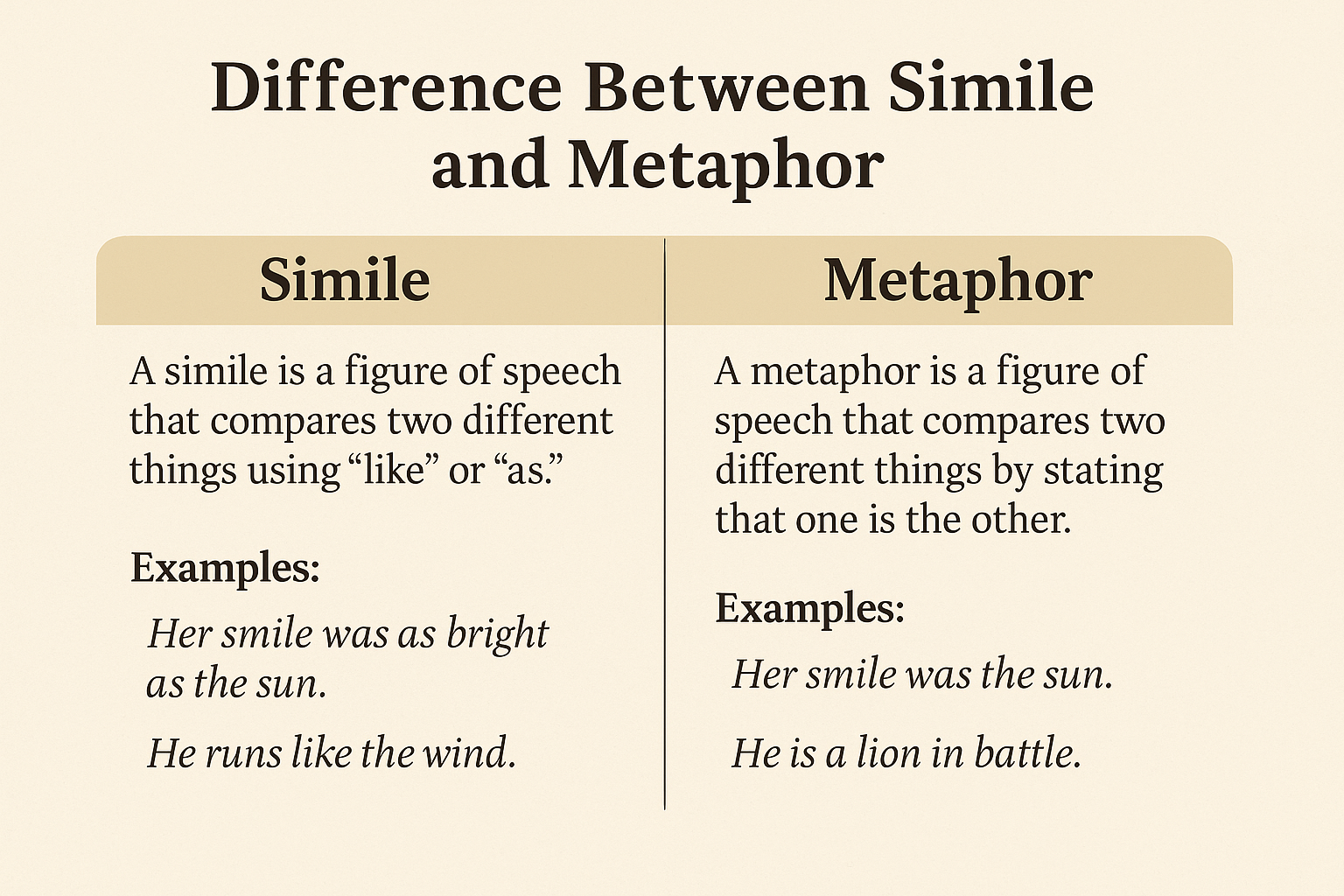
A simile compares two different objects clearly. Writers use connecting words during comparison. Common connectors include “like” and “as.” These words reveal similarity directly. Similes create quick mental pictures. Readers visualize comparison quickly. Thus, descriptions become clear and understandable. Writers often use similes in everyday communication. They simplify complex ideas effectively. Moreover, similes help young readers grasp imagery quickly. The difference between simile and metaphor appears clearly here. Similes depend on comparison markers. Metaphors avoid such markers completely. Similes, therefore, emphasize clarity. Writers highlight similarity without confusion. Readers easily recognize the comparison.
Similes are often used in poetry and storytelling. Authors use them to explain feelings and actions. Teachers also use similes in classroom instruction.
Similes strengthen descriptive language effectively. They also make storytelling lively and engaging. As a result, readers remember images easily.
Examples of simile include:
• Her smile shines like the sun.
• He runs like the wind.
• The baby sleeps like an angel.
• Her voice sounds like soft music.
• The water sparkles like diamonds.
Each example uses clear comparison markers.
What Is a Metaphor?
A metaphor compares two different things directly. Writers avoid connecting words like “like” or “as.” Instead, they identify one thing as another. Metaphors, therefore, create a stronger imaginative impact. They compress meaning into powerful images. Writers express emotion with bold comparisons.
The difference between simile and metaphor appears clearly here. Similes explain similarity. Metaphors declare identity. Metaphors deepen symbolic meaning. Writers reveal hidden relationships through direct association. Readers interpret imagery creatively. Metaphors are frequently used in poetry. They also enrich novels, speeches, and essays. Writers, therefore, achieve emotional intensity. Metaphors also shape philosophical expression. Writers explore abstract ideas through vivid images. Readers interpret deeper meanings gradually. Metaphors, therefore, require thoughtful interpretation. Readers analyze context and symbolism carefully. The Difference between simile and metaphor guides interpretation.
Examples of metaphor include:
• Her smile was the sun.
• Time is a thief.
• The classroom was a zoo.
• His heart is stone.
• Life is a journey.
These statements create direct imaginative identification.
Core Comparison
Understanding the difference between simile and metaphor requires examining structure. Similes include comparison markers. Metaphors avoid such markers entirely. Similes emphasize similarity explicitly. Writers highlight the resemblance clearly. Readers, therefore, grasp imagery instantly. Metaphors emphasize symbolic identity. Writers merge ideas creatively. Readers interpret deeper meaning. Similes often occur in explanatory writing. Metaphors are often used in artistic expression.
The difference between simile and metaphor also affects emotional tone. Similes sound gentle and descriptive. Metaphors sound bold and dramatic. Writers, therefore, select devices according to purpose. Clarity encourages simile usage. Emotional depth encourages metaphor usage. Both devices enrich language significantly. Writers thus employ both techniques creatively.
Why Writers Use Similes
Similes improve clarity and accessibility. Writers explain unfamiliar ideas through comparison. Readers, therefore, visualize concepts easily. Similes also support educational communication. Teachers use them during explanations. Students understand difficult concepts quickly.
The difference between simile and metaphor becomes helpful here. Similes guide readers gently toward imagery. Similes also suit storytelling and children’s literature. Young readers understand comparisons easily. Moreover, similes create rhythm and musicality in poetry. Writers keep the flow and readability.
Examples of similes in literature include:
• My love is like a red rose.
• Her laughter rings like bells.
• His mind works like lightning.
• The lake shines like glass.
These comparisons support vivid imagery.
Why Writers Use Metaphors
Metaphors create a stronger emotional impact. Writers present bold, imaginative connections. Readers interpret symbolic meaning. Metaphors also compress complex ideas into short phrases. Writers, therefore, express philosophy efficiently. The difference between simile and metaphor influences tone and intensity. Metaphors create dramatic imagery. Metaphors also enhance poetic expression. Writers reveal emotion through symbolic language.
Examples of metaphors include:
• The world is a stage.
• Her eyes were stars.
• Knowledge is power.
• His voice was thunder.
Each metaphor shapes powerful imagery.
Similes and Metaphors in Literature
Literature relies heavily on figurative comparisons. Poets especially employ similes and metaphors frequently. Robert Burns wrote famous similes. Shakespeare created memorable metaphors.
Examples from literature include:
Simile examples:
• My love is like a red rose.
• The clouds drift like feathers.
Metaphor examples:
• All the world is a stage.
• Time is a thief.
The difference between simile and metaphor becomes clearer through literary analysis. Readers, therefore, interpret imagery and symbolism carefully.
Simile vs. Metaphor in Everyday Language
People use figurative language daily. Conversations include similes and metaphors naturally.
Examples are often used during casual speech.
Simile examples:
• Busy like a bee
• Light as a feather
• Cold like ice
Metaphor examples:
• He is a rock
• Her voice is music
• The city never sleeps
Understanding the difference between simile and metaphor improves communication.
Speakers express emotions creatively through figurative language.
Teaching Similes and Metaphors
Teachers introduce figurative language early. Students learn comparison techniques gradually. Activities include identifying examples. Students also create original comparisons. The difference between simile and metaphor helps students analyze poetry. Teachers often encourage creative exercises. Students might write descriptive sentences.
Example activity:
• Write a simile describing happiness.
• Write a metaphor describing courage.
These activities strengthen creativity and analytical skills.
Importance for Writers
Writers rely on figurative language constantly. Comparisons enrich narrative description. The difference between simile and metaphor helps writers choose appropriate imagery. Similes improve clarity in explanatory writing. Metaphors enhance emotional depth in storytelling. Authors, therefore, balance both devices carefully. Creative writing becomes richer through imaginative comparison. Readers remember vivid imagery long after reading.
Conclusion
Figurative language enriches literature and communication. Similes and metaphors create vivid comparisons. Writers express ideas creatively through these devices.
The difference between simile and metaphor lies in structure and intensity. Similes use clear comparison words. Metaphors create direct imaginative identity. Both devices strengthen storytelling and poetic expression. Writers, therefore, choose devices according to purpose. Students benefit greatly from understanding figurative language. Analysis becomes clearer and more insightful. Writers also develop stronger descriptive skills. Language becomes lively and expressive.
Ultimately, the difference between simile and metaphor guides effective communication. Writers transform ordinary statements into memorable imagery. Readers, therefore, experience language with deeper appreciation.
Simile in Literature: https://englishlitnotes.com/2025/06/17/simile-in-literature/
Thomas Paine as a Revolutionary American Poet:
https://americanlit.englishlitnotes.com/thomas-paine-revolutionary-american-writer/
That vs Which: https://grammarpuzzlesolved.englishlitnotes.com/that-vs-which/
The Wolf and the Lamb: https://englishwithnaeemullahbutt.com/2025/05/18/wolf-and-lamb/
Victorian Period in English Literature: https://englishlitnotes.com/2025/04/20/victorian-period-in-english-literature/
Discover more from Naeem Ullah Butt - Mr.Blogger
Subscribe to get the latest posts sent to your email.