Introduction
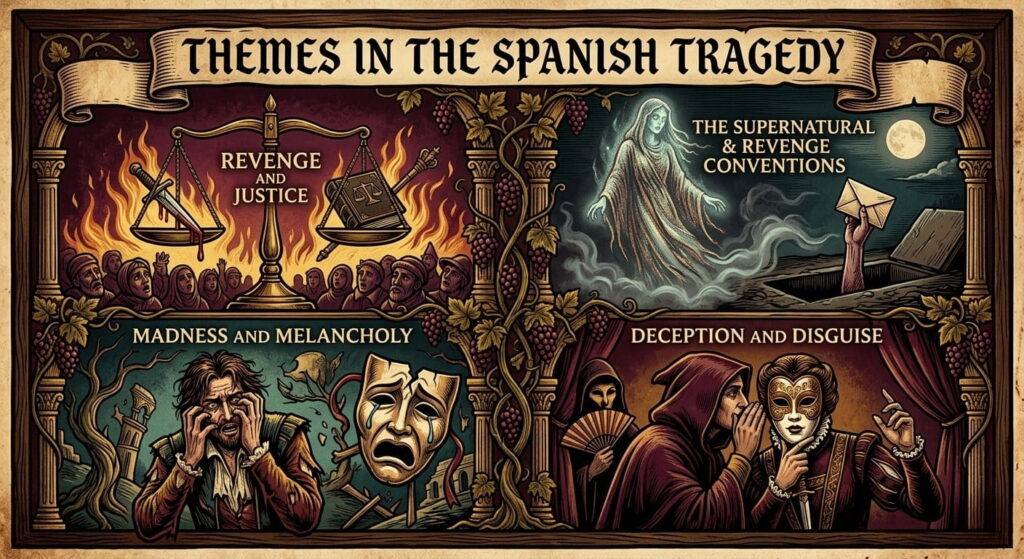
Themes in The Spanish Tragedy reveal deep emotional conflict. First, Thomas Kyd presents intense human suffering clearly. Moreover, the play explores revenge, justice, and political corruption. Therefore, the story reflects serious moral struggles. Furthermore, characters respond strongly to injustice and grief. Consequently, emotional pain drives the tragic narrative forward. Additionally, court politics influence many characters’ decisions. Similarly, ambition creates dangerous rivalry inside the royal court. Meanwhile, grief slowly transforms patience into violent revenge. Thus, audiences observe psychological change throughout the tragedy. Moreover, supernatural figures increase suspense and dramatic tension. Consequently, fate appears to guide tragic events. Furthermore, Kyd connects personal suffering with public corruption. Therefore, the narrative reflects Elizabethan concerns about justice. Additionally, betrayal damages trust within political relationships. Similarly, deception spreads across the royal court. Consequently, moral order collapses gradually during the tragedy. Thus, themes in this tragedy reveal the destructive consequences of injustice.
1. Revenge
Revenge dominates the tragic narrative strongly. First, Horatio’s murder begins the revenge conflict. Consequently, Hieronimo suffers unbearable grief and anger. Moreover, the court refuses to deliver fair justice. Therefore, revenge becomes the only visible solution. Furthermore, Bel-Imperia also demands revenge for Horatio. Similarly, her sorrow strengthens emotional determination. Meanwhile, Lorenzo hides his crime through manipulation. Consequently, injustice deepens Hieronimo’s suffering. Moreover, grief intensifies his emotional desperation daily. Therefore, anger replaces patience within his mind. Furthermore, revenge promises restoration of family honor. Meanwhile, corruption blocks every legal path. Consequently, frustration grows inside Hieronimo’s thoughts. Moreover, Bel-Imperia supports revenge through secret communication. Therefore, emotional loyalty strengthens their determination. Furthermore, villains celebrate temporary safety confidently. Meanwhile, injustice dominates the royal court. Consequently, revenge appears morally justified to grieving victims. Moreover, emotional suffering fuels a constant, revengeful imagination. Therefore, anger pushes characters toward violent solutions.
Moreover, revenge transforms personalities within the play gradually. First, Hieronimo trusts legal justice initially. However, corruption destroys his trust quickly. Consequently, grief becomes powerful anger. Furthermore, sorrow controls his emotional thinking. Therefore, revenge becomes his chosen path. Similarly, Bel-Imperia encourages his determination strongly. Meanwhile, villains continue abusing political power. Consequently, injustice appears permanent within the court. Moreover, Hieronimo observes corruption repeatedly. Therefore, patience slowly disappears from his behavior. Furthermore, emotional pressure shapes his thoughts constantly. Meanwhile, sorrow strengthens revengeful imagination. Consequently, revenge becomes his emotional survival strategy. Moreover, grief removes hesitation gradually. Therefore, determination replaces uncertainty and doubt. Furthermore, Bel-Imperia shares the same emotional goal. Similarly, loyalty strengthens their alliance against injustice. Meanwhile, Lorenzo continues manipulating authority arrogantly. Consequently, anger intensifies inside grieving characters. Moreover, revenge promises emotional relief. Therefore, characters prepare dangerous plans secretly. Thus, themes in tragedy present revenge powerfully.
Finally, revenge produces tragic destruction everywhere. First, violent revenge kills several characters. Consequently, justice arrives through chaos and suffering. Moreover, revenge spreads pain across the court. Therefore, tragedy replaces peaceful resolution completely. Furthermore, emotional anger destroys moral balance. Similarly, innocent individuals suffer terrible consequences. Consequently, revenge reveals dangerous emotional power. Moreover, grief turns into uncontrollable rage. Therefore, violence becomes inevitable within the narrative. Furthermore, revenge destroys both criminals and victims. Meanwhile, sorrow continues shaping tragic outcomes. Consequently, emotional destruction spreads across relationships. Moreover, revenge eliminates hope for reconciliation. Therefore, tragedy dominates the final events. Furthermore, violence silences corrupt villains finally. Meanwhile, suffering continues for surviving characters. Consequently, revenge fails to restore peace completely. Moreover, emotional wounds remain deeply painful. Therefore, the tragedy exposes revenge’s destructive consequences. Thus, themes warn against destructive revenge.
2. Justice
Justice becomes a central concern within the tragedy. First, Horatio’s murder demands clear legal justice. However, political corruption blocks fair investigation quickly. Consequently, criminals avoid punishment inside the royal court. Moreover, Lorenzo manipulates authority for protection. Therefore, truth remains hidden from the king. Furthermore, Hieronimo experiences deep frustration and despair. Meanwhile, he serves as a judge within society. Consequently, his role increases emotional conflict greatly. Additionally, he expects the law to protect innocent citizens. However, the court refuses honest action. Thus, justice slowly disappears from public authority. Moreover, corruption damages faith in royal justice. Therefore, Hieronimo questions the legal system deeply. Furthermore, grief intensifies his frustration daily. Meanwhile, criminals continue enjoying political security. Consequently, injustice spreads through the royal court. Moreover, moral order weakens within society. Therefore, citizens lose confidence in justice. Furthermore, power protects criminals instead of victims.
Moreover, injustice intensifies emotional suffering throughout the play. First, Hieronimo searches desperately for legal justice. However, powerful criminals control the political system. Consequently, evidence remains hidden or ignored. Furthermore, corruption weakens the court’s moral authority. Similarly, Bel-Imperia recognizes the same injustice. Therefore, both characters feel helpless within the system. Meanwhile, criminals celebrate their temporary victory confidently. Consequently, anger replaces patience gradually. Moreover, sorrow shapes emotional decisions constantly. Therefore, characters question the meaning of justice. Furthermore, grief strengthens determination for action. Meanwhile, political power blocks every honest effort. Consequently, frustration grows within grieving characters. Moreover, injustice damages emotional stability deeply. Therefore, patience slowly disappears from their thoughts. Furthermore, emotional pain demands immediate justice. Similarly, Bel-Imperia encourages resistance against corruption. Consequently, anger fuels determination for revenge.
Finally, revenge replaces justice when institutions collapse. First, Hieronimo creates his own dramatic punishment. Consequently, theater becomes his instrument of justice. Moreover, the final performance hides his revenge plan. Therefore, criminals face death during the play. Furthermore, revenge restores personal honor temporarily. However, tragic violence destroys many lives. Consequently, justice arrives through destruction. Moreover, revenge spreads suffering across the royal court. Therefore, tragedy replaces peaceful resolution completely. Furthermore, emotional anger dominates final decisions. Meanwhile, innocent characters suffer tragic consequences. Consequently, revenge exposes the weakness of legal authority. Moreover, moral balance collapses within the narrative. Therefore, revenge becomes a desperate solution. Furthermore, violence ends corruption briefly. However, sorrow continues after revenge. Consequently, tragedy becomes the final outcome. Thus, Themes in The Spanish Tragedy question the effectiveness of legal justice.
3. Power and Corruption
Power strongly influences behavior within the royal court. First, noble characters compete for authority constantly. Consequently, ambition encourages manipulation and deception. Moreover, political power protects criminals easily. Therefore, corruption spreads throughout the court. Furthermore, Lorenzo abuses his influence without hesitation. Meanwhile, weaker individuals suffer injustice quietly. Consequently, authority becomes a tool of oppression. Thus, political corruption shapes the tragic narrative. Moreover, ambition drives characters toward selfish decisions. Therefore, rivalry intensifies among powerful nobles. Furthermore, influence replaces honesty within political dealings. Meanwhile, manipulation hides criminal intentions carefully. Consequently, justice loses strength inside the court. Moreover, powerful figures silence weaker voices quickly. Therefore, corruption grows stronger every day. Furthermore, ambition blinds nobles to moral responsibility. Similarly, greed encourages further deception. Consequently, political authority becomes morally dangerous. Moreover, power distorts ethical judgment. Therefore, Themes in The Spanish Tragedy expose corruption clearly.
Moreover, ambition strengthens corruption within the royal family. First, powerful individuals seek control over others. Consequently, rivalry grows between noble families. Furthermore, political alliances change according to advantage. Similarly, deception becomes normal behavior within the court. Therefore, truth loses importance in political competition. Meanwhile, innocent characters face dangerous consequences. Consequently, corruption destroys trust completely. Thus, Themes in The Spanish Tragedy criticize corrupt authority. Moreover, ambition drives nobles toward selfish goals. Therefore, relationships weaken under political pressure. Furthermore, jealousy increases rivalry among ambitious leaders. Meanwhile, manipulation spreads through secret conspiracies. Consequently, noble families distrust each other deeply. Moreover, ambition weakens moral discipline greatly. Therefore, corruption damages political stability. Furthermore, lies replace honesty during court interactions. Similarly, rivalry increases political tension constantly. Consequently, betrayal becomes common within authority.
Finally, corruption damages justice and social order deeply. First, criminals believe authority protects them forever. Consequently, arrogance encourages violent behavior. Moreover, manipulation hides their crimes successfully. Therefore, the court ignores moral responsibility. Furthermore, corruption destroys confidence in government. Similarly, injustice spreads across society. Consequently, tragedy becomes unavoidable. Thus, Themes in The Spanish Tragedy reveal corruption’s destructive effects. Moreover, arrogance blinds criminals to moral consequences. Therefore, they continue abusing authority confidently. Furthermore, manipulation protects their political reputation. Meanwhile, innocent people lose hope for justice. Consequently, public trust disappears within society. Moreover, corruption weakens moral values strongly. Therefore, power encourages further injustice. Furthermore, dishonest leaders damage social stability. Similarly, selfish ambition destroys ethical leadership. Consequently, society moves toward tragic collapse. Thus, Themes in The Spanish Tragedy warn against corrupt power.
4. Madness
Madness appears through emotional suffering and grief. First, Hieronimo loses emotional stability after Horatio’s death. Consequently, sorrow overwhelms his rational thinking. Moreover, grief creates confusion and despair. Therefore, his behavior becomes unpredictable. Furthermore, emotional pain influences his speech strongly. Meanwhile, others misunderstand his mental suffering. Consequently, they ignore his desperate search for justice. Thus, madness becomes a visible expression of grief. Moreover, sorrow grows stronger within his thoughts daily. Therefore, anger slowly replaces calm judgment. Furthermore, grief controls his emotional reactions constantly. Meanwhile, injustice deepens psychological pressure. Consequently, Hieronimo struggles with overwhelming mental pain. Moreover, sorrow destroys emotional balance gradually. Therefore, madness reflects unbearable grief clearly. Furthermore, despair influences his actions strongly. Similarly, confusion shapes his emotional responses. Consequently, tragedy intensifies psychological conflict.
Moreover, madness reflects psychological trauma within tragedy. First, overwhelming sorrow damages emotional balance. Consequently, characters struggle with intense mental pressure. Furthermore, injustice increases psychological suffering. Similarly, loneliness deepens emotional confusion. Therefore, madness represents deep internal pain. Meanwhile, society refuses to recognize that suffering. Consequently, isolation grows around grieving characters. Thus, Themes in The Spanish Tragedy explore mental anguish deeply. Moreover, emotional wounds remain painfully visible. Therefore, characters struggle with constant psychological distress. Furthermore, sorrow weakens emotional strength gradually. Meanwhile, injustice continues increasing mental pressure. Consequently, despair shapes their thoughts continuously. Moreover, loneliness strengthens psychological suffering deeply. Therefore, madness reveals emotional vulnerability clearly. Furthermore, tragedy exposes human psychological weakness. Similarly, grief overwhelms rational thinking repeatedly. Consequently, mental suffering becomes unavoidable.
Finally, madness also becomes a strategic disguise. First, Hieronimo sometimes pretends madness deliberately. Consequently, enemies underestimate his intelligence. Moreover, this disguise protects his revenge plan. Therefore, madness becomes a dramatic tool. Furthermore, deception allows secret preparation for revenge. Similarly, villains fail to understand his strategy. Consequently, tragedy moves toward its final climax. Thus, Themes in The Spanish Tragedy connect madness with revenge. Moreover, Hieronimo controls his disguise carefully. Therefore, enemies believe his confusion completely. Furthermore, deception protects his dangerous intentions. Meanwhile, villains remain unaware of approaching danger. Consequently, revenge preparations continue without suspicion. Moreover, madness hides his emotional determination. Therefore, strategy replaces open confrontation. Furthermore, deception becomes essential for the success of revenge. Similarly, hidden planning strengthens tragic tension. Consequently, the story moves steadily toward catastrophe. Thus, Themes in The Spanish Tragedy combine madness with a revenge strategy.
5. Honor and Loyalty
Honor and loyalty guide several characters strongly. First, Horatio shows loyalty toward Bel-Imperia and Hieronimo. Consequently, his honest character contrasts with that of corrupt nobles. Moreover, his love remains sincere and respectful. Therefore, audiences admire his moral integrity. Furthermore, his loyalty creates emotional strength within relationships. Meanwhile, court rivals view him as an obstacle. Consequently, jealousy leads to violent betrayal. Thus, honor becomes dangerous within a corrupt society. Additionally, his death destroys emotional stability for others. Therefore, Themes in The Spanish Tragedy highlight loyalty through tragic sacrifice. Moreover, Horatio represents moral virtue within corruption. Consequently, his innocence strengthens emotional sympathy among audiences. Furthermore, loyalty shapes his actions consistently. Meanwhile, villains respond with jealousy and hatred. Consequently, betrayal grows from political ambition. Moreover, corruption opposes loyalty directly. Therefore, Horatio’s loyalty exposes a moral contrast clearly. Furthermore, his death deepens the tragic emotion.
Moreover, loyalty motivates the search for justice. First, Hieronimo loves his son deeply. Consequently, paternal loyalty intensifies emotional suffering. Furthermore, grief encourages determination for revenge. Similarly, Bel-Imperia honors Horatio’s memory faithfully. Therefore, she supports Hieronimo’s struggle strongly. Meanwhile, villains value power over loyalty. Consequently, betrayal spreads across relationships. Thus, Themes in The Spanish Tragedy contrast loyalty with corruption. Moreover, loyalty strengthens emotional courage against injustice. Therefore, characters refuse silence before wrongdoing. Furthermore, grief transforms loyalty into action. Meanwhile, injustice fuels emotional determination. Consequently, loyal characters pursue justice relentlessly. Moreover, loyalty inspires resistance against corruption. Therefore, personal devotion shapes dramatic conflict. Furthermore, Bel-Imperia demonstrates unwavering emotional loyalty. Similarly, Hieronimo honors Horatio’s memory continually. Consequently, loyalty becomes motivation for revenge.
Finally, honor influences moral responsibility strongly. First, characters value reputation and dignity. Consequently, injustice damages personal honor deeply. Moreover, revenge appears as a defense of honor. Therefore, characters fight against humiliation and betrayal. Furthermore, loyalty strengthens emotional courage. Similarly, honor inspires resistance against injustice. Consequently, tragic conflict grows from wounded pride. Thus, Themes in The Spanish Tragedy present honor as a powerful motivation. Moreover, honor guides moral decision-making constantly. Therefore, characters reject humiliation and dishonor. Furthermore, pride shapes emotional reactions strongly. Meanwhile, betrayal threatens personal dignity. Consequently, characters defend their reputation with determination. Moreover, honor strengthens commitment toward justice. Therefore, moral duty replaces passive acceptance. Furthermore, dignity motivates courageous action. Similarly, pride fuels resistance against corruption. Consequently, honor becomes inseparable from revenge. Thus, themes in this tragedy connect honor with tragic conflict.
6. Grief and Loss
Grief and loss dominate emotional experiences throughout the tragedy. First, Horatio’s murder causes overwhelming sorrow. Consequently, Hieronimo experiences unbearable emotional pain. Moreover, Bel-Imperia also suffers deep grief. Therefore, sorrow shapes their decisions strongly. Furthermore, grief destroys hope and peace. Meanwhile, injustice increases emotional despair. Consequently, suffering becomes constant within their lives. Thus, tragedy grows from painful loss. Therefore, Themes in The Spanish Tragedy emphasize grief strongly. Moreover, sorrow intensifies emotional conflict among characters. Consequently, grief influences their thinking constantly. Furthermore, mourning replaces former happiness quickly. Meanwhile, painful memories control their thoughts. Consequently, grief deepens emotional instability gradually. Moreover, sorrow strengthens anger and frustration. Therefore, characters begin seeking justice passionately. Furthermore, emotional pain drives dangerous determination. Similarly, grief influences every decision within the story. Consequently, sorrow shapes the tragic atmosphere. Thus, themes in this tragedy present grief as central suffering.
Moreover, grief transforms personality and behavior gradually. First, Hieronimo changes from a calm judge to a grieving father. Consequently, sorrow replaces patience with anger. Furthermore, emotional pain influences his thinking constantly. Similarly, Bel-Imperia expresses grief through determination. Therefore, sorrow becomes motivation for justice. Meanwhile, villains ignore the suffering they create. Consequently, emotional wounds deepen across the story. Thus, Themes in The Spanish Tragedy connect grief with revenge. Moreover, grief changes emotional priorities greatly. Consequently, sorrow controls personal actions strongly. Furthermore, mourning weakens calm reasoning gradually. Meanwhile, anger grows inside grieving characters. Consequently, sorrow shapes a revengeful imagination constantly. Moreover, grief encourages resistance against injustice. Therefore, determination replaces earlier patience. Furthermore, emotional pain strengthens their courage. Similarly, suffering intensifies commitment toward revenge. Consequently, grief becomes the driving emotional force.
Finally, grief spreads suffering beyond individual characters. First, Horatio’s death damages many relationships. Consequently, sorrow affects the entire court. Moreover, injustice intensifies emotional despair everywhere. Therefore, tragedy spreads across society. Furthermore, grief exposes human vulnerability clearly. Similarly, emotional pain unites victims against corruption. Consequently, sorrow becomes the foundation of tragic action. Thus, Themes in The Spanish Tragedy portray profound human suffering. Moreover, grief reshapes relationships among surviving characters. Consequently, sadness influences political interactions deeply. Furthermore, mourning weakens emotional stability throughout the court. Meanwhile, injustice continues to increase collective sorrow. Consequently, despair becomes a shared experience among many characters. Moreover, suffering spreads through families and friendships. Therefore, grief transforms the social environment completely. Furthermore, sorrow deepens the tragic atmosphere constantly. Similarly, pain strengthens unity among victims. Consequently, grief sustains tragic momentum throughout the narrative.
7. Fate and Supernatural Influence
Fate and supernatural forces shape the tragic narrative strongly. First, the Ghost of Andrea observes events silently. Consequently, supernatural presence guides the audience’s understanding clearly. Moreover, Revenge appears as a symbolic character. Therefore, destiny seems connected with justice and punishment. Furthermore, supernatural elements create powerful dramatic tension. Meanwhile, human characters follow their tragic paths blindly. Consequently, fate appears unavoidable throughout the story. Thus, supernatural influence strengthens tragic inevitability greatly. Therefore, Themes in The Spanish Tragedy include strong supernatural symbolism. Moreover, Andrea watches human corruption with growing expectation. Consequently, audiences anticipate justice and punishment gradually. Furthermore, Revenge encourages anticipation of tragic outcomes. Meanwhile, destiny slowly shapes the narrative direction. Consequently, human actions lead toward inevitable consequences. Moreover, supernatural commentary deepens moral meaning clearly. Therefore, audiences understand the tragic structure better.
Moreover, fate reflects the moral consequences of human actions. First, criminals believe they control events completely. Consequently, arrogance blinds them to future danger. Furthermore, supernatural observers watch human corruption carefully. Similarly, destiny slowly moves toward punishment. Therefore, fate balances injustice eventually. Meanwhile, villains continue their manipulation confidently. Consequently, their downfall becomes inevitable. Thus, Themes in The Spanish Tragedy connect fate with justice. Moreover, arrogance prevents criminals from recognizing approaching punishment. Therefore, ambition strengthens their dangerous confidence. Furthermore, manipulation increases their moral blindness. Meanwhile, destiny quietly prepares tragic consequences. Consequently, injustice slowly moves toward inevitable correction. Moreover, fate punishes moral corruption eventually. Therefore, villains cannot escape final judgment. Furthermore, destiny exposes human arrogance clearly. Similarly, tragic consequences follow immoral choices. Consequently, fate becomes a moral balance within tragedy.
Finally, supernatural presence increases dramatic meaning significantly. First, ghosts remind audiences about unresolved injustice. Consequently, spiritual forces observe human morality constantly. Moreover, destiny shapes the tragic structure gradually. Therefore, the story moves toward inevitable punishment. Furthermore, supernatural figures emphasize moral consequences clearly. Similarly, tragedy becomes part of cosmic justice. Consequently, fate reinforces the play’s moral message. Thus, Themes in The Spanish Tragedy integrate supernatural symbolism with tragedy. Moreover, spiritual observation highlights moral responsibility continuously. Therefore, audiences reflect on justice and destiny. Furthermore, supernatural commentary deepens dramatic tension further. Meanwhile, human characters ignore spiritual warnings repeatedly. Consequently, destiny continues guiding tragic outcomes. Moreover, fate exposes human weakness and arrogance. Therefore, supernatural presence strengthens moral interpretation. Furthermore, destiny connects wrongdoing with punishment firmly. Similarly, tragedy illustrates cosmic moral order. Consequently, fate shapes the tragic narrative powerfully. Thus, the themes of this tragedy unite fate with supernatural justice.
8. Betrayal and Deception
Betrayal and deception drive conflict within the royal court. First, Lorenzo secretly organizes Horatio’s brutal murder. Consequently, betrayal destroys trust among many characters. Moreover, deception hides the truth from royal authority. Therefore, criminals escape punishment temporarily. Furthermore, manipulation protects powerful individuals from justice. Meanwhile, innocent characters suffer injustice silently. Consequently, deception spreads throughout the court rapidly. Thus, betrayal becomes a central tragic force. Therefore, Themes in The Spanish Tragedy highlight political deception strongly. Moreover, ambition constantly encourages secret conspiracies. Consequently, dishonesty becomes common within noble society. Furthermore, villains depend upon deception for survival. Meanwhile, loyalty disappears from political relationships gradually. Consequently, suspicion grows among court members. Moreover, manipulation replaces honest communication entirely. Therefore, corruption strengthens betrayal within the narrative. Furthermore, deception encourages further injustice repeatedly. Similarly, criminals hide the truth through careful planning. Consequently, trust collapses throughout the royal court. Thus, themes of the tragedy reveal deception as destructive power.
Moreover, betrayal damages relationships and emotional stability deeply. First, Bel-Imperia faces betrayal from her own brother. Consequently, family loyalty breaks completely. Furthermore, deception destroys social harmony inside the court. Similarly, manipulation creates suspicion everywhere. Therefore, characters struggle to trust others easily. Meanwhile, criminals continue their schemes confidently. Consequently, betrayal increases conflict and suffering. Thus, Themes in The Spanish Tragedy explore deception’s destructive nature. Moreover, betrayal wounds emotional bonds painfully. Consequently, grief and anger replace former affection. Furthermore, deception divides families and friendships completely. Meanwhile, villains pursue ambition without moral hesitation. Consequently, trust disappears from personal relationships gradually. Moreover, manipulation influences every political interaction. Therefore, betrayal intensifies tragic tension within the narrative. Furthermore, deception spreads fear among innocent characters. Similarly, suspicion grows stronger across the court. Consequently, betrayal reshapes emotional connections permanently. Thus, themes of drama portray betrayal as tragic catalyst.
Finally, deception leads directly to tragic consequences. First, hidden crimes produce violent revenge eventually. Consequently, lies collapse during the final performance. Moreover, truth appears through dramatic justice suddenly. Therefore, criminals face punishment during the play. Furthermore, betrayal destroys both victims and villains. Similarly, deception spreads chaos across the court. Consequently, tragedy becomes unavoidable for many characters. Thus, Themes in The Spanish Tragedy reveal betrayal’s destructive power. Moreover, lies encourage further violence within the story. Consequently, revenge replaces legal justice entirely. Furthermore, criminals underestimate approaching punishment dangerously. Meanwhile, truth slowly approaches through dramatic strategy. Consequently, deception fails to protect villains eventually. Moreover, betrayal creates irreversible consequences for everyone. Therefore, tragedy concludes with widespread destruction. Furthermore, revenge exposes hidden crimes clearly. Similarly, justice appears through painful sacrifice. Consequently, deception ends with tragic revelation. Thus, Themes in The Spanish Tragedy expose betrayal’s fatal consequences.
Conclusion
Themes in The Spanish Tragedy reveal deep moral and emotional conflicts. First, Thomas Kyd presents revenge as the central force. Consequently, injustice creates overwhelming grief and anger. Moreover, corruption prevents fair legal justice. Therefore, revenge becomes the only visible solution. Furthermore, power and ambition damage moral order. Meanwhile, loyalty and honor struggle against corruption. Consequently, betrayal spreads across the royal court. Thus, tragic conflict grows from political injustice. Additionally, grief transforms characters emotionally and psychologically. Similarly, madness reflects unbearable emotional suffering. Moreover, supernatural forces highlight destiny and moral consequences. Therefore, fate appears connected with justice. Furthermore, betrayal and deception intensify tragic tension. Consequently, violence destroys both criminals and victims. Thus, themes in this tragedy present a powerful warning. Overall, the tragedy shows the destructive consequences of revenge, corruption, and injustice.
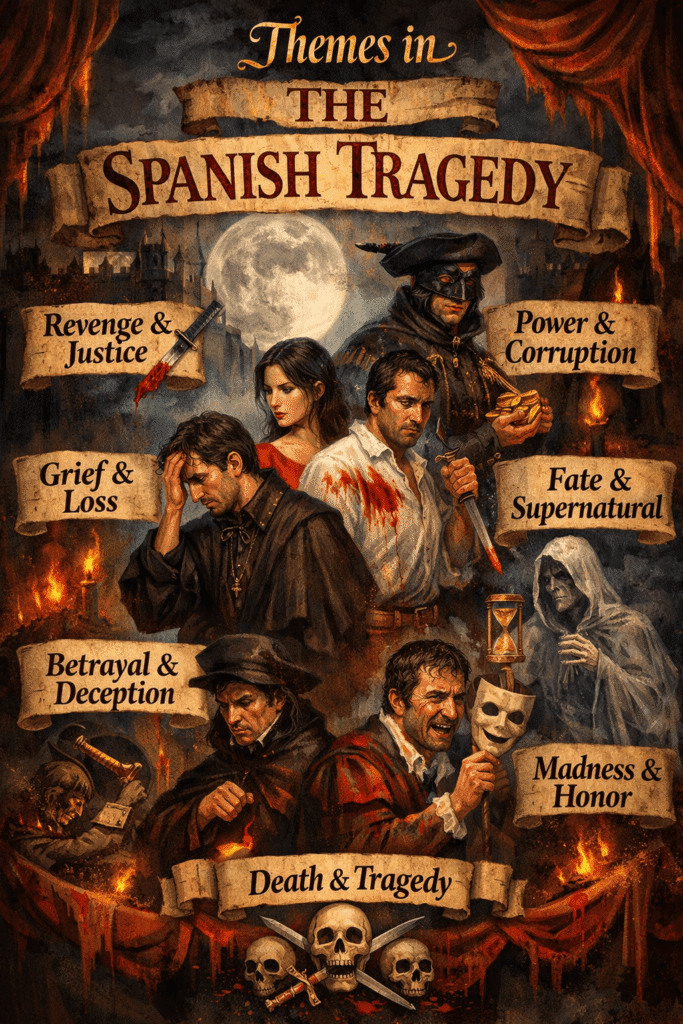
Characterization in The Spanish Tragedy: https://englishlitnotes.com/2026/03/14/characterization-in-the-spanish-tragedy-by-thomas-kyd/
New Sincerity in American Literature: https://americanlit.englishlitnotes.com/new-sincerity-in-american-literature/
Discover more from Naeem Ullah Butt - Mr.Blogger
Subscribe to get the latest posts sent to your email.