Introduction
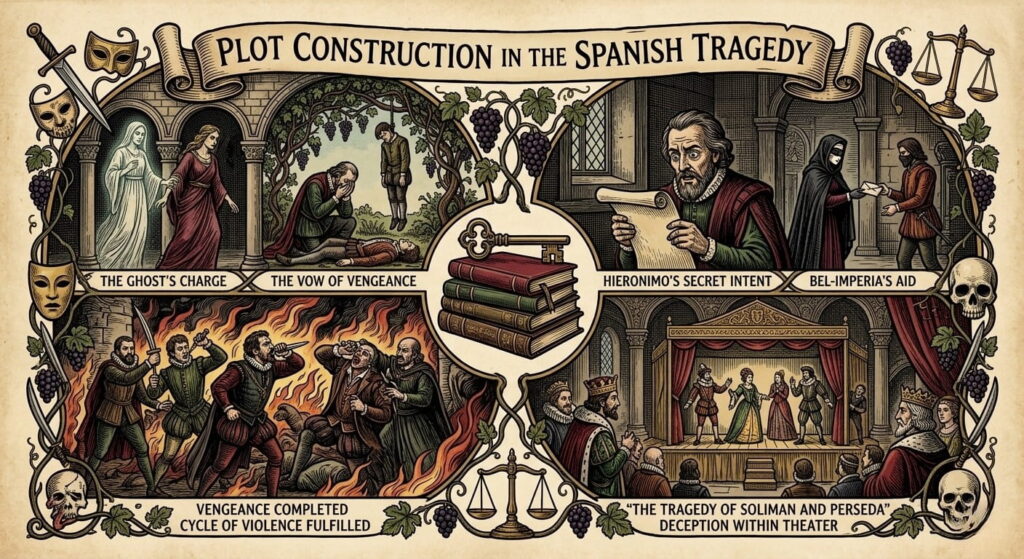
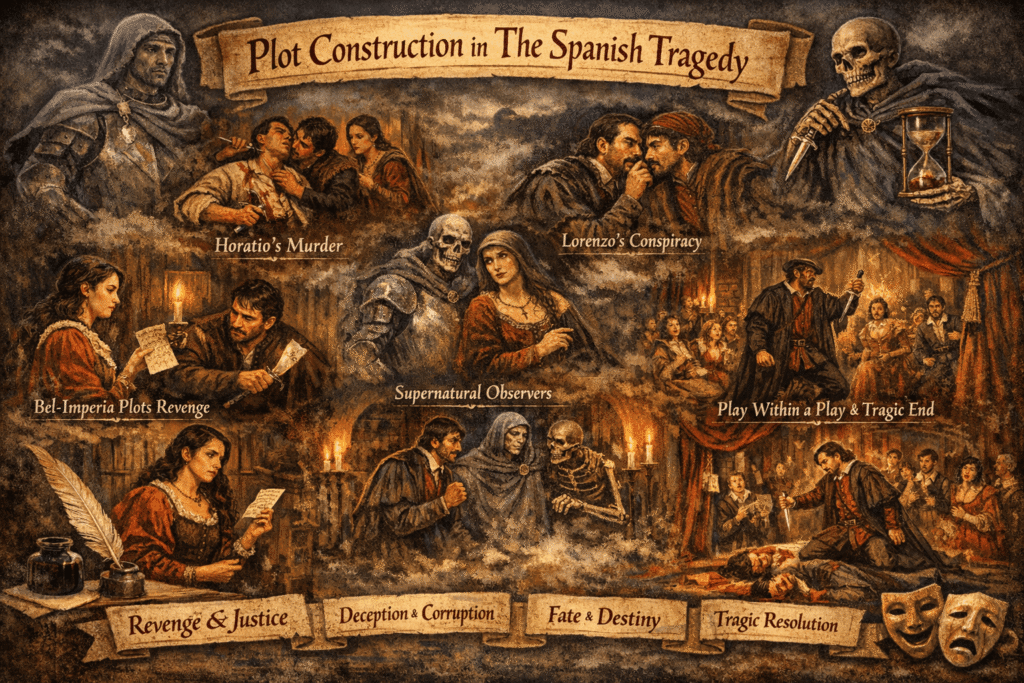
Plot Construction in The Spanish Tragedy reveals careful dramatic organization. First, Thomas Kyd builds the narrative through conflict and revenge. Moreover, the play connects personal grief with political corruption. Consequently, emotional tension grows across successive scenes. Furthermore, Horatio’s murder initiates the tragic sequence. Therefore, Hieronimo begins searching for justice desperately. Meanwhile, Bel-Imperia secretly challenges injustice within the court. Consequently, the hidden truth slowly shapes narrative development. Moreover, Lorenzo hides crime through manipulation and influence. Therefore, corruption complicates the search for justice. Furthermore, supernatural figures observe the unfolding tragedy. Meanwhile, Andrea’s ghost comments upon human actions. Consequently, destiny appears connected with punishment. Moreover, suspense increases with each investigation scene. Therefore, dramatic structure moves steadily toward revenge. Furthermore, conflict shapes every narrative step. Meanwhile, deception intensifies tension within relationships. Consequently, the audience anticipates inevitable tragedy. Thus, Plot Construction in The Spanish Tragedy demonstrates deliberate dramatic design.
1. Plot Construction in The Spanish Tragedy
Plot Construction in The Spanish Tragedy establishes the narrative foundation clearly. First, Andrea’s ghost introduces the tragic story. Consequently, supernatural commentary frames the narrative events. Moreover, the ghost watches unfolding human corruption carefully. Therefore, fate appears connected with moral consequences. Furthermore, early scenes strongly establish a tragic expectation. Meanwhile, audiences anticipate revenge and justice. Consequently, narrative tension begins immediately. Moreover, Horatio’s murder deepens emotional conflict. Therefore, Hieronimo begins searching for justice patiently. Furthermore, investigation scenes expand dramatic suspense. Meanwhile, criminals hide the truth through deception. Consequently, conflict intensifies gradually. Moreover, emotional speeches reveal personal suffering. Therefore, narrative movement becomes steady and logical. Furthermore, revenge slowly replaces hope for legal justice. Meanwhile, villains celebrate temporary safety. Consequently, tragedy approaches inevitable development. Thus, Plot Construction in The Spanish Tragedy organizes events through careful progression.
2. Thomas Kyd
Thomas Kyd shapes Plot Construction in The Spanish Tragedy with skill. First, he connects character suffering with narrative development. Moreover, each action produces dramatic consequences. Consequently, tension increases through cause and reaction. Furthermore, Kyd structures scenes through emotional conflict. Therefore, the story progresses logically. Meanwhile, characters struggle with injustice and corruption. Consequently, moral conflict strengthens narrative tension. Moreover, supernatural elements guide audience interpretation. Therefore, Andrea’s ghost comments upon human events. Furthermore, Revenge symbolizes inevitable punishment. Meanwhile, destiny appears within the narrative design. Consequently, suspense grows gradually. Moreover, Kyd delays revenge carefully. Therefore, anticipation strengthens emotional engagement. Furthermore, investigation scenes expand narrative complexity. Meanwhile, deception shapes relationships within the court. Consequently, conflict continues to develop across scenes. Thus, Plot Construction in The Spanish Tragedy reflects Kyd’s dramatic craftsmanship.
3. Revenge Tragedy Plot
Plot Construction in The Spanish Tragedy follows the revenge tragedy tradition. First, Horatio’s murder begins the central conflict. Consequently, grief overwhelms Hieronimo emotionally. Moreover, injustice motivates his search for punishment. Therefore, revenge becomes the narrative objective. Furthermore, Bel-Imperia supports justice through loyalty and determination. Meanwhile, villains hide crimes through political influence. Consequently, tension increases between victims and criminals. Moreover, revenge planning replaces faith in legal justice. Therefore, emotional suffering drives narrative movement. Furthermore, investigation scenes extend suspense. Meanwhile, corruption blocks official justice repeatedly. Consequently, victims pursue personal revenge. Moreover, revenge promises restoration of honor. Therefore, narrative tension grows steadily. Furthermore, villains celebrate temporary security confidently. Meanwhile, destiny moves events toward catastrophe. Consequently, tragedy approaches an inevitable climax. Thus, Plot Construction in The Spanish Tragedy depends strongly upon the revenge structure.
4. Elizabethan Revenge Drama
Plot Construction in The Spanish Tragedy reflects Elizabethan revenge drama traditions. First, the narrative begins with murder and injustice. Consequently, emotional suffering motivates revenge. Moreover, supernatural figures observe tragic events. Therefore, destiny appears connected with moral punishment. Furthermore, Andrea’s ghost introduces the revenge framework. Meanwhile, Revenge symbolizes inevitable retribution. Consequently, suspense grows through anticipation. Moreover, audiences understand the moral consequences early. Therefore, dramatic irony strengthens tension. Furthermore, revenge replaces legal justice gradually. Meanwhile, corruption blocks official authority. Consequently, victims seek violent solutions. Moreover, tragedy reveals moral instability within society. Therefore, revenge tragedies explore justice and corruption deeply. Furthermore, characters struggle with ethical decisions. Meanwhile, suffering drives revengeful determination. Consequently, narrative conflict intensifies. Thus, Plot Construction in The Spanish Tragedy mirrors Elizabethan revenge drama.
5. Plot Structure in The Spanish Tragedy
Plot Construction in The Spanish Tragedy demonstrates organized structural movement. First, supernatural framing establishes tragic expectation. Consequently, Horatio’s murder initiates the central conflict. Moreover, investigation scenes follow the crime carefully. Therefore, suspense grows through uncertainty. Furthermore, Hieronimo searches patiently for justice. Meanwhile, villains conceal the truth through deception. Consequently, tension increases across scenes. Moreover, Bel-Imperia secretly assists the investigation. Therefore, narrative conflict deepens gradually. Furthermore, emotional speeches reveal suffering and frustration. Meanwhile, corruption blocks official justice repeatedly. Consequently, revenge planning replaces hope for the law. Moreover, secrets shape relationships within the court. Therefore, narrative movement remains logical. Furthermore, suspense builds toward theatrical revenge. Meanwhile, villains remain unaware of approaching punishment. Consequently, tragedy moves toward an inevitable climax. Thus, Plot Construction in The Spanish Tragedy reveals structural balance.
6. Dramatic Structure of The Spanish Tragedy
Plot Construction in The Spanish Tragedy reveals a strong dramatic structure. First, the play moves through connected narrative stages. Moreover, each stage increases tension and emotional conflict. Consequently, suspense grows across successive scenes. Furthermore, Horatio’s murder begins a dramatic escalation immediately. Therefore, investigation scenes follow the initial crime. Meanwhile, Hieronimo searches patiently for evidence. Consequently, the narrative expands through dialogue and discovery. Moreover, Bel-Imperia secretly provides crucial information. Therefore, hidden knowledge strengthens dramatic tension. Furthermore, villains manipulate authority to escape punishment. Meanwhile, corruption delays justice repeatedly. Consequently, emotional frustration intensifies among victims. Moreover, suspense continues building toward revenge. Therefore, each scene pushes the narrative forward. Furthermore, dramatic pacing remains balanced and deliberate. Meanwhile, tension grows through deception and secrecy. Consequently, conflict approaches inevitable confrontation. Thus, Plot Construction in The Spanish Tragedy demonstrates disciplined dramatic organization.
7. Five-Act Structure
Plot Construction in The Spanish Tragedy follows a five-act structure. First, the opening act introduces the central conflict. Moreover, Andrea’s ghost frames the tragic narrative clearly. Consequently, audiences anticipate revenge and justice. Furthermore, Horatio’s death expands the dramatic conflict. Therefore, the second act develops investigation and suspicion. Meanwhile, Bel-Imperia secretly communicates the hidden truth. Consequently, tension grows between victims and villains. Moreover, the third act intensifies emotional suffering. Therefore, Hieronimo struggles with delayed justice. Furthermore, corruption blocks legal solutions repeatedly. Meanwhile, revenge begins replacing patience gradually. Consequently, the fourth act prepares dramatic revenge. Moreover, Hieronimo organizes the theatrical performance carefully. Therefore, suspense reaches its highest level. Furthermore, the final act delivers a violent resolution. Meanwhile, villains face sudden punishment. Consequently, tragedy concludes through catastrophic justice. Thus, Plot Construction in The Spanish Tragedy reflects classical dramatic structure.
8. Tragic Plot Development
Plot Construction in The Spanish Tragedy develops tragedy through gradual escalation. First, injustice begins with Horatio’s murder. Consequently, emotional suffering spreads across the narrative. Moreover, grief transforms character motivations steadily. Therefore, revenge becomes the central objective. Furthermore, Hieronimo searches for justice patiently. Meanwhile, villains manipulate political authority cleverly. Consequently, corruption delays punishment repeatedly. Moreover, investigation scenes reveal the hidden truth slowly. Therefore, suspense increases with each discovery. Furthermore, Bel-Imperia strengthens the pursuit of justice. Meanwhile, deception shapes political relationships constantly. Consequently, emotional tension deepens across the court. Moreover, tragedy grows through moral conflict. Therefore, revenge planning intensifies narrative momentum. Furthermore, hidden secrets complicate the investigation. Meanwhile, villains celebrate temporary security confidently. Consequently, destiny moves events toward catastrophe. Thus, Plot Construction in The Spanish Tragedy reveals careful tragic development.
9. Hieronimo Revenge Plot
Plot Construction in The Spanish Tragedy centers on Hieronimo’s revenge plot. First, Horatio’s death devastates Hieronimo emotionally. Consequently, grief replaces calm judgment gradually. Moreover, he searches desperately for legal justice. Therefore, corruption destroys his faith in authority. Furthermore, sorrow transforms patience into anger. Meanwhile, Bel-Imperia supports his struggle secretly. Consequently, revenge becomes his only solution. Moreover, Hieronimo begins planning punishment carefully. Therefore, deception hides his intentions from enemies. Furthermore, he organizes the theatrical performance strategically. Meanwhile, villains remain unaware of approaching danger. Consequently, suspense grows throughout the narrative. Moreover, revenge becomes both emotional and strategic. Therefore, the narrative focuses on his preparation. Furthermore, hidden planning strengthens dramatic tension. Meanwhile, justice approaches through theatrical action. Consequently, revenge fulfills emotional expectation. Thus, the play depends heavily upon Hieronimo’s revenge plan.
10. Horatio Murder Scene
the play transforms through Horatio’s murder scene. First, Lorenzo and Balthazar attack Horatio secretly. Consequently, the crime begins the tragic narrative conflict. Moreover, Bel-Imperia witnesses the violent act helplessly. Therefore, emotional suffering increases immediately. Furthermore, the murder exposes noble corruption clearly. Meanwhile, villains hide the crime through deception. Consequently, justice becomes difficult within the court. Moreover, the scene motivates Hieronimo’s investigation. Therefore, narrative tension begins to rise steadily. Furthermore, Horatio’s death symbolizes innocent victimhood. Meanwhile, grief spreads across affected characters. Consequently, emotional suffering drives future actions. Moreover, revenge becomes morally justified for victims. Therefore, suspense grows through the hidden truth. Furthermore, the murder shapes later narrative development. Meanwhile, villains celebrate temporary success confidently. Consequently, tragedy moves toward inevitable punishment. Thus, the play begins its tragic escalation with Horatio’s murder.
11. Bel-Imperia and Revenge Plot
the play includes Bel-Imperia’s revenge motivation. First, she loves Horatio sincerely. Consequently, his death causes overwhelming sorrow. Moreover, Bel-Imperia demands justice strongly. Therefore, she secretly helps Hieronimo’s investigation. Furthermore, she sends letters revealing the criminals. Meanwhile, Lorenzo attempts to control her actions. Consequently, family authority increases dramatic tension. Moreover, Bel-Imperia refuses silence despite danger. Therefore, loyalty motivates her courage. Furthermore, revenge becomes her personal objective. Meanwhile, corruption prevents official justice repeatedly. Consequently, she supports Hieronimo’s revenge plan. Moreover, her determination strengthens narrative conflict. Therefore, emotional resistance challenges political authority. Furthermore, Bel-Imperia represents moral courage. Meanwhile, villains underestimate her influence completely. Consequently, justice approaches through hidden cooperation. Thus, the play highlights Bel-Imperia’s crucial role in revenge.
12. Lorenzo Conspiracy
the play reveals Lorenzo’s conspiracy clearly. First, Lorenzo fears exposure after Horatio’s murder. Consequently, he plans deception to protect himself. Moreover, he controls information within the royal court. Therefore, truth remains hidden from authority. Furthermore, Lorenzo manipulates Balthazar for political advantage. Meanwhile, he spreads lies to mislead others. Consequently, suspicion grows across the narrative. Moreover, his actions intensify political corruption. Therefore, conflict grows between villains and victims. Furthermore, Lorenzo threatens witnesses to maintain silence. Meanwhile, Bel-Imperia resists his authority bravely. Consequently, tension increases within family relationships. Moreover, conspiracy strengthens the tragic direction. Therefore, deception dominates the narrative structure. Furthermore, Lorenzo’s ambition drives criminal decisions. Meanwhile, victims struggle against hidden injustice. Consequently, revenge becomes the inevitable response. Thus, the play uses Lorenzo’s conspiracy to intensify conflict.
13. Balthazar Character Role
the play highlights Balthazar’s political role. First, Balthazar desires Bel-Imperia strongly. Consequently, jealousy influences his behavior. Moreover, ambition encourages cooperation with Lorenzo. Therefore, he participates in Horatio’s murder. Furthermore, Balthazar represents aristocratic arrogance clearly. Meanwhile, political power protects him temporarily. Consequently, injustice spreads within the court. Moreover, his character strengthens the revenge narrative. Therefore, conflict develops through romantic rivalry. Furthermore, Bel-Imperia rejects his advances firmly. Meanwhile, humiliation increases his hostility. Consequently, tension grows within the royal family. Moreover, Balthazar’s presence deepens narrative conflict. Therefore, revenge gains emotional justification. Furthermore, his arrogance blinds him to danger. Meanwhile, criminals enjoy temporary security confidently. Consequently, punishment approaches gradually. Thus, the play uses Balthazar to expand political conflict.
14. Ghost of Andrea and Revenge
the play includes supernatural commentary. First, Andrea’s ghost observes human actions silently. Consequently, audiences understand moral consequences clearly. Moreover, Revenge accompanies the ghost throughout the play. Therefore, supernatural figures frame the narrative events. Furthermore, they comment on the unfolding tragedy. Meanwhile, human characters remain unaware of observation. Consequently, suspense increases through dramatic irony. Moreover, destiny appears connected with punishment. Therefore, supernatural presence strengthens tragic expectation. Furthermore, Andrea anticipates justice for injustice. Meanwhile, Revenge promises inevitable retribution. Consequently, tension grows across the narrative. Moreover, spiritual observation deepens moral meaning. Therefore, tragedy reflects cosmic justice. Furthermore, supernatural commentary shapes audience perception. Meanwhile, villains ignore approaching consequences. Consequently, destiny guides events gradually. Thus, the play integrates supernatural observation.
15. Play within a Play Device
the play features a theatrical strategy. First, Hieronimo organizes a staged performance. Consequently, he hides revenge within drama. Moreover, actors perform roles before the royal court. Therefore, villains remain unaware of danger. Furthermore, dramatic spectacle disguises violent justice. Meanwhile, audience anticipation increases strongly. Consequently, tension reaches dramatic intensity. Moreover, Hieronimo controls the performance carefully. Therefore, revenge unfolds through theatrical action. Furthermore, deception becomes an instrument of justice. Meanwhile, criminals trust the entertainment completely. Consequently, tragedy erupts suddenly during the play. Moreover, the device reveals Hieronimo’s intelligence. Therefore, narrative tension reaches a climax. Furthermore, theatrical illusion hides deadly intention. Meanwhile, truth appears through performance. Consequently, criminals face unexpected punishment. Thus, the play employs theatrical strategy effectively.
16. Dramatic Climax in The Spanish Tragedy
the play reaches its climax during the performance. First, Hieronimo begins the staged play. Consequently, suspense dominates the royal court. Moreover, villains watch the performance confidently. Therefore, they ignore hidden danger. Furthermore, dramatic dialogue builds tension rapidly. Meanwhile, revenge unfolds unexpectedly. Consequently, criminals receive violent punishment. Moreover, the audience witnesses shocking justice. Therefore, narrative tension collapses suddenly. Furthermore, truth emerges through tragic violence. Meanwhile, the royal court reacts with horror. Consequently, emotional shock spreads across characters. Moreover, revenge fulfills long-awaited justice. Therefore, the narrative achieves dramatic resolution. Furthermore, Hieronimo reveals the hidden truth openly. Meanwhile, tragedy overwhelms the court. Consequently, justice appears through catastrophe. Thus, the play culminates in a powerful climax.
17. Conflict in The Spanish Tragedy
the play depends on intense conflict. First, Horatio’s murder creates moral injustice. Consequently, victims pursue justice passionately. Moreover, villains hide crimes through deception. Therefore, conflict spreads across relationships. Furthermore, political corruption strengthens opposition. Meanwhile, Hieronimo struggles against authority. Consequently, frustration grows within his mind. Moreover, Bel-Imperia challenges family control bravely. Therefore, conflict intensifies within the royal court. Furthermore, revenge motivates narrative progression. Meanwhile, deception shapes political alliances. Consequently, tension rises through investigation scenes. Moreover, characters face moral dilemmas constantly. Therefore, emotional suffering deepens the tragedy. Furthermore, villains underestimate approaching revenge. Meanwhile, victims plan justice secretly. Consequently, conflict drives the entire narrative. Thus, the play relies upon powerful dramatic conflict.
18. Plot Tension in Elizabethan Drama
the play builds strong dramatic tension. First, Horatio’s murder shocks the audience immediately. Consequently, suspense appears from the beginning. Moreover, injustice creates emotional engagement. Therefore, audiences expect eventual revenge. Furthermore, the hidden truth increases narrative suspense. Meanwhile, villains believe their crimes remain hidden. Consequently, dramatic irony strengthens tension greatly. Moreover, investigation scenes maintain audience curiosity. Therefore, suspense continues across the narrative. Furthermore, Hieronimo struggles with patience and anger. Meanwhile, corruption blocks justice repeatedly. Consequently, tension rises through emotional conflict. Moreover, Bel-Imperia secretly supports revenge. Therefore, narrative tension deepens gradually. Furthermore, deception complicates relationships within the court. Meanwhile, villains ignore approaching punishment. Consequently, anticipation grows steadily. Thus, the play reflects Elizabethan dramatic tension.
19. Justice and Revenge Plot
the play balances justice and revenge. First, Horatio’s death demands immediate justice. Consequently, Hieronimo begins searching for the truth. Moreover, corruption blocks legal punishment. Therefore, revenge becomes the alternative solution. Furthermore, Bel-Imperia strongly supports moral justice. Meanwhile, villains depend upon political protection. Consequently, injustice spreads across the narrative. Moreover, revenge promises restoration of honor. Therefore, emotional suffering drives the plot. Furthermore, investigation scenes reveal hidden corruption. Meanwhile, patience gradually transforms into anger. Consequently, revenge replaces trust in authority. Moreover, justice appears through violent punishment. Therefore, tragedy exposes moral consequences clearly. Furthermore, victims reclaim dignity through revenge. Meanwhile, criminals underestimate approaching danger. Consequently, punishment becomes inevitable. Thus, the play links justice with revenge.
20. Tragic Ending in The Spanish Tragedy
the play concludes through a tragic resolution. First, Hieronimo performs the final theatrical revenge. Consequently, villains receive violent punishment immediately. Moreover, the royal court witnesses a sudden tragedy. Therefore, emotional shock spreads everywhere. Furthermore, justice appears through destructive action. Meanwhile, innocent characters also suffer loss. Consequently, tragedy becomes the outcome. Moreover, revenge fulfills emotional expectations briefly. Therefore, peace never returns completely. Furthermore, moral consequences remain visible afterward. Meanwhile, survivors face a painful reality. Consequently, sorrow dominates the final moments. Moreover, tragedy emphasizes human suffering clearly. Therefore, revenge reveals its destructive nature. Furthermore, emotional conflict ends through catastrophe. Meanwhile, justice appears incomplete despite revenge. Consequently, reflection follows the tragedy. Thus, the play ends with tragic destruction.
21. Dramatic Irony in The Spanish Tragedy
the play employs dramatic irony effectively. First, audiences learn about the criminals early. Consequently, tension increases during later scenes. Moreover, characters search for truth unknowingly. Therefore, suspense develops through hidden knowledge. Furthermore, viewers anticipate revenge constantly. Meanwhile, villains continue enjoying false security. Consequently, dramatic irony intensifies emotional engagement. Moreover, investigation scenes reveal partial truths gradually. Therefore, audiences understand approaching tragedy sooner. Furthermore, irony exposes corruption within authority. Meanwhile, victims struggle against deception. Consequently, tension grows through misunderstanding. Moreover, characters unknowingly approach disaster. Therefore, suspense remains strong throughout the narrative. Furthermore, audience awareness deepens dramatic experience. Meanwhile, villains ignore inevitable consequences. Consequently, destiny approaches silently. Thus, the play benefits from dramatic irony.
22. Elizabethan Stage Conventions
the play reflects Elizabethan stage traditions. First, dramatic speeches reveal emotional conflict clearly. Consequently, audiences understand character motivation deeply. Moreover, public performance shapes narrative presentation. Therefore, theatrical elements strengthen dramatic impact. Furthermore, the play uses soliloquies effectively. Meanwhile, characters reveal their inner thoughts openly. Consequently, suspense increases through emotional expression. Moreover, symbolic characters represent moral ideas. Therefore, supernatural figures guide interpretation. Furthermore, stage violence heightens tragic intensity. Meanwhile, a dramatic spectacle captures the audience’s attention. Consequently, revenge appears through theatrical performance. Moreover, Elizabethan drama encourages moral reflection. Therefore, tragedy teaches lessons through suffering. Furthermore, audiences observe justice through action. Meanwhile, dramatic devices structure narrative movement. Consequently, tension develops through performance. Thus, the play reflects Elizabethan stage tradition.
23. Court Politics in The Spanish Tragedy
the play reveals intense court politics. First, noble families compete for influence constantly. Consequently, ambition drives manipulation and deception. Moreover, Lorenzo controls information within the court. Therefore, political power protects criminals temporarily. Furthermore, corruption weakens justice repeatedly. Meanwhile, innocent characters struggle against authority. Consequently, tension grows within political relationships. Moreover, rivalry increases conflict between nobles. Therefore, court politics influence narrative events. Furthermore, ambition encourages secret conspiracies. Meanwhile, Bel-Imperia challenges her brother’s authority. Consequently, family conflict deepens tragedy. Moreover, power shapes moral decisions constantly. Therefore, justice becomes difficult within corruption. Furthermore, victims seek alternative solutions. Meanwhile, revenge replaces legal authority. Consequently, tragedy grows through political conflict. Thus, the play depends upon court politics.
24. Tragic Resolution in The Spanish Tragedy
the play moves toward a tragic resolution. First, Hieronimo completes his revenge during the performance. Consequently, criminals face immediate punishment. Moreover, truth emerges before the royal court. Therefore, justice appears through violent action. Furthermore, emotional suffering reaches final intensity. Meanwhile, innocent characters experience tragic consequences. Consequently, sorrow dominates the closing moments. Moreover, revenge destroys both villains and victims. Therefore, tragedy becomes the final outcome. Furthermore, moral reflection follows the violent climax. Meanwhile, survivors confront devastating loss. Consequently, justice appears incomplete despite revenge. Moreover, emotional conflict ends through destruction. Therefore, tragedy emphasizes human vulnerability. Furthermore, corruption receives ultimate exposure. Meanwhile, power fails to protect criminals. Consequently, suffering defines the final resolution. Thus, the play concludes with tragic justice.
25. Revenge Planning by Hieronimo
the play highlights careful revenge planning. First, Hieronimo investigates Horatio’s murder patiently. Consequently, he gathers clues about the criminals. Moreover, Bel-Imperia secretly provides important evidence. Therefore, Hieronimo confirms Lorenzo’s guilt. Furthermore, anger replaces patience gradually. Meanwhile, corruption blocks legal justice repeatedly. Consequently, he chooses revenge instead. Moreover, Hieronimo designs the theatrical punishment carefully. Therefore, he prepares the court performance strategically. Furthermore, actors participate without knowing the true plan. Meanwhile, villains remain unaware of approaching danger. Consequently, suspense increases across the narrative. Moreover, revenge planning strengthens dramatic tension. Therefore, narrative momentum moves toward the climax. Furthermore, hidden preparation reflects Hieronimo’s determination. Meanwhile, justice approaches through deception. Consequently, punishment becomes inevitable. Thus, the play depends upon Hieronimo’s strategic revenge.
26. Elizabethan Tragic Plot Techniques
the play employs Elizabethan tragic techniques. First, murder introduces the central conflict. Consequently, emotional suffering motivates revenge. Moreover, supernatural commentary frames the narrative events. Therefore, destiny appears connected with justice. Furthermore, dramatic irony constantly strengthens suspense. Meanwhile, audiences recognize approaching tragedy earlier. Consequently, tension builds through anticipation. Moreover, revenge delays create narrative suspense. Therefore, emotional conflict deepens gradually. Furthermore, theatrical spectacle increases dramatic intensity. Meanwhile, symbolic characters represent moral ideas. Consequently, tragedy delivers ethical lessons. Moreover, suffering highlights human weakness clearly. Therefore, audiences reflect upon justice and revenge. Furthermore, the violent climax resolves the narrative conflict. Meanwhile, moral consequences remain visible afterward. Consequently, tragedy ends through catastrophe. Thus, the play reflects Elizabethan tragic storytelling.
27. Narrative Structure of The Spanish Tragedy
the play follows an organized narrative structure. First, supernatural framing introduces the tragic world. Consequently, Andrea’s ghost observes human corruption. Moreover, Horatio’s murder initiates the central conflict. Therefore, investigation scenes follow the crime. Furthermore, Hieronimo searches for justice patiently. Meanwhile, villains conceal the truth through deception. Consequently, tension increases across scenes. Moreover, emotional speeches reveal personal suffering. Therefore, revenge gradually replaces hope for law. Furthermore, Bel-Imperia secretly supports justice. Meanwhile, secrets shape relationships within the court. Consequently, suspense grows steadily. Moreover, theatrical revenge prepares the climax. Therefore, narrative movement remains logical. Furthermore, tragedy concludes with violent justice. Meanwhile, moral consequences remain powerful. Consequently, suffering defines the narrative outcome. Thus, the play demonstrates clear narrative organization.
28. Rising Action in The Spanish Tragedy
the play develops rising action carefully. First, Horatio’s murder begins narrative tension. Consequently, Hieronimo investigates the crime. Moreover, Bel-Imperia reveals hidden information secretly. Therefore, suspicion grows within the court. Furthermore, villains attempt to hide evidence repeatedly. Meanwhile, corruption delays justice constantly. Consequently, emotional frustration increases. Moreover, tension grows through discovery scenes. Therefore, suspense strengthens audience engagement. Furthermore, secrets complicate relationships among characters. Meanwhile, revenge becomes the emerging solution. Consequently, narrative momentum accelerates gradually. Moreover, Hieronimo’s determination grows stronger daily. Therefore, revenge planning intensifies suspense. Furthermore, villains celebrate temporary success confidently. Meanwhile, destiny moves toward confrontation. Consequently, tragedy approaches an inevitable climax. Thus, the play builds rising action effectively.
29. Climax of The Spanish Tragedy
the play reaches its climax during the staged play. First, Hieronimo begins the performance confidently. Consequently, tension fills the royal court. Moreover, villains observe the play without suspicion. Therefore, revenge unfolds suddenly. Furthermore, criminals receive violent punishment immediately. Meanwhile, the audience witnesses shocking justice. Consequently, truth appears before royal authority. Moreover, emotional shock spreads across characters. Therefore, narrative tension collapses quickly. Furthermore, revenge fulfills Hieronimo’s purpose. Meanwhile, tragedy overwhelms the royal court. Consequently, moral consequences become visible. Moreover, the climax resolves the narrative conflict dramatically. Therefore, justice arrives through theatrical violence. Furthermore, villains lose their false security. Meanwhile, survivors face a painful reality. Consequently, tragedy dominates the scene. Thus, the play culminates with a powerful climax.
30. Catastrophe in The Spanish Tragedy
the play ends through catastrophe. First, revenge destroys several characters instantly. Consequently, the royal court witnesses a devastating tragedy. Moreover, justice appears through violent destruction. Therefore, sorrow dominates the final moments. Furthermore, survivors confront painful consequences. Meanwhile, revenge fails to restore happiness completely. Consequently, tragedy becomes the outcome. Moreover, emotional suffering remains after revenge. Therefore, moral lessons emerge from catastrophe. Furthermore, corruption receives final exposure. Meanwhile, power fails to protect criminals. Consequently, justice arrives too late for peace. Moreover, tragedy emphasizes human vulnerability clearly. Therefore, the ending reinforces moral reflection. Furthermore, suffering defines the narrative conclusion. Meanwhile, audiences contemplate justice and revenge. Consequently, tragedy leaves lasting impact. Thus, the play concludes with catastrophic resolution.
31. Character Motivation in the Plot
the play depends strongly on character motivation. First, Horatio’s murder motivates revenge. Consequently, Hieronimo searches for justice passionately. Moreover, Bel-Imperia seeks punishment for injustice. Therefore, loyalty drives her actions. Furthermore, Lorenzo pursues power and protection. Meanwhile, Balthazar seeks romantic control. Consequently, conflicting desires create dramatic tension. Moreover, ambition influences moral decisions. Therefore, characters shape narrative direction. Furthermore, grief transforms calm personalities gradually. Meanwhile, revenge replaces patience and hope. Consequently, emotional suffering drives action. Moreover, justice motivates investigation scenes. Therefore, narrative conflict grows naturally. Furthermore, characters pursue personal objectives constantly. Meanwhile, deception complicates relationships. Consequently, tension intensifies throughout the story. Thus, the play grows from character motivation.
32. Role of Deception in the Plot
the play relies heavily on deception. First, Lorenzo hides Horatio’s murder carefully. Consequently, justice becomes difficult within the court. Moreover, villains manipulate political authority repeatedly. Therefore, truth remains hidden temporarily. Furthermore, deception shapes relationships among characters. Meanwhile, Bel-Imperia secretly reveals information. Consequently, hidden knowledge strengthens suspense. Moreover, Hieronimo hides his revenge plan. Therefore, deception becomes a strategic tool. Furthermore, villains enjoy temporary safety. Meanwhile, audiences anticipate approaching punishment. Consequently, dramatic irony increases tension. Moreover, secrets guide narrative movement. Therefore, deception deepens conflict constantly. Furthermore, truth finally emerges during the climax. Meanwhile, criminals face unexpected justice. Consequently, tragedy exposes hidden corruption. Thus, the play demonstrates deception’s powerful narrative role.
33. Role of Fate in the Plot
the play includes a strong influence of fate. First, Andrea’s ghost observes events. Consequently, destiny frames the narrative structure. Moreover, Revenge symbolizes inevitable punishment. Therefore, supernatural presence guides interpretation. Furthermore, fate appears connected with justice. Meanwhile, villains ignore approaching consequences. Consequently, destiny moves events toward tragedy. Moreover, supernatural commentary strengthens suspense. Therefore, moral consequences become unavoidable. Furthermore, audiences anticipate eventual justice. Meanwhile, corruption delays punishment temporarily. Consequently, fate ensures ultimate retribution. Moreover, tragedy reflects cosmic moral balance. Therefore, destiny shapes narrative progression. Furthermore, supernatural figures guide audience understanding. Meanwhile, revenge fulfills moral expectations. Consequently, tragedy concludes through destiny. Thus, the play incorporates powerful supernatural fate.
34. Moral Justice in the Plot
the play explores moral justice deeply. First, Horatio’s murder demands punishment. Consequently, victims pursue justice passionately. Moreover, corruption blocks official authority repeatedly. Therefore, revenge becomes an alternative justice. Furthermore, moral conflict shapes character decisions. Meanwhile, audiences judge the villains’ actions. Consequently, justice appears through violent revenge. Moreover, tragedy exposes ethical consequences. Therefore, moral lessons emerge through suffering. Furthermore, victims regain honor through punishment. Meanwhile, criminals face inevitable destruction. Consequently, justice appears incomplete but meaningful. Moreover, tragedy encourages moral reflection. Therefore, audiences contemplate justice and revenge. Furthermore, suffering exposes moral corruption. Meanwhile, revenge reveals human weakness. Consequently, tragedy delivers an ethical warning. Thus, the play presents moral justice through tragedy.
35. Structural Balance of the Tragedy
the play demonstrates balanced structure. First, the narrative begins with supernatural framing. Consequently, tension grows through murder and investigation. Moreover, emotional conflict strengthens dramatic progression. Therefore, revenge replaces delayed justice gradually. Furthermore, rising action builds suspense steadily. Meanwhile, deception shapes narrative complexity. Consequently, the climax arrives through theatrical revenge. Moreover, catastrophe concludes the narrative conflict. Therefore, structure moves logically toward resolution. Furthermore, emotional tension remains consistent throughout. Meanwhile, investigation scenes balance dramatic pacing. Consequently, suspense maintains audience engagement. Moreover, revenge fulfills narrative purpose. Therefore, tragedy achieves structural completion. Furthermore, moral consequences reinforce the ending. Meanwhile, characters reveal human vulnerability. Consequently, narrative balance strengthens dramatic impact. Thus, the play achieves structural harmony.
Conclusion
the play reveals remarkable dramatic control. First, Thomas Kyd organizes events through careful progression. Moreover, Horatio’s murder initiates powerful narrative tension. Consequently, grief motivates Hieronimo’s search for justice. Furthermore, corruption blocks legal authority repeatedly. Therefore, revenge gradually replaces hope for justice. Meanwhile, Bel-Imperia secretly supports moral resistance. Consequently, tension grows across investigation scenes. Moreover, deception complicates relationships inside the court. Therefore, dramatic conflict expands steadily. Furthermore, supernatural figures guide audience understanding. Meanwhile, Andrea’s ghost observes unfolding tragedy. Consequently, fate appears connected with punishment. Moreover, suspense strengthens through dramatic irony. Therefore, audiences anticipate the violent climax. Furthermore, the play-within-the-play reveals a hidden truth. Meanwhile, villains face sudden punishment. Consequently, tragedy concludes through catastrophic justice. Moreover, moral consequences remain visible afterward. Therefore, suffer
Themes in The Spanish Tragedy by Thomas Kyd: https://englishlitnotes.com/2026/03/15/themes-in-the-spanish-tragedy-by-thomas-kyd/
Characterization in The Overstory: https://americanlit.englishlitnotes.com/characterization-in-overstory/
Discover more from Naeem Ullah Butt - Mr.Blogger
Subscribe to get the latest posts sent to your email.