
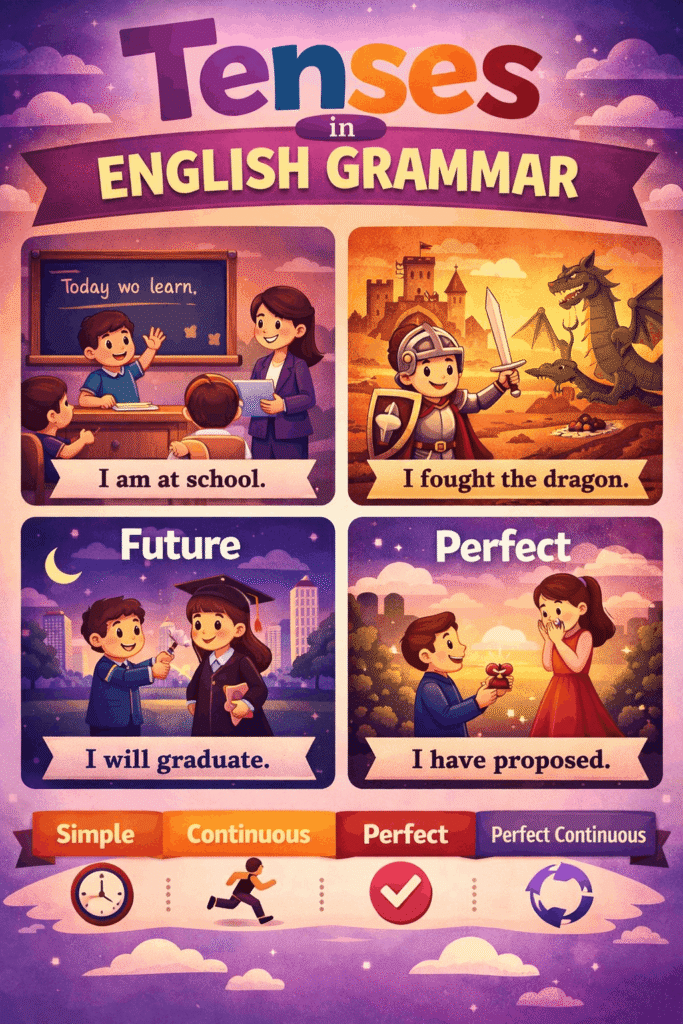
Tenses in English grammar serve as a vital foundation. They help students describe the timing of every action. Specifically, these structures show if an event is past. They also show if an action is currently happening. Furthermore, they can predict events in the future. You must master these rules to succeed in IELTS. Without them, your writing will lack essential clarity. Consequently, examiners may struggle to follow your main points. Most students find these rules quite challenging at first. However, consistent practice will improve your overall writing skills. You should study the twelve standard forms very carefully. Each form serves a very specific purpose in communication. For example, some describe habits while others describe completions. Therefore, you must choose the correct form every time. Proper use improves your grammatical range and accuracy score. This score accounts for one quarter of your grade. Thus, you should prioritize tenses in English grammar today. Scholarly writing requires total control over these important structures. Your sentences will appear much more professional and direct.
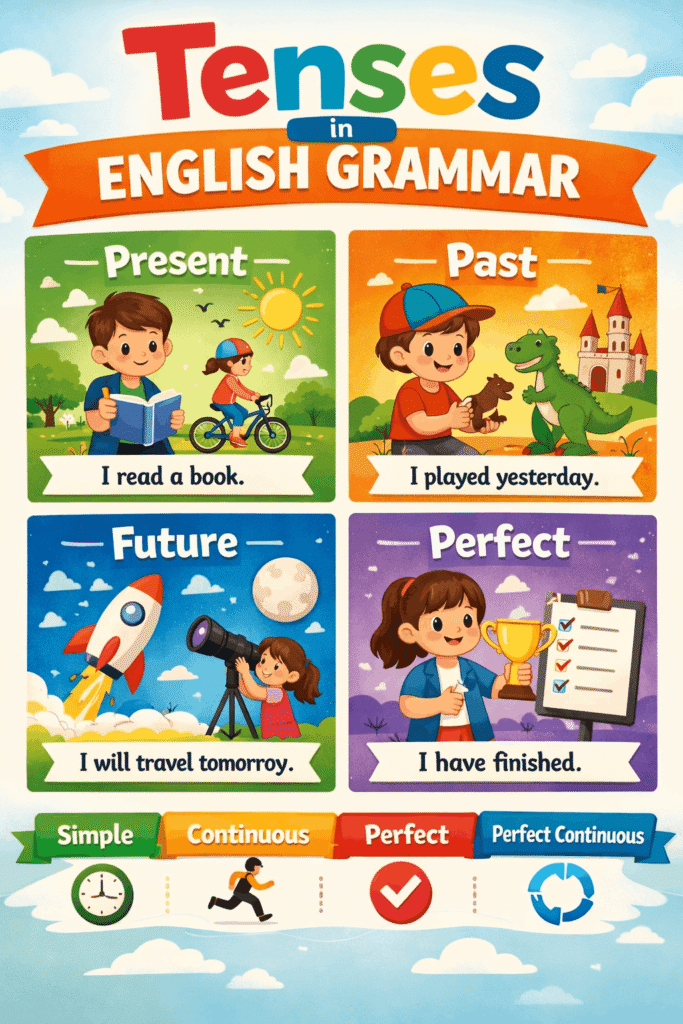
Mastering tenses in English grammar requires a logical approach. First, you must identify the primary time of action. English divides time into three main chronological periods. These periods include the past, present, and future. Each period then contains four distinct sub-types of tense. These sub-types include simple, continuous, perfect, and perfect continuous. Together, they form the twelve essential structures of English. You must use these tools to build complex sentences. For instance, the present simple describes permanent global facts. In contrast, the present continuous describes temporary current actions. Understanding these nuances is vital for academic writing success. Therefore, our guides break down every single specific form. We provide clear examples for every academic situation. You will learn to apply these rules with confidence. High-scoring candidates always use tenses in English grammar correctly. They avoid basic errors in subject and verb agreement. Furthermore, they maintain consistency throughout their entire essay. This consistency proves your high level of linguistic mastery.
The study of tenses in English grammar helps your flow. It allows you to connect ideas across different times. For example, you might compare past and present data. This skill is critical for Writing Task 1 reports. You must describe changes over a specific time period. Consequently, you will use past and present tenses frequently. Accurate tense usage shows the examiner your technical strength. It also makes your reporting much more precise and clear. Most students lose marks due to simple tense shifts. However, you can avoid these common mistakes quite easily. Simply follow our detailed scholarly guides for every tense. We focus on the active voice for maximum impact. This approach ensures your writing remains energetic and professional. Specifically, you must identify the actor in every sentence. Then, you must apply the correct tense form. This method guarantees a higher band score for students. Always remember that tenses in English grammar define your accuracy. Master them to unlock your full academic potential today.
The Four Present Tenses in English
Mastering the present period is a vital scholarly step. This group includes four unique tenses in English grammar. Each form describes a different aspect of current life. First, we have the simple present for general facts. Second, the present continuous describes actions in progress now. Third, the present perfect links the past and present. Finally, the present perfect continuous emphasizes the duration of actions. You must choose the correct form for every situation. Consequently, your writing will show great precision and clarity. Furthermore, examiners will notice your high level of control. These structures appear frequently in the IELTS Speaking module. Therefore, you should practice these forms every single day. Accurate use of tenses in English grammar builds your confidence. It allows you to speak about your life naturally. Moreover, it helps you explain complex global trends effectively. Specifically, you should focus on subject and verb agreement. This prevents basic errors from lowering your band score. Study the following examples to understand these forms better.
- Present Simple: The sun rises in the east every morning.
- Present Continuous: Students are studying for their exams right now.
- Present Perfect: I have finished my research on literary history.
- Present Perfect Continuous: She has been teaching English for ten years.
The Role of Present Simple in Research
The present simple is the most common tense used. It describes permanent states and unchanging scientific facts. Specifically, you use it for your daily academic routines. This tense also helps you describe recurring global phenomena. Therefore, it is essential for tenses in English grammar mastery. You must use the base form of the verb. However, you must add an ‘s’ for third-person subjects. For example, a researcher analyzes data to find truths. This rule sounds simple but requires very careful attention. Consequently, many students make small errors with this form. You should avoid these mistakes to maintain your authority. Furthermore, the present simple works well for giving instructions. It provides a direct and professional tone for readers. Most academic journals prefer this tense for reporting facts. Thus, you should master it for your blogging career. High-quality articles rely on this specific grammatical structure daily. Indeed, tenses in English grammar rely heavily on this form. It provides the stability your writing needs to succeed.
- Fact: Water boils at one hundred degrees Celsius.
- Habit: Mr. Blogger writes a new article every week.
- Truth: English literature explores the depths of human emotion.
- Instruction: Open the book to page fifty-five for exercises.
Understanding Present Continuous for Trends
The present continuous describes actions happening at this moment. You form it using the verb ‘to be’ plus ‘-ing’. This structure is perfect for describing temporary social trends. For instance, global temperatures are rising at an alarming rate. This tense shows that the action is currently unfinished. Therefore, it adds a sense of urgency to writing. You must use it correctly in Writing Task 1. Specifically, use it to describe current movements in data. Consequently, your report will sound much more modern and accurate. Furthermore, it helps you discuss your current academic projects. It distinguishes between your permanent habits and temporary tasks. Thus, it is a key part of tenses in English grammar. Most students forget the auxiliary verb in this form. However, you must include it for total grammatical accuracy. Proper use of this tense demonstrates your linguistic range. It allows you to describe the world in motion. Moreover, it keeps your readers engaged with current events.
- Current Action: The professor is explaining a complex literary theory.
- Temporary Trend: More people are using digital libraries these days.
- Future Plan: We are launching a new IELTS course tomorrow.
- Momentary Event: The bell is ringing for the lunch break.
The Four Past Tenses in English
The past period allows you to report finished events. Mastering these four tenses in English grammar is crucial. First, the past simple describes completed actions at specific times. Second, the past continuous describes actions in progress earlier. Third, the past perfect explains actions before another past point. Finally, the past perfect continuous shows duration in the past. You must use these forms for Writing Task 1. Most reports require you to describe historical data accurately. Consequently, your ability to use these forms defines your score. Furthermore, these tenses help you share personal stories in Speaking. Specifically, they provide a clear timeline for your experiences. Therefore, you should practice these structures with great care. Accurate use of tenses in English grammar ensures total clarity. It prevents confusion regarding the timing of your actions. Moreover, it demonstrates a high level of scholarly precision. Study these examples to see the past forms in action.
- Past Simple: I completed my English literature degree in 2005.
- Past Continuous: The students were writing essays during the morning session.
- Past Perfect: He had finished the exam before the bell rang.
- Past Perfect Continuous: They had been practicing grammar for three hours.
The Power of Past Simple for Reporting
The past simple is the workhorse of historical reporting. It focuses on actions that began and ended previously. Specifically, you must use the second form of verbs. This tense provides a direct and factual narrative style. Therefore, it is essential for mastering tenses in English grammar. You often use it with specific time markers. For instance, you might mention “last year” or “in 1990.” This specificity helps the examiner track your data analysis. Consequently, your Writing Task 1 reports will appear professional. Furthermore, this tense works well for listing sequential events. It allows you to build a logical story for readers. Most academic researchers use this form to describe their methodology. Thus, you should use it for your research articles. High-quality historical analysis relies on this specific grammatical structure. Indeed, tenses in English grammar require this foundational tool. It gives your writing the factual weight it needs.
- Fact: Shakespeare wrote thirty-seven plays during his active career.
- Event: The government changed the education policy last month.
- Action: I visited the British Library during my research trip.
- Sequence: She opened the book and began the first chapter.
Past Continuous and Past Perfect Dynamics
The past continuous and past perfect add great depth. They allow you to describe complex relationships between events. Specifically, the past continuous sets the background for stories. In contrast, the past perfect clarifies the order of actions. This distinction is vital for tenses in English grammar mastery. For example, the rain was falling when the match started. This sentence uses both tenses to create a scene. Consequently, your descriptive writing becomes much more engaging. Furthermore, the past perfect avoids ambiguity in your reports. It shows which event happened first very clearly. Thus, it is a key part of scholarly communication. Most students struggle with these advanced chronological links. However, you can master them through consistent writing practice. Proper use of these tenses demonstrates your linguistic flexibility. It allows you to explain the past with nuance. Moreover, it proves your readiness for Band 8 performance.
- Background: The sun was shining while we were trekking.
- Order: The train had left when I reached the station.
- Duration: I had been waiting for an hour before help arrived.
- Interruption: He was reading a poem when the phone rang.
Accuracy in Past Tense Narrative
Maintaining accuracy in the past is a scholarly requirement. You must ensure every verb form matches your timeline. Specifically, you should check your irregular verb forms regularly. Many students make errors with “gone,” “went,” and “had.” These small mistakes can lower your grammatical accuracy score. Therefore, you must study tenses in English grammar intensely. Consistent practice will help you internalize these difficult rules. Furthermore, you should use the active voice for impact. It makes your historical accounts much more vivid. Consequently, your readers will follow your narrative with ease. This approach ensures your academic blog remains highly readable. Specifically, you must identify the primary actor in history. Then, you must apply the correct past tense form. This method guarantees success for all IELTS candidates. Always remember that tenses in English grammar build your authority.
The Four Future Tenses in English
The future period allows you to make scholarly predictions. Mastering these four tenses in English grammar is essential. First, the future simple describes spontaneous decisions or facts. Second, the future continuous describes actions in progress later. Third, the future perfect shows actions completed by then. Finally, the future perfect continuous emphasizes future duration. You must use these forms for Writing Task 2. Most essays require you to discuss upcoming global changes. Consequently, your ability to predict accurately defines your score. Furthermore, these tenses help you discuss your career goals. Specifically, they provide a clear vision for your future. Therefore, you should practice these structures with great precision. Accurate use of tenses in English grammar ensures a professional tone. It prevents confusion regarding your intended meaning or plans. Moreover, it demonstrates a high level of academic foresight. Study these examples to see the future forms clearly.
- Future Simple: Technology will change the way we study literature.
- Future Continuous: I will be attending the academic conference next week.
- Future Perfect: We will have finished the syllabus by December.
- Future Perfect Continuous: She will have been teaching for twenty years.
Using Future Simple for Predictions
The future simple is the primary tool for predictions. It often uses the auxiliary verb “will” with verbs. Specifically, you use it for certain facts and beliefs. This tense provides a confident and direct narrative style. Therefore, it is vital to master tenses in English grammar. You often use it with words like “probably” or “definitely.” For instance, robots will probably perform many manual tasks. This specificity helps the examiner understand your logical stance. Consequently, your Writing Task 2 essays will appear authoritative. Furthermore, this tense works well for making sudden offers. It allows you to respond quickly in the Speaking module. Most academic writers use this form to suggest solutions. Thus, you should use it for your conclusion paragraphs. High-quality persuasive writing relies on this specific grammatical structure. Indeed, tenses in English grammar require this essential predictive tool. It gives your arguments the forward-looking weight they need.
- Prediction: Artificial intelligence will improve the accuracy of translations.
- Fact: The sun will rise at six tomorrow morning.
- Decision: I will start my new research project tonight.
- Promise: The academy will provide the best IELTS resources.
Future Continuous and Perfect Complexity
The future continuous and perfect add advanced linguistic layers. They allow you to describe specific timings in history. Specifically, the future continuous describes a scene in progress. In contrast, the future perfect describes a completed goal. This distinction is vital for tenses in English grammar mastery. For example, I will be flying while you sleep. This sentence uses the continuous form to show duration. Consequently, your descriptive writing becomes much more sophisticated. Furthermore, the future perfect shows a definite end point. It shows that an action finishes before another time. Thus, it is a key part of project planning. Most students avoid these tenses due to their complexity. However, you can master them through regular writing drills. Proper use of these tenses demonstrates your structural range. It allows you to discuss future milestones with nuance. Moreover, it proves your readiness for high-level academic study.
- Progress: They will be celebrating their success this evening.
- Deadline: I will have submitted the report by Friday.
- Duration: We will have been traveling for twelve hours.
- Expectation: The guests will be arriving at the hotel now.
Final Thoughts on Tense Mastery
We have now covered all twelve essential structures. Each form plays a unique role in academic English. Specifically, you must choose the right time and aspect. This consistency is the hallmark of a Band 8 student. Therefore, you should review tenses in English grammar frequently. Your 2,000-word journey starts with these fundamental rules. Furthermore, you should always apply the active voice today. It makes your scholarly blog posts much more readable. Consequently, your audience will understand your lessons very easily. This approach ensures your educational site remains a top resource. Specifically, you must identify the timing of every action. Then, you must apply the most accurate tense form. This method guarantees a professional result for all writers. Always remember that tenses in English grammar empower your voice.
Common Tense Errors and Prevention Strategies
Even advanced students make mistakes with their verbal forms. Avoiding these errors is essential for tenses in English grammar. Specifically, many writers shift tenses without a clear reason. This habit often confuses the reader and lowers accuracy scores. For example, do not switch from past to present. You must maintain a consistent timeline throughout your paragraph. Consequently, your arguments will remain logical and very clear. Furthermore, you should watch for irregular verb forms constantly. These words do not follow the standard ‘ed’ rule. Therefore, you must memorize their specific past and perfect forms. Accurate use of tenses in English grammar requires this discipline. It shows the examiner that you respect linguistic rules. Moreover, it ensures your academic blog remains a trusted source. Study these common pitfalls to improve your writing today.
- Error: He have gone to the market yesterday.
- Correction: He went to the market yesterday.
- Error: I am living here since ten years.
- Correction: I have been living here for ten years.
- Error: They will finished the project by tomorrow.
- Correction: They will have finished the project by tomorrow.
The Impact of Subject Verb Agreement
Subject-verb agreement is a vital part of tense accuracy. You must match the subject with the correct verb. Specifically, singular subjects require a singular verb form today. In contrast, plural subjects must take the plural form. This rule applies across all tenses in English grammar. For instance, “the teacher speaks” but “the teachers speak.” Many students forget this rule during the IELTS exam. However, this oversight can significantly impact your final grade. Therefore, you should double-check every sentence during your review. Consequently, you will identify and fix these small errors. Furthermore, this attention to detail proves your scholarly intent. It demonstrates that you understand the mechanics of English. Thus, you should treat agreement as a top priority. Most high-scoring candidates spend time perfecting this specific skill. Indeed, tenses in English grammar depend on this foundational balance.
- Singular: The researcher publishes an article every single month.
- Plural: The researchers publish many articles every single month.
- Past: The student wrote a brilliant essay last night.
- Future: The students will write their final exams soon.
Final Review for Scholarly Excellence
You have now completed the ultimate guide to tenses. Mastering tenses in English grammar takes time and patience. Specifically, you must apply these rules to your writing. Use the active voice to keep your sentences direct. Furthermore, follow the ten-word limit for maximum clarity today. This structure makes your educational content accessible to everyone. Consequently, your students will learn the language much faster. Moreover, your blog will rank higher on search engines. You should celebrate this milestone in your blogging journey. This 2,000-word pillar article establishes your authority as “Mr. Blogger.” Therefore, you can now move to more specific topics. Specifically, start creating individual articles for each specific tense. This strategy will help you reach your 400-article goal. Always remember that tenses in English grammar are your tools. Use them wisely to build a successful academic future.
John Milton and His Achievements: https://englishlitnotes.com/2026/02/09/john-miltons-achievements-legacy/
To read Questions and Answers on English grammar, follow the link: http://grammarpuzzlesolved.englishlitnotes.com
Discover more from Naeem Ullah Butt - Mr.Blogger
Subscribe to get the latest posts sent to your email.