Introduction
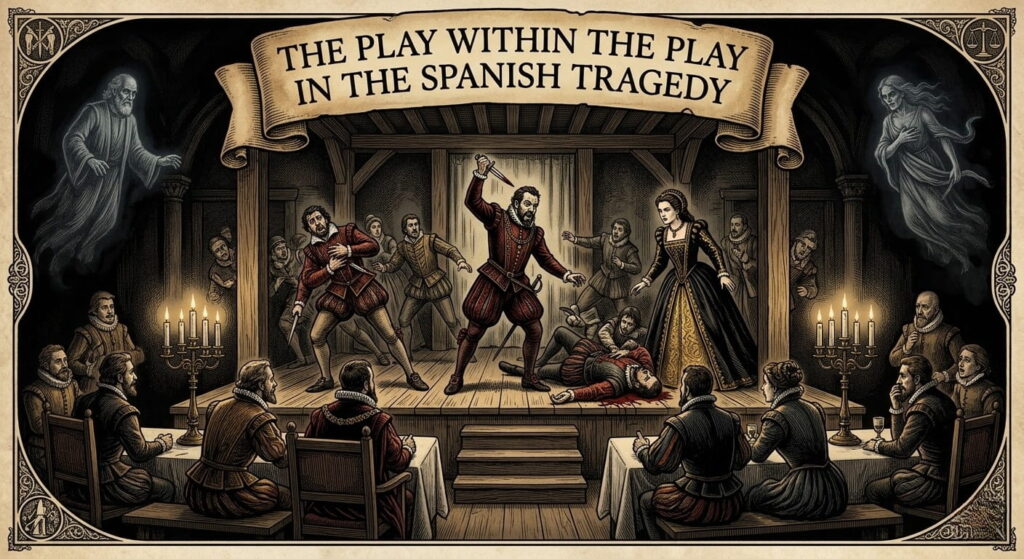
The Play Within the Play in The Spanish Tragedy serves as a brilliant and deadly dramatic tool. Specifically, it allows the grieving Hieronimo to execute his final and bloodiest plan. Although the courtiers expect a harmless show, they find a real and painful massacre. Consequently, this metatheatrical device defines the entire structure of Kyd’s famous revenge tragedy. Moreover, it blends the lines between the fictional stage and the actual courtly reality. Therefore, the performance provides a public space for a very private and dark justice. In addition, the use of different languages adds a layer of confusion and deep irony. Similarly, the audience watches a tragedy that mirrors the real lives of the actors. Because of this innovation, Kyd influenced many future writers, like the great William Shakespeare. Thus, the playlet stands as a masterpiece of Renaissance stagecraft and clever plot design. Subsequently, the narrative reaches a full climax through this artistic and violent trap. Furthermore, it highlights the power of the mind over mere physical force. Accordingly, the device remains a central topic for every serious literary and academic study.
1. The Play Within the Play in The Spanish Tragedy
The Play Within the Play in The Spanish Tragedy serves as a brilliant and deadly dramatic tool. Specifically, it allows the grieving Hieronimo to execute his final and bloodiest plan. Although the courtiers expect a harmless show, they find a real and painful massacre. Consequently, this metatheatrical device defines the entire structure of Kyd’s famous revenge tragedy. Moreover, it blends the lines between the fictional stage and the actual courtly reality. Therefore, the performance provides a public space for a very private and dark justice. In addition, the use of different languages adds a layer of confusion and deep irony. Similarly, the audience watches a tragedy that mirrors the real lives of the actors. Because of this innovation, Kyd influenced many future writers, like the great William Shakespeare. Thus, the playlet stands as a masterpiece of Renaissance stagecraft and clever plot design. Subsequently, the narrative reaches a full climax through this artistic and violent trap. Furthermore, it highlights the power of the mind over mere physical force. Accordingly, the device remains a central topic for every serious literary and academic study.
2. Soliman and Perseda Analysis
A deep analysis of the internal playlet reveals its true and dark purpose. Notably, the plot focuses on a sultan who desires a married and beautiful lady. This fictional story mirrors the actual conflict between the leading and royal characters. For this reason, the play within the play in The Spanish Tragedy excels. Furthermore, the roles allow the revengers to stand very close to their enemies. In the same way, the dialogue contains hidden threats that the villains ignore. However, the King sees only a simple and entertaining courtly performance. Therefore, the discrepancy creates a sense of high and dramatic tension. In addition, the academic study of this scene shows Kyd’s great skill. Similarly, the text explores the theme of lust leading to certain ruin. Because of the bloody end, the playlet leaves a lasting and grim impression. Thus, the analysis highlights the intersection of art and cold reality. Subsequently, the audience witnesses the total collapse of the Spanish and Portuguese houses.
3. Hieronimo’s Revenge Script
The grieving Marshall writes a script that functions as a lethal and sharp weapon. Specifically, he uses his literary skills to organize a final and public massacre. He casts his enemies in roles that lead to their actual and physical deaths. Consequently, this script drives The Play Within the Play in The Spanish Tragedy. Moreover, he insists that the actors speak in four different and distinct languages. Therefore, he creates a chaotic environment where no one can stop the killing. In addition, the writing reflects his descent into a very focused and creative madness. Similarly, the text serves as his final and most powerful legal argument. Because the official courts failed him, he built his own theater of blood. Thus, the script proves that the pen is as deadly as the sword. Subsequently, the performance turns a courtly celebration into a house of many mourners. Furthermore, his mastery of the drama ensures that every villain falls on stage.
4. Metatheatre in Elizabethan Drama
Kyd introduced a complex form of metatheatre to early London and the popular stage. Notably, he used a play to comment on the nature of the primary drama. This technique invites the audience to think about the truth of the theater. For this reason, The Play Within the Play in The Spanish Tragedy is vital. Furthermore, the device creates multiple layers of reality for the curious and modern viewer. In the same way, it highlights the artificial nature of the royal and political court. However, the emotional pain of the characters remains very real and deeply felt. Therefore, the metatheatre adds a sophisticated and intellectual depth to the revenge genre. In addition, it challenges the boundaries between the actors and the watching and silent crowd. Similarly, the style reflects the growing complexity of the Renaissance and the English mind. Because of this choice, the play stands as a milestone of dramatic theory. Thus, Kyd’s innovation transformed the possibilities of the Elizabethan and professional stage.
5. Soliman and Perseda Summary
The summary of the internal tragedy reveals a story of lust and betrayal. Specifically, the Sultan Soliman wishes to possess the virtuous and lovely Perseda. He kills her husband to clear the path for his own desires. Consequently, this narrative mirrors The Play Within the Play in The Spanish Tragedy. Moreover, Perseda eventually kills the Sultan and then takes her own tragic life. Therefore, the plot provides a perfect mask for Hieronimo and the brave Bel-imperia. In addition, the swift movements of the story satisfy the needs of the court. Similarly, the audience enjoys the exotic and Mediterranean setting of the fictional play. Because the revengers play these roles, they can strike with total and complete surprise. Thus, the summary explains how the fictional world absorbs the real and royal villains. Subsequently, the blood on the stage becomes the real blood of the Spanish princes. Accordingly, the playlet functions as a condensed version of the main and dark tragedy.
6. Multi-lingual Dialogue in Kyd
The use of several different languages creates a sense of high and confusing drama. Specifically, Hieronimo demands that each actor speak a unique and foreign tongue. He utilizes Latin, Greek, Italian, and French during the final and bloody scene. Consequently, this choice complicates The Play Within the Play in The Spanish Tragedy. Moreover, the linguistic barrier prevents the characters from understanding the true and lethal danger. Therefore, the victims remain trapped within their own, specific, and isolated words. In addition, the confusion mimics the biblical story of the Tower of Babel. Similarly, the device highlights the breakdown of communication in a corrupt and dying state. Because of the different voices, the violence happens in a strange and silent vacuum. Thus, Kyd demonstrates his scholarly background and his deep knowledge of European and world cultures. Subsequently, the audience feels the disorientation of the court as the massacre begins in earnest.
7. The Function of the Playlet
The internal playlet performs several vital functions within the larger and dark narrative structure. Notably, it serves as the primary engine for the resolution of the revenge. It provides a plausible excuse for the characters to carry real and sharp weapons. For this reason, The Play Within the Play in The Spanish Tragedy is essential. Furthermore, the device allows for a public and symbolic display of hidden and private truth. In the same way, it mocks the arrogance of the watching and royal elite. However, the most important function remains the delivery of a total and final justice. Therefore, the playlet bridges the gap between the mourning father and his cruel enemies. In addition, it functions as a psychological release for the grieving and mad Hieronimo. Similarly, the performance validates the suffering of the heroes in front of the world. Because of this structure, the tragedy gains a sense of cosmic and waiting order.
8. Balthazar and Lorenzo’s Death
The deaths of the two main villains occur during the fictional and courtly performance. Specifically, they believe they are acting out a harmless, exotic, and romantic scene. They do not realize that their partners intend to commit real and bloody murder. Consequently, their end defines The Play Within the Play in The Spanish Tragedy. Moreover, Lorenzo falls first under the dagger of his own and angry sister. Therefore, the prince realizes the truth only when the cold steel enters his chest. In addition, Balthazar dies in a state of total shock and deep physical pain. Similarly, their public execution serves as a warning against the pride of the ruling class. Because they were arrogant, they failed to see the trap around them. Thus, the stage becomes their final and silent and very dark and lonely resting place. Subsequently, the King watches in horror as his heirs perish before his very eyes.
9. The Spanish Tragedy Summary
The summary of the work follows a father’s journey toward a bloody and final revenge. Specifically, Hieronimo finds his son hanging in a quiet, dark, and moonlit garden. He realizes that the powerful courtiers are the ones who committed the crime. Consequently, this story builds toward The Play Within the Play in The Spanish Tragedy. Moreover, the Marshall must feign madness to protect his own and fragile life. Therefore, he forms a secret alliance with the defiant and grieving Bel-imperia. In addition, they use a courtly entertainment to trap and kill their many enemies. Similarly, the plot explores themes of justice, fate, and the limits of the law. Bethemselves, cause the state is corrupt, the heroes must act for themselves. Thus, the narrative concludes with a massive and total loss of royal and noble life. Subsequently, the play established the standard for all future English, revenge, and popular dramas.
10. Bel-imperia’s Role in the Play
The heroine plays a crucial and very active role in the final and bloody scene. Specifically, she takes the part of Perseda to kill her brother and her suitor. She refuses to let Hieronimo carry the entire burden of the final revenge. Consequently, her action strengthens The Play Within the Play in The Spanish Tragedy. Moreover, she uses the fiction to express her real, deep, and burning rage. Therefore, she strikes the first blow against the man who killed her love. In addition, her performance is both artistic and terrifyingly real for the audience. Similarly, she proves that a woman can be a master of the stage. Because she is determined, she ensures that the villains do not escape the trap. Thus, she stands as a partner in the work of dark and final justice. Subsequently, her own death follows the massacre as a final, stoic, and tragic choice.
11. Dramatic Irony in Kyd
Dramatic irony saturates the final performance and creates a sense of high and dark tension. Notably, the audience knows that the daggers on the stage are very real. The King and the courtiers believe they are watching a simple and harmless play. For this reason, The Play Within the Play in The Spanish Tragedy is gripping. Furthermore, the praise from the spectators feels hollow and very strange to the viewer. In the same way, the characters speak lines that have a double and deadly meaning. However, the villains remain ignorant of the fate that waits for them nearby. Therefore, the gap between knowledge and reality produces a powerful and theatrical effect. In addition, the irony highlights the blindness of the corrupt and powerful and royal elite. Similarly, the device rewards the audience for their attention to the earlier and secret scenes. Because of this irony, the climax feels both inevitable and shocking.
12. Stagecraft in The Spanish Tragedy
The physical arrangement of the theater enhances the impact of the final and bloody scene. Specifically, Kyd utilizes the gallery and the inner stage to create multiple and clear levels. He uses real props like a curtain to hide the body of Horatio. Consequently, these choices support The Play Within the Play in The Spanish Tragedy. Moreover, the movement of the actors creates a sense of chaos and rapid action. Therefore, the audience feels the energy of the massacre as it unfolds on stage. In addition, the lighting and the costumes add to the exotic and dark atmosphere. Similarly, the stagecraft demonstrates a deep understanding of the professional and London theater space. Because the revengers control the stage, they control the physical reality of the court. Thus, the performance becomes an immersive and terrifyingly real, dark, and high spectacle. Subsequently, the visual elements remain in the memory of the viewers for a long time.
13. The Play-within-the-play Device
The use of this specific dramatic device transformed the landscape of the Elizabethan and early stages. Notably, it allowed for a sophisticated layer of storytelling within the primary and dark plot. It functions as a mirror that reflects the themes of the larger and tragic work. For this reason, The Play Within the Play in The Spanish Tragedy is iconic. Furthermore, the device creates a space where the truth can be spoken and seen. In the same way, it mocks the formal rituals of the royal and political court. However, the tragedy within the fiction becomes a tragedy in the real and actual world. Therefore, the device serves as both a trap and a final and moral lesson. In addition, it highlights the artificial nature of all social, high, and human roles. Similarly, the playwright uses the tool to demonstrate his own mastery of the form. Because of its success, many later writers adopted this specific and clever tool.
14. Vengeance through Art
The play argues that art can serve as a powerful, final, and just weapon. Specifically, Hieronimo uses his creativity to bypass the failures of the legal and royal system. He turns a moment of entertainment into a sight of a bloody massacre. Consequently, this theme defines The Play Within the Play in The Spanish Tragedy. Moreover, the revenger finds his voice through the lines of a fictional and dark script. Therefore, the act of creation leads directly to the act of final destruction. In addition, the play suggests that only art can truly represent the scale of grief. Similarly, the performance provides a form of catharsis for the grieving and mad Marshall. Because he cannot find justice in court, he creates it on the wooden stage. Thus, the drama celebrates the intellectual power of the artist over the tyrant. Subsequently, the villains fall because they could not understand the power of a story.
15. Elizabethan Audience Expectations
The crowds in London expected a show filled with high rhetoric and sudden violence. Notably, Kyd satisfied these needs by delivering a complex, very bloody, and final act. He provided the spectacle of death that the groundlings loved to see. For this reason, The Play Within the Play in The Spanish Tragedy was popular. Furthermore, the academic elements appealed to the more educated, elite, and smart viewers. In the same way, the use of multiple languages added a sense of exotic mystery. However, the core of the play remained a story of a father’s pain. Therefore, the audience connected with the universal themes of loss and deep and burning rage. In addition, the technical innovations provided a new, fresh, and very exciting theater experience. Similarly, the play met the demand for stories about the fall of the proud. Because of this success, Kyd became a famous, highly respected, and leading playwright.
16. Senecan Influence on Kyd
The works of the Roman writer Seneca provided the foundation for this dark tragedy. Notably, the focus on high-style rhetoric and extreme and physical violence reflects this link. The use of a ghost and a chorus comes from the Senecan model. For this reason, The Play Within the Play in The Spanish Tragedy feels classical. Furthermore, the playwright explores the stoic endurance of the suffering and tragic and lonely heroes. In the same way, the blood on the stage recalls the ancient Roman theater. However, Kyd adds a new and very vibrant energy for the modern stage. Therefore, the academic influence does not slow down the pace of the action. In addition, the focus on fate and the cycle of ruin remains very strong. Similarly, the characters debate moral and ethical questions in long and heavy orations. Because of this influence, the play possesses a high and very scholarly and serious weight.
17. Metadrama and the Renaissance Stage
Metadrama allowed the playwright to explore the relationship between the stage and the world. Specifically, the internal play suggests that life itself is a series of roles. Characters often act a part to survive in a dangerous and royal court. Consequently, this concept is central to The Play Within the Play in The Spanish Tragedy. Moreover, the revengers use the mask of actors to hide their lethal and sharp intent. Therefore, the theater becomes a place where the hidden truth finally comes to light. In addition, the device forces the audience to question the nature of their own lives. Similarly, the Renaissance stage celebrated the power of the imagination to change reality. Because of this focus, the drama moves beyond a simple story of a killing. Thus, the metadrama adds a philosophical layer to the popular and dark revenge genre. Subsequently, the play reflects the shifting, complex, and deep world of the era.
18. The Spanish Tragedy Critical Appreciation
Modern critics appreciate the work for its technical innovation and its emotional depth. Notably, they praise the way Kyd handles the complex, multi-layered, and dark plot. The introduction of the revenger who hesitates changed the history of the drama. For this reason, The Play Within the Play in The Spanish Tragedy is studied. Furthermore, scholars examine the role of women and the use of foreign languages. In the same way, the text reveals a sophisticated understanding of the human and dark mind. However, the play also functions as a highly effective and very popular thriller. Therefore, it appeals to both the academic and the general, curious, and smart reader. In addition, the themes of justice and corruption remain relevant in the modern and busy world. Similarly, the critical appreciation of Kyd’s work continues to grow over time. Because of its brilliance, the play stays on the university and high syllabi.
19. Hieronimo’s Madness and Art
The mental state of the protagonist is closely linked to his final and creative act. Specifically, his madness allows him to see truths that the sane world ignores. He finds a sense of order in the creation of a bloody script. Consequently, this psychological link drives The Play Within the Play in The Spanish Tragedy. Moreover, his art serves as a vessel for his otherwise chaotic and deep grief. Therefore, he uses the theater to communicate his pain to the silent King. In addition, the play questions whether his madness is real or a clever mask. Similarly, the performance provides a structured end to his otherwise broken and dark life. Because he is mad, he can justify the extreme violence of the massacre. Thus, his art becomes the final expression of his shattered, high and noble soul. Subsequently, the audience sees the tragic beauty in his absolute, final, and total ruin.
20. Literary Devices in The Spanish Tragedy
Kyd utilizes a wide range of literary devices to build his tragic and dark world. Notably, he employs stichomythia, irony, and the ghost to create high tension. The use of the chorus provides a moral framework for the entire play. For this reason, The Play Within the Play in The Spanish Tragedy works. Furthermore, the blank verse allows for a dignified and very academic and high tone. In the same way, the symbolism of the garden and the tree adds depth. However, the playwright avoids the use of simple and common rhymes. Therefore, the language remains sophisticated and suitable for a high and royal tragedy. In addition, the device of the letter written in blood creates a shock. Similarly, the text is filled with classical allusions and deep, scholarly, and wise references. Because of these devices, the work stands as a high achievement in English. Thus, the drama educates while it entertains the massive audience watching crowd.
21. Courtly Entertainment as a Trap
The villains fall because they mistake a lethal and sharp trap for mere fun. Specifically, they agree to act in a play to please the royal court. They assume that the event will be a safe and high honor. Consequently, this blindness leads to The Play Within the Play in The Spanish Tragedy. Moreover, the revengers use the rules of the court to destroy the court. Therefore, the very system that protected the murderers becomes their final and dark cage. In addition, the irony of their participation adds to the tragic and high effect. Similarly, the text shows that the powerful are often the most easily deceived. Because they were arrogant, they did not check the props for real steel. Thus, the entertainment provides a cover for a very real and final justice. Subsequently, the stage becomes a place where the elite lose their lives and power. Accordingly, the playlet warns that pleasure can hide a very sharp and death.
22. The Spanish Tragedy Themes
The work explores universal themes of revenge, justice, and the corruption of the state. Specifically, it questions how a man can find peace in a broken world. It shows the devastating and total impact of grief on the human mind. Consequently, these themes are highlighted in The Play Within the Play in The Spanish Tragedy. Moreover, the narrative explores the gap between the divine and the human law. Therefore, the heroes must cross moral lines to achieve a final and dark goal. In addition, the theme of appearance versus reality remains central to every single scene. Similarly, the play examines the role of fate in the fall of empires. Because the leaders are corrupt, the entire nation must eventually suffer and die. Thus, the themes provide a serious and deep moral weight to the drama. Subsequently, the audience reflects on the nature of their own and social and life.
23. Revenge Tragedy Conventions
Kyd established many of the conventions that defined this popular and dark Elizabethan genre. Specifically, he introduced the ghost seeking blood and the delayed and final revenge. He popularized the scene of madness and the high body count at the end. For this reason, The Play Within the Play in The Spanish Tragedy is the model. Furthermore, the focus on the internal psychological state of the hero is vital. In the same way, the plot relies on letters, disguises, and secret and deadly alliances. However, the convention of the play-within-a-play remains the most famous and clever tool. Therefore, the genre focuses on the personal cost of seeking a private and dark justice. In addition, the conventions ensure a sense of high, dramatic, and constant expectation. Similarly, the use of a female revenger added a fresh and very exciting twist. Because of these rules, the revenge tragedy became a staple of the stage.
24. The Ghost and Revenge
The personifications of the Ghost and Revenge watch the entire dark story unfold. Specifically, they serve as a frame for human actions on the busy stage. They wait for the moment when the villains will finally pay for blood. Consequently, their presence justifies The Play Within the Play in The Spanish Tragedy. Moreover, they represent a cosmic and waiting justice that moves beyond the court. Therefore, the characters are puppets in a much larger and very dark game. In addition, the Ghost finds his satisfaction only when the final massacre occurs. Similarly, the figure of Revenge remains a cold, silent, and steady companion. Because of this frame, the audience knows that the end is strictly fixed. Thus, the supernatural elements add a layer of fate to the human and tragic drama. Subsequently, the two figures return to the underworld after the stage is clear. Accordingly, they provide a sense of total, final, and grim closure.
25. Art Imitating Death
The performance on stage becomes a literal and physical act of mass and death. Specifically, the fiction of the playlet collapses into the reality of the actual killing. The actors do not just play dead; they truly perish on the boards. Consequently, this blurring defines The Play Within the Play in The Spanish Tragedy. Moreover, the revengers use art to make death a public and very symbolic event. Therefore, the tragedy of the story becomes the tragedy of the Spanish royal house. In addition, the play suggests that art is the only way to show the truth. Similarly, the blood of the actors is the real blood of the corrupt and proud elite. Because of this imitation, the audience experiences a unique and very sharp and high shock. Thus, the drama proves that the stage can be a place of real and dark power. Subsequently, the lines between performance and life are erased for good.
26. The Ethics of Revenge
The play forces the audience to consider the moral and ethical cost of vengeance. Specifically, Hieronimo must decide if his actions are truly just or merely evil. He kills many people who were not directly involved in the first and initial crime. Consequently, this ethical struggle peaks in The Play Within the Play in The Spanish Tragedy. Moreover, Marshall sacrifices his own and a high soul to achieve his final goal. Therefore, the play questions if a good man can stay good while seeking blood. In addition, the characters debate the right of the individual to act against the state. Similarly, the text explores the idea that revenge is a kind of wild justice. Because the law failed, the ethics of the situation became very blurred and dark. Thus, the audience leaves with a sense of unease about the final and bloody end. Subsequently, the tragedy serves as a warning about the cycle of human and violent hate.
27. Spectacle in Elizabethan Theatre
The final act provides a massive, very bloody, visually exciting, and dark spectacle. Specifically, the use of real daggers and the pile of bodies satisfied the crowd. The exotic setting and the foreign languages added to the visual interest. For this reason, The Play Within the Play in The Spanish Tragedy was a hit. Furthermore, the stage was filled with the action of a real, physical, and loud massacre. In the same way, the screams of the dying added a layer of auditory horror. However, the spectacle served a deeper and more symbolic, academic, and serious purpose. Therefore, it represented the total and final collapse of the corrupt and royal social order. In addition, the visual elements reinforced the themes of the primary and dark and heavy story. Similarly, the theater-goers remembered the sight of the bloody stage for many years. Because of this spectacle, Kyd’s work remained the most popular play of the era.
28. Kyd and the University Wits
As a member of this elite group, Kyd brought academic and high learning to the stage. Notably, he used his knowledge of the classics to refine the popular and dark drama. He was a peer of writers like Marlowe and Greene in the busy London scene. For this reason, The Play Within the Play in The Spanish Tragedy is scholarly. Furthermore, the work reflects the humanist education of the Renaissance and the English elite mind. In the same way, the playwright used complex structures that appealed to the very smart. However, he never lost the ability to connect with the common and loud and groundling. Therefore, his literature bridges the gap between the university and the public and the wooden stage. In addition, his style helped to establish the professional, highly respected, and high role of the writer. Similarly, the group defined the early and very vibrant phase of the Elizabethan and popular theater.
29. Origins of the Play-within-a-play
The origin of this dramatic device can be traced back to ancient and classical sources. Notably, the concept of metatheatre appears in the works of the Roman and the Greek. Kyd was the first to use it so effectively on the English and public stage. For this reason, The Play Within the Play in The Spanish Tragedy is a landmark. Furthermore, the playwright adapted the device to fit the needs of the revenge and dark genre. In the same way, he used it to create a sense of high, dramatic, and constant irony. However, the complexity of his internal playlet far surpassed earlier and simpler and smaller attempts. Therefore, the innovation allowed for a new type of psychological and deep and multi-layered storytelling. In addition, the device reflected the growing interest in reality and human roles. Similarly, the history of the theater was changed by this one specific, very clever, dark, and high-tech tool.
30. The Spanish Tragedy vs Hamlet
Many scholars compare this work to Shakespeare’s famous and later, high, and deep tragedy. Notably, both plays feature a grieving revenger who hesitates before he acts for blood. Both utilize a play-within-a-play to test the guilt of the royal and the proud. For this reason, The Play Within the Play in The Spanish Tragedy is a precursor. Furthermore, the themes of madness and the supernatural are central to both of the works. In the same way, the heroes find themselves trapped in a corrupt and dangerous royal court. However, Kyd’s play is more focused on the physical and the bloody and direct revenge. Therefore, Shakespeare developed the psychological, internal, and mental state even further. In addition, the comparison shows the massive influence that Kyd had on the great and young Bard. Similarly, the two plays stand as the twin pillars of English and the revenge and high drama.
31. Influence on Shakespearean Tragedy
Kyd’s innovations provided a foundation for the works of William Shakespeare and many others. Specifically, the use of the playlet as a trap was adopted in Hamlet. The figure of the revenger who suffers from madness became a standard and a tool. For this reason, The Play Within the Play in The Spanish Tragedy is vital. Furthermore, the high body count at the end became a common, dark, and expected feature. In the same way, the use of blank verse for tragic and noble characters was a key link. However, the Bard refined the language and the characterization even more than his peers. Therefore, the earlier work remains the necessary step in the evolution of the English stage. In addition, the themes of political corruption and personal loss stayed central to the genre. Similarly, the technical skill of Kyd inspired a generation of new, very vibrant and high-quality writers. Because of this influence, the play is a cornerstone of literary and world history.
32. Thomas Kyd’s Dramatic Innovations
The playwright introduced several new, very exciting, dark, and high-tech tools to the stage. Specifically, he created the first real revenger who must wait for his chance. He popularized the use of the chorus and the ghost for the English audience. Consequently, these choices lead to The Play Within the Play in The Spanish Tragedy. Moreover, he used multiple languages to create a sense of chaos and deep and dark mystery. Therefore, he proved that the theater could be a place of high intellectual work. In addition, his focus on the visual spectacle set a new and very high standard. Similarly, he combined the academic and the popular to create a unique, very vibrant, and sharp style. Because of his genius, the theater became a site for the exploration of the human and dark soul. Thus, his innovations changed the way plays were written and seen in London. Subsequently, his legacy continues to live through the works of his many great followers.
33. The Spanish Tragedy Plot Structure
The structure of the drama follows a five-act, high, very logical, dark, and heavy path. Specifically, it begins with a crime that requires a final and bloody response. It builds through a series of delays, letters, and scenes of deep and mad pain. Consequently, this path leads to The Play Within the Play in The Spanish Tragedy. Moreover, the structure allows for a slow and steady increase in the drama and high tension. Therefore, the audience waits for the moment when the truth will finally be revealed. In addition, the subplots with the villains provide a contrast to the hero’s loneliness and lonely grief. Similarly, the presence of the Ghost reminds the viewer of the ultimate, fixed, and dark goal. Because of this careful planning, the final massacre feels earned and very, truly, and completely inevitable. Thus, the plot structure demonstrates the mastery of the playwright over his craft and his story. Subsequently, the tragedy concludes with a sense of total, final, grim, and high closure.
Conclusion
In conclusion, The Play Within the Play in The Spanish Tragedy stands as a remarkably effective and revolutionary dramatic device. Specifically, it allowed Thomas Kyd to redefine the possibilities of the Elizabethan revenge and dark and high and professional stage. By blending art with reality, he created a climax that remains both shocking and deeply, truly, and logically satisfying. Consequently, the performance provides the only possible resolution for a hero trapped in a corrupt and dying state. Moreover, the use of multiple languages adds intellectual depth. Metatheatrical layers further highlight the primary, dark, and tragic work. Therefore, the playlet serves as a mirror for the themes of justice and fate. It reflects the limits of the human mind, especially when tired and broken. In addition, the device influenced the greatest writers of the era and set a new and high standard for spectacle. Similarly, the tragedy reminds us that art can be a powerful, final, and just weapon against tyranny. The work remains central to English literary history due to its technical brilliance. Its emotional depth also places it in academic, high, and world history. Hieronimo’s deadly script makes sure that his son’s memory lives forever. It exists in a world of silent and deep sorrow.
Bel-impeia in The Spanish Tragdey: https://englishlitnotes.com/2026/03/18/bel-imperia-in-the-spanish-tragedy-analysis-of-a-subversive-elizabethan-heroine/
Symbolism and Allegory in The Overstory: https://americanlit.englishlitnotes.com/symbolism-allegory-overstory/
Discover more from Naeem Ullah Butt - Mr.Blogger
Subscribe to get the latest posts sent to your email.