Introduction
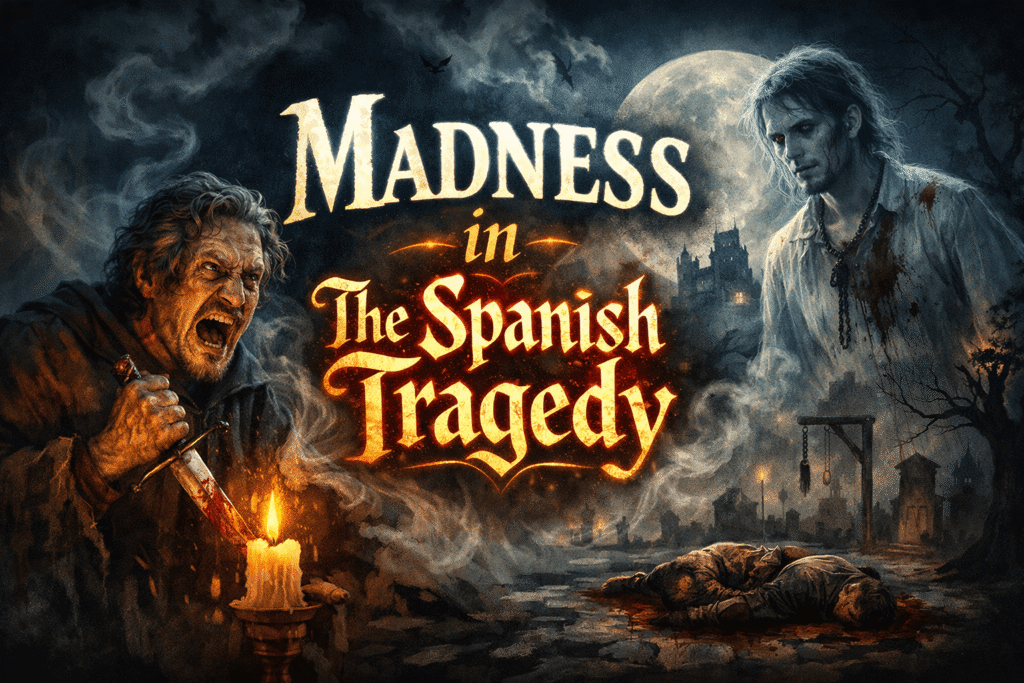
Madness shapes the emotional center of this tragic play. Moreover, it drives actions, thoughts, and suffering. Therefore, readers witness deep psychological conflict from beginning to end. Initially, Hieronimo appears stable, wise, and disciplined in conduct. However, Horatio’s murder destroys his emotional balance completely. Consequently, grief enters his mind with terrible force. In addition, delayed justice worsens his pain and confusion. As a result, he cannot regain inner peace. Meanwhile, his sorrow grows into obsession and instability. Furthermore, his mental struggle shapes the movement of events. Thus, Madness in The Spanish Tragedy becomes a major theme. Not only does it affect one character deeply, but it also influences the entire tragic atmosphere. Similarly, it reveals the weakness of human endurance. On the other hand, it exposes the cruelty of broken justice. Therefore, madness appears both personal and social. Ultimately, it gives the play its tragic intensity, emotional depth, and unforgettable dramatic power.
1. Hieronimo’s Psychological Collapse
At first, Hieronimo appears calm, sensible, and respected. However, his son’s murder breaks his inner stability. Consequently, he begins to lose emotional control. Moreover, sorrow clouds his judgment and weakens his reason. Therefore, his thoughts become restless and disordered. In addition, he returns constantly to painful memories. As a result, his grief never softens with time. Meanwhile, he searches desperately for truth and justice. Furthermore, repeated failure damages his mental strength. Thus, Madness in The Spanish Tragedy appears clearly through Hieronimo’s collapse. On the other hand, he does not fall suddenly. Instead, he declines through pain, frustration, and helplessness. Consequently, the audience sees a slow mental breakdown. Moreover, his language starts showing confusion and instability. Therefore, his inner suffering becomes visible in speech. In addition, he grows more isolated from others. As a result, his mind moves further toward chaos. Ultimately, his collapse shapes the tragic direction of the whole play.
2. Grief as a Catalyst for Madness
Grief acts as the strongest force behind Hieronimo’s decline. Initially, sorrow follows the natural shock of loss. However, this sorrow soon becomes deeply destructive. Consequently, he cannot heal from Horatio’s death. Moreover, memory keeps reopening his emotional wounds. Therefore, pain remains active inside his mind. In addition, he receives no satisfying justice or comfort. As a result, grief changes into bitterness and obsession. Meanwhile, his thoughts circle constantly around death and revenge. Furthermore, emotional suffering disturbs his reasoning powers. Thus, Madness in The Spanish Tragedy grows directly from unresolved grief. On the other hand, his sorrow also makes him human. Therefore, readers sympathize with his suffering and weakness. However, sympathy does not stop his decline. Consequently, grief keeps pushing him toward unstable choices. Moreover, he loses peace, restraint, and emotional balance. In addition, anger mixes with helplessness inside him. As a result, grief becomes the root of mental destruction and tragic action throughout the play.
3. Feigned Versus Real Madness
Hieronimo’s madness seems both real and purposeful. At times, he appears truly broken by grief. However, he also uses strange behavior strategically. Consequently, others fail to read his mind clearly. Moreover, his confusion hides his real intentions well. Therefore, he gains space to plan revenge carefully. In addition, his emotional pain gives truth to his disorder. As a result, the audience sees both performance and reality. Meanwhile, his enemies dismiss him as unstable and weak. Furthermore, that mistake helps his revenge move forward. Thus, Madness in The Spanish Tragedy becomes complex and layered here. On the other hand, he never becomes entirely irrational. Instead, he keeps a hidden purpose beneath disorder. Consequently, his madness carries dramatic ambiguity and tension. Moreover, that uncertainty deepens his character significantly. Therefore, readers keep questioning his true mental state. In addition, this tension makes his role more powerful. Ultimately, his madness works as suffering, disguise, and weapon at the same time.
4. Madness and Revenge Connection
Madness closely connects with the desire for revenge. Initially, Hieronimo seeks justice through proper legal channels. However, the system fails to punish the guilty. Consequently, frustration begins to grow inside his mind. Moreover, anger slowly replaces patience and rational thinking. Therefore, he starts considering revenge as the only option. In addition, emotional pain strengthens his violent intentions. As a result, his thoughts become darker and more dangerous. Meanwhile, his obsession with revenge increases daily. Furthermore, he justifies his actions through personal suffering. Thus, Madness in The Spanish Tragedy drives the revenge motive strongly. On the other hand, revenge also deepens his madness. Therefore, both forces feed each other continuously. However, he cannot escape this destructive cycle. Consequently, his mental state becomes more unstable. Moreover, his decisions lose moral balance completely. In addition, he ignores all consequences of his actions. As a result, tragedy becomes unavoidable. Ultimately, madness and revenge together shape the fatal outcome.
5. Language of Madness
Language clearly reflects Hieronimo’s mental instability. Initially, he speaks with clarity and strong reasoning. However, his speech soon becomes emotional and disorganized. Consequently, his words lose logical structure and control. Moreover, he uses repetition to express deep obsession. Therefore, his language mirrors his disturbed thoughts directly. In addition, sudden emotional expressions interrupt his sentences. As a result, communication becomes confusing and intense. Meanwhile, he asks many rhetorical questions without answers. Furthermore, these questions show his inner conflict clearly. Thus, Madness in The Spanish Tragedy appears strongly through language. On the other hand, his speech still carries hidden meaning. Therefore, careful listeners can sense his intentions. However, most characters ignore these signals completely. Consequently, misunderstanding increases dramatic tension. Moreover, language becomes a tool of both expression and disguise. In addition, his shifting tone creates emotional impact. As a result, the audience feels his psychological struggle deeply. Ultimately, language reveals his mind’s gradual collapse.
6. Isolation and Mental Breakdown
Isolation plays a major role in Hieronimo’s mental decline. Initially, he belongs to a respected social position. However, grief separates him from others emotionally. Consequently, he becomes alone in his suffering. Moreover, no one truly understands his pain. Therefore, he cannot share his thoughts openly. In addition, silence increases his emotional pressure. As a result, his mind fills with unchecked ideas. Meanwhile, loneliness deepens his confusion and sadness. Furthermore, he withdraws from normal social interaction. Thus, Madness in The Spanish Tragedy grows through isolation. On the other hand, support could have eased his suffering. However, the absence of empathy worsens his condition. Consequently, he turns inward and loses balance. Moreover, isolation removes any guidance or correction. Therefore, his thoughts become extreme and obsessive. In addition, he trusts only his own judgment. As a result, his decisions become dangerous. Ultimately, isolation accelerates his mental breakdown and tragic fate.
7. Emotional Turmoil
Hieronimo experiences constant emotional conflict within himself. Initially, grief dominates his feelings completely. However, anger soon enters his emotional state. Consequently, he struggles to control these intense emotions. Moreover, sorrow and rage mix inside his mind. Therefore, he cannot think clearly or calmly. In addition, his feelings change rapidly without warning. As a result, his behavior becomes unpredictable. Meanwhile, emotional pressure continues building over time. Furthermore, he cannot find any relief or peace. Thus, Madness in The Spanish Tragedy reflects deep emotional turmoil. On the other hand, these emotions make him human and relatable. Therefore, the audience feels sympathy for his suffering. However, sympathy does not reduce his instability. Consequently, his emotional conflict pushes him toward extreme actions. Moreover, he loses control over his responses. In addition, his mind becomes overwhelmed by feelings. As a result, reason disappears from his decisions. Ultimately, emotional turmoil leads directly to tragic consequences.
8. Madness as a Dramatic Device
Madness serves as an important dramatic tool in the play. Initially, it creates suspense and audience curiosity. However, it also deepens character complexity significantly. Consequently, viewers remain engaged with unfolding events. Moreover, madness allows unexpected actions and surprises. Therefore, the story becomes more intense and gripping. In addition, it blurs the line between reality and illusion. As a result, scenes gain emotional and psychological depth. Meanwhile, tension increases with each unpredictable moment. Furthermore, madness highlights the inner struggles of characters. Thus, Madness in The Spanish Tragedy strengthens dramatic impact. On the other hand, it also reflects real human experiences. Therefore, the audience connects emotionally with the theme. However, it also creates discomfort and fear. Consequently, drama becomes both engaging and disturbing. Moreover, it exposes hidden truths about society. In addition, it challenges ideas of sanity and justice. As a result, the play gains lasting significance. Ultimately, madness enhances both meaning and performance.
9. Justice and Mental Conflict
Justice failure creates a strong mental conflict in Hieronimo. Initially, he trusts the legal system completely. However, corruption prevents fair punishment for the criminals. Consequently, frustration begins to disturb his peaceful mind. Moreover, he feels powerless within the system. Therefore, confusion replaces his earlier confidence. In addition, he questions the value of justice itself. As a result, his thoughts become unstable and conflicted. Meanwhile, anger grows alongside disappointment inside him. Furthermore, he struggles between law and revenge. Thus, Madness in The Spanish Tragedy reflects this inner conflict. On the other hand, he still desires moral correctness. However, the delay of justice weakens his patience gradually. Consequently, he starts losing faith in authority. Moreover, emotional pressure affects his decisions strongly. Therefore, he moves closer to irrational actions. In addition, his mind cannot resolve this conflict. As a result, instability increases steadily. Ultimately, failed justice pushes him toward madness and tragedy.
10. Obsession with Revenge
Obsession takes control of Hieronimo’s thoughts completely. Initially, he seeks simple answers for his loss. However, revenge soon becomes his main purpose. Consequently, he ignores all other responsibilities. Moreover, his mind focuses only on punishment. Therefore, rational thinking fades away gradually. In addition, he plans revenge with intense determination. As a result, his thoughts become repetitive and fixed. Meanwhile, he cannot escape this mental loop. Furthermore, obsession removes emotional balance from his mind. Thus, Madness in The Spanish Tragedy shows obsessive behavior clearly. On the other hand, obsession gives him strength and direction. However, it also destroys his mental peace. Consequently, he becomes blind to consequences. Moreover, he sacrifices morality for revenge. Therefore, his choices grow more extreme daily. In addition, his identity changes completely. As a result, revenge defines his existence. Ultimately, obsession leads him toward inevitable destruction.
11. Symbolism of Madness
Madness carries deep symbolic meaning within the play. Initially, it represents personal grief and suffering. However, it also reflects the failure of social justice. Consequently, the theme becomes both personal and universal. Moreover, madness symbolizes human emotional fragility. Therefore, it shows how easily balance can be broken. In addition, it reveals the weakness of institutions. As a result, deeper meanings emerge from the story. Meanwhile, characters represent different aspects of instability. Furthermore, madness highlights the dangers of suppressed emotions. Thus, Madness in The Spanish Tragedy holds symbolic importance. On the other hand, it also reflects moral corruption. Therefore, society appears responsible for individual breakdown. However, symbols remain open to interpretation. Consequently, readers explore multiple meanings. Moreover, the theme gains intellectual depth. In addition, it enriches the dramatic experience. As a result, the play becomes more thought-provoking. Ultimately, symbolism strengthens the impact of madness throughout.
12. Inner Conflict
Inner conflict shapes Hieronimo’s actions at every stage. Initially, he struggles between patience and anger. However, revenge slowly dominates his thoughts. Consequently, his mind becomes divided and unstable. Moreover, he cannot decide between justice and violence. Therefore, confusion controls his mental state. In addition, emotional pressure increases this struggle. As a result, he feels trapped within his own mind. Meanwhile, his thoughts remain disorganized and restless. Furthermore, he questions his own decisions repeatedly. Thus, Madness in The Spanish Tragedy reflects a deep inner struggle. On the other hand, this conflict makes him human. Therefore, the audience understands his suffering. However, conflict also weakens his control. Consequently, he loses clarity in judgment. Moreover, hesitation delays his actions initially. Therefore, frustration grows stronger over time. In addition, his mind cannot find peace. As a result, conflict leads him toward madness. Ultimately, inner struggle drives his tragic path forward.
13. Public Perception of Madness
Public perception influences how madness appears in the play. Initially, others view Hieronimo as respected and wise. However, his strange behavior changes their opinion quickly. Consequently, people begin to see him as unstable. Moreover, they dismiss his words as meaningless. Therefore, they fail to understand his real pain. In addition, society ignores his emotional suffering. As a result, he becomes further isolated. Meanwhile, his reputation continues to decline publicly. Furthermore, misunderstanding increases his frustration deeply. Thus, Madness in The Spanish Tragedy reflects social judgment. On the other hand, his madness hides his true intentions. Therefore, public misjudgment becomes his advantage. However, it also removes support and sympathy. Consequently, he feels completely abandoned. Moreover, society contributes to his breakdown. Therefore, perception shapes his experience strongly. In addition, judgment replaces compassion everywhere. As a result, isolation grows deeper. Ultimately, public perception intensifies both madness and tragedy.
14. Control Versus Chaos
Control and chaos exist in constant tension within Hieronimo. Initially, he tries to maintain order in life. However, grief introduces chaos into his mind. Consequently, control begins to weaken slowly. Moreover, emotions overpower his rational thinking. Therefore, chaos spreads through his thoughts. In addition, he struggles to regain stability. As a result, his actions become inconsistent. Meanwhile, moments of clarity appear occasionally. Furthermore, these moments show his remaining control. Thus, Madness in The Spanish Tragedy balances chaos and order. On the other hand, chaos gives freedom for revenge planning. Therefore, disorder becomes useful at times. However, it also risks total collapse. Consequently, control continues slipping away. Moreover, emotional instability dominates his mind. Therefore, balance becomes impossible to maintain. In addition, confusion replaces certainty. As a result, chaos defines his mental state. Ultimately, this tension leads to tragic consequences.
15. Madness and Morality
Madness challenges traditional ideas of morality strongly. Initially, Hieronimo follows ethical and legal principles. However, revenge changes his moral perspective. Consequently, he justifies violence through personal pain. Moreover, he believes his actions are necessary. Therefore, moral boundaries begin to fade. In addition, emotional suffering influences ethical decisions. As a result, right and wrong become unclear. Meanwhile, his conscience struggles with his plans. Furthermore, he questions his own morality repeatedly. Thus, Madness in The Spanish Tragedy blurs moral lines. On the other hand, the audience understands his motivation. Therefore, sympathy complicates moral judgment. However, his actions remain violent and extreme. Consequently, morality loses its clear definition. Moreover, revenge overrides ethical responsibility. Therefore, justice becomes personal rather than legal. In addition, values collapse under emotional pressure. As a result, morality weakens completely. Ultimately, madness transforms moral understanding in the play.
16. Madness and Delay
Delay plays a significant role in Hieronimo’s madness. Initially, he waits for proper justice patiently. However, time passes without any real progress. Consequently, frustration begins to grow inside him. Moreover, the delay increases his emotional suffering daily. Therefore, his patience turns into anger gradually. In addition, waiting weakens his mental stability. As a result, his thoughts become restless and intense. Meanwhile, he feels trapped in helpless circumstances. Furthermore, the delay forces him toward personal revenge. Thus, Madness in The Spanish Tragedy grows through delay. On the other hand, delay builds dramatic tension effectively. Therefore, the audience feels increasing pressure. However, it also deepens his psychological damage. Consequently, his mind loses balance over time. Moreover, repeated waiting creates hopelessness. Therefore, he abandons rational solutions completely. In addition, urgency replaces patience entirely. As a result, delay becomes a destructive force. Ultimately, it pushes him closer to tragic action.
17. Madness and Powerlessness
Powerlessness strongly contributes to Hieronimo’s mental decline. Initially, he holds authority and respect in society. However, he cannot punish his son’s killers. Consequently, he feels weak and ineffective. Moreover, this helplessness damages his confidence deeply. Therefore, frustration takes control of his thoughts. In addition, he loses trust in his own position. As a result, anger replaces dignity and control. Meanwhile, he searches for alternative ways to act. Furthermore, powerlessness pushes him toward revenge. Thus, Madness in The Spanish Tragedy reflects helplessness clearly. On the other hand, powerlessness increases emotional pressure. Therefore, his mind cannot remain calm. However, lack of control creates desperation. Consequently, he adopts extreme solutions. Moreover, authority becomes meaningless to him. Therefore, he turns away from legal systems. In addition, his identity begins to change. As a result, he feels driven by anger alone. Ultimately, powerlessness fuels his madness and tragic decisions.
18. Madness and Memory
Memory plays a powerful role in Hieronimo’s madness. Initially, memories bring sorrow and reflection. However, they soon become painful reminders of loss. Consequently, he cannot escape thoughts of Horatio. Moreover, these memories repeat constantly in his mind. Therefore, emotional wounds never heal properly. In addition, memory strengthens his desire for revenge. As a result, his thoughts remain fixed on tragedy. Meanwhile, he relives past events repeatedly. Furthermore, memory disturbs his present reality. Thus, Madness in The Spanish Tragedy grows through memory. On the other hand, memory keeps his motivation alive. Therefore, he refuses to forget injustice. However, constant remembrance increases his suffering. Consequently, his mind becomes overwhelmed by the past. Moreover, he loses connection with the present. Therefore, memory controls his actions completely. In addition, emotional pain intensifies through recollection. As a result, memory becomes a destructive force. Ultimately, it strengthens his madness and tragic purpose.
19. Madness and Violence
Violence connects deeply with Hieronimo’s unstable mind. Initially, violence shocks him with intense grief. However, it soon becomes part of his thinking. Consequently, he begins to accept violence as a solution. Moreover, anger justifies his violent intentions. Therefore, he plans revenge without hesitation. In addition, emotional pain fuels aggressive thoughts. As a result, violence appears necessary to him. Meanwhile, he loses fear of consequences. Furthermore, violent ideas dominate his decisions. Thus, Madness in The Spanish Tragedy links strongly to violence. On the other hand, violence reflects his inner chaos. Therefore, it shows his loss of control. However, it also drives the plot forward. Consequently, tragedy becomes an inevitable outcome. Moreover, violence replaces rational discussion entirely. Therefore, destruction becomes his final answer. In addition, his actions grow more extreme. As a result, violence defines his path. Ultimately, madness leads directly to violent revenge.
20. Madness and Identity
Madness changes Hieronimo’s identity completely. Initially, he appears as a noble and rational man. However, grief transforms his personality gradually. Consequently, he loses his former self. Moreover, revenge becomes his defining purpose. Therefore, his identity shifts toward obsession. In addition, he abandons his previous values. As a result, he no longer recognizes himself. Meanwhile, his actions reflect a new character. Furthermore, instability replaces dignity and control. Thus, Madness in The Spanish Tragedy reshapes identity. On the other hand, this change shows human vulnerability. Therefore, identity appears fragile under pressure. However, transformation leads to destruction. Consequently, he cannot return to normal life. Moreover, his role in society disappears. Therefore, he becomes isolated from his past. In addition, his sense of self breaks down. As a result, identity loss deepens his madness. Ultimately, transformation leads him toward a tragic end.
21. Madness and Performance
Madness often appears as a performance in the play. Initially, Hieronimo shows genuine emotional instability. However, he later uses madness deliberately. Consequently, his behavior becomes partly controlled. Moreover, performance hides his true intentions effectively. Therefore, others misjudge his condition completely. In addition, he gains an advantage through deception. As a result, his enemies remain unaware of danger. Meanwhile, he plans revenge carefully behind a disguise. Furthermore, performance adds complexity to his character. Thus, Madness in The Spanish Tragedy includes theatrical elements. On the other hand, performance blurs truth and illusion. Therefore, the audience questions reality constantly. However, emotional pain remains genuine beneath the act. Consequently, both aspects exist together. Moreover, this duality increases dramatic tension. Therefore, his madness becomes a strategic tool. In addition, performance strengthens his final plan. As a result, deception leads to success. Ultimately, madness works as both reality and disguise.
22. Madness and Fate
Fate influences Hieronimo’s mental condition strongly. Initially, events seem accidental and tragic. However, they begin to feel unavoidable. Consequently, he believes destiny controls his life. Moreover, this belief increases his helplessness. Therefore, he accepts suffering as part of fate. In addition, fate removes hope for change. As a result, his mind grows darker and more unstable. Meanwhile, he sees revenge as a destined action. Furthermore, fate justifies his violent decisions. Thus, Madness in The Spanish Tragedy connects with fate. On the other hand, fate reduces personal responsibility. Therefore, he feels less guilt for his actions. However, this belief limits rational thinking. Consequently, he stops seeking peaceful solutions. Moreover, fate strengthens his determination. Therefore, he moves toward a tragic outcome willingly. In addition, destiny shapes his mental path. As a result, madness appears unavoidable. Ultimately, fate guides him toward destruction.
23. Madness and Justice Failure
Justice failure deeply affects Hieronimo’s mental stability. Initially, he expects fairness from authority. However, corruption blocks true justice completely. Consequently, disappointment grows into frustration. Moreover, he loses trust in the system. Therefore, anger replaces belief in law. In addition, injustice increases his emotional pain. As a result, he feels abandoned by society. Meanwhile, he questions the value of justice. Furthermore, he seeks personal solutions instead. Thus, Madness in The Spanish Tragedy emerges from injustice. On the other hand, failure of justice creates moral confusion. Therefore, right actions become unclear. However, revenge appears justified to him. Consequently, he chooses violence over law. Moreover, the justice system loses meaning entirely. Therefore, he follows his own rules. In addition, frustration controls his decisions. As a result, instability increases rapidly. Ultimately, justice failure drives his madness and revenge.
24. Madness and Emotional Expression
Emotional expression reveals Hieronimo’s mental condition clearly. Initially, he controls his feelings carefully. However, grief breaks this control completely. Consequently, emotions appear openly and intensely. Moreover, he expresses pain through words and actions. Therefore, his feelings become visible to others. In addition, expression shows his inner suffering. As a result, the audience understands his condition deeply. Meanwhile, his emotions shift rapidly. Furthermore, he cannot regulate his responses. Thus, Madness in The Spanish Tragedy appears through expression. On the other hand, expression brings temporary relief. Therefore, he releases emotional pressure briefly. However, it does not solve his problems. Consequently, pain returns stronger each time. Moreover, emotional overflow weakens his control. Therefore, his behavior becomes unpredictable. In addition, expression reflects mental chaos. As a result, his instability increases. Ultimately, emotional expression exposes his psychological breakdown.
25. Madness and Dramatic Irony
Dramatic irony plays a key role in madness. Initially, the audience understands more than the characters. However, characters misinterpret Hieronimo’s behavior. Consequently, tension increases throughout the play. Moreover, irony highlights misunderstanding clearly. Therefore, viewers anticipate a coming tragedy. In addition, irony deepens emotional impact. As a result, scenes become more powerful. Meanwhile, Hieronimo’s madness hides his intentions. Furthermore, others fail to see his plans. Thus, Madness in The Spanish Tragedy creates irony. On the other hand, irony engages the audience strongly. Therefore, they remain alert and involved. However, characters remain unaware of the truth. Consequently, tragedy becomes unavoidable. Moreover, irony reveals human blindness. Therefore, misunderstanding drives events forward. In addition, tension builds with each scene. As a result, drama becomes more intense. Ultimately, irony strengthens the effect of madness.
26. Madness and Tragic Structure
Madness supports the overall tragic structure effectively. Initially, it introduces emotional conflict. However, it gradually increases tension and complexity. Consequently, events move toward inevitable disaster. Moreover, madness connects all major themes. Therefore, it drives the plot consistently forward. In addition, it shapes character development strongly. As a result, tragedy appears complete and powerful. Meanwhile, each stage reflects deeper instability. Furthermore, structure follows his mental decline. Thus, Madness in The Spanish Tragedy defines tragedy. On the other hand, it ensures emotional engagement. Therefore, the audience experiences rising tension. However, the outcome remains unavoidable. Consequently, structure leads to a final catastrophe. Moreover, madness prepares the climax carefully. Therefore, the ending feels justified and intense. In addition, every event connects logically. As a result, tragedy becomes meaningful. Ultimately, madness strengthens the entire dramatic framework.
27. Madness and Final Revenge
Final revenge represents the peak of Hieronimo’s madness. Initially, he plans his actions carefully. However, emotions still drive his decisions strongly. Consequently, revenge becomes his ultimate goal. Moreover, he executes his plan through performance. Therefore, madness and strategy combine. In addition, violence reaches its highest level. As a result, tragedy unfolds completely. Meanwhile, his actions bring both justice and destruction. Furthermore, revenge ends his suffering permanently. Thus, Madness in The Spanish Tragedy reaches its climax here. On the other hand, revenge does not restore peace. Therefore, loss remains irreversible. However, he achieves personal satisfaction briefly. Consequently, destruction affects everyone involved. Moreover, final actions reveal full transformation. Therefore, his journey ends in chaos. In addition, tragedy becomes complete and unavoidable. As a result, the audience witnesses ultimate consequences. Ultimately, final revenge defines the tragic ending.
Conclusion
Madness remains the central force throughout the play. Moreover, it shapes characters, actions, and outcomes deeply. Therefore, the story presents a powerful psychological exploration. Initially, grief begins the process of instability. However, injustice and isolation intensify mental breakdown. Consequently, Hieronimo loses control over his thoughts. In addition, revenge becomes his final purpose. As a result, tragedy unfolds through his actions. Meanwhile, madness connects all major themes. Furthermore, it strengthens dramatic tension and emotional impact. Thus, Madness in The Spanish Tragedy defines the narrative. On the other hand, it reflects human vulnerability clearly. Therefore, the play remains relevant and meaningful. However, it also warns against uncontrolled emotions. Consequently, readers understand the danger of obsession. Moreover, justice failure appears as a major cause. Therefore, society shares responsibility for the tragedy. In addition, madness becomes both a personal and social issue. Ultimately, the play presents a powerful study of human psychology.
The Play Within The Play in The Spanish Tragedy: https://englishlitnotes.com/2026/03/19/the-play-within-the-play-in-the-spanish-tragedy-a-complete-analysis/
Themes of The Overstory by Richard Powers: https://americanlit.englishlitnotes.com/themes-of-the-overstory/
Discover more from Naeem Ullah Butt - Mr.Blogger
Subscribe to get the latest posts sent to your email.