Introduction
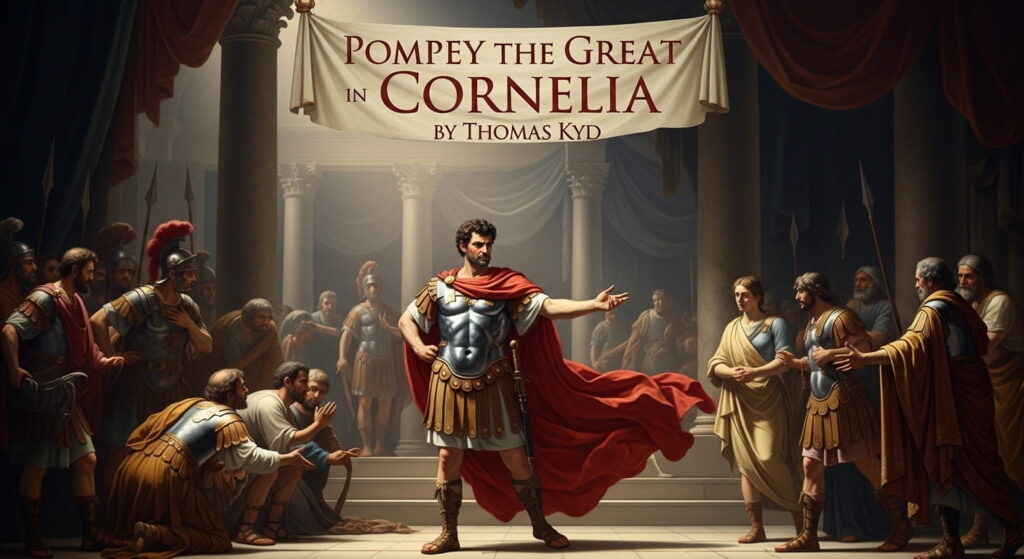
Pompey the Great stands at the emotional heart of Thomas Kyd’s Cornelia. Furthermore, his presence shapes the entire dramatic and thematic structure of the play. Therefore, understanding Pompey the Great is essential to understanding Kyd’s dramatic vision. Additionally, he never appears directly on the stage throughout the entire drama. Consequently, his character exists entirely through memory, lamentation, and reported speech. Moreover, Pompey the Great represents Roman republican virtue, military greatness, and political honour. Thus, his destruction by Caesar carries both personal and civilizational dramatic weight. Meanwhile, Cornelia’s love for him gives the drama its most powerful emotional force. However, Pompey the Great is not a conventional tragic hero who acts on stage. Furthermore, his heroism is communicated entirely through other characters’ grief and admiration. For a deeper understanding of language and dramatic style in this play, readers may consult blank verse in Cornelia. Therefore, this article provides a complete analysis of Pompey the Great in Kyd’s Cornelia. Overall, his role is indispensable to the play’s meaning, structure, and emotional power.
1. Pompey the Great
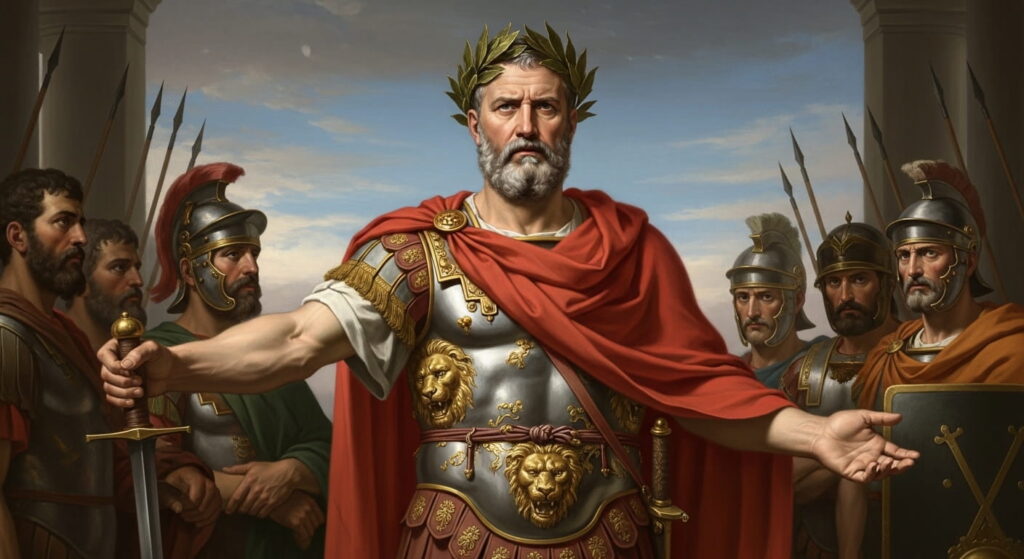
Pompey the Great is the most significant absent presence in all of Kyd’s Cornelia. Furthermore, his historical identity as Gnaeus Pompeius Magnus lends him enormous dramatic authority. Therefore, Kyd’s decision to base his character on real Roman history was deeply purposeful. Additionally, Pompey the Great was one of Rome’s most celebrated military commanders historically. Consequently, his defeat by Caesar feels like a catastrophe of civilizational proportions. Moreover, Kyd presents Pompey the Great not as a flawed hero but as a figure of pure virtue. Thus, the drama avoids moral ambiguity in its treatment of Pompey’s character entirely. Meanwhile, his reputation as a champion of the Roman Republic gives his fall enormous symbolic weight. However, Pompey the Great is never allowed to defend himself or speak in his own voice. Furthermore, everything the audience knows about him comes through Cornelia’s devoted lamentation. Therefore, Pompey the Great functions as the moral standard against which all other characters are measured. Overall, his greatness is the foundation upon which Kyd builds the entire tragic structure.
2. Pompey in Cornelia
Pompey in Cornelia occupies a position unlike any other character in Elizabethan drama. Furthermore, he is simultaneously the play’s most important figure and its most invisible one. Therefore, Kyd creates a remarkable, dramatic paradox through this deliberate structural choice. Additionally, Pompey in Cornelia is defined entirely by what others say and feel about him. Consequently, his character is constructed through layers of grief, admiration, and historical reference. Moreover, every major speech in the play connects in some way to Pompey’s fate. Thus, the drama revolves around him like a planet orbiting an invisible sun consistently. Meanwhile, Pompey’s relationship with Cornelia gives the play its deeply personal emotional core. However, Pompey in Cornelia also represents a political ideal that Caesar’s power has destroyed. Furthermore, his fate becomes inseparable from the fate of Rome’s republican tradition itself. Therefore, Pompey in Cornelia functions simultaneously as husband, hero, and symbol of lost greatness. Overall, his invisible presence generates more dramatic force than any visible character in the play.
3. Thomas Kyd Cornelia
Thomas Kyd’s Cornelia represents his most philosophically sophisticated and classically disciplined work. Furthermore, Kyd translated the play from Robert Garnier’s French Cornelie in 1594 with great care. Therefore, the play reflects both French humanist drama and English Renaissance classical learning. Additionally, Thomas Kyd Cornelia differs sharply from his popular revenge tragedy The Spanish Tragedy. Consequently, scholars recognize Cornelia as the more intellectually ambitious of his two surviving plays. Moreover, Kyd structures Cornelia around spoken lamentation rather than theatrical spectacle or action. Thus, Thomas Kyd Cornelia prioritizes philosophical reflection over conventional dramatic excitement entirely. Meanwhile, Pompey the Great’s absence from the stage reflects Kyd’s strict Senecan theatrical principles. The character of Bel-Imperia in The Spanish Tragedy offers a striking contrast. She acts as an active female figure in Kyd’s other work. However, in Cornelia, Kyd creates a heroine defined by endurance rather than by action or revenge. Furthermore, Thomas Kyd Cornelia demonstrates his deep familiarity with Roman history and Stoic philosophy. Therefore, this play reveals dimensions of Kyd’s dramatic talent not visible in his other work. Overall, Thomas Kyd Cornelia remains a masterwork of the English closet drama tradition.
4. Pompey the Great in Cornelia by Thomas Kyd
Pompey the Great in Cornelia by Thomas Kyd serves as the drama’s absent tragic center. Furthermore, Kyd uses historical sources to establish Pompey’s greatness before the drama begins. Therefore, audiences arrive with an understanding of who Pompey the Great was historically. Additionally, this prior knowledge amplifies the emotional impact of his reported death significantly. Consequently, the messenger’s news carries the weight of history collapsing in a single moment. Moreover, Pompey the Great in Cornelia by Thomas Kyd is treated with consistent reverence and admiration. Thus, no character questions his virtue, courage, or political legitimacy at any point. Meanwhile, his defeat by Caesar is presented as the triumph of force over republican justice. However, Pompey the Great in Cornelia by Thomas Kyd also carries a stoic philosophical meaning. Furthermore, his death illustrates the Senecan truth that even the greatest men cannot resist fortune. Therefore, Pompey the Great in Cornelia by Thomas Kyd embodies both historical tragedy and philosophical lessons. Overall, Kyd makes him the play’s moral and emotional cornerstone throughout every act.
5. Roman Hero in Elizabethan Drama
The Roman hero in Elizabethan drama occupies a prestigious and culturally significant position. Furthermore, Elizabethan writers admired Roman historical figures for their virtue, courage, and political clarity. Therefore, presenting Pompey the Great as a Roman hero connected the play to broader cultural values. Additionally, Roman heroes in Elizabethan drama typically represent a lost golden age of virtue. Consequently, their defeat or death carries a melancholic sense of historical and moral loss. Moreover, Pompey the Great fits this archetype perfectly in every dimension of his characterization. Thus, his military greatness, political honor, and republican loyalty define him as an ideal Roman hero. Meanwhile, the Roman hero in Elizabethan drama also serves as an implicit political commentary. However, Kyd avoids making this commentary too direct or politically dangerous for his audience. Furthermore, Pompey the Great, as a Roman hero, allows Elizabethan readers to reflect on power and justice. Therefore, the Roman hero in Elizabethan drama functions as both entertainment and philosophical instruction. Overall, Pompey the Great represents the finest expression of this important Elizabethan dramatic archetype.
6. Pompey’s Death in Cornelia
Pompey’s death in Cornelia is the play’s most devastating and structurally pivotal moment. Furthermore, this death is never shown on stage but reported by a messenger instead. Therefore, Kyd follows strict Senecan theatrical convention in handling this crucial dramatic event. Additionally, the messenger’s account of Pompey’s death is composed with extraordinary rhetorical power. Consequently, the audience experiences the horror of his end entirely through the force of language. Moreover, Pompey’s death in Cornelia triggers Cornelia’s greatest and most powerful lamentation speech. Thus, the dramatic climax of the entire play depends entirely on this reported death. Meanwhile, the symbolism in The Spanish Tragedy offers a useful contrast to how Kyd handles death symbolically across his works. However, in Cornelia, Pompey’s death carries a philosophical rather than merely theatrical significance. Furthermore, it illustrates the Stoic truth that fortune destroys even the greatest and most virtuous men. Therefore, Pompey’s death in Cornelia functions as both a personal tragedy and a universal philosophical statement. Overall, this moment stands as one of the most emotionally powerful in all of Elizabethan drama.
7. Pompey and Cornelia’s Relationship
The Pompey and Cornelia relationship forms the emotional foundation of Kyd’s entire dramatic work. Furthermore, their bond is one of deep and devoted love grounded in mutual respect and admiration. Therefore, Cornelia’s grief for Pompey feels entirely authentic and philosophically serious throughout. Additionally, Kyd draws on historical sources to establish the authenticity of their relationship. Consequently, the Pompey and Cornelia relationship carries the weight of real Roman historical love. Moreover, Cornelia’s devotion to Pompey elevates her grief beyond mere personal loss immediately. Thus, she mourns not only a husband but also a political vision and a moral ideal. Meanwhile, the Pompey and Cornelia relationship also reflects the Stoic ideal of virtuous human bonds. However, their relationship is never shown developing or flourishing anywhere in the play. Furthermore, it exists only in memory, lamentation, and Cornelia’s unwavering philosophical loyalty. Therefore, the Pompey and Cornelia relationship is defined entirely by absence and irreplaceable loss. Overall, this relationship gives the drama its most profound and moving emotional dimension throughout.
8. Pompey as a Tragic Figure
Pompey, as a tragic figure, differs fundamentally from conventional Elizabethan tragic heroes. Furthermore, he does not suffer from a recognizable fatal flaw in the classical Aristotelian sense. Therefore, his tragedy arises entirely from fortune’s cruelty rather than from personal moral failure. Additionally, Pompey, as a tragic figure, represents the destruction of virtue by overwhelming political force. Consequently, his tragedy feels more philosophically disturbing than a conventional fall from greatness. Moreover, Kyd presents Pompey’s fate as an indictment of fortune rather than of human weakness. Thus, Pompey, as a tragic figure, embodies the Senecan view of human helplessness before fate. Meanwhile, his tragedy also carries a political dimension that gives it historical and cultural resonance. However, Pompey, as a tragic figure, is unique because his tragedy unfolds entirely offstage. Furthermore, the audience never witnesses his suffering, struggle, or final moments directly. Therefore, Pompey, as a tragic figure, exists only in the emotional aftermath of his destruction. Overall, this makes him one of the most philosophically provocative tragic figures in Renaissance drama.
9. Gnaeus Pompeius Magnus
Gnaeus Pompeius Magnus was the full historical name of the figure Kyd dramatizes in Cornelia. Furthermore, this historical identity lends Pompey the Great enormous authority and cultural prestige. Therefore, Kyd’s educated Elizabethan readers would have recognized him immediately and clearly. Additionally, Gnaeus Pompeius Magnus was one of the three members of the First Triumvirate. Consequently, his political significance extended far beyond his role as Cornelia’s husband. Moreover, Gnaeus Pompeius Magnus conquered vast territories and commanded Roman legions with great distinction. Thus, his military reputation gave his dramatic portrayal an automatic grandeur and historical weight. Meanwhile, Kyd draws on this historical reputation to establish Pompey’s greatness without lengthy explanation. The contrast between Kyd’s classical drama and Shakespeare’s distinct style illuminates how differently Renaissance dramatists approached Roman historical figures. However, Kyd treats Gnaeus Pompeius Magnus with reverence rather than dramatic complexity or moral ambiguity. Furthermore, the historical record of his greatness becomes the measure of fortune’s devastating cruelty. Therefore, Gnaeus Pompeius Magnus in Kyd’s drama is history transformed into philosophical illustration. Overall, his historical identity deepens every dimension of the play’s tragic and philosophical impact.
10. Roman General in Renaissance Drama
The Roman general in Renaissance drama typically embodies military virtue and political authority. Furthermore, Pompey the Great represents this archetype at its most idealized and philosophically serious. Therefore, his portrayal reflects Renaissance humanist admiration for Roman military and political culture. Additionally, Roman generals in Renaissance drama often serve as mirrors for contemporary political concerns. Consequently, Pompey the Great’s defeat by Caesar carries implicit commentary on power and legitimacy. Moreover, the Roman general in Renaissance drama connects literary culture to classical historical tradition. Thus, Pompey the Great, as a Roman general, allows Kyd to engage with classical history meaningfully. Meanwhile, Renaissance readers admired Roman generals for their discipline, courage, and service to the republic. However, Kyd presents Pompey the Great as a Roman general whose greatness cannot protect him. Furthermore, even a military genius proves powerless against fortune’s overwhelming and arbitrary force. Therefore, the Roman general in Renaissance drama becomes in Kyd’s hands a figure of philosophical tragedy. Overall, Pompey the Great elevates this familiar archetype into something genuinely profound and moving.
11. Pompey’s Role in Closet Drama
Pompey’s role in closet drama is shaped entirely by the formal demands of the genre. Furthermore, closet drama was written for reading rather than for public theatrical performance. Therefore, Kyd could construct Pompey’s character entirely through language and rhetorical description. Additionally, closet drama allows extended philosophical reflection impossible on the popular Elizabethan stage. Consequently, Pompey’s role becomes a vehicle for sustained meditation on fate, virtue, and loss. Moreover, Pompey’s role in closet drama depends on his absence rather than his physical presence. Thus, the reader must construct the character imaginatively from other characters’ speech and grief. Meanwhile, closet drama’s educated readership would have recognized Pompey’s historical significance immediately. However, Pompey’s role in closet drama also reflects the genre’s preference for intellectual over theatrical drama. Furthermore, his unseen greatness generates more imaginative power than any stage performance could provide. Therefore, Pompey’s role in closet drama exploits the genre’s unique dramatic possibilities brilliantly. Overall, closet drama proves the perfect form for Kyd’s treatment of this absent tragic hero.
12. Offstage Character in Senecan Tragedy
The offstage character in Senecan tragedy is one of the most distinctive features of the form. Furthermore, Seneca’s theatrical conventions strictly required violent and dramatic action to remain offstage. Therefore, Pompey the Great, as an offstage character, reflects Kyd’s faithful adherence to Senecan principles. Additionally, the offstage character in Senecan tragedy communicates through reported speech and lamentation. Consequently, Pompey’s character reaches the audience entirely through the messenger and Cornelia’s grief. Moreover, keeping Pompey the Great offstage concentrates dramatic attention on the emotional aftermath rather than the event. Thus, the offstage character in Senecan tragedy paradoxically achieves greater dramatic power through absence. Meanwhile, Kyd exploits this convention brilliantly to make Pompey’s death more devastating than any staged death. However, the offstage character in Senecan tragedy also serves important philosophical purposes. Furthermore, what cannot be seen must be imagined, and imagination amplifies grief beyond any visual representation. Therefore, Pompey the Great, as an offstage character, becomes more powerful precisely because he cannot be seen. Overall, this Senecan convention transforms Pompey’s absence into the play’s greatest source of dramatic force.
13. Pompey Versus Caesar
The conflict of Pompey versus Caesar provides the central historical and political axis of the drama. Furthermore, this opposition between republican virtue and autocratic power drives the entire tragic action. Therefore, Pompey versus Caesar represents more than a military contest in Kyd’s dramatic vision. Additionally, Pompey stands for legitimate republican governance, honor, and constitutional Roman order. Consequently, Caesar represents the triumph of force and personal ambition over traditional virtue. Moreover, Pompey versus Caesar in Kyd’s drama is never presented as a contest between equal moral forces. Thus, the dramatic sympathy lies entirely and consistently with Pompey the Great throughout. Meanwhile, Caesar’s victory is presented as fortune’s cruel indifference to virtue and justice. However, Pompey versus Caesar also reflects broader Renaissance anxieties about political power and legitimacy. Furthermore, Elizabethan readers would have recognized the contemporary relevance of this ancient conflict. For a wider context on literary and dramatic symbolism, see English literature notes. Therefore, Pompey versus Caesar in Kyd’s Cornelia functions as both history and philosophical allegory. Overall, this opposition gives the play its political backbone and its deepest thematic resonance.
14. Roman Republic in Elizabethan Literature
The Roman Republic in Elizabethan literature represents an idealized model of political virtue. Furthermore, Elizabethan writers consistently admired Rome’s republican values of civic duty and collective governance. Therefore, the republic’s destruction by Caesar carried enormous symbolic weight for Renaissance readers. Additionally, the Roman Republic in Elizabethan literature provided a politically safe way to discuss power. Consequently, writers could comment on tyranny, legitimacy, and justice through classical historical distance. Moreover, Pompey the Great, as defender of the Roman Republic, positions himself as a heroic political figure. Thus, his defeat represents the catastrophic failure of virtue against overwhelming political force. Meanwhile, the Roman Republic in Elizabethan literature is also connected to humanist educational values. However, Kyd treats the republic’s fall with philosophical resignation rather than political anger. Furthermore, he presents its destruction as an illustration of fortune’s power rather than human failing. Therefore, the Roman Republic in Elizabethan literature gives Pompey the Great his deepest political significance. Overall, Kyd uses the republican ideal to elevate Pompey’s tragic fate to universal significance.
15. Pompey’s Absence in Drama
Pompey’s absence in drama is the most striking and philosophically productive feature of Kyd’s work. Furthermore, his complete invisibility throughout five acts defies conventional dramatic expectation entirely. Therefore, Kyd challenges every assumption about how important characters must be presented on stage. Additionally, Pompey’s absence in drama forces readers to construct his character entirely through imagination. Consequently, the play demands a more active and intellectually engaged form of readerly participation. Moreover, Pompey’s absence in drama creates a structural void that grief and lamentation must fill. Thus, Cornelia’s speeches function as both emotional expression and character construction simultaneously. Meanwhile, his absence also prevents any dramatic complication of the idealized image others present. However, Pompey’s absence in drama is not a limitation but a deliberate and sophisticated choice. Furthermore, what is never seen can never disappoint or contradict the image that grief constructs. Therefore, Pompey’s absence in drama preserves his heroic ideal in its most perfect and uncompromised form. Overall, his absence becomes Kyd’s most powerful and productive dramatic tool throughout the play.
16. Tragic Hero in Cornelia
The tragic hero in Cornelia raises genuinely complex questions about the nature of tragic heroism. Furthermore, both Cornelia and Pompey the Great could claim the title of tragic hero with equal justification. Therefore, Kyd creates a drama with a divided and philosophically rich tragic center. Additionally, Pompey the Great, as a tragic hero, differs from conventional models in important ways. Consequently, his heroism consists entirely of virtue rather than of dramatic action or visible suffering. Moreover, the tragic hero in Cornelia is defined by what he represents rather than by what he does. Thus, Pompey the Great’s heroism is moral, political, and historical rather than theatrical. Meanwhile, Cornelia, as a tragic hero, endures suffering with stoic philosophical dignity and composure. However, the tragic hero in Cornelia is ultimately Pompey the Great because his loss drives everything. Furthermore, his destroyed greatness is the source of all grief, lamentation, and philosophical reflection. Therefore, the tragic hero in Cornelia is both invisible and omnipresent throughout the entire drama. Overall, Kyd redefines tragic heroism as a quality of character rather than a pattern of action.
17. Pompey’s Political Significance
Pompey’s political significance in Kyd’s drama extends far beyond his personal story. Furthermore, he represents the entire tradition of Roman republican governance and constitutional order. Therefore, his defeat by Caesar signifies the end of legitimate political authority in Rome. Additionally, Pompey’s political significance connects directly to Renaissance humanist political philosophy. Consequently, Elizabethan readers understood his fate as a lesson about power, virtue, and political mortality. Moreover, Pompey the Great’s political significance makes his tragedy relevant beyond its historical moment. Thus, Kyd’s drama transforms a specific Roman historical event into universal political philosophy. Meanwhile, Pompey’s political significance also reflects concerns about political legitimacy in Elizabethan England. However, Kyd handles these political themes with philosophical restraint rather than direct commentary. Furthermore, the study of American literature reveals how the theme of republican virtue and political loss continues across literary traditions. Therefore, Pompey’s political significance gives Kyd’s drama a cultural resonance extending far beyond its immediate subject. Overall, his political meaning elevates Cornelia from private grief to public and historical tragedy.
18. Roman Civil War in Drama
The Roman civil war in drama provides the historical backdrop for Pompey the Great’s tragedy. Furthermore, the conflict between Caesar and Pompey was the defining crisis of the late Roman Republic. Therefore, placing Cornelia within this historical context gives the drama enormous political and cultural weight. Additionally, the Roman civil war in drama allows Kyd to explore themes of divided loyalty and political collapse. Consequently, the war’s devastation explains and justifies the scale of Cornelia’s grief and suffering. Moreover, the Roman civil war in drama was a subject of intense humanist scholarly interest in Renaissance Europe. Thus, Kyd’s educated readers would have known this history with considerable depth and detail. Meanwhile, the civil war also provides the necessary historical context for understanding Pompey’s fate. However, the Roman civil war in drama remains entirely in the background of Kyd’s dramatic action. Furthermore, its events reach the audience only through reported speech and lamentation throughout. Therefore, the Roman civil war in drama functions as the invisible engine driving every scene forward. Overall, the civil war gives Pompey the Great’s tragedy its full historical and political dimension.
19. Senecan Tragic Hero
The Senecan tragic hero is defined by philosophical endurance rather than by dramatic action. Furthermore, Pompey the Great fits this model precisely in every dimension of his characterization. Therefore, Kyd constructs his portrait of Pompey entirely according to Senecan tragic principles. Additionally, the Senecan tragic hero typically faces overwhelming fortune with dignity and philosophical composure. Consequently, Pompey the Great’s stoic acceptance of his fate marks him as a true Senecan figure. Moreover, the Senecan tragic hero does not seek revenge or resist fate through violent action. Thus, Pompey the Great’s passive heroism perfectly embodies this classical philosophical ideal. Meanwhile, the Senecan tragic hero also serves a didactic function in the drama’s moral framework. However, the Senecan tragic hero is not passive in a weak sense but dignified in a philosophical sense. Furthermore, his endurance in the face of fortune represents the highest form of human virtue available. Therefore, the Senecan tragic hero in Kyd’s drama teaches readers how to face catastrophe with dignity. Overall, Pompey the Great represents the Senecan tragic ideal in its most complete and compelling form.
20. Pompey’s Military Greatness
Pompey’s military greatness is established repeatedly and consistently throughout Kyd’s drama. Furthermore, other characters reference his military achievements with reverence and admiration. Therefore, his reputation as a commander lends his tragic fate an even greater sense of devastating loss. Additionally, Pompey’s military greatness connected him to the great tradition of Roman martial virtue. Consequently, his defeat by Caesar feels like an assault on Roman values themselves. Moreover, Pompey the Great’s military greatness also elevates Cornelia’s grief to a historically significant level. Thus, she mourns not only a husband but also Rome’s greatest living military commander. Meanwhile, his military achievements provide the historical foundation for his elevated dramatic status. However, Pompey’s military greatness proves ultimately powerless against fortune’s arbitrary cruelty. Furthermore, even his greatest victories could not protect him from political betrayal and violent death. Therefore, Pompey’s military greatness makes his fall more philosophically profound rather than less so. Overall, military greatness in Kyd’s drama becomes evidence of fortune’s indifference to human achievement.
21. Cornelia’s Grief for Pompey
Cornelia’s grief for Pompey the Great is the emotional engine driving the entire dramatic work. Furthermore, this grief is not merely personal but philosophical, political, and historically significant. Therefore, Kyd constructs Cornelia’s lamentation with extraordinary rhetorical care and structural precision. Additionally, Cornelia’s grief for Pompey encompasses the loss of a husband, a republic, and a moral world. Consequently, her lamentation speaks to losses that extend far beyond any individual relationship. Moreover, Cornelia’s grief for Pompey is presented as fully compatible with Stoic philosophical dignity. Thus, she grieves with intellectual composure rather than descending into theatrical despair entirely. Meanwhile, her grief also functions as a form of tribute to Pompey the Great’s extraordinary character. However, Cornelia’s grief for Pompey is not static but develops progressively across the five acts. Furthermore, it moves from raw anguish toward a more philosophical and resigned form of endurance. Therefore, Cornelia’s grief for Pompey traces a philosophical arc as well as an emotional one. Overall, this grief is the most powerful and sustained dramatic achievement of Kyd’s entire work.
22. Messenger and Pompey’s Death
The messenger and Pompey’s death together constitute the most dramatic scene in all of Cornelia. Furthermore, the classical messenger device transfers Pompey the Great’s offstage death into powerful rhetorical speech. Therefore, violence remains invisible while its emotional consequences become fully and vividly present. Additionally, the messenger’s account of Pompey’s death is composed with careful rhetorical elaboration. Consequently, every detail of the reported death amplifies the sense of historical catastrophe. Moreover, the messenger and Pompey’s death scene represents Kyd’s mastery of Senecan theatrical convention. Thus, the absence of visible action makes the emotional impact of the death scene more powerful. Meanwhile, Cornelia’s reaction to the messenger transforms his report into the play’s climactic moment. However, the messenger and Pompey’s death also serve a philosophical rather than merely theatrical function. Furthermore, the reported death illustrates Seneca’s teaching that fortune destroys even the greatest men. Therefore, the messenger and Pompey’s death scene is both dramatically climactic and philosophically instructive. Overall, this scene represents the finest single moment of dramatic writing in Kyd’s Cornelia.
23. Pompey as Symbol of Roman Virtue
Pompey, as a symbol of Roman virtue, is one of Kyd’s most significant and sustained dramatic constructions. Furthermore, Roman virtue encompassed military courage, civic duty, political honour, and personal integrity. Therefore, Pompey the Great embodies all these qualities consistently throughout the drama’s action. Additionally, Pompey as a symbol of Roman virtue connects Kyd’s drama to the broader Renaissance idealization of Rome. Consequently, his destruction symbolizes the defeat of virtue itself by fortune and political force. Moreover, Pompey, as a symbol of Roman virtue, gives Cornelia’s grief a moral and political dimension. Thus, she mourns not only personally but as a representative of Rome’s lost moral order. Meanwhile, the symbolic dimension of Pompey’s character elevates the drama above mere historical narrative. However, Kyd handles this symbolism with philosophical restraint rather than rhetorical excess. Furthermore, the symbolism emerges naturally from historical and dramatic context rather than being imposed artificially. Therefore, Pompey, as a symbol of Roman virtue, deepens every scene in which his name is spoken. Overall, this symbolic dimension makes Pompey the Great one of Renaissance drama’s most richly meaningful figures.
24. Renaissance Treatment of Roman History
The Renaissance treatment of Roman history shaped how Kyd portrayed Pompey the Great dramatically. Furthermore, Renaissance humanists studied Roman history as a source of moral and political wisdom. Therefore, historical figures like Pompey the Great carried genuine philosophical authority for educated readers. Additionally, Renaissance treatment of Roman history typically emphasized virtue, civic duty, and political legitimacy. Consequently, Pompey the Great’s republican values aligned perfectly with Renaissance humanist political ideals. Moreover, Renaissance treatment of Roman history also involved translating and adapting classical texts creatively. Thus, Kyd’s translation of Garnier participates in this broader Renaissance cultural practice directly. Meanwhile, Renaissance scholars treated Roman civil war as a cautionary tale about political ambition. However, Renaissance treatment of Roman history also involved genuine admiration for Rome’s cultural achievements. Furthermore, Pompey the Great’s military and political career embodied the virtues Renaissance readers most admired. Therefore, Renaissance treatment of Roman history provided Kyd with a culturally validated dramatic subject. Overall, Kyd’s engagement with Roman history reflects the deepest values of Renaissance humanist culture.
25. Pompey’s Legacy in English Drama
Pompey’s legacy in English drama extends well beyond Kyd’s Cornelia into broader literary history. Furthermore, Pompey the Great became a recurring figure in English Renaissance dramatic imagination. Therefore, Kyd’s treatment of him established important precedents for later dramatic portrayals. Additionally, Pompey’s legacy in English drama reflects the enduring fascination with Roman republican history. Consequently, later dramatists, including Shakespeare, engaged with the same historical material differently. Moreover, Pompey’s legacy in English drama demonstrates the richness of classical history as dramatic subject matter. Thus, his story offered Renaissance writers a powerful vehicle for philosophical and political reflection. Meanwhile, Kyd’s Cornelia remains the most philosophically serious English treatment of Pompey the Great. However, Pompey’s legacy in English drama also reflects the Senecan tradition’s lasting influence. Furthermore, the convention of the offstage hero that Kyd uses so brilliantly continued to influence later drama. Therefore, Pompey’s legacy in English drama connects directly to the development of serious English tragic writing. For a broader literary context and analysis, readers should explore English literature notes. Overall, Pompey the Great in Cornelia by Thomas Kyd stands as a defining contribution to English dramatic literature.
Conclusion
Pompey the Great in Cornelia by Thomas Kyd represents one of Renaissance drama’s most remarkable achievements. Furthermore, Kyd constructs a fully realized tragic figure who never once appears on the stage. Therefore, Pompey the Great’s dramatic power derives entirely from language, grief, and philosophical reflection. Additionally, his role as husband, republican hero, and symbol of Roman virtue gives him extraordinary depth. Consequently, Pompey the Great functions simultaneously at personal, political, and philosophical dramatic levels. Moreover, Kyd’s treatment of his absence demonstrates the highest possibilities of Senecan theatrical convention. Thus, Pompey the Great in Cornelia by Thomas Kyd redefines what dramatic presence can mean. Meanwhile, Cornelia’s grief for him transforms personal love into universal philosophical lamentation. However, Pompey the Great is not merely a passive symbol but an active moral force throughout the drama. Furthermore, his invisible greatness measures the magnitude of fortune’s cruelty and Rome’s catastrophic loss. Therefore, Pompey the Great in Cornelia by Thomas Kyd remains endlessly rich for scholarly analysis and reflection. Overall, this complete analysis confirms Pompey the Great as the play’s irreplaceable tragic and philosophical center.
Discover more from Naeem Ullah Butt - Mr.Blogger
Subscribe to get the latest posts sent to your email.