Introduction
Symbolism in The Spanish Tragedy enriches the tragic narrative greatly. First, Thomas Kyd uses symbols to deepen meaning. Moreover, symbols reveal hidden emotions and moral conflict. Consequently, audiences understand deeper themes within the play. Furthermore, revenge appears not only as an action. Instead, revenge becomes a symbolic force within events. Meanwhile, justice appears delayed throughout the tragedy. Consequently, symbols highlight the failure of authority. Moreover, blood, death, and suffering carry symbolic meaning. Therefore, violence represents moral corruption within society. Furthermore, supernatural figures symbolize destiny and judgment. Meanwhile, the Ghost of Andrea watches human actions silently. Consequently, spiritual observation suggests inevitable punishment. Moreover, the royal court symbolizes political corruption clearly. Therefore, power appears unreliable and dangerous. Furthermore, characters represent moral struggles and emotional pain. Meanwhile, the play-within-the-play symbolizes theatrical justice. Consequently, performance becomes the instrument of revenge. Moreover, tragedy reflects broader Elizabethan anxieties about justice. Therefore, symbolism strengthens emotional and moral interpretation. Thus, Symbolism in The Spanish Tragedy deepens the narrative’s tragic meaning.
1. Symbolism in The Spanish Tragedy
Symbolism in The Spanish Tragedy shapes the entire dramatic structure. First, symbols communicate meaning beyond literal events. Moreover, characters represent deeper moral struggles. Consequently, the narrative gains philosophical depth. Furthermore, violence symbolizes corruption within a noble society. Meanwhile, revenge represents emotional resistance against injustice. Consequently, symbolic meaning expands through every scene. Moreover, grief symbolizes the collapse of moral order. Therefore, suffering reflects deeper social corruption. Furthermore, supernatural figures symbolize fate and judgment. Meanwhile, the audience observes spiritual awareness clearly. Consequently, destiny appears connected with tragic outcomes. Moreover, objects and locations gain symbolic importance. Therefore, settings reflect emotional conflict and injustice. Furthermore, symbols guide audience interpretation of events. Meanwhile, characters remain unaware of the symbolic meaning. Consequently, spectators understand deeper narrative significance. Moreover, tragedy exposes corruption through symbolic contrast. Therefore, symbols strengthen dramatic tension. Thus, symbolism becomes essential within the tragedy.
2. Thomas Kyd’s Use of Symbolism
Thomas Kyd carefully employs symbolism throughout the tragedy. First, he connects physical actions with deeper meaning. Moreover, symbols reveal hidden psychological conflict. Consequently, emotional suffering becomes more powerful. Furthermore, symbolic imagery strengthens tragic tension. Meanwhile, revenge appears as moral resistance. Consequently, characters represent ethical struggles within society. Moreover, supernatural figures symbolize cosmic judgment. Therefore, spiritual observation shapes narrative interpretation. Furthermore, symbolic contrast exposes corruption clearly. Meanwhile, noble authority appears morally unreliable. Consequently, institutions symbolize broken justice. Moreover, violent acts symbolize social collapse. Therefore, tragedy reflects broader political anxiety. Furthermore, the playwright uses symbolism to guide audience reflection. Meanwhile, spectators interpret events beyond the surface story. Consequently, meaning expands across the narrative. Moreover, emotional conflict gains philosophical importance. Therefore, symbolism strengthens the dramatic message. Thus, Kyd uses symbolism to deepen moral and emotional understanding.
3. Symbolism and Revenge
Revenge functions as a powerful symbol within the tragedy. First, revenge represents resistance against injustice. Moreover, victims pursue justice when institutions fail. Consequently, revenge symbolizes moral frustration. Furthermore, it reflects emotional suffering within characters. Meanwhile, corruption prevents legal punishment repeatedly. Consequently, revenge becomes symbolic justice. Moreover, revenge represents emotional loyalty to the dead. Therefore, grief transforms into violent determination. Furthermore, revenge symbolizes the collapse of legal authority. Meanwhile, institutions appear powerless against corruption. Consequently, individuals take justice into their own hands. Moreover, revenge exposes the weakness of political systems. Therefore, violence replaces lawful order. Furthermore, revenge symbolizes moral chaos within society. Meanwhile, tragic consequences follow every violent act. Consequently, revenge represents both justice and destruction. Thus, revenge becomes one of the tragedy’s strongest symbols.
4. Symbolism of Blood
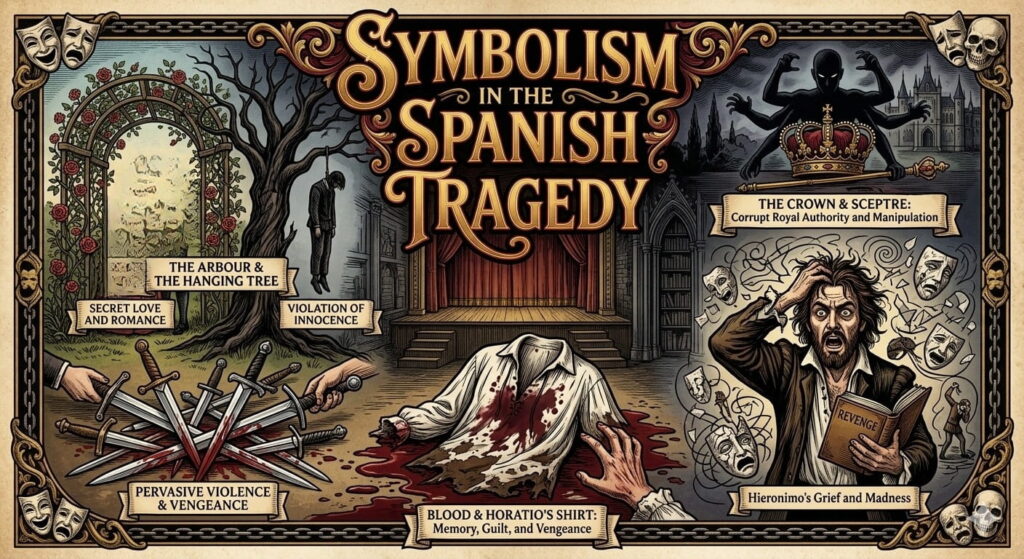
Blood imagery carries powerful symbolic meaning within the tragedy. First, blood represents violence and moral corruption. Moreover, blood reminds characters of injustice repeatedly. Consequently, violent acts appear morally disturbing. Furthermore, blood symbolizes the irreversible consequences of revenge. Meanwhile, characters cannot escape the results of violence. Consequently, guilt and suffering continue spreading. Moreover, blood imagery reflects emotional pain clearly. Therefore, violence becomes a visible reminder of tragedy. Furthermore, blood symbolizes the destruction of innocence. Meanwhile, Horatio’s murder reveals brutal ambition. Consequently, ambition becomes morally dangerous. Moreover, blood also symbolizes the cost of revenge. Therefore, justice arrives through suffering and death. Furthermore, the presence of blood deepens the tragic atmosphere. Meanwhile, audiences reflect on the moral consequences. Consequently, blood imagery strengthens emotional intensity. Thus, blood becomes a powerful symbol of corruption and revenge.
5. Symbolism of Death
Death functions as a central symbol within the tragedy. First, death represents the ultimate consequence of corruption. Moreover, violence destroys innocent lives repeatedly. Consequently, tragedy exposes the cruelty of ambition. Furthermore, death symbolizes moral collapse within society. Meanwhile, powerful nobles ignore human suffering. Consequently, injustice spreads across the court. Moreover, death also symbolizes the failure of justice. Therefore, victims receive punishment instead of the criminals. Furthermore, death represents the destructive power of revenge. Meanwhile, revenge ultimately destroys both victims and villains. Consequently, tragedy spreads across relationships. Moreover, death symbolizes the inevitable consequences of moral corruption. Therefore, destiny appears unavoidable within the narrative. Furthermore, repeated deaths intensify the tragic atmosphere. Meanwhile, audiences reflect on the cost of revenge. Consequently, death becomes the ultimate symbol of tragic justice.
6. Symbolism of Justice
Justice appears as a symbolic ideal within the tragedy. First, characters believe authority should protect innocence. Moreover, legal institutions promise fairness and order. Consequently, justice symbolizes hope for moral balance. However, corruption destroys this expectation repeatedly. Therefore, justice becomes a symbol of failure. Furthermore, characters struggle to seek moral resolution. Meanwhile, political power protects criminals instead. Consequently, justice appears distant and unreachable. Moreover, revenge eventually symbolizes personal justice. Therefore, individuals replace legal institutions. Furthermore, tragic violence restores temporary moral balance. Meanwhile, audiences reflect on ethical consequences. Consequently, justice appears complicated and unstable. Moreover, the narrative questions the reliability of authority. Therefore, justice symbolizes both hope and disappointment. Thus, the tragedy presents justice as a fragile moral symbol.
7. Symbolism of the Royal Court
The royal court symbolizes political authority and corruption. First, the court appears powerful and orderly. Moreover, noble titles suggest moral leadership. Consequently, society trusts royal institutions. However, corruption secretly dominates political decisions. Therefore, the court symbolizes moral hypocrisy. Furthermore, criminals manipulate influence for protection. Meanwhile, innocent victims remain powerless. Consequently, authority fails to protect justice. Moreover, the court becomes a symbol of injustice. Therefore, appearances hide dangerous corruption. Furthermore, ambition shapes political relationships. Meanwhile, betrayal spreads within noble society. Consequently, trust collapses gradually. Moreover, the court reflects wider social corruption. Therefore, political authority appears unreliable. Furthermore, audiences question the legitimacy of leadership. Consequently, the royal court symbolizes moral decay within power.
8. Symbolism of Corruption and Power
Power and corruption carry strong symbolic meaning. First, authority promises justice and protection. However, ambition secretly controls political behavior. Consequently, power symbolizes moral temptation. Moreover, nobles misuse authority for personal advantage. Therefore, corruption spreads within the court environment. Furthermore, powerful figures appear honorable publicly. Meanwhile, hidden actions reveal dishonesty and cruelty. Consequently, appearance contrasts sharply with reality. Moreover, corruption symbolizes moral decay within leadership. Therefore, political institutions lose credibility gradually. Furthermore, innocent characters suffer from this corruption. Meanwhile, criminals enjoy safety through influence. Consequently, injustice appears normal within society. Moreover, power becomes a symbol of manipulation. Therefore, leadership loses moral responsibility. Furthermore, the court represents the dangers of ambition. Meanwhile, audiences recognize hypocrisy clearly. Consequently, corruption deepens tragic tension. Thus, power symbolizes both authority and ethical collapse.
9. Symbolism in Horatio’s Murder
Horatio’s murder carries deep symbolic meaning. First, Horatio represents innocence and loyalty. Meanwhile, jealous ambition drives his enemies. Consequently, his death symbolizes the destruction of virtue. Moreover, the violent attack reveals moral corruption. Therefore, ambition becomes symbolically dangerous. Furthermore, the murder occurs secretly in the darkness. Meanwhile, secrecy symbolizes hidden corruption within society. Consequently, crime spreads beneath respectable appearances. Moreover, Horatio’s death symbolizes broken justice. Therefore, innocent people remain vulnerable to power. Furthermore, his murder motivates later revenge. Meanwhile, grief spreads through the surviving characters. Consequently, suffering symbolizes emotional loyalty. Moreover, the tragedy exposes the cruelty of ambition. Therefore, Horatio’s death symbolizes moral injustice. Furthermore, audiences witness the destruction of innocence. Meanwhile, revenge slowly develops afterward. Consequently, the murder symbolizes the beginning of tragic chaos.
10. Symbolism of the Garden Scene
The garden scene carries a powerful symbolic meaning. First, gardens traditionally represent peace and harmony. However, violence occurs within this peaceful setting. Consequently, the contrast creates tragic symbolism. Moreover, innocence becomes vulnerable within beauty. Therefore, the garden symbolizes lost harmony. Furthermore, nature contrasts with human corruption. Meanwhile, ambition destroys peaceful surroundings. Consequently, violence interrupts the natural order. Moreover, the garden symbolizes innocence threatened by power. Therefore, human ambition disturbs moral balance. Furthermore, the scene highlights a tragic contrast clearly. Meanwhile, peaceful space becomes a place of death. Consequently, beauty transforms into tragedy suddenly. Moreover, the garden reflects the fragility of innocence. Therefore, corruption invades even peaceful spaces. Furthermore, audiences observe symbolic contrast strongly. Meanwhile, revenge grows from this violent moment. Consequently, the garden symbolizes the destruction of innocence.
11. Symbolism of the Tree
The tree where Horatio dies becomes symbolic. First, trees normally represent life and growth. However, the tree becomes an instrument of death. Consequently, natural symbolism becomes inverted tragically. Moreover, innocence suffers beneath this symbol. Therefore, the tree represents corrupted nature. Furthermore, violence transforms natural space suddenly. Meanwhile, ambition turns life into destruction. Consequently, the symbol becomes deeply disturbing. Moreover, the hanging body creates powerful imagery. Therefore, death replaces life within the symbol. Furthermore, the tree reminds characters of injustice. Meanwhile, grief continues influencing emotional decisions. Consequently, the symbol strengthens tragic memory. Moreover, audiences recall this violent image repeatedly. Therefore, the tree symbolizes irreversible tragedy. Furthermore, revenge develops from this painful reminder. Meanwhile, moral corruption becomes visible through symbolism. Consequently, the tree represents the collapse of innocence.
12. Symbolism of Hieronimo’s Grief
Hieronimo’s grief carries deep symbolic meaning. First, grief represents emotional devastation after injustice. Moreover, sorrow symbolizes loyalty toward the dead. Consequently, suffering reflects moral responsibility. Furthermore, grief transforms personal identity gradually. Meanwhile, the grieving father searches for justice. Consequently, grief symbolizes moral protest. Moreover, emotional pain reflects social corruption. Therefore, suffering exposes injustice clearly. Furthermore, grief also symbolizes resistance against oppression. Meanwhile, sorrow strengthens determination for revenge. Consequently, grief becomes emotional motivation. Moreover, audiences witness a powerful psychological struggle. Therefore, grief represents human vulnerability. Furthermore, emotional suffering deepens the tragic atmosphere. Meanwhile, characters struggle to control overwhelming pain. Consequently, grief symbolizes moral outrage. Moreover, sorrow leads toward violent justice. Therefore, grief becomes both emotional suffering and moral resistance.
13. Symbolism of Madness
Madness becomes symbolic within the tragedy. First, madness represents psychological suffering. Moreover, grief destroys emotional stability gradually. Consequently, madness reflects unbearable pain. Furthermore, emotional confusion symbolizes moral injustice. Meanwhile, characters misunderstand the grieving father’s behavior. Consequently, society ignores genuine suffering. Moreover, madness also symbolizes a hidden strategy. Therefore, apparent insanity hides careful planning. Furthermore, villains underestimate this behavior completely. Meanwhile, revenge continues to develop secretly. Consequently, madness becomes a symbolic disguise. Moreover, the contrast strengthens dramatic tension. Therefore, emotional suffering appears both genuine and strategic. Furthermore, audiences recognize the deeper meaning clearly. Meanwhile, criminals remain unaware of danger. Consequently, madness symbolizes both grief and resistance. Thus, the symbol highlights psychological and moral conflict.
14. Symbolism in Bel-Imperia’s Resistance
Bel-Imperia represents courageous resistance against corruption. First, she refuses to be silent after Horatio’s murder. Moreover, she openly challenges powerful authority figures. Consequently, her actions symbolize moral courage. Furthermore, she rejects the obedience expected from noble women. Meanwhile, corrupt men attempt to control her decisions. Consequently, her defiance becomes politically significant. Moreover, she secretly communicates the truth to Hieronimo. Therefore, communication symbolizes loyalty and justice. Furthermore, her determination strengthens the revenge alliance. Meanwhile, villains continue underestimating her intelligence. Consequently, her quiet strength becomes symbolic resistance. Moreover, Bel-Imperia represents justice against oppressive power. Therefore, her role challenges patriarchal authority. Furthermore, she refuses to accept injustice quietly. Meanwhile, emotional loyalty guides her actions constantly. Consequently, resistance becomes morally meaningful. Moreover, her courage inspires Hieronimo’s determination. Therefore, Bel-Imperia symbolizes justice through bravery and loyalty.
15. Symbolism of the Ghost of Andrea
Andrea’s ghost symbolizes moral observation and destiny. First, the spirit watches events calmly. Moreover, supernatural presence represents eternal justice. Consequently, audiences receive a spiritual perspective. Furthermore, Andrea observes corruption without interference. Meanwhile, human characters struggle blindly with injustice. Consequently, spiritual awareness contrasts with human ignorance. Moreover, the ghost anticipates revenge clearly. Therefore, destiny appears inevitable from the beginning. Furthermore, supernatural commentary guides audience understanding. Meanwhile, characters remain unaware of spiritual observation. Consequently, dramatic tension grows steadily. Moreover, Andrea symbolizes the memory of injustice. Therefore, Horatio’s death gains deeper meaning. Furthermore, spiritual presence emphasizes moral accountability. Meanwhile, villains continue believing themselves secure. Consequently, their confidence becomes ironic. Moreover, Andrea patiently waits for revenge. Therefore, the ghost symbolizes moral judgment beyond human authority.
16. Symbolism of Revenge as a Character
Revenge appears as a symbolic force. First, Revenge represents inevitable punishment for wrongdoing. Moreover, the figure guides Andrea’s expectations. Consequently, revenge symbolizes moral balance. Furthermore, human justice repeatedly fails within the narrative. Meanwhile, revenge promises inevitable retribution. Consequently, the symbolic figure represents destiny. Moreover, revenge reflects emotional anger and grief. Therefore, suffering transforms into punishment. Furthermore, revenge symbolizes resistance against corruption. Meanwhile, villains believe themselves permanently safe. Consequently, their arrogance becomes ironic. Moreover, revenge appears patient and inevitable. Therefore, time strengthens the symbolic force. Furthermore, punishment approaches gradually yet certainly. Meanwhile, victims struggle to seek justice. Consequently, revenge represents moral correction. Thus, the symbolic character embodies justice beyond human law.
17. Symbolism of Fate and Destiny
Fate appears repeatedly through symbolic structure. First, characters attempt to control their future actions. However, destiny shapes outcomes unexpectedly. Consequently, fate symbolizes unavoidable consequences. Moreover, ambition leads toward tragic results. Therefore, destiny punishes corruption eventually. Furthermore, supernatural figures emphasize inevitable justice. Meanwhile, criminals trust temporary power. Consequently, fate exposes their arrogance. Moreover, tragedy develops through predictable moral consequences. Therefore, destiny becomes a symbolic moral order. Furthermore, audiences anticipate punishment gradually. Meanwhile, characters ignore approaching danger completely. Consequently, destiny appears unavoidable. Moreover, fate represents moral correction within society. Therefore, corruption cannot escape final consequences. Furthermore, destiny strengthens tragic meaning. Meanwhile, revenge fulfills fate’s promise. Consequently, fate symbolizes moral balance within tragedy.
18. Symbolism of Justice Delayed
Delayed justice carries symbolic significance. First, victims expect immediate punishment for the crime. However, the authority fails to deliver fair judgment. Consequently, justice becomes symbolic frustration. Moreover, corruption blocks legal investigation repeatedly. Therefore, institutions symbolize moral weakness. Furthermore, victims remain powerless before authority. Meanwhile, criminals enjoy political protection. Consequently, injustice appears permanent temporarily. Moreover, justice delayed strengthens emotional suffering. Therefore, revenge replaces legal institutions gradually. Furthermore, delayed justice symbolizes institutional failure. Meanwhile, characters question authority repeatedly. Consequently, moral balance appears impossible. Moreover, audiences anticipate eventual correction. Therefore, justice arrives through unexpected violence. Furthermore, the delay strengthens tragic tension. Meanwhile, suffering deepens emotional conflict. Consequently, delayed justice symbolizes moral disorder within society.
19. Symbolism in Hieronimo’s Revenge Plan
Hieronimo’s revenge plan holds symbolic importance. First, planning represents a calculated moral response. Moreover, patience replaces uncontrolled anger. Consequently, revenge symbolizes deliberate justice. Furthermore, secrecy protects the plan carefully. Meanwhile, criminals trust their security foolishly. Consequently, deception becomes a strategic defense. Moreover, the plan symbolizes intellectual resistance. Therefore, intelligence defeats political power eventually. Furthermore, revenge planning reveals emotional determination. Meanwhile, suffering strengthens moral conviction. Consequently, justice appears personal rather than institutional. Moreover, the strategy represents moral balance restoration. Therefore, revenge becomes a symbolic correction. Furthermore, hidden preparation strengthens narrative tension. Meanwhile, villains remain unaware of danger. Consequently, irony intensifies the tragedy. Thus, the plan symbolizes controlled resistance against injustice.
20. Symbolism of the Play-Within-the-Play
The play-within-the-play symbolizes theatrical justice. First, performance becomes the instrument of revenge. Moreover, theater represents the hidden truth. Consequently, fiction reveals reality dramatically. Furthermore, criminals participate unknowingly in punishment. Meanwhile, spectators observe approaching justice clearly. Consequently, theatrical illusion hides deadly intention. Moreover, performance symbolizes moral exposure. Therefore, truth appears through artistic deception. Furthermore, the theater represents public revelation. Meanwhile, hidden crimes become visible suddenly. Consequently, justice arrives through dramatic spectacle. Moreover, performance symbolizes social judgment. Therefore, the court witnesses moral consequences directly. Furthermore, audiences recognize symbolic meaning clearly. Meanwhile, criminals realize the danger too late. Consequently, tragedy reaches its climax. Thus, theater becomes symbolic justice.
21. Symbolism of Theater as Justice
Theater symbolizes justice beyond legal authority. First, performance replaces failed institutions. Moreover, drama exposes hidden corruption publicly. Consequently, the theater symbolizes moral judgment. Furthermore, audiences observe truth through performance. Meanwhile, criminals believe they are watching entertainment. Consequently, deception reverses power relations. Moreover, the stage represents a symbolic courtroom. Therefore, justice appears through dramatic action. Furthermore, the theater reveals hidden guilt openly. Meanwhile, victims finally achieve moral recognition. Consequently, performance symbolizes truth revealed. Moreover, dramatic spectacle punishes corruption. Therefore, theater represents alternative justice. Furthermore, spectators witness moral restoration directly. Meanwhile, authority loses control over events. Consequently, the theater symbolizes justice beyond politics.
22. Symbolism of Disguise and Deception
Disguise and deception carry strong symbolic meaning. First, deception hides dangerous intentions from enemies. Moreover, disguise protects revenge plans carefully. Consequently, deception symbolizes survival within corruption. Furthermore, criminals also depend upon deception repeatedly. Meanwhile, polite behavior hides cruel ambition. Consequently, appearances contrast with hidden reality. Moreover, deception reflects political dishonesty within the court. Therefore, trust becomes fragile among characters. Furthermore, disguise represents strategic intelligence against powerful enemies. Meanwhile, victims must conceal their intentions carefully. Consequently, deception becomes necessary for justice. Moreover, audiences recognize hidden motives quickly. Therefore, dramatic tension grows through secrecy. Furthermore, deception symbolizes moral corruption within society. Meanwhile, criminals manipulate appearances for safety. Consequently, honesty disappears from political relationships. Moreover, disguise allows revenge plans to develop secretly. Therefore, deception strengthens tragic suspense.
23. Symbolism of Political Authority
Political authority carries symbolic importance within the tragedy. First, authority promises protection and moral order. However, corruption secretly controls political power. Consequently, authority symbolizes hypocrisy and injustice. Moreover, leaders ignore suffering among innocent citizens. Therefore, authority appears unreliable within society. Furthermore, criminals manipulate influence for protection. Meanwhile, victims remain powerless before institutions. Consequently, authority becomes symbolic corruption. Moreover, audiences observe this hypocrisy clearly. Therefore, leadership loses moral credibility gradually. Furthermore, political power fails to protect justice repeatedly. Meanwhile, ambition shapes decisions within the court. Consequently, corruption becomes institutionalized. Moreover, authority symbolizes broken social trust. Therefore, citizens question leadership legitimacy. Furthermore, revenge replaces failed authority eventually. Meanwhile, spectators witness political collapse. Consequently, authority symbolizes moral decay within power.
24. Symbolism of Moral Corruption
Moral corruption appears through powerful symbolism. First, ambition encourages betrayal among nobles. Moreover, deception hides unethical behavior repeatedly. Consequently, corruption spreads across political relationships. Furthermore, noble status contrasts with immoral actions. Meanwhile, characters pretend honor while committing crimes. Consequently, hypocrisy becomes symbolic corruption. Moreover, society tolerates injustice silently. Therefore, corruption becomes socially normalized. Furthermore, the court represents ethical collapse clearly. Meanwhile, victims struggle against powerful enemies. Consequently, moral corruption strengthens tragic conflict. Moreover, revenge appears necessary for justice. Therefore, violence symbolizes resistance against corruption. Furthermore, audiences reflect on ethical consequences deeply. Meanwhile, criminals underestimate moral accountability. Consequently, corruption leads to destruction. Thus, moral corruption symbolizes the tragedy’s central conflict.
25. Symbolism of Family Loyalty
Family loyalty holds symbolic importance. First, loyalty represents emotional devotion toward loved ones. Moreover, Horatio’s death strengthens familial grief. Consequently, loyalty motivates the search for justice. Furthermore, family relationships symbolize moral responsibility. Meanwhile, grief deepens emotional bonds among survivors. Consequently, loyalty transforms into determination for revenge. Moreover, betrayal threatens these emotional connections. Therefore, loyalty contrasts strongly with corruption. Furthermore, family bonds strengthen moral courage. Meanwhile, villains ignore loyalty for ambition. Consequently, loyalty symbolizes ethical commitment. Moreover, audiences sympathize with grieving families. Therefore, emotional loyalty shapes the tragic narrative. Furthermore, revenge becomes a symbolic defense of family honor. Meanwhile, suffering strengthens emotional resolve. Consequently, loyalty symbolizes resistance against injustice.
26. Symbolism of Honor and Reputation
Honor symbolizes moral identity within a noble society. First, characters value reputation highly. Moreover, social status depends upon honorable conduct. Consequently, dishonor produces emotional humiliation. Furthermore, revenge becomes a symbolic restoration of honor. Meanwhile, injustice damages personal reputation deeply. Consequently, honor motivates resistance against corruption. Moreover, villains disrespect moral responsibility. Therefore, corruption destroys honorable values. Furthermore, honor symbolizes ethical dignity. Meanwhile, characters defend their reputation passionately. Consequently, tragic conflict grows from wounded pride. Moreover, audiences recognize moral importance clearly. Therefore, honor becomes symbolic motivation. Furthermore, revenge represents the restoration of dignity. Meanwhile, betrayal threatens personal reputation repeatedly. Consequently, honor symbolizes moral strength within tragedy.
27. Symbolism of Betrayal
Betrayal symbolizes broken trust within society. First, betrayal destroys relationships between friends and family. Moreover, ambition encourages treachery among nobles. Consequently, trust collapses across the court. Furthermore, betrayal represents moral corruption. Meanwhile, villains pursue selfish goals without hesitation. Consequently, betrayal spreads emotional suffering. Moreover, betrayal contrasts strongly with loyalty. Therefore, relationships become fragile and uncertain. Furthermore, betrayal symbolizes political dishonesty. Meanwhile, deception dominates social interactions. Consequently, characters struggle to trust each other. Moreover, betrayal leads to revenge inevitably. Therefore, betrayal strengthens tragic conflict. Furthermore, betrayal exposes human weakness clearly. Meanwhile, audiences witness emotional destruction. Consequently, betrayal symbolizes the collapse of moral order.
28. Symbolism of Violence
Violence symbolizes emotional desperation and injustice. First, violence results from institutional failure. Moreover, corruption prevents peaceful resolution. Consequently, violence appears necessary for justice. Furthermore, revenge expresses emotional suffering violently. Meanwhile, innocent victims suffer brutal consequences. Consequently, violence reveals moral disorder. Moreover, violence symbolizes tragic desperation. Therefore, revenge becomes destructive yet inevitable. Furthermore, violence spreads suffering across relationships. Meanwhile, justice arrives through painful sacrifice. Consequently, tragedy intensifies through violence. Thus, violence symbolizes moral collapse within society.
29. Symbolism of Punishment
Punishment symbolizes moral accountability. First, criminals expect protection through authority. Meanwhile, revenge delivers justice unexpectedly. Consequently, punishment exposes corruption publicly. Moreover, criminals face consequences for their actions. Therefore, punishment symbolizes moral balance. Furthermore, revenge reveals a hidden truth dramatically. Meanwhile, authoritative witnesses serve justice directly. Consequently, punishment restores temporary order. Moreover, audiences recognize moral consequences clearly. Therefore, punishment symbolizes ethical correction within tragedy.
30. Symbolism in the Final Revenge Scene
The final revenge scene holds deep symbolic meaning. First, criminals expect harmless entertainment. Meanwhile, revenge hides within theatrical performance. Consequently, punishment appears suddenly and violently. Moreover, justice replaces deception publicly. Therefore, revenge symbolizes moral correction. Furthermore, the court witnesses justice directly. Meanwhile, arrogance collapses before truth. Consequently, the climax symbolizes inevitable consequences. Thus, the final scene represents justice through tragedy.
31. Symbolism of Tragic Justice
Tragic justice symbolizes moral restoration. First, criminals enjoy power temporarily. Meanwhile, revenge corrects injustice violently. Consequently, moral balance returns briefly. Moreover, tragedy reveals corruption clearly. Therefore, justice appears through painful sacrifice. Furthermore, victims finally achieve recognition. Meanwhile, audiences reflect on ethical consequences. Consequently, justice symbolizes moral warning.
32. Symbolism and Revenge Tragedy
The tragedy follows the Elizabethan revenge tradition. First, injustice motivates revengeful action. Moreover, institutions fail to protect victims. Consequently, revenge symbolizes personal justice. Furthermore, suffering leads toward violent correction. Meanwhile, audiences anticipate punishment gradually. Consequently, the revenge tragedy reveals moral consequences.
33. Symbolism and Emotional Conflict
Symbols reflect emotional suffering within characters. First, grief shapes decisions strongly. Moreover, emotional pain drives revenge plans. Consequently, symbols reveal psychological struggle. Furthermore, tragedy reflects human vulnerability clearly. Meanwhile, audiences sympathize with suffering characters. Consequently, emotional conflict strengthens tragic meaning.
34. Symbolism and Moral Meaning
Symbolism conveys deeper moral lessons. First, corruption produces inevitable consequences. Moreover, injustice destroys social harmony. Consequently, revenge appears morally complicated. Furthermore, tragedy warns against uncontrolled vengeance. Meanwhile, audiences reflect on ethical responsibility. Consequently, symbolism strengthens moral interpretation.
35. Overall Significance of Symbolism
Symbols unify the tragedy’s narrative meaning. First, symbols reveal hidden moral conflict. Moreover, symbolism strengthens emotional depth. Consequently, audiences interpret events beyond literal actions. Furthermore, symbolic meaning deepens tragic understanding. Meanwhile, revenge, justice, and corruption gain philosophical importance. Consequently, symbolism enriches the dramatic experience.
Conclusion
Symbolism in The Spanish Tragedy strengthens the play’s tragic meaning. First, symbols reveal hidden moral conflict. Moreover, revenge represents resistance against injustice. Consequently, violence reflects institutional failure. Furthermore, supernatural figures symbolize destiny and judgment. Meanwhile, betrayal and corruption shape tragic events. Consequently, tragedy exposes moral weakness within authority. Moreover, symbolic imagery deepens emotional engagement. Therefore, audiences reflect on justice and revenge carefully. Thus, symbolism remains central to the tragedy’s lasting power.
Irony in The Spanish Tragedy: https://englishlitnotes.com/2026/03/16/irony-in-the-spanish-tragedy-by-thomas-kyd/
Elizabeth Bishop as a Modernist Writer: https://americanlit.englishlitnotes.com/elizabeth-bishop-modernist-writer/
Discover more from Naeem Ullah Butt - Mr.Blogger
Subscribe to get the latest posts sent to your email.