

IELTS Writing Task 1: The Ultimate Comprehensive Guide
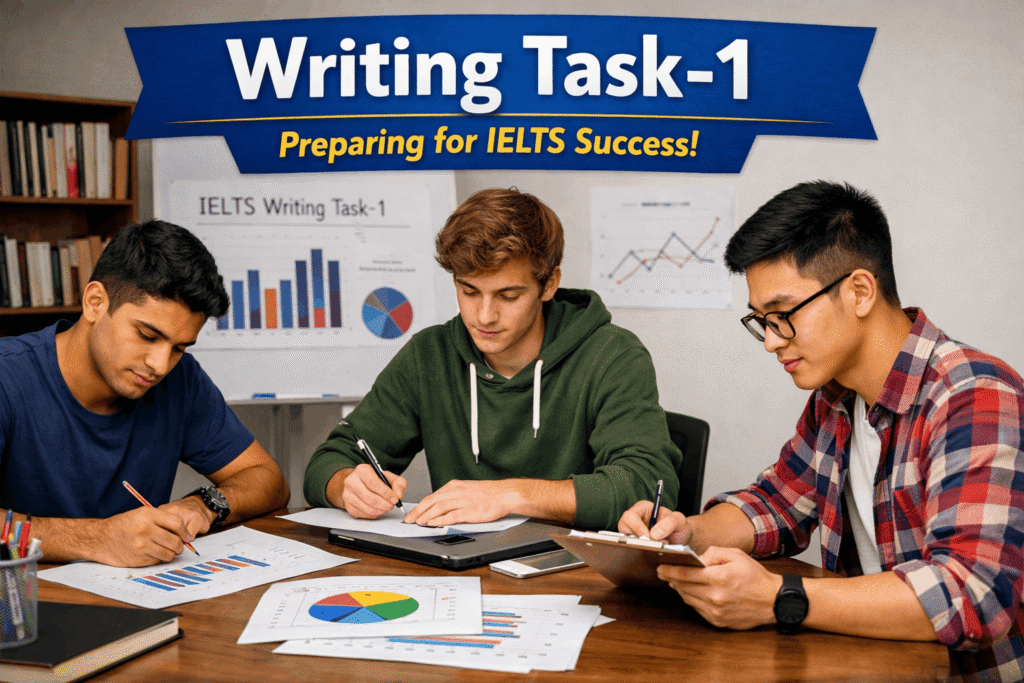
IELTS Writing Task 1 is the first part of the academic exam. It requires a specific set of academic skills from every student. You must describe visual information in your own words very quickly. This task tests your ability to identify important trends accurately. Candidates usually spend twenty minutes on this particular writing section. You must write at least 150 words for a good score. Therefore, preparation for this module is very essential today. Most students find this task challenging at the very beginning. However, regular practice makes the entire process much easier. You will learn to summarize data effectively through this guide.
The Core Purpose of This Specific Task
The main goal of IELTS Writing Task 1 is reporting. You act as a neutral observer of the data provided. The examiners look for clear and very precise descriptions. You must avoid giving any personal opinions in your report. Instead, you focus only on the facts shown visually. This section evaluates your range of vocabulary and grammar skills. Moreover, it tests how you organize your many ideas logically. A well-structured report earns a much higher band score. Therefore, understanding the requirements of the exam is vital. You should study various types of charts and diagrams carefully. Each visual format requires a slightly different reporting approach.
Types of Visuals in Academic Writing Task 1
You might see several types of graphics in the exam. Line graphs are very common in IELTS Writing Task 1 papers. They show changes in data over a period of time. Bar charts are also frequent in this writing section. These charts compare different categories of information quite clearly. Pie charts show how a whole thing is divided. You must describe the proportions or percentages very accurately. Tables provide data in a very organized grid format. Sometimes, you might see a process diagram or map. These diagrams show a sequence of events or changes. Therefore, mastering the visual types involves studying all formats. You must learn specific vocabulary for each different type.
Structural Requirements for a High Band Score
A clear structure is necessary for IELTS Writing Task 1 success. First, you must write a brief and clear introduction. This paragraph paraphrases the question using your own unique words. Second, you should write a strong and general overview. This is the most important part of your entire report. It highlights the main trends or the highest figures. Third, you provide two detailed body paragraphs for clarity. These paragraphs contain specific data and comparisons for the reader. As a result, your academic report stays organized. Each section serves a very specific and useful purpose. Students who follow this structure usually achieve better results.
Mastering the Introduction Paragraph
The introduction for IELTS Writing Task 1 is quite short. You rewrite the prompt without changing the original meaning. Use synonyms to show your wide range of English words. For example, change “shows” to “illustrates” or “depicts” easily. This shows the examiner that you understand the task well. Do not copy words directly from the question paper. This can lower your score for vocabulary and grammar significantly. Start your writing journey with a strong opening. It sets a professional tone for the rest of your work. Keep this paragraph to only one or two sentences. Then, move quickly to the very important overview section.
Writing a Clear and Effective Overview
The overview is the heart of IELTS Writing Task 1 reports. It summarizes the most significant features of the visual data. You should not include specific numbers in this paragraph. Instead, focus on the overall direction of the trends shown. For instance, mention if figures are rising or falling. You can also highlight the most notable differences or similarities. A missing overview can prevent you from getting band seven. Therefore, practice writing summaries for the charts regularly. This section tells the reader what is most important. It connects the introduction to the specific data details later. Use linking words to make your overview flow smoothly.
Detailed Data in Body Paragraphs
The body paragraphs of IELTS Writing Task 1 need data. Here, you use specific numbers and percentages for evidence. You must compare and contrast the different data points. Do not simply list every single number from the chart. This makes your report boring and very difficult to read. Instead, select the most relevant facts for your description. Group similar information together to create a logical flow. This approach improves your score for coherence and cohesion. Mastering the analysis requires these thinking skills. You must be very precise with your measurements and dates. Clarity is your main goal in these two paragraphs.
Understanding the Official Marking Criteria
Examiners use four specific criteria for IELTS Writing Task 1. First, they look at your Task Achievement score closely. This measures how well you answer the entire question. You must cover all the main points very clearly. Second, they check for Coherence and Cohesion in your work. This shows how logically you organize your many ideas. Third, Lexical Resource evaluates your range of English vocabulary. Therefore, using varied words is very important for success. Finally, Grammatical Range and Accuracy measures your sentence structures. Mastering the criteria requires balance across these areas. You should aim for high marks in every category.
The Importance of Task Achievement
Task Achievement is the foundation of IELTS Writing Task 1. It confirms that you followed all the specific instructions. For example, did you write at least 150 words? Moreover, did you include a clear and helpful overview? You must also provide enough data to support your points. Avoid including irrelevant information that distracts the reader. Thus, your written response stays very focused. Students who ignore these requirements often lose valuable points. Always double-check your work against the original question paper. This ensures that you meet every single task requirement.
Improving Coherence and Cohesion
Coherence makes your IELTS Writing Task 1 report easy to read. It involves grouping your ideas into logical and clear paragraphs. Use transition words to connect your sentences very smoothly. For instance, use “furthermore” to add another related point. Use “nevertheless” to show a surprising or different result. This creates a natural flow throughout your entire report. Moreover, use pronouns like “it” or “they” for variety. This avoids repeating the same nouns over and over again. High levels of cohesion lead to a better band score. Therefore, plan your structure before you start writing anything.
Essential Vocabulary Tables for Task One
Specific words help describe trends in IELTS Writing Task 1. You must use varied verbs and adverbs for data. For example, use strong verbs to show big changes. Use gentle adverbs for small movements in the data. This variety improves your lexical resource score very quickly. Practice these words to describe different charts with high accuracy.
| Movement Type | Verb Form | Noun Form |
| Upward | Rose, Climbed, Surged | An increase, A growth |
| Downward | Fell, Dropped, Plummeted | A decline, A reduction |
| Stability | Remained steady, Plateaued | A period of stability |
| Change | Fluctuated, Varied | A fluctuation, A variation |
These words show movement in your IELTS Writing Task 1 report. Use them to describe line graphs and bar charts. They help you explain the data points very clearly. Therefore, choose the best word for each specific situation. Avoid repeating the same verb twice in one paragraph. This shows a high level of language skill to examiners.
Adverbs for Describing Degree of Change
Adverbs add detail to your IELTS Writing Task 1 sentences. They tell the reader how the change actually happened. For example, say “prices rose sharply” for a big jump. Or say “sales fell slightly” for a small drop. This level of detail is necessary for high bands. Practice combining these verbs and adverbs during your study.
| Speed of Change | Useful Adverbs | Useful Adjectives |
| Fast / Big | Sharply, Dramatically | Sharp, Dramatic |
| Moderate | Steadily, Significantly | Steady, Significant |
| Slow / Small | Slightly, Gradually | Slight, Gradual |
Grammar and Accuracy in Task 1
Grammar plays a huge role in IELTS Writing Task 1 scores. You must use the correct tenses for the data. If the dates are in the past, use past. If the data is for the future, use future. Sometimes, the chart shows facts that are always true. In that case, use the simple present tense correctly. Accuracy in your sentence structure is also very important. Avoid making simple mistakes with subject-verb agreement or plurals. This ensures that your professional report is excellent. Clear and simple sentences are often better than complex ones. Focus on being correct rather than being overly fancy. This strategy leads to a much more reliable score.
Time Management Strategies for Success
You have only twenty minutes for IELTS Writing Task 1 during the test. Therefore, you must manage your time very wisely indeed. Spend three minutes analyzing the visual and planning ahead. Write your report in about fifteen minutes with focus. Use the final two minutes to check for errors. Look for spelling mistakes or missing words in your text. This quick review can save many valuable score points. Practicing under timed conditions is very helpful. It builds your speed and increases your overall confidence. Do not spend too much time on this first task. You need forty minutes for the second writing task.
Common Pitfalls to Avoid in Writing
Many students make mistakes in IELTS Writing Task 1 frequently. One big mistake is including personal opinions or outside knowledge. Never explain why a trend is happening in your report. Only describe what you see on the page before you. Another common error is writing less than 150 words. This will lead to a penalty in your score. Avoid repeating the same words over and over again. This shows a lack of vocabulary range to examiners. Finally, do not misread the labels on the chart axes. Misunderstanding the data ruins your entire response. Double-check all units and categories before you start writing.
Analyzing Line Graphs Effectively
Line graphs are a staple of IELTS Writing Task 1 exams. They usually show how variables change over specific years. Look for the starting and ending points of lines. Note any peaks or low points in the trends clearly. Describe how the lines cross or move apart over time. This shows a high level of data analysis skill. Your detailed report should be very clear. Use time connectors like “thereafter” or “following this” often. This helps the reader follow the timeline of the graph. Line graphs are great for practicing your trend vocabulary. They offer many opportunities to describe various types of movement.
Understanding Bar Charts and Comparisons
Bar charts in IELTS Writing Task 1 focus on comparison. They compare different items at a single point in time. Or they show changes across a few different years. You must identify the highest and lowest bars quickly. Compare the gaps between the bars to show differences. Use superlative adjectives like “the highest” or “the greatest.” This makes your report more dynamic. Group bars with similar values together in one paragraph. This keeps your writing organized and very easy to follow. Bar charts are excellent for practicing your comparison language skills. Students often find them easier than complex process diagrams.
Pie Charts and Proportions
Pie charts measure proportions in an IELTS Writing Task 1 context. They show how a total amount is distributed. Use words like “fraction,” “percentage,” or “portion” in your report. Compare the different slices of the pie chart accurately. For example, note if one slice is double another one. This shows a good understanding of the visual data. Your analytical report needs variety. Instead of saying “30 percent,” say “nearly one third.” This variety improves your lexical resource score significantly. Pie charts often come in pairs for easy comparison. Describe the changes between the two charts very carefully.
Dealing with Tables of Data
Tables can look overwhelming in IELTS Writing Task 1 tasks. They contain many rows and columns of raw numbers. Your job is to find the most important figures. Do not try to describe every single cell in table. Look for the maximum and minimum values in each row. Spot any obvious patterns or sudden changes in the data. This selective approach is key to exam success. Organize your paragraphs by category or by specific years. This makes the data much easier for the reader. Tables require high levels of accuracy and careful grouping. Practice with tables to improve your data selection skills.
Describing Processes and Diagrams
Process diagrams are unique in IELTS Writing Task 1 papers. They show how something is made or how it works. You must describe every stage of the process clearly. Use sequence words like “firstly,” “next,” or “subsequently” often. This ensures the reader follows the steps in order. A process report needs clarity. Mention the equipment or the materials used in each stage. Do not miss any steps shown in the visual diagram. This task usually uses the present simple tense for facts. It is a great test of your descriptive abilities. Focus on the flow of the process from start to finish.
Maps and Changes Over Time
Maps are another interesting IELTS Writing Task 1 visual type. They usually show a place at two different times. You must describe the developments or the changes clearly. For example, note if a forest became a park. Use prepositions of place like “next to” or “opposite.” This helps the reader visualize the new layout easily. Your map report should be specific. Mention what was added, removed, or modernized in the area. This task tests your ability to describe physical space. It is very different from describing a bar chart or graph. Focus on the transformation of the location over the years.
Enhancing Cohesion and Logic
Cohesion is vital for a high IELTS Writing Task 1 score. You must link your sentences and paragraphs together well. Use a variety of transition words to show relationships. For example, use “furthermore” to add more relevant information. Use “conversely” to show a clear and direct contrast. This makes your report feel unified. Each sentence should lead logically into the next one. Avoid using too many simple and disconnected sentences. A smooth flow helps the examiner read your work. Practice using these linking words in your daily writing tasks. This will become a very natural habit over time.
Vocabulary for High and Low Points
Describing extremes is a key IELTS Writing Task 1 skill. Use “reached a peak” for the highest point shown. Use “hit a low” for the lowest point reached. These phrases make your reporting much more precise and professional. You can also use “fluctuated” for data that changes often. This adds a nice variety to your vocabulary. Mention the specific year when these peaks or lows occurred. This provides necessary context for your data descriptions. Students who use these phrases sound more like experts. They demonstrate a high level of English language proficiency. Keep a list of these phrases for your exam prep.
Checking Your Work for Final Errors
The final check is a crucial IELTS Writing Task 1 step. Take two minutes to read your entire report slowly. Look for small errors that you might have missed. Check your spelling of difficult academic words very carefully. Ensure that your numbers match the chart or graph. This attention to detail shows a high level of care. A clean report earns more points. Correct any grammar mistakes that stand out to you. Small fixes can make a big difference in your band. This final habit is essential for every serious IELTS candidate. It ensures that your hard work pays off well.
Building Confidence through Regular Practice
Confidence comes from practicing IELTS Writing Task 1 every day. Start with simple line graphs and move to diagrams. Time yourself to see how fast you can write. Review your work against the official band descriptors regularly. This helps you understand what the examiners really want. Improving your skills takes time and effort. Do not be discouraged by a slow start at first. Each report you write makes you a better writer. Use high-quality resources and examples for your study sessions. Eventually, this task will feel very familiar and easy. You will be ready for any visual on exam day.
The Role of Academic Tone
An academic tone is necessary for IELTS Writing Task 1 success. This means being formal, objective, and very professional. Avoid using slang or very informal words in your report. Do not use contractions like “don’t” or “can’t” at all. Instead, write out the full words for a better look. Your response should look like a formal report. This tone shows that you are ready for university study. Use academic verbs and nouns to strengthen your writing style. This consistency in tone is very impressive to examiners. It sets your work apart from lower-level candidates easily.
Useful Phrases for Comparing Data
Comparing data is a core IELTS Writing Task 1 skill. You must highlight the differences between several items clearly. Use phrases like “in comparison to” or “compared with.” These phrases link your ideas in a very logical way. Moreover, use “similarly” to show two things are alike. Use “on the other hand” for showing clear contrasts. As a result, your report becomes much more professional.
- The number of cars increased significantly.
- In contrast, the number of bikes fell slightly.
- Both figures reached a peak in 2010.
- The gap between the items widened over time.
Final Strategy for Vocabulary Use
Do not use words if you are unsure of them. Accuracy is very important for IELTS Writing Task 1 scores. Use a mix of verbs and noun phrases instead. For instance, say “the population grew” in one sentence. Then say “there was a growth in population” next. This shows your flexibility with the English language clearly. Your report will sound much better. Keep practicing with different data sets to build confidence. Accuracy in your vocabulary shows a disciplined and focused mind.
Advanced Spelling Scenarios
Spelling can sometimes be tricky for IELTS Writing Task 1 candidates. Some words like “fluctuated” or “significantly” are hard to spell. You must practice these difficult words every single day. Correct spelling is part of the Lexical Resource score. Therefore, do not lose points on simple spelling mistakes. Look at your words carefully during the final review. Use the correct spelling for British or American English consistently. This professional approach will impress the marking examiner. Accuracy reflects your hard work and your study habits.
Summary of Key Strategies
In summary, IELTS Writing Task 1 requires focus and skill. You must describe visual data accurately and very objectively. Follow a clear structure with an introduction and overview. Use a wide range of vocabulary for trends and comparisons. Manage your twenty minutes effectively to finish on time. Avoid personal opinions and stick strictly to the facts. Regular practice with all visual types is very important. This ensures you are ready for any surprise on test day. Success in this module is within your reach. Follow these steps to achieve your target band score. Good luck with your preparation for the IELTS exam!
IELTS Grammar Mastery: https://englishlitnotes.com/category/ielts/grammar/
Ben Lerner as a Writer of Post-postmodernism: https://americanlit.englishlitnotes.com/ben-lerner-as-a-writer/
Discover more from Naeem Ullah Butt - Mr.Blogger
Subscribe to get the latest posts sent to your email.