Introduction
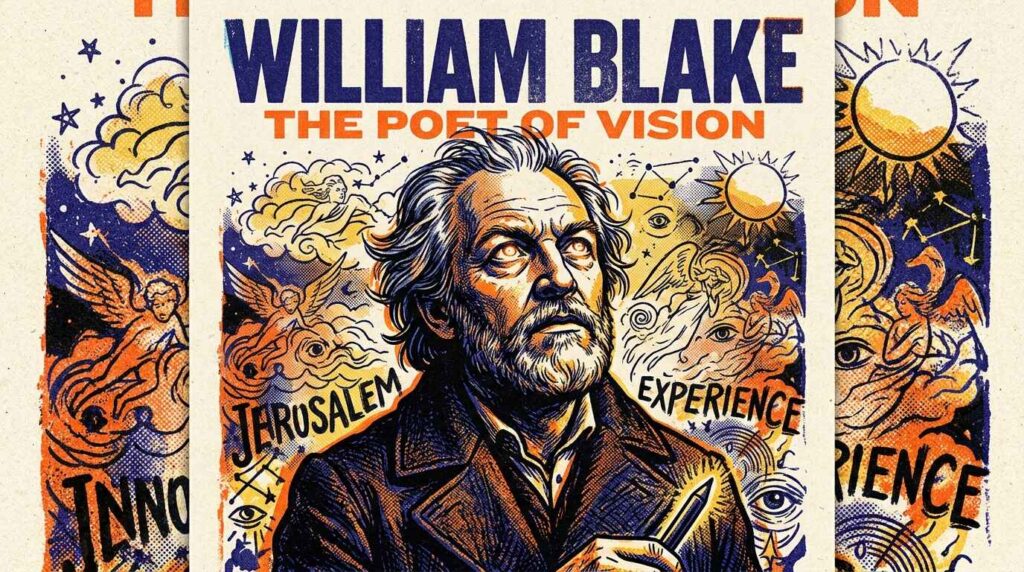
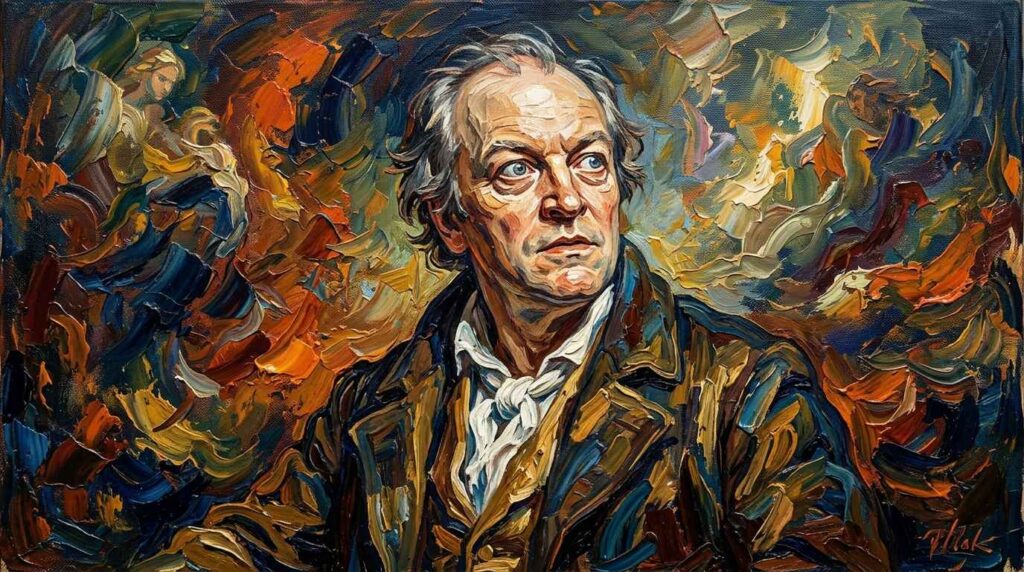
William Blake as Poet of Vision revolutionized literary imagination in the Romantic Period in English Literature. He rejected conventional artistic limits, exploring divine inspiration through poetry. Consequently, his work fused visual and verbal artistry, creating multidimensional meaning. Furthermore, Blake’s vision emphasized the spiritual over material reality. He depicted human experience intertwined with cosmic and ethical frameworks. Moreover, prophetic symbolism pervaded his poetry, connecting individual insight to universal truth. In addition, he addressed social injustice, political oppression, and religious hypocrisy. Therefore, each poem became both imaginative journey and moral commentary. Blake fused mythology, scripture, and personal revelation to challenge readers. His writings combined visionary imagination with ethical reflection. The intricate interplay of words and images magnified emotional and philosophical impact. Like Samuel Taylor Coleridge as Poet of Nature, Blake explored spiritual and imaginative dimensions. Furthermore, he inspired later Romantic and visionary poets. Every poem acted as moral compass, philosophical exploration, and aesthetic delight. Therefore, William Blake as Poet of Vision remains essential for literary study.
1. Early Life and Influences
William Blake as Poet of Vision drew inspiration from childhood experiences. Specifically, he witnessed spiritual visions that shaped his lifelong imaginative outlook. Consequently, mystical insight became central to his creative process. Early exposure to art and engraving taught him technical skills and artistic discipline. Moreover, religious texts influenced his symbolic vocabulary and moral philosophy. Furthermore, political upheaval and social inequality heightened awareness of injustice. Blake internalized these experiences, transforming them into literary and visual expression. Additionally, his apprenticeship at an engraving workshop provided hands-on artistic mastery. These early challenges nurtured his independence and visionary perspective. Consequently, William Blake as Poet of Vision emerged with a unique voice combining moral, spiritual, and aesthetic power. Furthermore, mentorship and familial encouragement reinforced his imaginative courage. He developed an integrated approach linking poetic diction with prophetic imagery. Transitioning from youth to early adulthood, his experiences laid the foundation for a revolutionary literary career. Ultimately, Blake’s early life reveals the origin of visionary creativity, social consciousness, and ethical engagement.
2. Artistic Apprenticeship and Skills
William Blake as Poet of Vision perfected artistic techniques during apprenticeship. He trained in engraving, etching, and illustrative design. Consequently, technical mastery supported his innovative fusion of text and image. Furthermore, he developed meticulous attention to detail, enhancing symbolic complexity. The combination of literary and visual skills allowed imaginative expression. Moreover, apprenticeship exposed him to classical art, fostering deep understanding of form and composition. Additionally, Blake studied illuminated manuscripts, which influenced his integration of words and illustration. Early exposure to these traditions inspired creative experimentation and visionary thinking. Therefore, William Blake as Poet of Vision transformed technical competence into imaginative power. Furthermore, every artistic experiment reinforced ethical and philosophical meaning. His approach combined craftsmanship with spiritual insight, merging material skill and visionary depth. Transitioning between engraving and writing, he created works that challenged conventional boundaries. The apprenticeship period provided foundational experience that enabled later prophetic works. Ultimately, his technical education enriched both aesthetic quality and conceptual depth.
3. Visionary Philosophy
William Blake as Poet of Vision advanced a philosophy centered on imagination and spiritual insight. Primarily, he believed perception of the divine underpins all human creativity. Consequently, the poet’s imagination becomes both a moral guide and visionary instrument. Furthermore, Blake rejected materialism and rationalism, favoring intuitive understanding of reality. He proposed that ordinary perception obscures true knowledge of ethical and cosmic truths. Moreover, he considered human life intertwined with spiritual and eternal realms. William Blake as Poet of Vision viewed art as a vehicle for divine revelation. Additionally, prophetic works exemplified integration of ethical reflection and imaginative freedom. Symbolism, allegory, and myth reinforced his philosophical concepts. Furthermore, Blake emphasized personal moral responsibility and societal critique. Every poem, image, and engraving embodied visionary insight. Consequently, readers are invited to contemplate spiritual, moral, and imaginative dimensions. Ultimately, Blake’s philosophy merges perception, ethics, and artistic expression. Therefore, visionary philosophy defines the foundation of his literary and artistic achievements.
4. Integration of Art and Poetry
William Blake as Poet of Vision merged artistic illustration with written text. Primarily, this integration created a layered aesthetic experience for the audience. Consequently, words and images reinforced moral, spiritual, and philosophical messages. Moreover, illustrations functioned as symbolic extensions of poetic narrative. Transitioning between visual and verbal storytelling enhanced comprehension and emotional resonance. Furthermore, this synthesis challenged conventional literary and artistic boundaries. William Blake as Poet of Vision exploited every element to convey ethical insight. Additionally, illuminated books demonstrated his mastery of both medium and message. Each plate combines intricate engraving, expressive figures, and textual narrative. Consequently, readers navigate symbolic meaning in multiple dimensions. The interplay of line, color, and verse produces holistic imaginative impact. Moreover, Blake’s method inspires modern experiments in mixed media and multimedia storytelling. Every work exemplifies the fusion of craftsmanship, imagination, and ethical vision. Therefore, the integration of art and poetry defines a cornerstone of Blake’s enduring creative methodology.
5. Social and Political Commentary
William Blake as Poet of Vision critiqued social injustice and political oppression. Primarily, he challenged hierarchical structures, inequality, and institutional corruption. Consequently, his poems illuminate ethical dilemmas in contemporary society. Furthermore, works like Songs of Innocence and Experience juxtapose innocence with systemic cruelty. He condemns child labor, blind authority, and spiritual neglect. William Blake as Poet of Vision transforms critique into visionary imagination. Furthermore, poetry interweaves ethical responsibility, empathy, and civic awareness. Every narrative highlights the moral cost of societal indifference. Moreover, allegorical figures exemplify both oppression and moral awakening. Consequently, readers understand injustice through symbolic, ethical, and imaginative lens. Blake’s social commentary emphasizes transformative potential of awareness and action. Additionally, his vision demonstrates how moral consciousness can inspire societal reflection. Ultimately, social critique intertwines with spiritual and imaginative insight. Therefore, political and ethical engagement remains central to Blake’s literary identity.
6. Religious Themes
William Blake as Poet of Vision explored complex religious themes. Primarily, he challenged orthodox dogma while emphasizing personal spiritual revelation. Consequently, scripture, mythology, and visionary imagination intertwine in his poetry. Furthermore, moral allegory conveys divine principles alongside human ethical responsibility. William Blake as Poet of Vision illustrates divine justice, mercy, and human choice. Moreover, he portrays the tension between innocence and corruption. Ethical and spiritual growth appear intertwined with imaginative perception. Consequently, religious symbols illuminate moral understanding. Blake emphasizes internalized, visionary spirituality over external ritual. Transitioning between angelic, human, and mythical figures, he constructs complex theological landscapes. Every image reinforces the interplay of divine insight and ethical accountability. Furthermore, his work encourages readers to engage imagination in moral contemplation. William Blake as Poet of Vision fuses devotional intensity with critical reflection. Consequently, religious themes guide ethical discernment and imaginative expansion. His approach bridges human experience with transcendent vision.
7. Use of Symbolism
William Blake as Poet of Vision employed symbolism to convey layered ethical meanings. Primarily, symbols transform abstract concepts into tangible imagery. Consequently, allegorical figures, objects, and natural elements express moral, spiritual, and political ideas. William Blake as Poet of Vision integrates complex thematic ideas using visual and verbal signs. Furthermore, symbolic characters personify virtues, vices, and spiritual forces. Every metaphor, image, and emblem reinforces ethical reflection. Moreover, recurring motifs enhance narrative cohesion and philosophical clarity. Consequently, readers perceive layered meaning through observation and contemplation. William Blake as Poet of Vision ensures moral instruction blends with imaginative pleasure. Additionally, symbolic repetition emphasizes growth, transformation, and ethical awareness. Symbols convert ordinary narrative into ethical and spiritual journey. Consequently, the reader engages both morally and aesthetically. Ultimately, symbolism embodies Blake’s vision of integrated moral, spiritual, and imaginative truth.
8. Themes of Innocence and Experience
William Blake as Poet of Vision explores duality between innocence and experience. Primarily, the contrast reveals human potential and moral vulnerability. Consequently, Songs of Innocence presents purity, joy, and divine trust. Transitioning to Songs of Experience, corruption, suffering, and ethical challenge dominate. William Blake as Poet of Vision depicts how social and spiritual constraints shape human perception. Furthermore, allegorical characters exemplify the tension between naivety and worldly wisdom. Moral insight emerges through juxtaposition and reflection. Symbols, images, and narrative structure emphasize ethical lessons. Consequently, the reader navigates the human journey through innocence and experience. William Blake as Poet of Vision ensures that imagination mediates between ethical understanding and experiential reality. Moreover, the contrast enhances awareness of freedom, choice, and responsibility. Ultimately, innocence and experience function as both thematic and symbolic framework. This duality embodies Blake’s enduring visionary perspective.
9. Prophetic Vision
William Blake as Poet of Vision exhibits prophetic foresight, moral critique, and imaginative insight. Primarily, he predicts societal consequences of injustice and corruption. Consequently, his works serve as both imaginative literature and ethical warning. William Blake as Poet of Vision uses visionary imagination to reveal ethical truth. Furthermore, he warns against materialism, spiritual neglect, and political oppression. Symbolic figures embody consequences of moral failure. Ethical guidance emerges through allegorical and prophetic voice. Every poem embodies moral urgency and imaginative exploration. William Blake as Poet of Vision demonstrates how literature can inspire reflection and social consciousness. Moreover, prophetic vision informs narrative structure, imagery, and symbolic complexity. Consequently, readers experience both aesthetic pleasure and ethical instruction. Blake merges visionary, spiritual, and political dimensions. Ultimately, prophetic insight reinforces imaginative authority and moral responsibility. Therefore, visionary foresight defines the ethical and artistic framework of Blake’s enduring works.
10. Mythical and Allegorical Figures
William Blake as Poet of Vision populates his works with rich mythical and allegorical figures. Primarily, these characters embody moral, spiritual, and psychological truths. Consequently, allegorical personifications of virtues and vices guide readers through ethical reflection. William Blake as Poet of Vision merges mythology, biblical archetypes, and original invention. Furthermore, mythic characters facilitate exploration of imagination, freedom, and spiritual insight. Each figure represents ethical struggle, transformation, and enlightenment. Consequently, readers navigate moral and imaginative dimensions. William Blake as Poet of Vision ensures that every allegorical character contributes to ethical, philosophical, and aesthetic depth. Moreover, their interaction dramatizes moral lessons and human potential. Consequently, mythical and allegorical dimensions unify imagination and moral instruction. Ultimately, Blake’s characters exemplify spiritual, ethical, and imaginative guidance. Therefore, allegorical figures reinforce the holistic vision central to Blake’s literary genius.
11. Blake’s Early Symbolic Imagery
William Blake as Poet of Vision employed rich symbolic imagery from the start. Primarily, he used personal myth and religious iconography to convey moral truths. Therefore, readers encounter angels, demons, and prophetic figures. Consequently, symbolism transforms ordinary scenes into profound spiritual lessons. Furthermore, Blake’s early poems reveal his concern with innocence and experience. Moreover, every visual element carries layered ethical meaning. In addition, color, line, and form unite to guide interpretation. Symbols become active participants in the narrative structure. Consequently, readers must navigate complex visual and verbal cues. Each figure conveys moral and spiritual instruction. Blake’s method requires close observation and reflective engagement. Therefore, understanding Blake involves both emotional and intellectual participation. Symbols serve as ethical bridges between human perception and divine order. Ultimately, his early imagery establishes a framework for visionary exploration.
12. Prophetic Tone in Early Work
William Blake as Poet of Vision infused prophetic tone into his work. Specifically, he challenged social injustice and spiritual corruption. Consequently, poems like Songs of Innocence reveal moral tension. Furthermore, Blake’s voice combines lyrical beauty with ethical critique. Moreover, the prophetic tone alerts readers to larger cosmic principles. In addition, divine and human law intersect within poetic expression. Symbols, metaphor, and allegory intertwine to reinforce central themes. Therefore, understanding his prophetic intent requires careful reading and reflection. Every poem contains multiple layers of meaning. Moreover, readers witness moral and social guidance alongside artistic innovation. Blake critiques institutions, while also proposing spiritual alternatives. Consequently, the prophetic tone elevates poetry beyond aesthetic pleasure alone. His works demand attention to both form and message. Therefore, prophetic voice defines Blake’s earliest major writings.
13. The Role of Imagination
William Blake as Poet of Vision celebrated imagination as supreme creative force. Primarily, he rejected mere imitation of nature or classical precedent. Therefore, visionary imagination allows poets to perceive spiritual truths. Consequently, imagination connects human experience with divine order. Furthermore, every imaginative act reveals ethical and aesthetic principles. Moreover, Blake emphasizes imagination as necessary for moral understanding. Imagination guides readers through symbolic landscapes and moral dilemmas. Symbols, allegory, and myth emerge naturally from imaginative insight. Consequently, imagination serves as the bridge between visible world and spiritual truth. Like John Keats as Romantic Poet, Blake elevated imagination to the supreme creative and moral faculty. Therefore, understanding Blake requires both intellectual and emotional engagement. Imagination shapes narrative, structure, and moral instruction.
14. Integration of Text and Visual Art
William Blake as Poet of Vision merges poetry with visual illustration. Specifically, illuminated printing allows text and image to operate as unified message. Therefore, meaning arises from words, color, and form. Consequently, narrative and vision interconnect to create profound interpretive layers. Furthermore, visual design reinforces symbolic content. Moreover, readers navigate intertwined verbal and visual storytelling. In addition, illustration highlights moral, spiritual, and philosophical instruction. Visual elements provide context for allegory, myth, and prophecy. Blake’s method demands attentive, reflective engagement. Symbols function in both pictorial and verbal register. Consequently, understanding Blake as poet requires synthesis of image and verse. Imagination, prophecy, and moral teaching converge through illustrated text.
15. Critique of Institutional Religion
William Blake as Poet of Vision critiques institutional religion. Primarily, he exposes hypocrisy within churches and spiritual authority. Therefore, moral instruction accompanies critique in his visionary framework. Consequently, poetry functions as ethical protest as well as imaginative creation. Furthermore, symbols reveal spiritual corruption and moral failure. Moreover, Blake presents divine law as internal rather than imposed externally. In addition, prophetic tone reinforces ethical and social responsibility. Symbolism transforms abstract spiritual concepts into tangible ethical lessons. Blake advocates personal morality and spiritual awakening. Symbols connect reader to larger cosmic and moral structure. Consequently, critique of religious authority aligns with imaginative and visionary purpose. Ethical and spiritual insight emerges from reading with reflective engagement.
16. Exploration of Innocence and Experience
William Blake as Poet of Vision contrasts innocence and experience. Primarily, he explores childhood purity versus adult corruption. Therefore, poems reveal moral tension across human development. Consequently, symbols in Songs of Innocence and Experience illustrate ethical conflict. Furthermore, Blake connects personal experience with universal spiritual principles. Moreover, innocence provides foundation for moral understanding. Symbols transform narrative into ethical meditation. Readers witness internal struggle alongside external reality. Therefore, Blake integrates imagination, vision, and morality. Ethical principles emerge through narrative, symbol, and metaphor. Blake’s vision merges aesthetic, moral, and spiritual dimensions. Symbols unite experience, reflection, and ethical instruction.
17. Political and Social Commentary
William Blake as Poet of Vision embeds political and social critique. Primarily, he challenges oppression, injustice, and hierarchical power. Therefore, his work questions monarchy, war, and social inequality. Consequently, symbols translate critique into ethical and moral reflection. Furthermore, poems instruct readers about liberty, responsibility, and conscience. Moreover, prophetic voice ensures urgency of social reform. In addition, imagery emphasizes consequences of moral corruption and ethical failure. Blake combines art, imagination, and morality for ethical teaching. Symbols connect readers to both societal and spiritual principles. Consequently, social commentary operates alongside visionary and imaginative expression. Ethical lessons merge with critique, imagination, and prophetic vision.
18. Symbolism and Allegory
William Blake as Poet of Vision employs symbolism and allegory. Primarily, symbols reveal hidden truths about morality, spirituality, and human nature. Therefore, allegorical figures convey ethical lessons. Consequently, abstract concepts gain tangible form through narrative and imagery. Furthermore, prophetic vision ensures ethical meaning permeates symbols. Moreover, allegory structures narrative to align imagination and moral instruction. Symbols interweave with plot, character, and imagery. Therefore, Blake communicates complex truths without sacrificing artistic expression. Allegory becomes essential to understanding both moral and visionary intent. Symbols teach, challenge, and illuminate human perception. Consequently, ethical reflection emerges naturally from interpretive engagement. Symbolism and allegory fuse aesthetic, spiritual, and moral instruction.
19. Blake’s Use of Myth
William Blake as Poet of Vision constructs personal mythology. Primarily, he invents characters and cosmology to explore ethical principles. Therefore, myth operates as moral and spiritual guide. Consequently, readers navigate layered stories blending imagination, ethics, and prophecy. Furthermore, myth allows abstract ideas to gain narrative form. In addition, Blake intertwines myth with personal vision and historical critique. Symbols within myth instruct on courage, virtue, and human responsibility. Therefore, myth merges visionary, ethical, and imaginative dimensions. Ethical principles unfold through narrative, symbol, and character development. Like Percy Bysshe Shelley as Romantic Poet, Blake used mythological imagination as a vehicle for social and moral transformation. Consequently, myth remains central to understanding Blake’s visionary approach.
20. Poetic Innovation and Language
William Blake experiments with poetic form. Primarily, he breaks from conventional meter, rhyme, and stanza structures. Therefore, innovation conveys moral and imaginative intensity. Consequently, language becomes vehicle for vision, prophecy, and ethical instruction. Furthermore, inventive diction reflects symbolic meaning and visionary purpose. In addition, form and content intertwine to communicate ethical lessons. Blake’s innovations ensure every line conveys aesthetic and spiritual message. Symbols gain clarity through inventive poetic technique. Therefore, experimentation enhances both understanding and engagement. Consequently, readers experience moral, imaginative, and visionary insights. Blake’s poetic innovation amplifies impact and vision. Every word carries imaginative, ethical, and prophetic significance.
21. Blake’s Early Artistic Environment
William Blake’s early artistic environment shaped both his vision and creative philosophy. His exposure to illuminated manuscripts, miniature painting, and classical art provided essential tools. Consequently, he developed a fascination with symbolic imagery and allegorical representation. Moreover, his apprenticeship under James Basire honed technical skills while reinforcing appreciation for precision. Furthermore, these formative experiences cultivated a blend of imagination and discipline. Additionally, Blake’s interactions with contemporary engravers enriched his understanding of visual storytelling. He explored themes of morality, spirituality, and human experience through early sketches. Blake combined observation with imagination to create original artistic forms. Therefore, these influences underpin the depth and complexity found in his later works. By integrating traditional techniques with personal vision, he established a unique approach. Each skill learned contributed to his symbolic and imaginative output.
22. Influence of Religion on Blake
Religion shaped William Blake as Poet of Vision throughout his life. Christian texts, apocryphal stories, and mystical interpretations informed his symbolic imagination. He engaged with moral philosophy while questioning institutional authority. Consequently, spiritual themes became central in both poetry and art. Blake perceived divine presence in nature, history, and human experience. Biblical allegories provided structural and ethical frameworks for his visions. Moreover, religious symbolism fueled his critique of social injustice and corruption. His creative work integrated visionary insight with moral instruction. Symbols such as angels, serpents, and light reflected both guidance and peril. He used spiritual imagery to convey profound psychological and ethical lessons. Consequently, William Blake demonstrates the interplay between mystical perception and societal critique. Religious influence allowed him to construct intricate mythologies and visionary landscapes. Therefore, his work remains a remarkable synthesis of faith, imagination, and moral vision.
23. Blake’s Early Poetry and Manuscripts
William Blake’s initial poetry reflects his imaginative and symbolic tendencies. Early manuscripts combined lyrical expression with visual elements. He experimented with form, rhythm, and illustration. Consequently, his poems reveal a continuous dialogue between textual and pictorial representation. Blake explored innocence, morality, and visionary insight. The structure of these works emphasized both aesthetic and ethical concerns. Moreover, he challenged conventional poetic norms through inventive techniques. Childhood, nature, and social observations became recurrent subjects. Early poetry displayed profound philosophical and spiritual preoccupations. Furthermore, Blake developed techniques like illuminated printing that allowed simultaneous artistic and literary innovation. These works established his unique creative voice and public identity. Every poem presented an opportunity to instruct, inspire, and provoke reflection. Consequently, the manuscripts became a foundation for later masterpieces and mythopoeic systems.
24. The Concept of Innocence and Experience
William Blake explored the dialectic of innocence and experience throughout his work. Childhood, moral development, and societal corruption intersect within his poetry. Innocence represents purity, trust, and spontaneous imagination. Experience embodies knowledge, corruption, and social constraint. Consequently, Blake’s vision demonstrates the tension between idealism and worldly reality. The two states provide contrasting perspectives that illuminate ethical, spiritual, and aesthetic dimensions. Moreover, the interplay of light, shadow, and symbolism conveys transformation and insight. Symbols of lambs, flowers, and children evoke innocence. Conversely, cities, machinery, and predators signify experience and temptation. Blake emphasizes that understanding both states is essential for moral growth. His poetic vision merges philosophical, spiritual, and social observation. Readers witness ethical instruction intertwined with imaginative depiction. Consequently, William Blake as Poet of Vision portrays human development as intertwined with ethical and spiritual evolution.
25. Political Awareness in Blake’s Poetry
William Blake as Poet of Vision integrated political consciousness within his visionary writing. Social inequality, oppression, and institutional corruption fueled his poetic imagination. He critiqued aristocracy, monarchy, and clerical authority. Consequently, his works combine visionary insight with political protest. Blake depicted rebellion as both moral and spiritual necessity. Human freedom and justice became recurring ethical imperatives throughout his poetry. Moreover, his use of allegory and symbolism illustrates complex political ideas. He connected personal morality with societal reform. Like Lord Byron as Romantic Poet, Blake used poetry as a vehicle for passionate political protest and social reform. Social critique appears alongside religious and visionary symbolism. Blake challenged readers to recognize injustice while cultivating ethical and imaginative faculties. Consequently, William Blake as Poet of Vision demonstrates the synthesis of creative expression and political activism. Political awareness remains inseparable from the visionary and ethical dimensions of his poetry.
26. Mythological Imagination in Blake
William Blake constructed intricate personal mythologies across his work. Mythological figures, allegories, and symbolic landscapes populate his visionary universe. He drew inspiration from biblical, classical, and imaginative sources. Consequently, his mythopoeic imagination conveys ethical, spiritual, and philosophical concepts. Allegorical characters embody virtues, vices, and cosmic principles. The mythological framework allows exploration of human psychology and morality. Blake connects historical events with symbolic representation. Myths integrate personal vision with universal ethical concerns. Characters, conflicts, and settings reflect both inner consciousness and societal critique. He merges visual artistry with poetic narrative. Consequently, William Blake demonstrates mastery over language, symbol, and allegory. Mythological imagination becomes a lens for ethical instruction, philosophical reflection, and spiritual engagement. Every story, image, and poem carries layered significance.
27. Symbolism in Blake’s Illuminated Printing
William Blake revolutionized print through illuminated works. Text and image merged, creating symbolic and aesthetic synthesis. His printing technique emphasizes moral, spiritual, and imaginative instruction. Each illustration complements poetic message. Symbols convey ethical, social, and metaphysical concepts. Readers experience layered meaning through visual and verbal elements. The process enhances emotional engagement and intellectual comprehension. Consequently, Blake expanded the possibilities of literary expression. Every print demonstrates unity of imagination, craft, and ethical purpose. He transforms conventional reading into a sensory, moral, and intellectual experience. Symbols embedded in images clarify abstract ideas while reinforcing narrative meaning. Blake’s illuminated technique invites reflection on virtue, vice, and divine order. Moreover, the visual dimension allows apprehension of moral and spiritual truths. Symbolism guides readers’ attention to ethical and aesthetic instruction.
28. Nature and Visionary Perception
William Blake as Poet of Vision merges natural imagery with visionary perception. Landscapes, flora, and celestial phenomena carry symbolic and ethical significance. Nature becomes both instructional and spiritually resonant. He emphasizes the correspondence between human consciousness and natural patterns. Natural imagery conveys moral, philosophical, and imaginative lessons. Mountains, rivers, and stars reflect ethical, psychological, and cosmic order. Observing nature encourages reflection, insight, and self-awareness. Blake’s poems depict the interconnectedness of physical and spiritual worlds. Symbols derived from nature instruct readers while enhancing aesthetic experience. Like William Wordsworth as Poet of Nature, Blake found profound moral and spiritual instruction in the natural world. Consequently, William Blake as Poet of Vision demonstrates how ecological and cosmic perception informs ethical understanding. Nature functions as both canvas and teacher. Every description provides opportunity for reflection, imagination, and moral insight.
29. Influence of Classical Literature
William Blake’s engagement with classical literature enriched his visionary art and poetry. He studied ancient mythology, philosophy, and epic narratives. Greek and Roman texts provided ethical, moral, and imaginative templates. Symbolic, allegorical, and thematic elements inform his personal mythologies. Classical influence shaped narrative techniques, character construction, and ethical framework. He adapted heroic ideals to explore spiritual, ethical, and social issues. Metaphor, allegory, and epic structure derive inspiration from classical sources. Blake merges classical reference with visionary originality. Reading ancient texts enhanced philosophical rigor and imaginative freedom. Historical and mythological allusions enrich interpretive possibilities. Blake translates universal ethical questions into personal visionary symbolism. Consequently, classical literature informs structure, aesthetics, and thematic depth. He combines study of ancient texts with creative innovation. Classical literature strengthens the intellectual and imaginative scaffolding of his poetry.
30. Late Prophetic Works
William Blake as Poet of Vision reaches culmination in late prophetic writings. These works combine moral instruction, visionary imagination, and social critique. He constructs intricate mythologies to examine human virtue and vice. Allegorical characters embody cosmic, spiritual, and ethical principles. Poems address tyranny, injustice, and spiritual corruption. Visionary insight shapes political and ethical critique. Blake merges personal vision with universal moral truths. His late works demonstrate mastery over language, symbol, and prophetic message. Every poem combines aesthetic pleasure with ethical instruction. He transforms narrative and visual form into integrated visionary expression. Moreover, spiritual and social critique become inseparable in late works. Blake challenges readers to perceive moral truth alongside imaginative depth. Consequently, William Blake as Poet of Vision demonstrates the pinnacle of prophetic, artistic, and ethical achievement. His late works continue to inspire literary, artistic, and spiritual audiences.
31. Blake’s Early Artistic Influences
William Blake’s early artistic environment shaped his vision and creative philosophy. His exposure to illuminated manuscripts, miniature painting, and classical art provided essential tools. Consequently, he developed a fascination with symbolic imagery and allegorical representation. Moreover, his apprenticeship under James Basire honed technical skills. Furthermore, these formative experiences cultivated a blend of imagination and discipline. Additionally, Blake’s interactions with contemporary engravers enriched his understanding of visual storytelling. He explored themes of morality, spirituality, and human experience through early sketches. Blake combined observation with imagination to create original artistic forms. Therefore, these influences underpin the depth and complexity found in his later works. By integrating traditional techniques with personal vision, he established a unique approach. Each skill learned contributed to his symbolic and imaginative output.
32. Spirituality and Moral Philosophy
Blake’s work reflects deep engagement with spirituality and moral philosophy. He believed human perception connects directly to divine understanding. Consequently, his poetry and art explore both visible and invisible realms. Moreover, moral questions often guide narrative progression and symbolic representation. Blake emphasized the interplay of innocence, experience, and ethical responsibility. Additionally, visionary experiences informed his understanding of good and evil. His symbolic language conveys ethical lessons intertwined with spiritual insight. Furthermore, allegorical imagery frames human struggles alongside divine presence. He used light, darkness, and color to mark spiritual significance. Consequently, readers navigate ethical terrain through imaginative scenarios. Blake’s attention to detail integrates moral philosophy with aesthetic appeal. Additionally, contrasting ideas of freedom and constraint appear. Blake’s narratives often illustrate consequences of action and choice. Moreover, personal reflection becomes a vehicle for ethical understanding.
33. Integration of Text and Image
Blake combined textual and visual media in unprecedented ways. Poetry and illustration complement each other to reinforce meaning. Consequently, readers experience layered interpretation through visual and linguistic cues. His illuminated books integrate line, color, and typography. Moreover, text placement enhances thematic resonance and narrative flow. Symbols and motifs recur across image and word. Additionally, integration amplifies emotional and ethical impact. The interaction between illustration and verse invites reflective engagement. Blake experimented with margins, spacing, and color to enhance meaning. Visual storytelling amplifies narrative tension and moral instruction. Furthermore, allegorical figures move across text and page. Readers encounter layered symbolism connecting ethical, spiritual, and aesthetic themes. Each illustration reinforces poetic concepts. His methods blend technical skill with visionary imagination. Integration shapes reader perception and interpretive strategy.
34. Nature and Visionary Experience
Blake’s depiction of nature reflects both observation and visionary perception. He interprets landscapes as moral and spiritual canvases. Consequently, natural elements convey ethical lessons and philosophical meaning. Trees, rivers, and skies symbolize human emotion and divine presence. Moreover, the cycles of life and death mirror ethical and spiritual truths. Observational detail blends with imaginative symbolism. Furthermore, recurring natural imagery guides reflection on morality, freedom, and experience. Blake uses contrast, light, and perspective to emphasize significance. Seasonal change and environmental rhythm suggest moral and spiritual progression. Consequently, readers interpret natural description as both literal and allegorical. Nature frames visionary experience and supports ethical contemplation. Moreover, environmental symbolism reinforces connections between inner life and external world. Blake’s treatment of landscape merges physical reality with imaginative insight.
35. Symbolism of Innocence and Experience
Blake’s work contrasts states of innocence and experience. Innocence represents purity, trust, and uncorrupted perception. Conversely, experience embodies awareness, corruption, and the complexity of human life. Consequently, readers witness moral and spiritual growth through allegorical figures. He juxtaposes states to emphasize ethical lessons and spiritual insight. Moreover, recurring motifs highlight tension between freedom and restraint. The duality invites reflection on moral choices and consequences. Blake integrates narrative, symbol, and visual cues to reinforce contrast. Consequently, innocence and experience inform understanding of virtue, corruption, and responsibility. Seasonal, spatial, and environmental symbols further illustrate moral states. His layered symbolism fosters contemplation and ethical reasoning. Readers engage with human development as both personal and universal truth. Blake presents duality to provoke thoughtful engagement with morality.
36. Urban and Social Critique
Blake critiques social inequality and urban corruption. Crowded cities and industrial labor represent moral degradation. Consequently, social observation informs allegorical narrative and symbolic imagery. He contrasts urban squalor with rural or visionary space. Moreover, corruption and oppression serve as moral lessons. Blake’s social vision emphasizes ethical responsibility and human dignity. Furthermore, he critiques law, authority, and institutional power. Ethical reflection arises through narrative and visual symbolism. Blake encourages readers to evaluate justice, freedom, and morality. Social critique merges with spiritual and ethical contemplation. Furthermore, symbolic imagery of hierarchy and labor frames understanding. His urban landscapes represent both literal and metaphorical human experience. Consequently, ethical lessons emerge from societal observation and imaginative interpretation.
37. Artistic Techniques and Innovation
Blake’s artistic methods demonstrate innovation in technique, medium, and presentation. He pioneered relief etching to merge text with imagery. Consequently, technical experimentation enhances narrative, symbolic, and ethical dimensions. Furthermore, manipulation of light, color, and composition amplifies thematic resonance. Innovation allows each work to engage readers visually, emotionally, and morally. Moreover, layering of images and words fosters interpretive depth. Techniques guide audience reflection and ethical evaluation. His experimentation influences both artistic and literary traditions. Additionally, symbols and visual motifs gain greater impact through technical mastery. Readers navigate aesthetic, ethical, and imaginative meaning. Innovation becomes inseparable from moral and philosophical content. Consequently, Blake’s approach exemplifies integration of craft and message.
38. Mythology and Personal Cosmology
Blake develops a personal mythology blending biblical, classical, and imaginative elements. Figures such as Urizen, Los, and Enitharmon embody moral and spiritual principles. Consequently, readers navigate ethical and philosophical meaning through symbolic representation. Blake’s cosmology structures narrative and vision, guiding reflection. Furthermore, mythological figures personify abstract qualities, ethical dilemmas, and human traits. Imagery conveys moral instruction, spiritual insight, and imaginative vision. Moreover, symbolic narrative intertwines cosmic and personal scale. Narrative and myth reinforce moral understanding and visionary contemplation. Blake’s cosmology allows integration of ethical, spiritual, and aesthetic elements. Consequently, myth becomes ethical and imaginative framework. Allegorical complexity deepens philosophical engagement. Readers interpret characters, events, and symbols as intertwined moral lessons.
39. Influence of Mysticism
Blake’s mystical approach shapes both content and style. Visionary perception links directly to ethical and spiritual insight. Consequently, mystical experience informs symbolic imagery, narrative, and poetic language. Mysticism merges imagination, perception, and ethical reflection. He emphasizes direct engagement with spiritual truth. Symbolism gains depth through mystical insight. Mystical experience provides foundation for moral, ethical, and visionary exploration. Moreover, readers witness interaction of human and divine perception. Blake’s mystical orientation reinforces ethical reflection and imaginative engagement. Allegorical narrative, symbolic imagery, and mystical content interweave. Readers interpret visionary symbols as conduits for moral understanding. Mysticism shapes perception, creativity, and ethical consciousness. Blake blends imagination with moral and visionary perception.
40. Symbolism in Innocence and Experience
Blake emphasizes innocence and experience to explore moral and spiritual tension. Innocence reflects purity, openness, and divine perception. Experience represents knowledge, corruption, and the trials of life. Symbols recur across text and image to illustrate human development. Nature, architecture, and allegorical figures all reinforce moral instruction. Readers witness consequences of action and ethical choice. Allegorical depiction encourages reflection on freedom, constraint, and moral responsibility. Imagery of light, shadow, and color communicates internal states. Symbols guide audience understanding of virtue, limitation, and human flaw. Blake integrates narrative, visual, and symbolic methods. Each work invites readers to consider ethical growth. Themes of learning, humility, and moral insight emerge naturally. Symbolism enhances ethical engagement, imaginative interpretation, and spiritual reflection.
41. Blake’s Engagement with Political Issues
Blake addresses political corruption, war, and oppression throughout his work. Urban life and hierarchy reflect imbalance and human exploitation. Symbols of power, labor, and restriction convey moral meaning. Allegory and visionary narrative illuminate injustice and personal responsibility. Blake critiques institutional authority while emphasizing human dignity. Urban and rural contrast reinforces ethical lessons. He challenges conventional morality, law, and social hierarchy. Readers consider human choice, consequence, and moral duty. Ethical reflection is intertwined with imaginative vision. Blake uses symbolic imagery to highlight oppression and personal freedom. Allegorical detail reinforces moral responsibility and ethical reflection. His social commentary deepens spiritual and imaginative understanding. Blake merges aesthetics, ethics, and social consciousness.
42. Role of Mystical Vision
Blake’s mystical vision informs poetry, art, and allegory. Imagination provides direct access to ethical and spiritual truth. Mystical experience enhances symbolic interpretation across literary and visual works. Allegorical figures communicate moral, ethical, and spiritual lessons. Visionary perception merges with narrative to guide reflective engagement. Symbols gain depth through mystical insight and imaginative understanding. Ethical and spiritual reasoning emerges through visionary representation. Mystical insight integrates imagination, morality, and narrative. Readers experience layered meaning and reflective engagement. Symbols reinforce mystical understanding and ethical instruction. Narrative, allegory, and visionary vision converge. Mysticism amplifies symbolic, narrative, and ethical complexity. Readers interpret vision and morality as inseparable.
43. Exploration of Human Creativity
Blake celebrates human imagination and artistic potential. Creative expression embodies ethical, spiritual, and visionary dimensions. Symbols of art, craft, and innovation highlight moral and aesthetic integration. Visionary creativity allows engagement with divine and ethical truth. Narrative, image, and symbolic forms merge to reinforce insight. Creativity is both personal and universal in scope. Ethical and spiritual lessons emerge through imaginative exploration. Symbols frame human endeavor as ethically significant. Blake merges artistic technique, vision, and moral instruction. Creativity becomes a vehicle for ethical and spiritual insight. Human imagination reflects divine inspiration and ethical responsibility. Narrative and symbolic structure amplify creative and moral engagement.
44. Use of Allegory
Blake employs allegory to communicate moral and spiritual principles. Figures, landscapes, and events embody ethical and philosophical meaning. Allegorical method allows layered insight into human experience and divine truth. Moral lessons are embedded within symbolic narrative and visual imagery. Allegory reinforces ethical evaluation and imaginative interpretation. Recurring motifs highlight freedom, restraint, and human responsibility. Symbols integrate narrative, visual, and ethical elements. Allegorical characters illustrate virtues, flaws, and consequences. Narrative structure supports reflective engagement with ethical and spiritual insight. Blake blends imaginative vision with moral and philosophical inquiry. Allegory amplifies symbolic meaning across literary and artistic forms. Ethical reflection emerges from symbolic narrative.
45. William Blake as Poet of Vision
William Blake as Poet of Vision integrates imagination, symbolism, and moral insight. Visionary perception enables exploration of ethical and spiritual truth. Symbols communicate moral, spiritual, and imaginative principles. Allegorical and visionary content provides ethical guidance. Blake merges text, image, and imaginative vision. Creative and ethical integration shapes narrative and visual meaning. Vision transforms perception, ethical understanding, and imaginative engagement. Allegory, color, and composition amplify instructional impact. Ethical and imaginative development converge within symbolic form. Narrative, symbol, and vision interconnect. Blake’s poetic vision illuminates moral, ethical, and spiritual insight. Symbolic, allegorical, and visionary techniques reinforce reflection and comprehension. Moral, imaginative, and spiritual integration occurs naturally. William Blake as Poet of Vision establishes a model of imaginative, ethical, and symbolic excellence.
46. Ethical Implications of Visionary Work
Blake’s visionary art illustrates ethical responsibility and human potential. Symbols, allegory, and narrative convey lessons on virtue and human choice. Moral consequences emerge through narrative, imagery, and visionary structure. Characters and events exemplify human struggle, freedom, and responsibility. Ethical understanding develops through imaginative engagement and visionary insight. Narrative and symbolism merge with philosophical reflection. Visionary experience emphasizes interaction of human perception, morality, and divine insight. Symbols enhance understanding of ethical, spiritual, and imaginative dimensions. Allegorical imagery reinforces reflective engagement and moral evaluation. Blake’s work encourages careful moral reflection alongside imaginative exploration. Ethical, spiritual, and artistic principles intertwine. Moral lessons emerge through imaginative perception. Symbols shape understanding of responsibility, freedom, and ethical consequence.
47. Exploration of Freedom
Blake explores personal and spiritual freedom throughout his work. Human liberty intertwines with ethical responsibility and moral consequence. Visionary imagery reinforces themes of autonomy, constraint, and ethical choice. Freedom operates alongside responsibility and consequence. Symbols, allegory, and narrative illustrate tension between liberation and restraint. Ethical lessons emerge through imaginative perception. Liberty and moral accountability interconnect across poetic and artistic structures. Narrative, imagery, and symbol integrate freedom with spiritual and ethical meaning. Blake emphasizes moral decision-making within framework of freedom. Imagination and vision support ethical contemplation. Symbols reflect balance of human autonomy and divine guidance. Narrative and symbolic integration deepen understanding of liberty.
48. Depiction of Human Emotion
Blake portrays human emotion with symbolic and allegorical precision. Love, fear, joy, and sorrow carry moral, ethical, and spiritual significance. Emotional states interact with symbolic imagery to reinforce reflective engagement. Narrative and allegory guide readers through ethical and imaginative response. Emotions illustrate human virtue, flaw, and moral challenge. Symbolic treatment amplifies emotional experience and ethical evaluation. Narrative and imagery provide layered understanding of inner life. Human affect becomes instructive in visionary context. Allegory links inner life to imaginative and moral insight. Ethical, spiritual, and imaginative reflection converge through depiction of feeling. Readers engage with morality, vision, and imaginative experience.
49. William Blake as Poet of Vision
William Blake as Poet of Vision fuses imagination, morality, and spiritual insight. Visionary perception frames ethical, aesthetic, and allegorical interpretation. Allegorical figures convey ethical, spiritual, and imaginative meaning. Symbols reinforce moral lesson, imaginative insight, and narrative coherence. Narrative, allegory, and visionary vision interconnect. Ethical, aesthetic, and imaginative principles merge naturally. Visionary content supports reflection, moral instruction, and imaginative insight. Allegorical and symbolic integration fosters layered comprehension. Narrative, imaginative, and ethical dimensions reinforce each other. Blake’s integration of vision, imagination, and morality illuminates complex human experience. For more on related Romantic literary figures, explore John Keats as Romantic Poet, Percy Bysshe Shelley as Romantic Poet, and Lord Byron as Romantic Poet.
50. Exploration of Eternity
Blake’s work investigates timelessness, immortality, and divine perspective. Symbols, allegory, and visionary narrative explore ethical and spiritual permanence. Eternity emerges through narrative, visionary imagery, and moral instruction. Allegory and symbol communicate enduring principles and moral lessons. Visionary perception merges human, ethical, and divine understanding. Eternal truth underlies narrative structure and allegorical content. Symbols, imagery, and visionary content support reflective engagement. Narrative and allegory reinforce timeless ethical and imaginative understanding. Visionary insight shapes comprehension of eternal principles. Symbolism frames human experience within moral and spiritual continuum. Reflection, symbol, and narrative coalesce to illustrate enduring ethical principles.
51. Human Struggle and Redemption
Blake depicts human struggle intertwined with ethical and spiritual redemption. Characters face moral challenges that illuminate consequence and responsibility. Symbols reinforce ethical lessons and imaginative insight. Allegorical narrative illustrates growth, failure, and moral correction. Redemption emerges through imaginative vision, symbol, and reflective engagement. Human imperfection interacts with divine guidance. Allegory conveys moral instruction while fostering imaginative engagement. Symbols transform narrative events into lessons on virtue, responsibility, and freedom. Visionary perception supports recognition of moral and ethical patterns. Redemption becomes central motif reinforced by symbol and narrative. Narrative, allegory, and vision converge to illustrate ethical development.
52. Conflict Between Material and Spiritual
Blake contrasts material limitation with spiritual transcendence throughout his work. Symbols emphasize ethical significance beyond earthly possession. Material wealth, status, and authority interact with spiritual truth. Allegorical figures highlight ethical tension between worldly desire and moral responsibility. Human temptation and spiritual aspiration intertwine. Material restraint and spiritual openness emerge as guiding principles. Narrative, allegory, and visionary insight integrate ethical, imaginative, and spiritual understanding. Ethical consequences frame human engagement with temporal and spiritual concerns. Reflection, symbol, and narrative converge to illuminate spiritual principle. Material and spiritual concerns interact naturally in narrative and allegory.
53. Vision of Political Justice
Blake envisions ethical governance and political morality. Allegorical figures illustrate corruption, fairness, and human responsibility. Narrative, symbol, and visionary insight demonstrate moral evaluation. Social critique informs imaginative and ethical engagement. Ethical responsibility emerges through imaginative perception and visionary insight. Moral instruction accompanies artistic and imaginative expression. Narrative, allegory, and symbol merge ethical, imaginative, and visionary content. Justice and moral principle are reinforced by symbol and visionary perception. Allegory supports comprehension of human responsibility and societal structure. Visionary content frames moral understanding within social context.
54. Ethical and Imaginative Integration
Blake integrates imagination, ethics, and visionary insight throughout his works. Allegory, symbol, and narrative intertwine moral, ethical, and spiritual meaning. Ethical principles emerge naturally through imaginative perception and symbolic interpretation. Moral evaluation interacts with imaginative and visionary elements. Symbols support ethical understanding alongside aesthetic and spiritual reflection. Narrative, allegory, and imaginative content converge to reinforce ethical instruction. Imagination mediates comprehension of morality, spirituality, and aesthetic significance. Ethical reflection arises through visionary, narrative, and symbolic methods. Allegory guides moral contemplation and imaginative engagement. Narrative, symbol, and vision merge ethical, aesthetic, and spiritual comprehension. Ethical, imaginative, and spiritual integration becomes central to understanding.
55. Conclusion
William Blake as Poet of Vision exemplifies integration of imagination, ethics, and spiritual insight. Visionary perception, allegory, and symbol reinforce moral and imaginative engagement. Ethical, aesthetic, and spiritual principles converge in imaginative expression. Symbols illustrate morality, vision, and imaginative insight. Allegorical figures communicate virtue, flaw, and consequence. Visionary insight shapes comprehension of ethical, aesthetic, and spiritual meaning. Narrative, symbol, and imagination intertwine to guide reflective engagement. Ethical and spiritual lessons emerge through allegory and imaginative perception. Symbolism reinforces understanding of human responsibility and imaginative exploration. Blake integrates morality, vision, and imagination. The poet’s enduring significance stems from this integration. For further reading on literary tradition and Romantic poetry, visit English literature notes and American literature. William Blake as Poet of Vision remains one of the most visionary and morally profound voices in all of English literature.
Notes on English for All Classes: http://englishwithnaeemullahbutt.com
Discover more from Naeem Ullah Butt - Mr.Blogger
Subscribe to get the latest posts sent to your email.